


Secondary sourcePaintingc. 1736
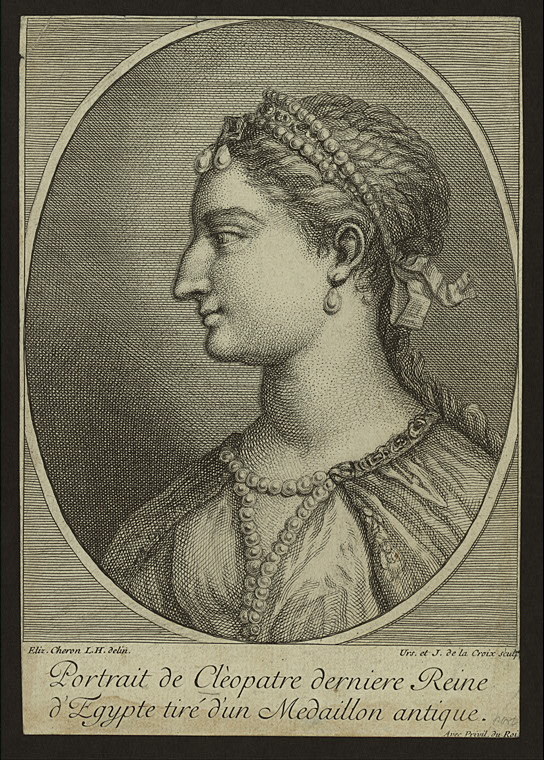
Engraving of Cleopatra VII after a Hellenistic Medallion
Élisabeth Sophie Chéron · c. 1736
An 18th-century engraving based on a lost ancient medallion, showing an imagined likeness of Cleopatra.
This engraving reproduces an ancient medallion thought to show Cleopatra, filtered through a much later artist's interpretation.
About this source
What it is
This oval engraving by the French artist Élisabeth Sophie Chéron was published around 1736, as plate 40 in a book of engravings of antique gems and medallions. It is based on a Hellenistic-period medallion of Cleopatra VII, and is titled "Portrait de Clèopatre dernière Reine d'Egypte tiré d'un Médaillon."
Why it matters
The engraving shows Cleopatra in profile with a jeweled headband, pearls and draped clothing. Because it copies an ancient medallion, it may preserve something of how people in antiquity pictured her, but it was also reshaped by Chéron's own 18th-century style, making it a layered source: ancient image filtered through a much later engraver's hand.
Look closer
- What jewelry and clothing details does the engraver emphasize, and why might that be?
- How might copying an ancient medallion change the final image compared to the original?
- Why is it useful for historians to know this engraving is based on an older object rather than made from life?
This painting is part of the curated material that grounds the AI version of Cleopatra on Humy.ai — when students ask about related events, the AI can quote it and cite it.
More Cleopatra sources
Meet the AI Cleopatra →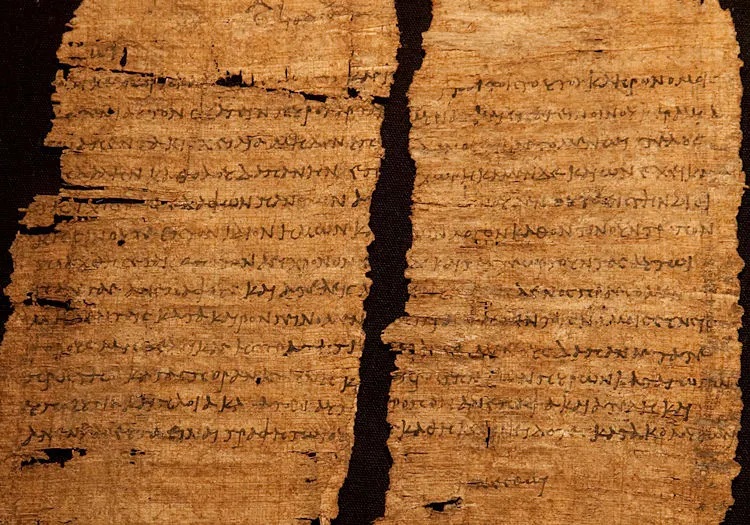 Document
Primary source
Papyrus with Signature of Cleopatra VII
Ptolemaic scribe; possibly countersigned by Cleopatra VII · February 33 BCE
 Painting
Secondary source
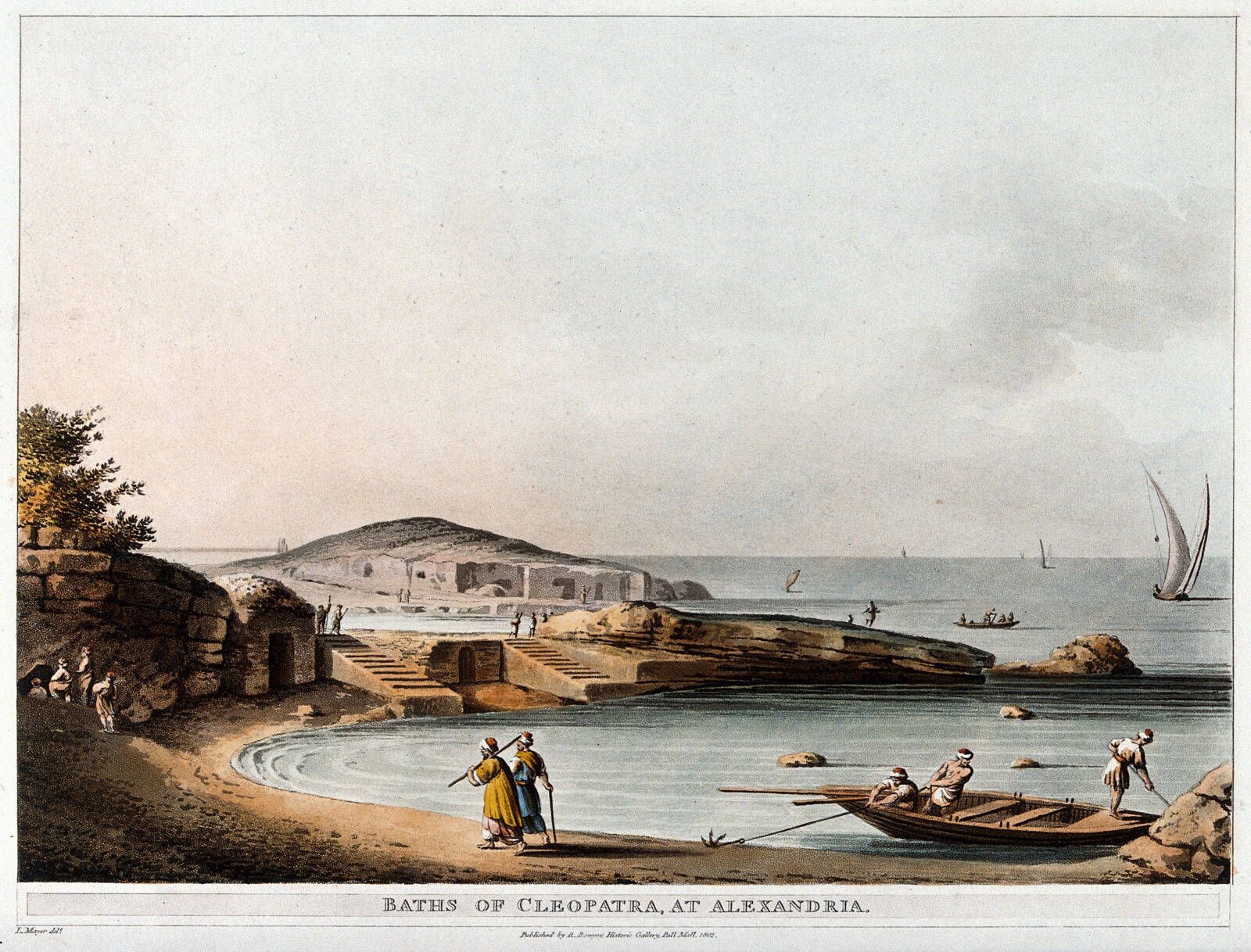
Baths of Cleopatra, at Alexandria
Luigi Mayer · 1802
 Sculpture
Secondary source
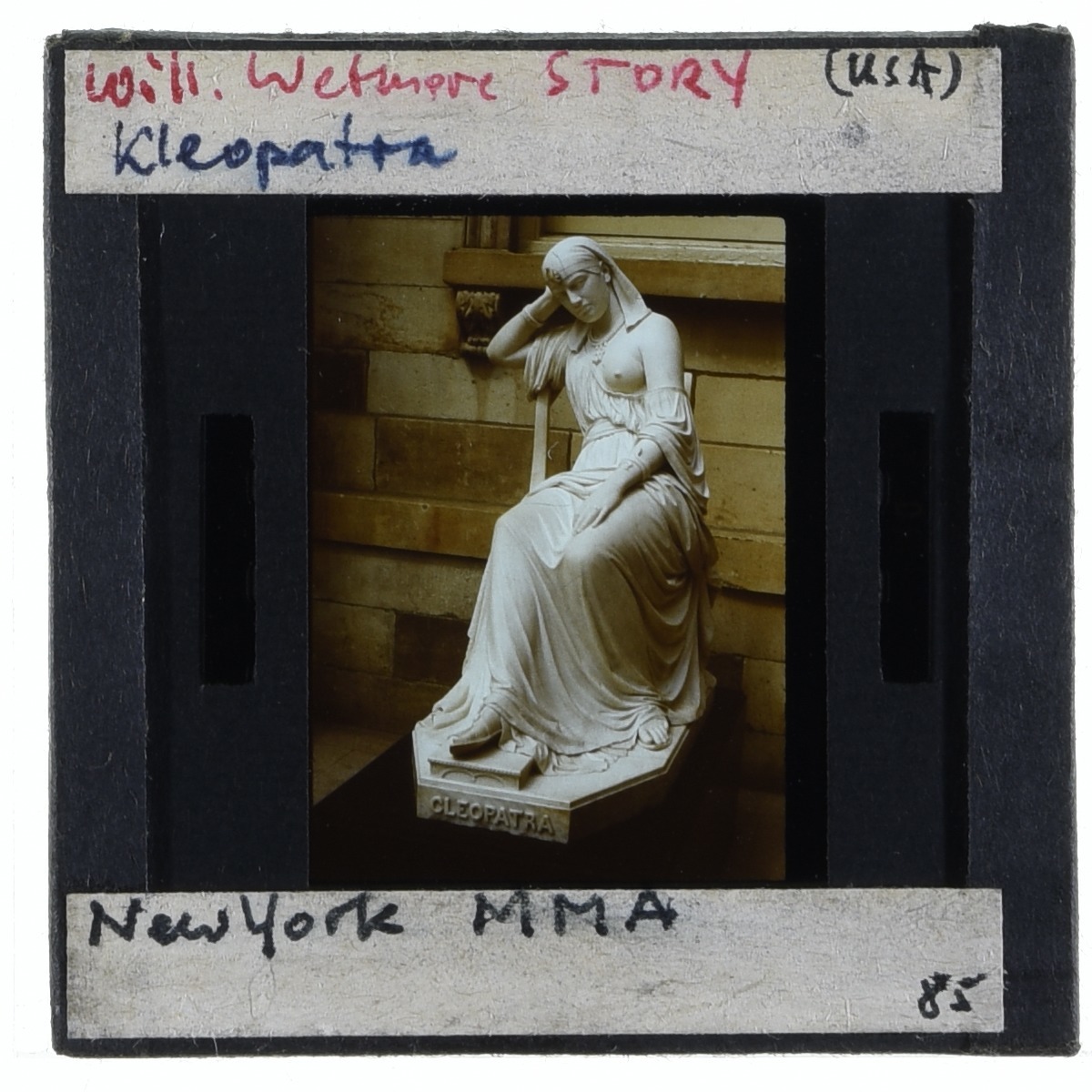
Cleopatra
William Wetmore Story
 Sculpture
Primary source
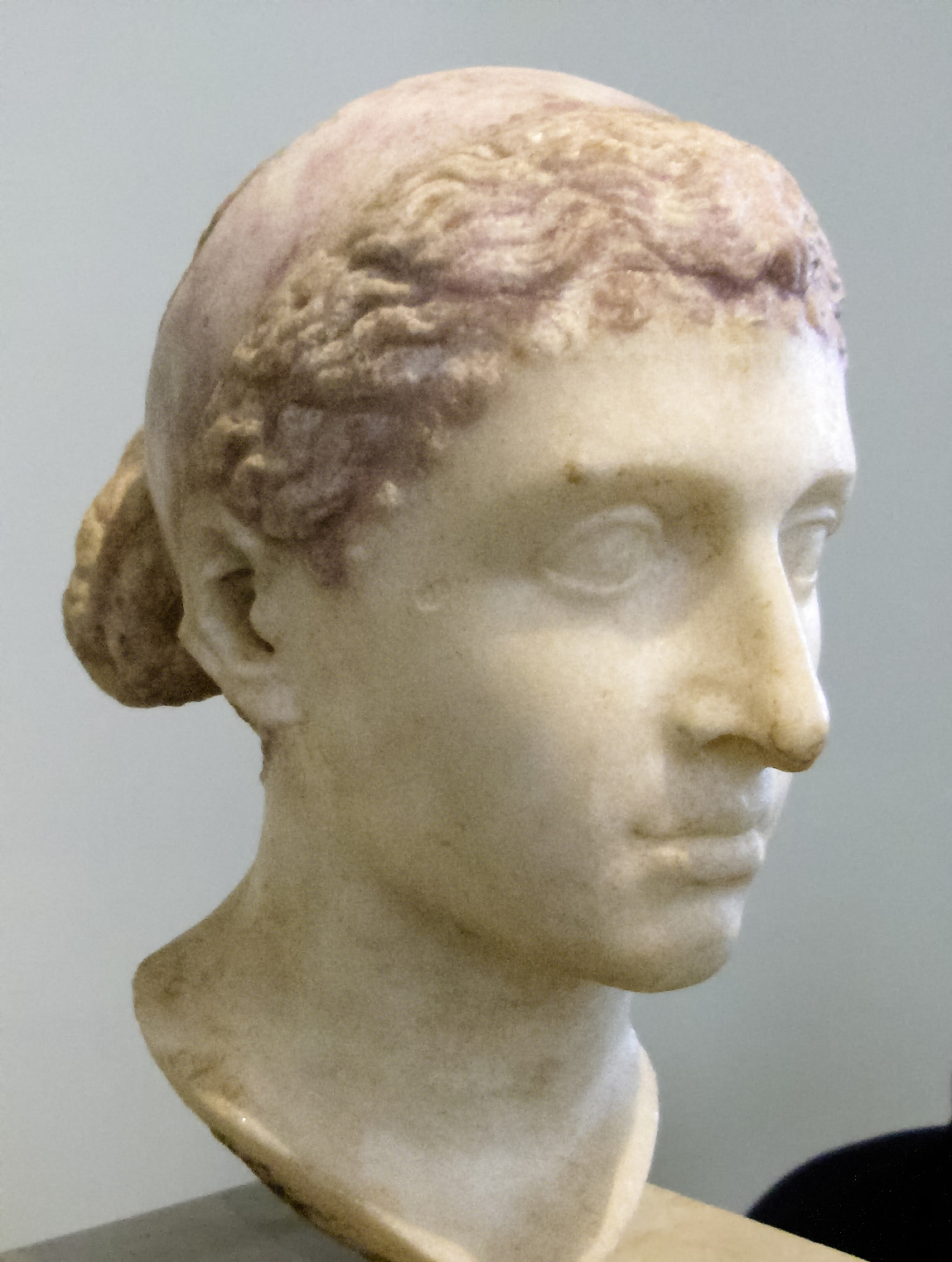
Portrait of Cleopatra (Berlin Bust)
c. 40-30 BCE
 Sculpture
Primary source
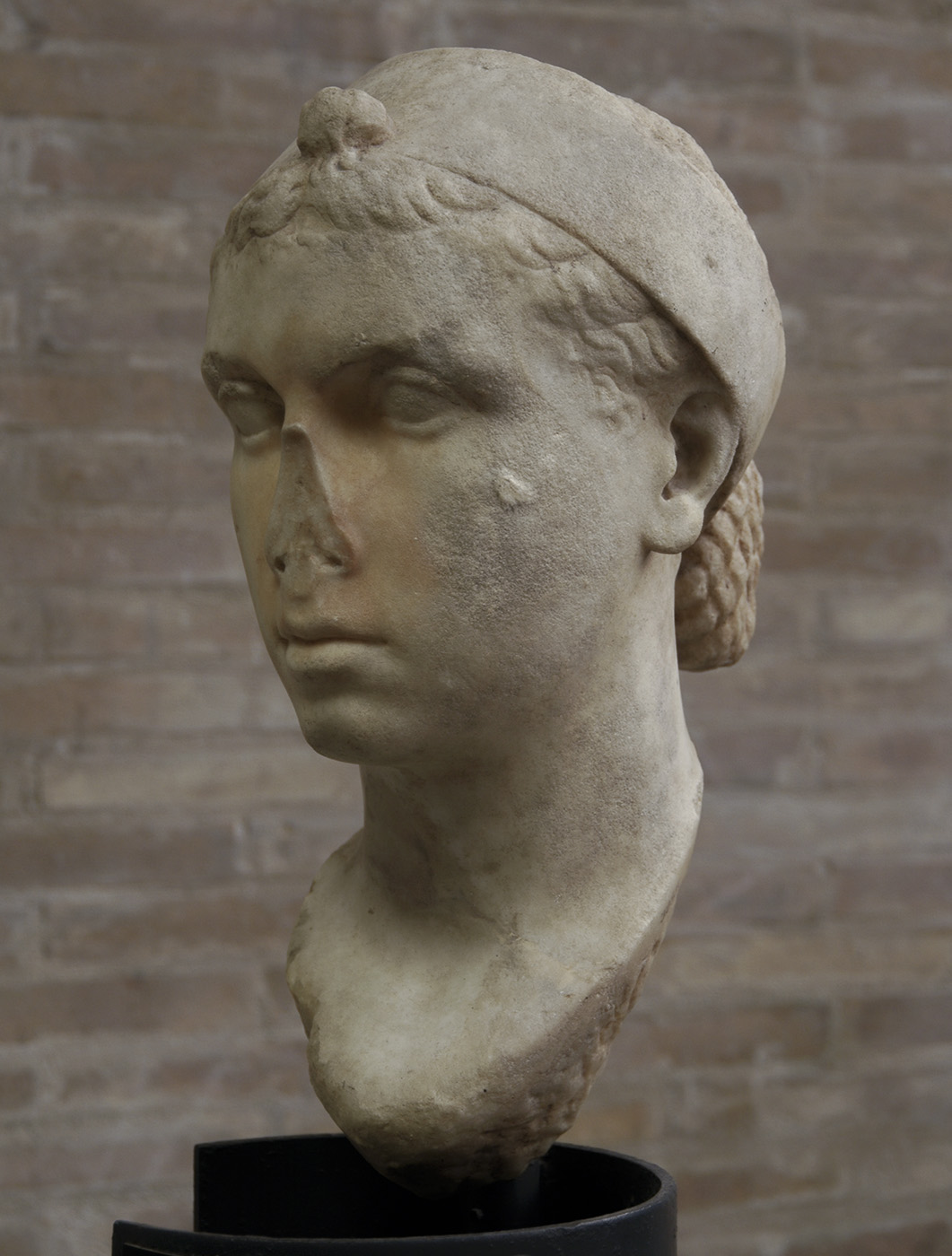
Head-Portrait of Cleopatra VII (Vatican Bust)
c. 40-30 BCE
Ready when you are
Start chatting with Cleopatra now.
20 messages free · No credit card · Available in 50+ languages.