


Secondary sourcePainting1889
Epictetus the Slave
Giuseppe Rossi (attributed) · 1889
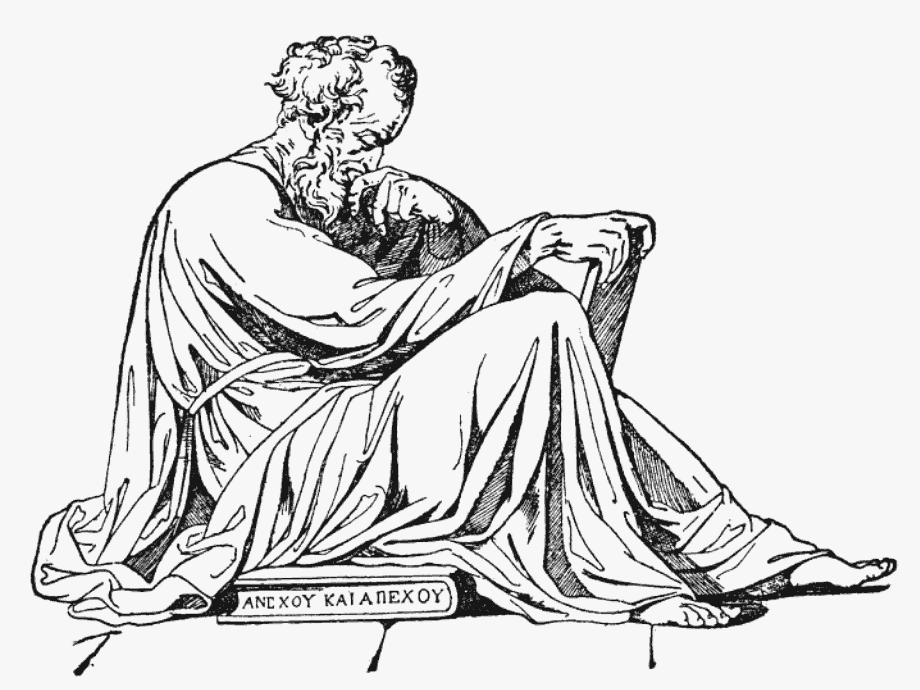
A 19th-century book illustration imagining Epictetus as a seated slave-philosopher, made long after his death.
An imagined later portrait depicting Epictetus as a seated, barefoot slave-philosopher.
About this source
What it is
This black-and-white illustration appeared in an 1889 English edition of Voltaire's stories, accompanying the tale "The Sage and the Atheist." It is said to be based on a painting by an artist named Giuseppe Rossi, though it is unclear which of two artists by that name made the original. The image shows a bearded, barefoot man in draped robes, seated with his head resting on his hand, with the Greek phrase "bear and forbear" inscribed nearby.
Why it matters
Epictetus was once an enslaved person before becoming a Stoic teacher. This image is not a likeness made from life but a 19th-century artist's imagined vision of him, created for a book illustration centuries after he lived. It shows how later generations pictured ancient philosophers according to their own ideas.
Look closer
- What does the pose and setting suggest about how the artist wanted viewers to see Epictetus?
- Why might an illustrator include the Greek phrase "bear and forbear" in the image?
- How might this image differ from what Epictetus actually looked like?
This painting is part of the curated material that grounds the AI version of Epictetus on Humy.ai — when students ask about related events, the AI can quote it and cite it.
More Epictetus sources
Meet the AI Epictetus →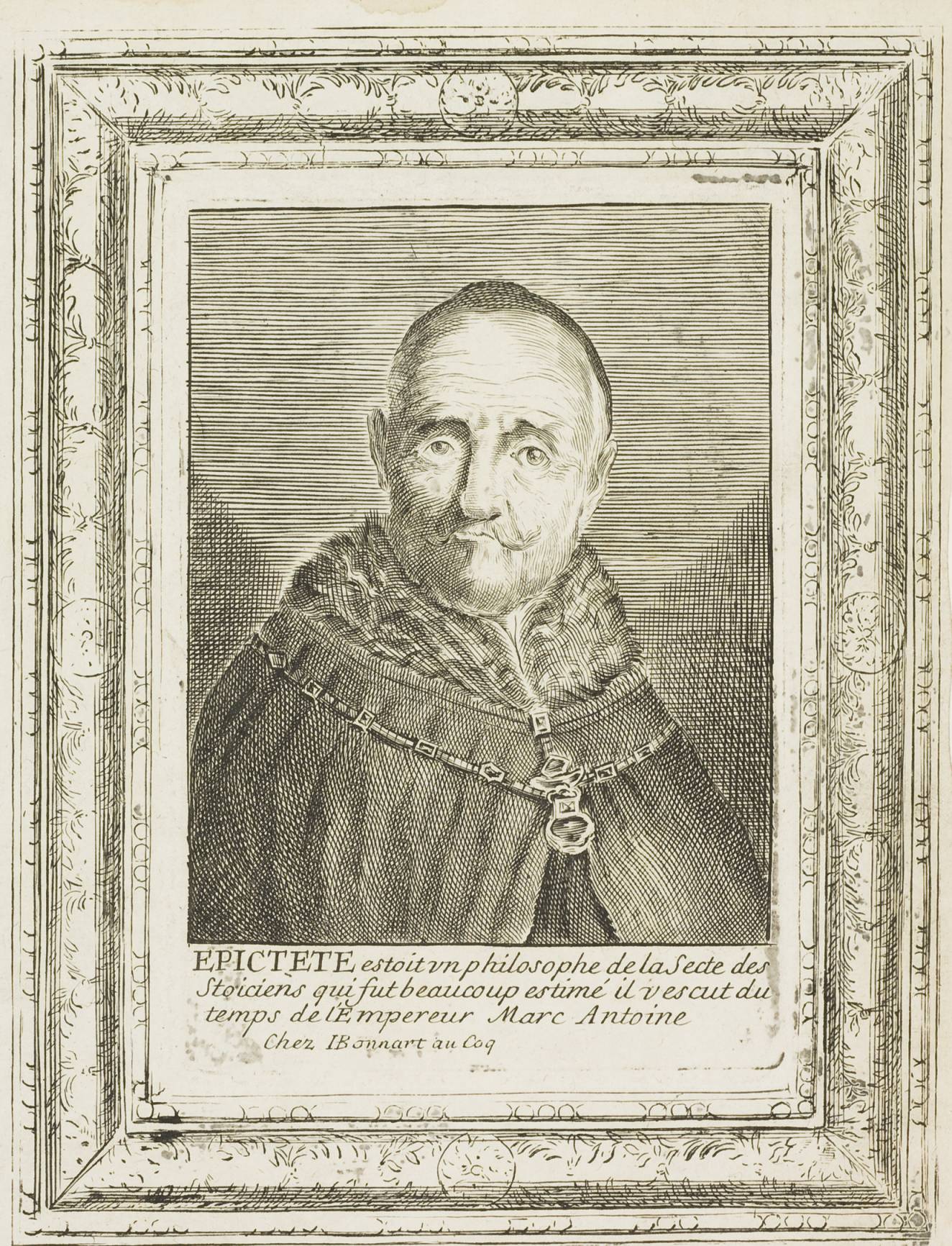 Painting
Secondary source
Epictete
Henri Bonnart · 17th century
 Book
Secondary source
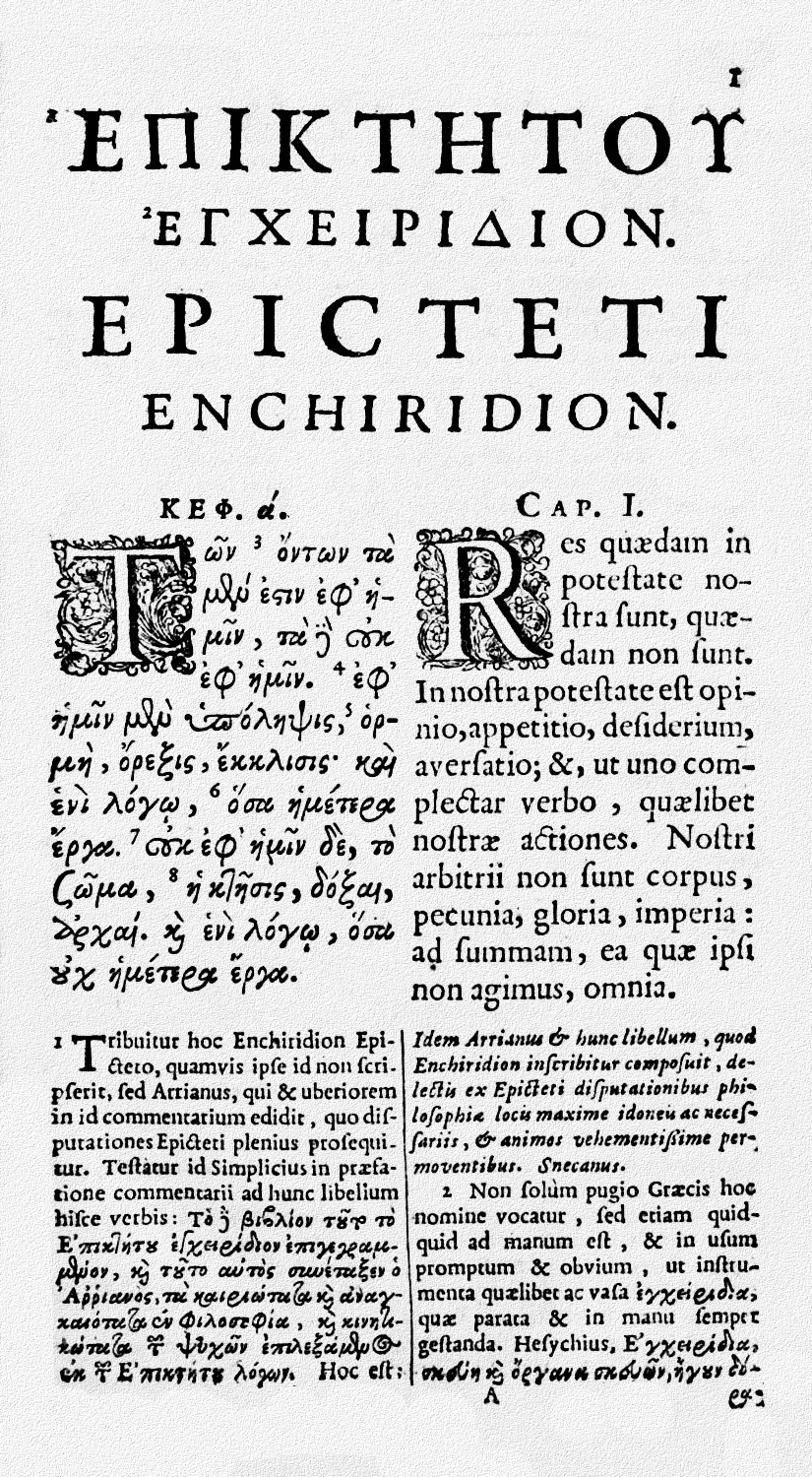
Enchiridion of Epictetus
Arrian · early 2nd century AD (this edition 1683)
 Book
Secondary source
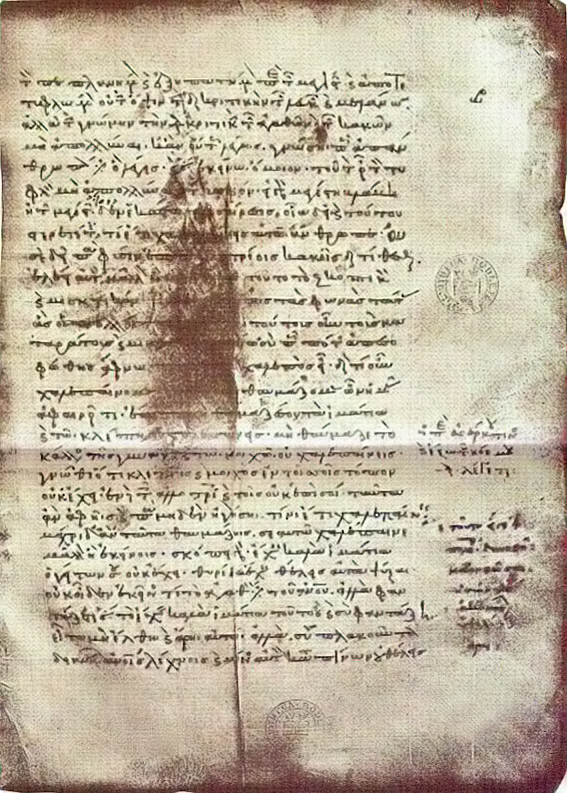
Discourses of Epictetus
Arrian · c. 108 AD
 Painting
Secondary source
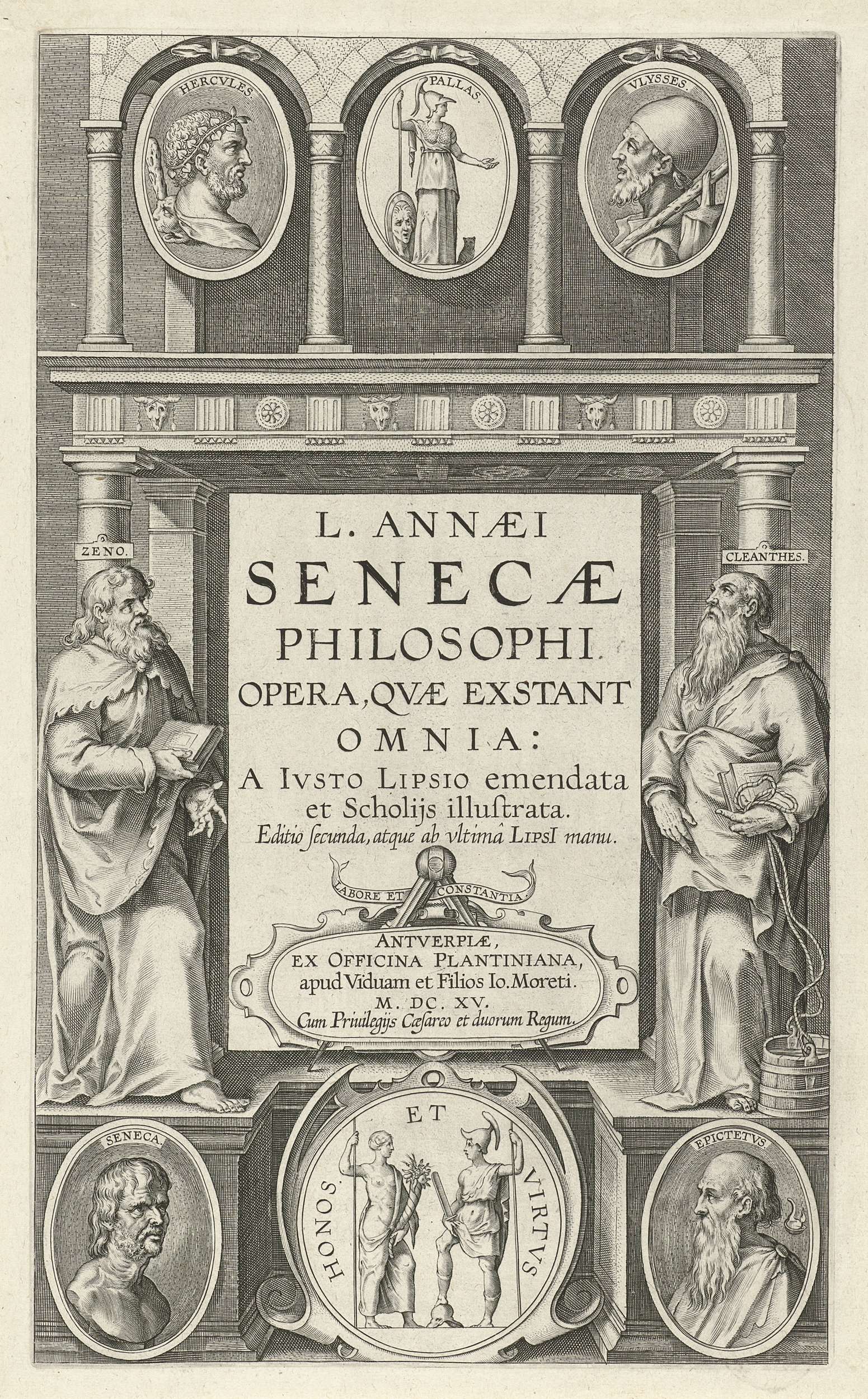
Title Page of L. Annaei Senecae Philosophi Opera
1615
DocumentSecondary source
Codex Bodleianus
c. 11th-12th century
Ready when you are
Start chatting with Epictetus now.
20 messages free · No credit card · Available in 50+ languages.