


Primary sourceBook1677 (written 1661-1675)
Ethics
Benedictus de Spinoza · 1677 (written 1661-1675)
Spinoza's masterwork of philosophy, laid out as geometric proofs, arguing that God and Nature are one and exploring human emotion and freedom.
This is Spinoza's own philosophical masterwork, the core text defining his ideas on God, mind and freedom.
About this source
What it is
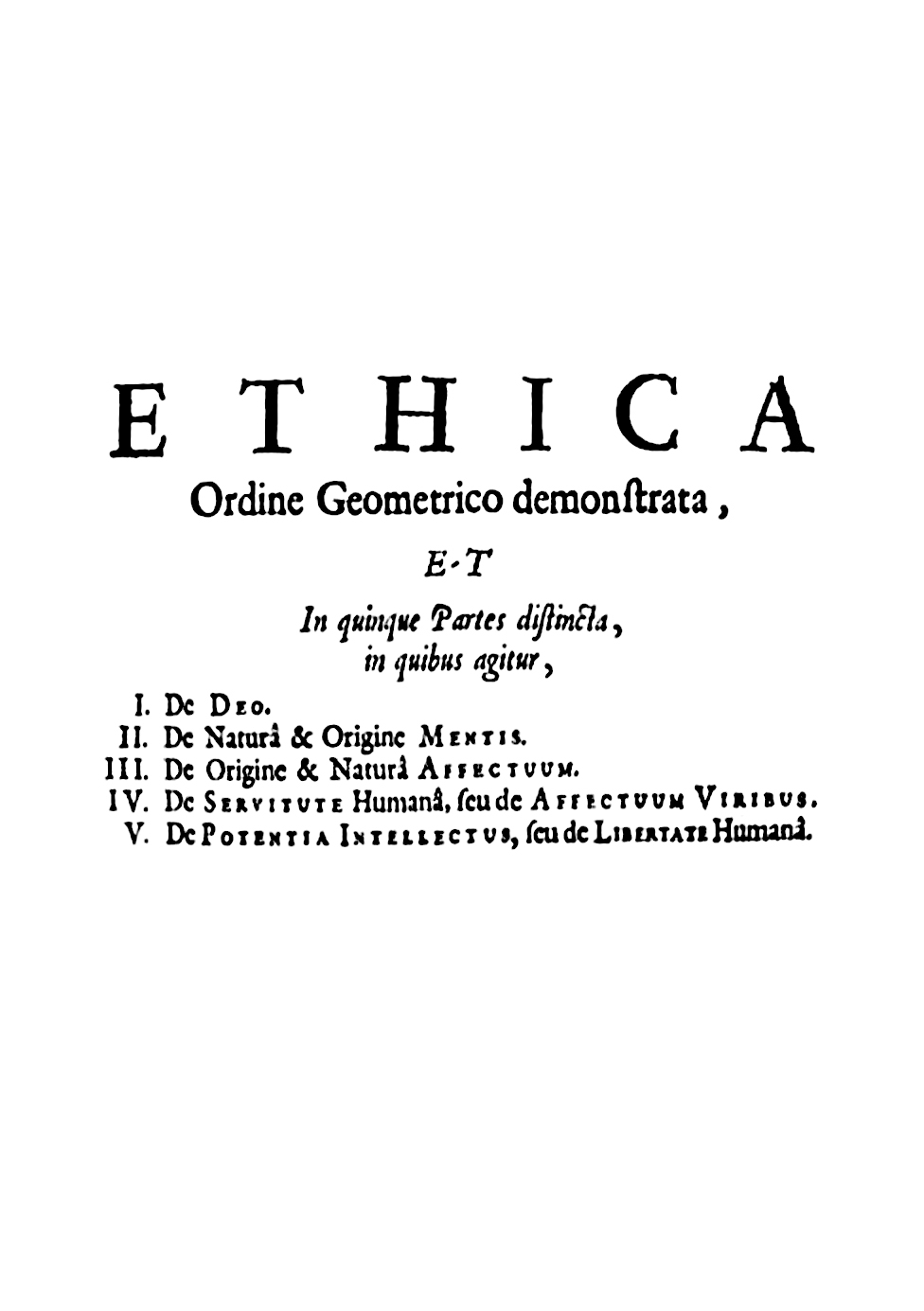
The Ethics is a philosophical treatise written in Latin by Benedictus de Spinoza, composed between 1661 and 1675 and published only after his death in 1677. It is structured like a geometry textbook, building definitions and axioms into proofs about God, the mind, the emotions and human freedom.
Why it matters
The book argues that God is identical with Nature itself, rejecting the idea of a God who stands outside the universe and acts by free will. It also claims mind and body are two ways of describing one thing, challenging Descartes. These were radical, controversial ideas in Spinoza's time and shaped later philosophy.
Look closer
- Why might a philosopher choose to write about God and emotions using geometric proofs instead of ordinary prose?
- What does the title page tell you about how the work was organised?
- Why do you think this book was published only after Spinoza's death?
This book is part of the curated material that grounds the AI version of Baruch Spinoza on Humy.ai — when students ask about related events, the AI can quote it and cite it.
More Baruch Spinoza sources
Meet the AI Baruch Spinoza →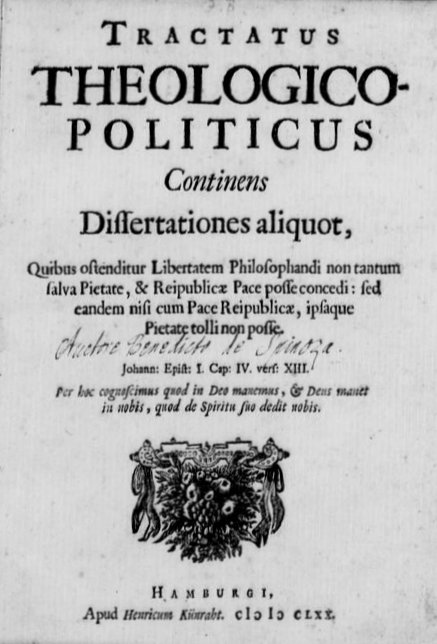 Book
Primary source
Tractatus Theologico-Politicus
Benedictus de Spinoza · 1670
 Painting
Primary source
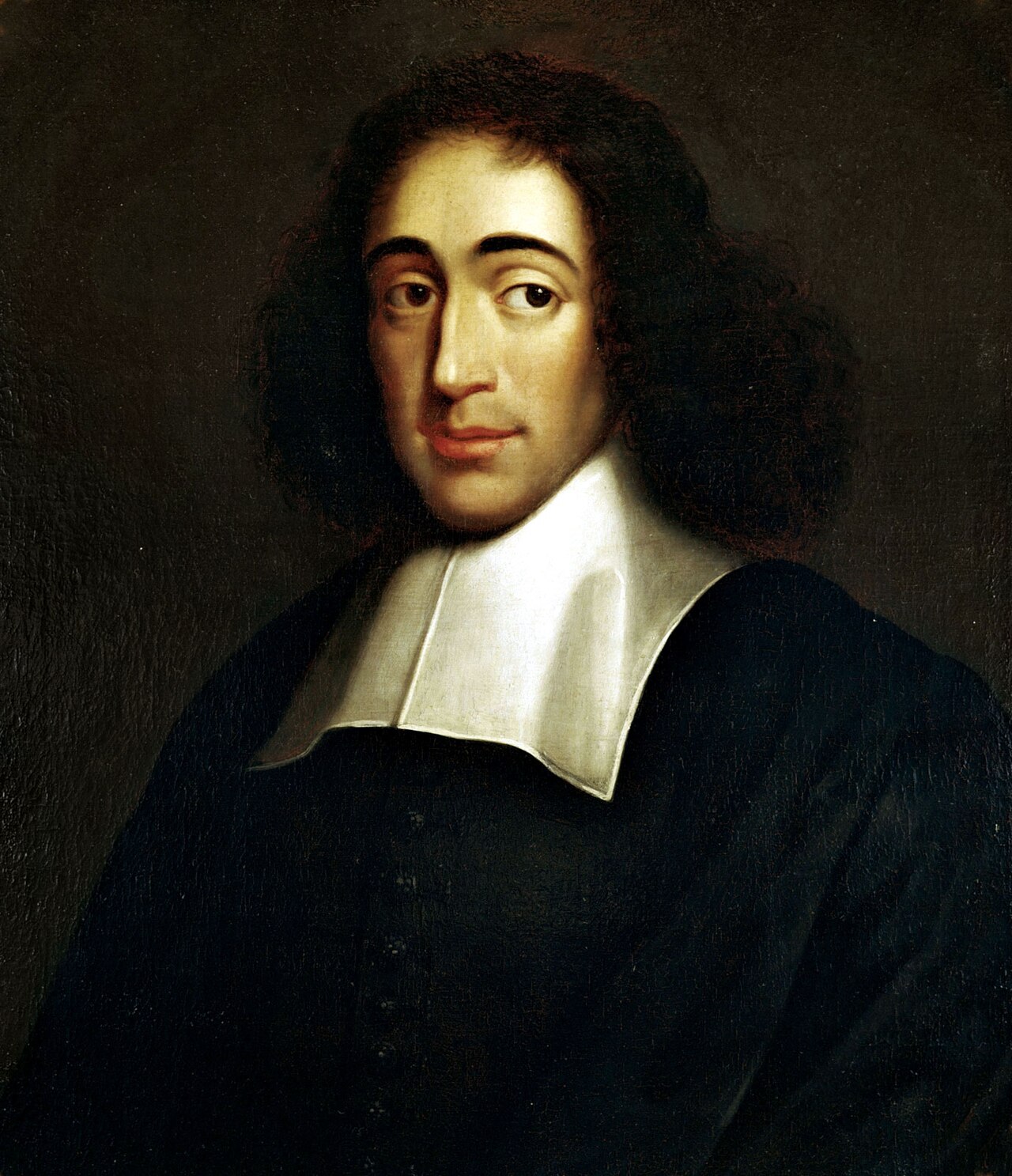
Portrait of Benedictus de Spinoza
Unknown · c. 1665
 Book
Primary source
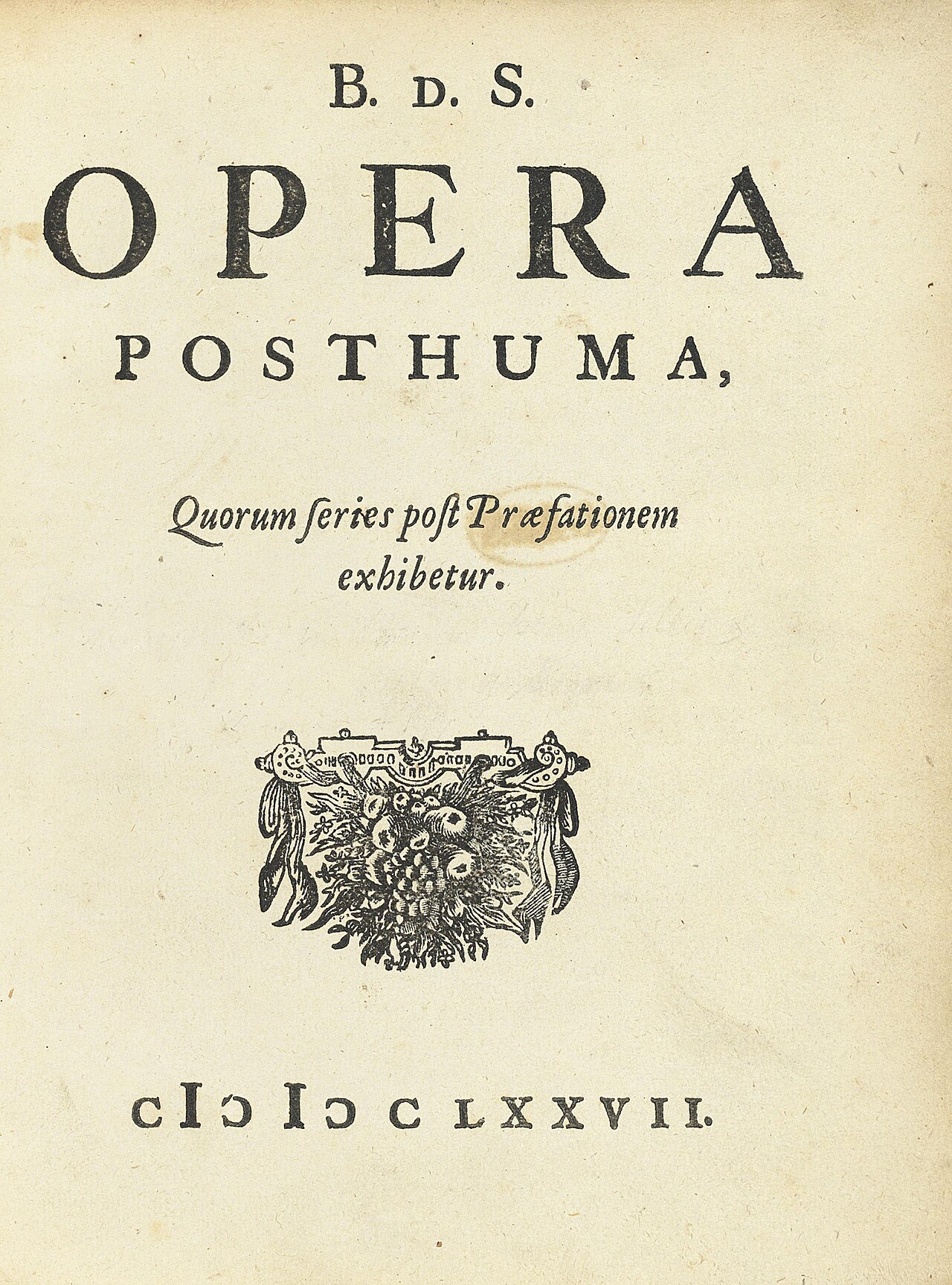
Opera Posthuma
Benedictus de Spinoza · 1677
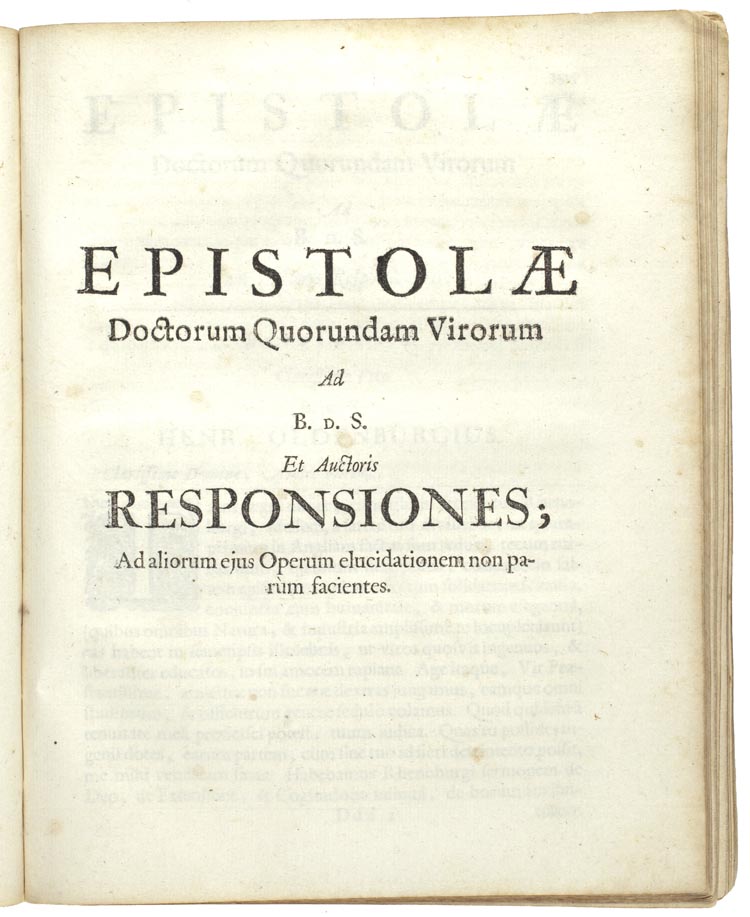 Letter
Primary source
Epistolae, Correspondence of Benedict de Spinoza
Benedictus de Spinoza · 1661-1676, published 1677
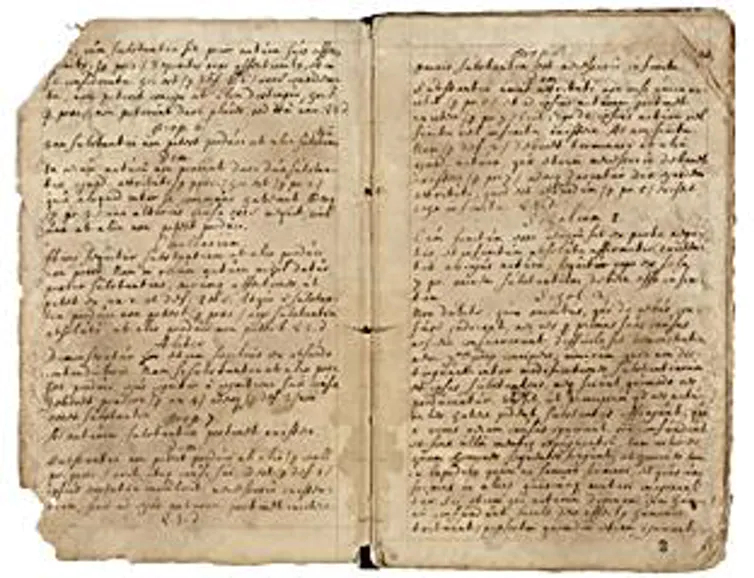 Document
Primary source
Vatican Manuscript of Spinoza's Ethics
Pieter van Gent (copyist), after Benedictus de Spinoza · c. 1675
Ready when you are
Start chatting with Baruch Spinoza now.
20 messages free · No credit card · Available in 50+ languages.