


Primary sourceDocument23 May 1814
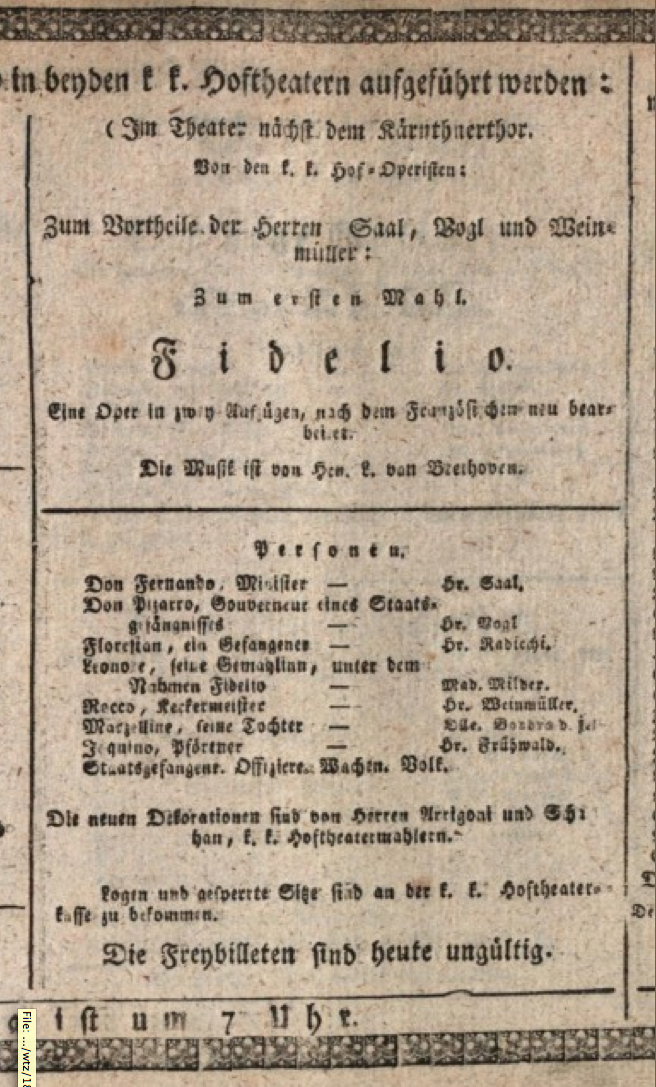
Fidelio Premiere Playbill
23 May 1814
The 1814 playbill announcing the final version of Fidelio, Beethoven's only opera, about loyalty and freedom from tyranny.
Documents the premiere of Beethoven's only opera, which expressed his ideals of liberty and justice.
About this source
What it is
This playbill announced the 1814 performance of Fidelio at the Theater am Kärntnertor in Vienna, the final version of Beethoven's only opera. Fidelio tells the story of Leonore, who disguises herself to free her husband from political imprisonment.
Why it matters
Beethoven worked on Fidelio for a decade, revising it three times, because the themes of freedom, loyalty and resistance to tyranny mattered deeply to him. The opera reflects the political ideas circulating in Europe during his lifetime, and its difficult creation shows his persistence as an artist.
Look closer
- What does the playbill tell us about how operas were advertised in Beethoven's time?
- Why might a story about rescuing a political prisoner have appealed to audiences in 1814?
- Why do you think Beethoven revised this opera so many times before being satisfied?
This document is part of the curated material that grounds the AI version of Ludwig van Beethoven on Humy.ai — when students ask about related events, the AI can quote it and cite it.
More Ludwig van Beethoven sources
Meet the AI Ludwig van Beethoven →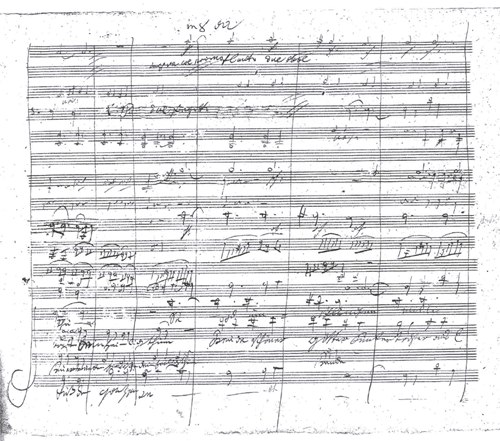 Document
Primary source
Symphony No. 9
Ludwig van Beethoven · 1824
 Sculpture
Secondary source
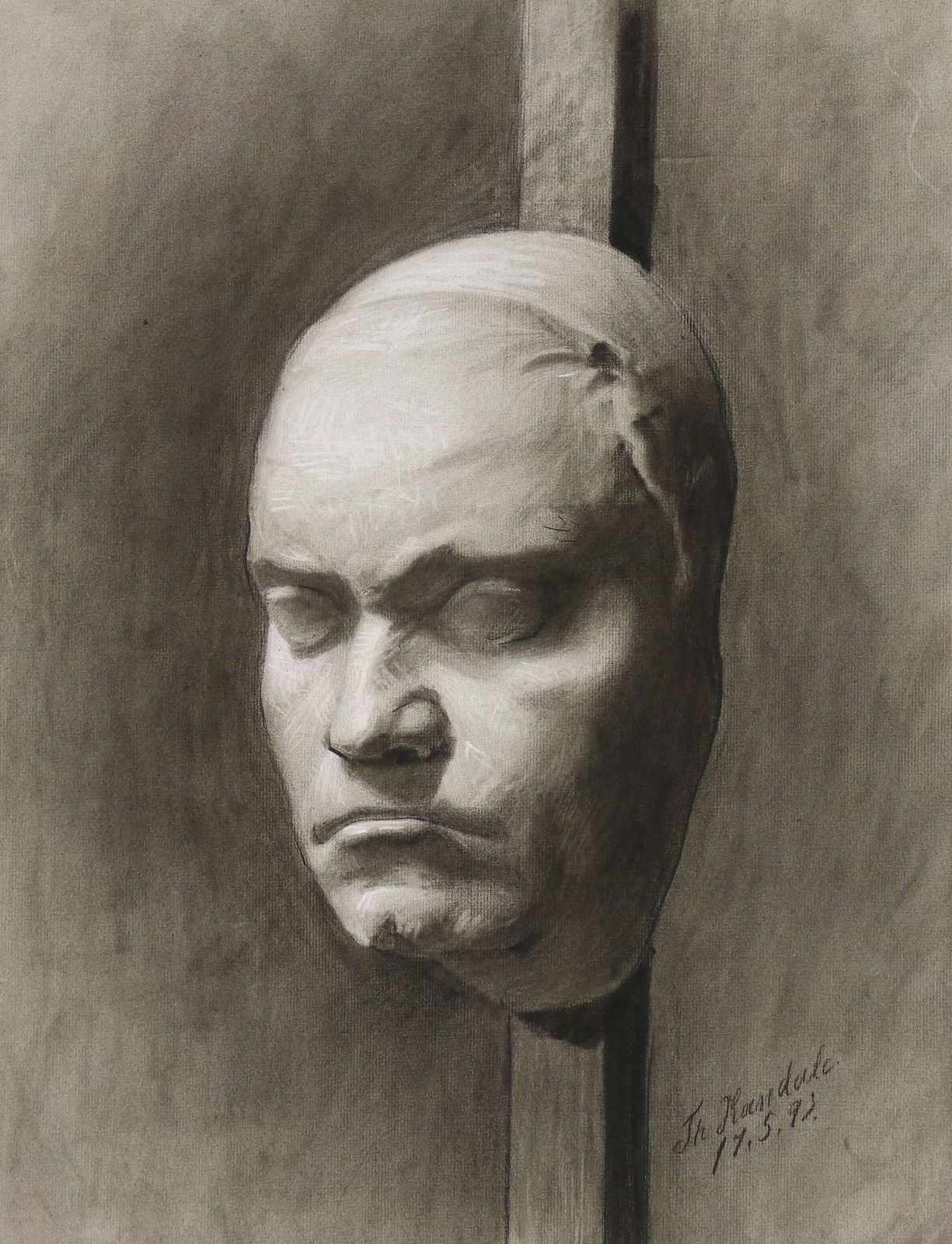
Death of Ludwig van Beethoven
Theodor Kandale (after Josef Danhauser) · 1827 (mask); drawing 1893
 Sculpture
Secondary source
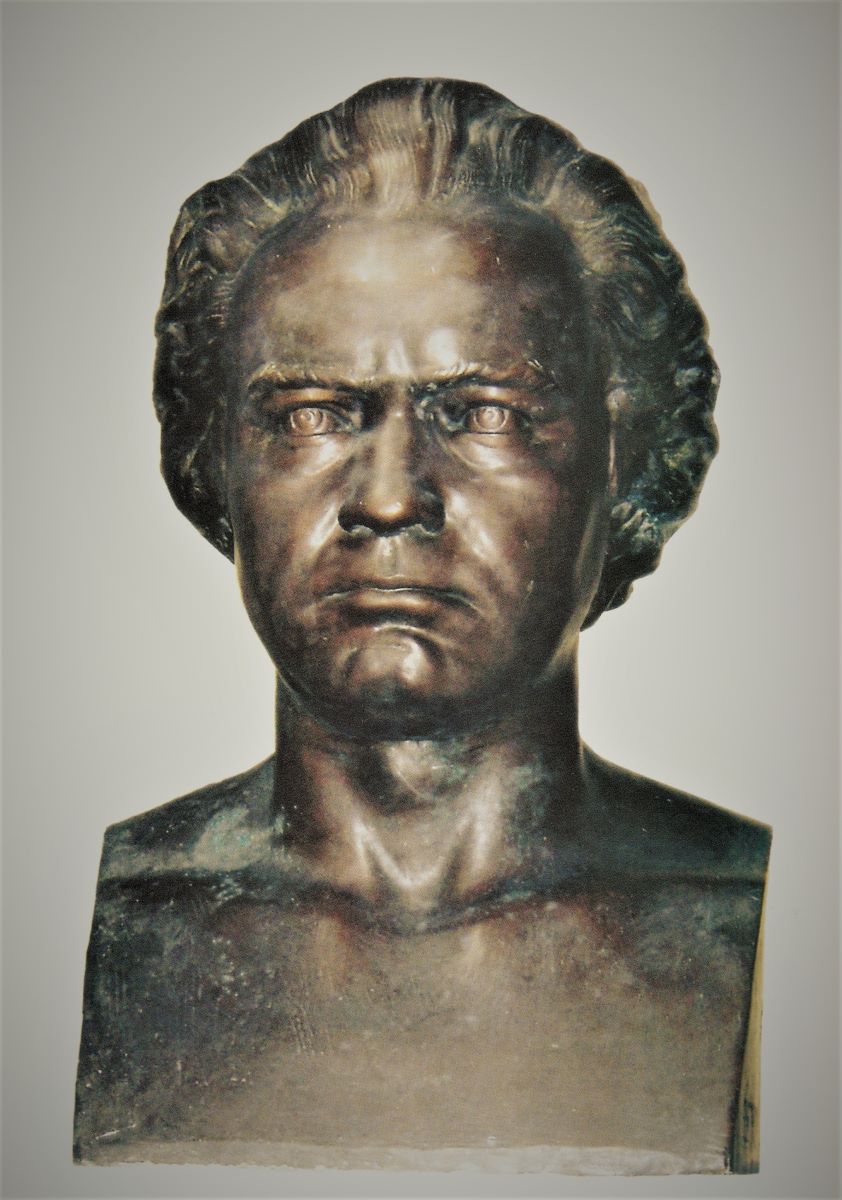
Bust of Ludwig van Beethoven by Frederic Storck
Frederic Storck · 1930
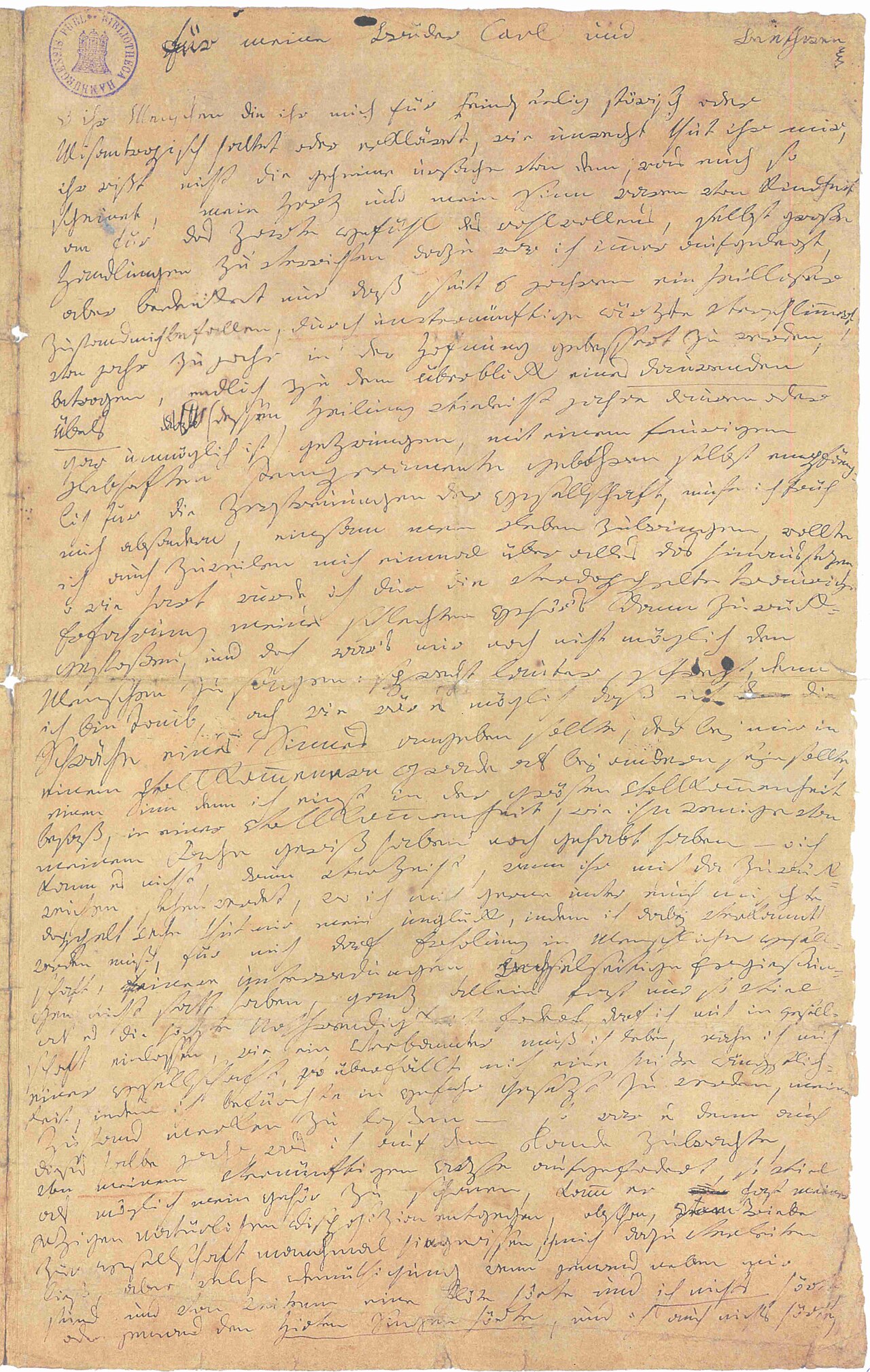 Letter
Primary source
Heiligenstadt Testament
Ludwig van Beethoven · 6 October 1802
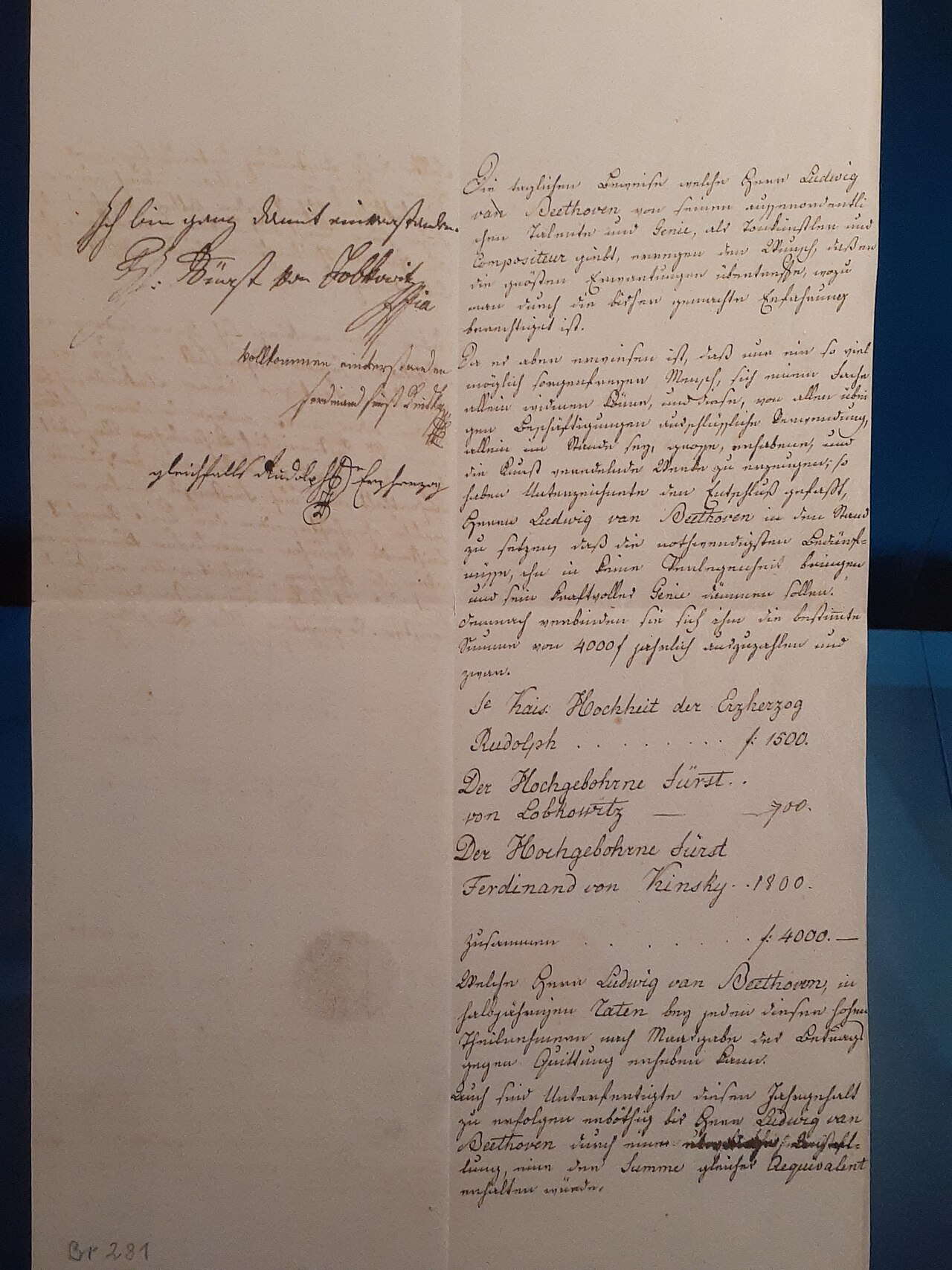 Document
Primary source
Agreement between Beethoven and Archduke Rudolph, Prince Kinsky and Prince Lobkowitz
1 March 1809
Ready when you are
Start chatting with Ludwig van Beethoven now.
20 messages free · No credit card · Available in 50+ languages.