


Primary sourceSculpturebetween 1333 and 1323 BC
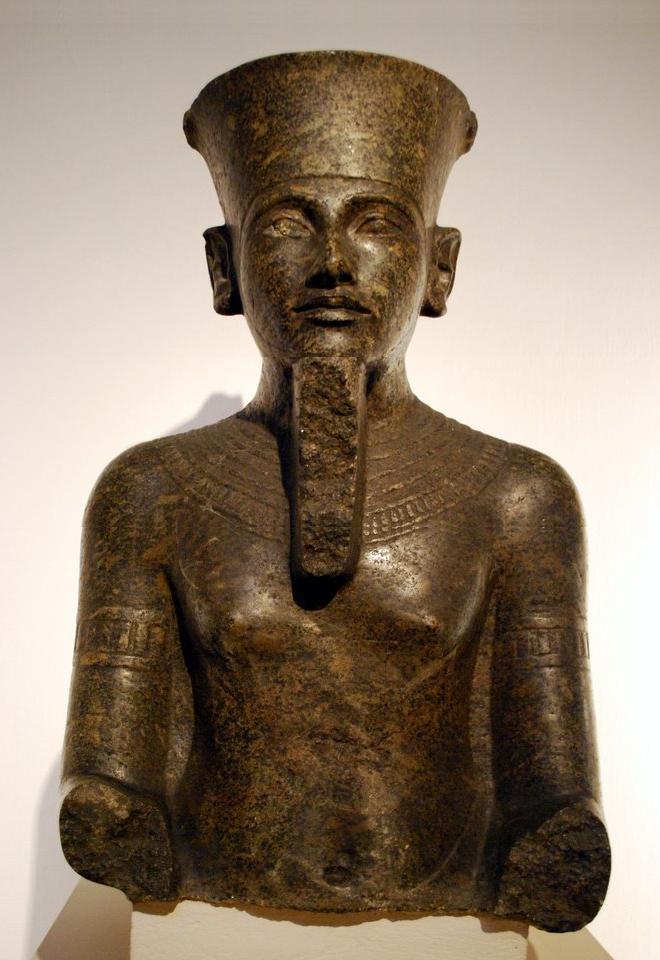
Fragment of a Coronation Statuary Group Showing Amun
Unknown · between 1333 and 1323 BC
A granite bust fragment from a statue group made during Tutankhamun's reign, showing the restored god Amun.
Made during Tutankhamun's reign, linked to his restoration of traditional Amun worship.
About this source
What it is
This dark granite bust fragment, made by an unknown Egyptian sculptor between about 1333 and 1323 BC, comes from a larger coronation statuary group. It depicts a royal figure wearing a tall flaring crown, a ceremonial beard, a broad collar necklace, and banded armlets.
Why it matters
The piece dates to Tutankhamun's reign, a period when the worship of the god Amun was being restored after the religious changes of his predecessor. Statues like this one show how Tutankhamun's government used art and religion to signal a return to traditional beliefs.
Look closer
- What details on the crown and beard suggest this figure is royal or divine?
- Why might a ruler want to be shown performing religious restoration in stone?
- What is missing from this fragment that might help us understand the whole statue?
This sculpture is part of the curated material that grounds the AI version of Tutankhamun on Humy.ai — when students ask about related events, the AI can quote it and cite it.
More Tutankhamun sources
Meet the AI Tutankhamun →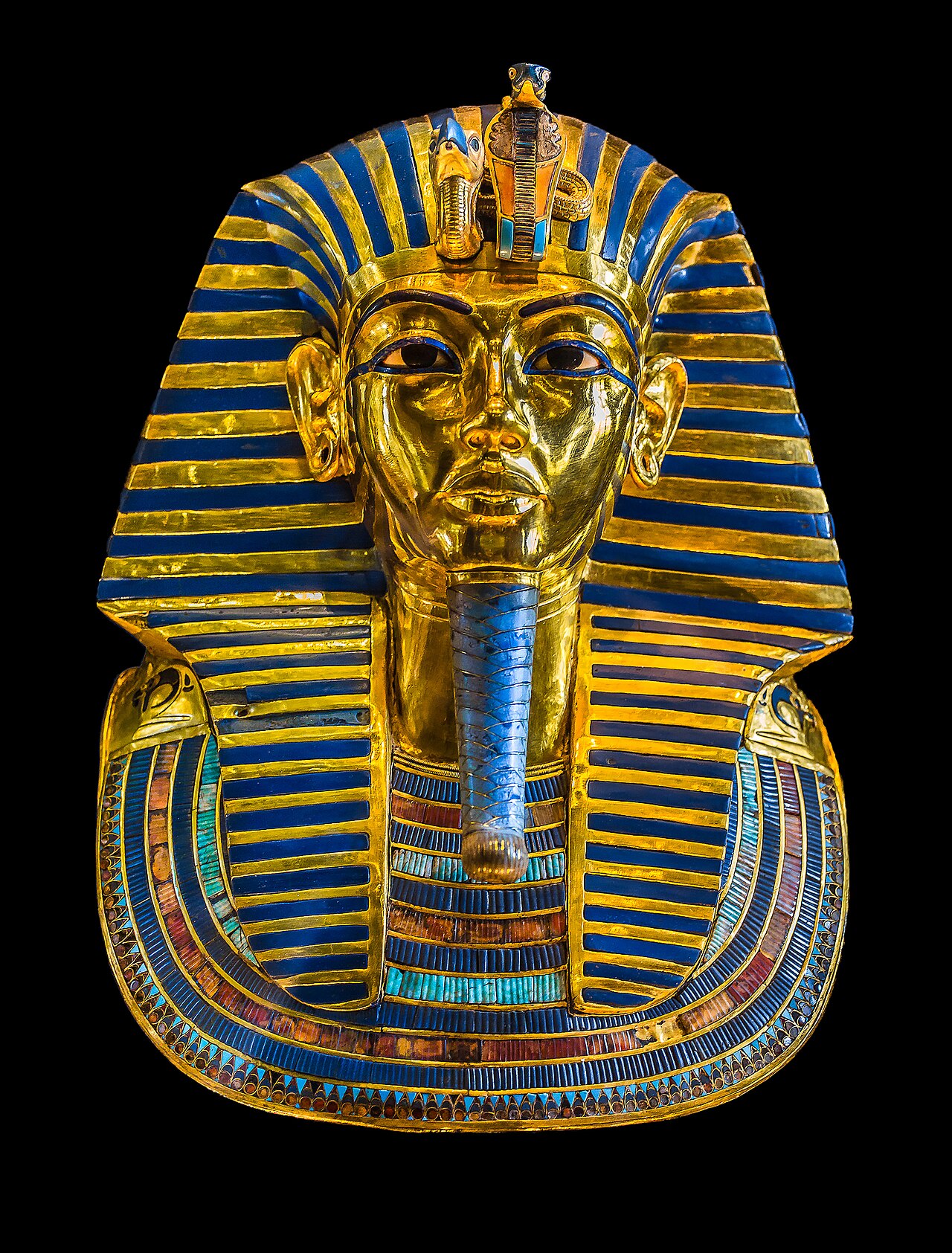 Artifact
Primary source
Mask of Tutankhamun
c. 1333 BCE
 Photograph
Primary source
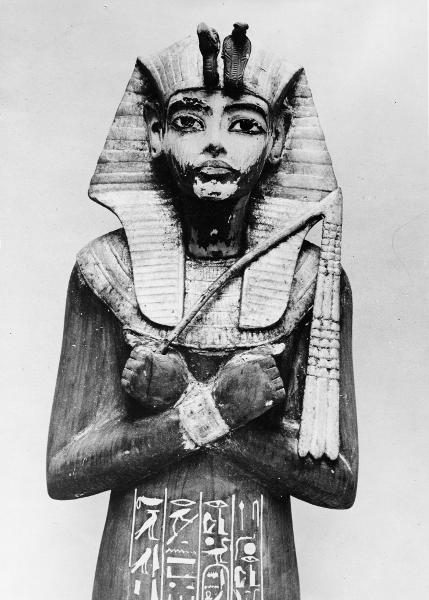
Photograph of Tutankhamun's Shawabti Figure
Harry Burton · 1920s
 Artifact
Primary source
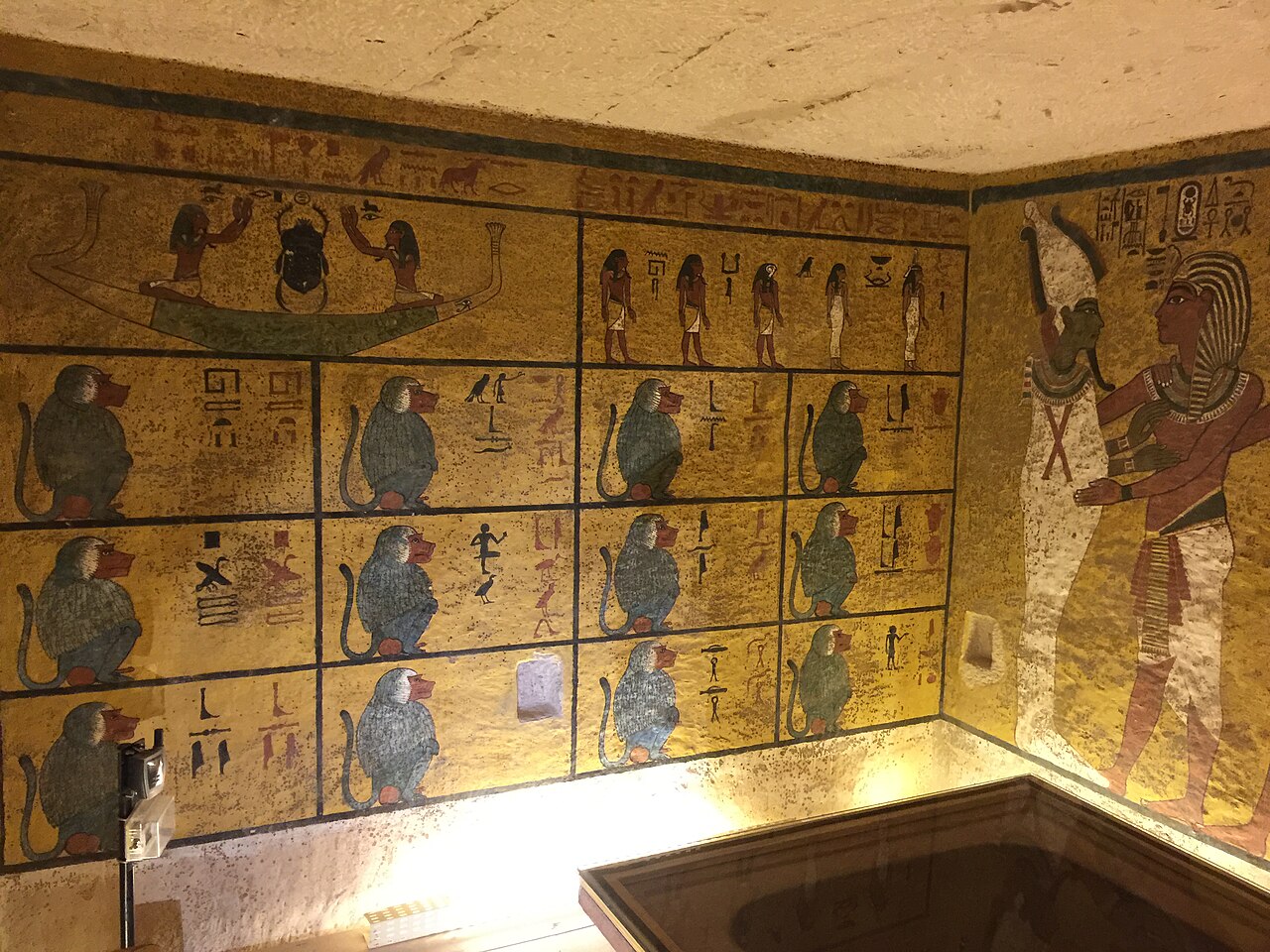
Tomb of Tutankhamun
14th century BCE
 Photograph
Primary source
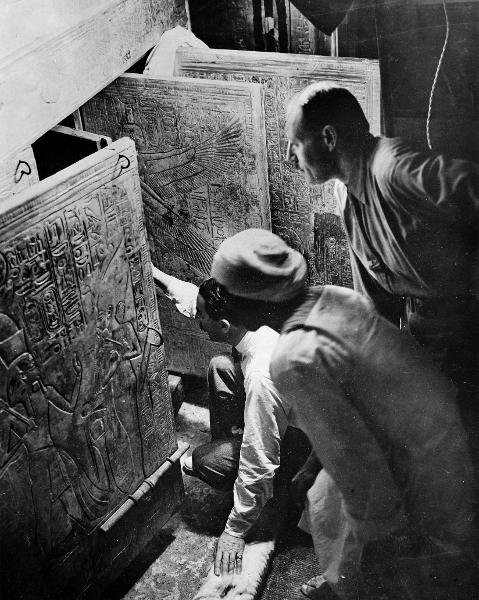
Opening the Doors of the Fourth Shrine in Tutankhamun's Tomb
Harry Burton · 1920s
 Document
Primary source
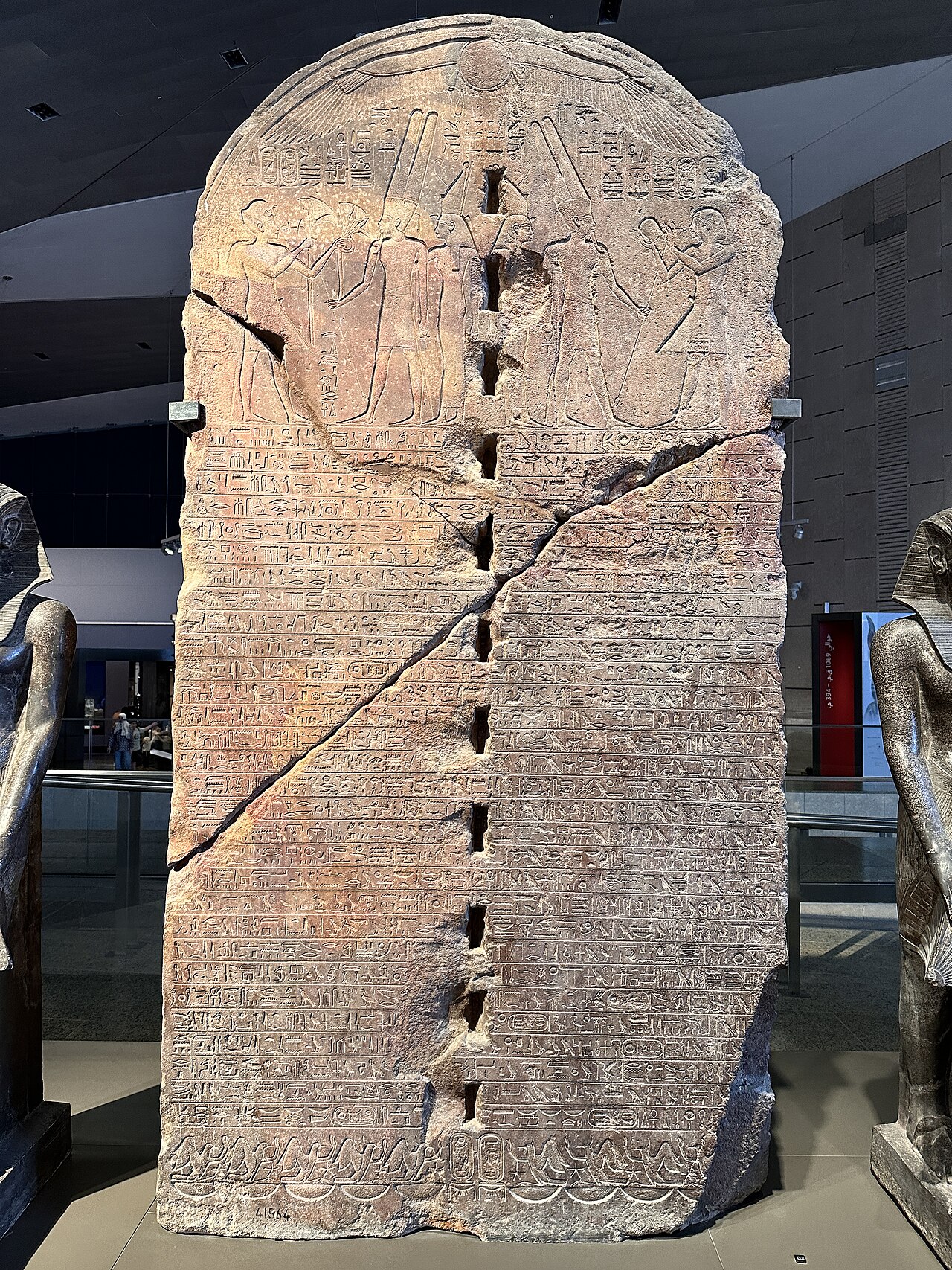
Restoration Stela
Tutankhamun · c. 1326 BCE
Ready when you are
Start chatting with Tutankhamun now.
20 messages free · No credit card · Available in 50+ languages.