


Secondary sourcePaintingburied 79 CE
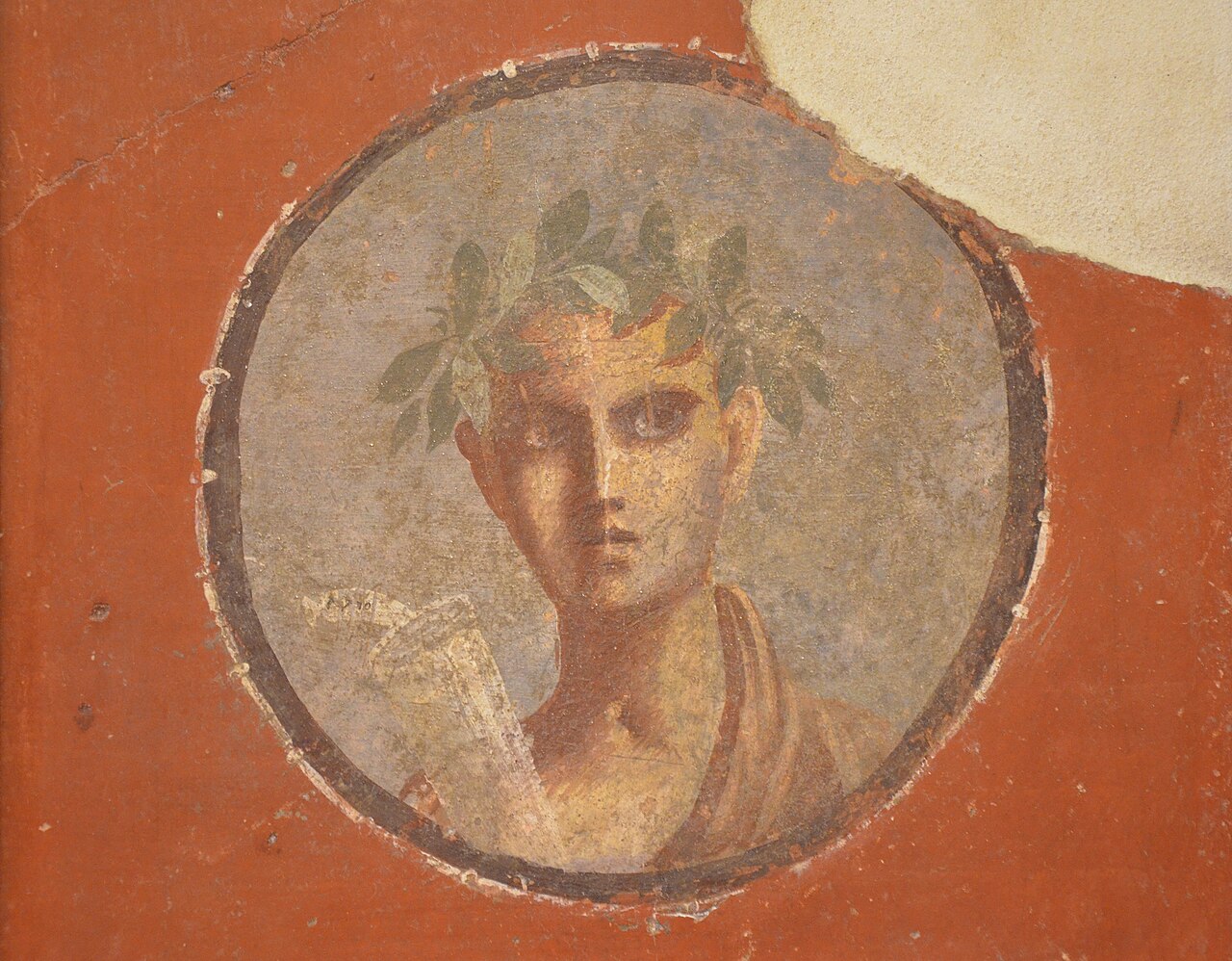
Fresco showing a young man with a scroll labelled Plato
buried 79 CE
A Roman wall painting from Pompeii showing a young man holding a scroll labelled Plato. It shows the philosopher's works as part of a Roman education.
Shows Plato's name as a mark of education in a Roman home, long after the philosopher lived.
About this source
What it is
This is a Roman fresco from the House of the Apartment in Pompeii, held by the Naples National Archaeological Museum. It shows a young man with a laurel wreath and draped garment, holding a scroll labelled with Plato's name. The lettering on the scroll is faded. The image in this archive is a photograph of the fresco, taken by Carole Raddato.
Why it matters
The painting was buried in 79 CE, and it shows that a reader of Plato could be shown as a sign of education in a Roman household. It reveals how wealthy Romans displayed Greek philosophy in their homes, centuries after Plato lived.
Look closer
- What does the young man's wreath and scroll tell you about how he wanted to be seen?
- Why would a Roman household choose to show Plato's name on the wall?
- What does this painting leave out about the people who lived in the house and what they actually read?
This painting is part of the curated material that grounds the AI version of Plato on Humy.ai — when students ask about related events, the AI can quote it and cite it.
More Plato sources
Meet the AI Plato →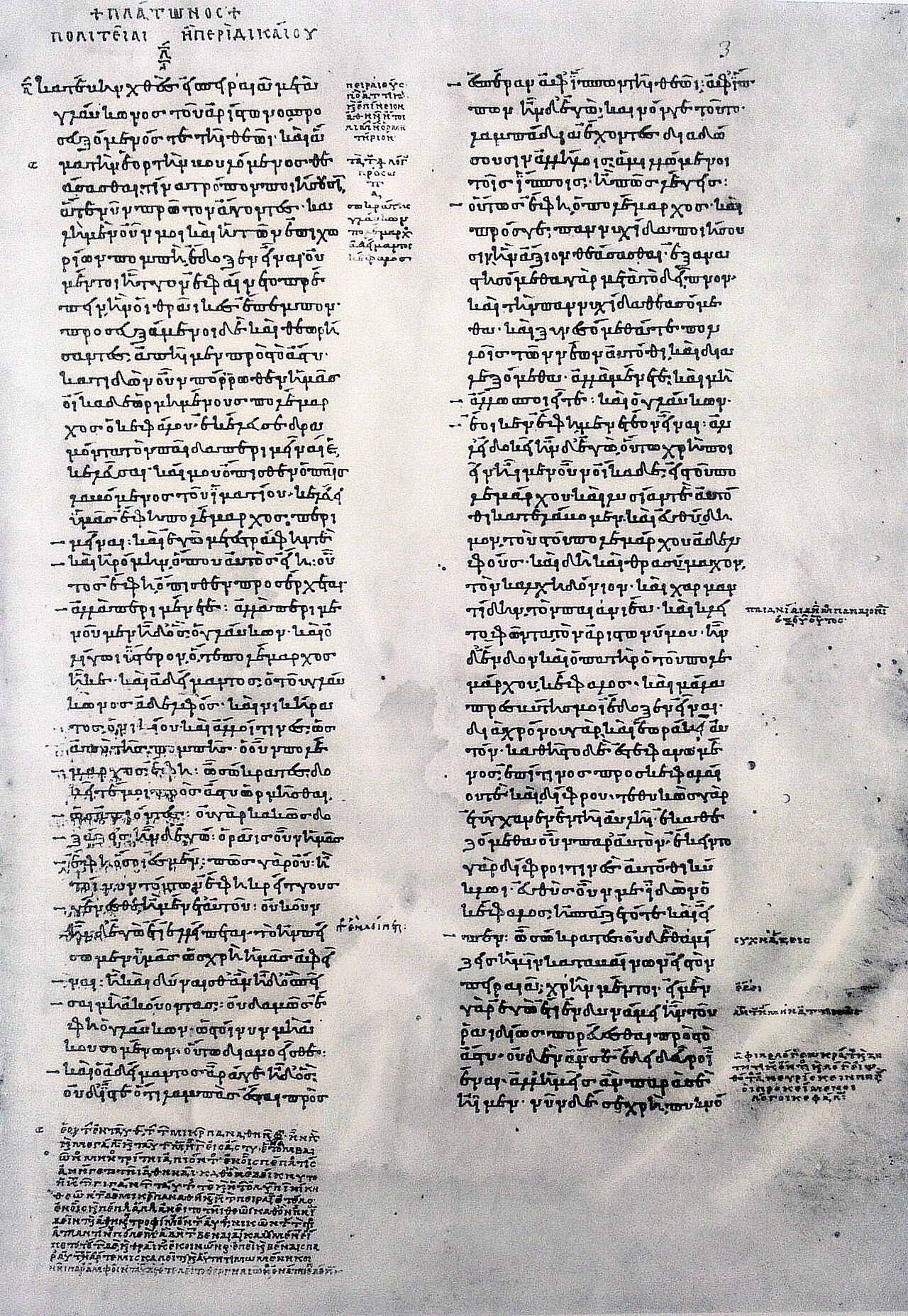 Book
Secondary source
The Republic
Plato · c. 375 BC
 Book
Primary source
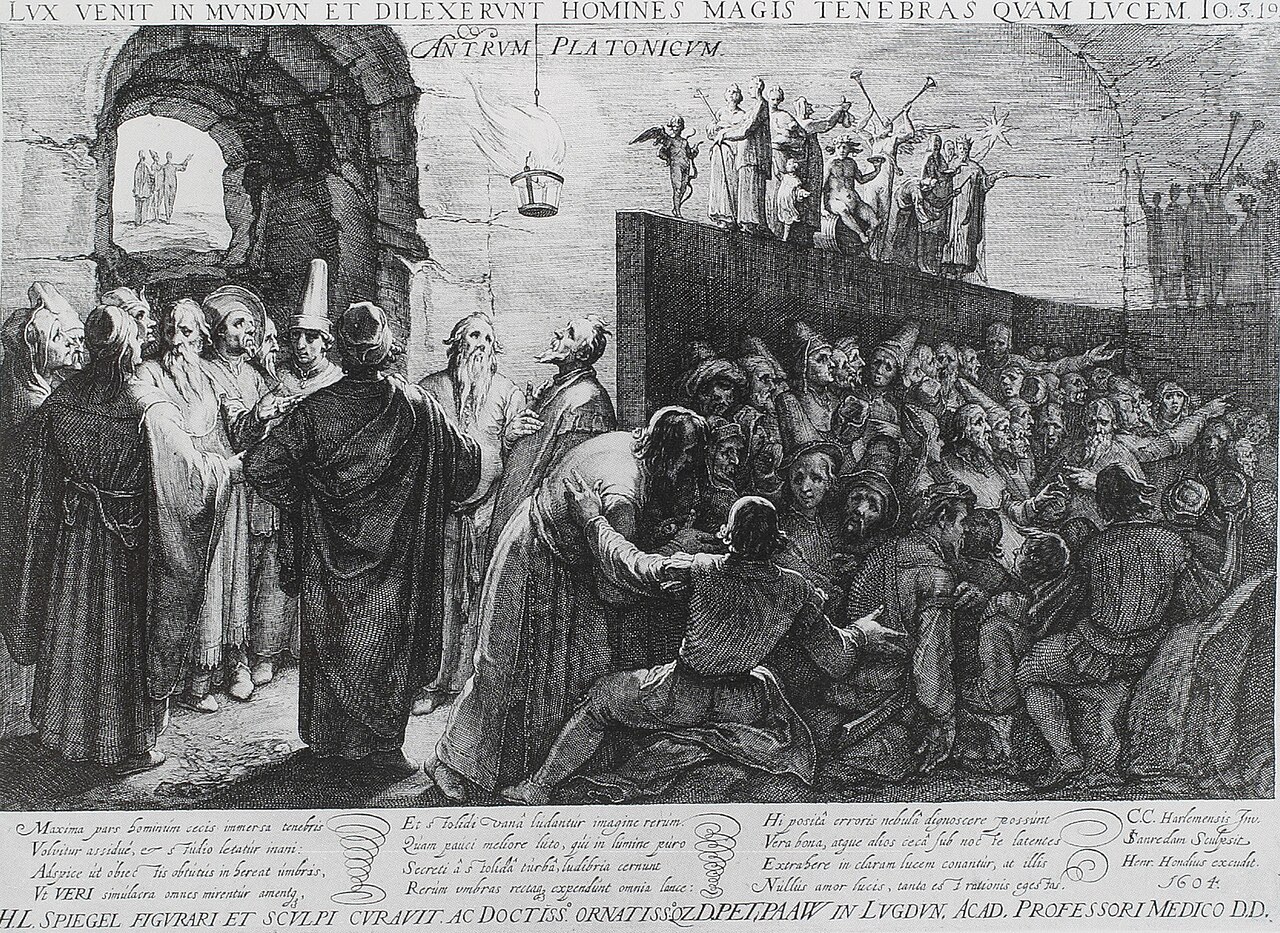
Allegory of the Cave
Plato · c. 400 BC
Secondary source
Apology
Plato · c. 395 BC
 Sculpture
Secondary source
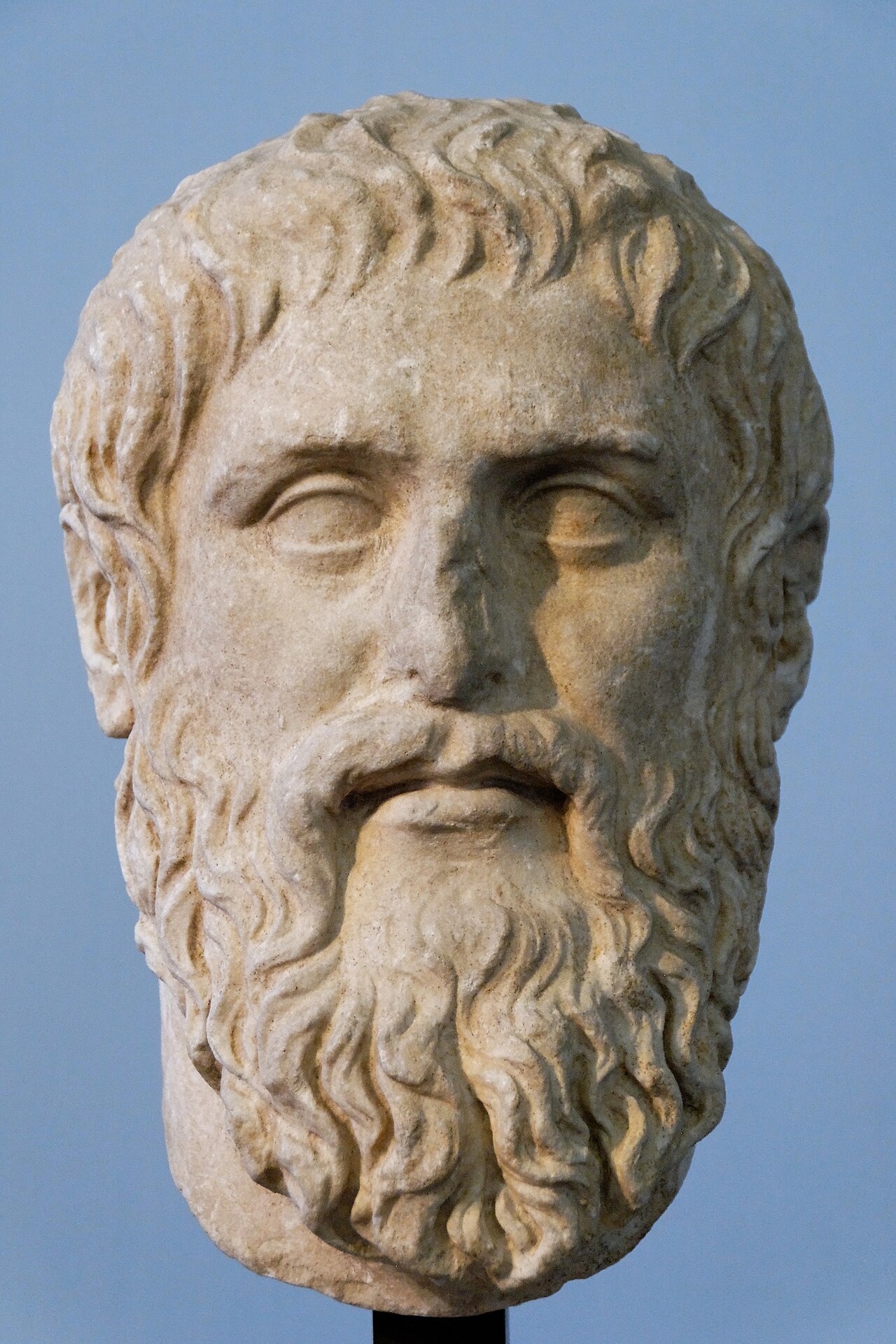
Portrait of Plato
Silanion (original type) · ca. 370 BC (original type); this copy Roman era
 Book
Secondary source
Phaedo
Plato · c. 360 BC
Ready when you are
Start chatting with Plato now.
20 messages free · No credit card · Available in 50+ languages.