


Secondary sourcePainting1692
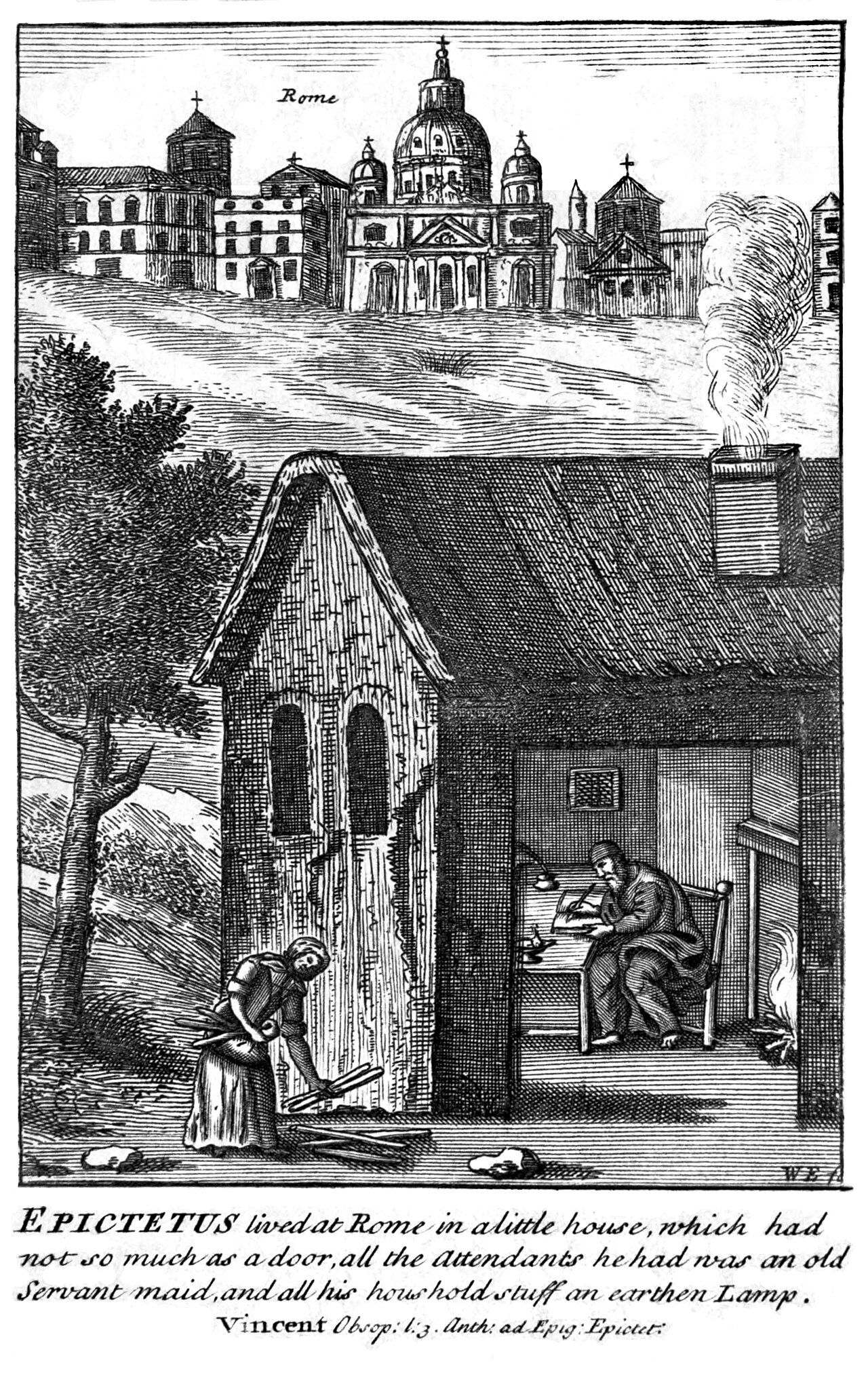
Frontispiece Portrait of Epictetus, The Morals of Epictetus
William Elder · 1692
An engraved 1692 frontispiece showing Epictetus's humble house in Rome, from Ellis Walker's English paraphrase of his works.
A later imagined portrait emphasizing Epictetus's famous humility and poverty in Rome.
About this source
What it is
This engraving by William Elder appeared as the frontispiece to Epicteti Enchiridion made English, a 1692 poetical paraphrase by Ellis Walker. It depicts a small stone house in Rome, a servant woman gathering sticks, and a bearded man writing by lamplight inside. A caption describes Epictetus's humble household, with only an old servant and an earthen lamp.
Why it matters
This image reflects how English readers of the late 1600s imagined Epictetus's poverty and simple life, reinforcing his reputation as a philosopher who valued virtue over possessions. It shows how his biography was retold to teach Stoic values to new readers.
Look closer
- What does the artist choose to show about Epictetus's daily life, and what might be left out?
- Why might the caption emphasize that his house 'had not so much as a door'?
- How does this image compare to how wealthy or powerful figures were usually portrayed?
This painting is part of the curated material that grounds the AI version of Epictetus on Humy.ai — when students ask about related events, the AI can quote it and cite it.
More Epictetus sources
Meet the AI Epictetus →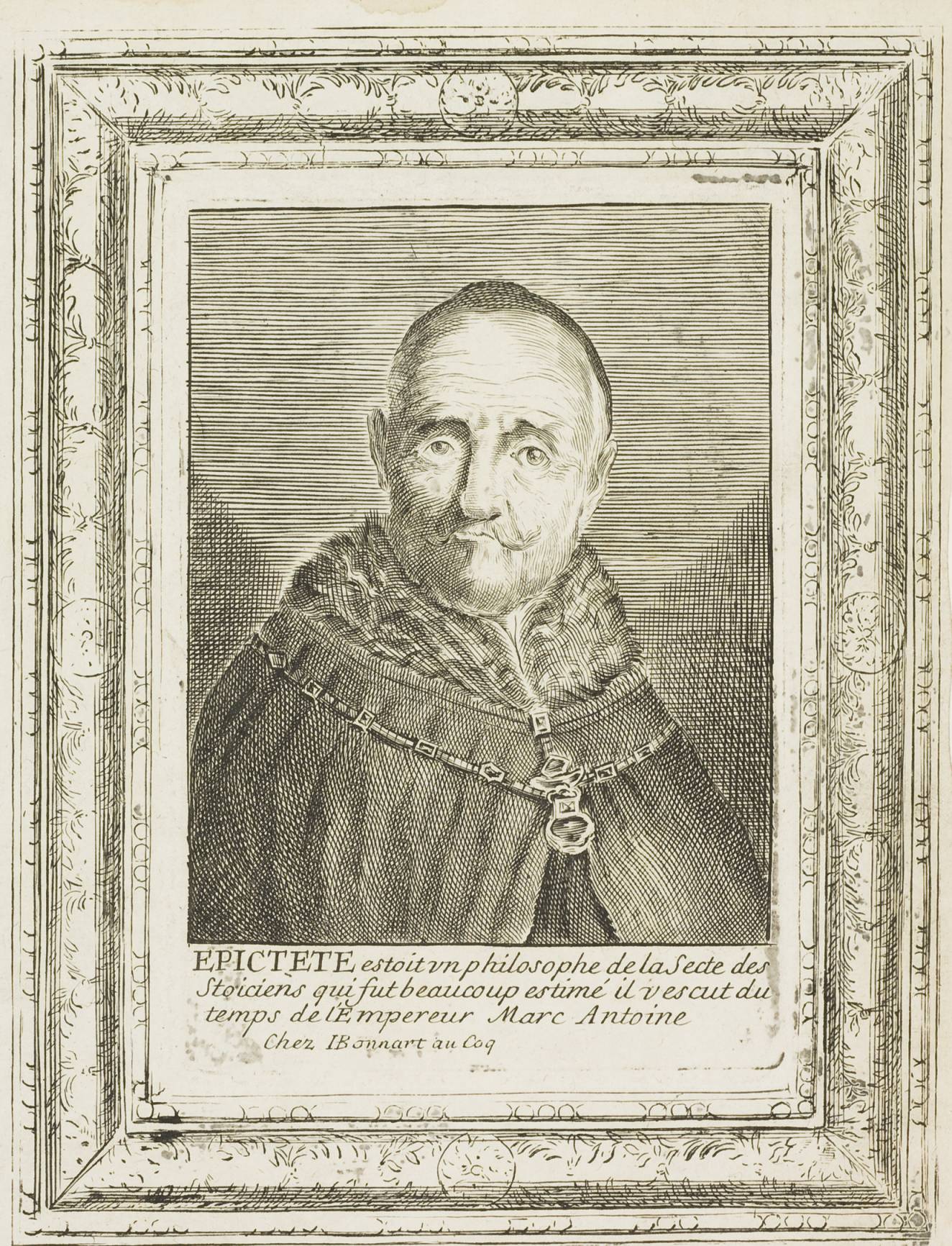 Painting
Secondary source
Epictete
Henri Bonnart · 17th century
 Book
Secondary source
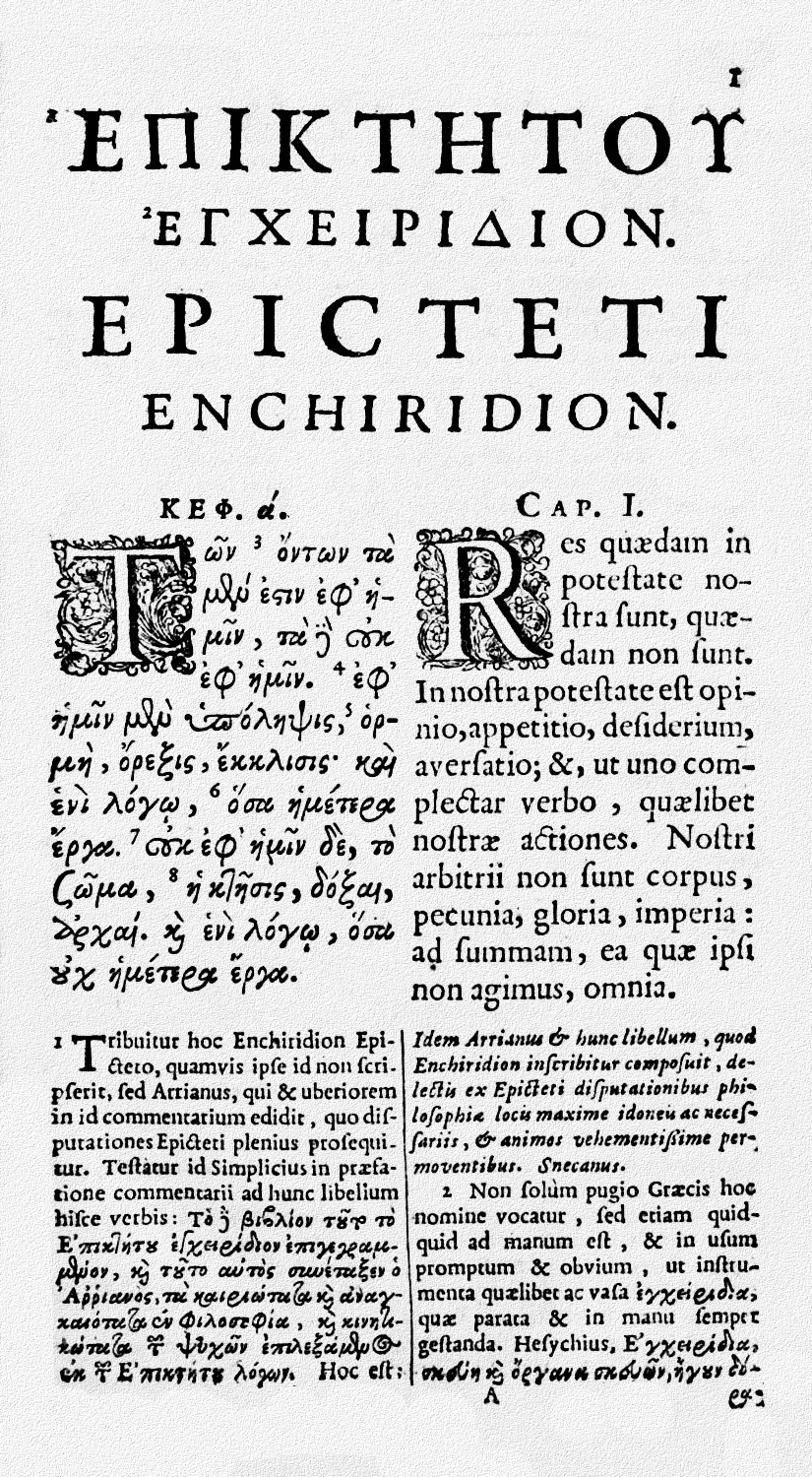
Enchiridion of Epictetus
Arrian · early 2nd century AD (this edition 1683)
 Book
Secondary source
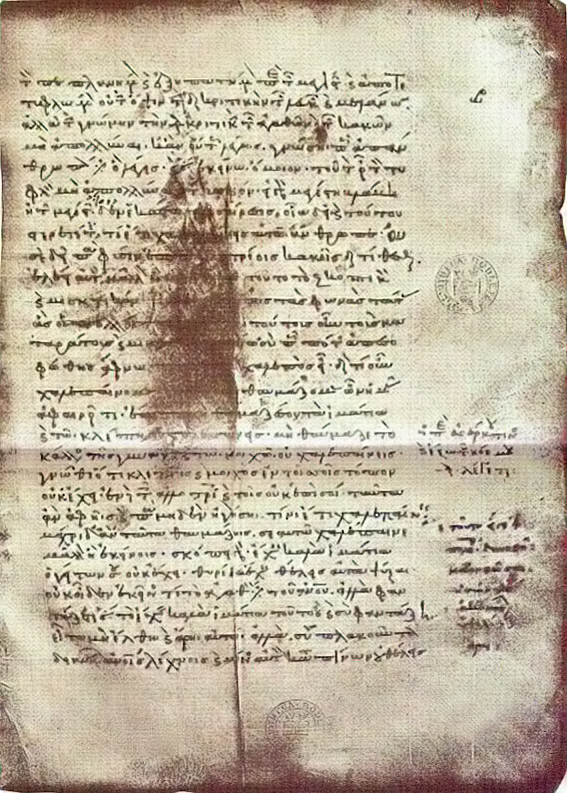
Discourses of Epictetus
Arrian · c. 108 AD
 Painting
Secondary source
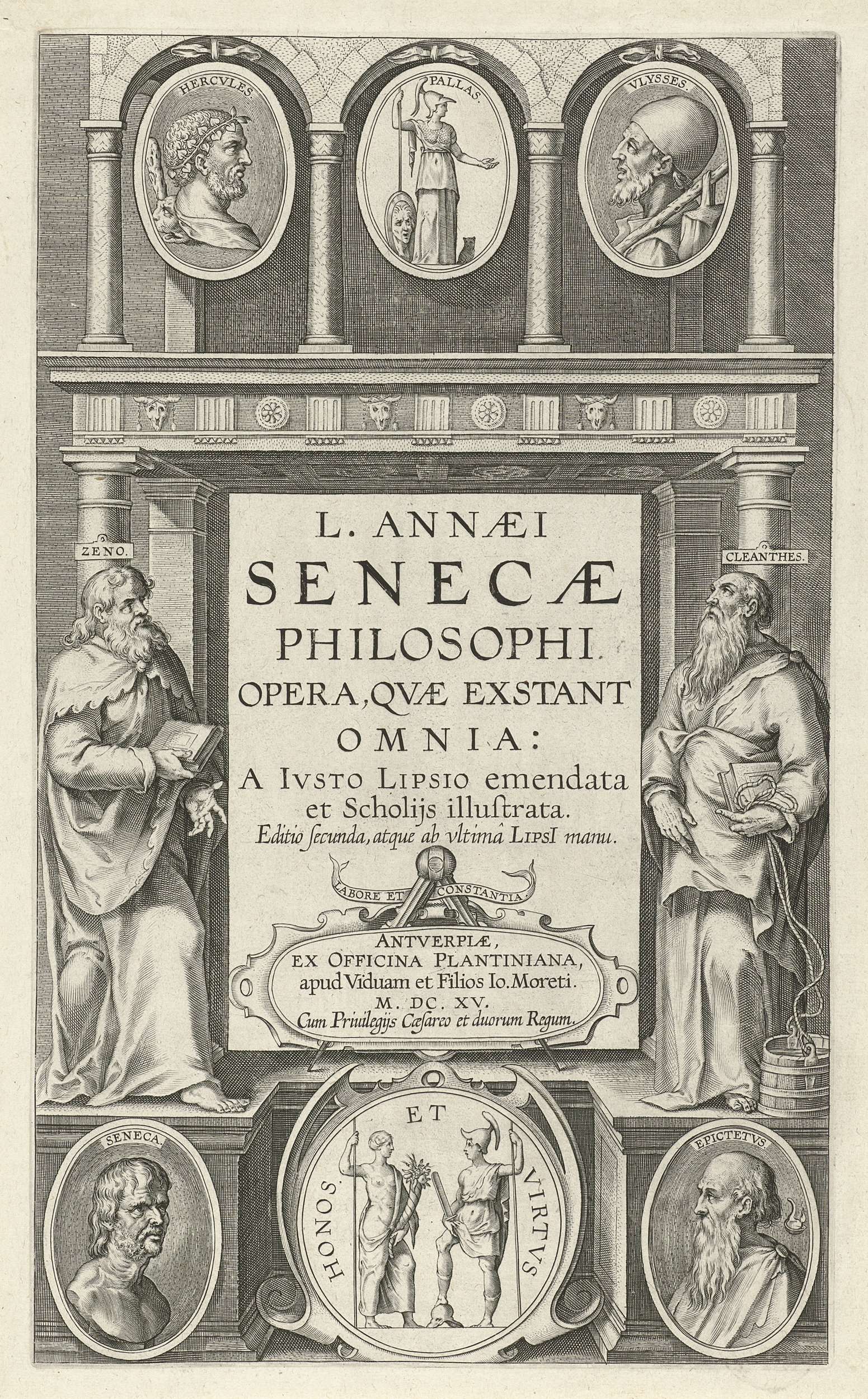
Title Page of L. Annaei Senecae Philosophi Opera
1615
DocumentSecondary source
Codex Bodleianus
c. 11th-12th century
Ready when you are
Start chatting with Epictetus now.
20 messages free · No credit card · Available in 50+ languages.