


Secondary sourcePainting1635
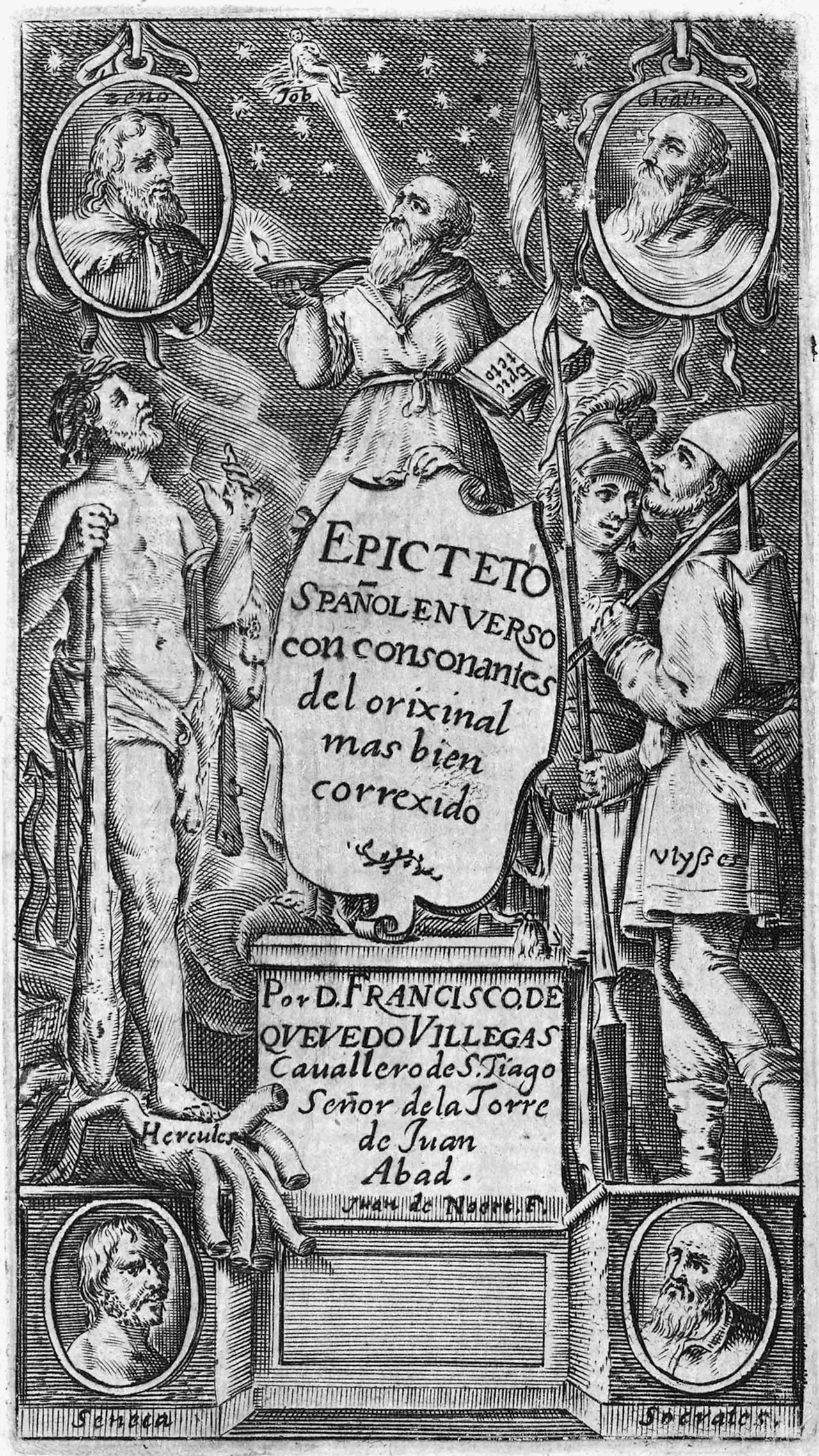
Frontispiece to Quevedo's Epicteto y Phocilides
Johan de Noort · 1635
A 1635 Spanish engraving placing Epictetus among Zeno, Cleanthes, Seneca and Socrates, from Quevedo's translation of his works.
Shows Epictetus honored alongside major Stoic and classical philosophers in a Spanish translation of his works.
About this source
What it is
Engraved by Johan de Noort for Francisco de Quevedo's 1635 Spanish edition Epicteto, y Phocilides, this frontispiece shows Epictetus at the top center holding a lamp and book beneath stars. Four medallions show Zeno, Cleanthes, Seneca and Socrates, while Hercules and Ulysses stand as supporting figures, and the biblical Job appears above.
Why it matters
Placing Epictetus alongside famous Greek and Roman philosophers and a biblical figure shows how he was honored as part of a long tradition of wisdom literature in early modern Spain. It reveals how Stoic philosophy was blended with classical mythology and Christian imagery for readers of the time.
Look closer
- Why might the artist combine pagan philosophers with the biblical figure of Job?
- What do Hercules and Ulysses, as supporting figures, suggest about the qualities associated with philosophy?
- What does placing Epictetus at the top center suggest about his standing among the other thinkers shown?
This painting is part of the curated material that grounds the AI version of Epictetus on Humy.ai — when students ask about related events, the AI can quote it and cite it.
More Epictetus sources
Meet the AI Epictetus →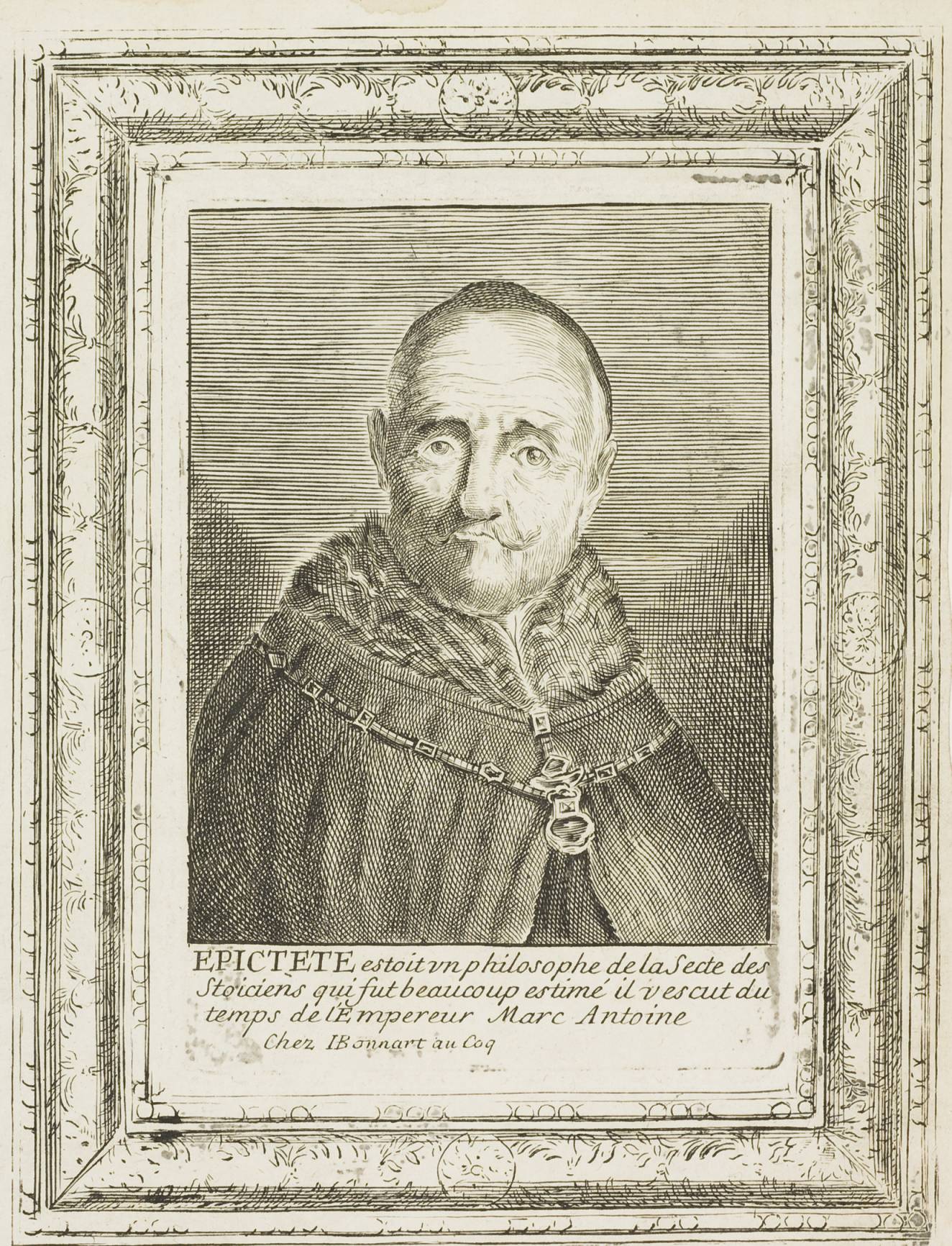 Painting
Secondary source
Epictete
Henri Bonnart · 17th century
 Book
Secondary source
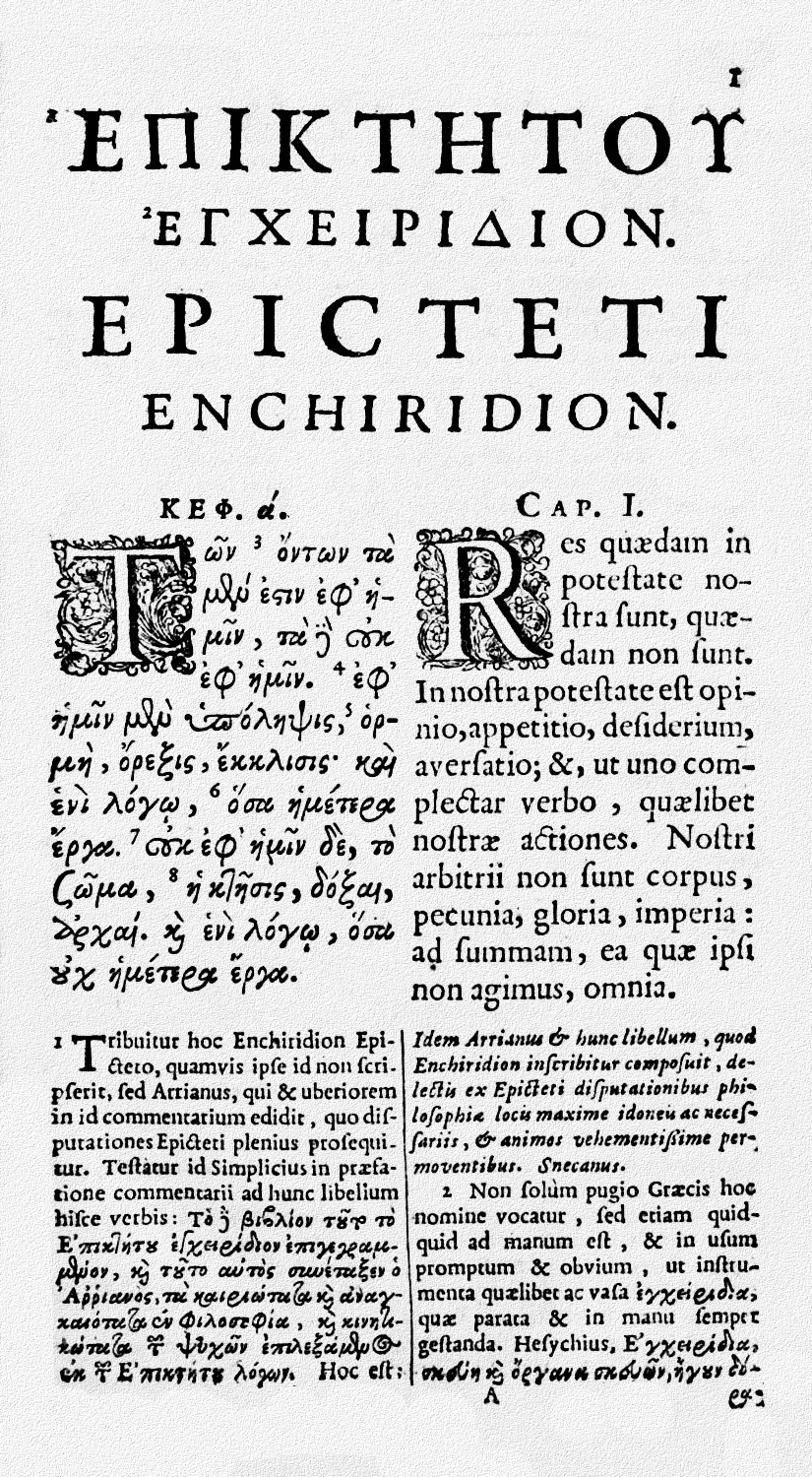
Enchiridion of Epictetus
Arrian · early 2nd century AD (this edition 1683)
 Book
Secondary source
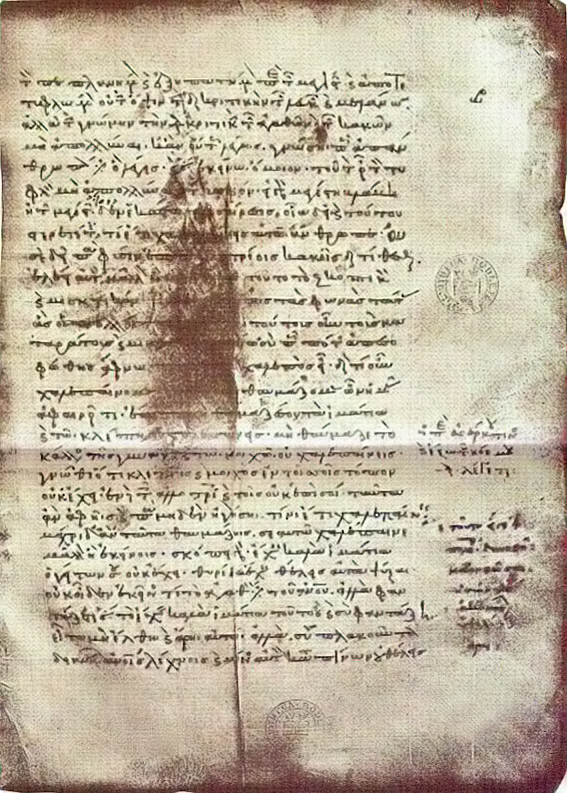
Discourses of Epictetus
Arrian · c. 108 AD
 Painting
Secondary source
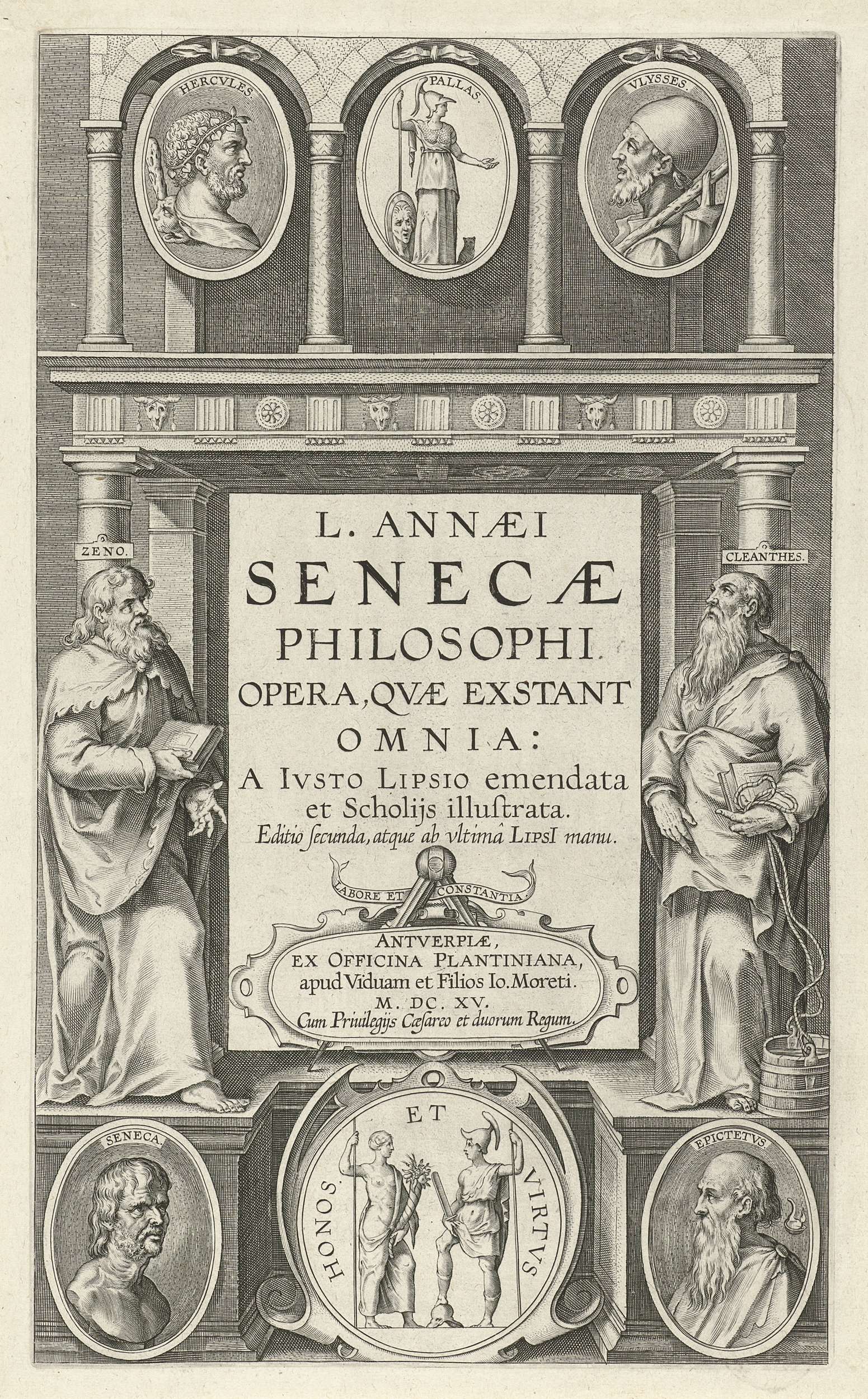
Title Page of L. Annaei Senecae Philosophi Opera
1615
DocumentSecondary source
Codex Bodleianus
c. 11th-12th century
Ready when you are
Start chatting with Epictetus now.
20 messages free · No credit card · Available in 50+ languages.