


Secondary sourcePhotograph24 March 2019
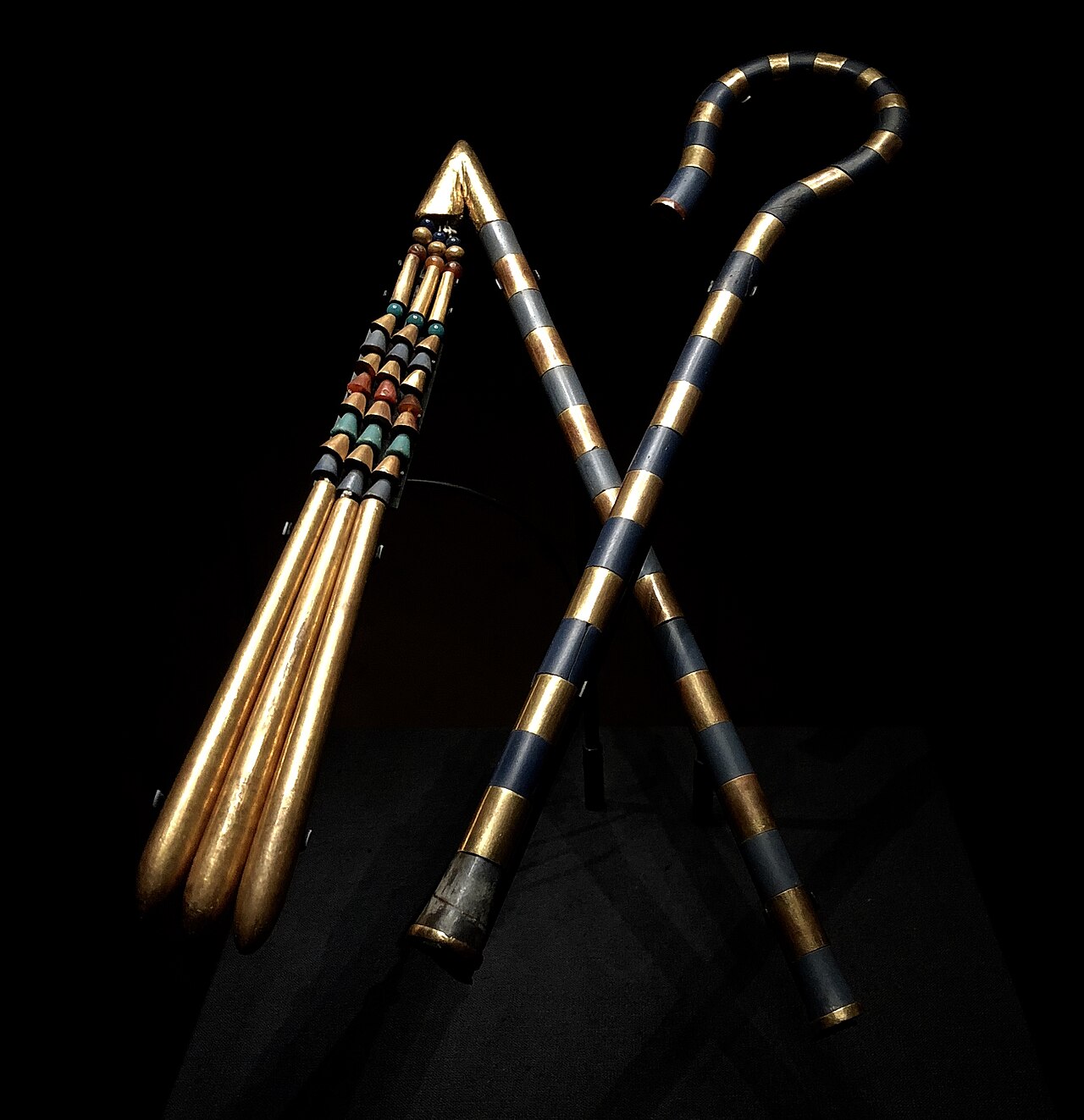
Gilded Flail and Crook of Tutankhamun
Yann Caradec · 24 March 2019
A photograph of the gilded flail and crook, royal regalia found in Tutankhamun's tomb that symbolised his kingship.
The flail and crook were royal regalia buried with Tutankhamun to symbolise his power as pharaoh.
About this source
What it is
This photograph, taken in 2019, shows two gilded objects: a flail with a bundle of golden rods strung with coloured beads, and a crook-shaped staff with a curled top. Both are banded in gold and dark blue and were found among the treasures of Tutankhamun's tomb.
Why it matters
The crook and flail were traditional symbols of Egyptian kingship, representing a pharaoh's role as ruler and protector of his people. Finding these objects in Tutankhamun's tomb shows how Egyptian rulers were buried with items that proclaimed their royal authority even in the afterlife.
Look closer
- Why do you think a pharaoh would want these symbols buried with him rather than left with the living ruler?
- What do the materials used — gold, beads, lapis-coloured bands — suggest about their importance?
- What does this object tell us about Egyptian beliefs about death and the afterlife?
This photograph is part of the curated material that grounds the AI version of Tutankhamun on Humy.ai — when students ask about related events, the AI can quote it and cite it.
More Tutankhamun sources
Meet the AI Tutankhamun →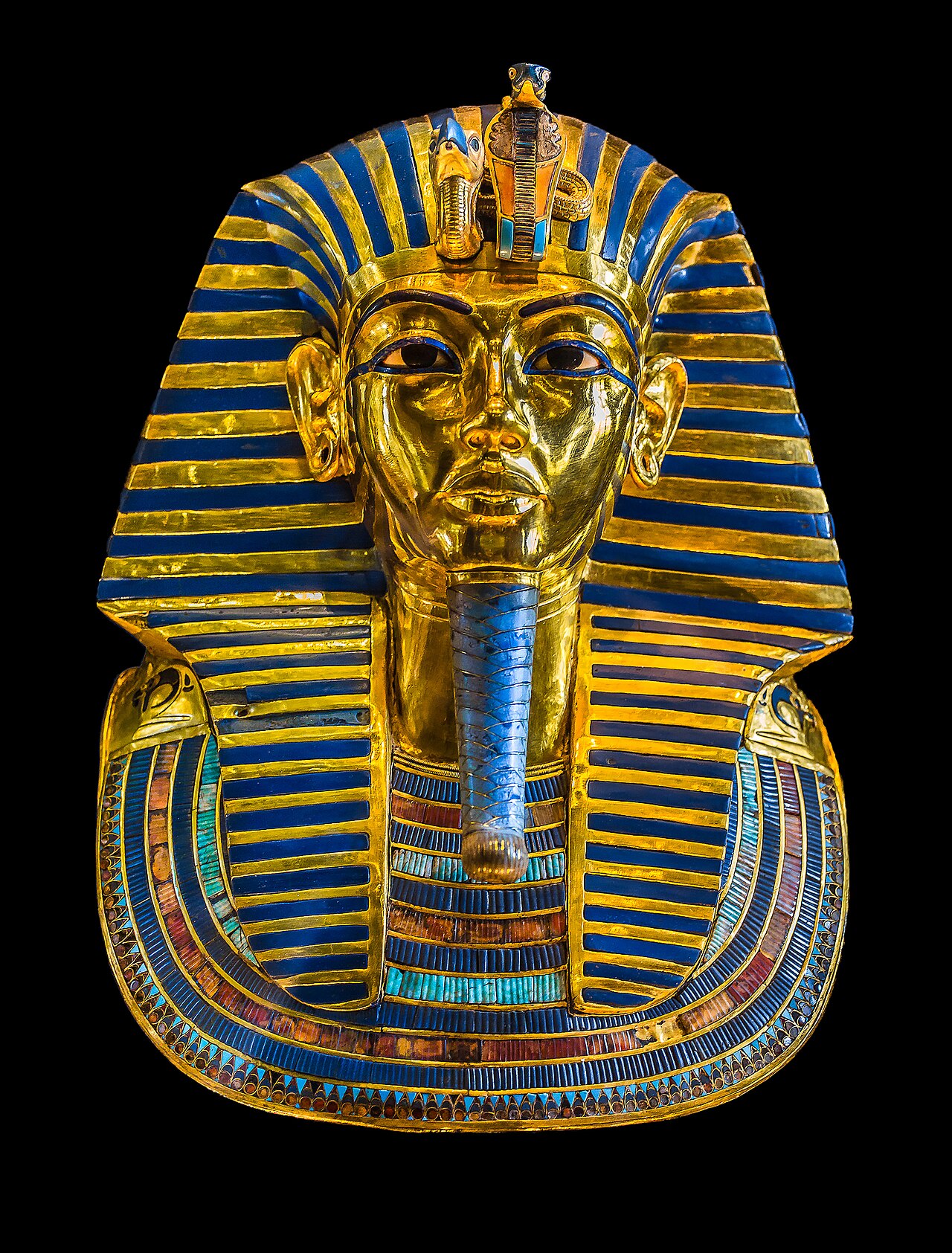 Artifact
Primary source
Mask of Tutankhamun
c. 1333 BCE
 Photograph
Primary source
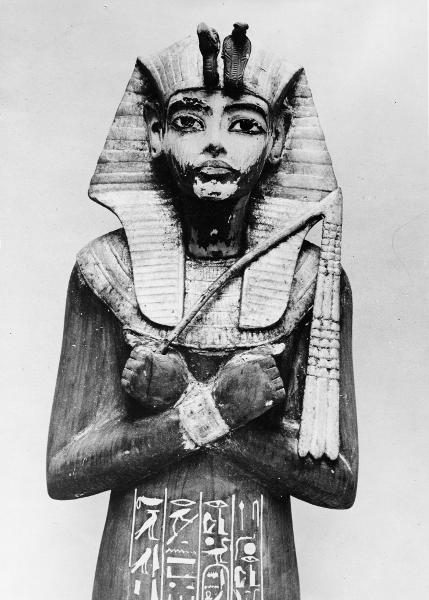
Photograph of Tutankhamun's Shawabti Figure
Harry Burton · 1920s
 Artifact
Primary source
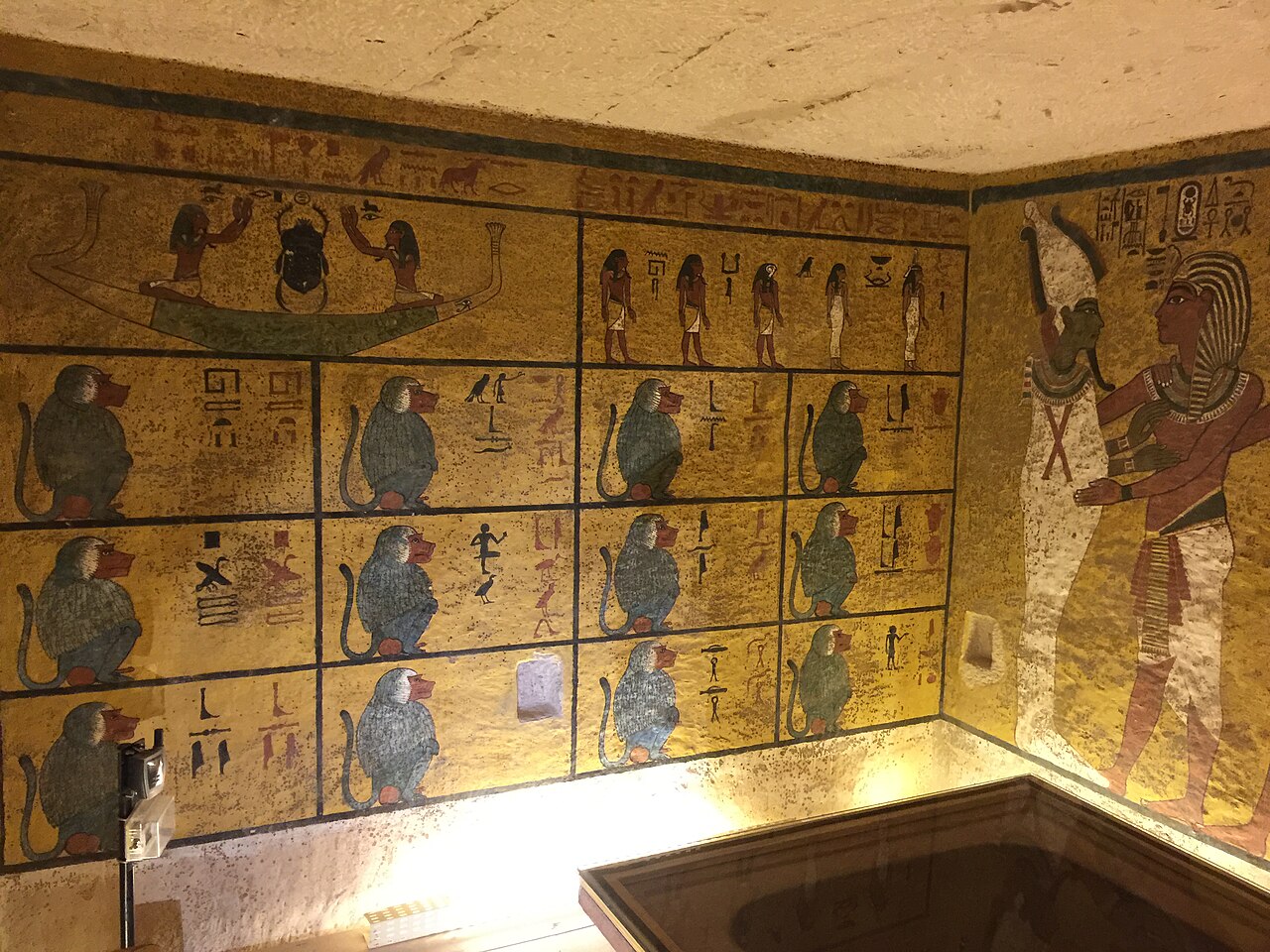
Tomb of Tutankhamun
14th century BCE
 Photograph
Primary source
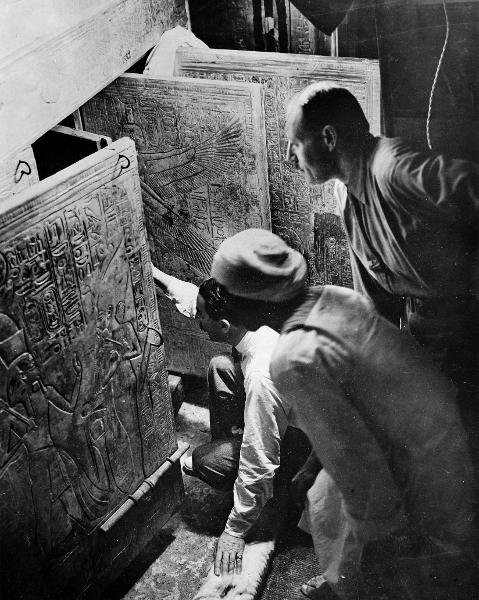
Opening the Doors of the Fourth Shrine in Tutankhamun's Tomb
Harry Burton · 1920s
 Document
Primary source
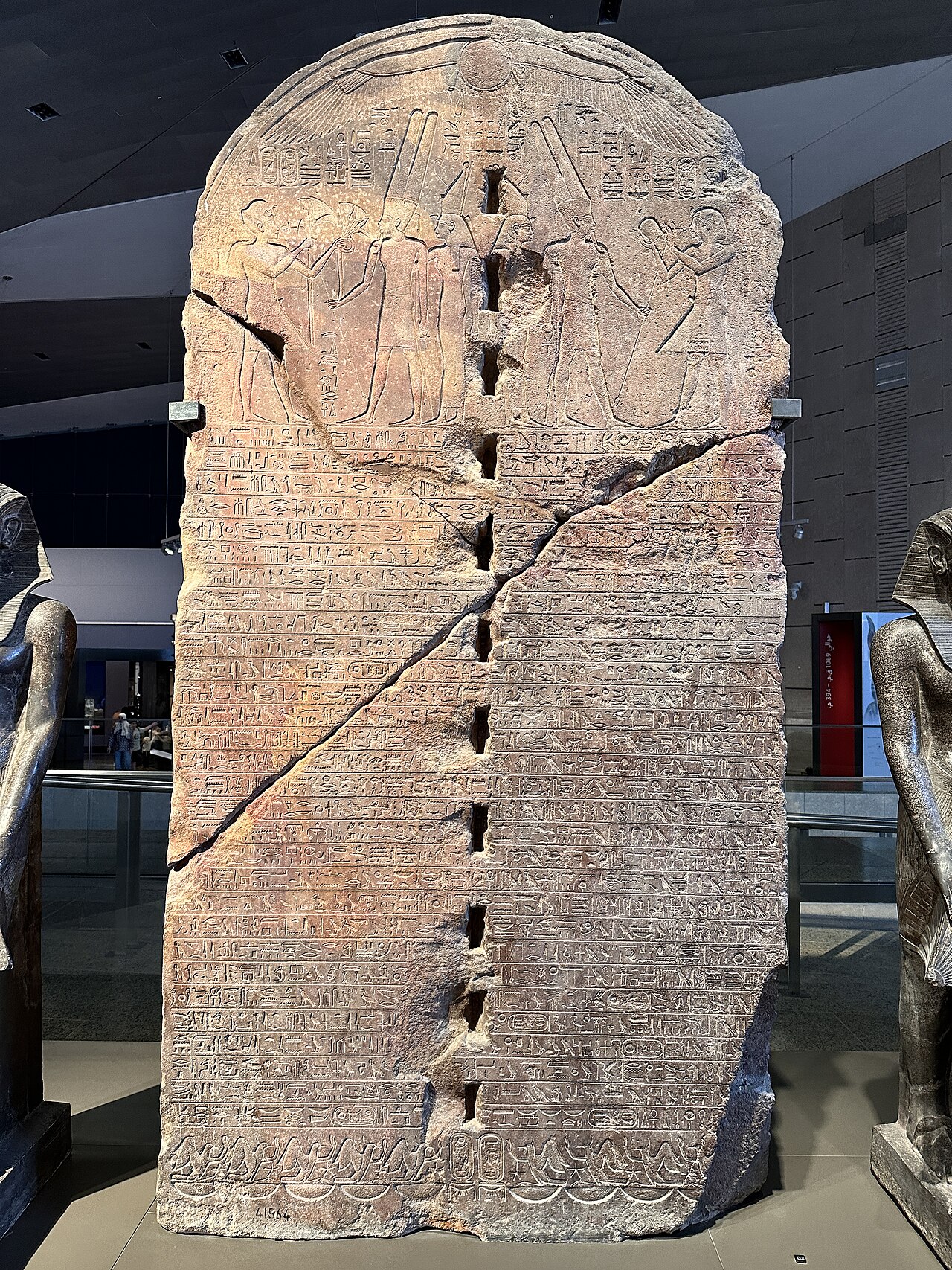
Restoration Stela
Tutankhamun · c. 1326 BCE
Ready when you are
Start chatting with Tutankhamun now.
20 messages free · No credit card · Available in 50+ languages.