


Secondary sourceArtifact1881
Grave of Fyodor Dostoevsky
1881
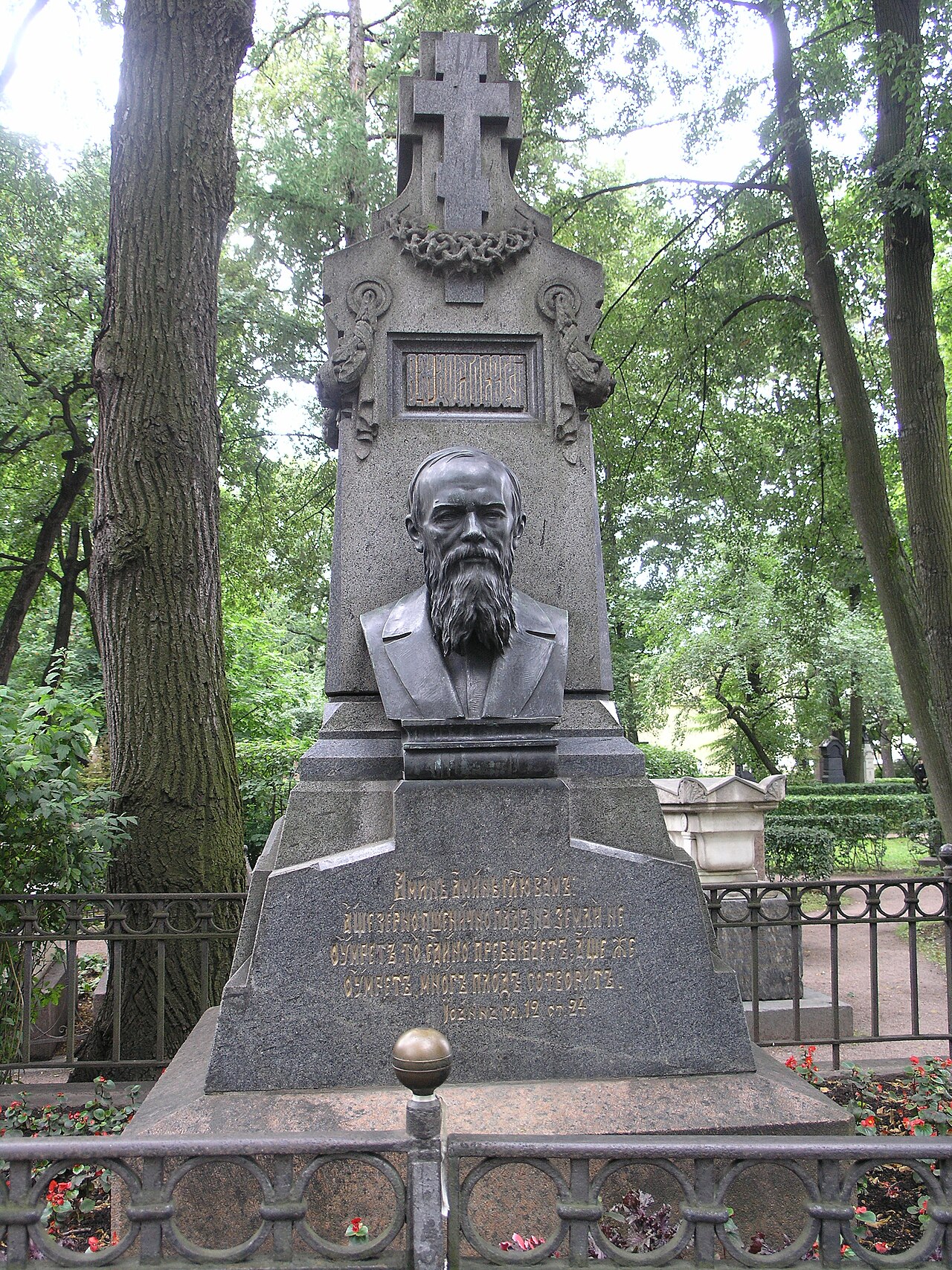
The grave of Fyodor Dostoevsky in the Tikhvin Cemetery of the Alexander Nevsky Lavra in Saint Petersburg, topped by a cross and a bronze bust of the writer.
This monument marks Dostoevsky's grave, showing how he was honoured after his death in 1881 and why he is remembered in his archive.
About this source
What it is
This is the grave monument of Fyodor Dostoevsky, the Russian novelist and philosopher who died in 1881. It stands in the Tikhvin Cemetery of the Alexander Nevsky Lavra in Saint Petersburg. The monument was erected soon after his death, and its opening drew huge crowds. The photograph shows a dark granite monument topped by a cross, with a bronze bust of a bearded man in a jacket on its front, a carved inscription panel below, and an iron railing in a shaded green park setting.
Why it matters
A grave shows how a society chooses to remember a person. The size of the crowds at Dostoevsky's burial suggests how widely his novels were read and how much he mattered to readers in his own time. The monument is a later memorial, not something Dostoevsky made himself, so it tells us about the people who honoured him as much as about the man himself.
Look closer
- What details of the monument, such as the cross, the bust and the inscription, seem chosen to show who Dostoevsky was?
- Who would have paid for and approved a monument like this, and what might they have wanted people to remember?
- What does a photograph of a grave leave out about the writer's life and the way he was treated while alive?
This artifact is part of the curated material that grounds the AI version of Fyodor Dostoevsky on Humy.ai — when students ask about related events, the AI can quote it and cite it.
More Fyodor Dostoevsky sources
Meet the AI Fyodor Dostoevsky →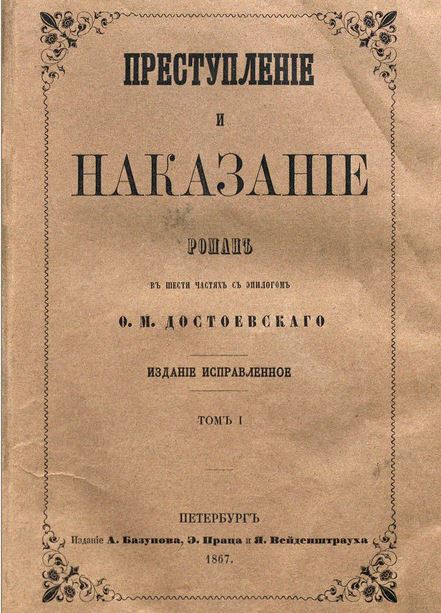 Book
Primary source
Crime and Punishment
Fyodor Dostoyevsky · 1866
 Book
Primary source
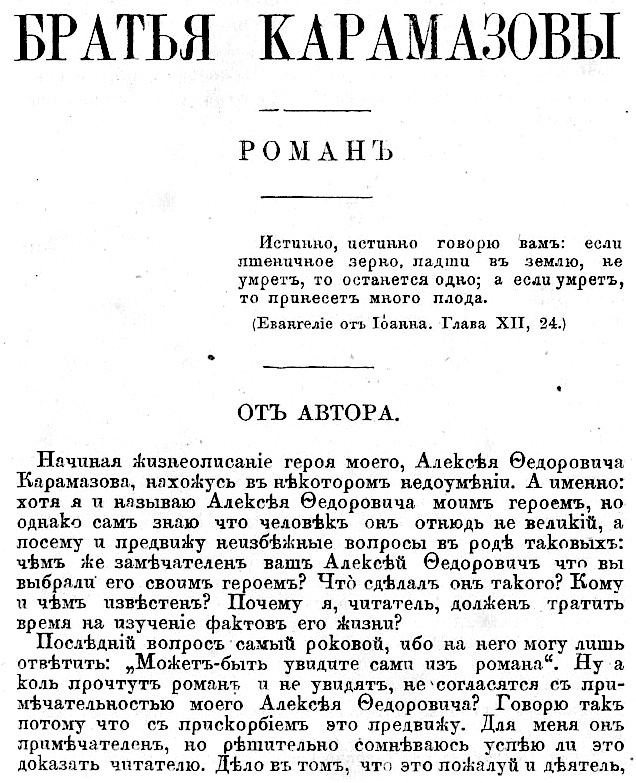
The Brothers Karamazov
Fyodor Dostoyevsky · 1879-1880
Primary source
The Grand Inquisitor
Fyodor Dostoyevsky · 1879
 Book
Primary source
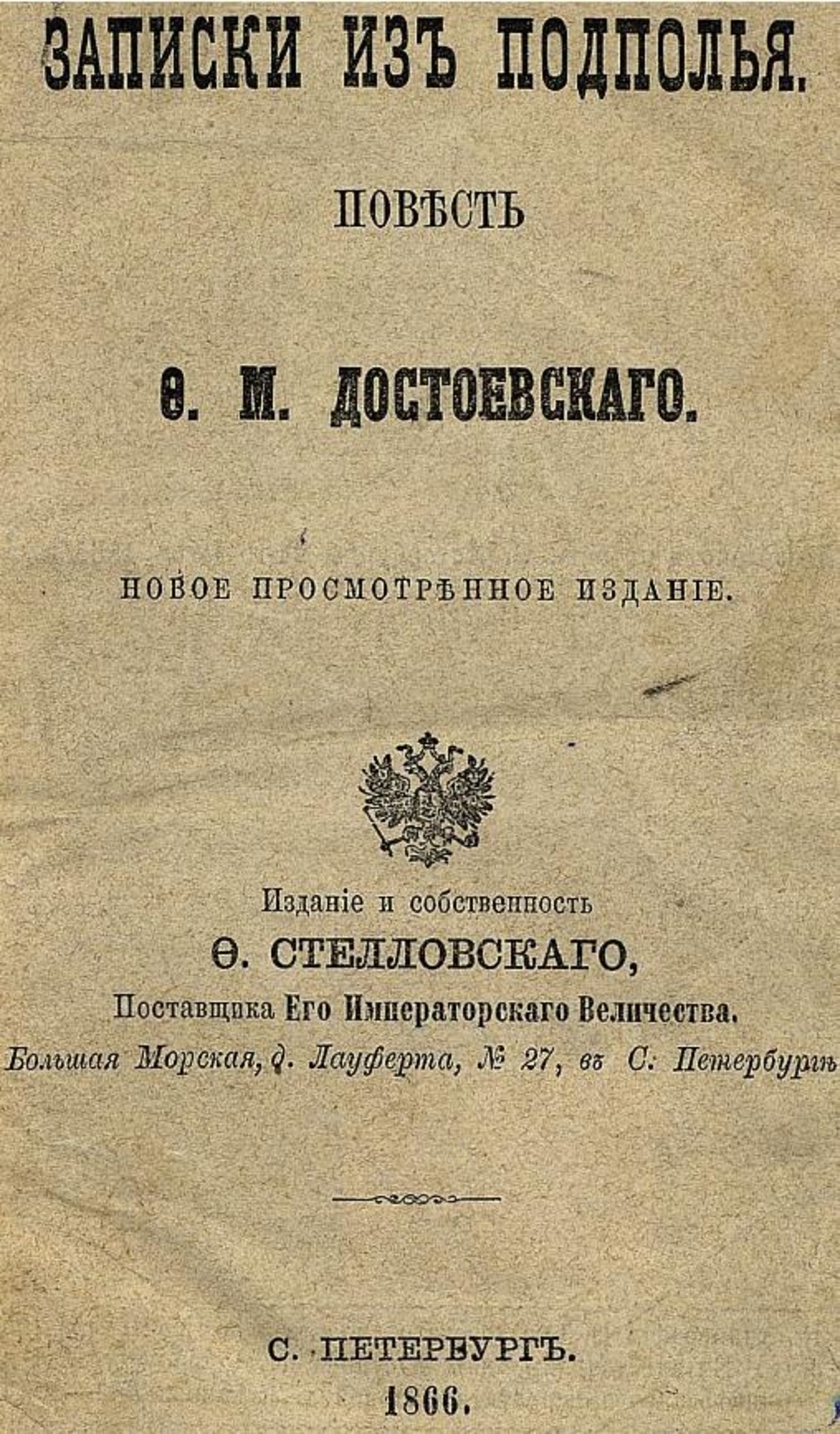
Notes from Underground
Fyodor Dostoyevsky · 1864
 Book
Primary source
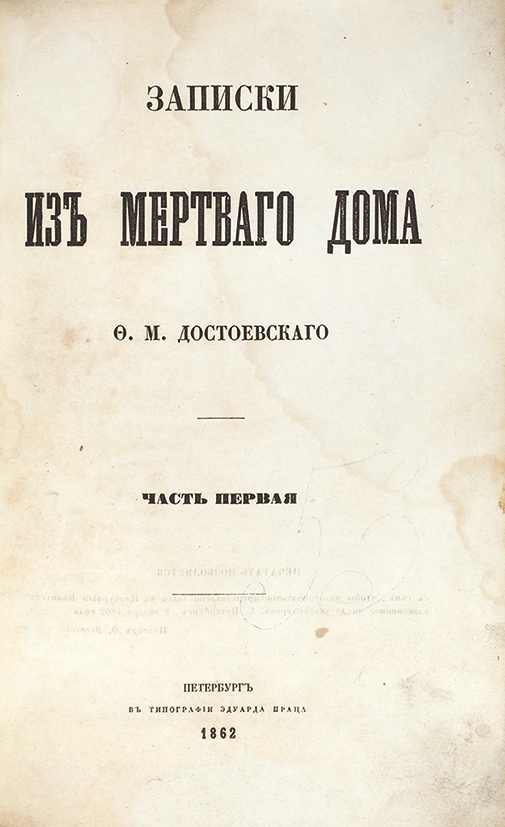
The House of the Dead
Fyodor Dostoyevsky · 1860-1862
Ready when you are
Start chatting with Fyodor Dostoevsky now.
20 messages free · No credit card · Available in 50+ languages.