


Secondary sourceSculpture
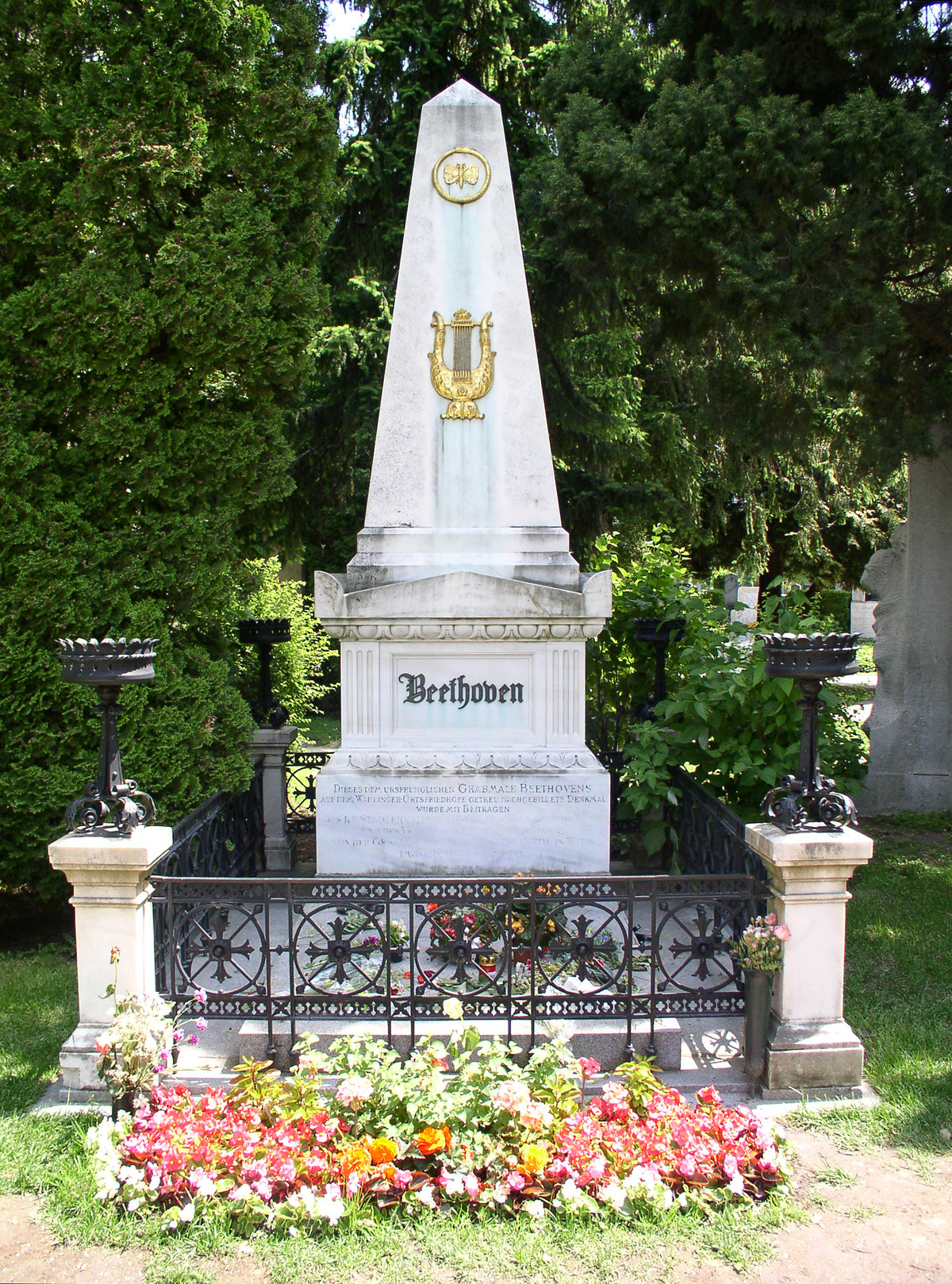
Grave of Ludwig van Beethoven
Beethoven's honorary grave monument in Vienna's Zentralfriedhof, moved there in 1888, marking his status as a celebrated public figure.
This monument marks Beethoven's honorary grave, reflecting his status as a celebrated civic hero after death.
About this source
What it is
This is a photograph of Beethoven's grave, a white marble obelisk decorated with a gold lyre and wreath, inscribed with his name, standing behind an ornate iron railing in Vienna's Zentralfriedhof cemetery.
Why it matters
This honorary grave copies the design of Beethoven's original tomb and was created when his remains were moved from Währing cemetery in 1888. It reflects the way Beethoven's reputation grew after his death, as Vienna honored him as a civic hero and a symbol of musical greatness worth preserving and celebrating.
Look closer
- What do the lyre and wreath symbols on the gravestone suggest about how Beethoven was remembered?
- Why might a city choose to move and rebuild a famous person's grave decades after their death?
- What does a grave monument tell us about a person's legacy rather than their actual life?
This sculpture is part of the curated material that grounds the AI version of Ludwig van Beethoven on Humy.ai — when students ask about related events, the AI can quote it and cite it.
More Ludwig van Beethoven sources
Meet the AI Ludwig van Beethoven →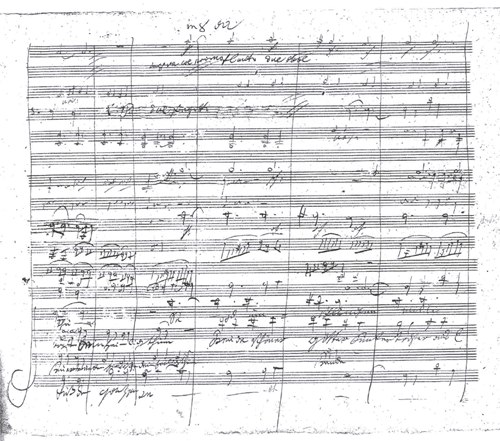 Document
Primary source
Symphony No. 9
Ludwig van Beethoven · 1824
 Sculpture
Secondary source
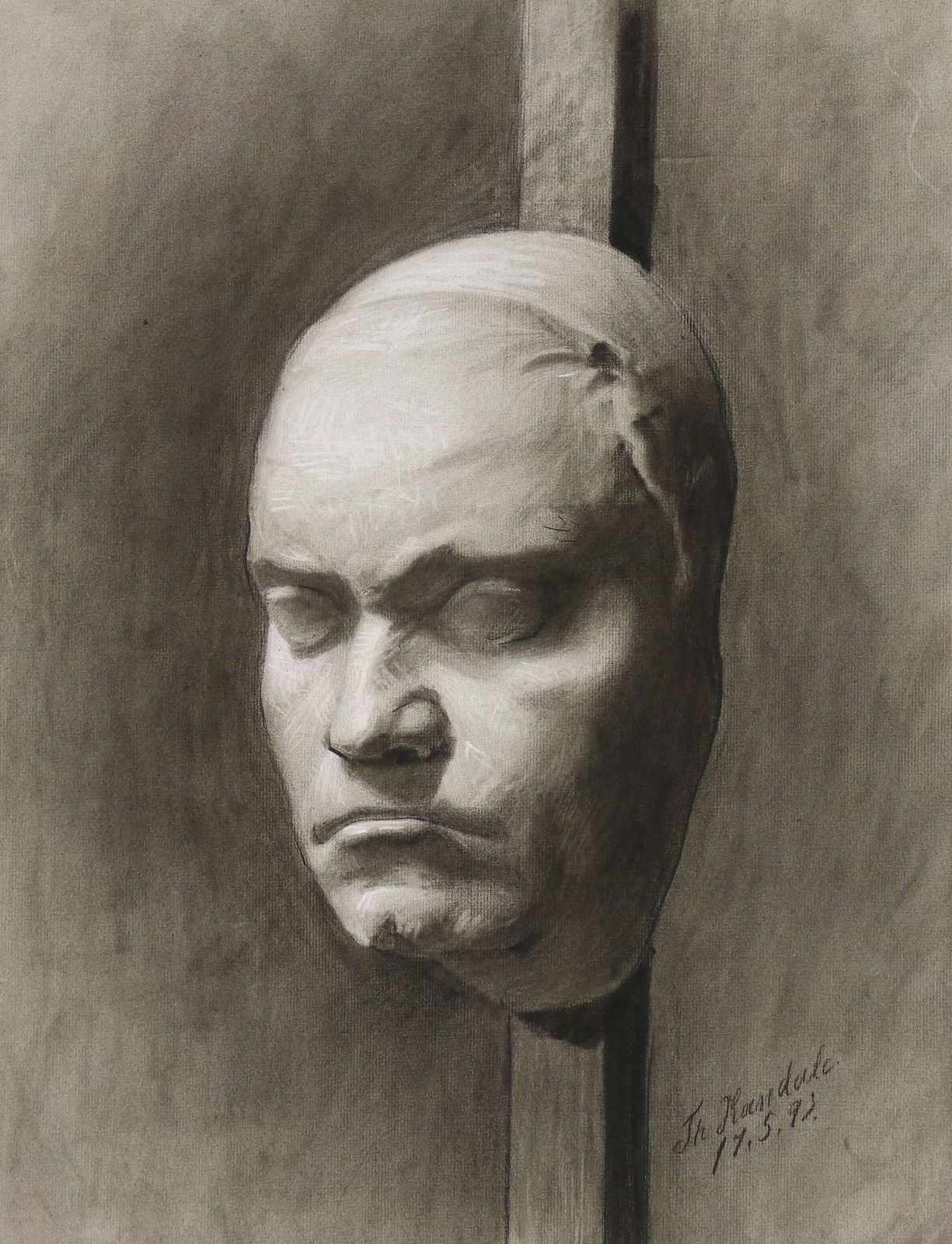
Death of Ludwig van Beethoven
Theodor Kandale (after Josef Danhauser) · 1827 (mask); drawing 1893
 Sculpture
Secondary source
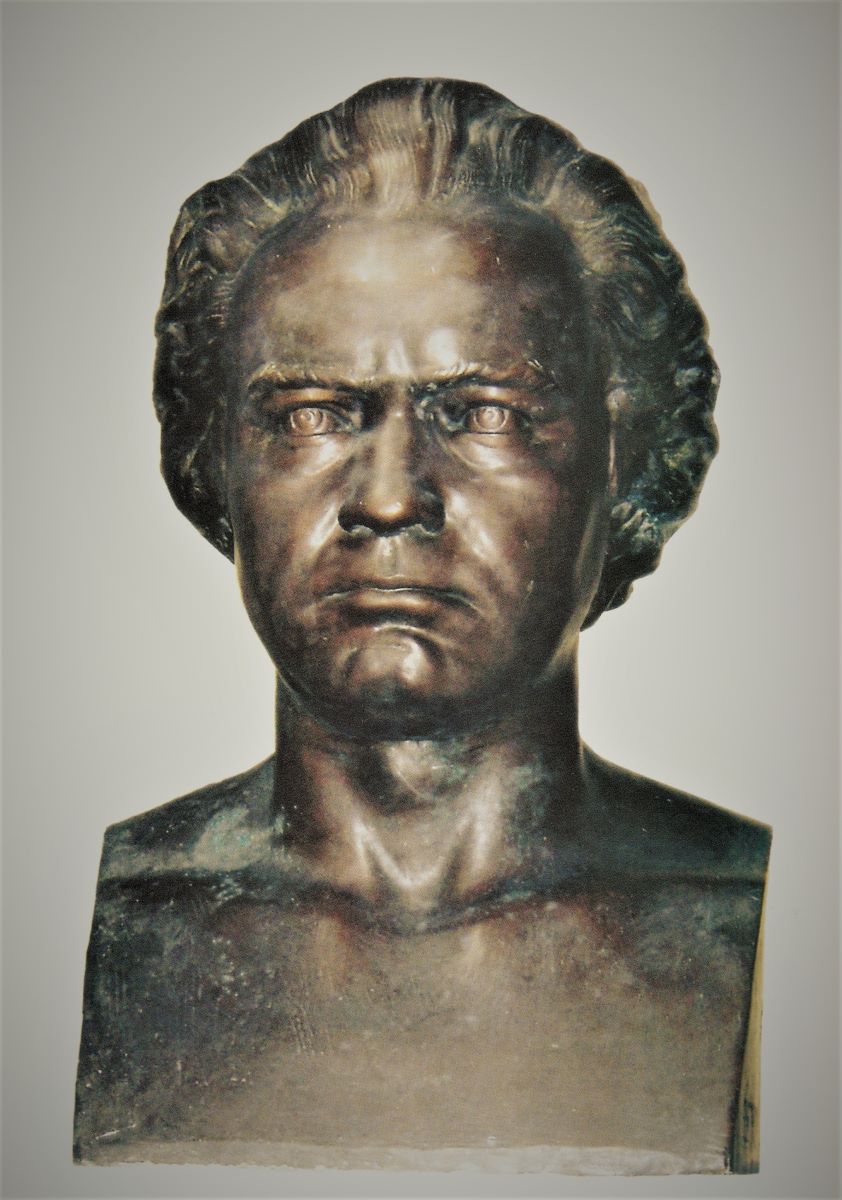
Bust of Ludwig van Beethoven by Frederic Storck
Frederic Storck · 1930
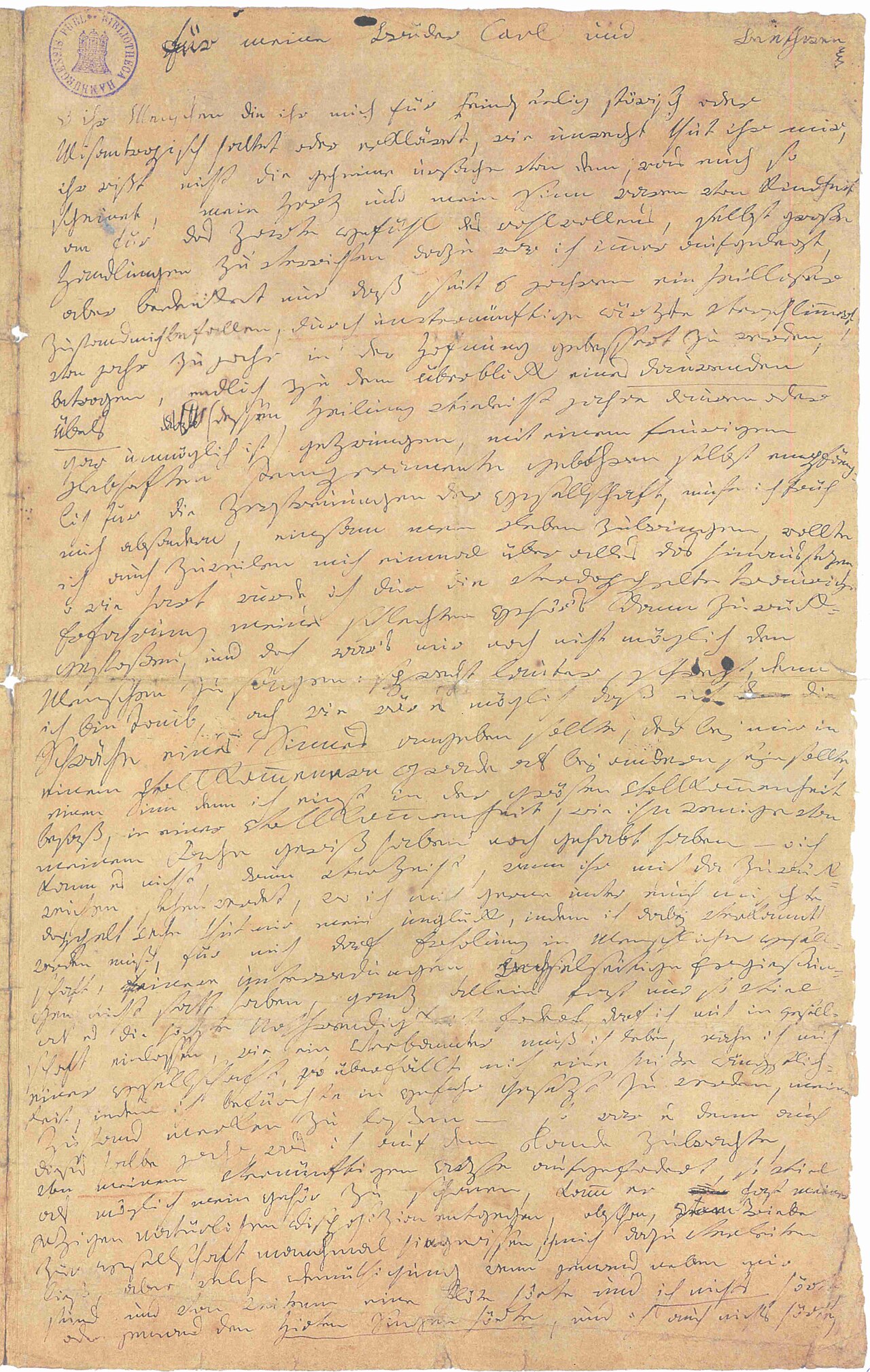 Letter
Primary source
Heiligenstadt Testament
Ludwig van Beethoven · 6 October 1802
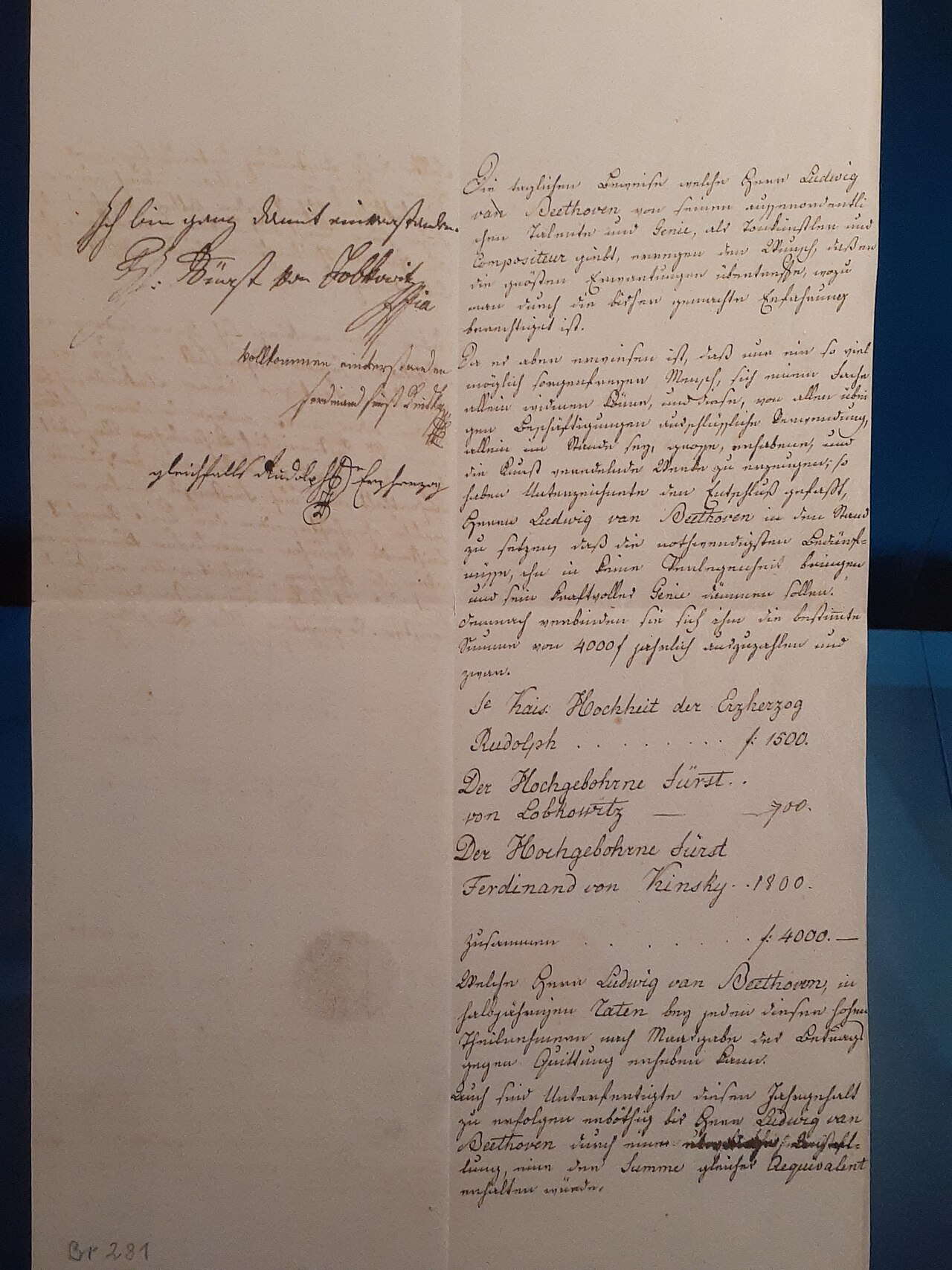 Document
Primary source
Agreement between Beethoven and Archduke Rudolph, Prince Kinsky and Prince Lobkowitz
1 March 1809
Ready when you are
Start chatting with Ludwig van Beethoven now.
20 messages free · No credit card · Available in 50+ languages.