


Primary sourceArtifact1827
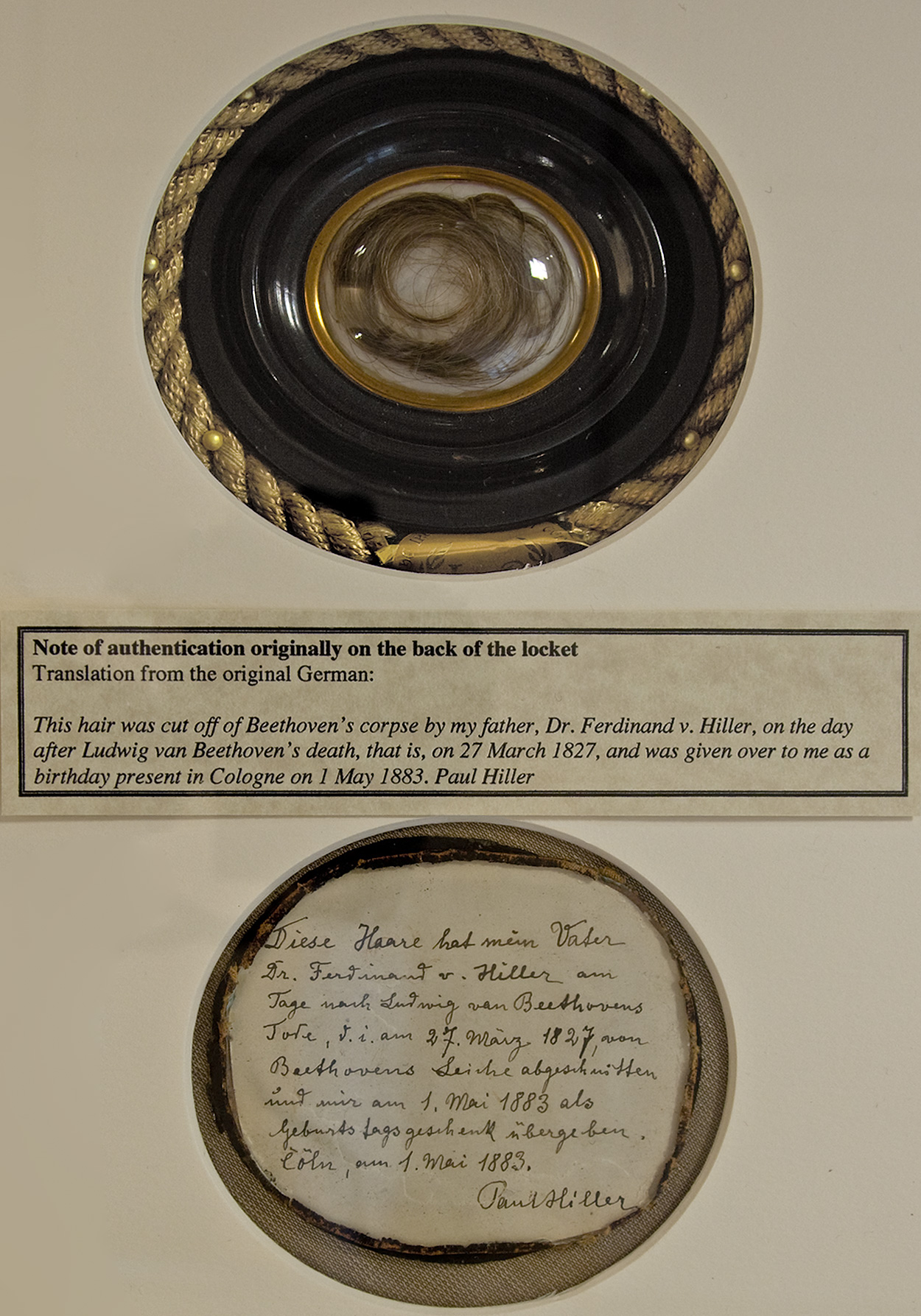
Guevara Lock
1827
A lock of Beethoven's hair, cut from his body after his death in 1827, later studied to investigate his illnesses.
A physical remnant of Beethoven's body, later used by scientists to study his illnesses.
About this source
What it is
This is a lock of hair cut from Beethoven's body after he died in 1827. It is kept in a small mourning locket, and a handwritten note on the back describes the hair as coming from his corpse. It is now held by the Ira F. Brilliant Center for Beethoven Studies.
Why it matters
Mourning lockets with hair from the dead were common in the 1800s. This particular lock has become important to modern researchers, who have used scientific analysis of the hair to study Beethoven's health problems in the years before he died.
Look closer
- Why might someone in 1827 have wanted to keep a lock of a famous person's hair?
- What can scientists learn from hair that they cannot learn from written records?
- What does the handwritten note tell us about who kept this object and why?
This artifact is part of the curated material that grounds the AI version of Ludwig van Beethoven on Humy.ai — when students ask about related events, the AI can quote it and cite it.
More Ludwig van Beethoven sources
Meet the AI Ludwig van Beethoven →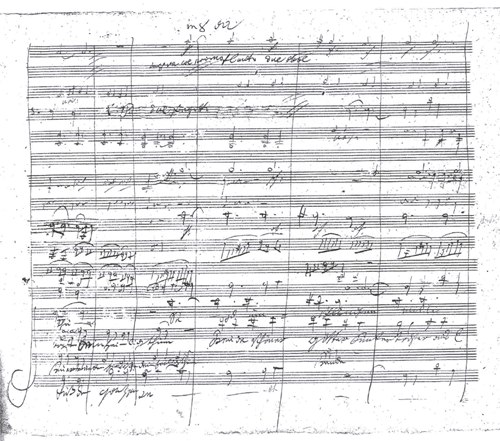 Document
Primary source
Symphony No. 9
Ludwig van Beethoven · 1824
 Sculpture
Secondary source
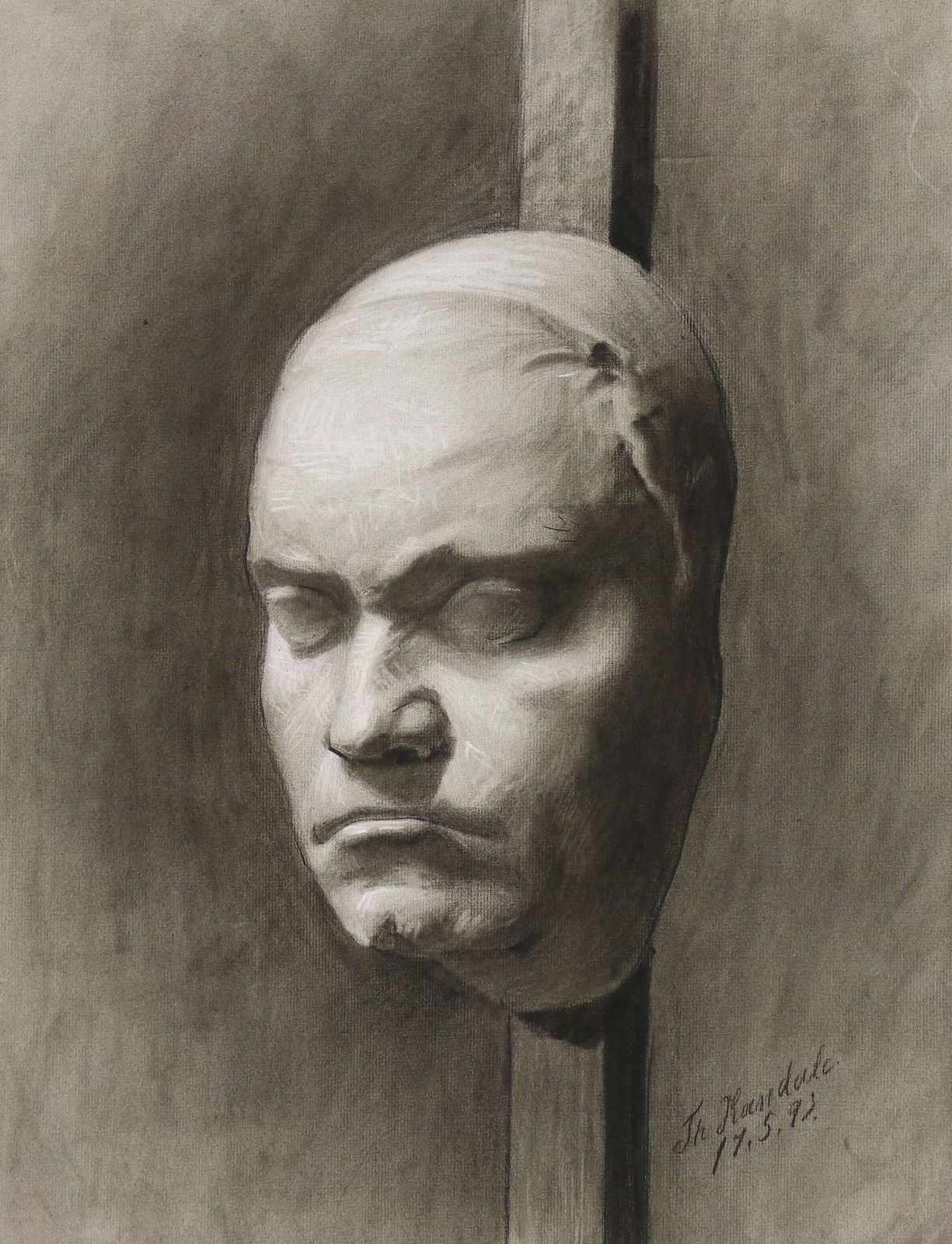
Death of Ludwig van Beethoven
Theodor Kandale (after Josef Danhauser) · 1827 (mask); drawing 1893
 Sculpture
Secondary source
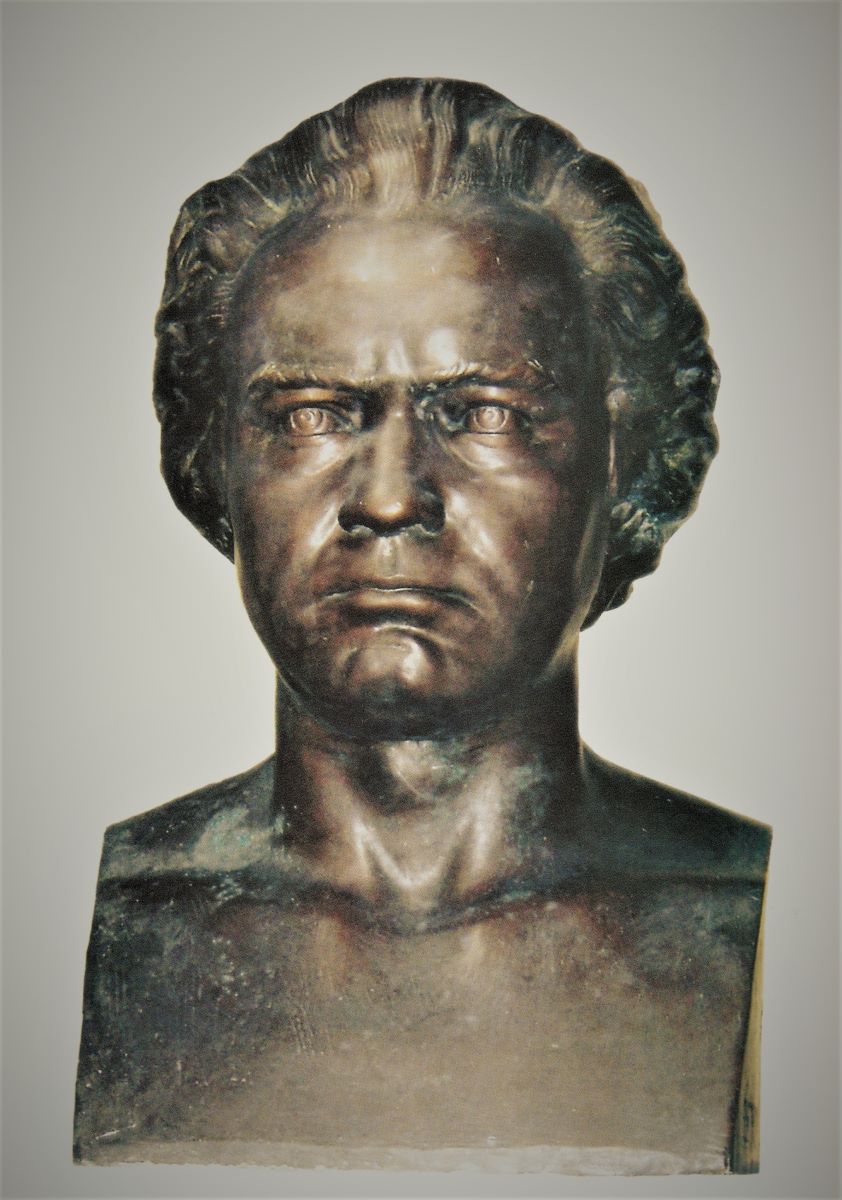
Bust of Ludwig van Beethoven by Frederic Storck
Frederic Storck · 1930
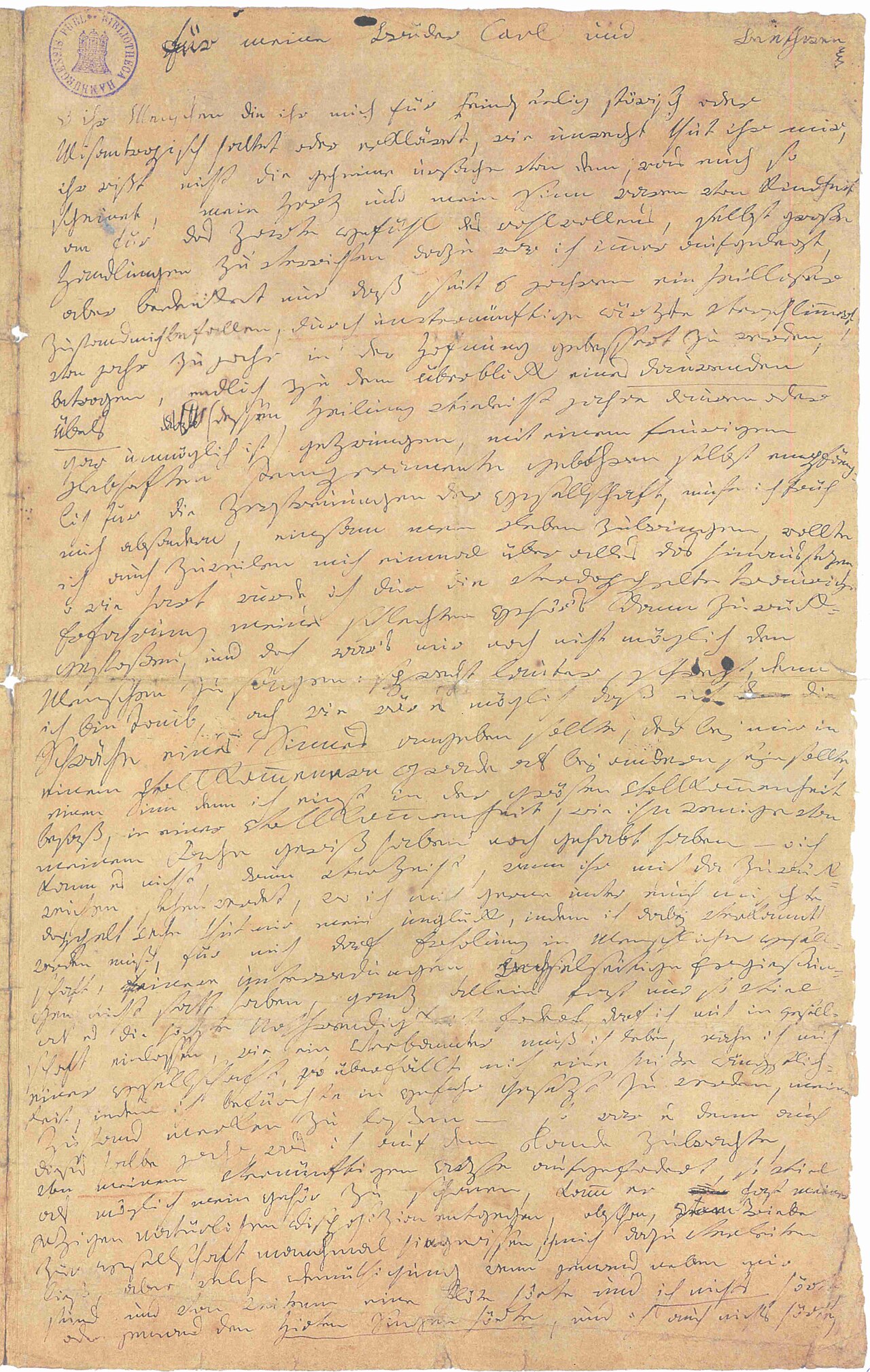 Letter
Primary source
Heiligenstadt Testament
Ludwig van Beethoven · 6 October 1802
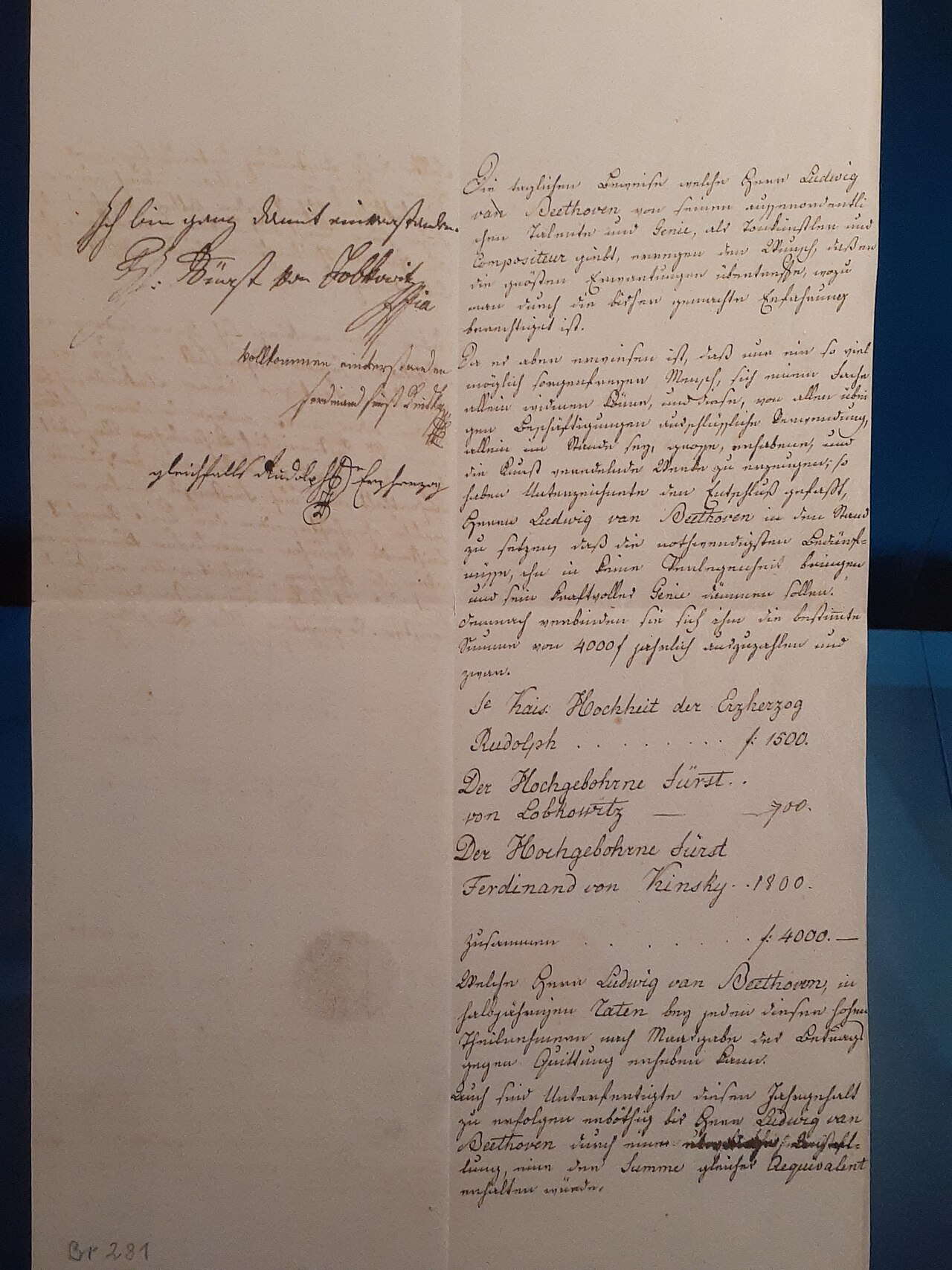 Document
Primary source
Agreement between Beethoven and Archduke Rudolph, Prince Kinsky and Prince Lobkowitz
1 March 1809
Ready when you are
Start chatting with Ludwig van Beethoven now.
20 messages free · No credit card · Available in 50+ languages.