


Primary sourceDocumentca. 1328–1318 BCE
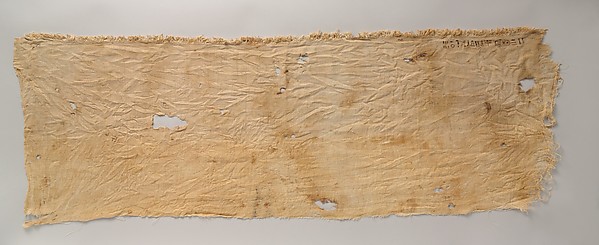
Inscribed Linen from Tutankhamun's Embalming Cache
ca. 1328–1318 BCE
A piece of linen with ink inscriptions from the embalming cache linked to Tutankhamun's burial.
Linen from the cache used in embalishing Tutankhamun, bearing inscriptions tied to his funerary preparation.
About this source
What it is
This is a strip of linen marked with ink, from the embalming cache connected to the burial of Tutankhamun. It dates to the New Kingdom, Dynasty 18, during his reign, and is held at The Metropolitan Museum of Art, given by Theodore M. Davis in 1909.
Why it matters
Inscribed linens from embalming caches help researchers understand the funerary texts and labeling practices used in preparing a pharaoh's body and burial goods. As a direct survival from the time of Tutankhamun's death, it offers evidence of the written record that accompanied his embalming, even though much of the inscription is faint today.
Look closer
- What can you make out of the ink marks, and what might they have recorded?
- Why might linen, rather than stone or papyrus, have been used here?
- What does the damage and fading tell us about the object's age and history?
This document is part of the curated material that grounds the AI version of Tutankhamun on Humy.ai — when students ask about related events, the AI can quote it and cite it.
More Tutankhamun sources
Meet the AI Tutankhamun →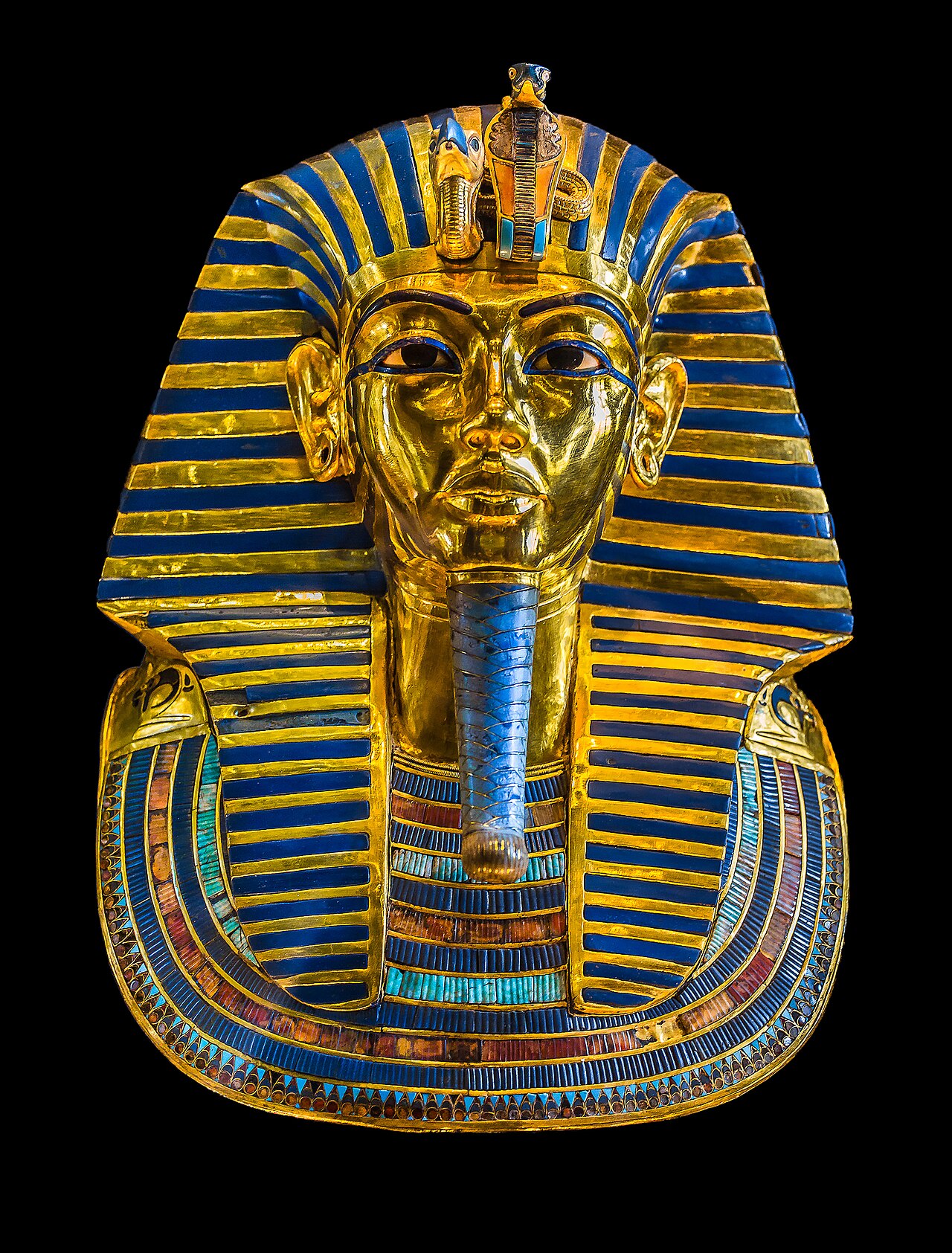 Artifact
Primary source
Mask of Tutankhamun
c. 1333 BCE
 Photograph
Primary source
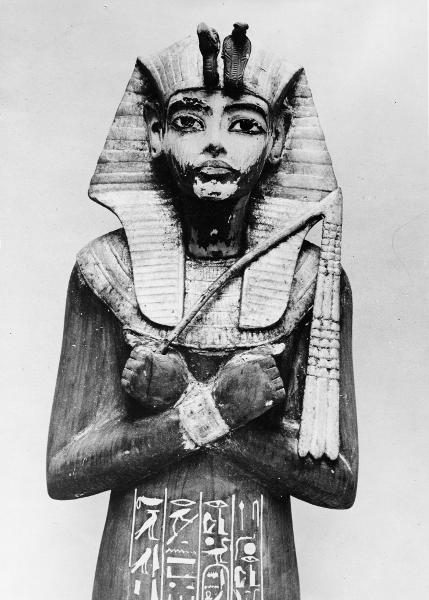
Photograph of Tutankhamun's Shawabti Figure
Harry Burton · 1920s
 Artifact
Primary source
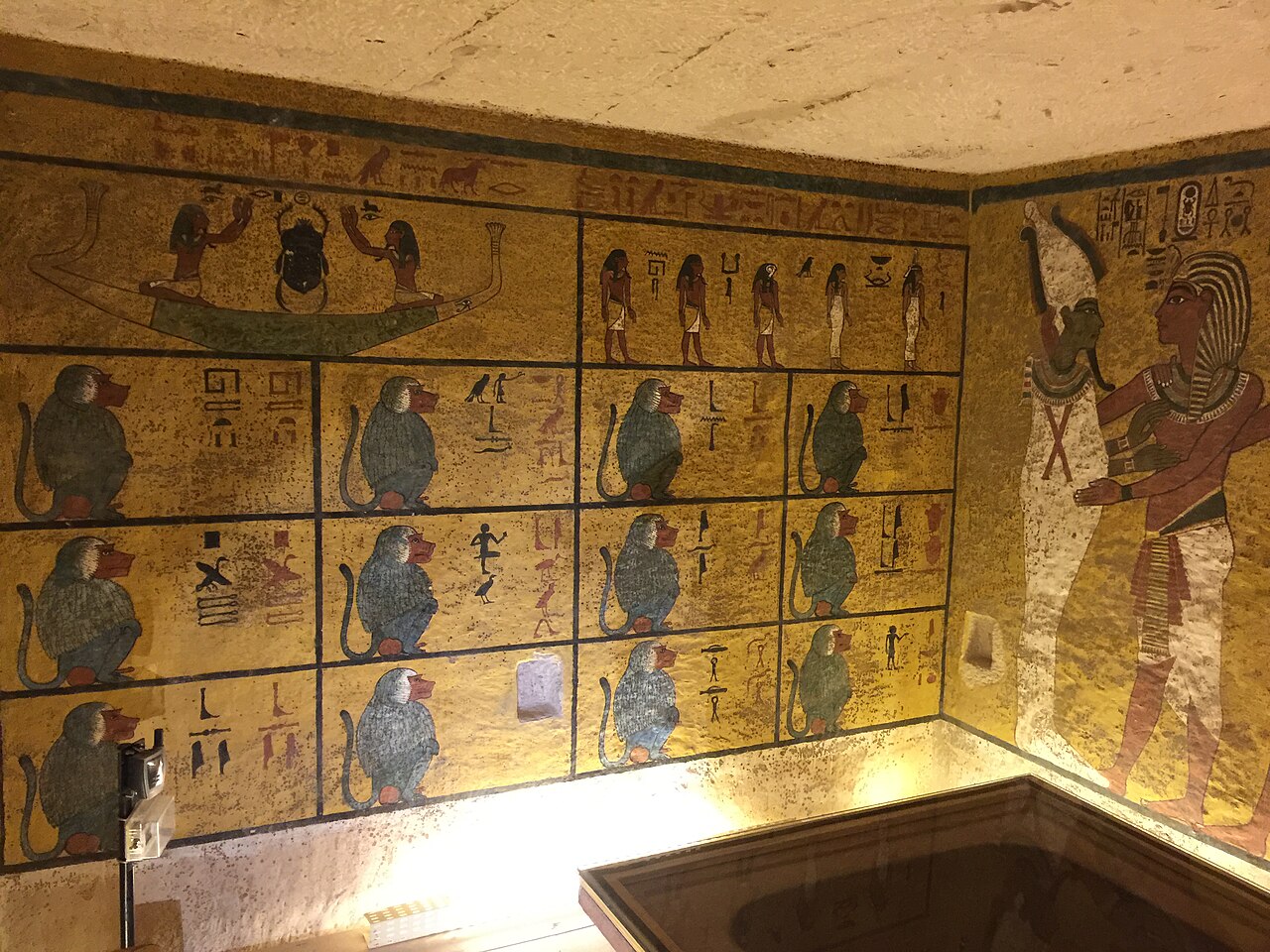
Tomb of Tutankhamun
14th century BCE
 Photograph
Primary source
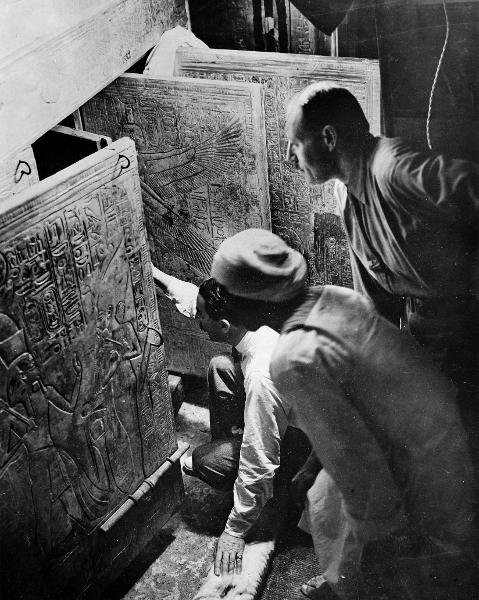
Opening the Doors of the Fourth Shrine in Tutankhamun's Tomb
Harry Burton · 1920s
 Document
Primary source
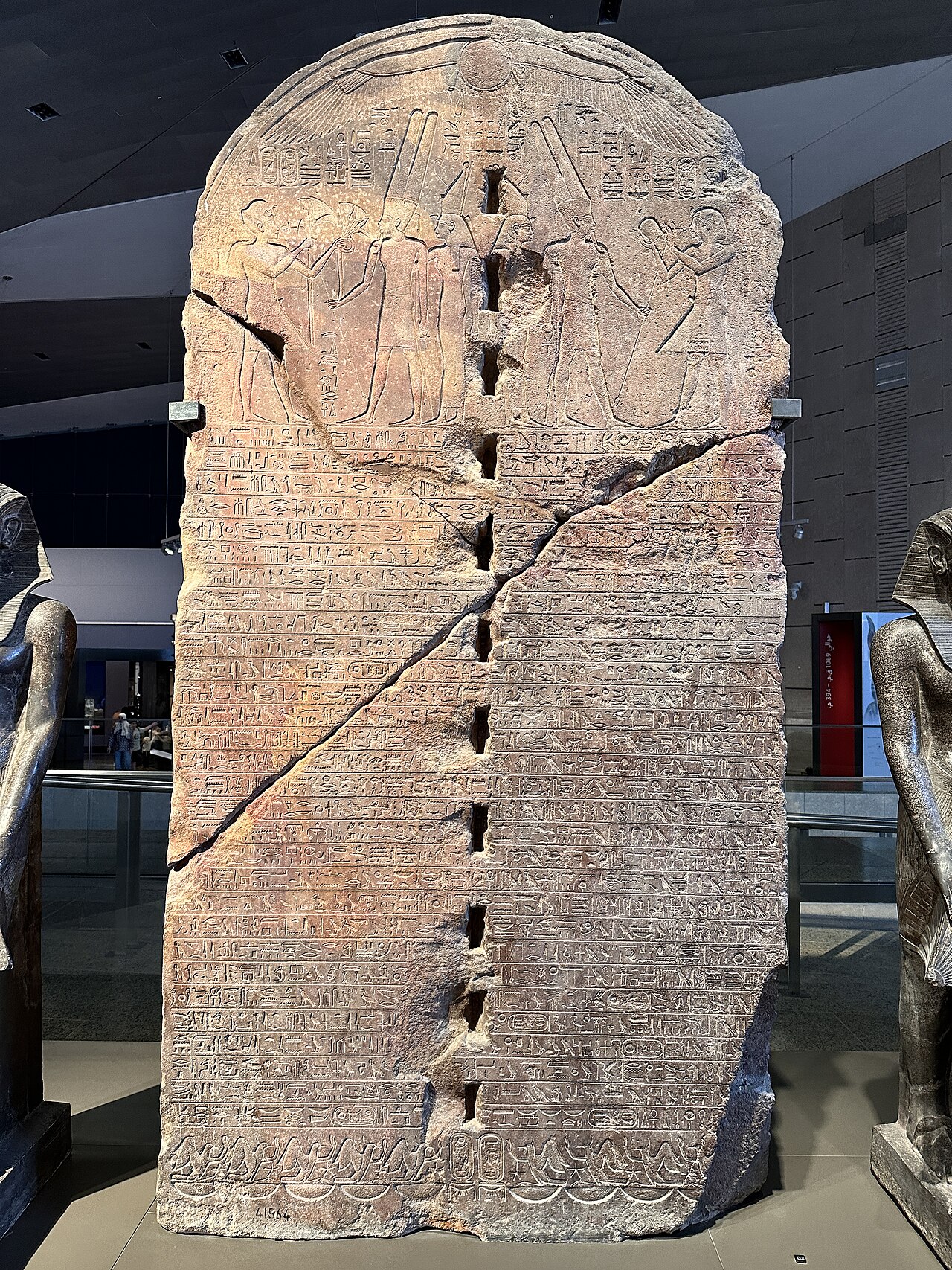
Restoration Stela
Tutankhamun · c. 1326 BCE
Ready when you are
Start chatting with Tutankhamun now.
20 messages free · No credit card · Available in 50+ languages.