


Primary sourceArtifact
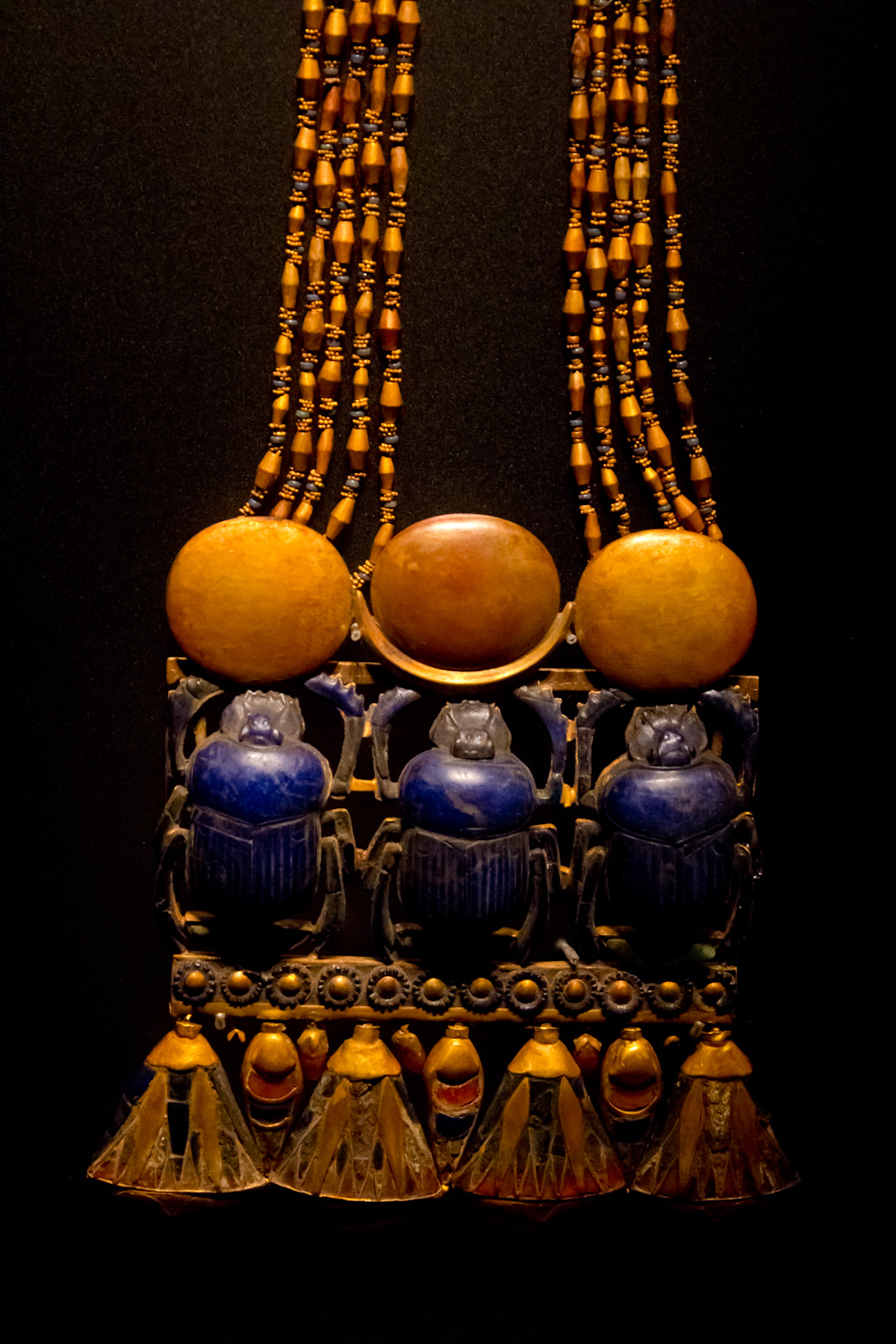
Khepri Scarab Pectoral from Tutankhamun's Tomb
Unknown
A gold and lapis lazuli pectoral jewel found in Tutankhamun's tomb, showing scarab beetles pushing the sun.
One of the treasures buried with Tutankhamun, reflecting beliefs about his afterlife.
About this source
What it is
This photograph shows a gold pectoral discovered in the intact tomb KV62, the burial place of Tutankhamun. It features three blue lapis lazuli scarab beetles, representing the god Khepri, set in gold frames with wings, legs, studs, and amber-colored beads. The original object is now held in the Cairo Museum.
Why it matters
The scarab was a symbol of the sun god pushing the sun across the sky, tied to ideas of rebirth important in Egyptian royal burial. As one of the treasures buried with Tutankhamun, this pectoral shows the wealth and religious beliefs surrounding his burial as a pharaoh of the 18th dynasty.
Look closer
- Why might scarab imagery have been chosen for jewelry buried with a king?
- What materials were used, and what might that tell you about their value?
- What does this piece suggest about beliefs in life after death?
This artifact is part of the curated material that grounds the AI version of Tutankhamun on Humy.ai — when students ask about related events, the AI can quote it and cite it.
More Tutankhamun sources
Meet the AI Tutankhamun →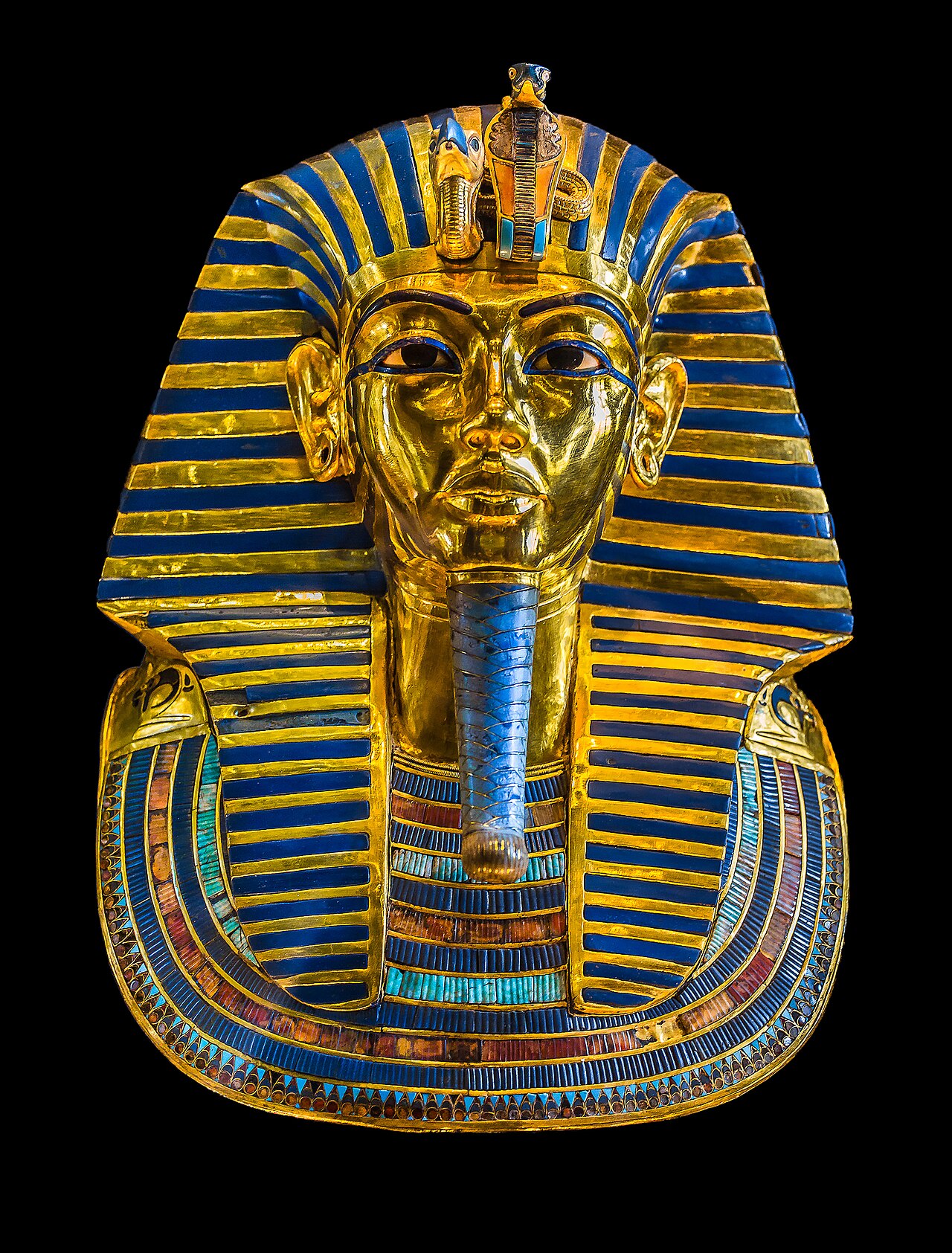 Artifact
Primary source
Mask of Tutankhamun
c. 1333 BCE
 Photograph
Primary source
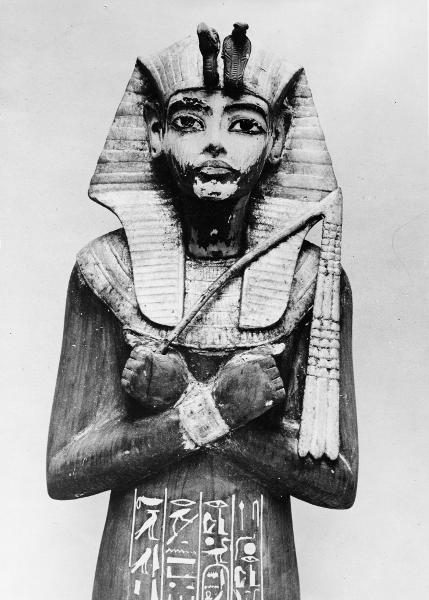
Photograph of Tutankhamun's Shawabti Figure
Harry Burton · 1920s
 Artifact
Primary source
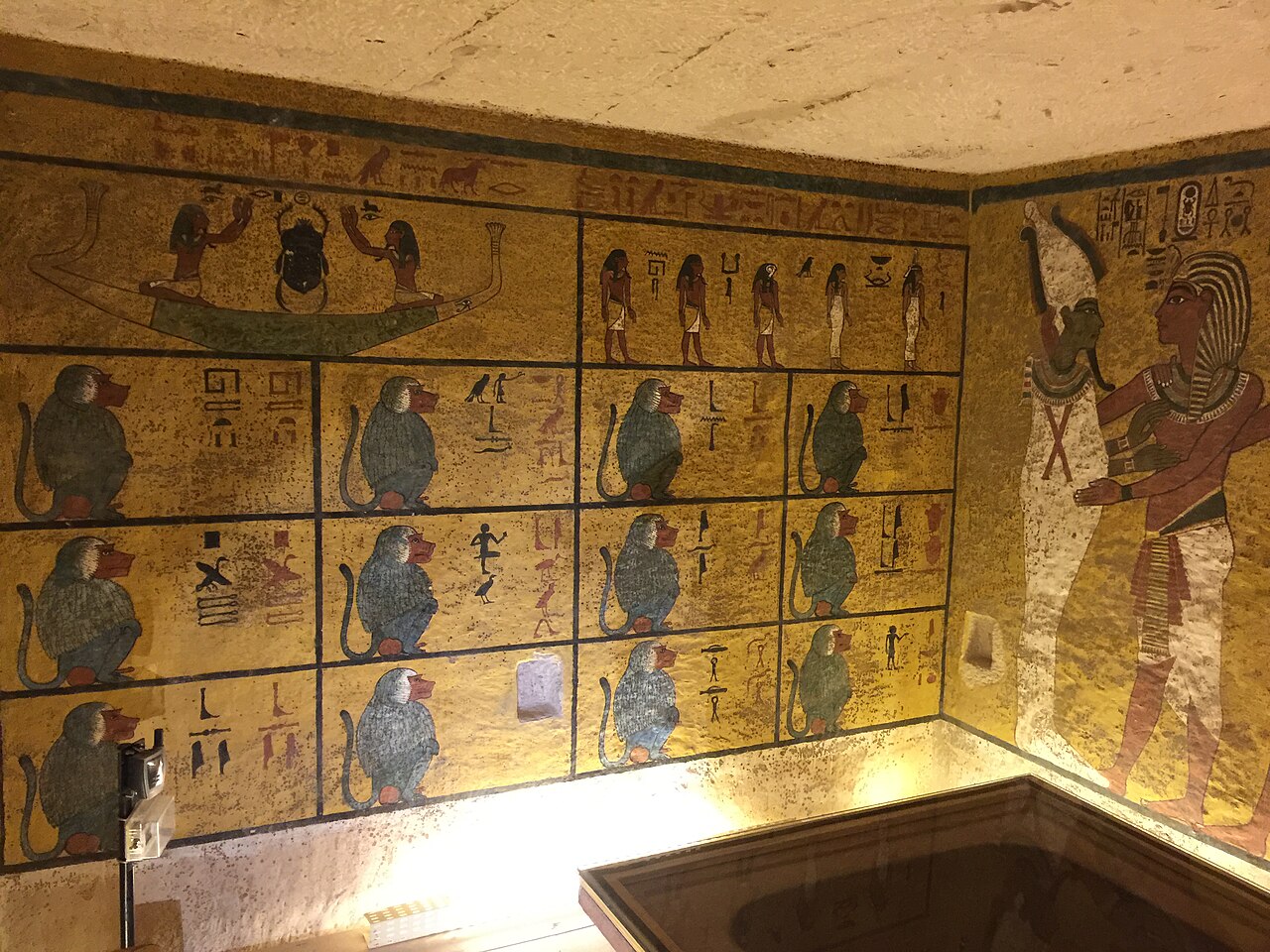
Tomb of Tutankhamun
14th century BCE
 Photograph
Primary source
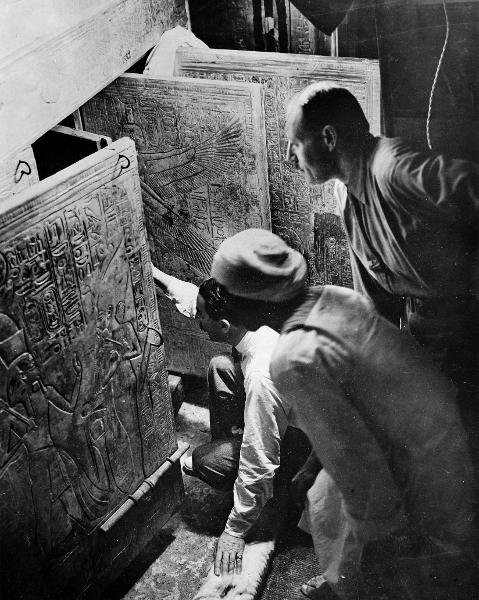
Opening the Doors of the Fourth Shrine in Tutankhamun's Tomb
Harry Burton · 1920s
 Document
Primary source
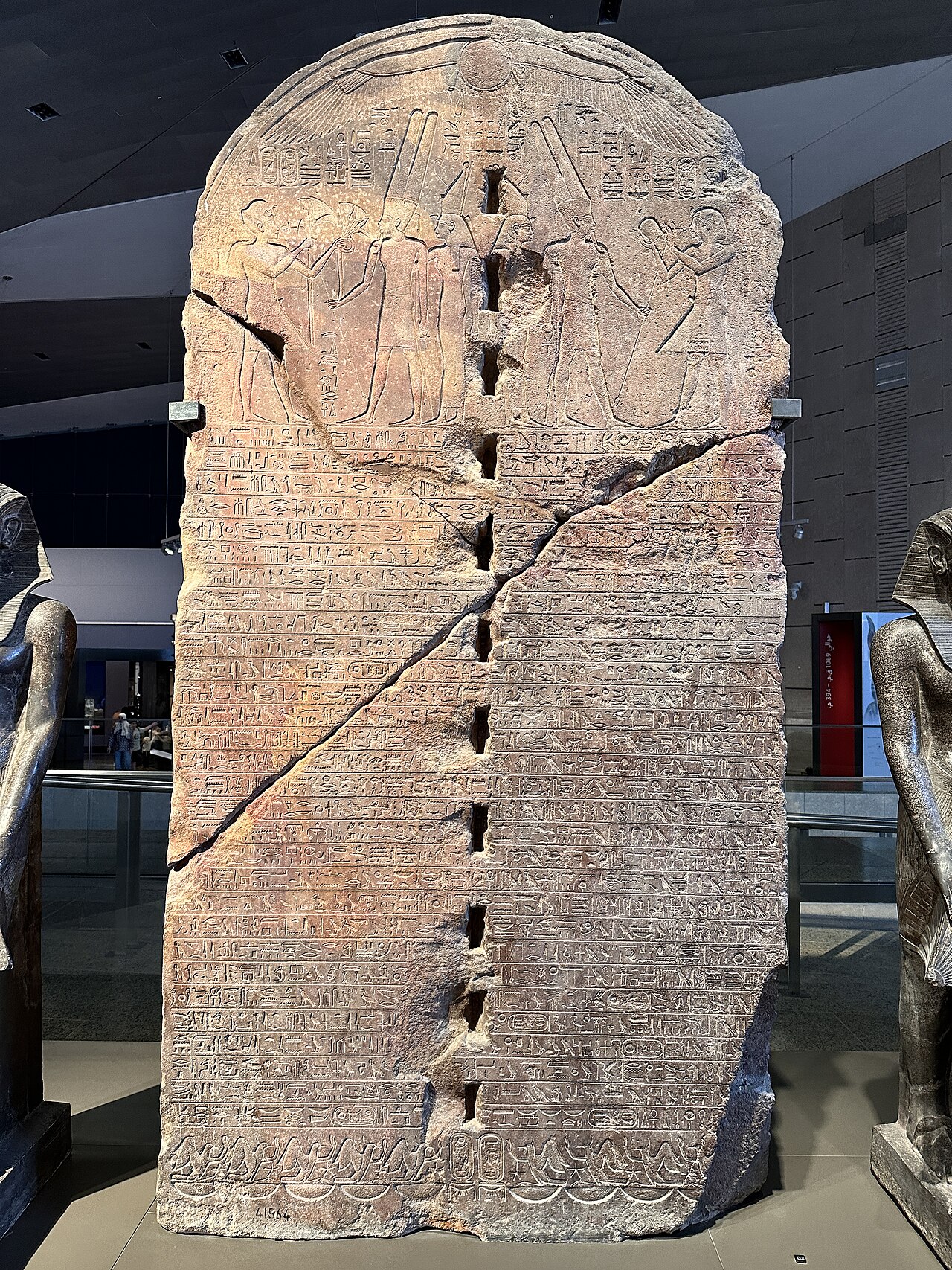
Restoration Stela
Tutankhamun · c. 1326 BCE
Ready when you are
Start chatting with Tutankhamun now.
20 messages free · No credit card · Available in 50+ languages.