


Secondary sourceBook1914 edition of a 16th-century translation
La doctrine d'Epictète stoïcien
André de Rivaudeau · 1914 edition of a 16th-century translation
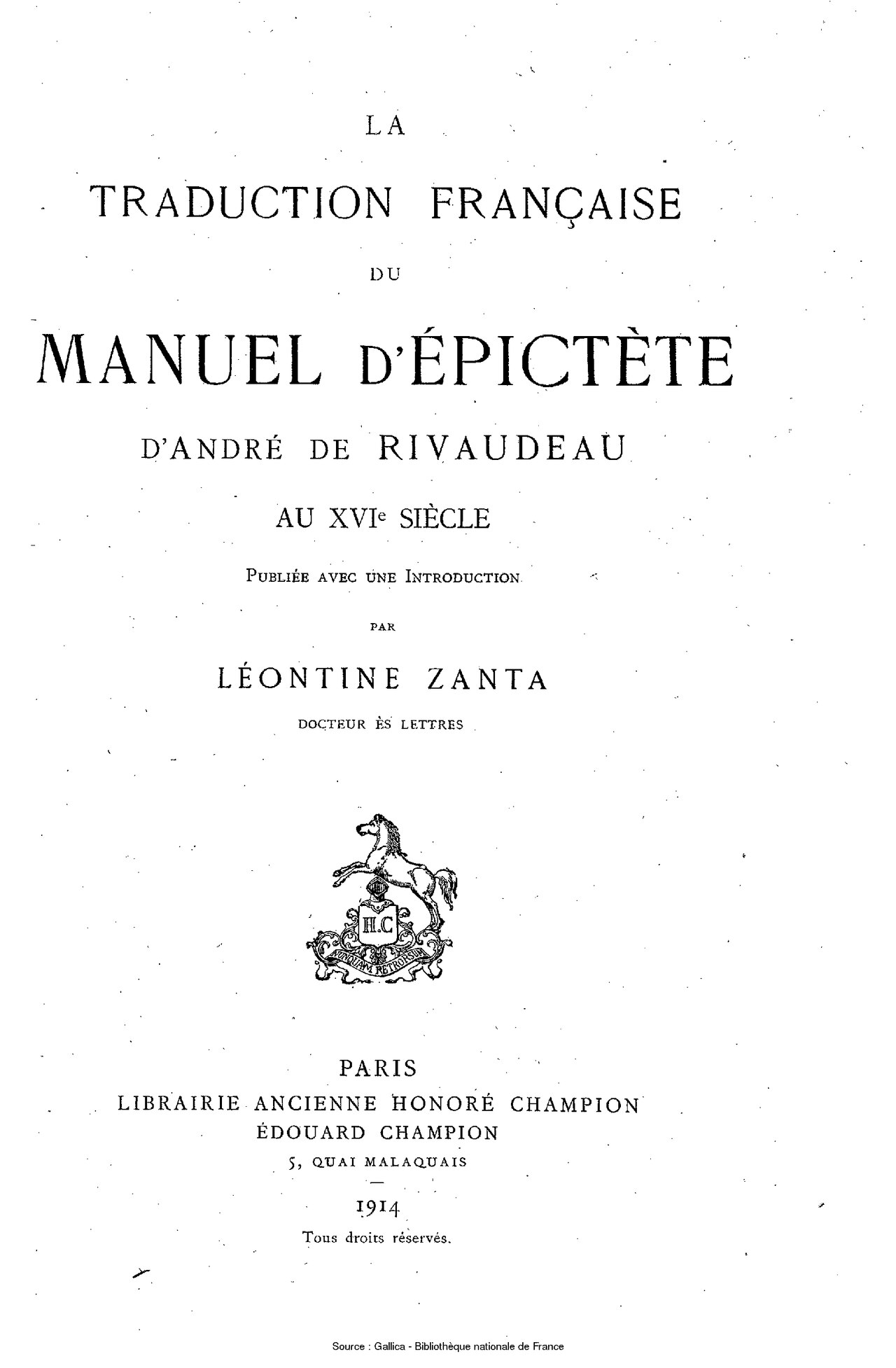
A 16th-century French translation of Epictetus's teachings by André de Rivaudeau, shown here in a 1914 scholarly edition title page.
A French translation of Epictetus's teachings, showing how his ethics spread in vernacular Europe.
About this source
What it is
This is the title page of a 1914 scholarly edition presenting André de Rivaudeau's 16th-century French translation of Epictetus's teachings. The edition was prepared by Léontine Zanta and published in Paris.
Why it matters
Rivaudeau's translation shows how Epictetus's Stoic ethics spread into vernacular European languages during the Renaissance, making his ideas accessible beyond Latin and Greek readers. It reflects the broader revival of Stoic philosophy in early modern France.
Look closer
- Why might a translator in the 16th century want to bring Epictetus's ideas into French?
- What does the existence of a 1914 scholarly re-edition tell us about ongoing interest in this text?
- What might be lost or changed when a philosopher's words pass through translation?
This book is part of the curated material that grounds the AI version of Epictetus on Humy.ai — when students ask about related events, the AI can quote it and cite it.
More Epictetus sources
Meet the AI Epictetus →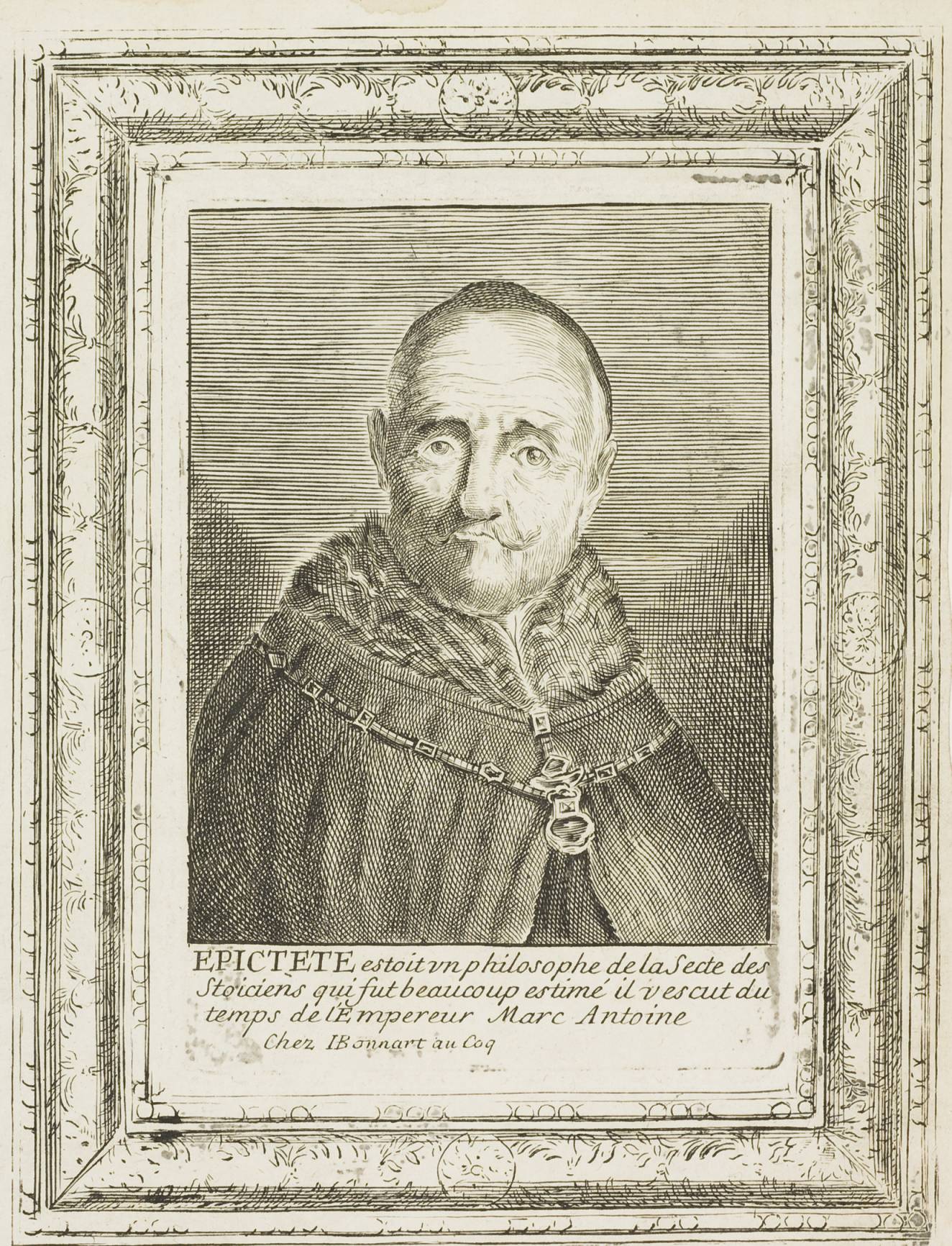 Painting
Secondary source
Epictete
Henri Bonnart · 17th century
 Book
Secondary source
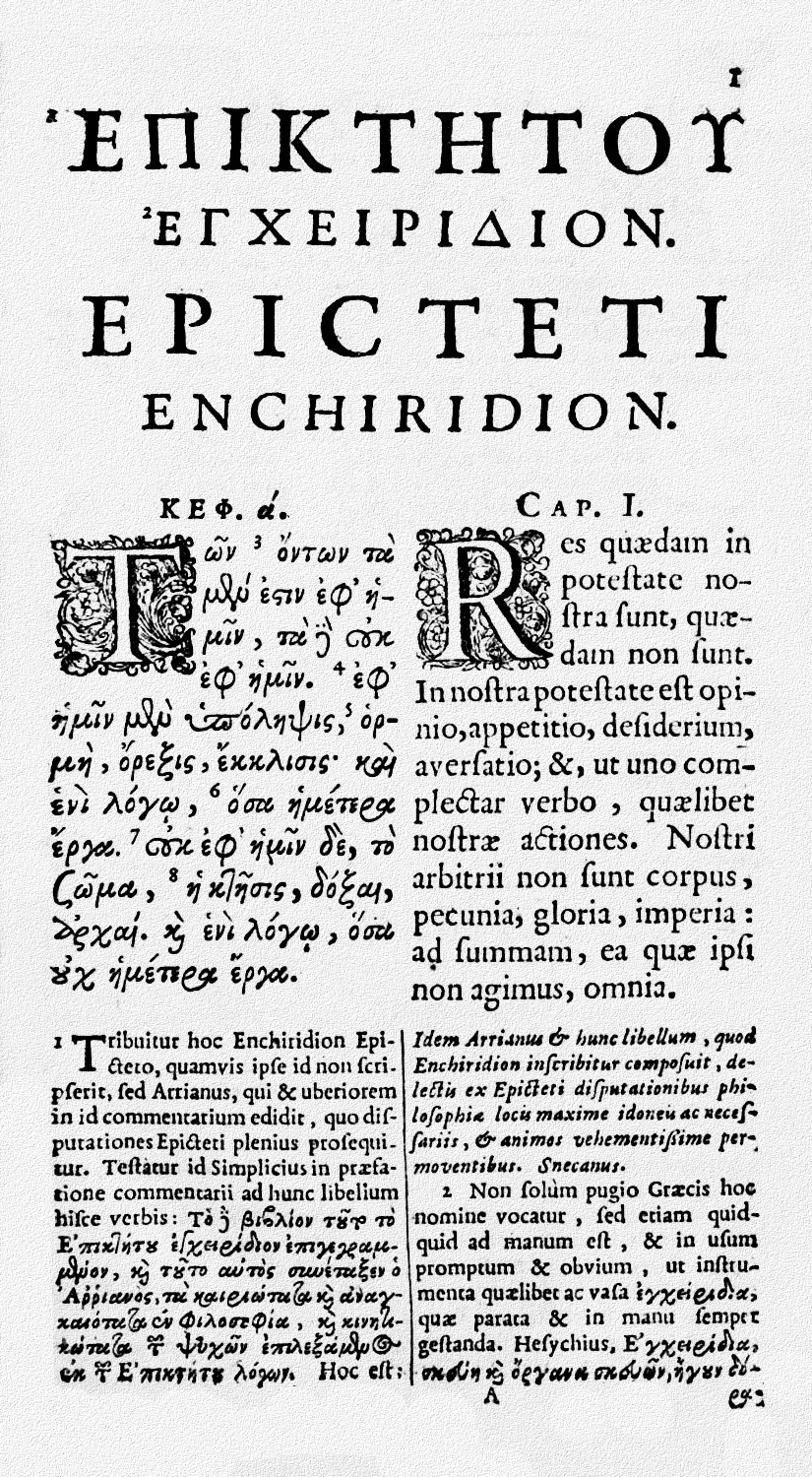
Enchiridion of Epictetus
Arrian · early 2nd century AD (this edition 1683)
 Book
Secondary source
Discourses of Epictetus
Arrian · c. 108 AD
 Painting
Secondary source
Title Page of L. Annaei Senecae Philosophi Opera
1615
DocumentSecondary source
Codex Bodleianus
c. 11th-12th century
Ready when you are
Start chatting with Epictetus now.
20 messages free · No credit card · Available in 50+ languages.