


Secondary sourceDocumentmedieval
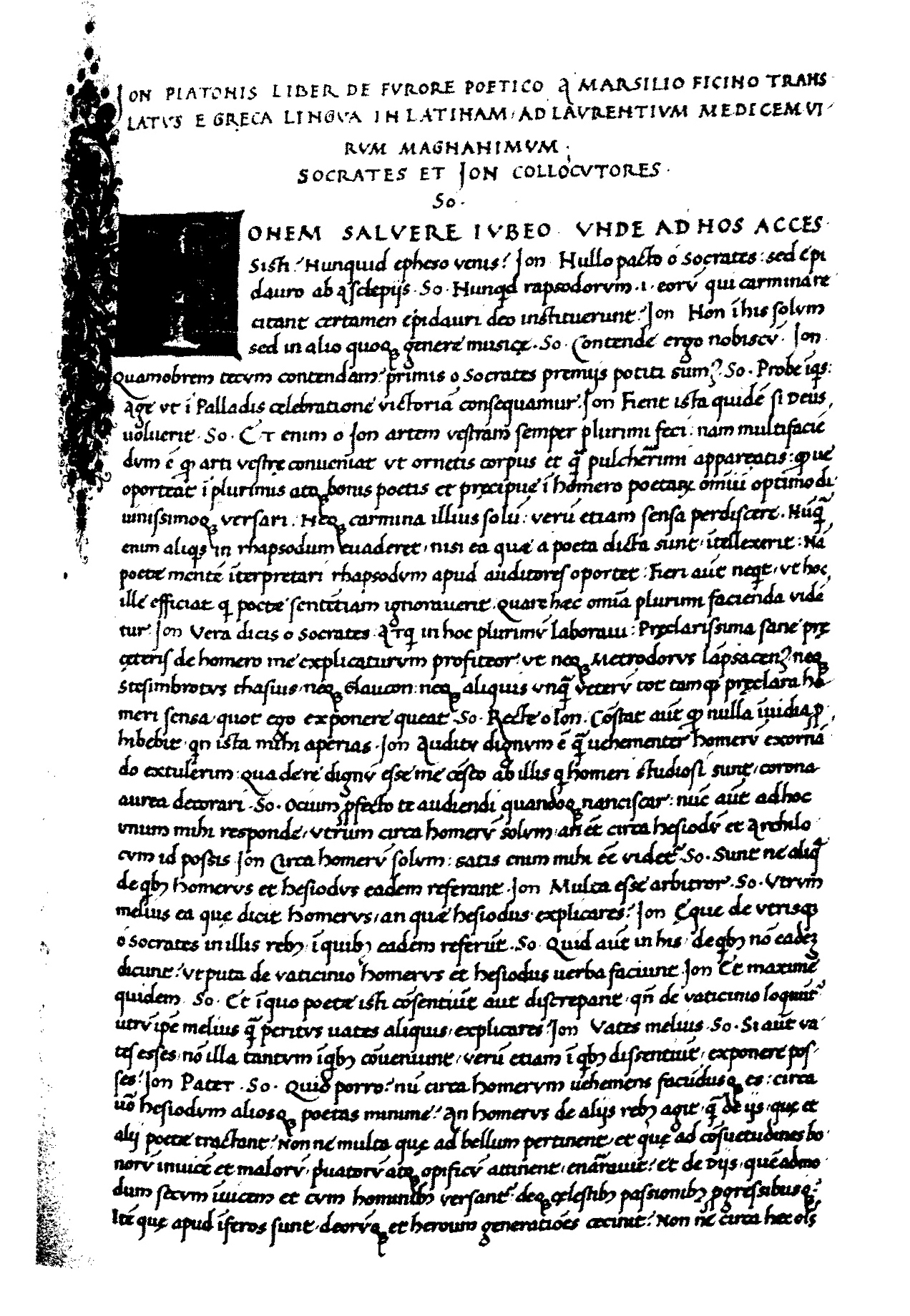
Laurentianus 82, 6, folio 116r
Marsilio Ficino (translator) · medieval
A printed page containing a Latin translation of Plato's dialogue Ion, made by Marsilio Ficino.
This page preserves a Latin translation of Plato's dialogue Ion, showing how his works spread through later scholarship.
About this source
What it is
This page shows a printed Latin text of Plato's dialogue Ion, translated by the Renaissance scholar Marsilio Ficino. The page is set in black letter type with a decorative woodcut initial.
Though catalogued as Laurentianus 82, 6, the image itself shows a later printed Latin edition rather than the Greek manuscript, reflecting how Plato's works were studied and translated long after his lifetime.
Why it matters
This page shows how Plato's writings were carried forward through translation during the Renaissance, when scholars like Ficino worked to bring Greek philosophy to Latin-reading Europe. It highlights the long chain of copying and translation that kept Plato's ideas alive for centuries.
Look closer
- What does the use of Latin, rather than Greek, tell you about who was meant to read this page?
- Why might a scholar like Ficino have wanted to translate Plato's work into Latin?
- What details in the typography and decoration suggest when and how this page was produced?
This document is part of the curated material that grounds the AI version of Plato on Humy.ai — when students ask about related events, the AI can quote it and cite it.
More Plato sources
Meet the AI Plato →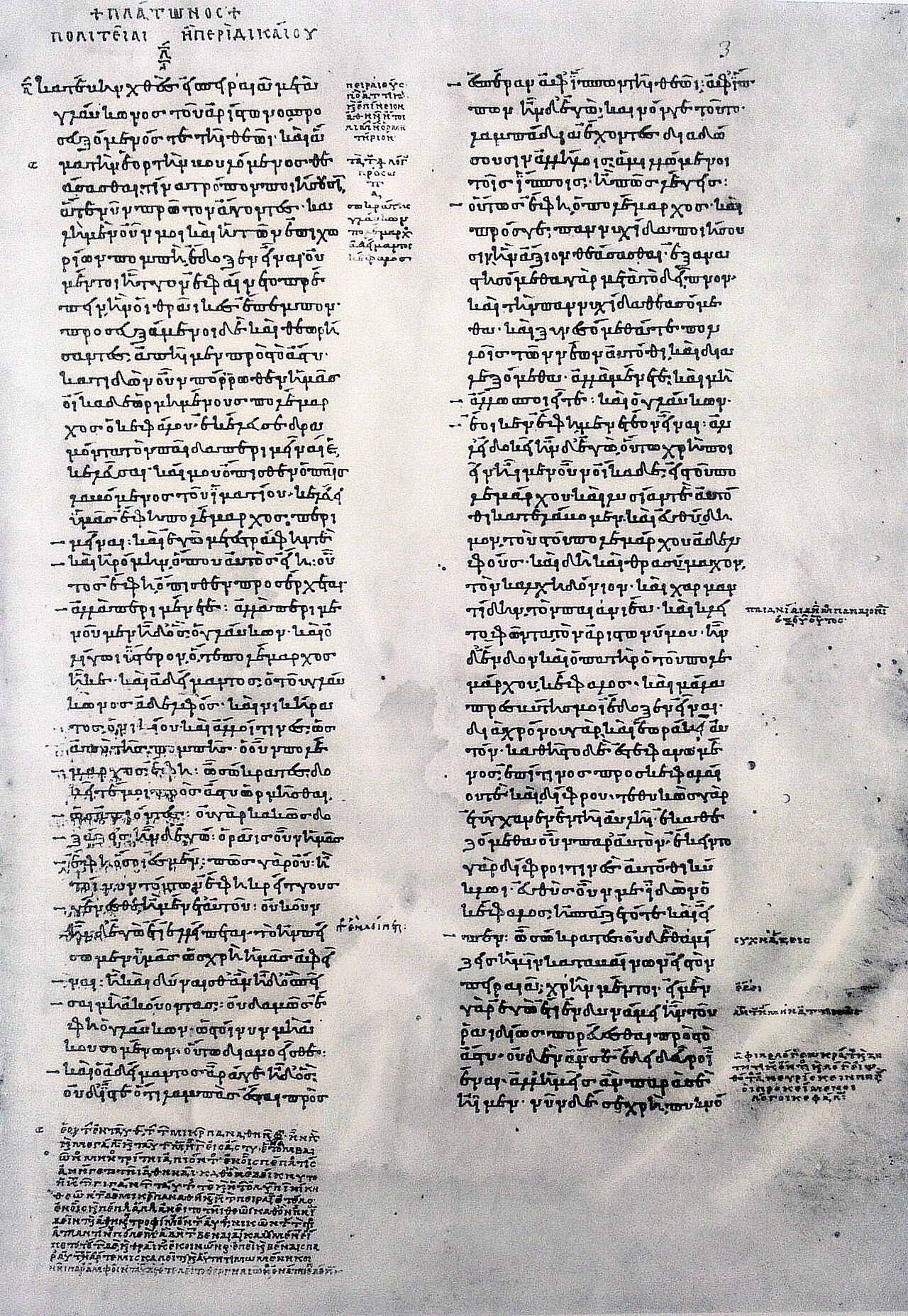 Book
Secondary source
The Republic
Plato · c. 375 BC
 Book
Primary source
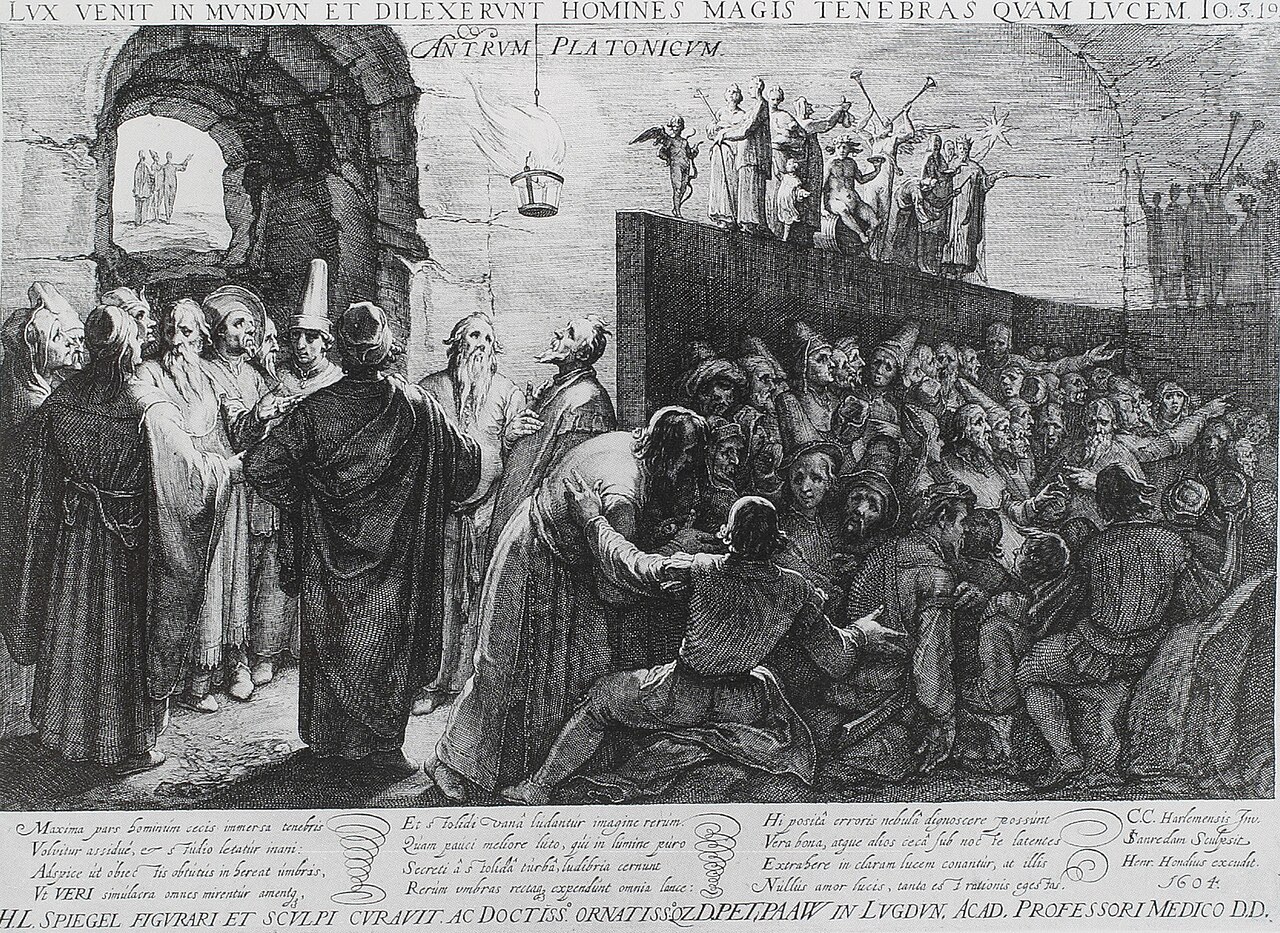
Allegory of the Cave
Plato · c. 400 BC
Secondary source
Apology
Plato · c. 395 BC
 Sculpture
Secondary source
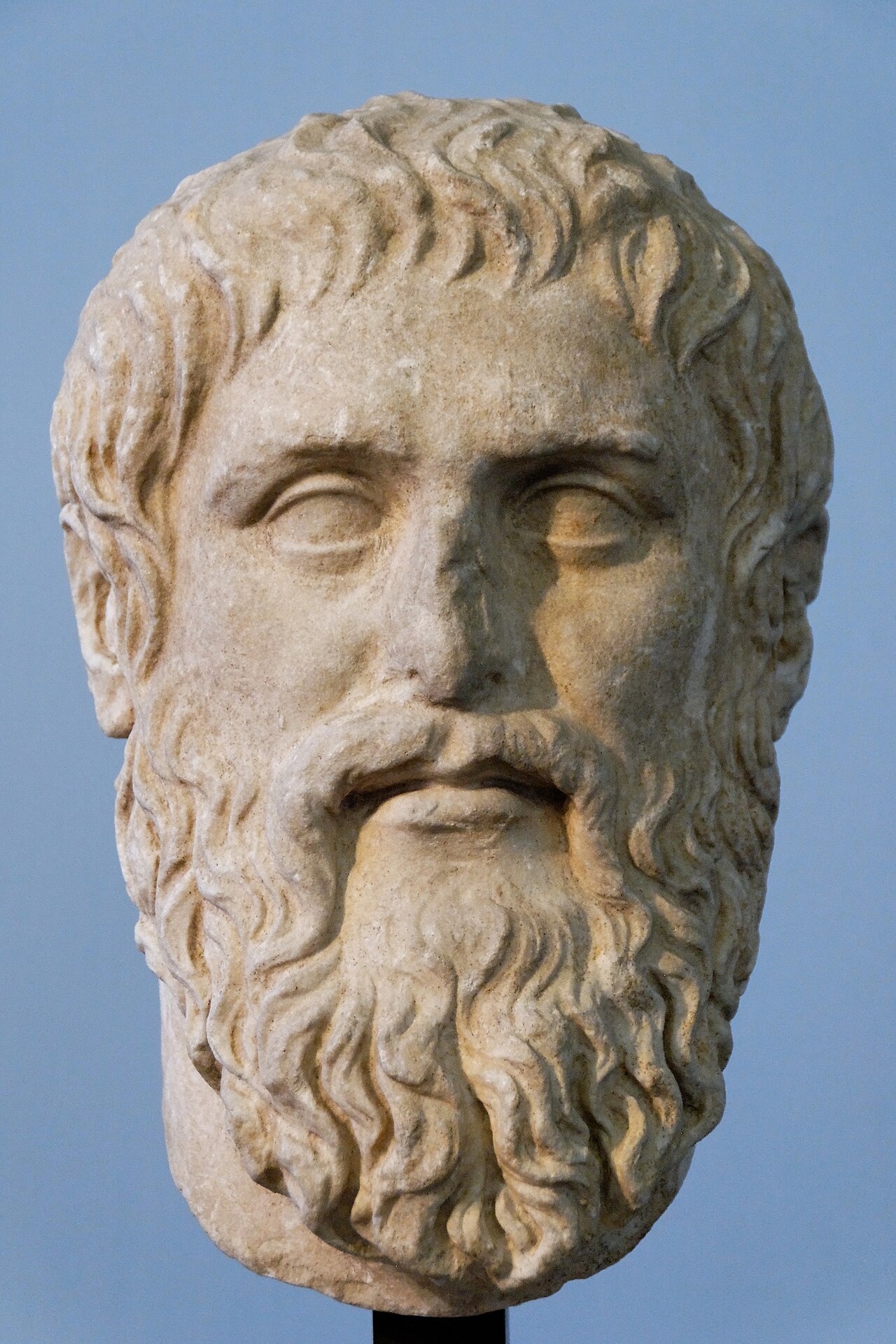
Portrait of Plato
Silanion (original type) · ca. 370 BC (original type); this copy Roman era
 Book
Secondary source
Phaedo
Plato · c. 360 BC
Ready when you are
Start chatting with Plato now.
20 messages free · No credit card · Available in 50+ languages.