


Primary sourceDocumentmedieval
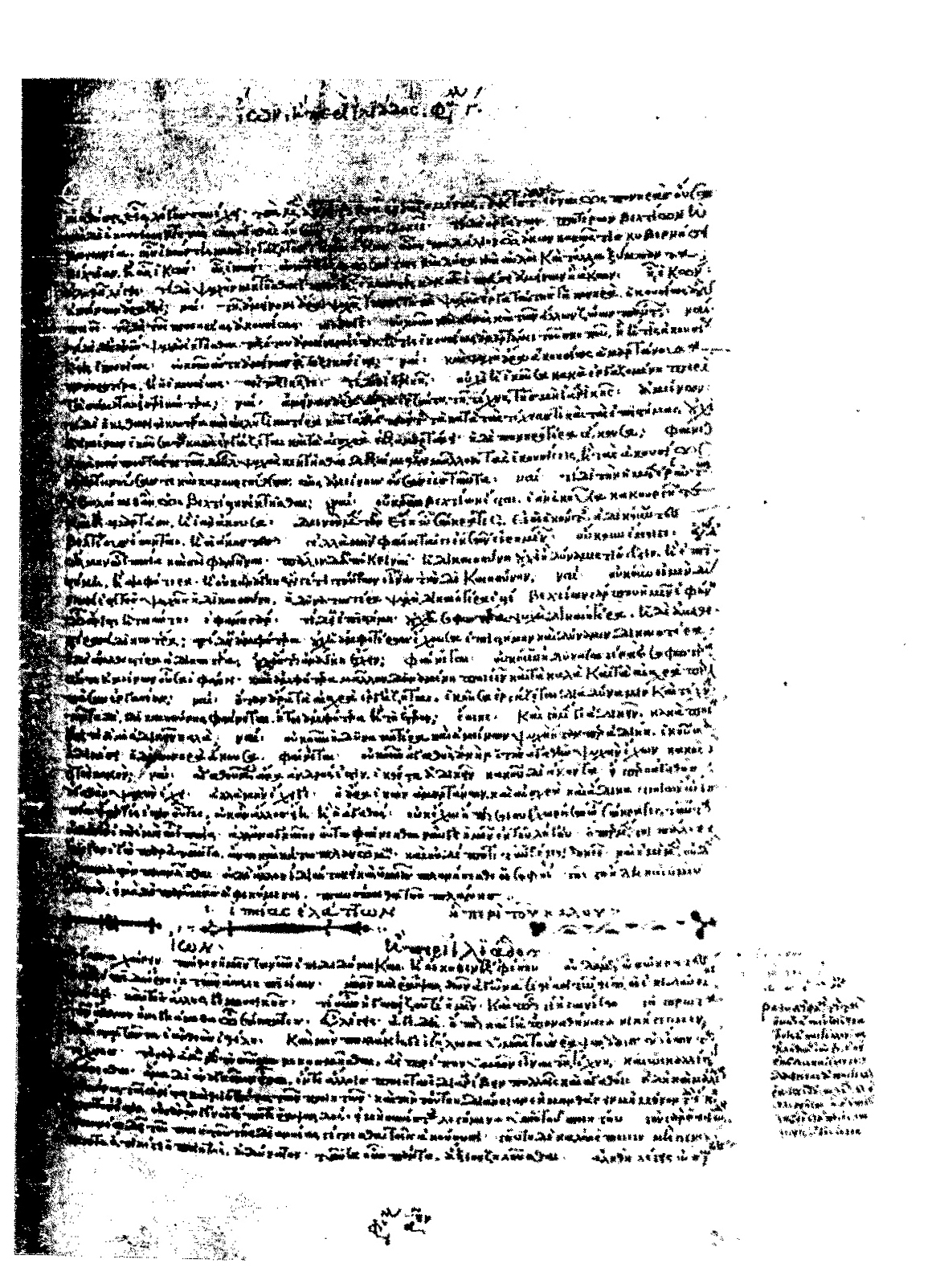
Laurentianus 85, 9, folio 200r
medieval author · medieval
A page from a medieval Greek manuscript containing Plato's dialogues, an early surviving witness to his text.
This manuscript page preserves Plato's own text, copied by a medieval scribe, and is a key source for his writings.
About this source
What it is
This is a page from a medieval Greek manuscript, Laurentianus 85, 9, which preserves text written by Plato. The page shows dense handwritten Greek text with a heading and a marginal note.
The manuscript was copied long after Plato's lifetime by a medieval scribe, but it transmits his original words.
Why it matters
Manuscripts like this one are how Plato's writings survived from ancient times to today. Because no original copies from Plato's own era exist, medieval manuscripts such as this are crucial primary sources for reconstructing exactly what Plato wrote.
Look closer
- What do the handwriting style and marginal notes tell you about how this manuscript was used or studied?
- Why is a copy made centuries after Plato's death still considered a valuable historical source?
- What challenges might arise in copying a long Greek text by hand across many centuries?
This document is part of the curated material that grounds the AI version of Plato on Humy.ai — when students ask about related events, the AI can quote it and cite it.
More Plato sources
Meet the AI Plato →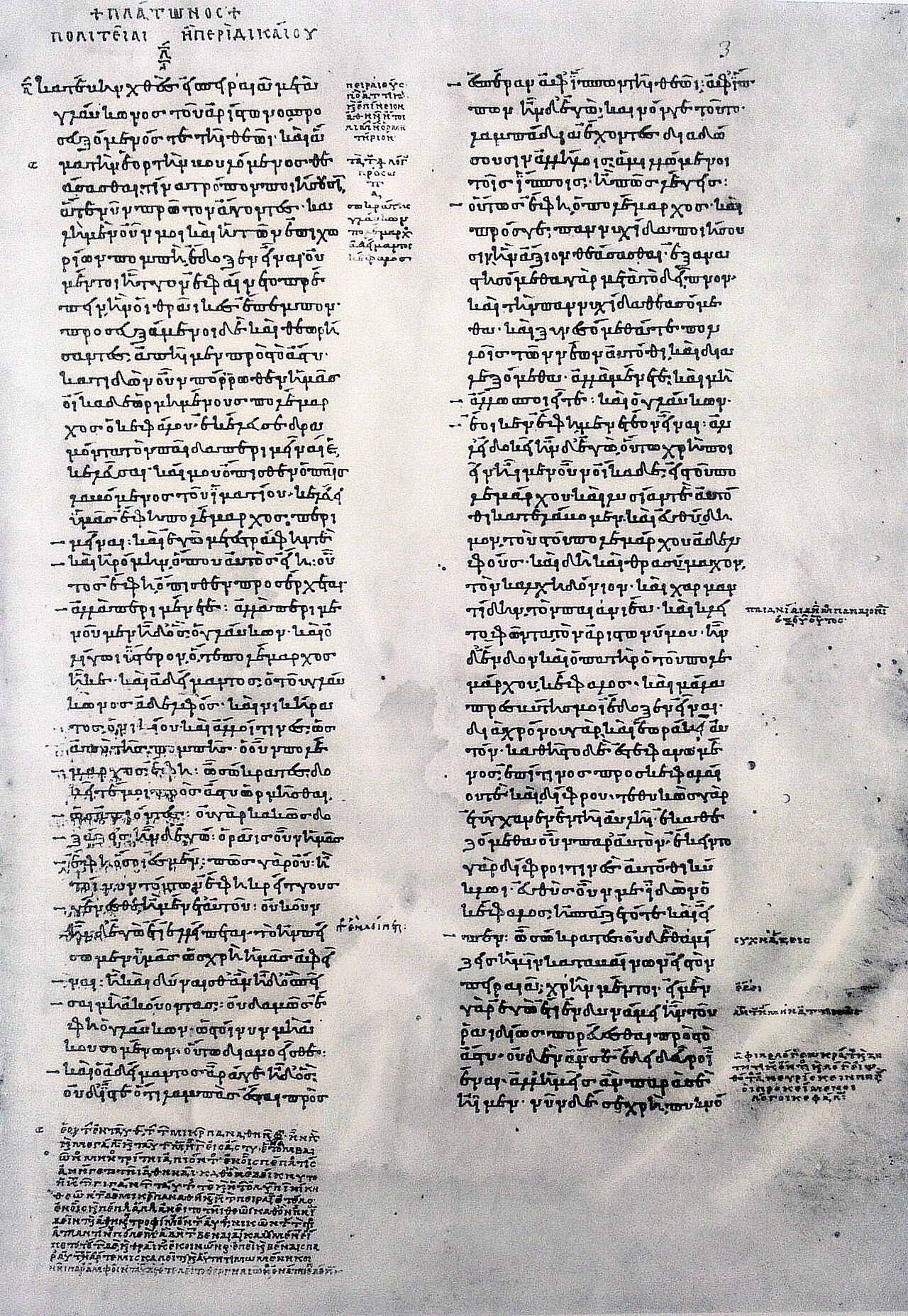 Book
Secondary source
The Republic
Plato · c. 375 BC
 Book
Primary source
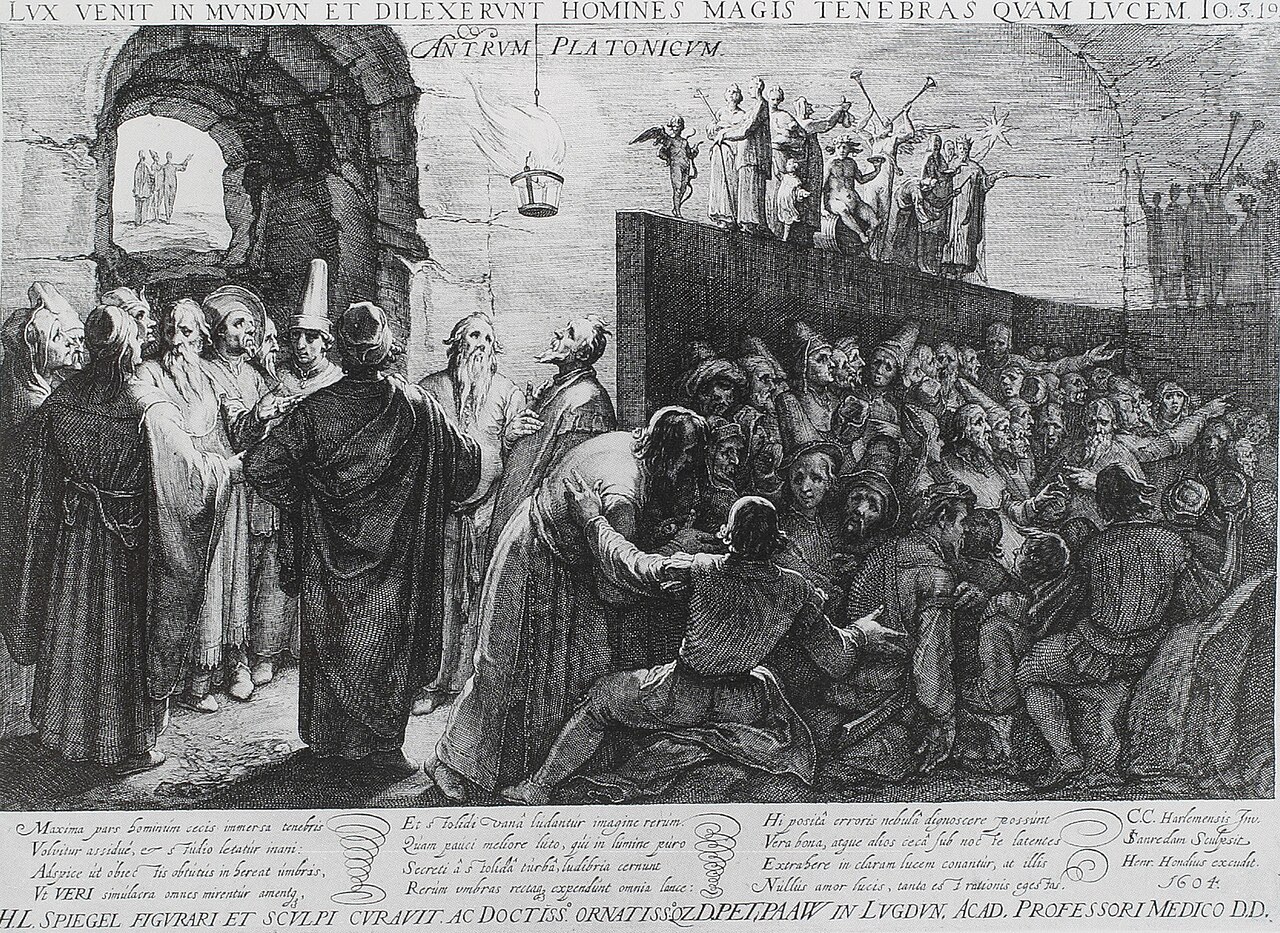
Allegory of the Cave
Plato · c. 400 BC
Secondary source
Apology
Plato · c. 395 BC
 Sculpture
Secondary source
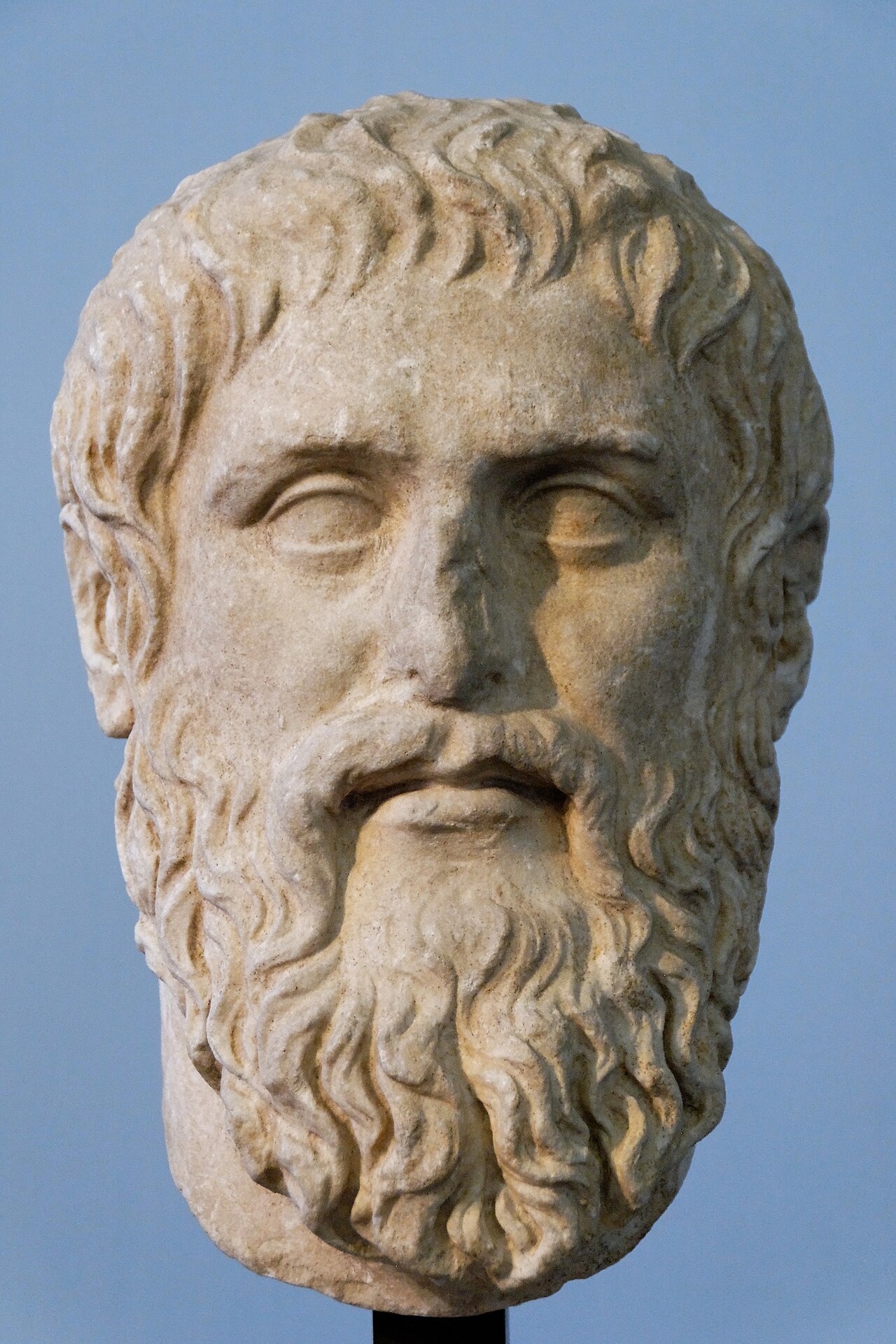
Portrait of Plato
Silanion (original type) · ca. 370 BC (original type); this copy Roman era
 Book
Secondary source
Phaedo
Plato · c. 360 BC
Ready when you are
Start chatting with Plato now.
20 messages free · No credit card · Available in 50+ languages.