


Primary sourceBookmedieval
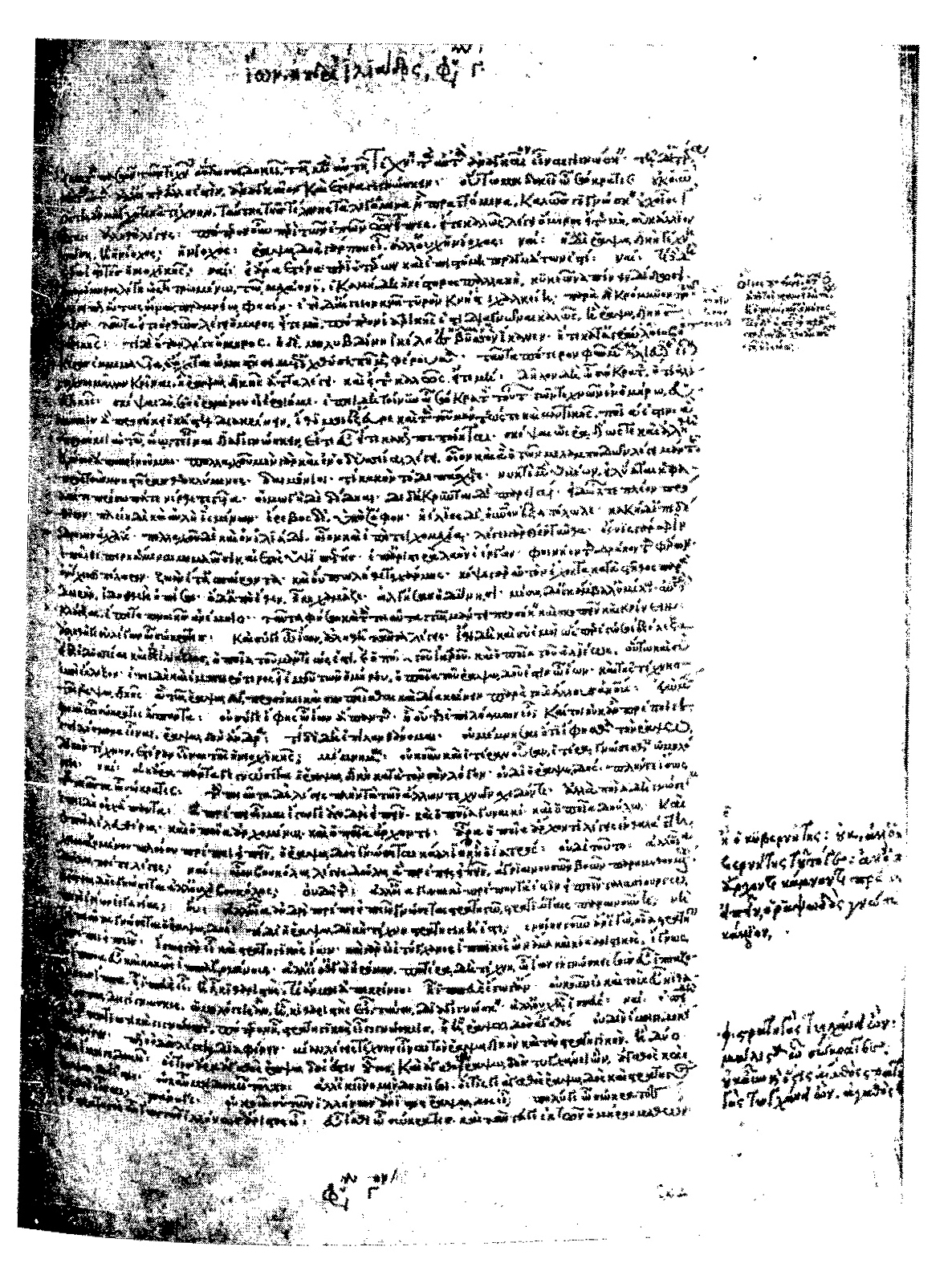
Laurentianus 85, 9 (Plato manuscript folio 202r)
Unknown medieval scribe · medieval
A medieval Greek manuscript page preserving Plato's dialogues, one of the primary sources used to transmit his text through the centuries.
This manuscript page transmits Plato's own dialogues, making it a primary witness to his written philosophy.
About this source
What it is
This is a folio (page 202r) from a medieval Greek manuscript known as Laurentianus 85, 9. It contains part of the text of Plato's dialogues, written by hand in dense Greek script, with notes added in the margin.
Manuscripts like this were copied by scribes long after Plato lived, since no original copies written by Plato himself survive.
Why it matters
Everything we know of Plato's writings comes through copies like this one, made by unnamed medieval scribes who preserved his words for later readers. Studying such manuscripts shows how fragile and dependent on human effort the survival of ancient philosophy really was.
Look closer
- What do the marginal notes suggest about how this manuscript was read or studied?
- Why might the left edge of the page be darkened?
- What does it mean that we rely on copies, not originals, for Plato's words?
This book is part of the curated material that grounds the AI version of Plato on Humy.ai — when students ask about related events, the AI can quote it and cite it.
More Plato sources
Meet the AI Plato →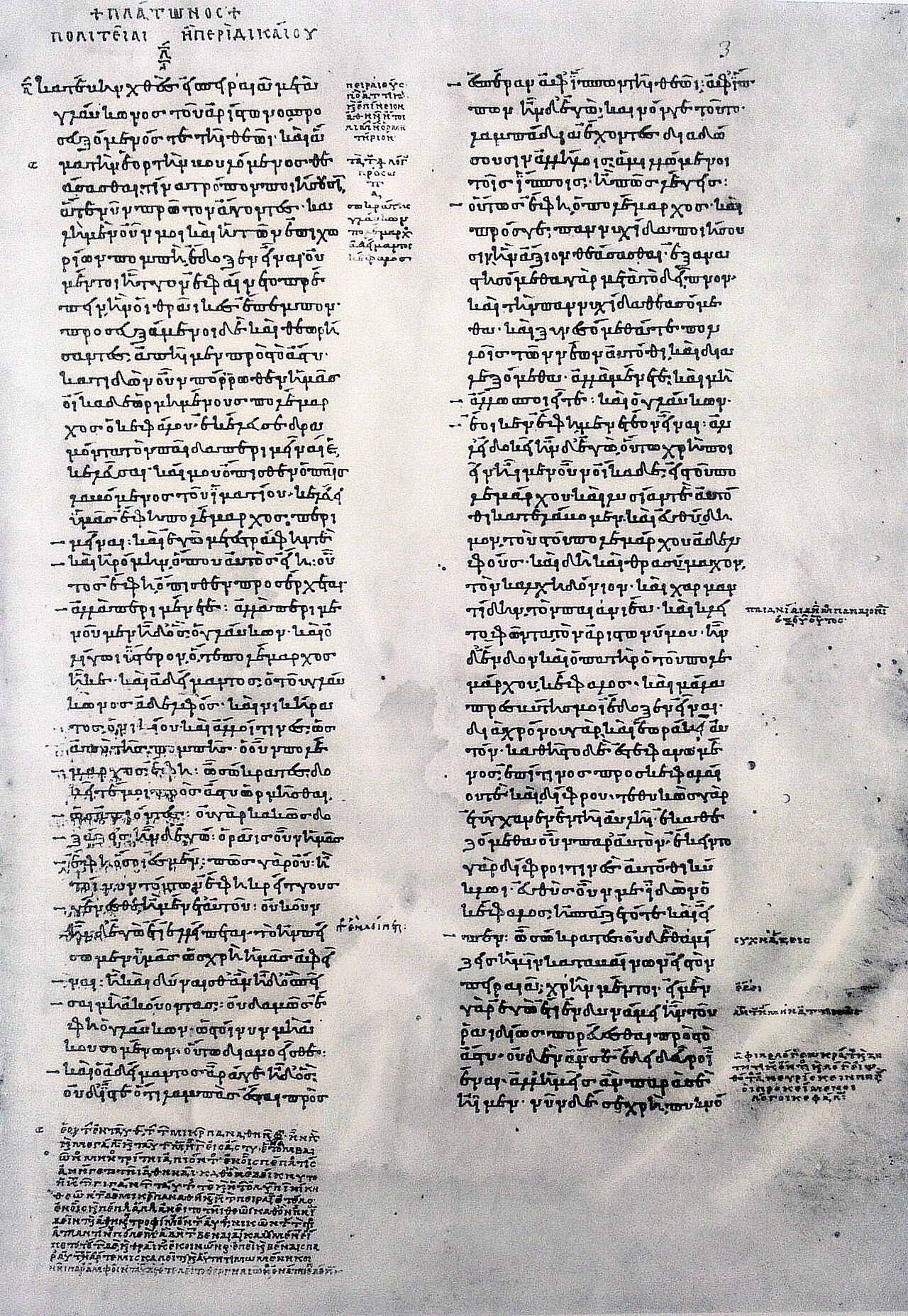 Book
Secondary source
The Republic
Plato · c. 375 BC
 Book
Primary source
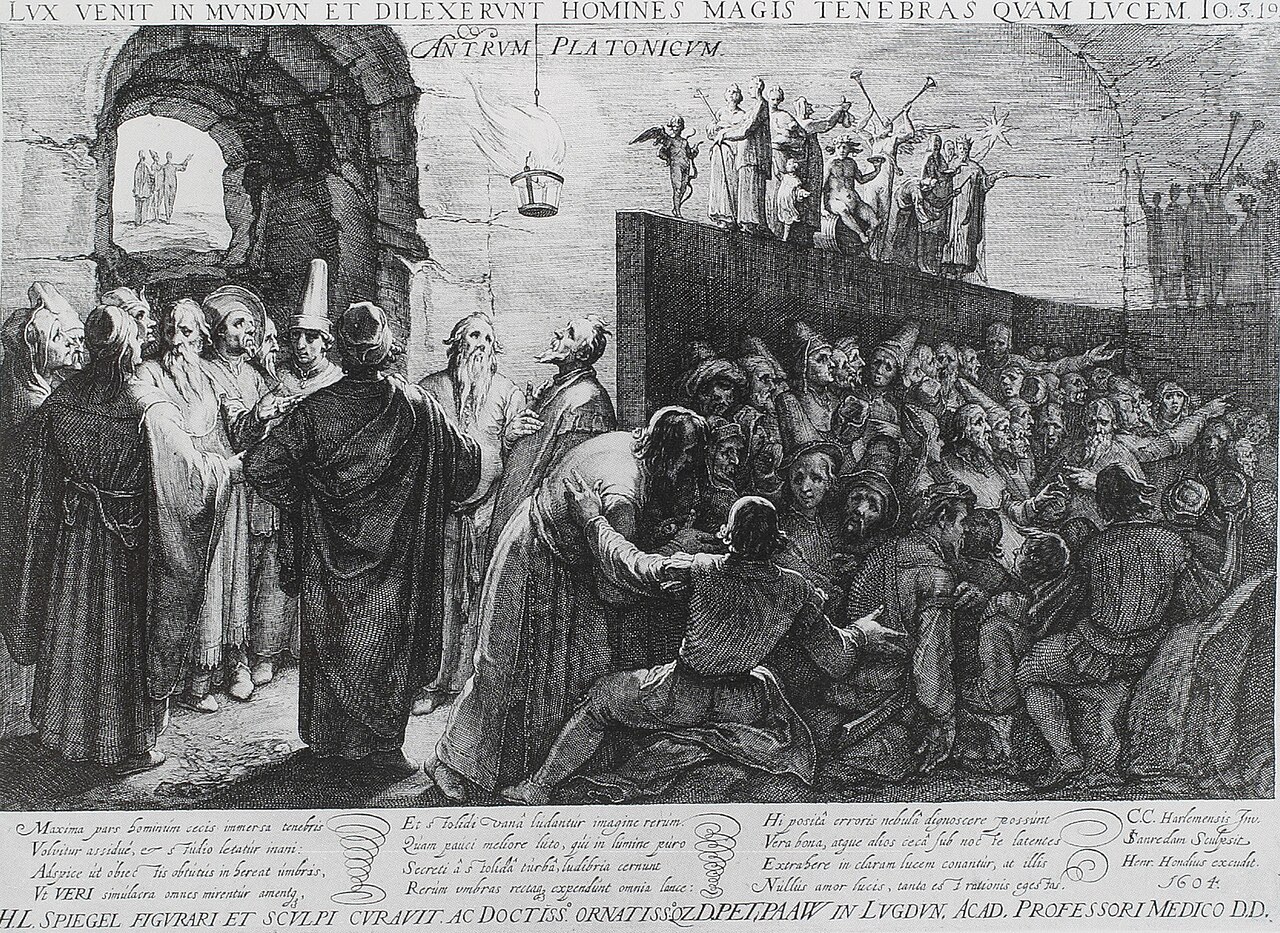
Allegory of the Cave
Plato · c. 400 BC
Secondary source
Apology
Plato · c. 395 BC
 Sculpture
Secondary source
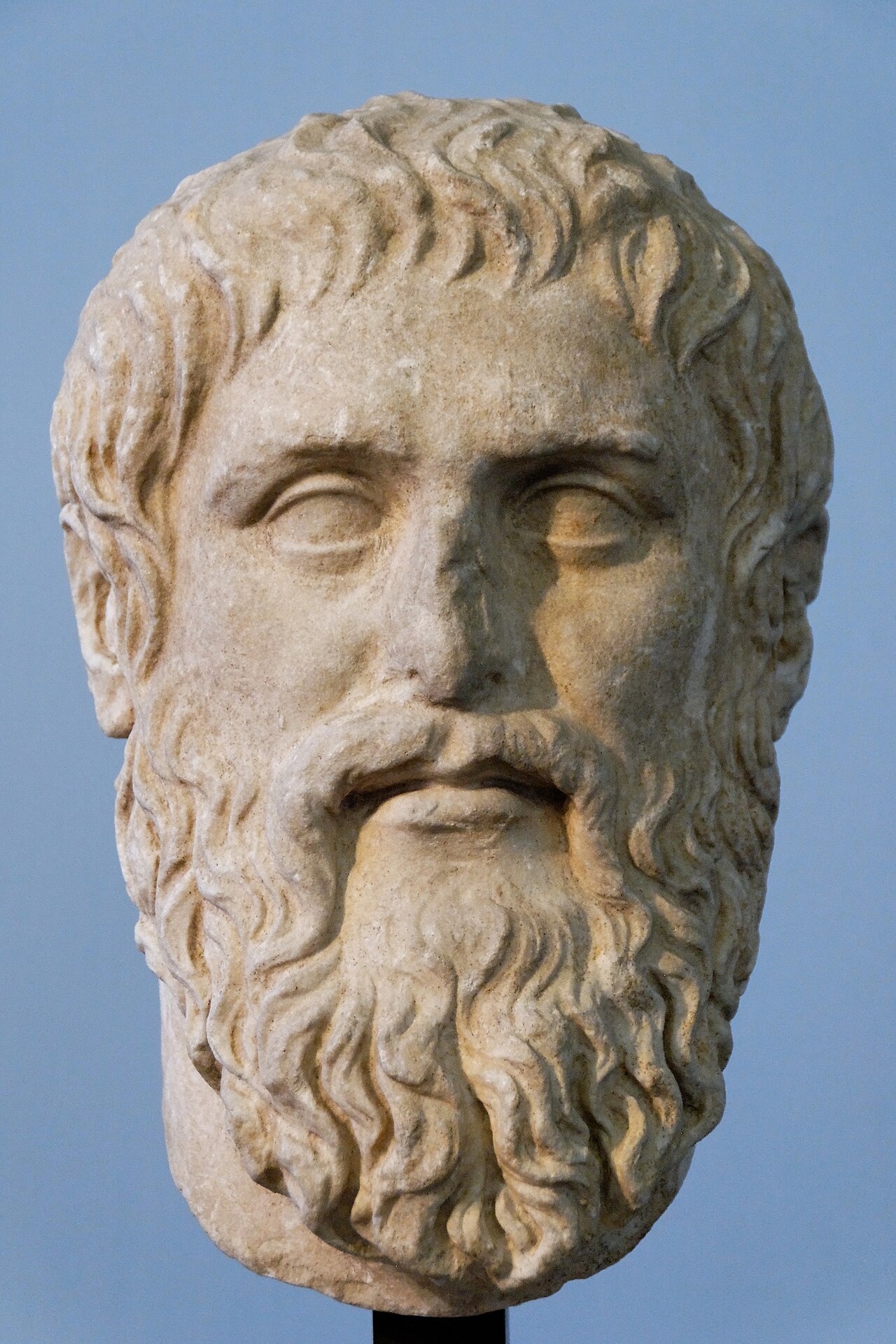
Portrait of Plato
Silanion (original type) · ca. 370 BC (original type); this copy Roman era
 Book
Secondary source
Phaedo
Plato · c. 360 BC
Ready when you are
Start chatting with Plato now.
20 messages free · No credit card · Available in 50+ languages.