


Primary sourceSculpture200 CE
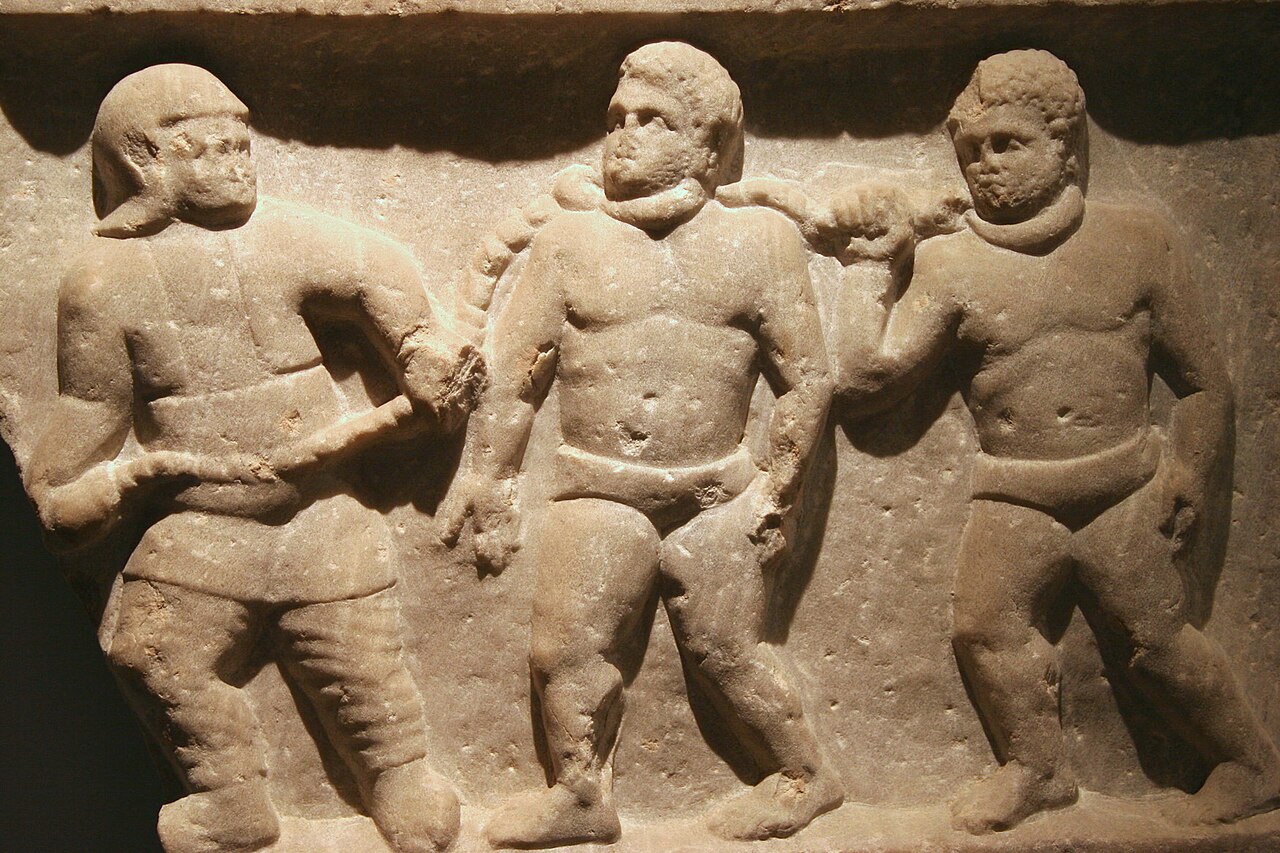
Marble Relief of Collared Roman Slaves
200 CE
A Roman marble relief from Smyrna showing enslaved men in iron collars, illustrating the condition Epictetus himself once endured.
Depicts the kind of enslavement Epictetus himself experienced before gaining his freedom.
About this source
What it is
This marble relief from Smyrna (modern Izmir, Turkey), dated to around 200 CE, shows three nude male figures, two wearing iron collars, with their arms linked together. It is held in the Ashmolean Museum in Oxford, England.
Why it matters
Epictetus was born into slavery before gaining his freedom and becoming a Stoic teacher. Though this relief dates from after his lifetime, it comes from the same region of the Roman world and shows the physical reality of enslavement that he once lived through. It helps students understand the lived experience behind his philosophy of enduring hardship.
Look closer
- What details in the relief show how the sculptor depicted the slaves' bodies and condition?
- Why might this object have been made, and for whom?
- What does this image leave out about the experience of slavery that the collars alone cannot show?
This sculpture is part of the curated material that grounds the AI version of Epictetus on Humy.ai — when students ask about related events, the AI can quote it and cite it.
More Epictetus sources
Meet the AI Epictetus →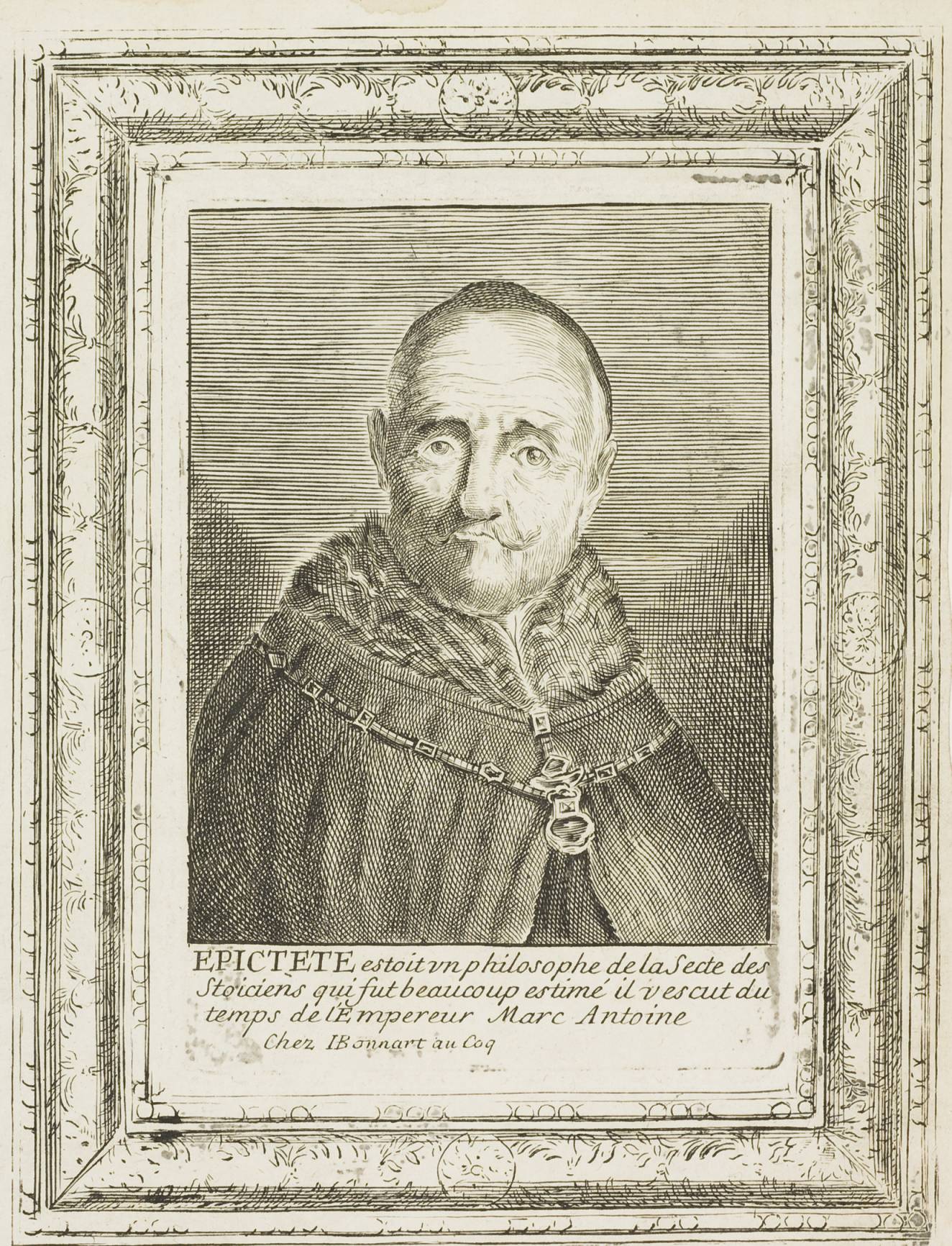 Painting
Secondary source
Epictete
Henri Bonnart · 17th century
 Book
Secondary source
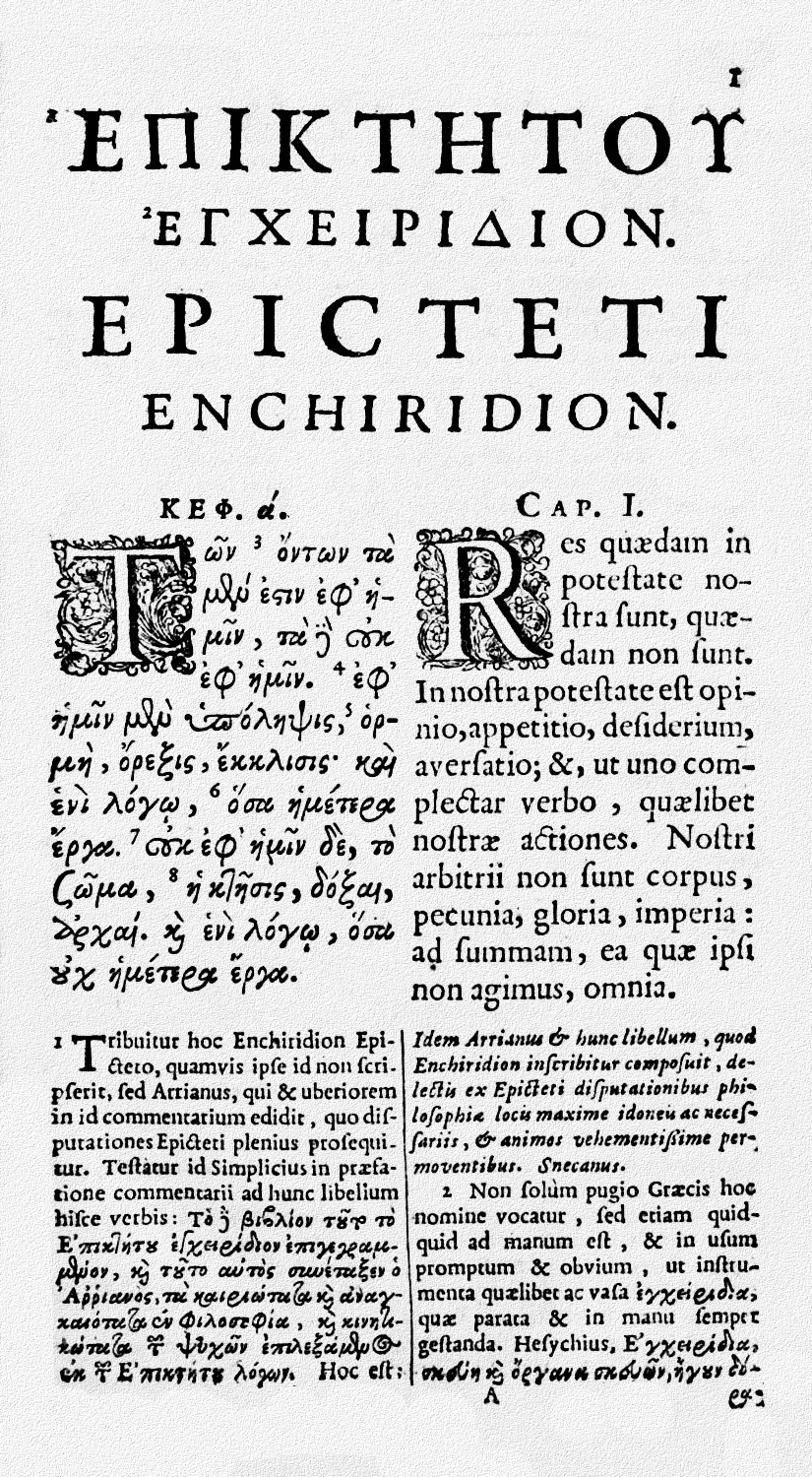
Enchiridion of Epictetus
Arrian · early 2nd century AD (this edition 1683)
 Book
Secondary source
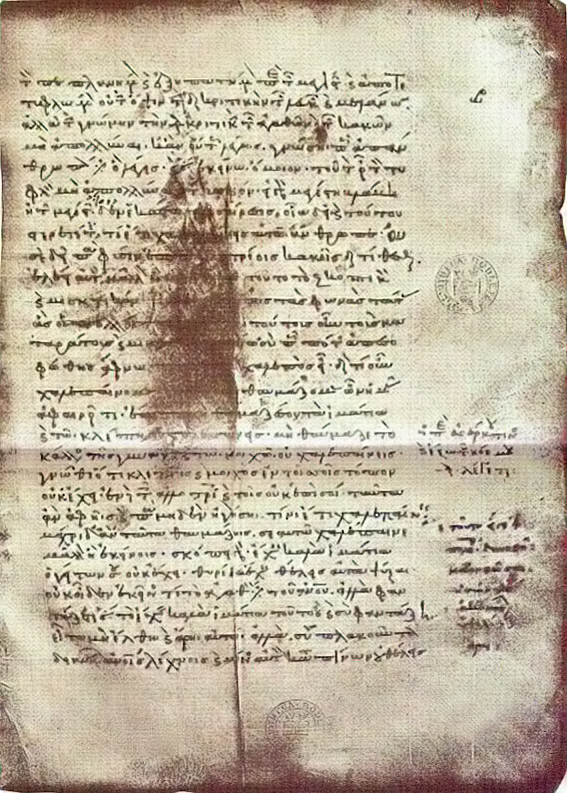
Discourses of Epictetus
Arrian · c. 108 AD
 Painting
Secondary source
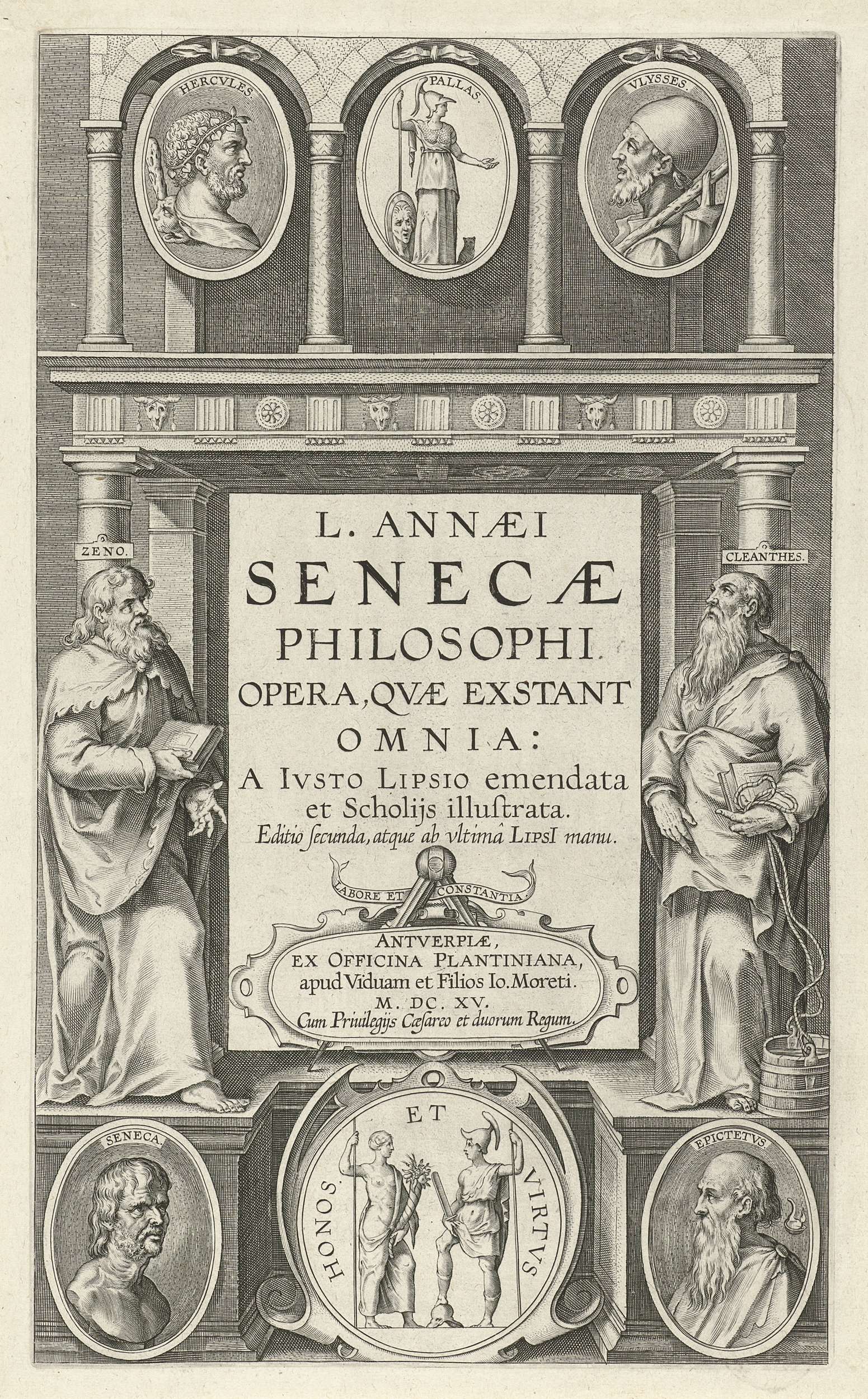
Title Page of L. Annaei Senecae Philosophi Opera
1615
DocumentSecondary source
Codex Bodleianus
c. 11th-12th century
Ready when you are
Start chatting with Epictetus now.
20 messages free · No credit card · Available in 50+ languages.