


Primary sourceBook1849
Netochka Nezvanova
Fyodor Dostoyevsky · 1849
An unfinished novel by Dostoyevsky, begun in 1848 and published in part in 1849. It was cut short by his arrest and exile for his part in the Petrashevsky Circle.
This first long novel was interrupted when Dostoyevsky was arrested in 1849, and it reflects his early literary ambitions before his exile.
About this source
What it is
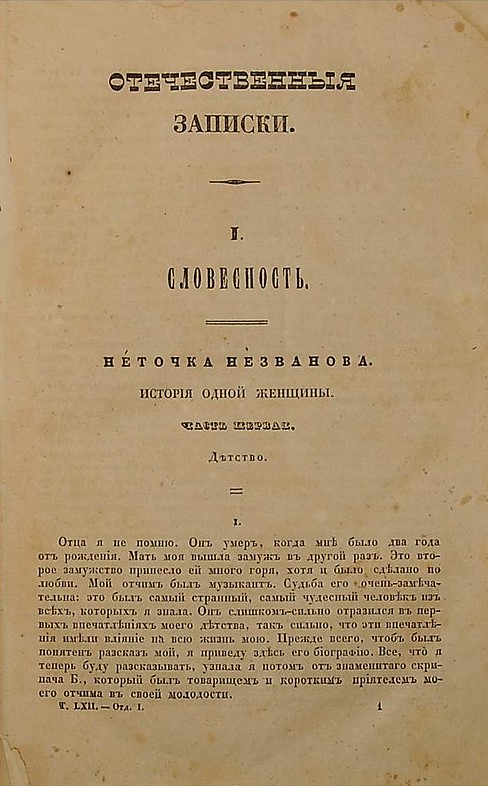
An unfinished novel by Dostoyevsky, written in the style of a Bildungsroman. Only a background sketch of the heroine's childhood and adolescence was completed and published. Its first completed section appeared at the end of 1849 in the journal Otechestvennye Zapiski. The page shown is a scan of that journal, with the first paragraph of the Russian text. The heroine recalls her stepfather, a violinist whose madness brings poverty and ends with him killing her mother.
Why it matters
Dostoyevsky intended the novel as a large work in the form of a confession, but his arrest for his part in the Petrashevsky Circle and his exile to a Siberian detention camp prevented him from continuing it. He never resumed work on it after his return in 1859. The surviving text is a fragment that shows his early interest in art, the artist and emotional life.
Look closer
- How does the young narrator's voice shape what the reader learns about the stepfather?
- Why might the unfinished state of the novel matter to how we read it?
- What does the journal page show about how the story first reached its readers?
This book is part of the curated material that grounds the AI version of Fyodor Dostoevsky on Humy.ai — when students ask about related events, the AI can quote it and cite it.
More Fyodor Dostoevsky sources
Meet the AI Fyodor Dostoevsky →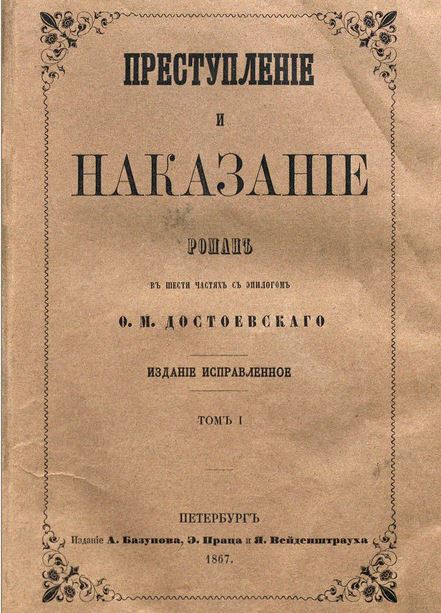 Book
Primary source
Crime and Punishment
Fyodor Dostoyevsky · 1866
 Book
Primary source
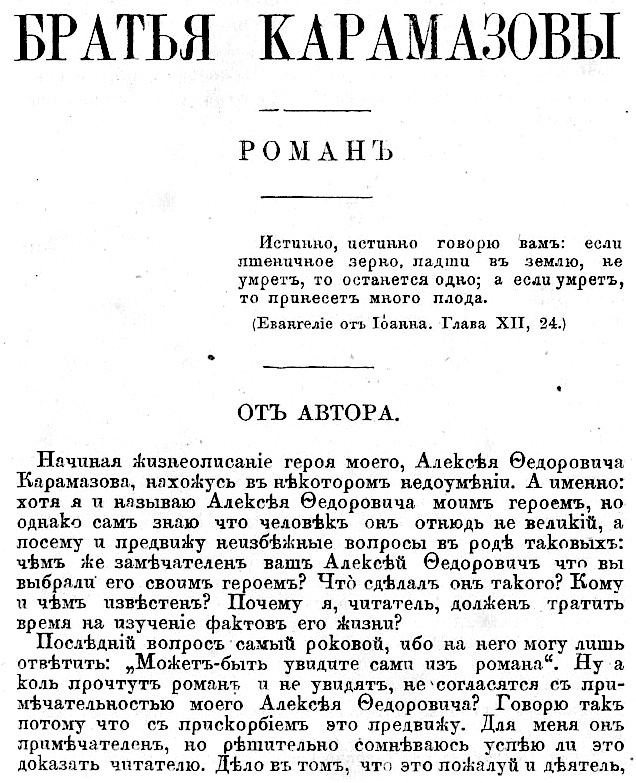
The Brothers Karamazov
Fyodor Dostoyevsky · 1879-1880
Primary source
The Grand Inquisitor
Fyodor Dostoyevsky · 1879
 Book
Primary source
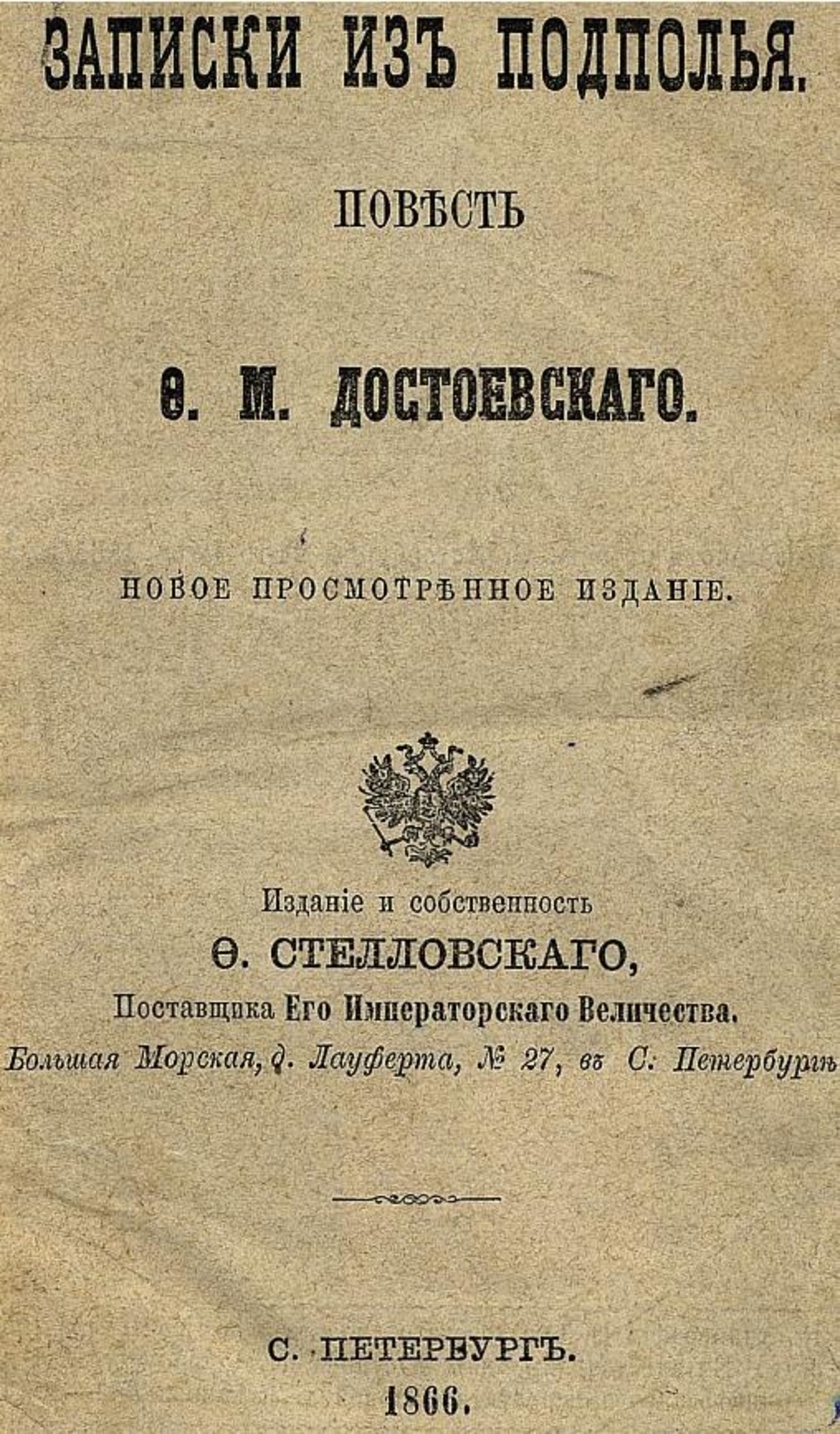
Notes from Underground
Fyodor Dostoyevsky · 1864
 Book
Primary source
The House of the Dead
Fyodor Dostoyevsky · 1860-1862
Ready when you are
Start chatting with Fyodor Dostoevsky now.
20 messages free · No credit card · Available in 50+ languages.