


Secondary sourceBook1513
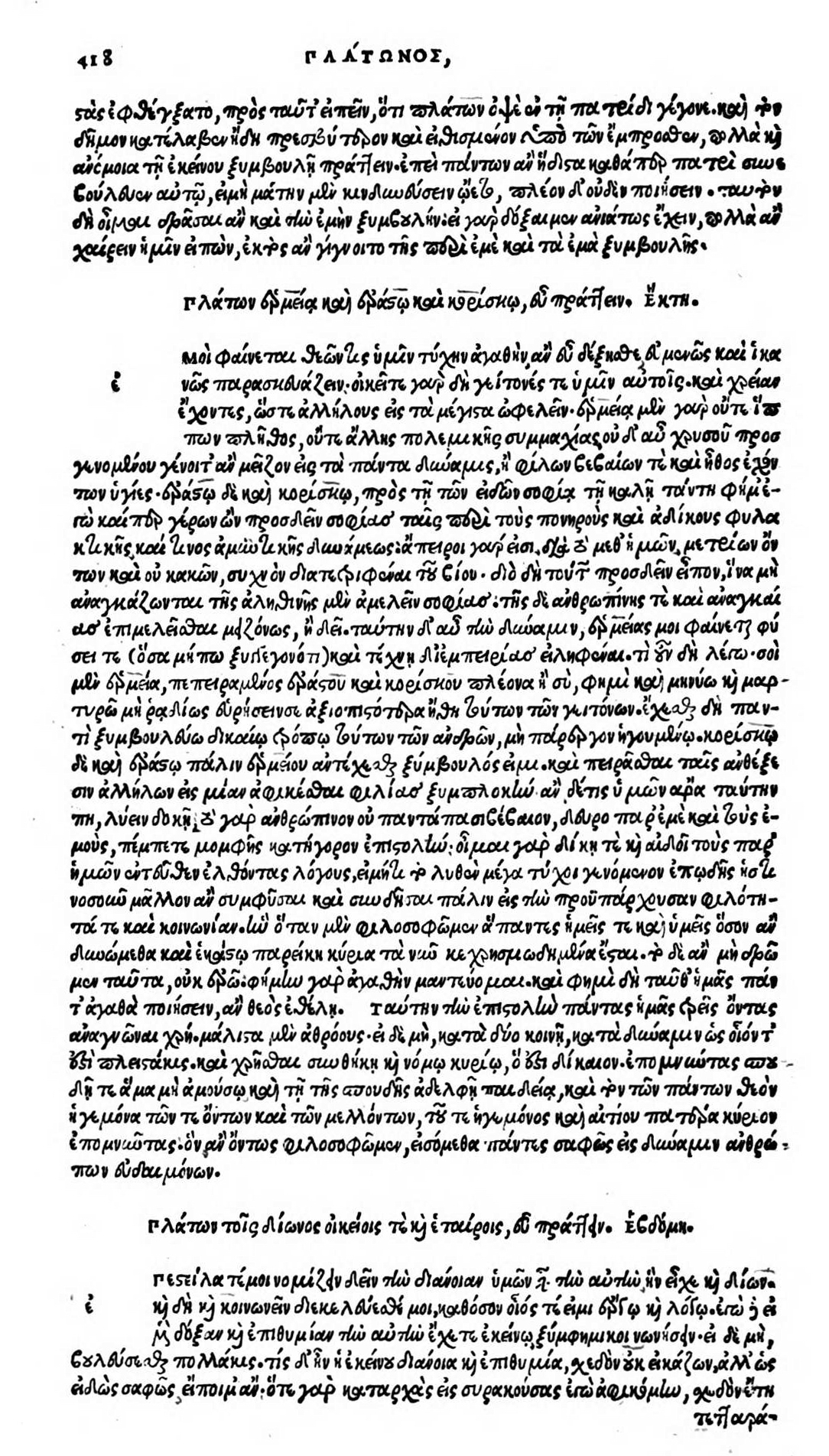
Opening of Plato's Epistles VI and VII, Venice 1513
Plato · 1513
A page from the first printed edition of Plato's letters, including the Seventh Letter where he discusses his political views.
This is an early printed edition of letters attributed to Plato, preserving his own account of his political life.
About this source
What it is
This is a page from the editio princeps (first printed edition) of Plato's letters, printed in Venice in 1513. It shows the opening of Epistles VI and VII, printed in Greek black-letter type.
Why it matters
The Seventh Letter is one of the few texts attributed to Plato that discusses his own life and political experiences directly. This 1513 printing shows how Plato's writings were preserved, copied, and eventually spread through the new technology of printing, more than a thousand years after he lived.
- What does the layout of the page tell you about how Greek texts were printed in the early 1500s?
- Why might printers choose to publish Plato's letters as one of the first printed editions?
- What is lost or changed when an ancient text is copied by hand for centuries before being printed?
This book is part of the curated material that grounds the AI version of Plato on Humy.ai — when students ask about related events, the AI can quote it and cite it.
More Plato sources
Meet the AI Plato →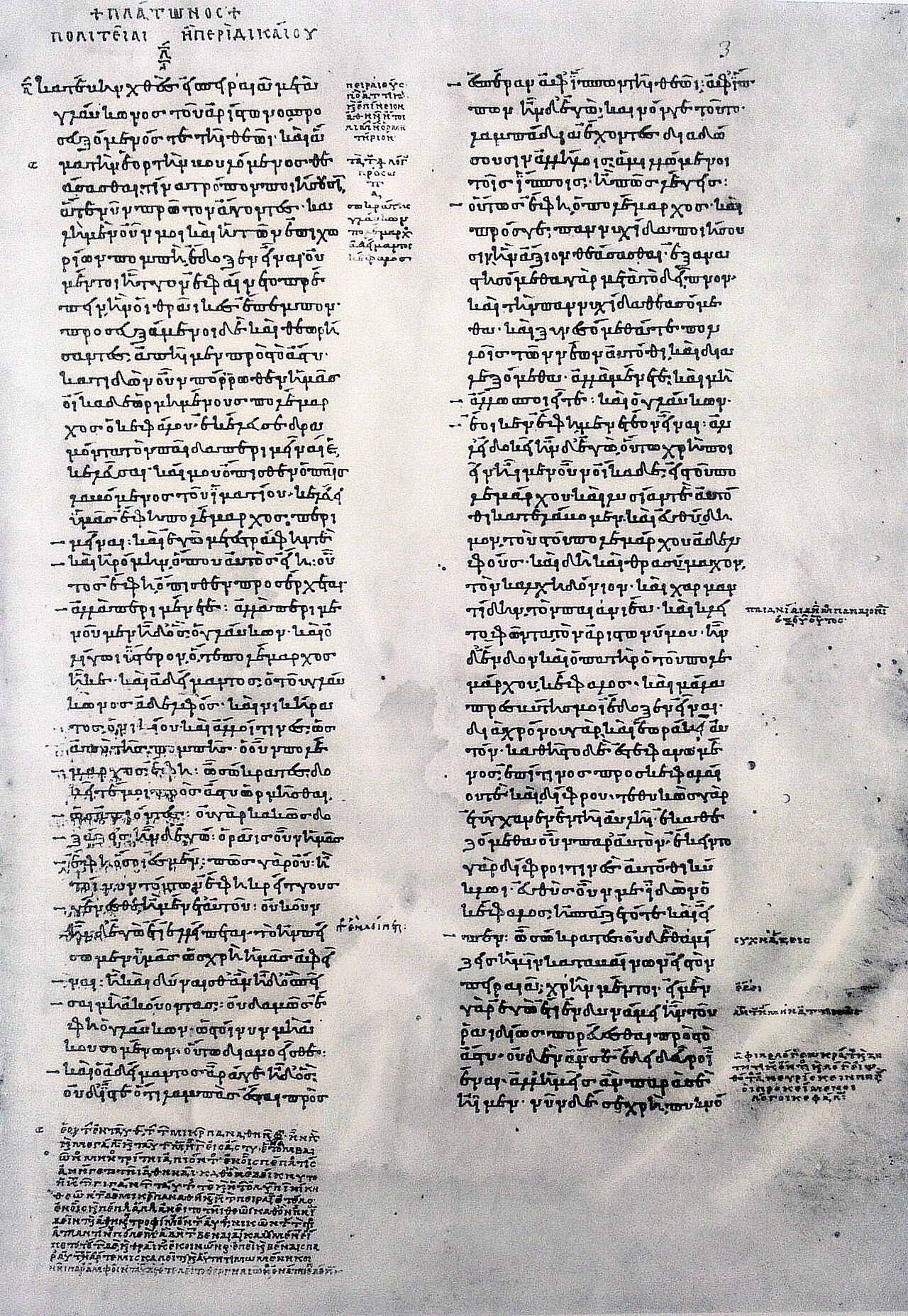 Book
Secondary source
The Republic
Plato · c. 375 BC
 Book
Primary source
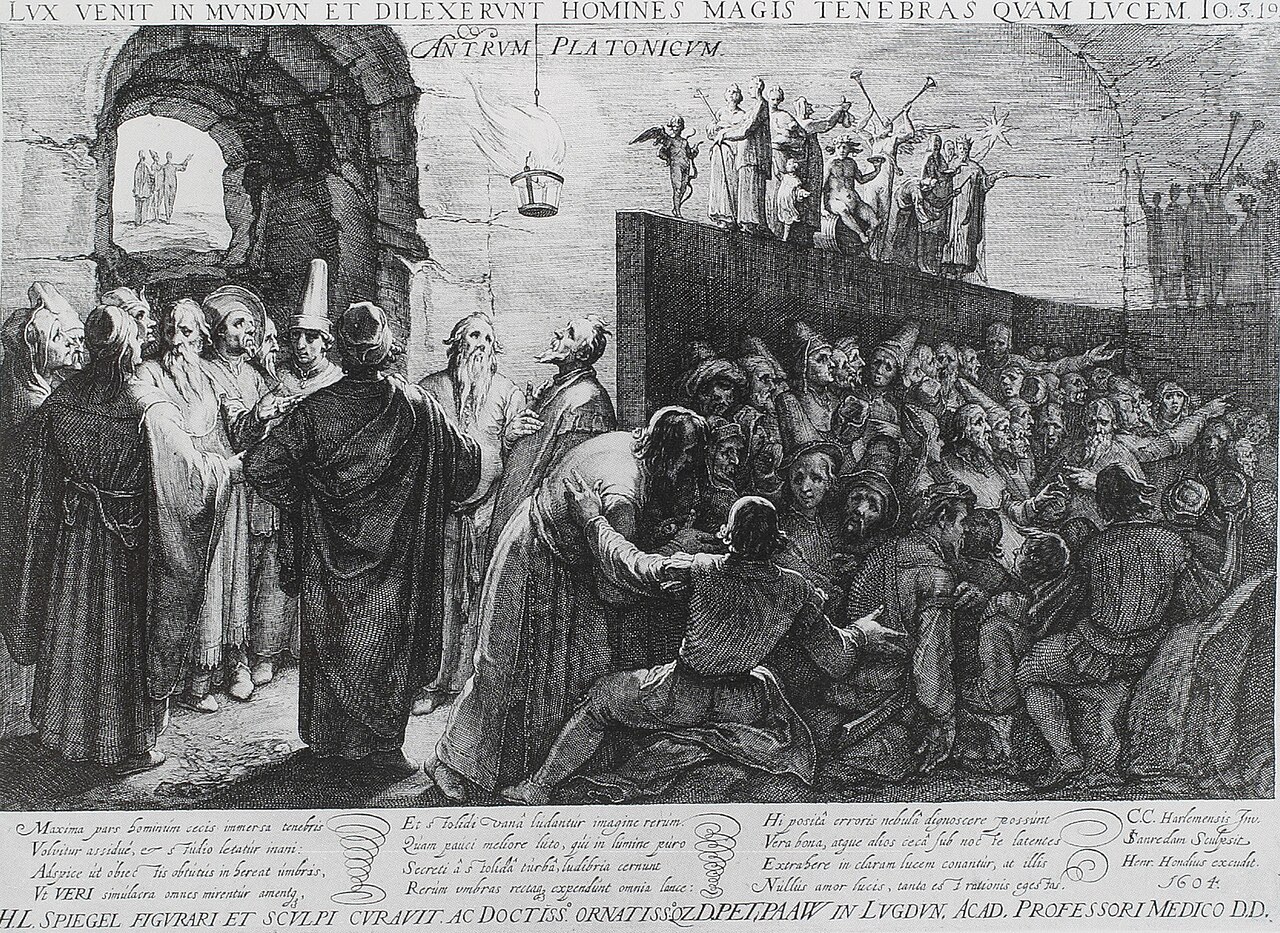
Allegory of the Cave
Plato · c. 400 BC
Secondary source
Apology
Plato · c. 395 BC
 Sculpture
Secondary source
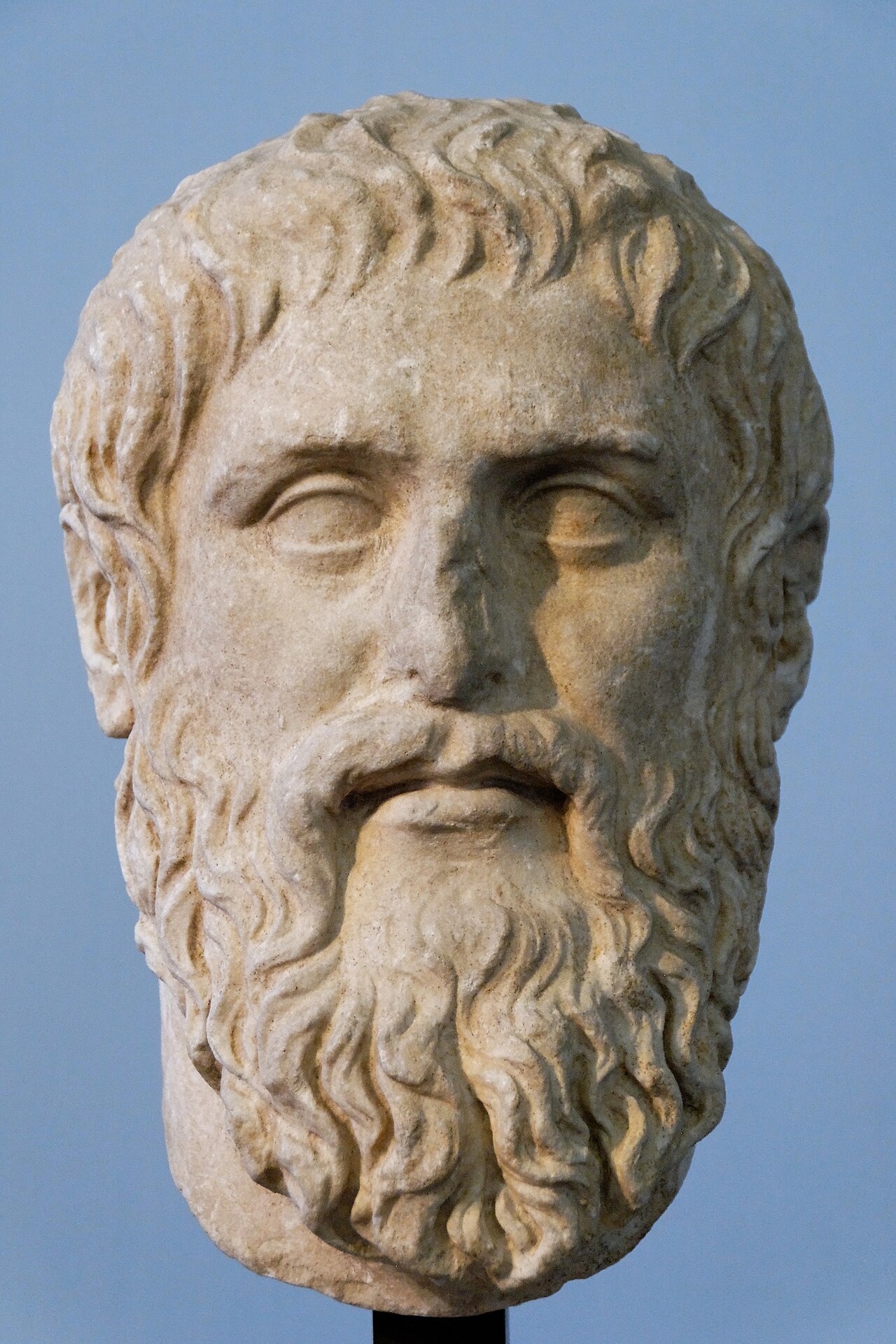
Portrait of Plato
Silanion (original type) · ca. 370 BC (original type); this copy Roman era
 Book
Secondary source
Phaedo
Plato · c. 360 BC
Ready when you are
Start chatting with Plato now.
20 messages free · No credit card · Available in 50+ languages.