


Secondary sourceBookc. 200 CE
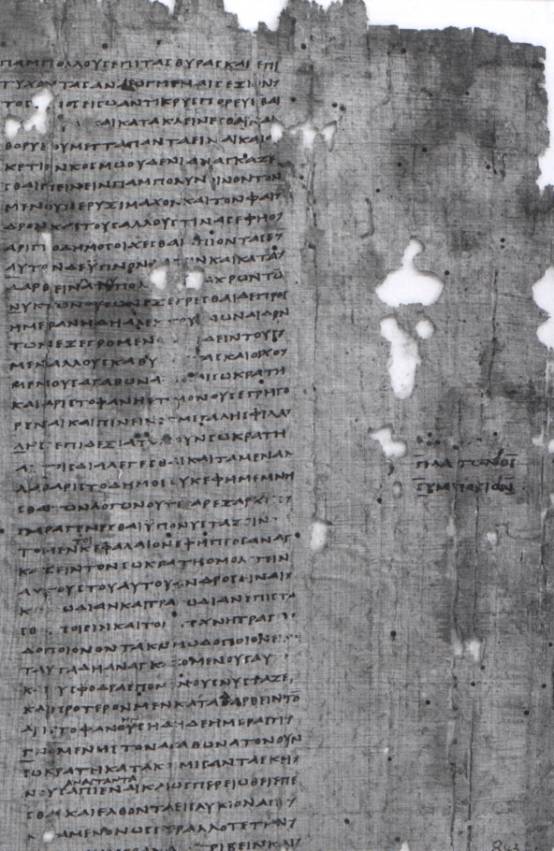
Oxyrhynchus Papyrus 843 (Plato, Symposium)
c. 200 CE
A fragmentary Roman-era papyrus roll from Egypt that preserves part of Plato's Symposium, showing how the dialogue was read in antiquity.
This papyrus is a later copy of Plato's Symposium, showing how his dialogue was read in the centuries after he wrote it.
About this source
What it is
This is a photograph of a fragmentary papyrus manuscript containing Greek text of Plato's Symposium. The text is written in dark brown ink in columns, and parts of the papyrus are torn or missing. It is held in the Cairo Museum under the number 41082, and a marginal label appears at the lower right. The scribe is unknown. The papyrus is dated to about 200 CE, long after Plato wrote the dialogue.
Why it matters
The papyrus shows that Plato's dialogues were read and copied centuries after his death in 348 BCE. Copies like this one were used long before the medieval codices that preserve most of Plato's works. Finding such fragments in Egypt shows that his writing had readers far from Athens.
Look closer
- What can the damaged, torn areas tell you about how the roll was used, stored and lost?
- Why would someone in Roman Egypt copy a dialogue written in Athens centuries earlier?
- What parts of the Symposium are missing from this fragment, and how would you find out what they said?
This book is part of the curated material that grounds the AI version of Plato on Humy.ai — when students ask about related events, the AI can quote it and cite it.
More Plato sources
Meet the AI Plato →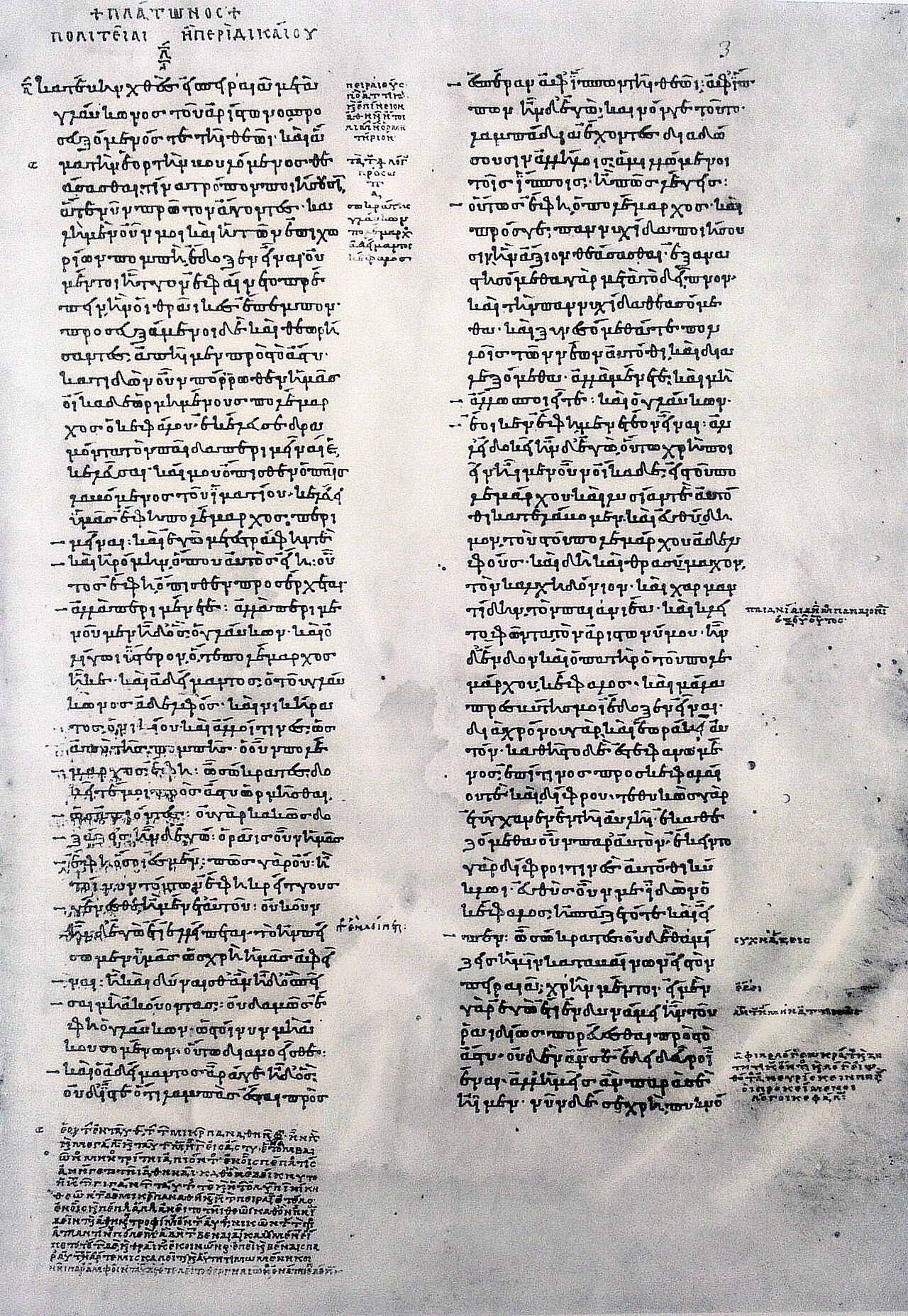 Book
Secondary source
The Republic
Plato · c. 375 BC
 Book
Primary source
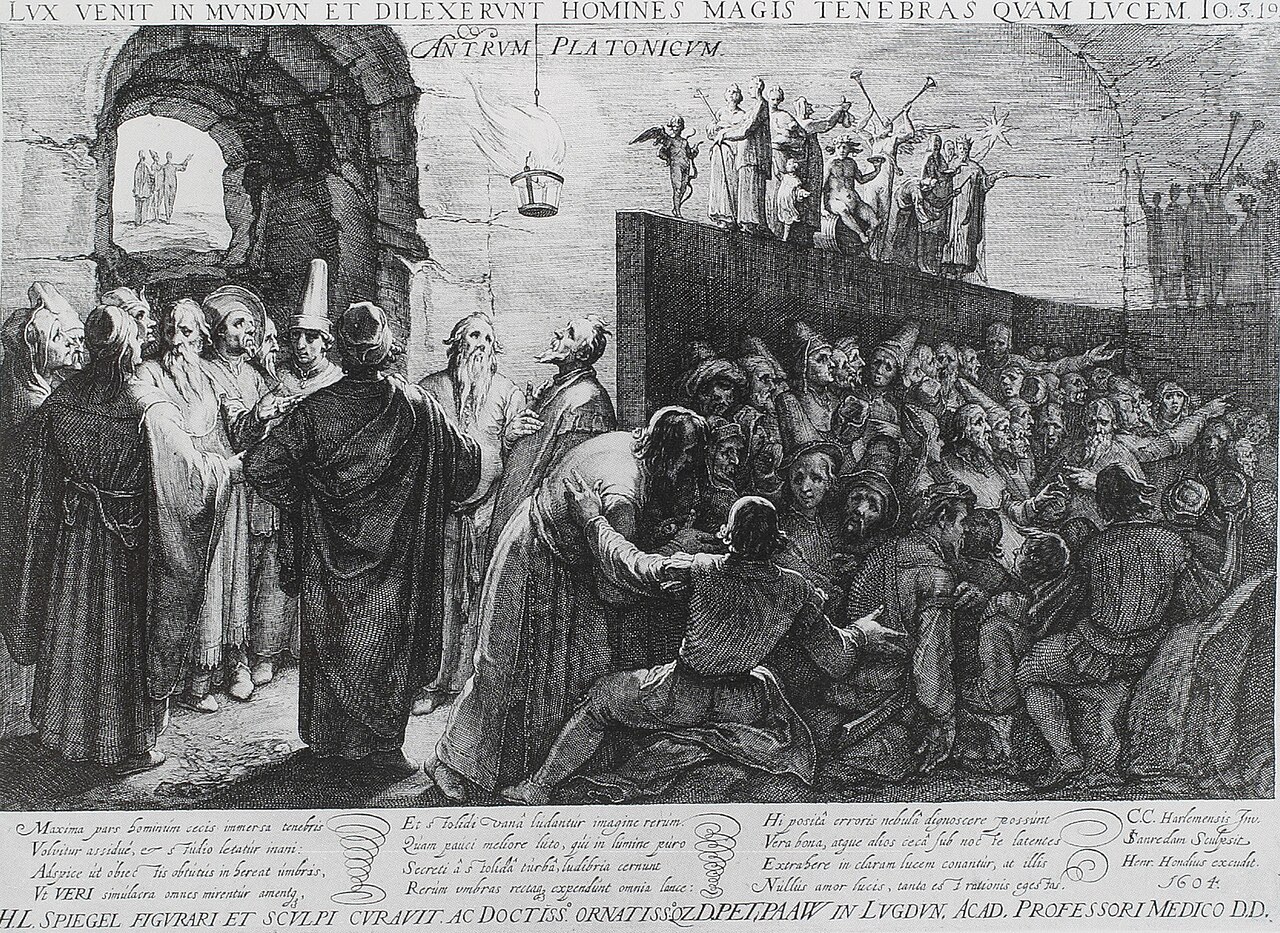
Allegory of the Cave
Plato · c. 400 BC
Secondary source
Apology
Plato · c. 395 BC
 Sculpture
Secondary source
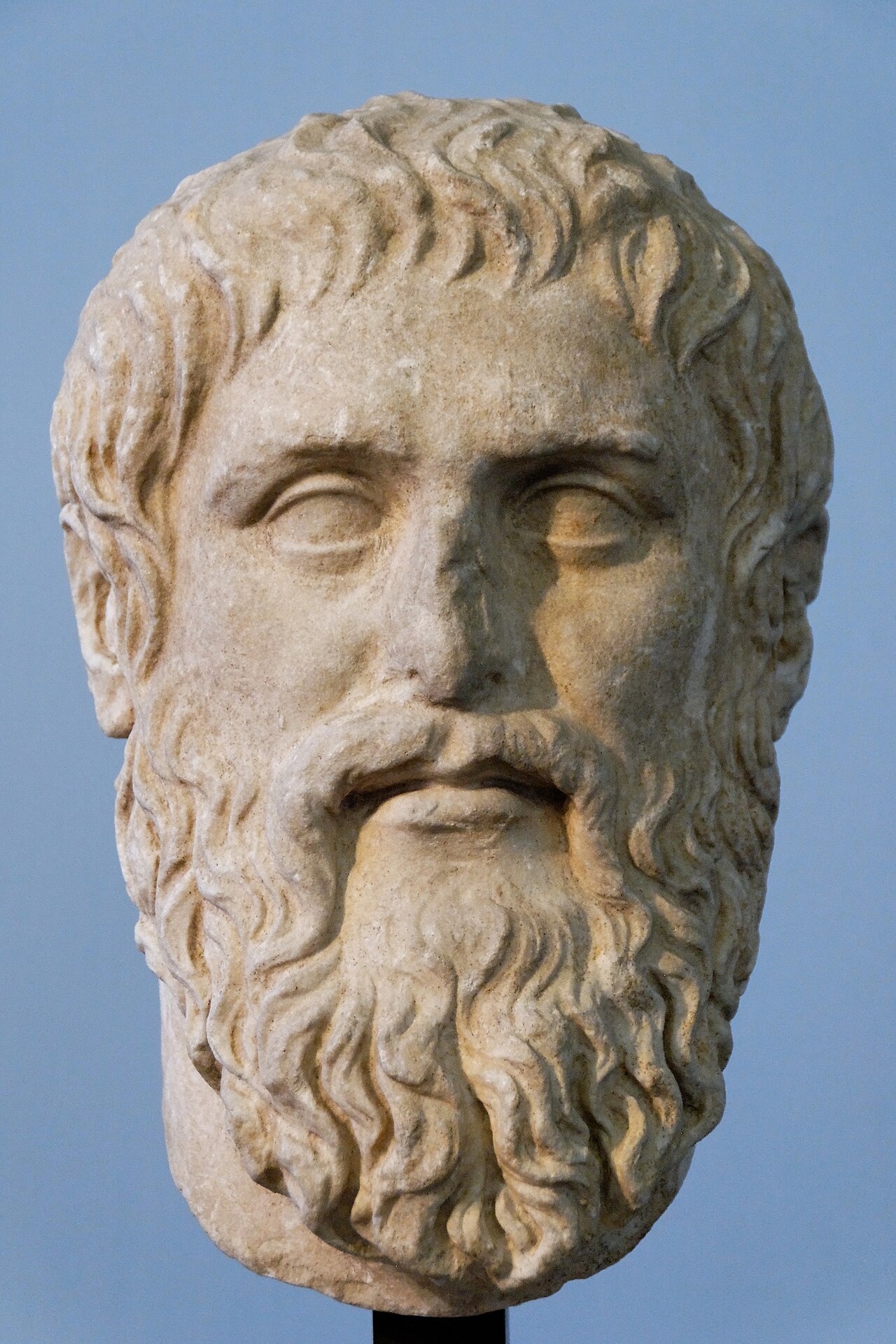
Portrait of Plato
Silanion (original type) · ca. 370 BC (original type); this copy Roman era
 Book
Secondary source
Phaedo
Plato · c. 360 BC
Ready when you are
Start chatting with Plato now.
20 messages free · No credit card · Available in 50+ languages.