


Secondary sourcePainting1st century AD
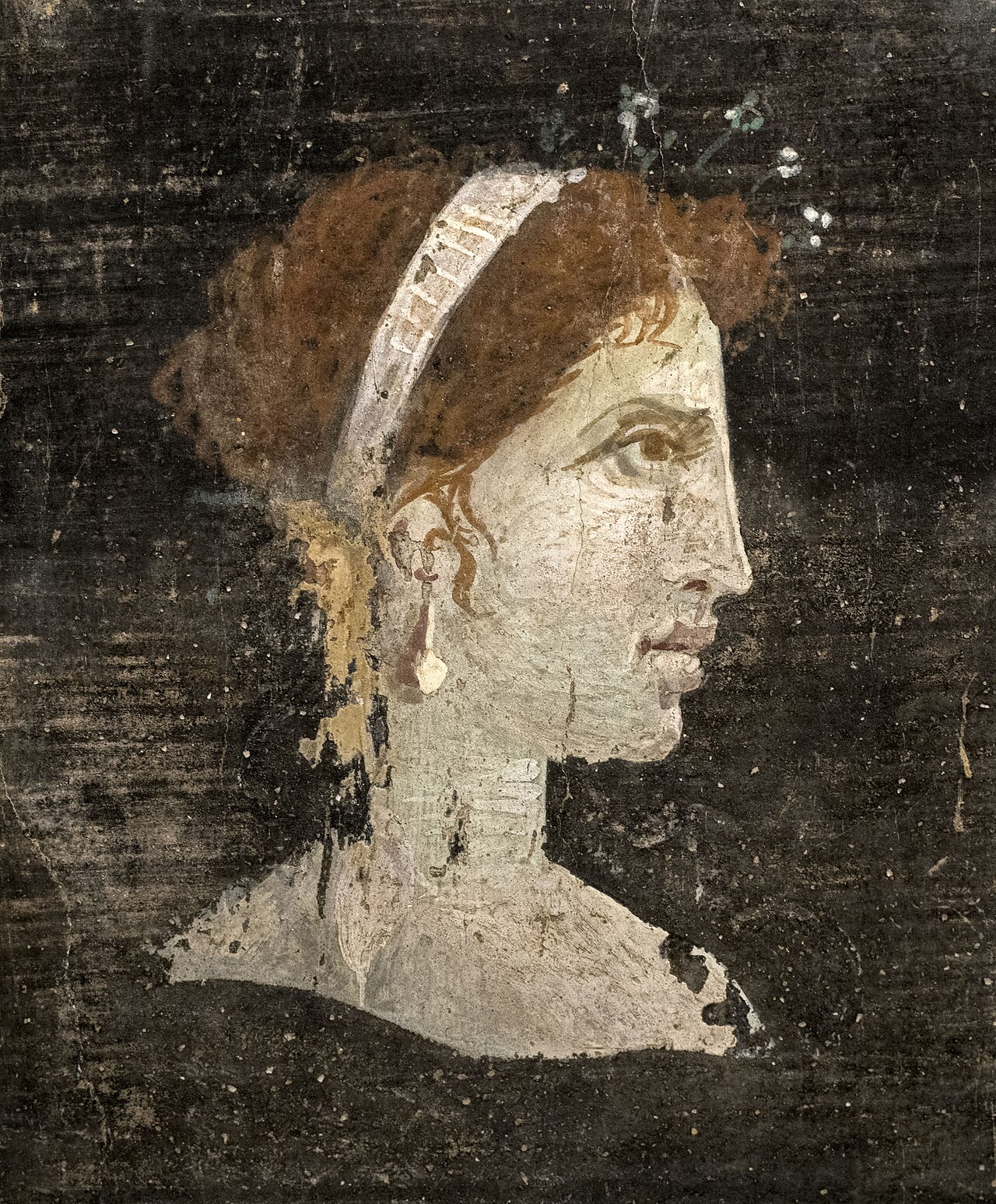
Painted Portrait of Cleopatra from Herculaneum
1st century AD
A first-century Roman fresco portrait thought to show Cleopatra, painted after her death and now in Naples.
This Roman fresco is believed to be a posthumous portrait of Cleopatra, showing how her image survived after her reign.
About this source
What it is
A fresco from a villa at Herculaneum, painted in the first century AD, before the town was buried by the eruption of Mount Vesuvius. It shows a woman in profile with reddish hair, a white headband, and pearl-studded hairpins, now kept in the National Archaeological Museum of Naples.
Why it matters
According to the researcher Joann Fletcher, the woman's features, royal diadem, and hairstyle suggest this is a posthumous portrait of Cleopatra VII, painted by Roman artists after she had died. It shows how Cleopatra's image continued to circulate in the Roman world long after her reign ended.
Look closer
- What details in the painting led a researcher to identify this as Cleopatra rather than another woman?
- Why might Romans continue to paint her image after her death?
- How reliable can a portrait be if it was painted after its subject had already died?
This painting is part of the curated material that grounds the AI version of Cleopatra on Humy.ai — when students ask about related events, the AI can quote it and cite it.
More Cleopatra sources
Meet the AI Cleopatra → Document
Primary source
Papyrus with Signature of Cleopatra VII
Ptolemaic scribe; possibly countersigned by Cleopatra VII · February 33 BCE
 Painting
Secondary source
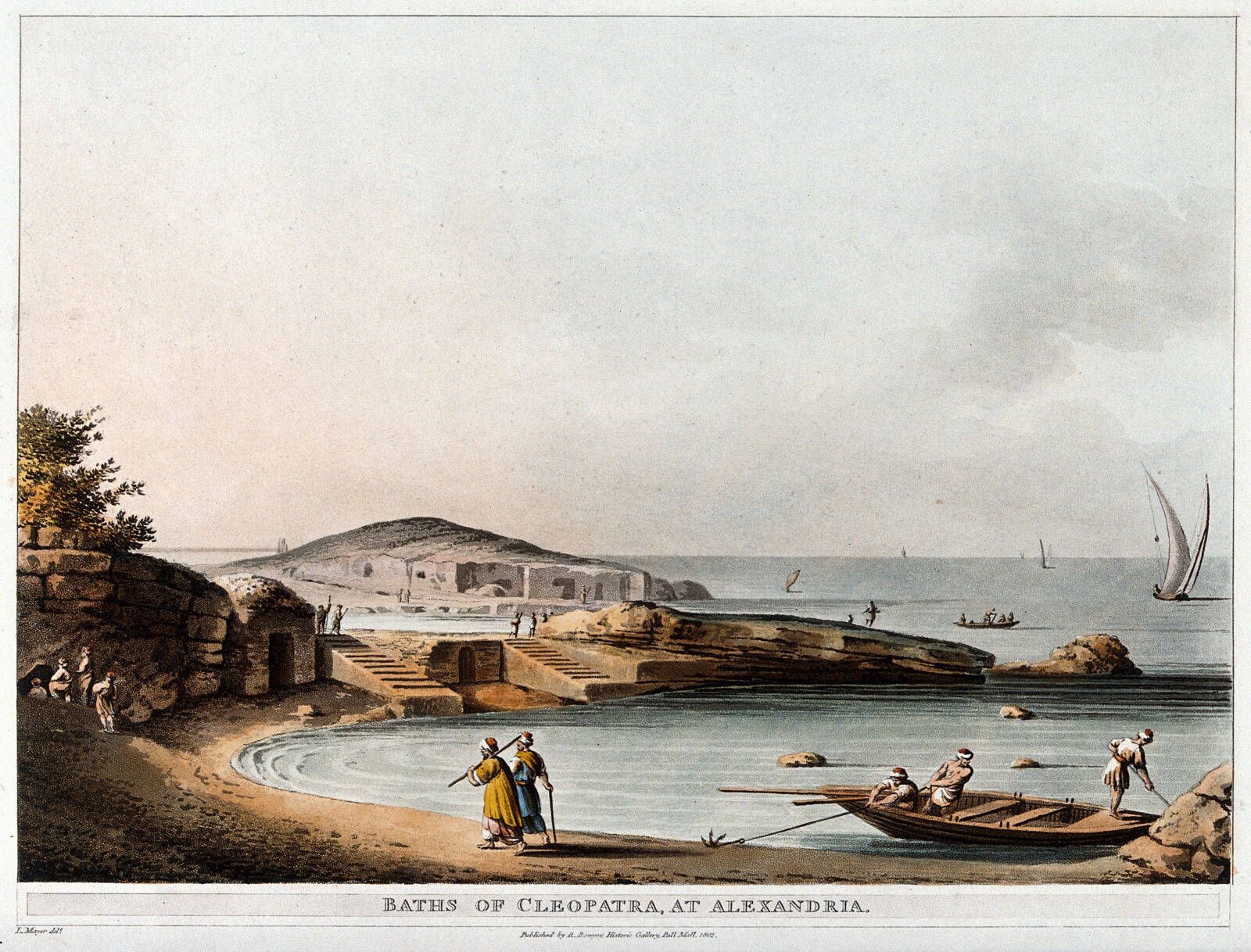
Baths of Cleopatra, at Alexandria
Luigi Mayer · 1802
 Sculpture
Secondary source
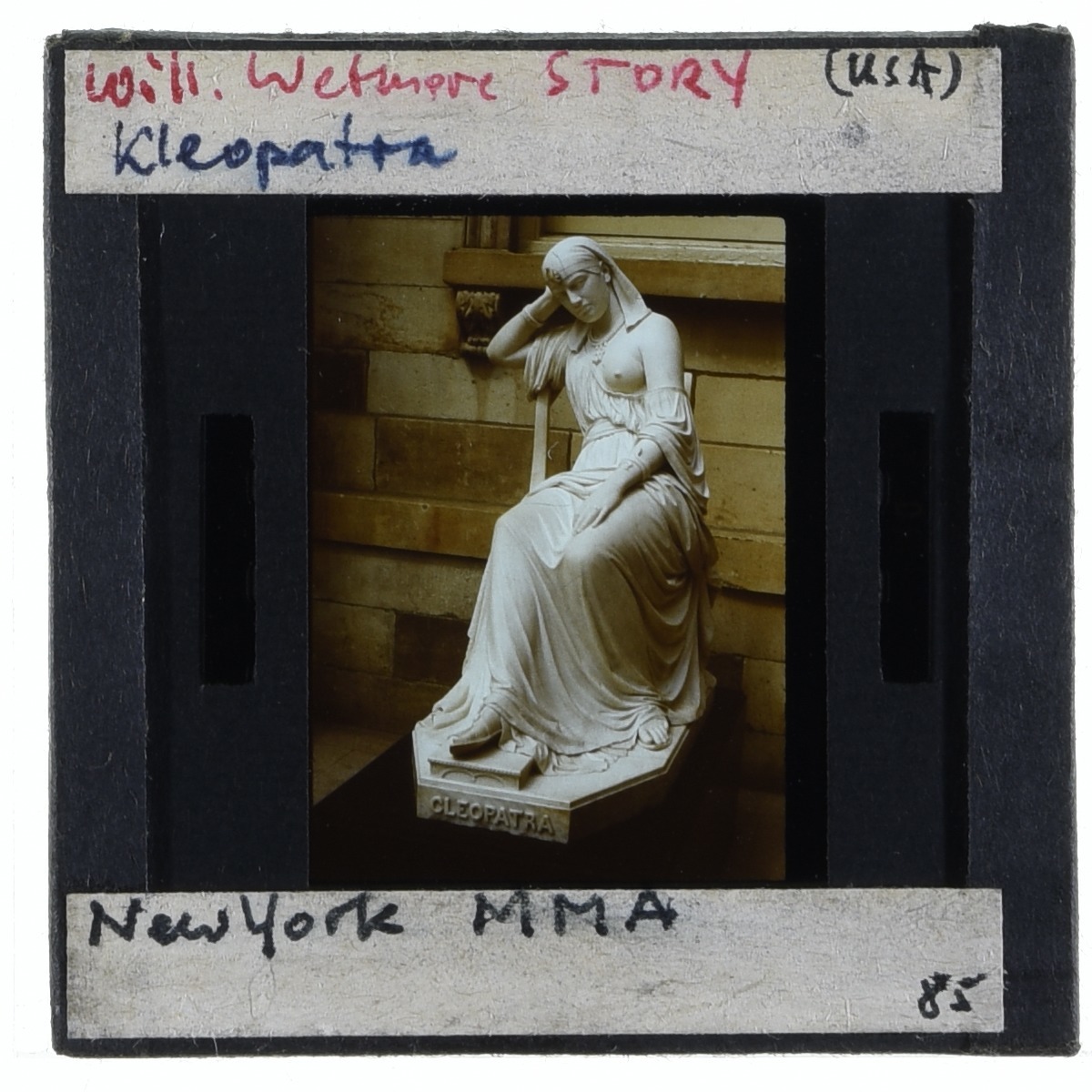
Cleopatra
William Wetmore Story
 Sculpture
Primary source
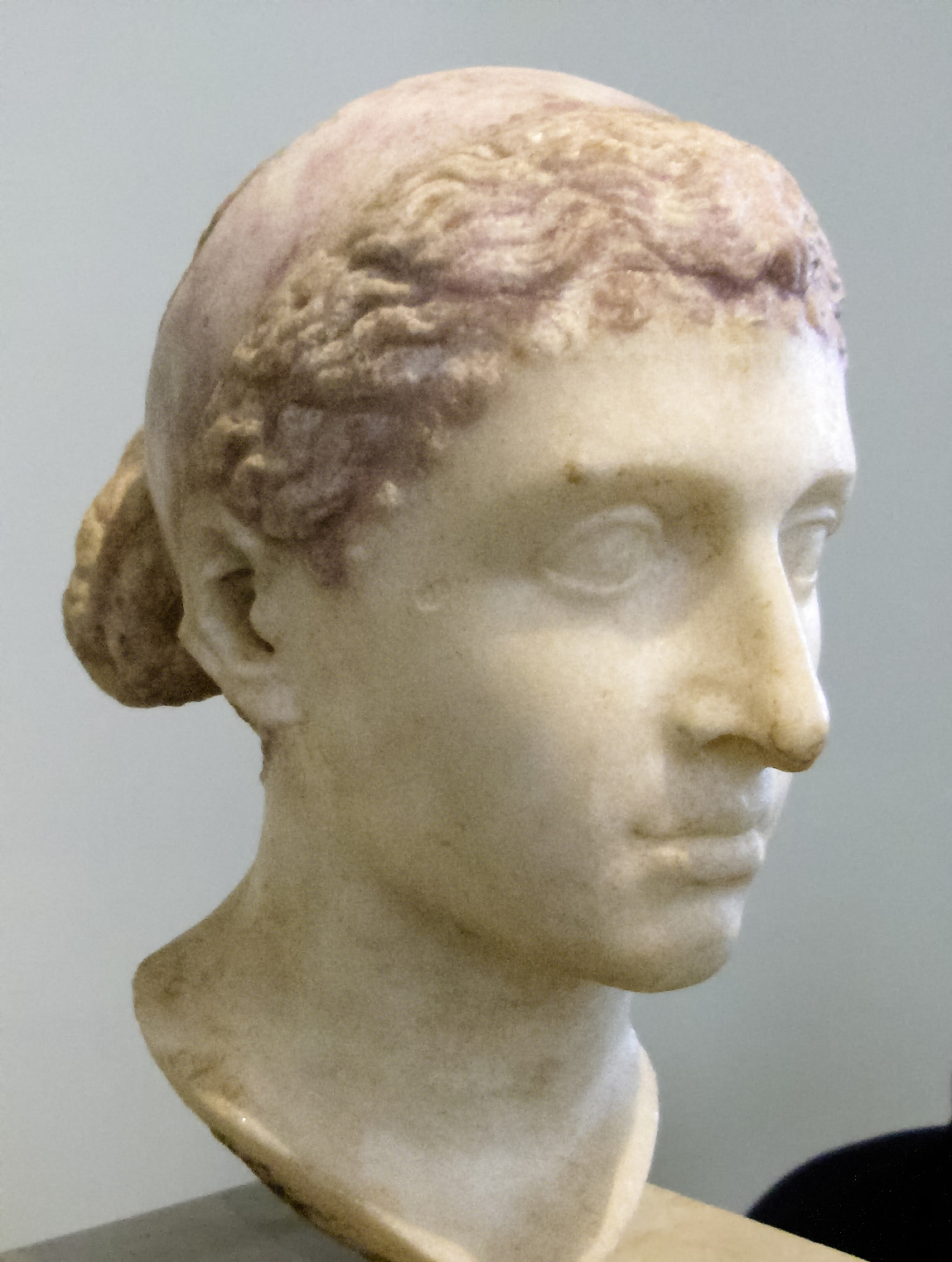
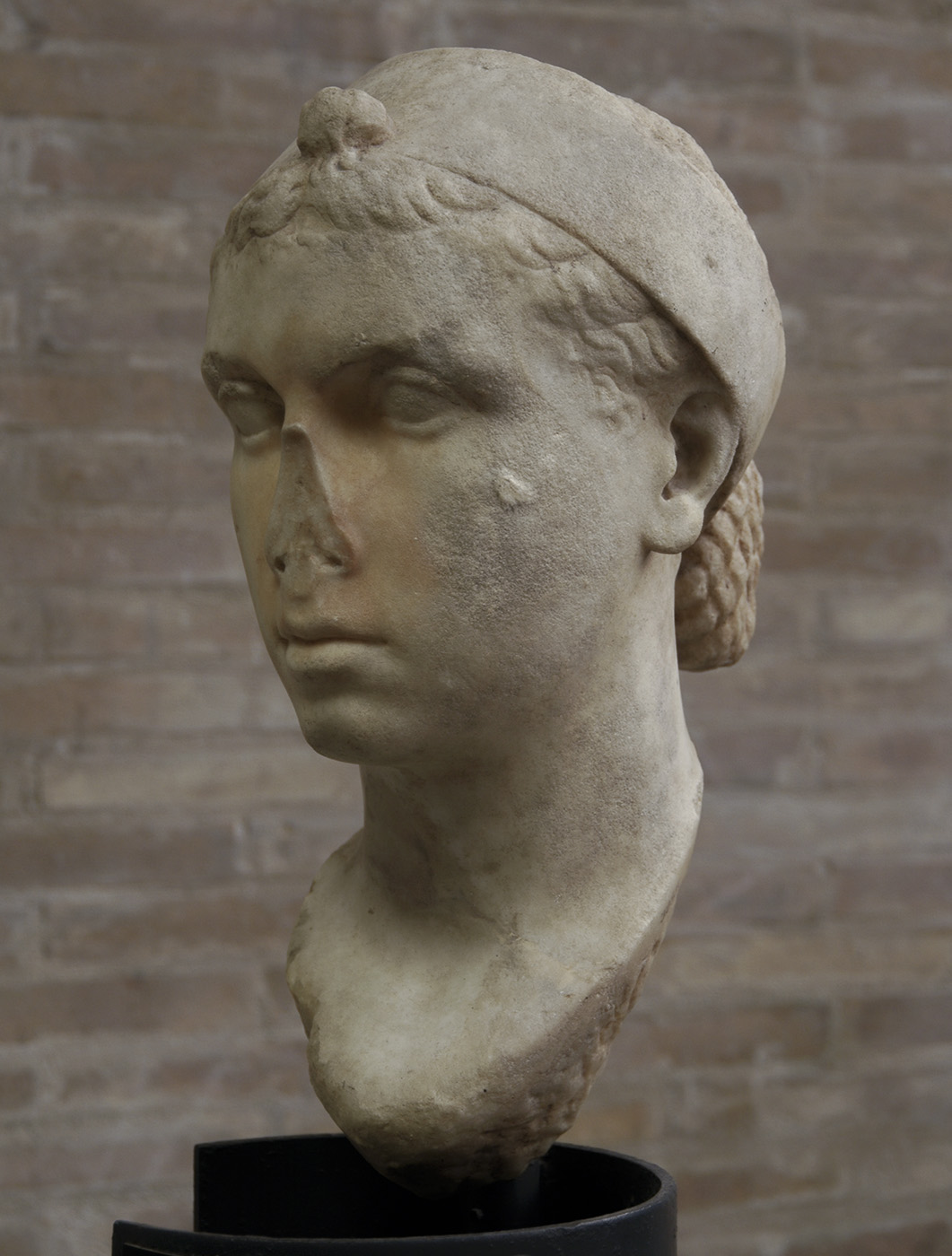
Portrait of Cleopatra (Berlin Bust)
c. 40-30 BCE
 Sculpture
Primary source
Head-Portrait of Cleopatra VII (Vatican Bust)
c. 40-30 BCE
Ready when you are
Start chatting with Cleopatra now.
20 messages free · No credit card · Available in 50+ languages.