


Secondary sourcePaintingc. 1793 (uncertain)
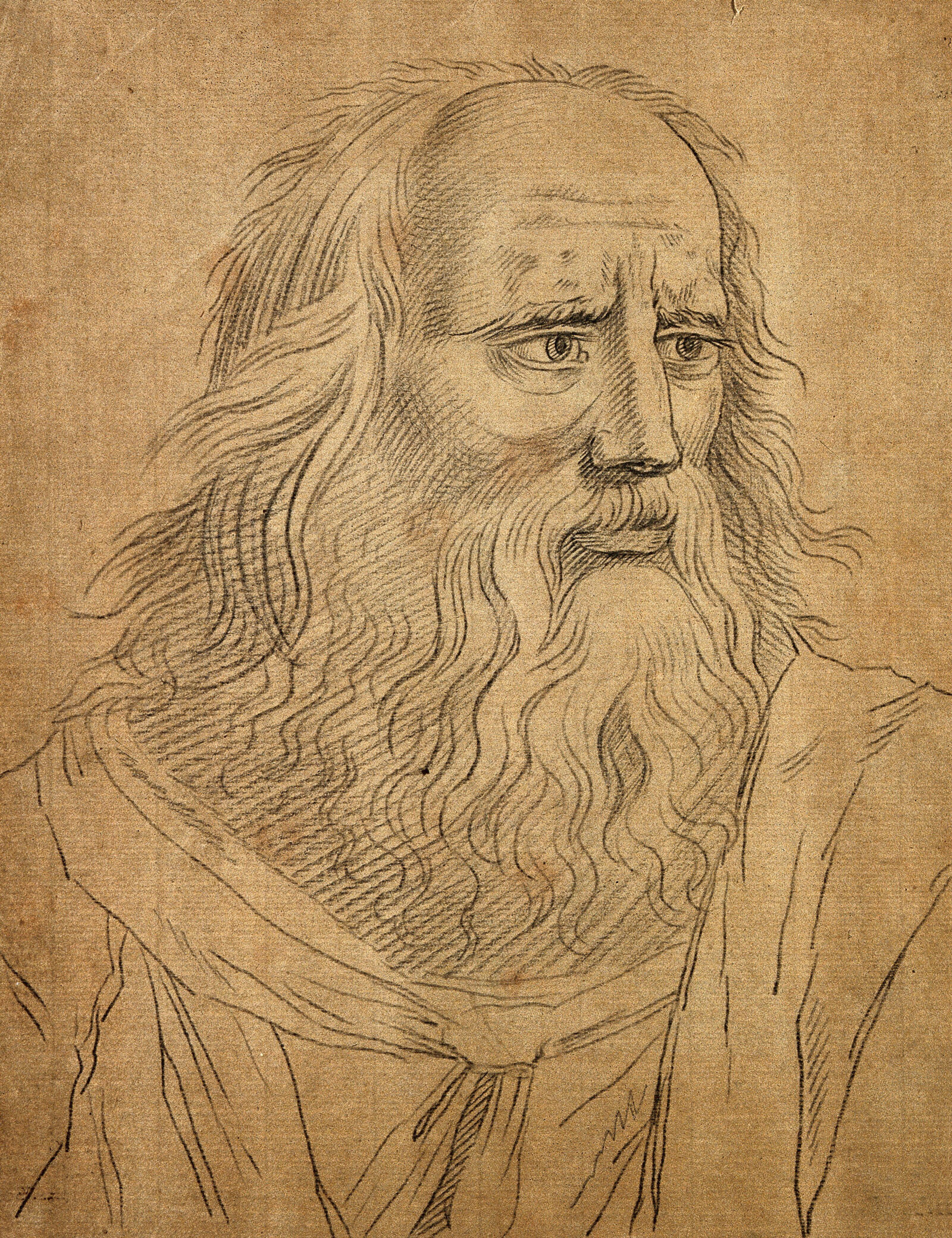
Plato, drawing after Raphael
c. 1793 (uncertain)
A pencil or ink drawing of Plato's head, copied from Raphael's School of Athens, made around 1793 for an English edition of Lavater's physiognomy book.
Shows how Plato's face, taken from Raphael's School of Athens, was reused in a late 1700s book on physiognomy.
About this source
What it is
This is a pencil or ink drawing on tan paper showing a bearded old man with long wavy hair. His head is turned slightly to the right, his brow is furrowed, and his eyes are downcast. The drawing reproduces the head of Plato from Raphael's School of Athens, where Plato holds a volume of the Timaeus. It was made around 1793 as one of a series of drawings for the English version of Johann Caspar Lavater's Essays on Physiognomy, a book about reading character from faces. The Wellcome Collection in London holds it. The record does not name the person who drew it.
Why it matters
The drawing shows how Plato's face was pictured long after his death. Its source is Raphael's painting, and it was reused in a book about faces and character. Thomas Holloway (1748-1827) supervised the artwork for the English edition, which re-engraved many works from the original German and French publications. So the image tells us as much about the late 1700s, when people studied faces this way, as about ancient Athens.
Look closer
- What expression has the artist given Plato, and what kind of character might the book want readers to see there?
- How is this copy different from the figure in Raphael's painting, and what might explain the changes?
- What does this image leave out about Plato's ideas and his writing?
This painting is part of the curated material that grounds the AI version of Plato on Humy.ai — when students ask about related events, the AI can quote it and cite it.
More Plato sources
Meet the AI Plato →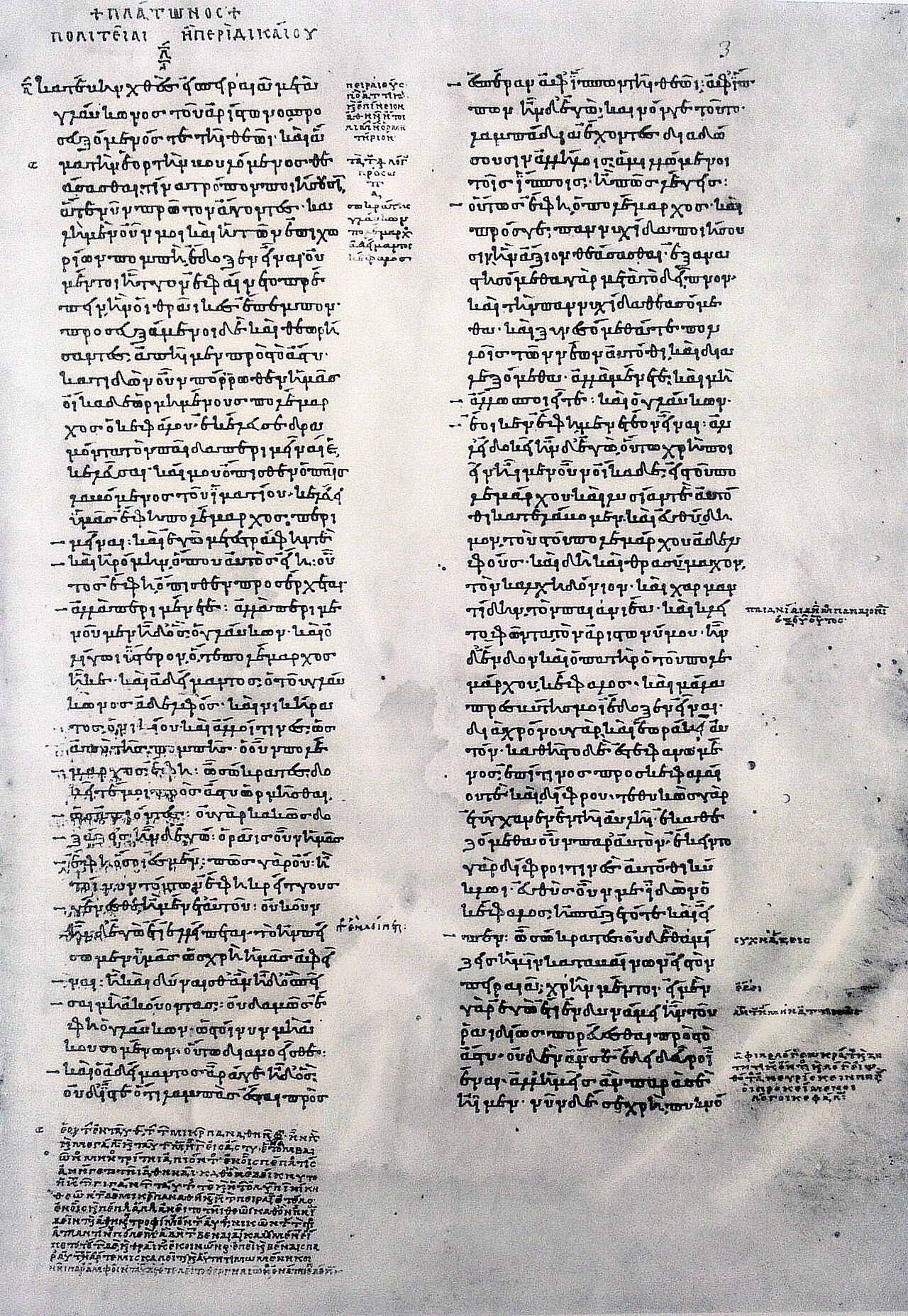 Book
Secondary source
The Republic
Plato · c. 375 BC
 Book
Primary source
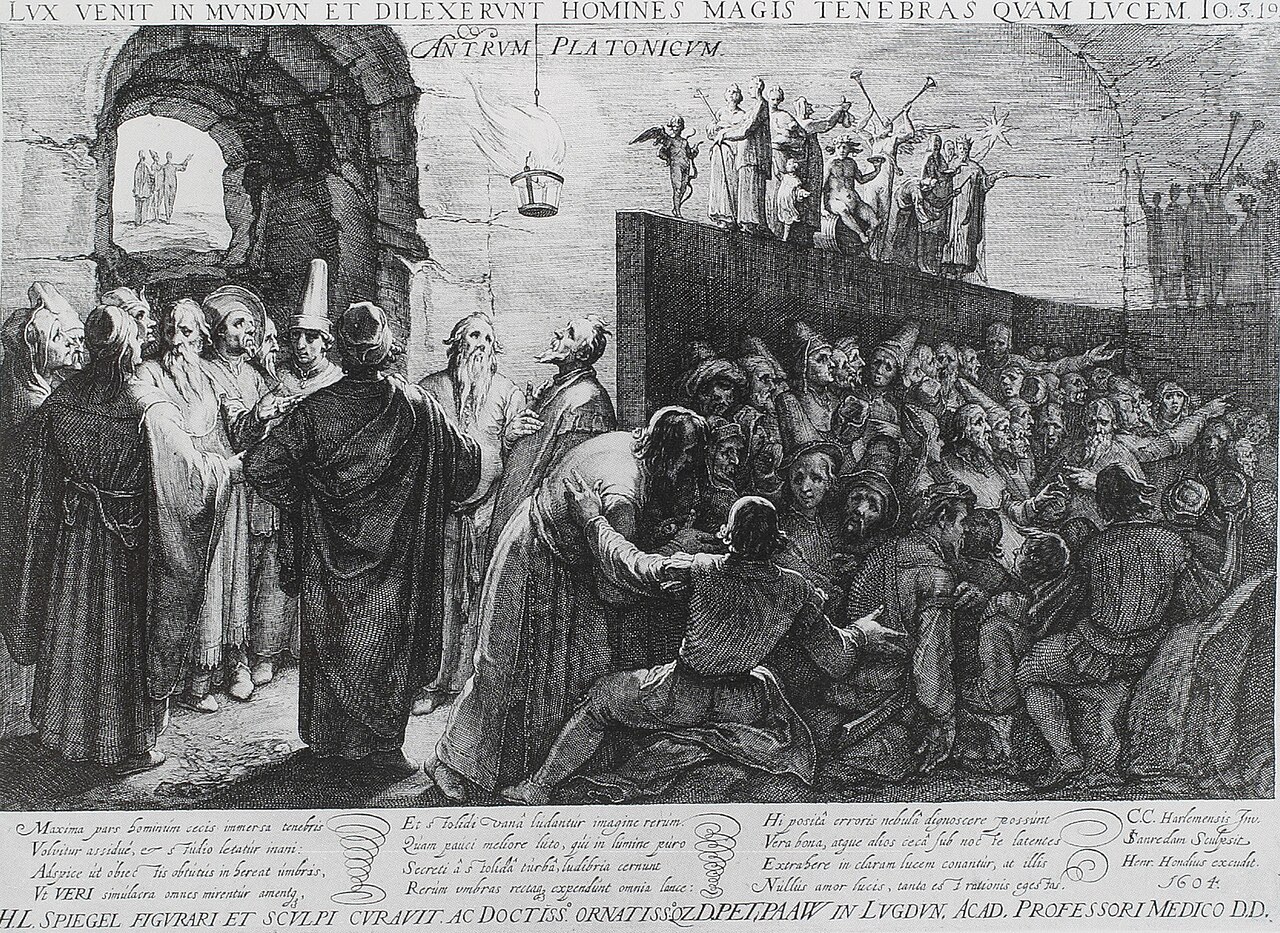
Allegory of the Cave
Plato · c. 400 BC
Secondary source
Apology
Plato · c. 395 BC
 Sculpture
Secondary source
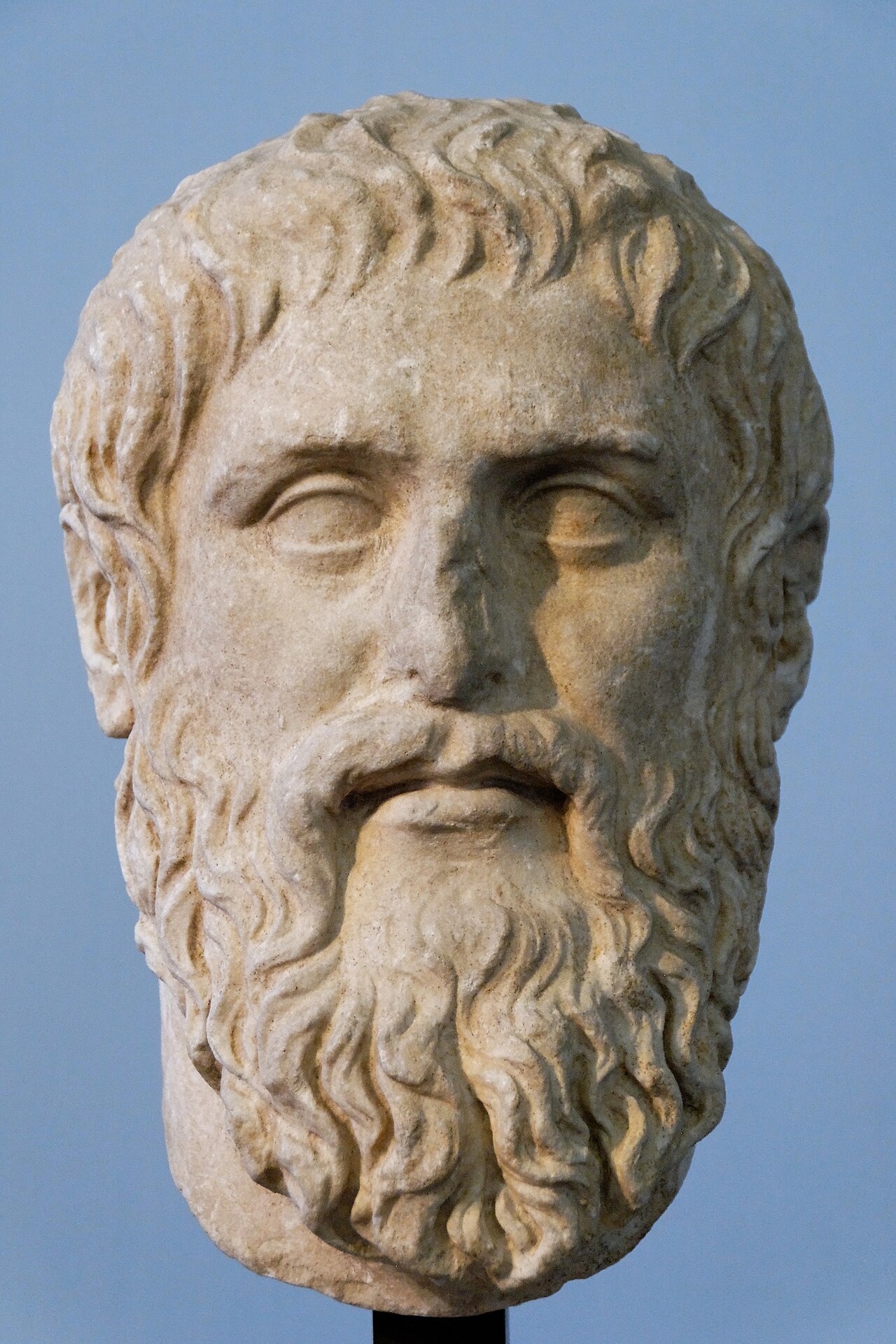
Portrait of Plato
Silanion (original type) · ca. 370 BC (original type); this copy Roman era
 Book
Secondary source
Phaedo
Plato · c. 360 BC
Ready when you are
Start chatting with Plato now.
20 messages free · No credit card · Available in 50+ languages.