


Secondary sourceBook1578
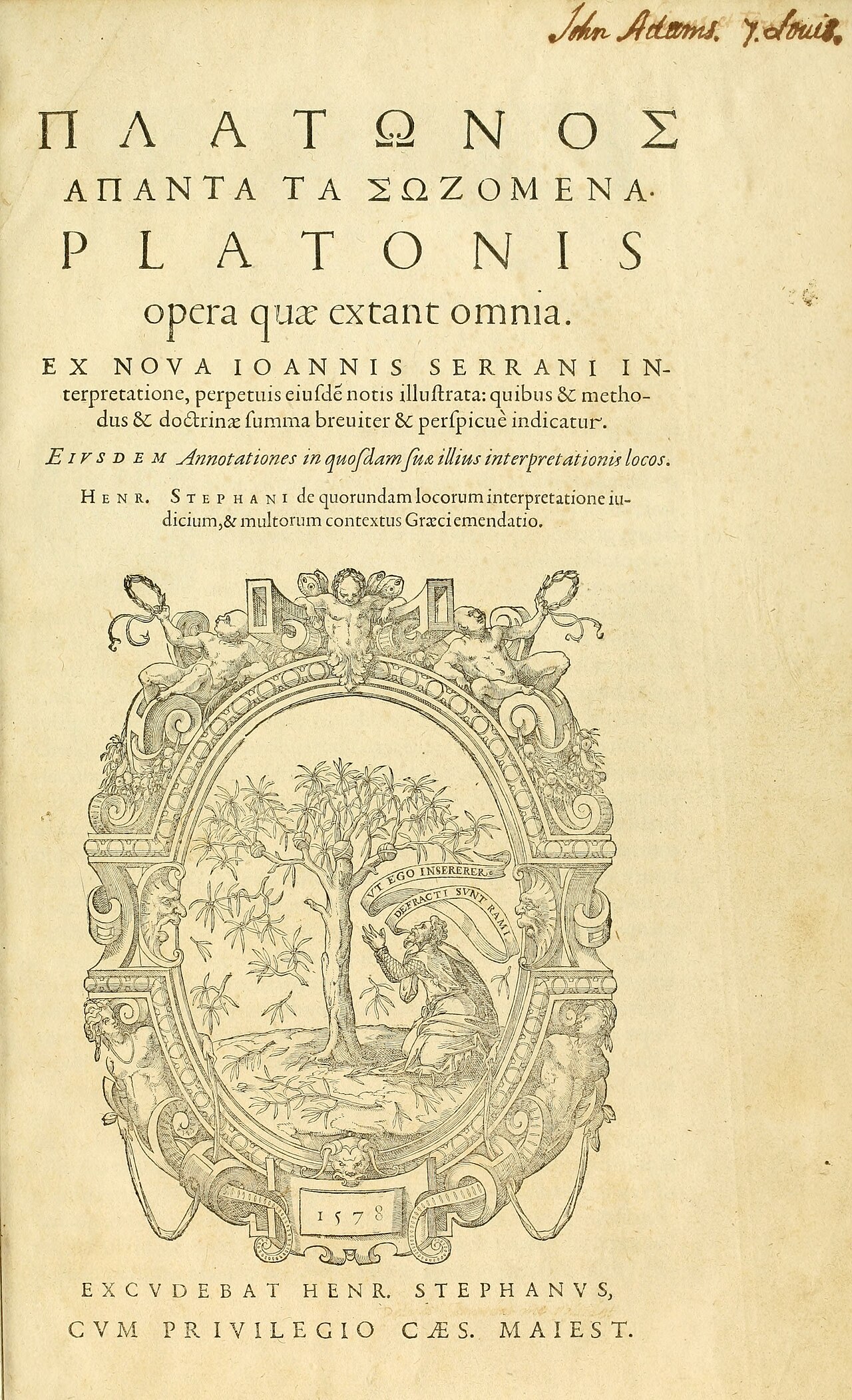
Platonis opera quae extant omnia
Henri Estienne · 1578
A 1578 printed Greek–Latin edition of Plato's works, whose page numbers are still used today to cite his writings.
This printed edition organized and preserved Plato's works, creating the page-numbering system still used to cite him.
About this source
What it is
This is a three-volume printed edition of Plato's works, published in Geneva in 1578. It was edited and printed by Henri Estienne, with a Latin translation and notes by Jean de Serres.
A surviving copy was once owned by John Adams and John Quincy Adams, and is now held at the Boston Public Library.
Why it matters
This edition became the standard reference for Plato's texts. Its page numbers — for example, citing a passage as 'Republic 514a' — are still used by scholars today, over four centuries later. It shows how Renaissance scholars like Estienne and de Serres worked to preserve and organize ancient Greek philosophy for new generations of readers.
Look closer
- Why would scholars want a standard way to cite passages from an ancient text?
- What does the ownership by early American statesmen suggest about how Plato's ideas traveled through history?
- What can decorative elements like the woodcut ornament tell us about how books were valued as objects?
This book is part of the curated material that grounds the AI version of Plato on Humy.ai — when students ask about related events, the AI can quote it and cite it.
More Plato sources
Meet the AI Plato →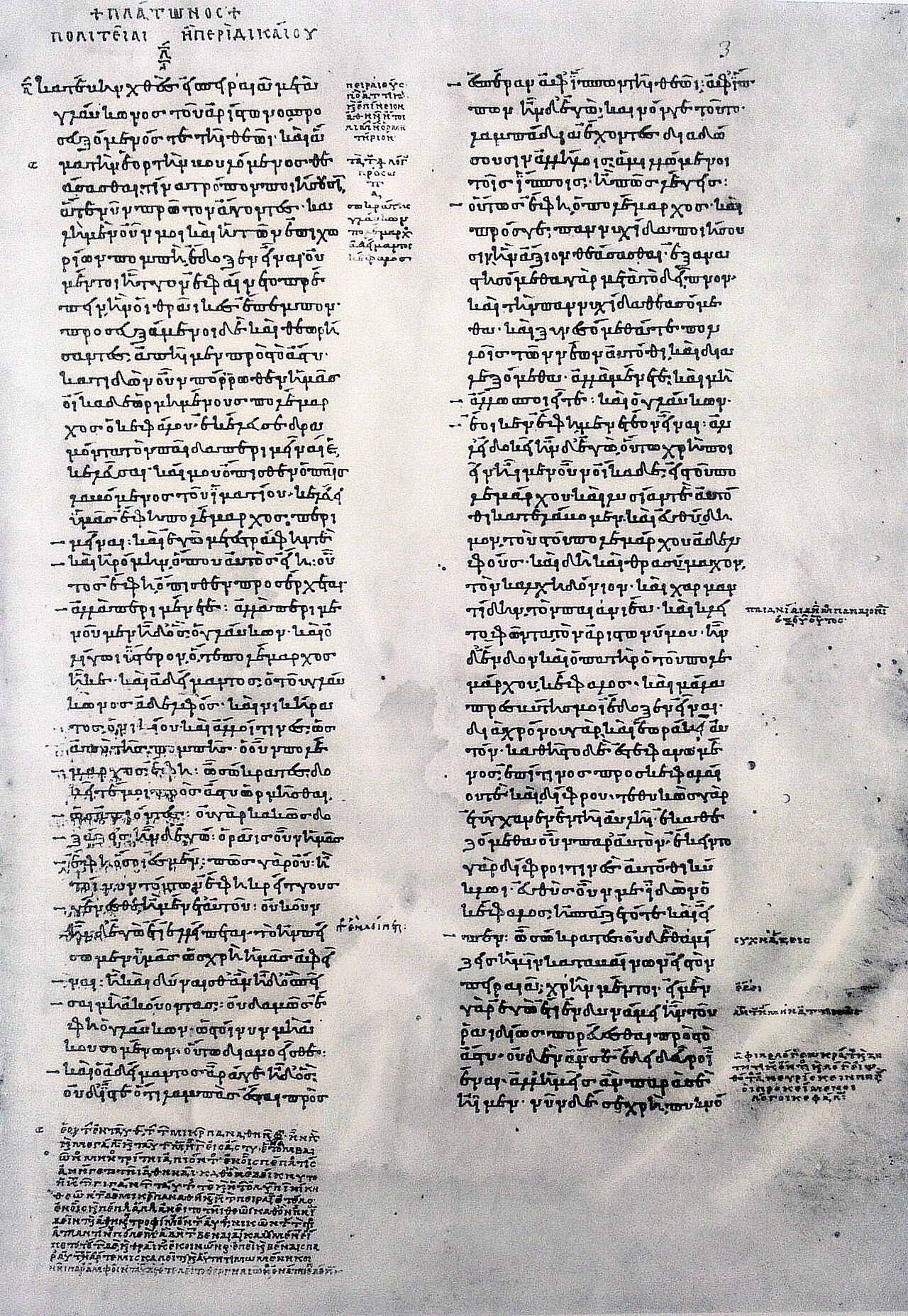 Book
Secondary source
The Republic
Plato · c. 375 BC
 Book
Primary source
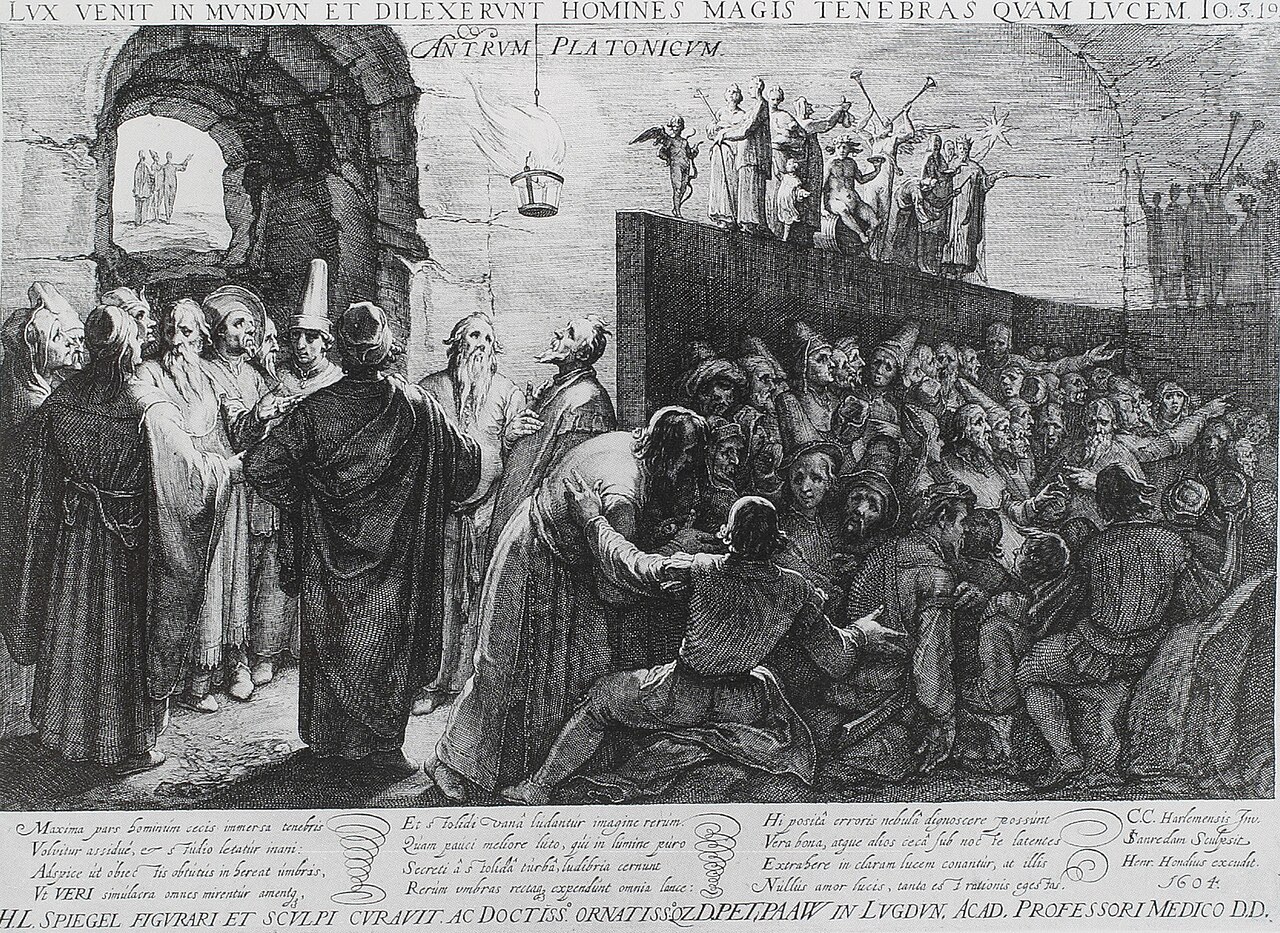
Allegory of the Cave
Plato · c. 400 BC
Secondary source
Apology
Plato · c. 395 BC
 Sculpture
Secondary source
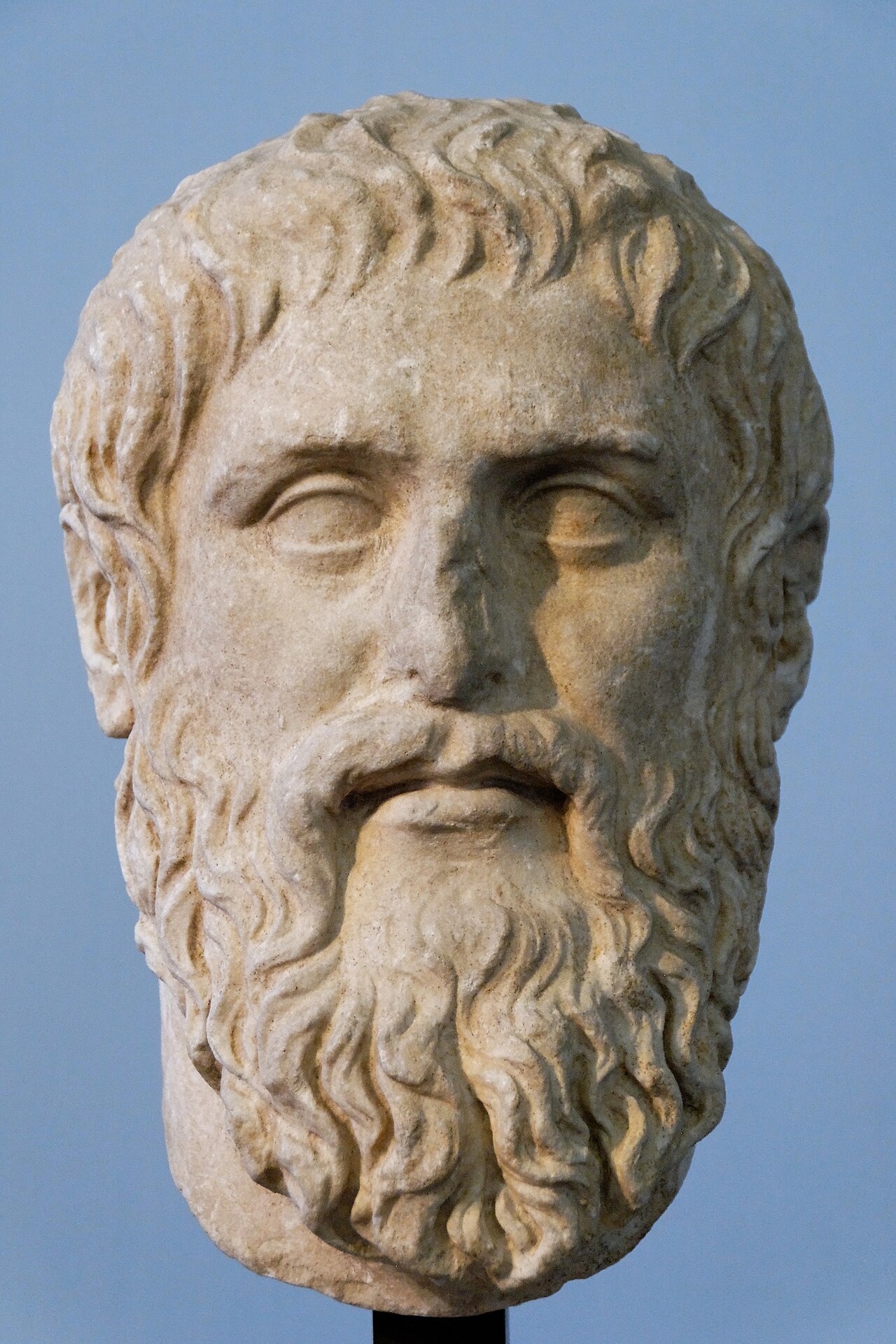
Portrait of Plato
Silanion (original type) · ca. 370 BC (original type); this copy Roman era
 Book
Secondary source
Phaedo
Plato · c. 360 BC
Ready when you are
Start chatting with Plato now.
20 messages free · No credit card · Available in 50+ languages.