


Secondary sourcePainting
Portrait of Dante Alighieri, Albertina Museum
Cornelis Galleder the Elder
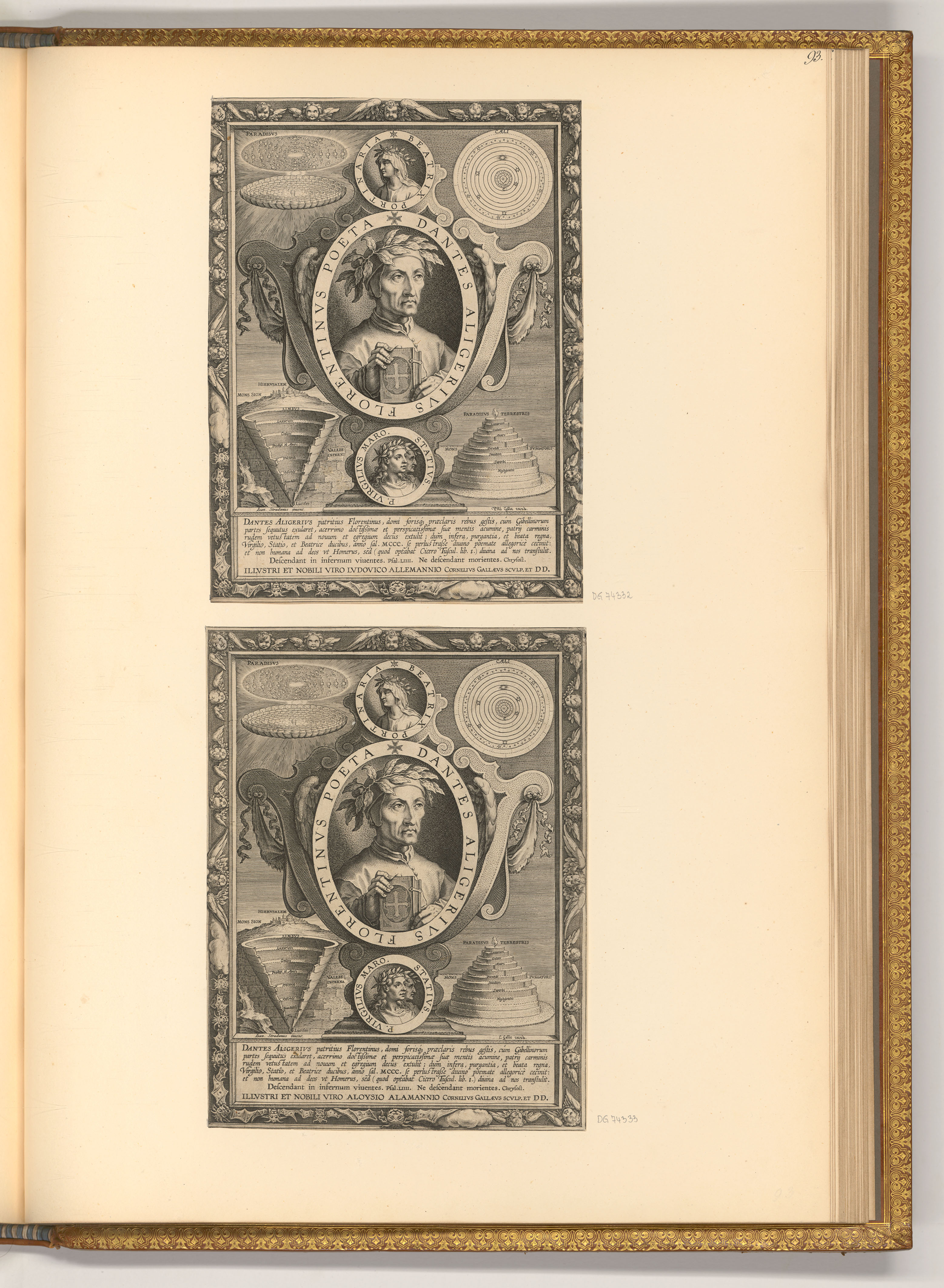
An album page with two identical engraved title plates showing an oval portrait of Dante with a laurel wreath, surrounded by medallions and diagrams of the afterlife realms.
Shows an imagined portrait of Dante with scenes from his poem, showing how later artists framed him as the author of the Divine Comedy.
About this source
What it is
This is a page from a bound album held by the Albertina Museum in Austria. It shows two identical engraved title plates for Dante Alighieri. Each has an oval portrait of Dante holding a book, with a laurel wreath, an inscription, medallions of Beatrice and Virgil, and diagrams of Hell, Purgatory, Paradise and the heavens. Printed text lies below each plate. The record lists Cornelis Galleder the Elder as creator, and the portrait is an imagined likeness rather than a contemporary image.
Why it matters
The plates bring together the main people and places of the Divine Comedy: Dante himself, his guides Beatrice and Virgil, and the three realms of the afterlife. Title plates like these introduced editions of the poem and shaped how readers pictured both the author and his journey. Because the portrait was made long after Dante's death, it reflects the artist's idea of him.
Look closer
- Which figures appear in the medallions, and why might the maker have chosen them?
- How do the diagrams of Hell, Purgatory and Paradise help a reader understand the poem?
- Since the portrait is imagined, what details might the artist have invented rather than copied?
This painting is part of the curated material that grounds the AI version of Dante Alighieri on Humy.ai — when students ask about related events, the AI can quote it and cite it.
More Dante Alighieri sources
Meet the AI Dante Alighieri → Book
Secondary source
The Divine Comedy
Dante Alighieri · 1320
 Book
Primary source
Inferno
Dante Alighieri · c. 1306–1310
 Book
Primary source
Vita Nuova
Dante Alighieri · before 1294
 Book
Primary source
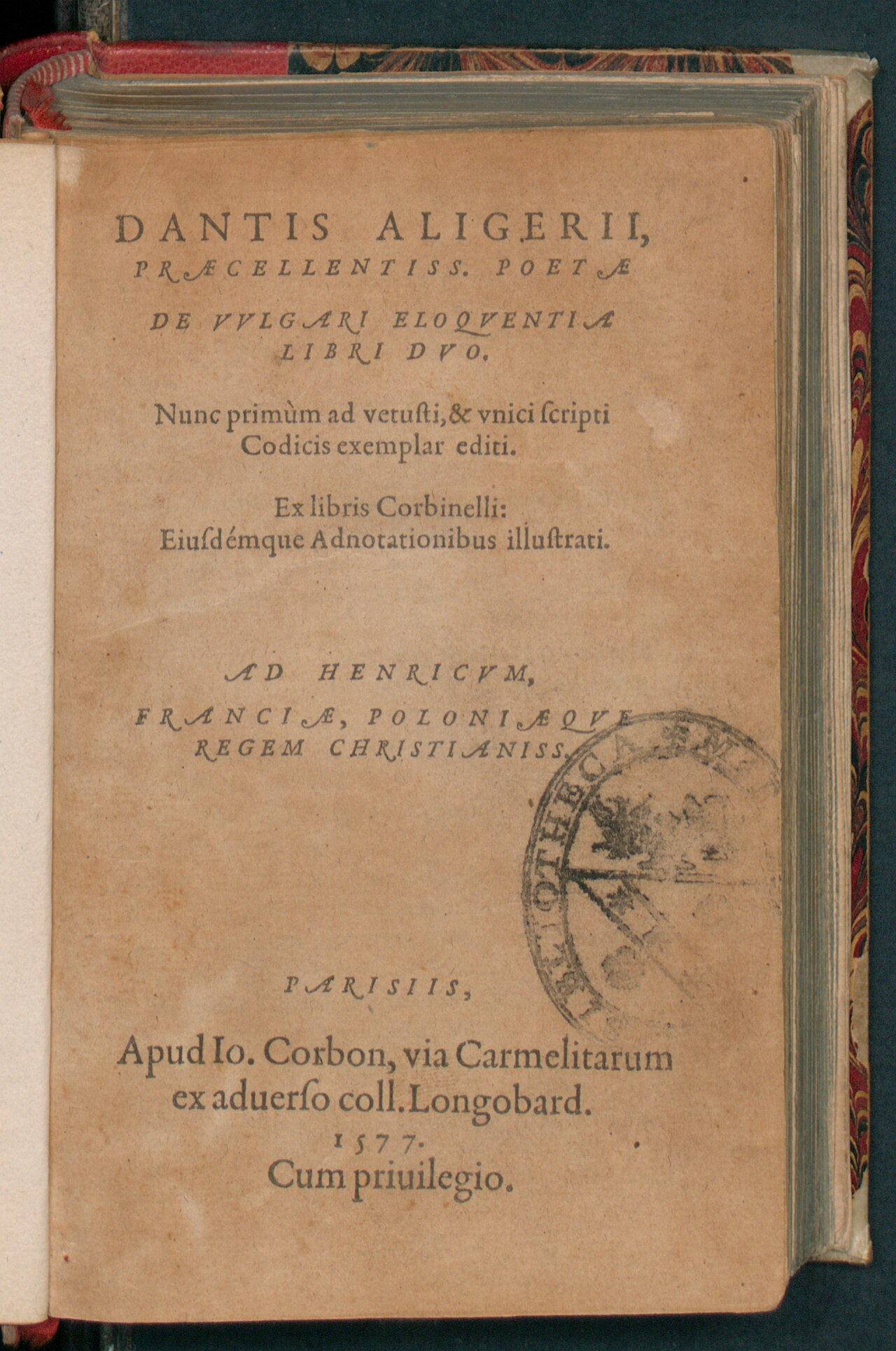
De vulgari eloquentia
Dante Alighieri · c. 1302–1305
 Book
Primary source
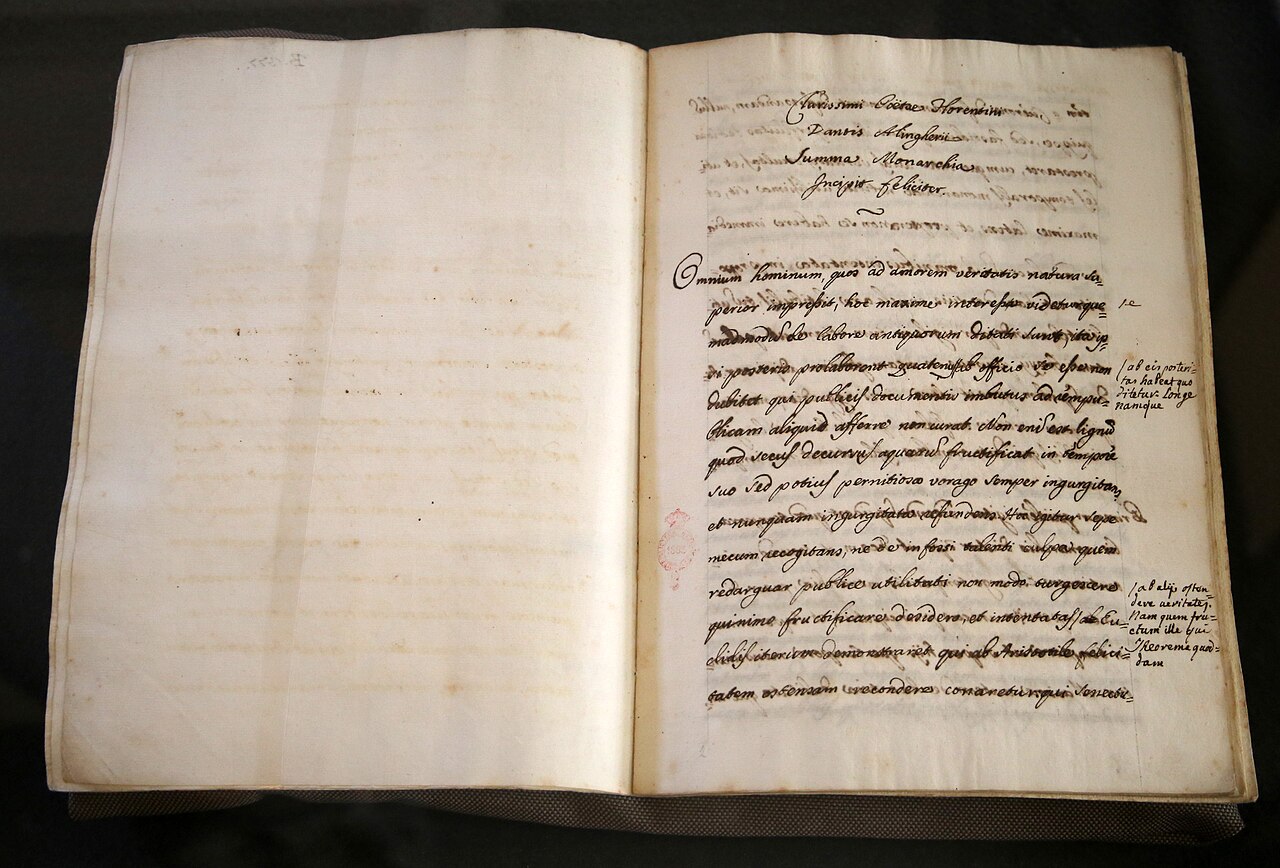
De Monarchia
Dante Alighieri · c. 1312–1313
Ready when you are
Start chatting with Dante Alighieri now.
20 messages free · No credit card · Available in 50+ languages.