


Secondary sourceBook1320
The Divine Comedy
Dante Alighieri · 1320
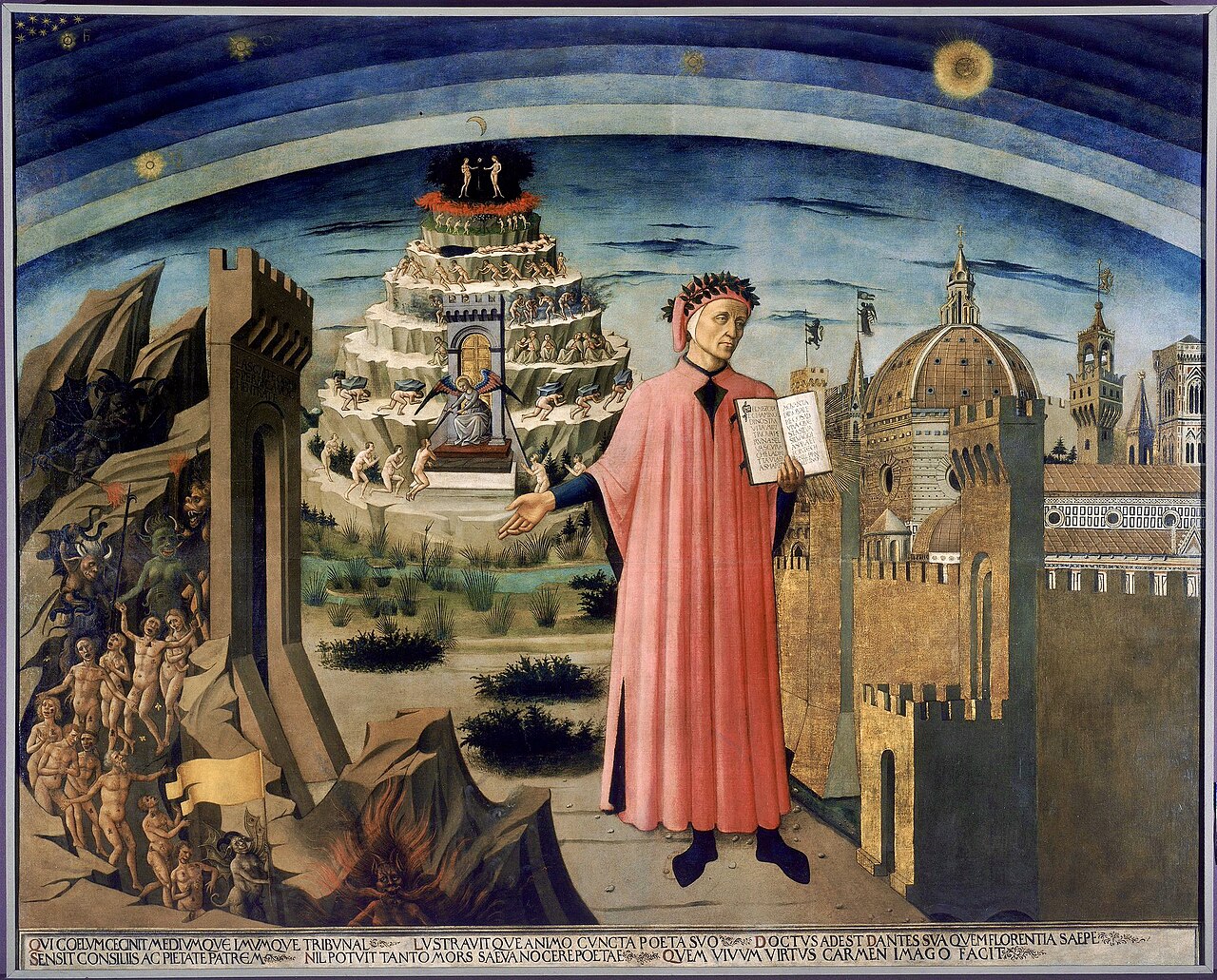
Dante's epic poem casting Virgil as his guide through Hell and Purgatory, the most influential later image of Virgil as the voice of reason.
Virgil appears as a character, guiding Dante through Hell and Purgatory, showing his later reputation as a symbol of reason.
About this source
What it is
The Divine Comedy is a long narrative poem in Italian written by Dante Alighieri, completed around the time of his death. It is divided into three parts: Inferno, Purgatorio, and Paradiso.
In the poem, Virgil appears as a character who leads the pilgrim Dante through Hell and most of Purgatory before Beatrice takes over as guide.
Why it matters
This poem shaped how later generations saw Virgil, turning the Roman poet into a symbol of human reason and poetic wisdom. It shows how deeply admired Virgil's work remained more than a thousand years after his death, and how Dante used him to build his own authority as a poet.
The work also helped shape the Italian language itself and is considered one of the greatest achievements of Western literature.
Look closer
- Why might Dante have chosen a pagan Roman poet, rather than a Christian figure, to guide him through Hell and Purgatory?
- What does it mean that a poet from centuries earlier becomes a character inside someone else's poem?
- What does this later portrait leave out about who the real historical Virgil was?
This book is part of the curated material that grounds the AI version of Virgil and Dante Alighieri on Humy.ai — when students ask about related events, the AI can quote it and cite it.
Ready when you are
Start chatting with Virgil now.
20 messages free · No credit card · Available in 50+ languages.