


Primary sourceBook1913
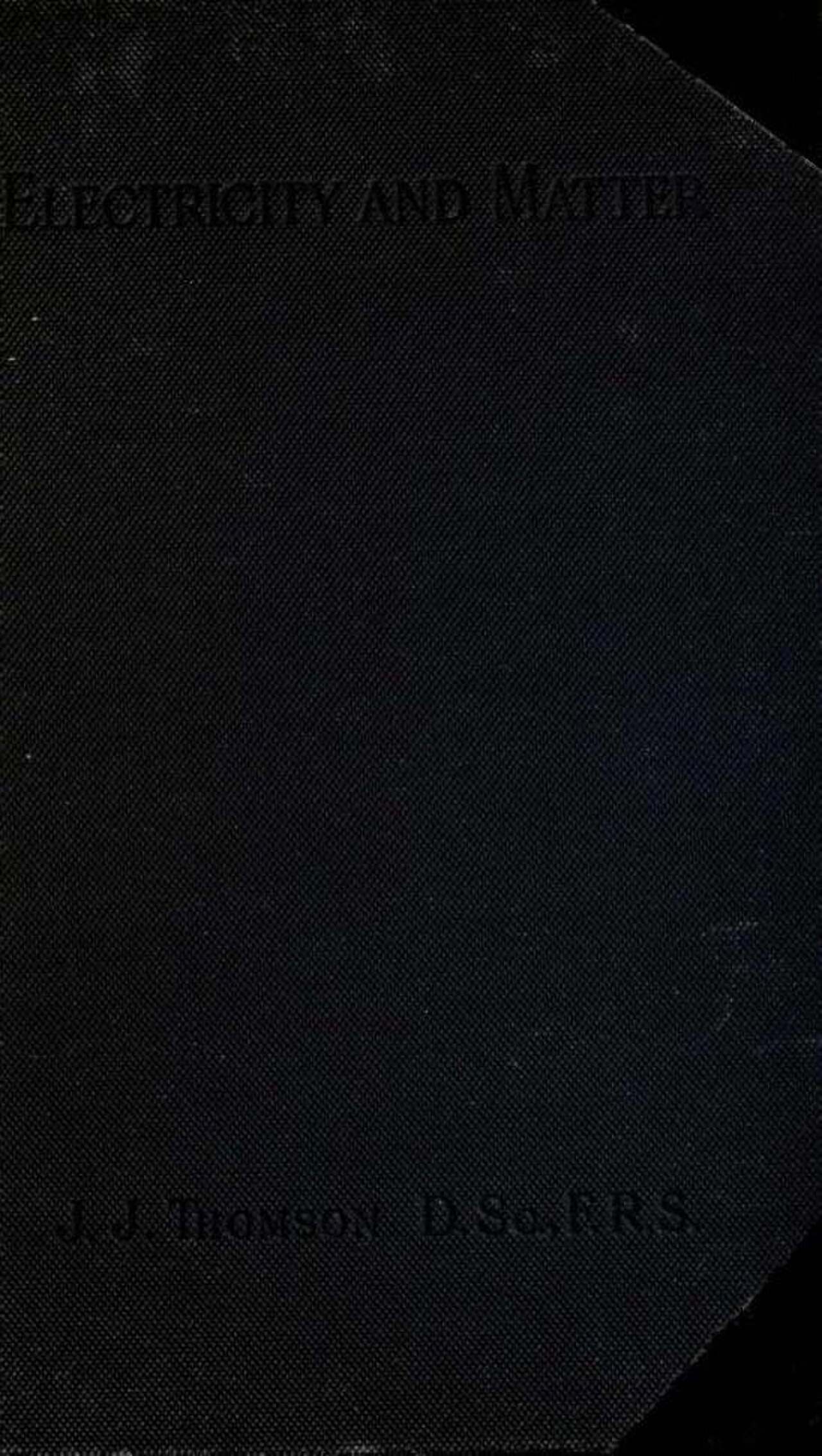
Rays of Positive Electricity and Their Application to Chemical Analyses
Joseph John Thomson · 1913
Thomson's 1913 monograph on canal rays that laid the foundation for mass spectrometry and the discovery of isotopes.
Thomson's own monograph extending his discovery of the electron into the study of positive rays and isotopes.
Free Humy account · No credit card · 120,912 sources to read
About this source
What it is
This is J. J. Thomson's 1913 book on positive rays, also known as canal rays, first discovered by Eugen Goldstein in 1886. In it, Thomson describes apparatus and methods for analysing the composition of gases by studying these rays.
Why it matters
This book extended Thomson's earlier work on cathode rays and the electron into a new area: using charged particle beams to analyse matter. The methods described here were developed further with Francis Aston and led directly to the discovery of isotopes and the invention of mass spectrometry, a technique still used today in chemistry and physics.
Look closer
- Why does Thomson begin by describing Goldstein's earlier discovery rather than his own work first?
- What does the detailed description of the apparatus suggest about how science was communicated at the time?
- How did this book's methods lead to later discoveries that Thomson himself may not have expected?
This book is part of the curated material that grounds the AI version of J. J. Thomson on Humy.ai — when students ask about related events, the AI can quote it and cite it.
More J. J. Thomson sources
Browse all 55 →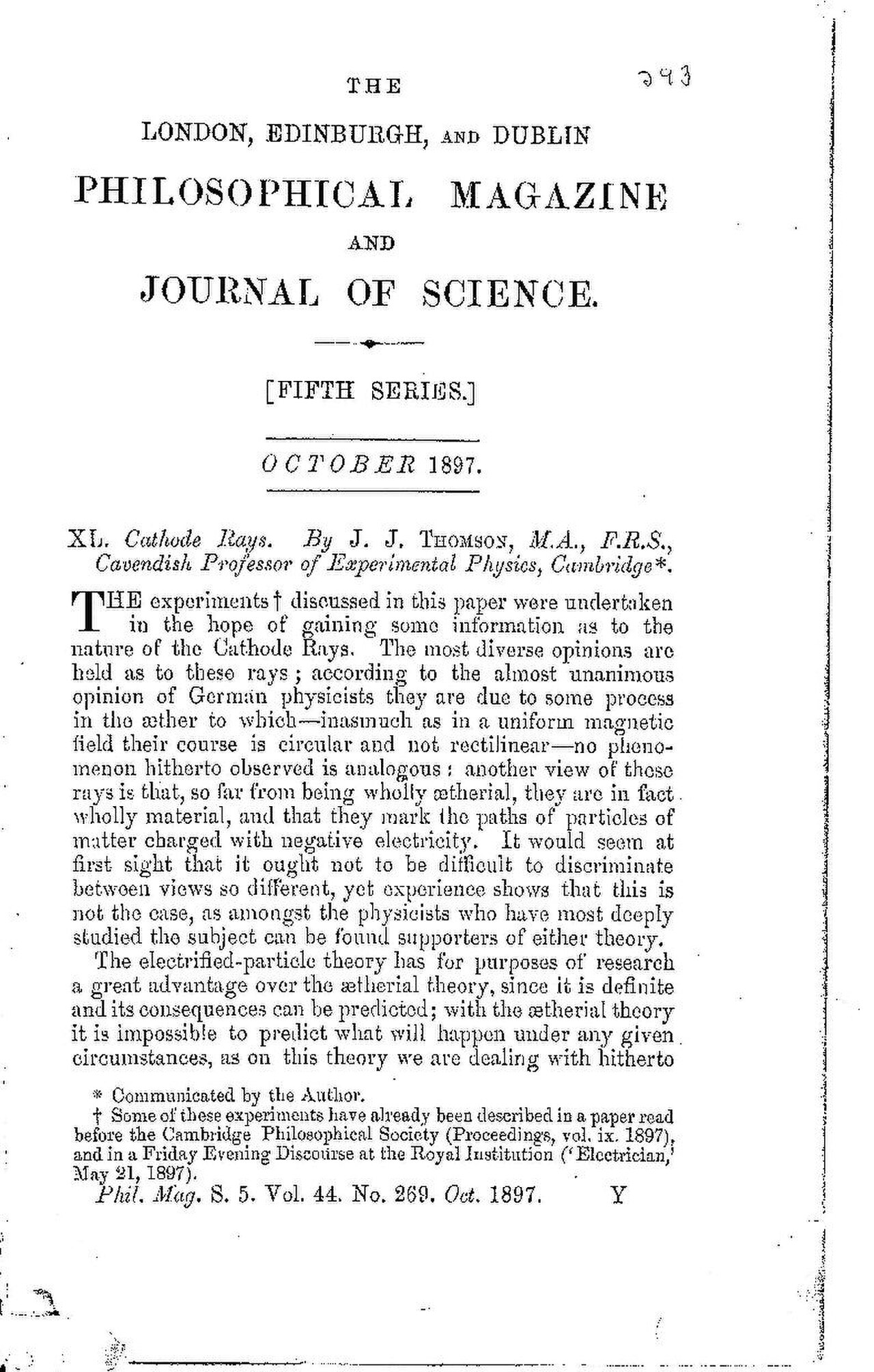 Document
Primary source
Cathode Rays
J. J. Thomson · October 1897
 Artifact
Primary source
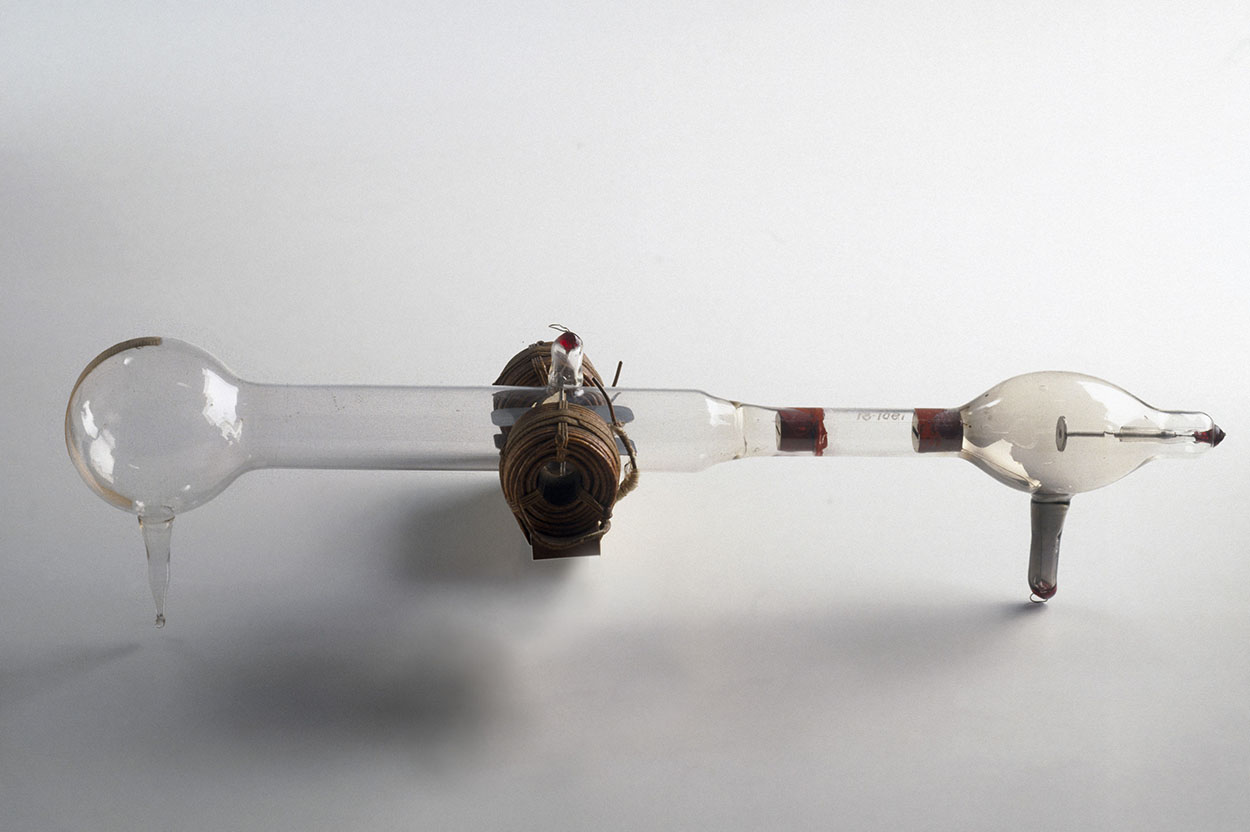
Cathode Ray Tube with Magnet Coils
1897
 Painting
Primary source
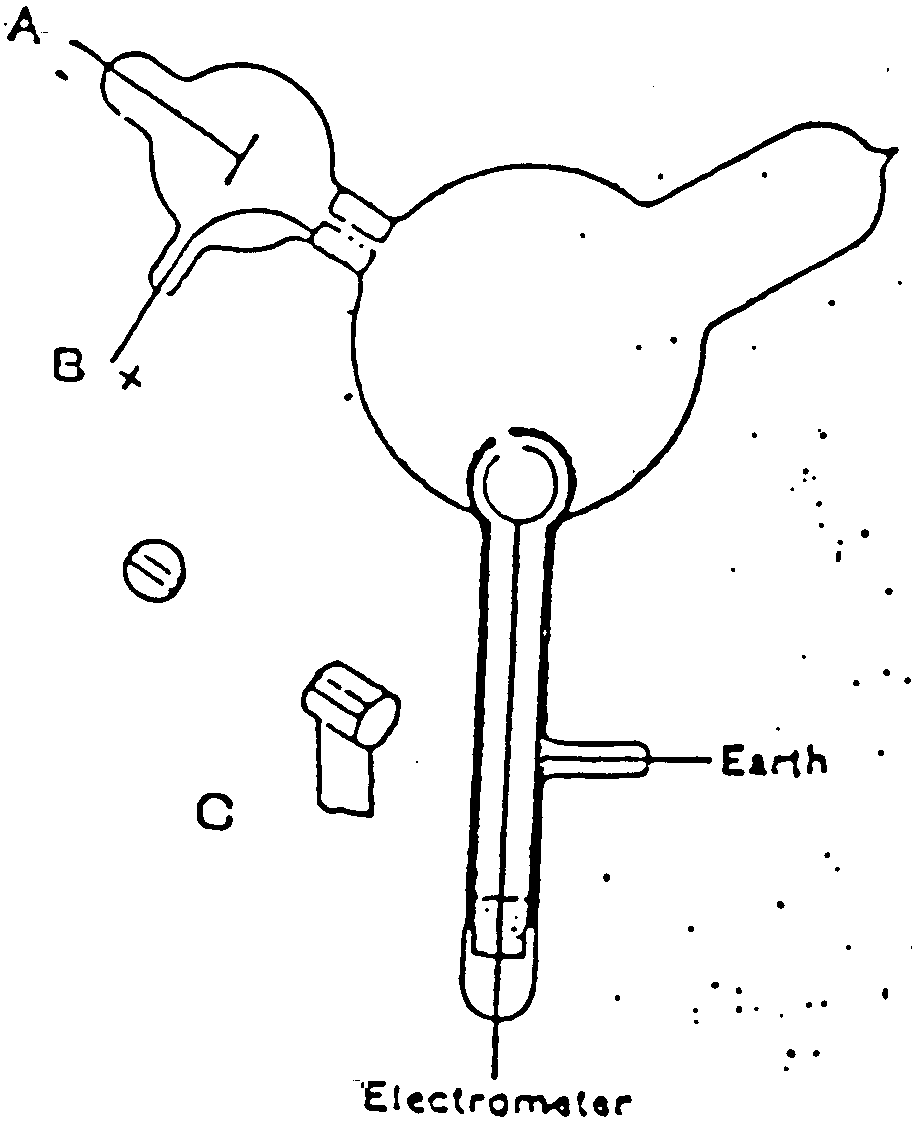
Cathode Ray Tube Diagram
J. J. Thomson · 1897
 Photograph
Primary source
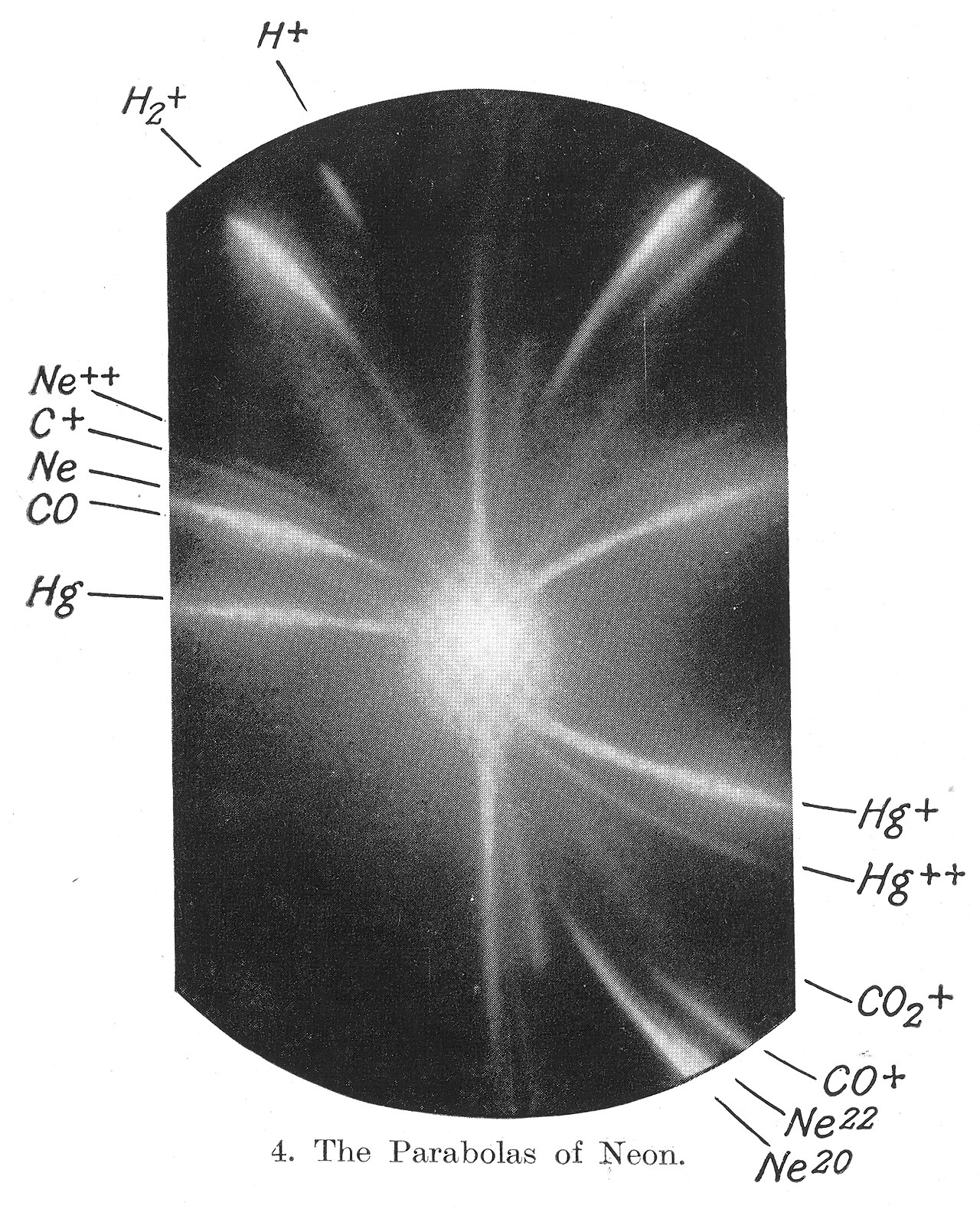
Discovery of Neon Isotopes
Francis William Aston · 1912-1913
Free account
Read every J. J. Thomson source
Sign up free →
Ready when you are
Start chatting with J. J. Thomson now.
20 messages free · No credit card · Available in 50+ languages.