


Secondary sourceSculpture1762
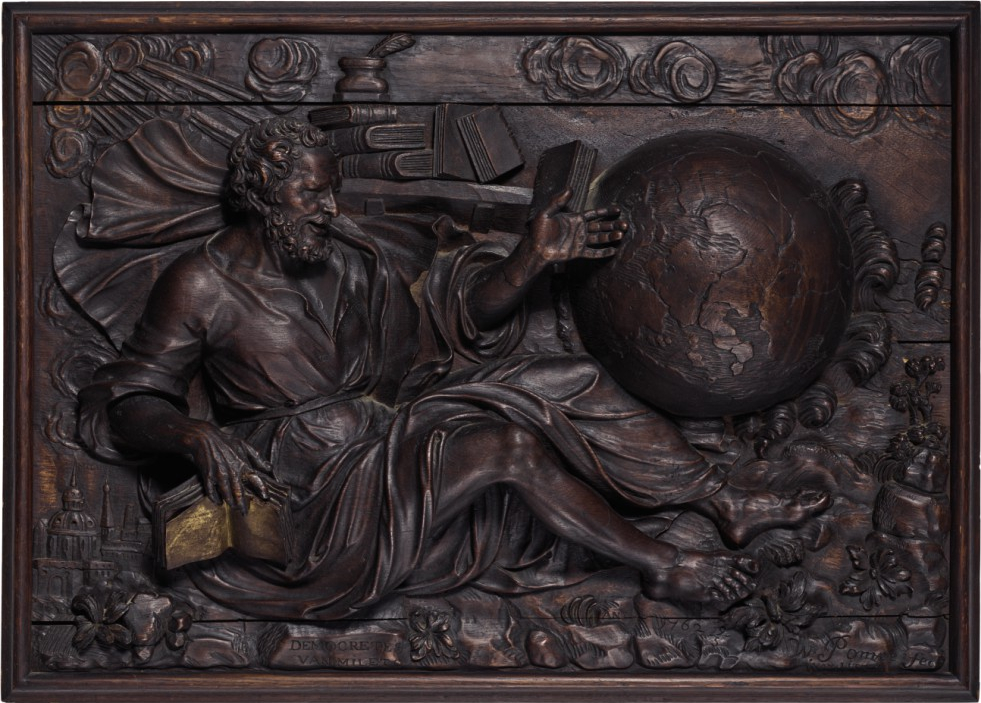
Relief of the Laughing Democritus
Walter Pompe · 1762
A carved wooden relief from 1762 showing Democritus reclining with books and a globe, made long after his death as an imagined portrait.
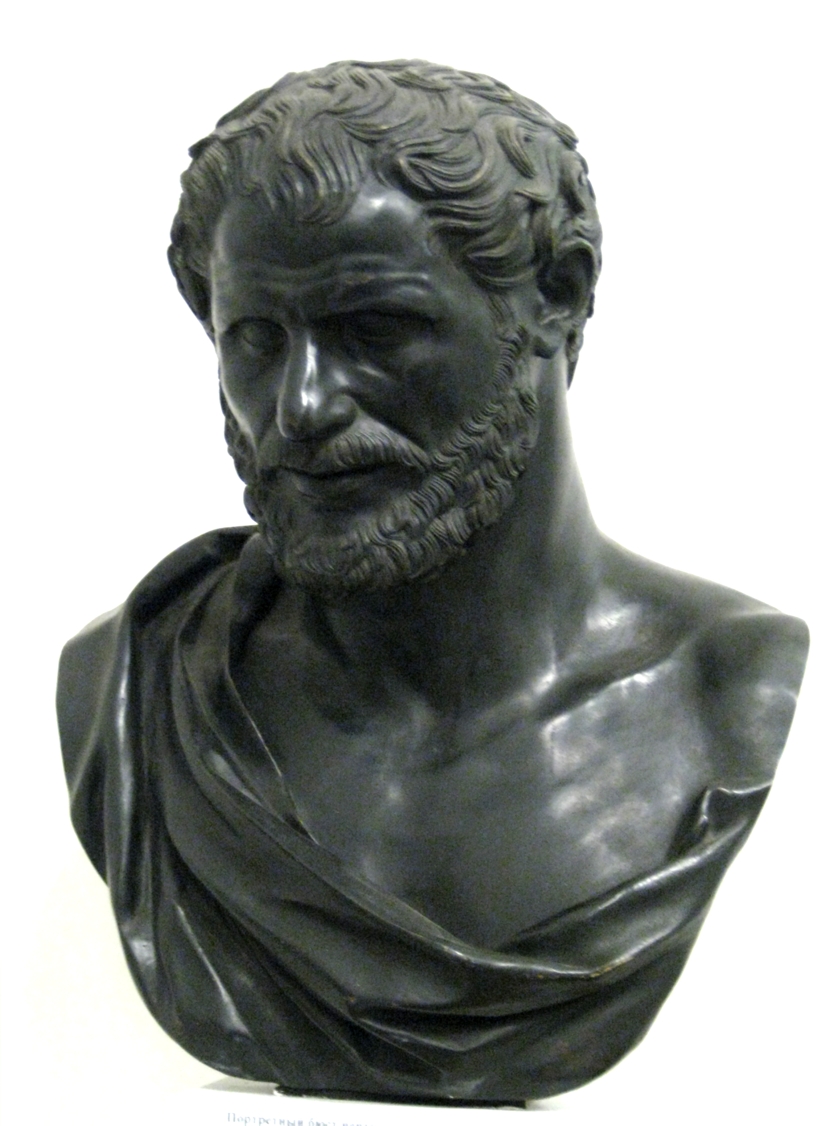
An imagined 18th-century likeness of Democritus as the 'laughing philosopher', made long after his lifetime.
About this source
What it is
This is a carved wooden relief made by the sculptor Walter Pompe in 1762. It shows a bearded man in flowing robes reclining with a large globe, holding a book, with more books and an inkwell above him and carved clouds and a domed building around the scene.
Why it matters
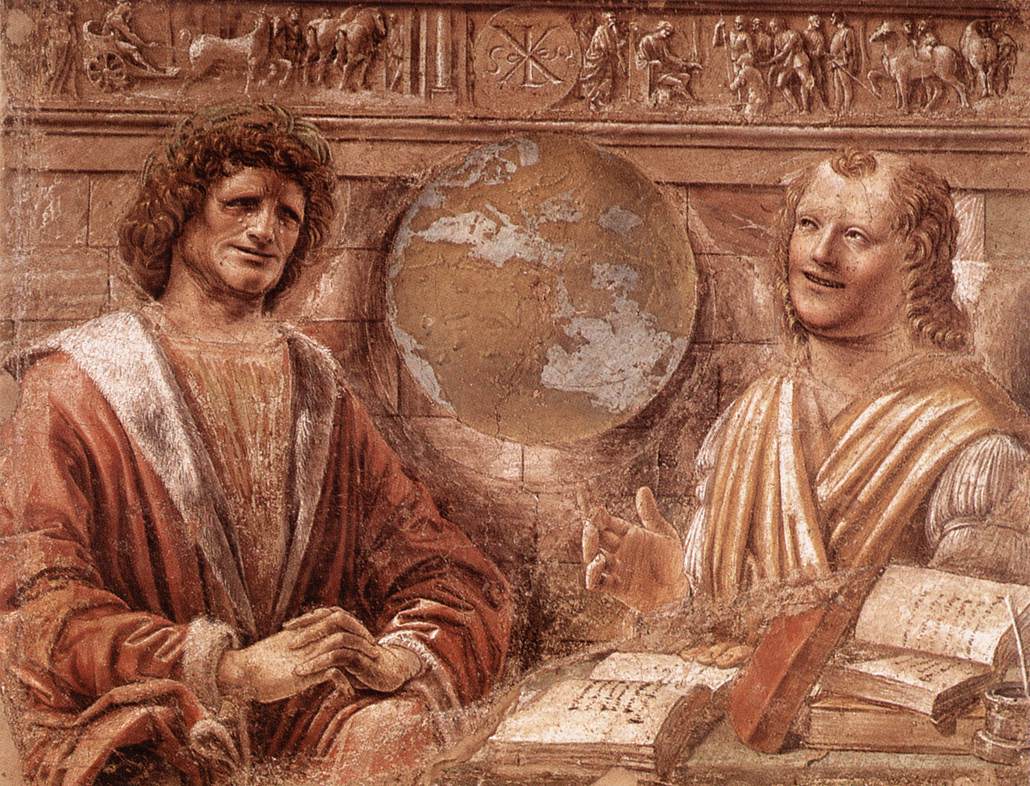
The relief does not show the real appearance of Democritus, who lived many centuries earlier. Instead it shows how 18th-century artists imagined the "laughing philosopher" as a wise, bookish figure surrounded by symbols of learning. It tells us more about how later Europeans pictured ancient philosophers than about Democritus himself.
Look closer
- What objects surround the man, and what do they suggest about his character?
- Why might an artist in 1762 still be interested in making art about a philosopher from ancient Greece?
- What does this image leave out about the real Democritus?
This sculpture is part of the curated material that grounds the AI version of Democritus on Humy.ai — when students ask about related events, the AI can quote it and cite it.
More Democritus sources
Browse all 93 →

Ready when you are
Start chatting with Democritus now.
20 messages free · No credit card · Available in 50+ languages.