


Primary sourcePaintingc. 1820-1823
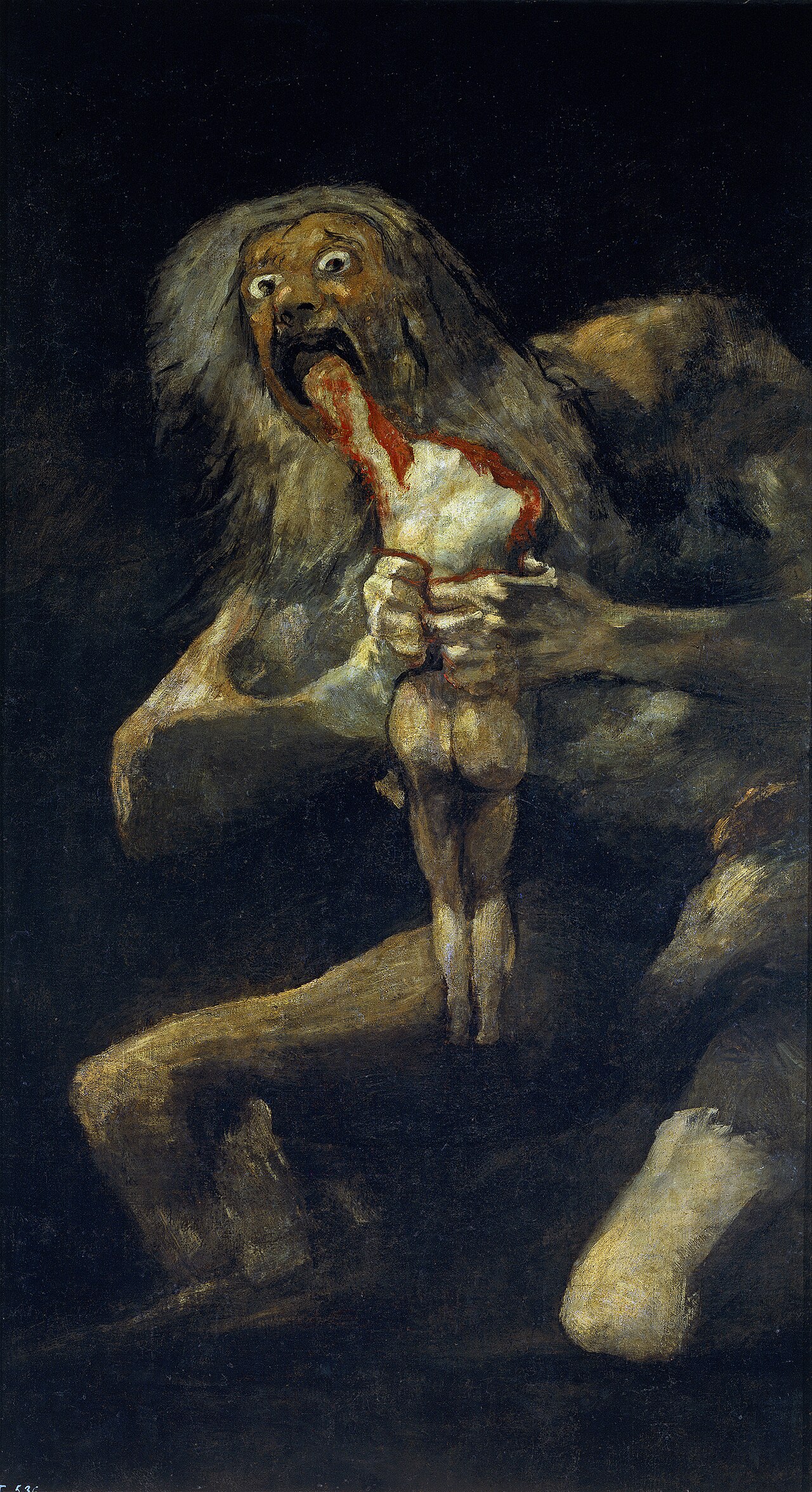
Saturn Devouring His Son
Francisco Goya · c. 1820-1823
One of Goya's Black Paintings, showing a monstrous figure devouring a human body, often linked to the myth of Saturn/Cronus.
Goya painted this disturbing mural himself, privately, in his house during his last years.
About this source
What it is
This painting by Francisco Goya was one of 14 murals he painted directly onto the walls of his house, the Quinta del Sordo, sometime between 1820 and 1823. It was later moved onto canvas and is now in the Museo del Prado in Madrid. Goya left no title or notes, so the name comes from later writers who connected it to the Roman myth of Saturn, who ate his own children to stop them overthrowing him.
Why it matters
Painted privately, with no buyer or audience in mind, it is seen as a glimpse into Goya's darkest state of mind in old age, after wars, illness and political upheaval in Spain. Scholars have linked it to ideas about time, power, Spain devouring its own people in conflict, and even Goya's own family life, though none of this can be proven.
Look closer
- What details make this image feel frightening rather than calm?
- Why do historians disagree about what the painting really means?
- Does knowing Goya never named or explained the work change how you read it?
This painting is part of the curated material that grounds the AI version of Francisco Goya on Humy.ai — when students ask about related events, the AI can quote it and cite it.
More Francisco Goya sources
Meet the AI Francisco Goya →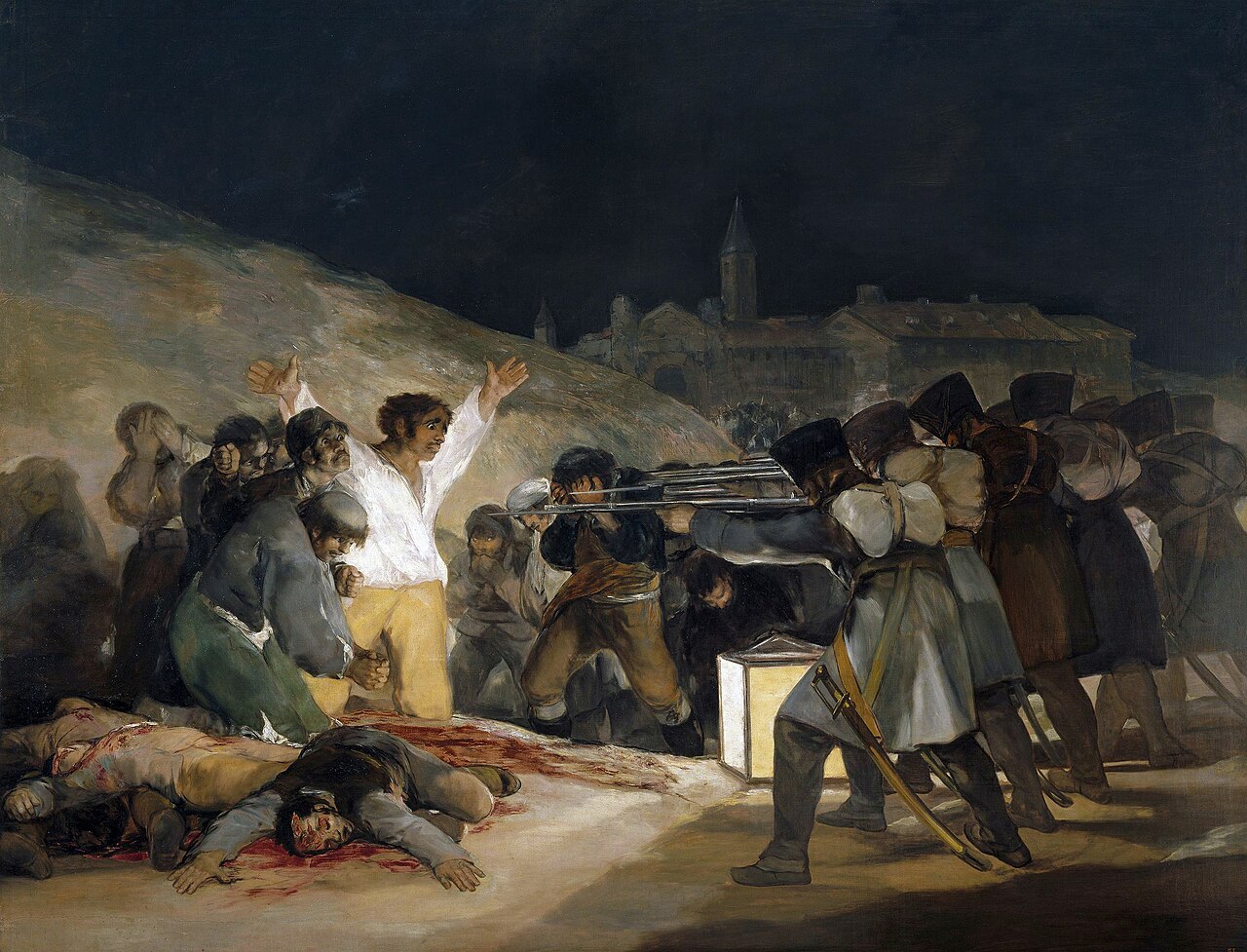 Painting
Secondary source
The Third of May 1808
Francisco Goya · 1814
 Painting
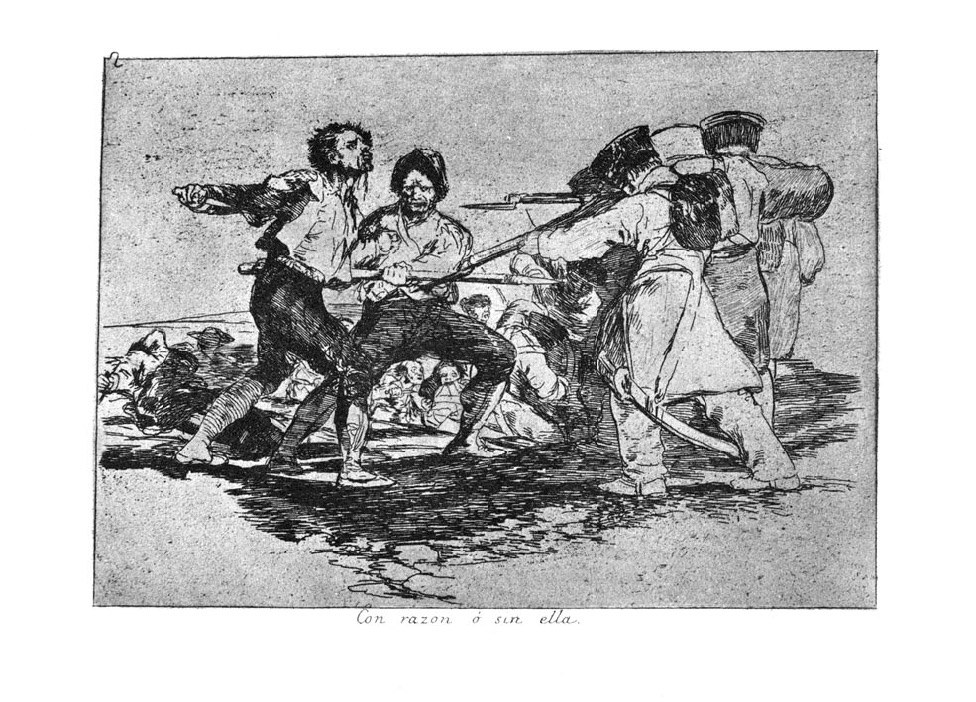
Primary source
The Disasters of War
Francisco Goya · 1810-1820
 Painting
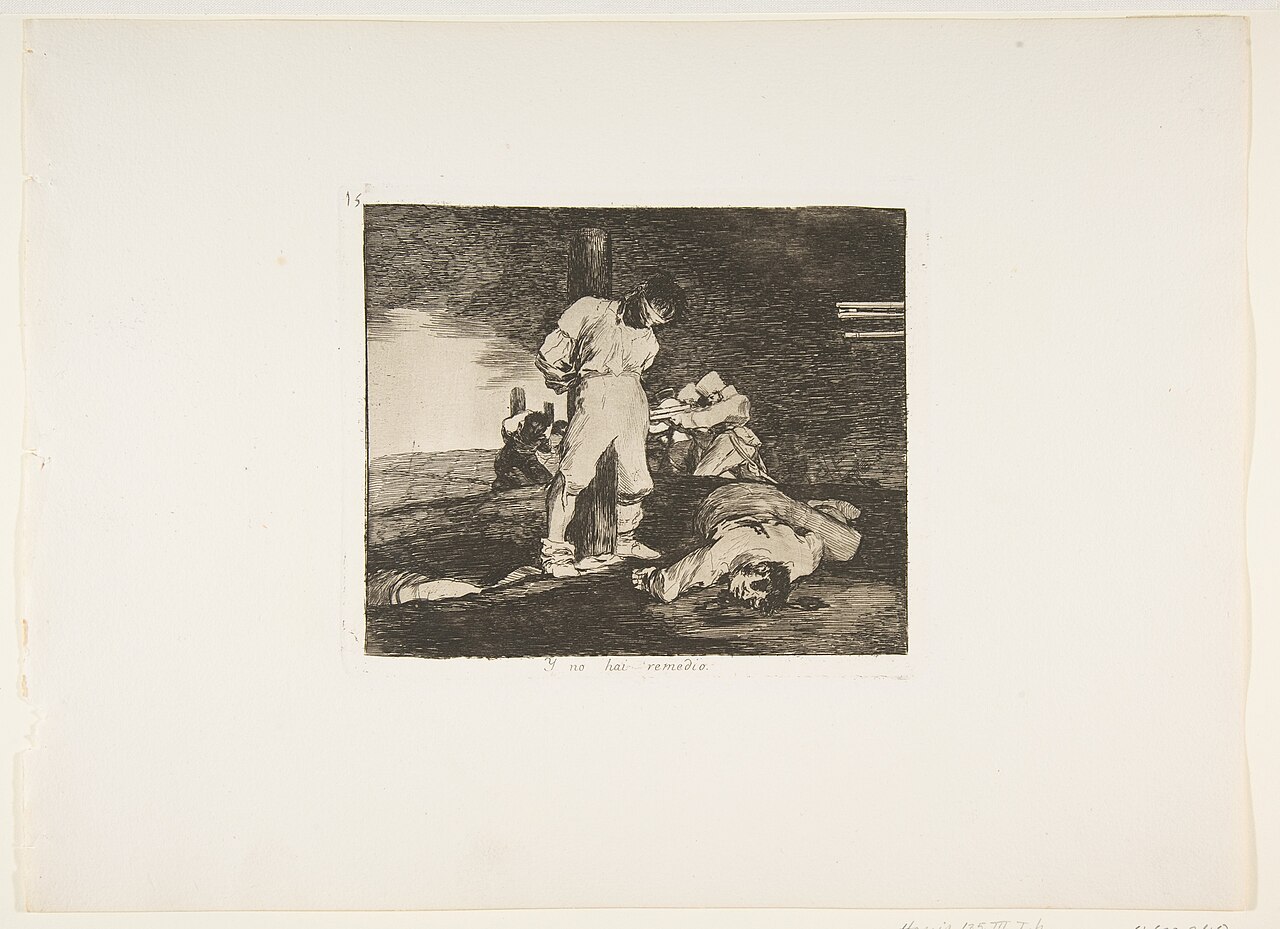
Primary source
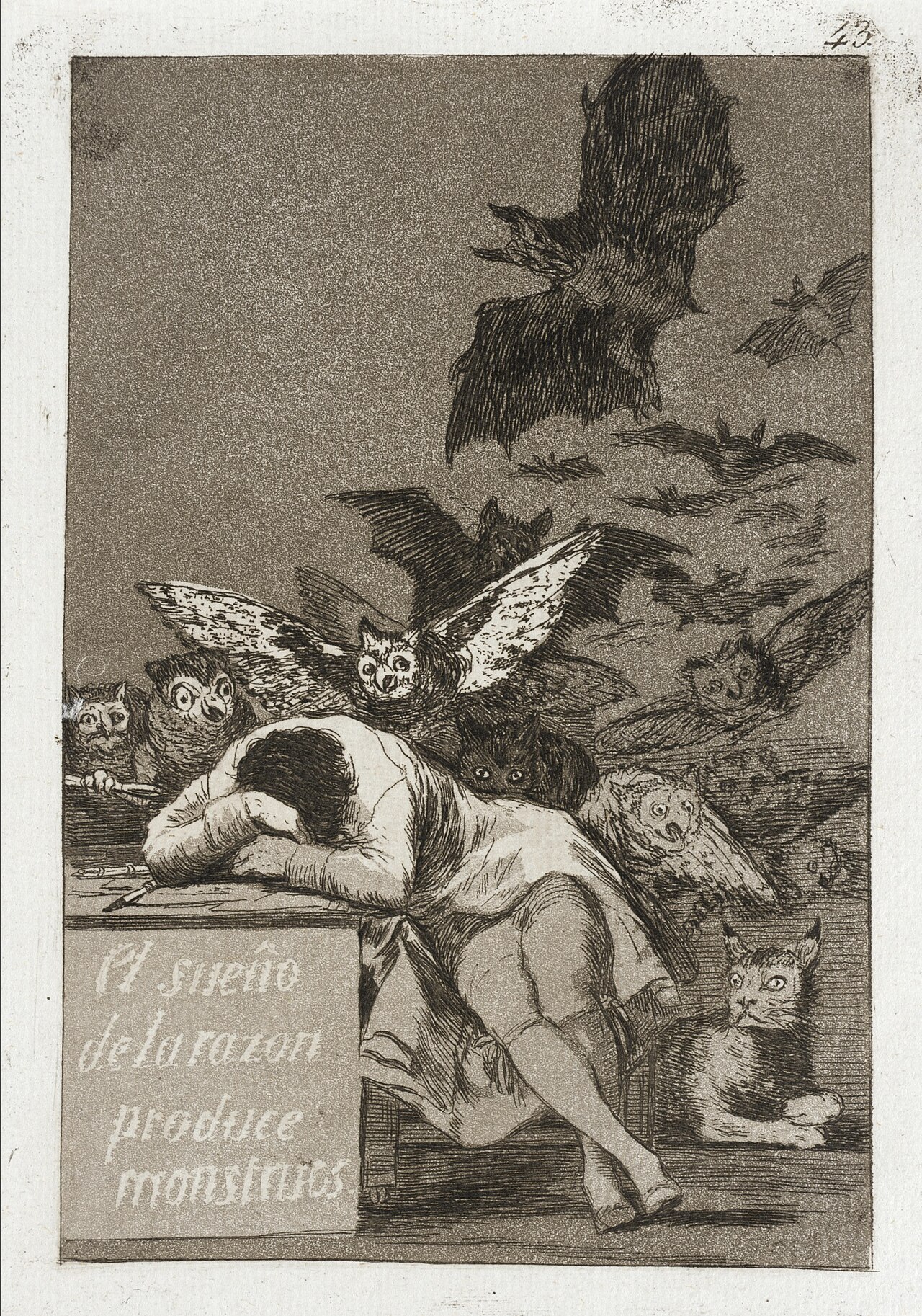
Y no hai remedio
Francisco de Goya · c. 1810-1814 (published 1863)
 Painting
Primary source
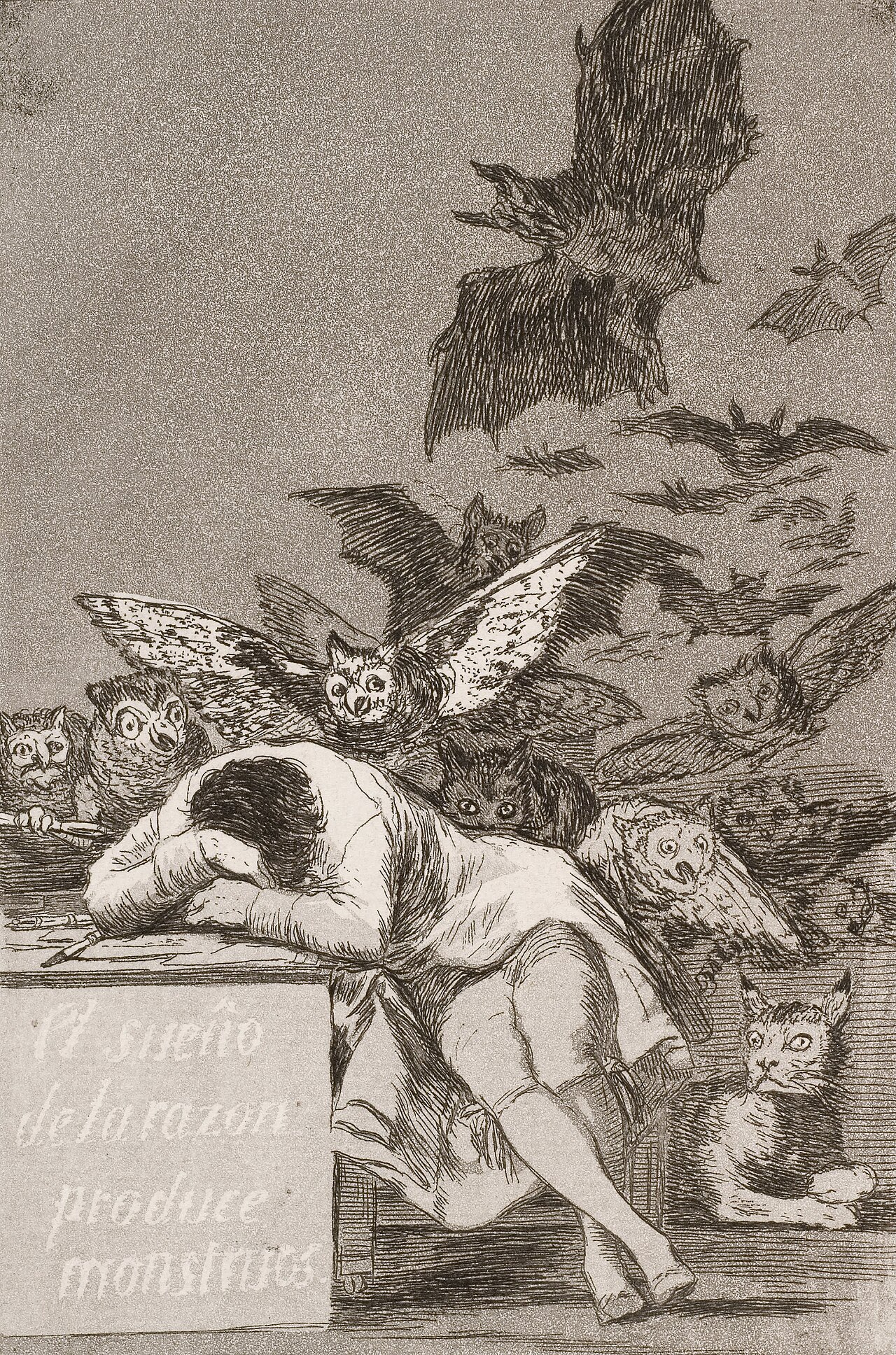
Caprichos
Francisco Goya · 1799 (created 1797-1798)
 Painting
Primary source
The Sleep of Reason Produces Monsters
Francisco Goya · 1797-1799
Ready when you are
Start chatting with Francisco Goya now.
20 messages free · No credit card · Available in 50+ languages.