


Secondary sourcePaintingc. 1830s
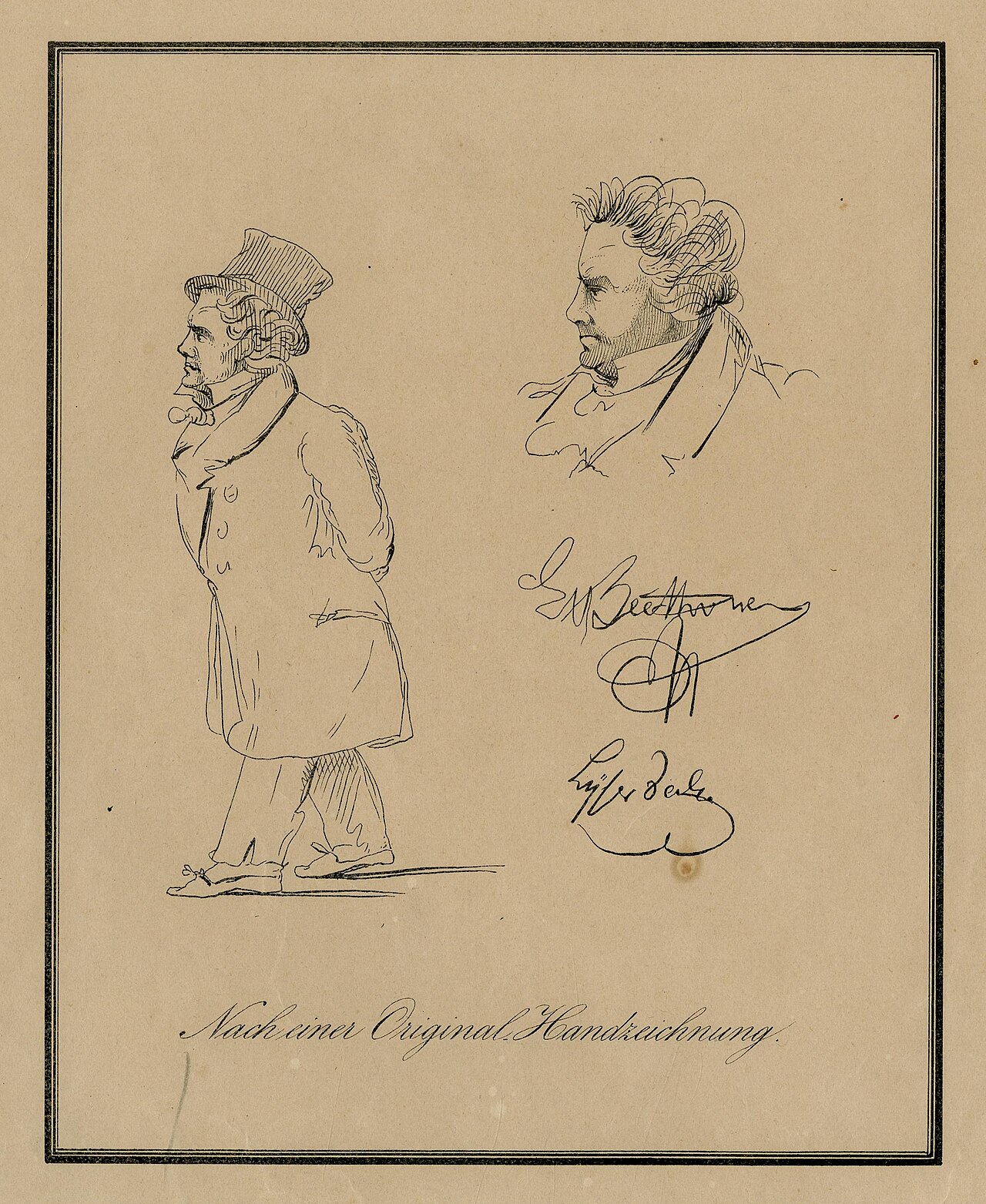
Sketches of Beethoven Walking
Johann Peter Lyser · c. 1830s
Ink sketches by Johann Peter Lyser showing Beethoven striding through Vienna, which shaped his popular image as an eccentric genius.
These sketches shaped the popular image of Beethoven as an eccentric genius wandering Vienna.
About this source
What it is
This is a lithograph after sketches by Johann Peter Lyser, made around the 1830s, showing two profile portraits of Beethoven: one full-length figure walking with hands behind his back, and one head-and-shoulders view, with a facsimile of his autograph below.
Why it matters
These sketches, drawn by Lyser after Beethoven's death, helped create the popular picture of Beethoven as an eccentric genius wandering through Vienna lost in thought. They show how artists who did not necessarily know him personally still shaped the way later generations imagined him.
Look closer
- What does Beethoven's posture and clothing suggest about how Lyser wanted him to appear?
- Why do you think caricature-like images of famous people become popular after their death?
- How reliable might a sketch made after Beethoven's death be as evidence of what he actually looked like?
This painting is part of the curated material that grounds the AI version of Ludwig van Beethoven on Humy.ai — when students ask about related events, the AI can quote it and cite it.
More Ludwig van Beethoven sources
Meet the AI Ludwig van Beethoven →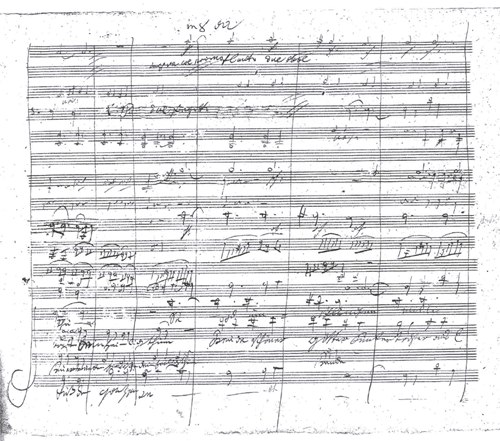 Document
Primary source
Symphony No. 9
Ludwig van Beethoven · 1824
 Sculpture
Secondary source
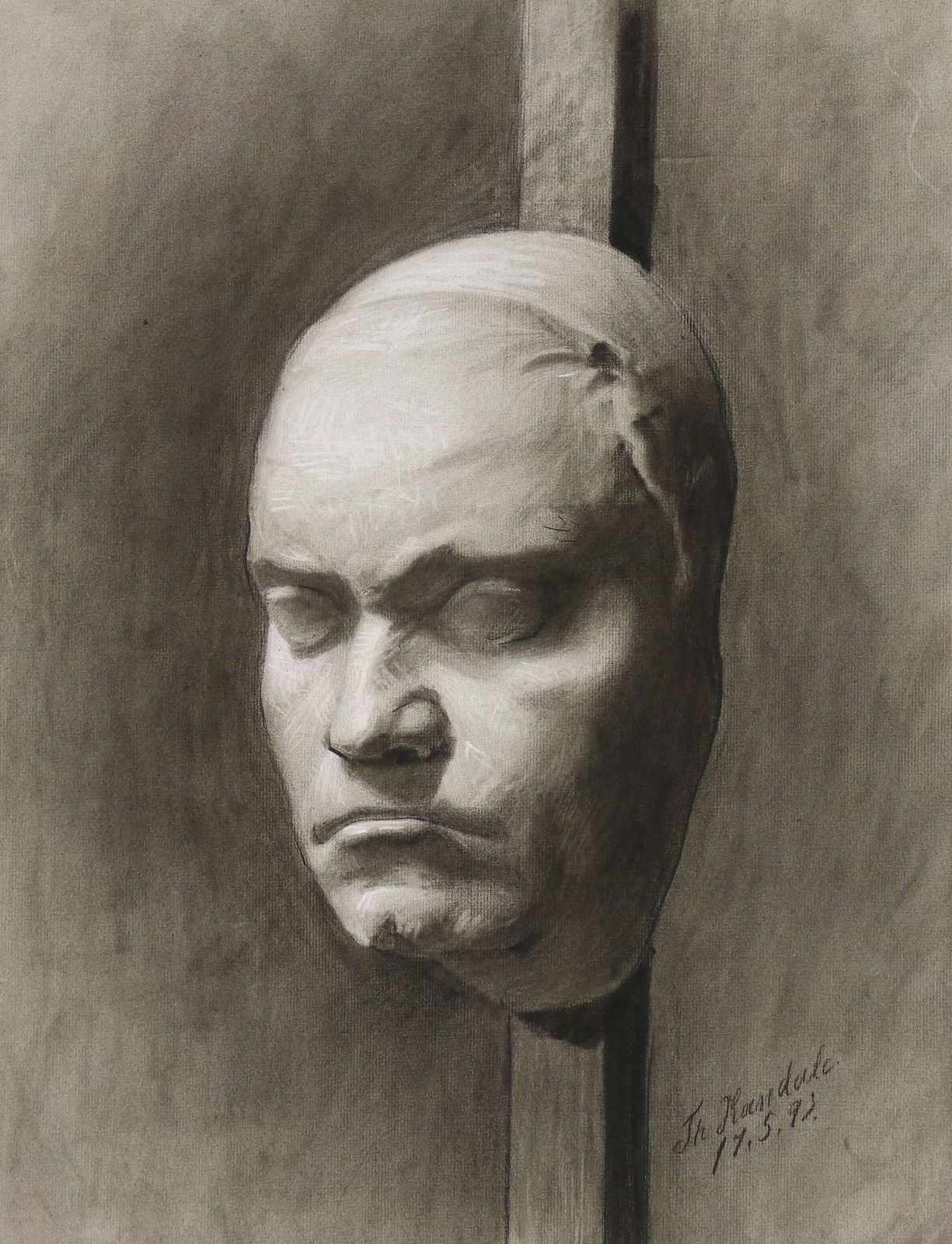
Death of Ludwig van Beethoven
Theodor Kandale (after Josef Danhauser) · 1827 (mask); drawing 1893
 Sculpture
Secondary source
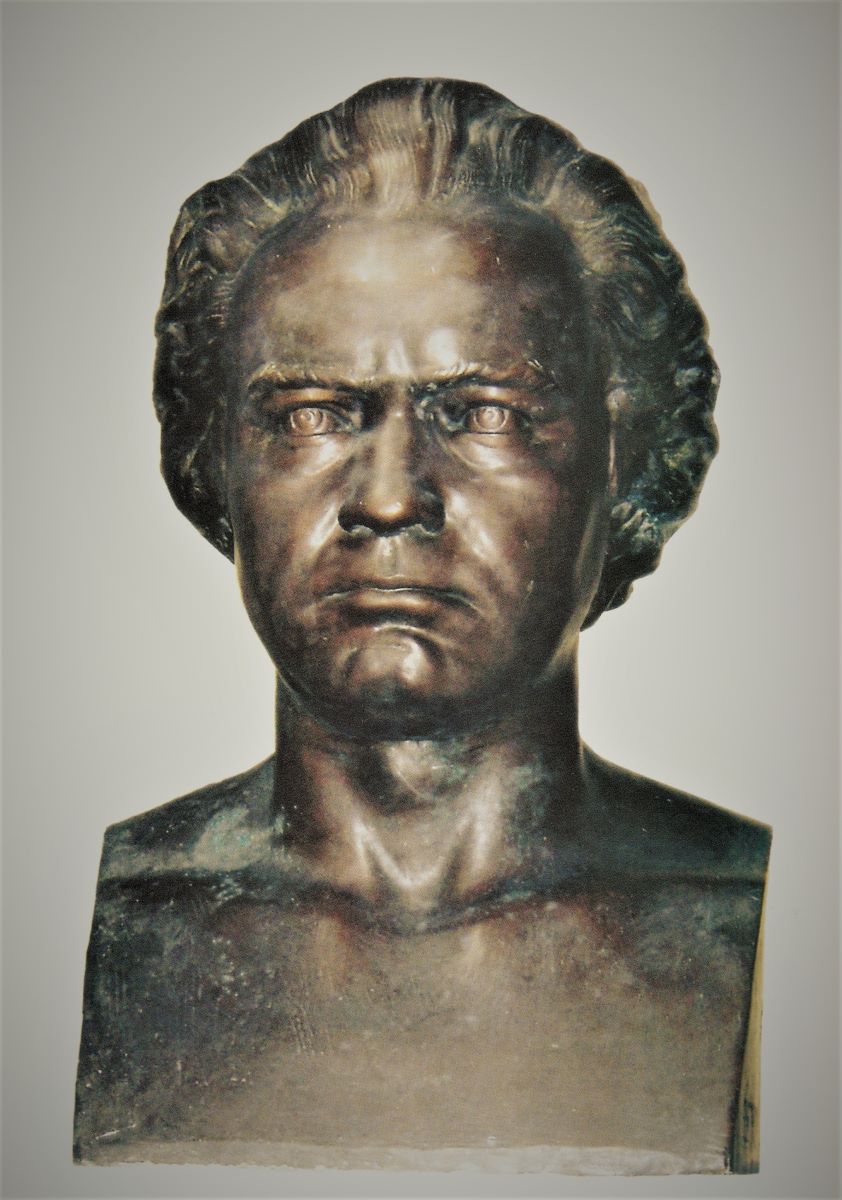
Bust of Ludwig van Beethoven by Frederic Storck
Frederic Storck · 1930
 Letter
Primary source
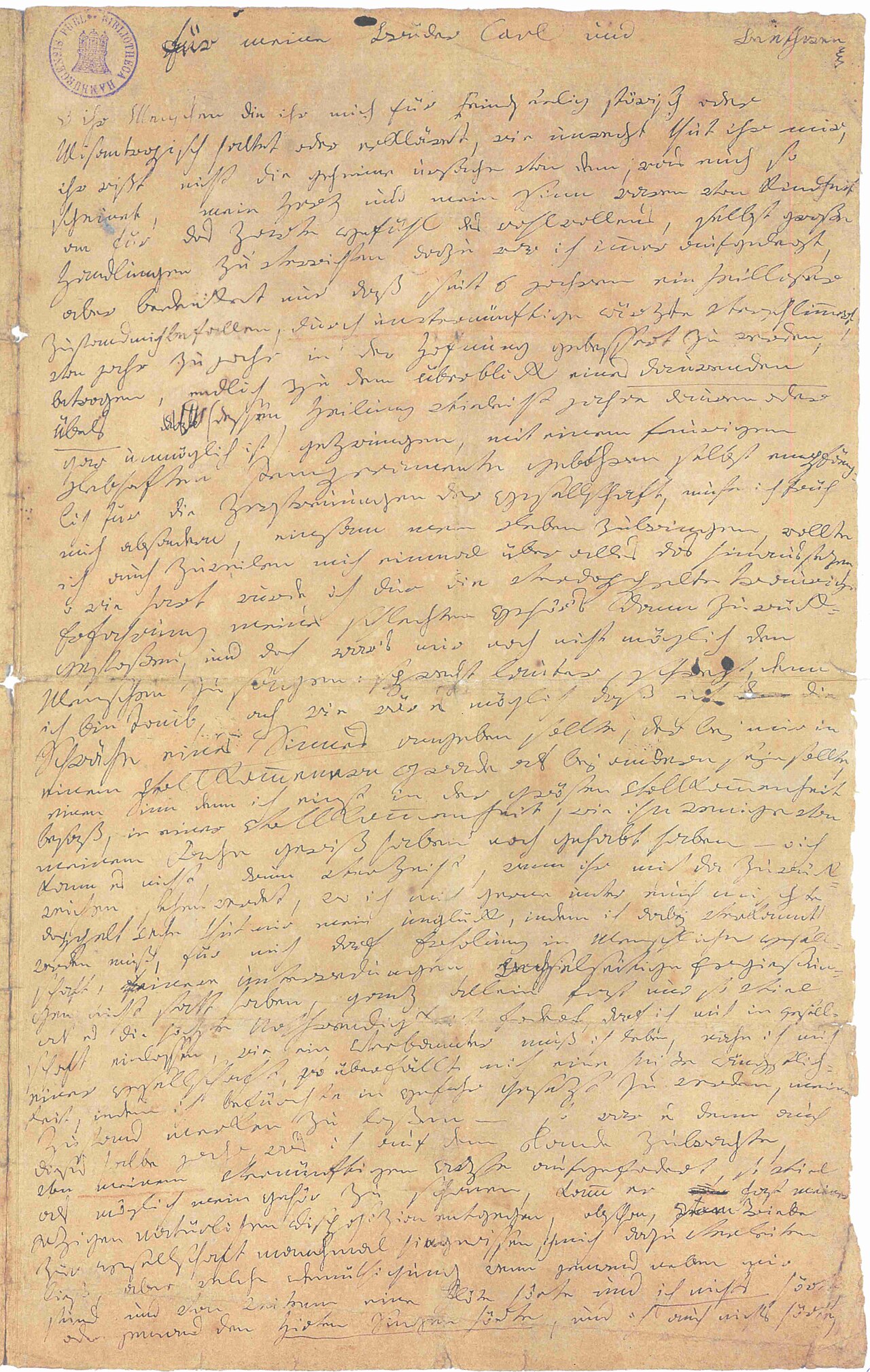
Heiligenstadt Testament
Ludwig van Beethoven · 6 October 1802
 Document
Primary source
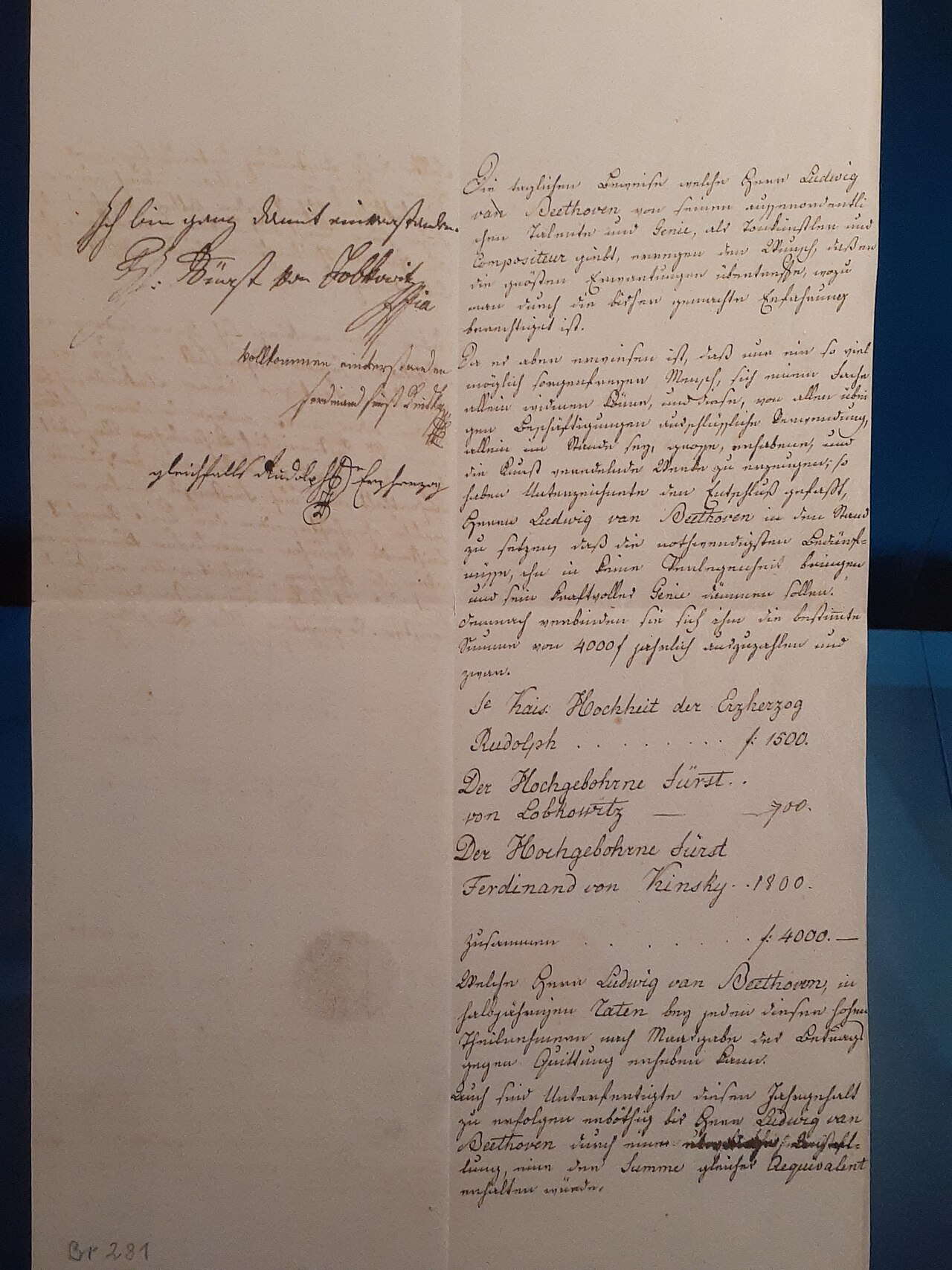
Agreement between Beethoven and Archduke Rudolph, Prince Kinsky and Prince Lobkowitz
1 March 1809
Ready when you are
Start chatting with Ludwig van Beethoven now.
20 messages free · No credit card · Available in 50+ languages.