


Primary sourceSculpture14th century BCE
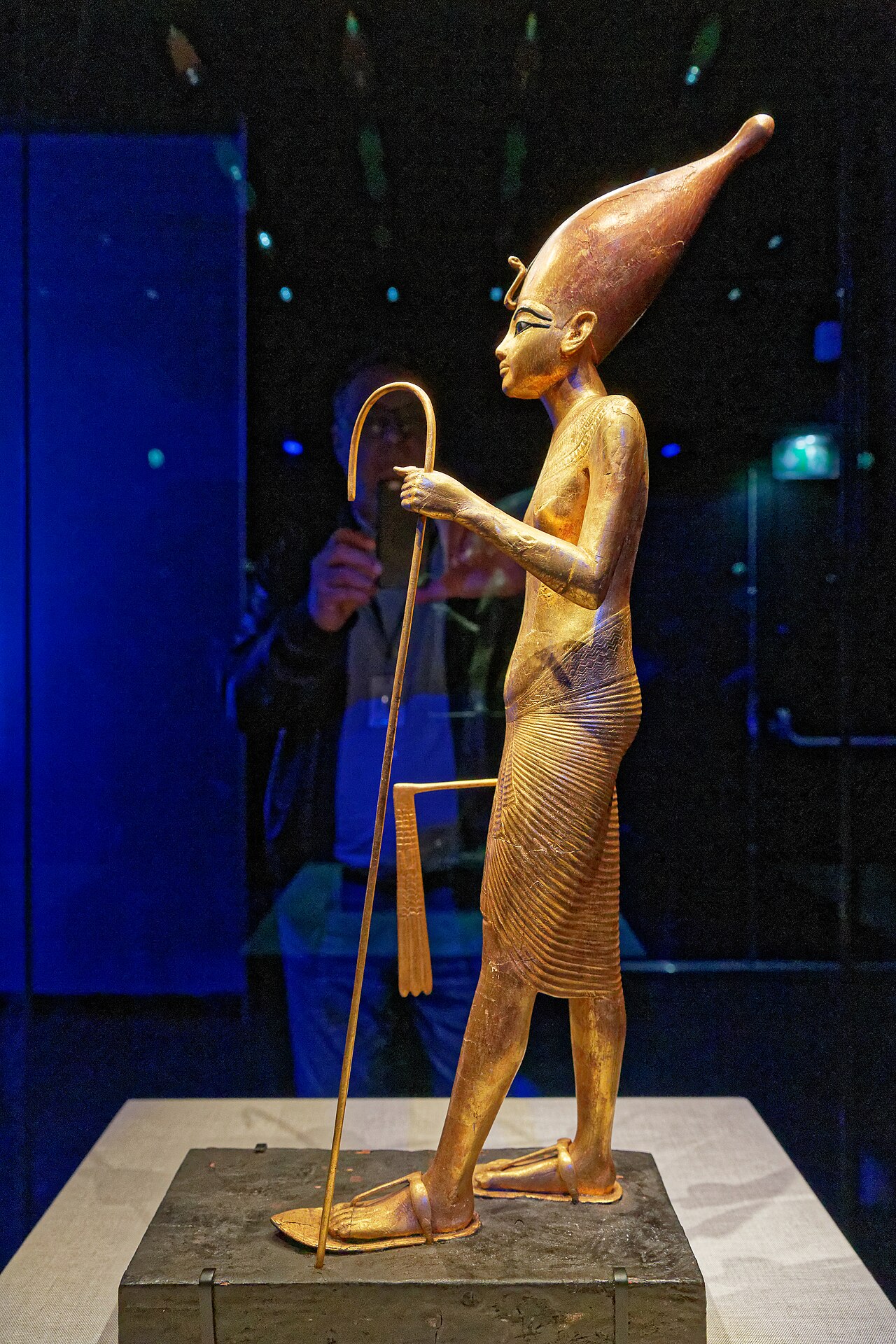
Statue of Tutankhamun with the White Crown
14th century BCE
A gilded wooden statuette from the tomb showing Tutankhamun wearing the white crown of Upper Egypt, one of many ritual figures buried with him.
One of several ritual tomb statues of Tutankhamun, shown here wearing the white crown of Upper Egypt.
About this source
What it is
This gilded wooden statue depicts Tutankhamun standing and wearing the tall white crown of Upper Egypt while holding a crook staff. It was placed among the objects in his tomb and is now displayed in a museum.
Why it matters
Statues like this were part of a set of ritual figures meant to serve and protect the king in the afterlife, each showing him with different crowns and regalia tied to Egyptian kingship and religion. They reveal how closely Egyptian rulers were linked to religious symbols even in death.
Look closer
- Why do you think multiple statues of the king wearing different crowns were placed in his tomb?
- What does the crook staff suggest about the role the statue was meant to represent?
- What does the statue not tell us about the king as a real, living person?
This sculpture is part of the curated material that grounds the AI version of Tutankhamun on Humy.ai — when students ask about related events, the AI can quote it and cite it.
More Tutankhamun sources
Meet the AI Tutankhamun →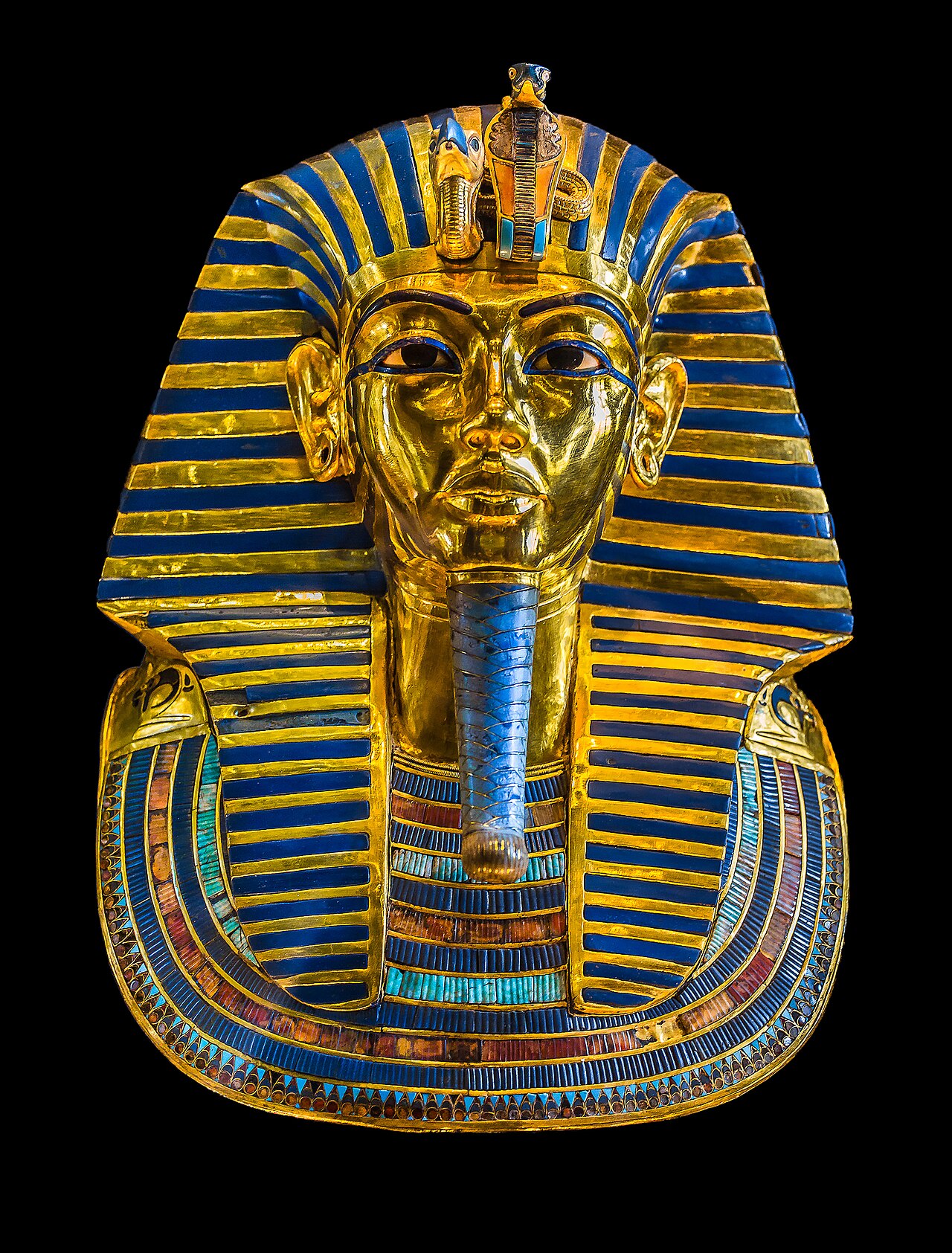 Artifact
Primary source
Mask of Tutankhamun
c. 1333 BCE
 Photograph
Primary source
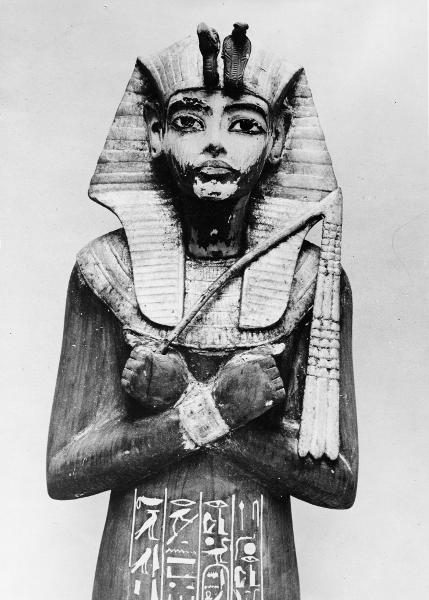
Photograph of Tutankhamun's Shawabti Figure
Harry Burton · 1920s
 Artifact
Primary source
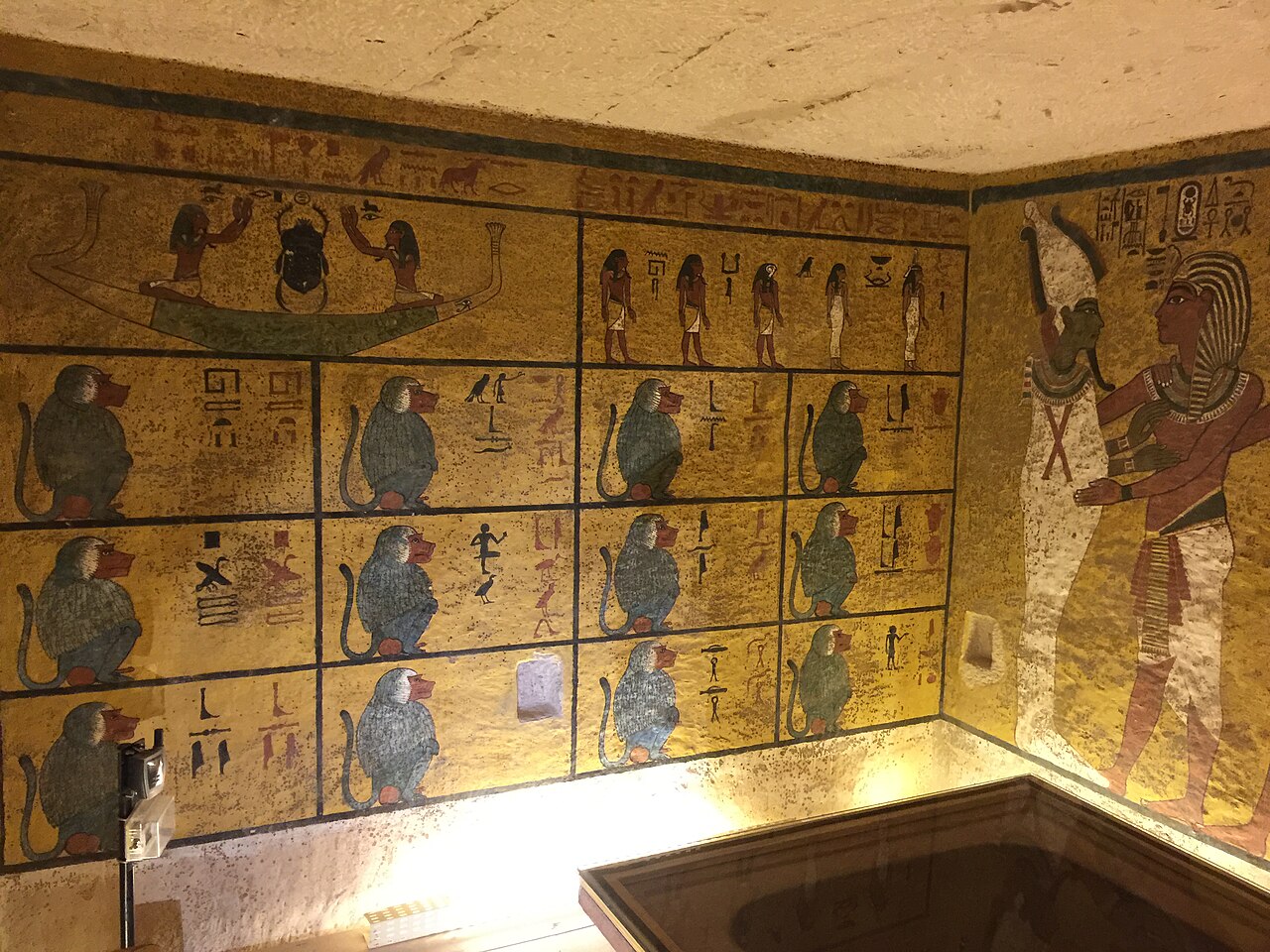
Tomb of Tutankhamun
14th century BCE
 Photograph
Primary source
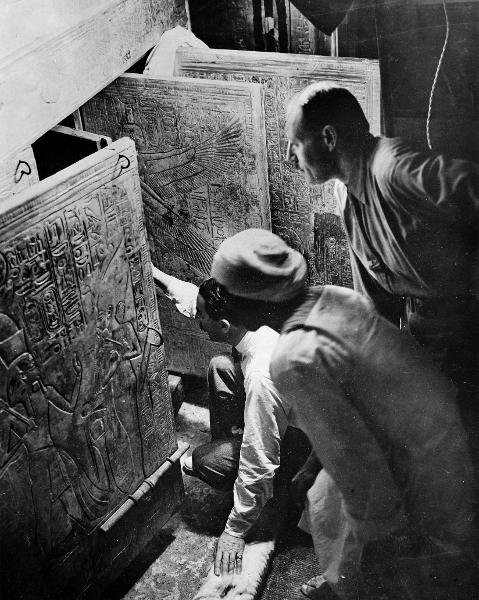
Opening the Doors of the Fourth Shrine in Tutankhamun's Tomb
Harry Burton · 1920s
 Document
Primary source
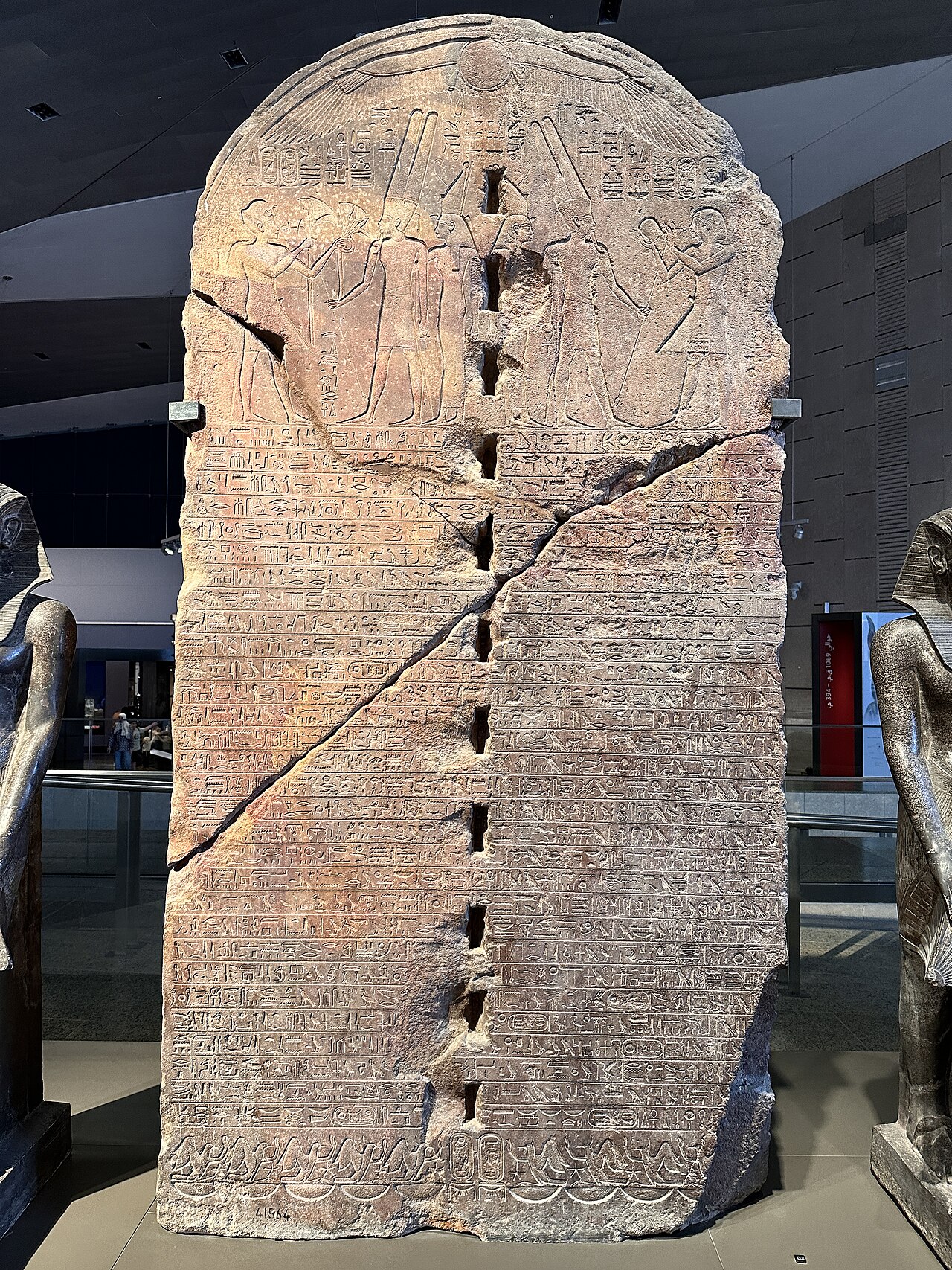
Restoration Stela
Tutankhamun · c. 1326 BCE
Ready when you are
Start chatting with Tutankhamun now.
20 messages free · No credit card · Available in 50+ languages.