


Primary sourceSculpturec. 100 BCE
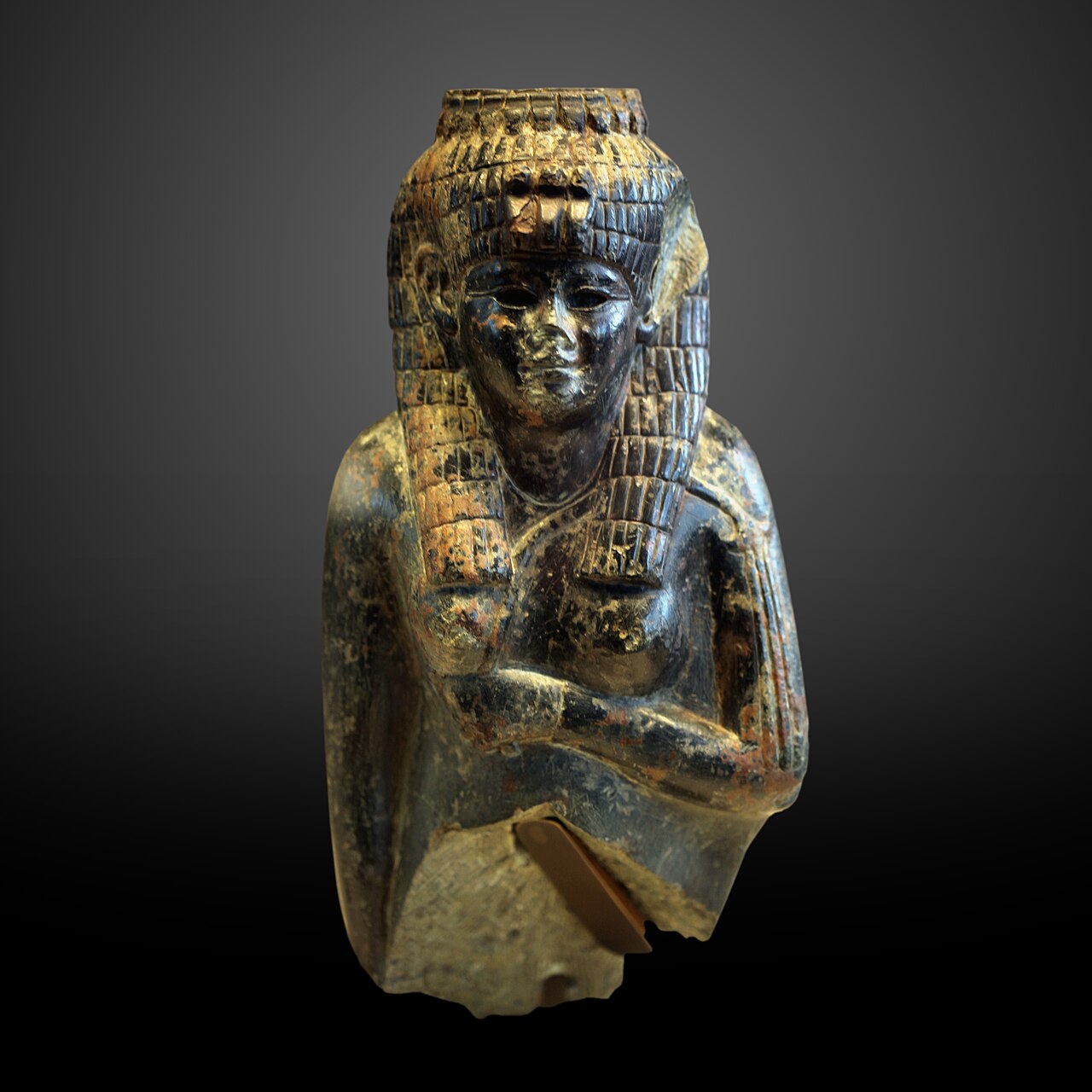
Statuette of Cleopatra VII with Triple Uraeus
c. 100 BCE
An Egyptian-style statuette of Cleopatra holding a fly-whisk and wearing a triple cobra crown unique to her, now in the Louvre.
An Egyptian-style depiction showing how Cleopatra presented herself as a native queen-goddess.
About this source
What it is
This is a small statuette of Cleopatra VII, carved in Egyptian style, dated to around 100 BCE. It is held in the Department of Egyptian Antiquities of the Louvre.
Why it matters
The statuette shows Cleopatra holding a fly-whisk and wearing a triple uraeus, a crown symbol unique to her among Egyptian rulers. It presents her as a native Egyptian queen-goddess, rather than as a Greek monarch, showing how she used different images for different audiences.
Look closer
- Why might Cleopatra choose to be shown in Egyptian style here instead of Greek style?
- What does the triple uraeus symbol suggest about how she wanted to be seen?
- Who do you think this image was meant for, and how might that shape what it shows?
This sculpture is part of the curated material that grounds the AI version of Cleopatra on Humy.ai — when students ask about related events, the AI can quote it and cite it.
More Cleopatra sources
Meet the AI Cleopatra →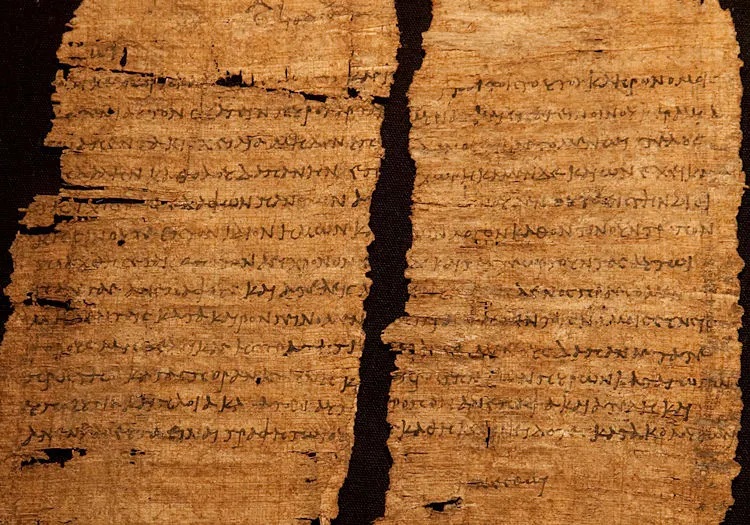 Document
Primary source
Papyrus with Signature of Cleopatra VII
Ptolemaic scribe; possibly countersigned by Cleopatra VII · February 33 BCE
 Painting
Secondary source
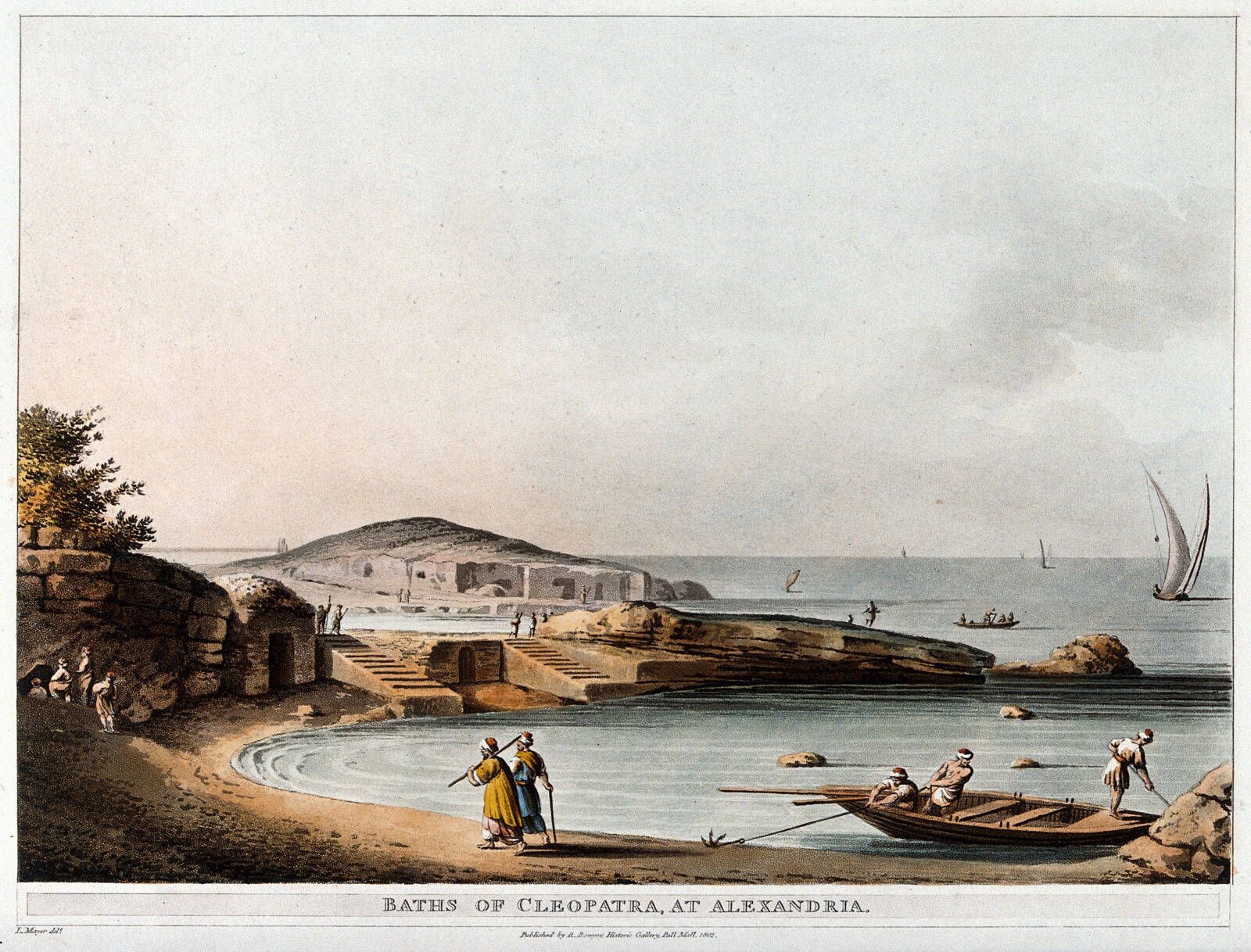
Baths of Cleopatra, at Alexandria
Luigi Mayer · 1802
 Sculpture
Secondary source
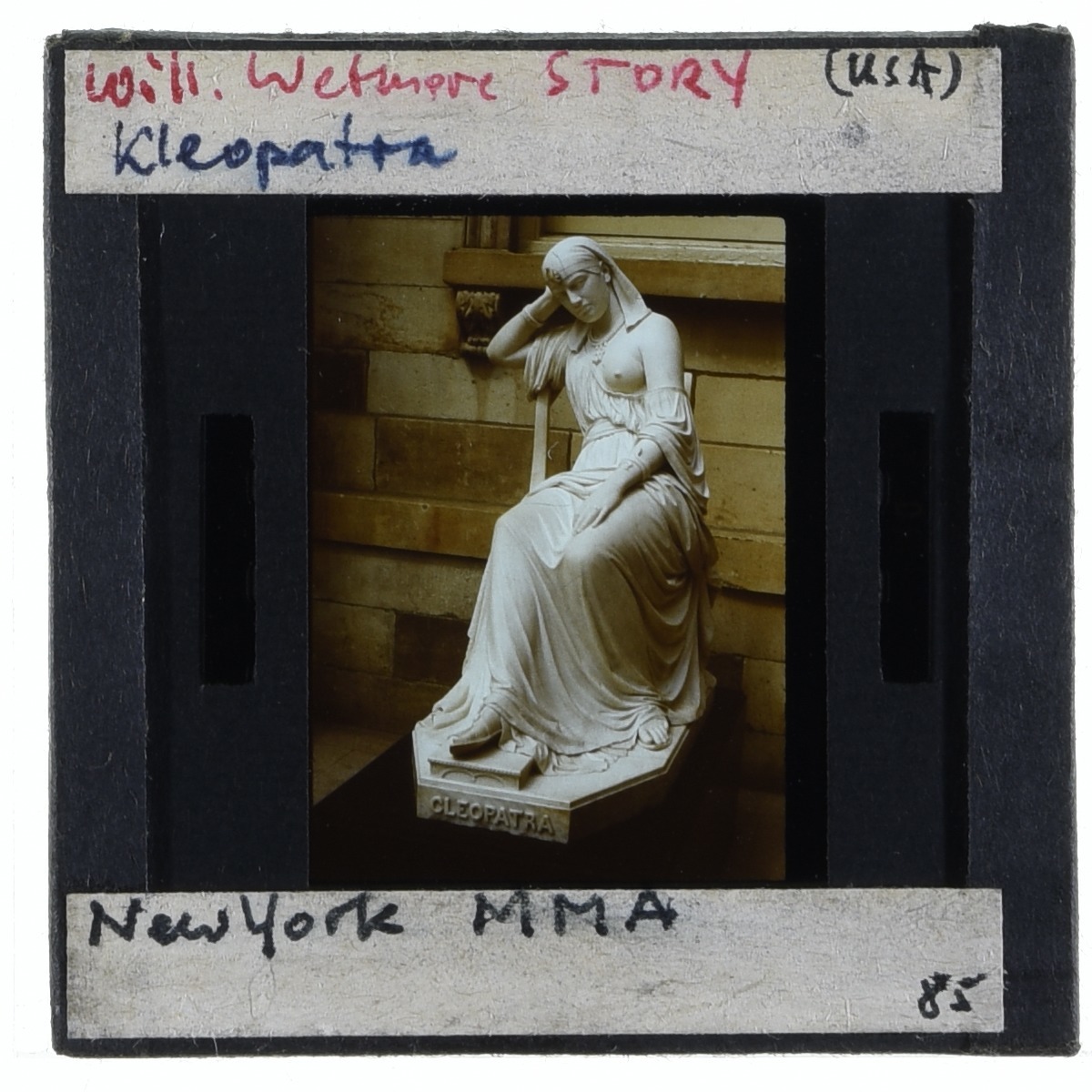
Cleopatra
William Wetmore Story
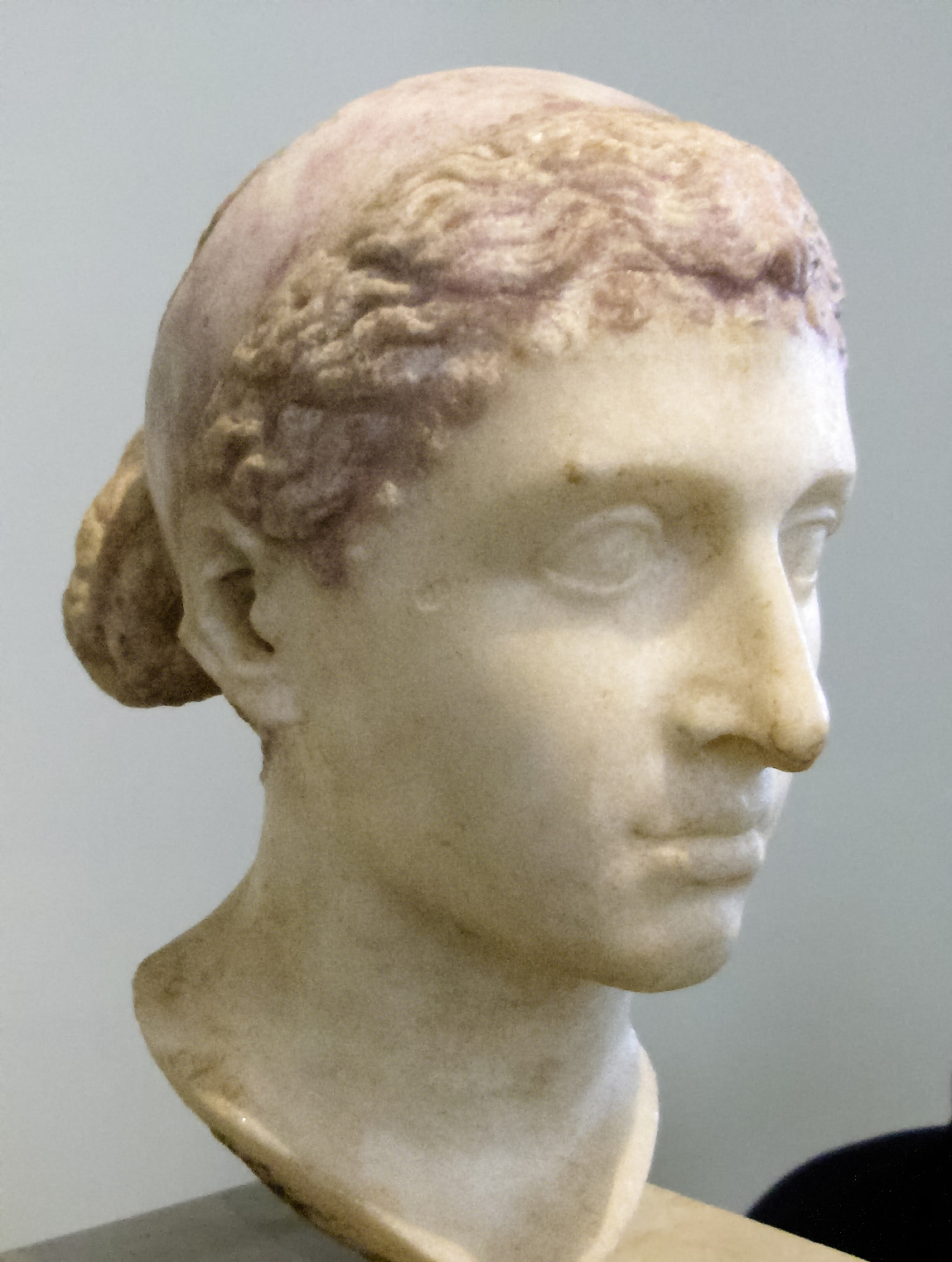 Sculpture
Primary source
Portrait of Cleopatra (Berlin Bust)
c. 40-30 BCE
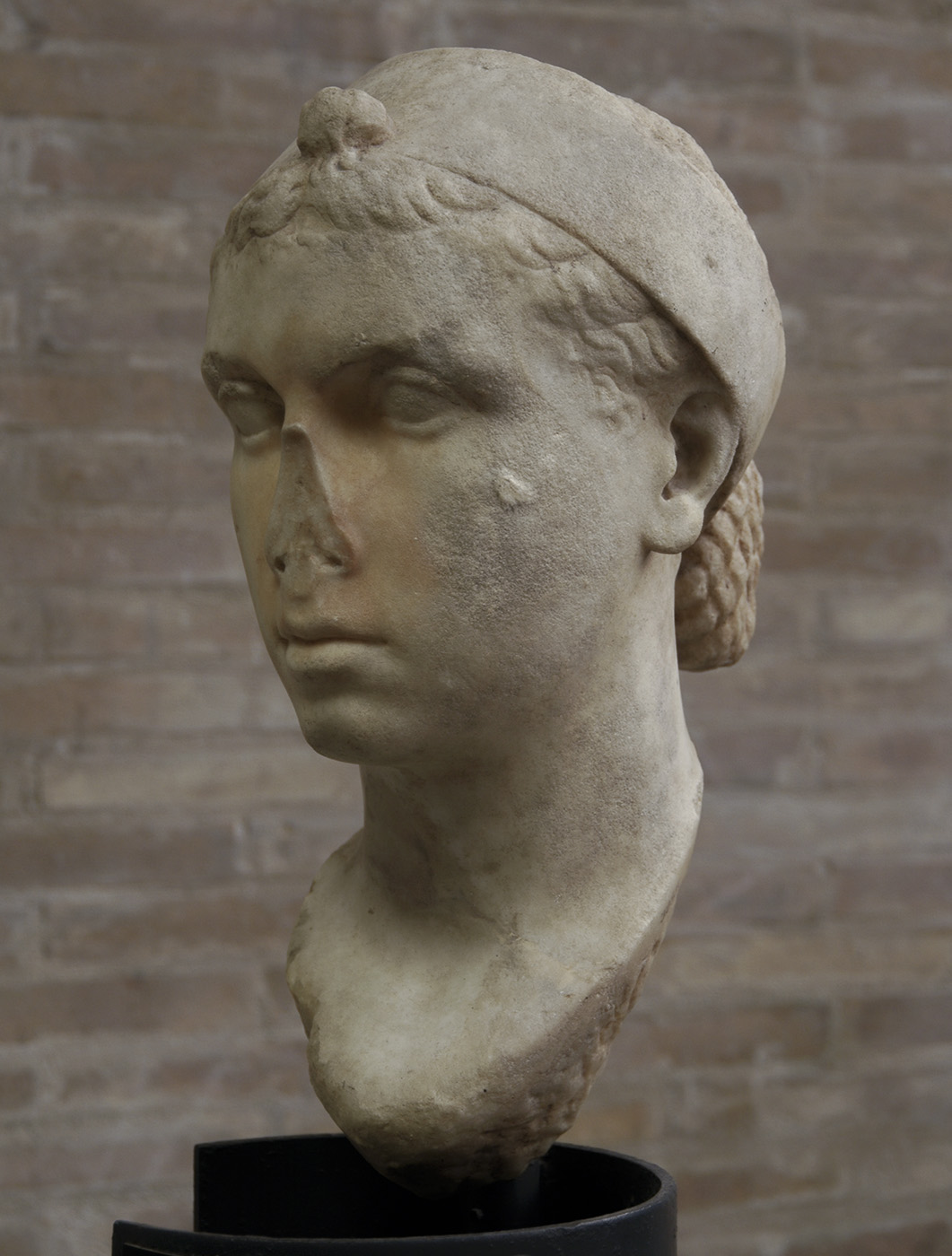 Sculpture
Primary source
Head-Portrait of Cleopatra VII (Vatican Bust)
c. 40-30 BCE
Ready when you are
Start chatting with Cleopatra now.
20 messages free · No credit card · Available in 50+ languages.