


Primary sourceSculpture
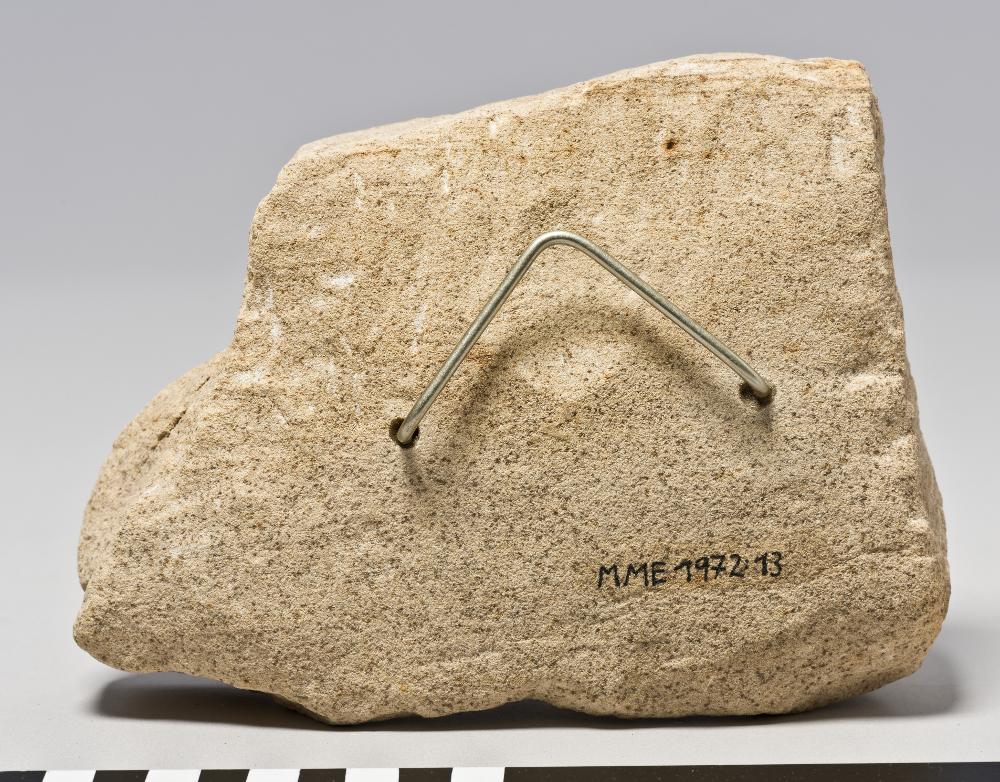
Talatat Relief Showing Akhenaten at the Sed Festival
A carved stone block from Akhenaten's temples showing him carrying ceremonial objects at a festival, in his characteristic artistic style.
This temple block fragment shows Akhenaten performing a ceremonial role, carved in his distinctive artistic style.
About this source
What it is
This is a fragment of a talatat, a small standard-sized building block used in Akhenaten's temple constructions. It shows the king carrying the flail and sceptre at a festival, with the rays of the god Aten behind him, one ending in a hand holding a symbolic sign. The block is now held by the Museum of Mediterranean and Near Eastern Antiquities in Sweden.
Why it matters
Talatat blocks were used to quickly build and later destroy Akhenaten's monuments to Aten after his death, so each surviving piece is a rare clue to what his temples once showed. The long neck, curving chin, and full mouth on this fragment are typical features of how Akhenaten was portrayed.
Look closer
- What symbols or objects does the king hold, and what might they represent?
- Why do you think this fragment survived while whole temples did not?
- What clues on the stone itself (color, condition, museum marks) tell you this is a real excavated artifact?
This sculpture is part of the curated material that grounds the AI version of Akhenaten on Humy.ai — when students ask about related events, the AI can quote it and cite it.
More Akhenaten sources
Browse all 99 →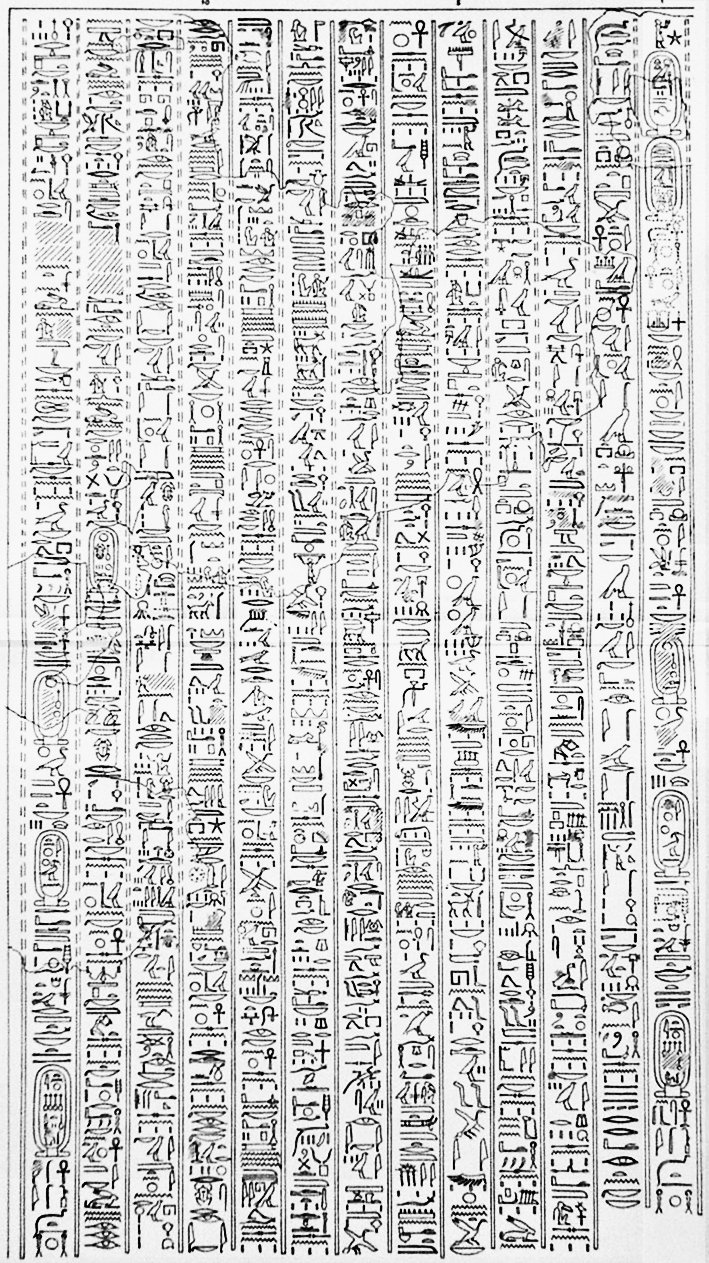 Document
Primary source
Great Hymn to the Aten
Akhenaten · c. 1350 BC
 Document
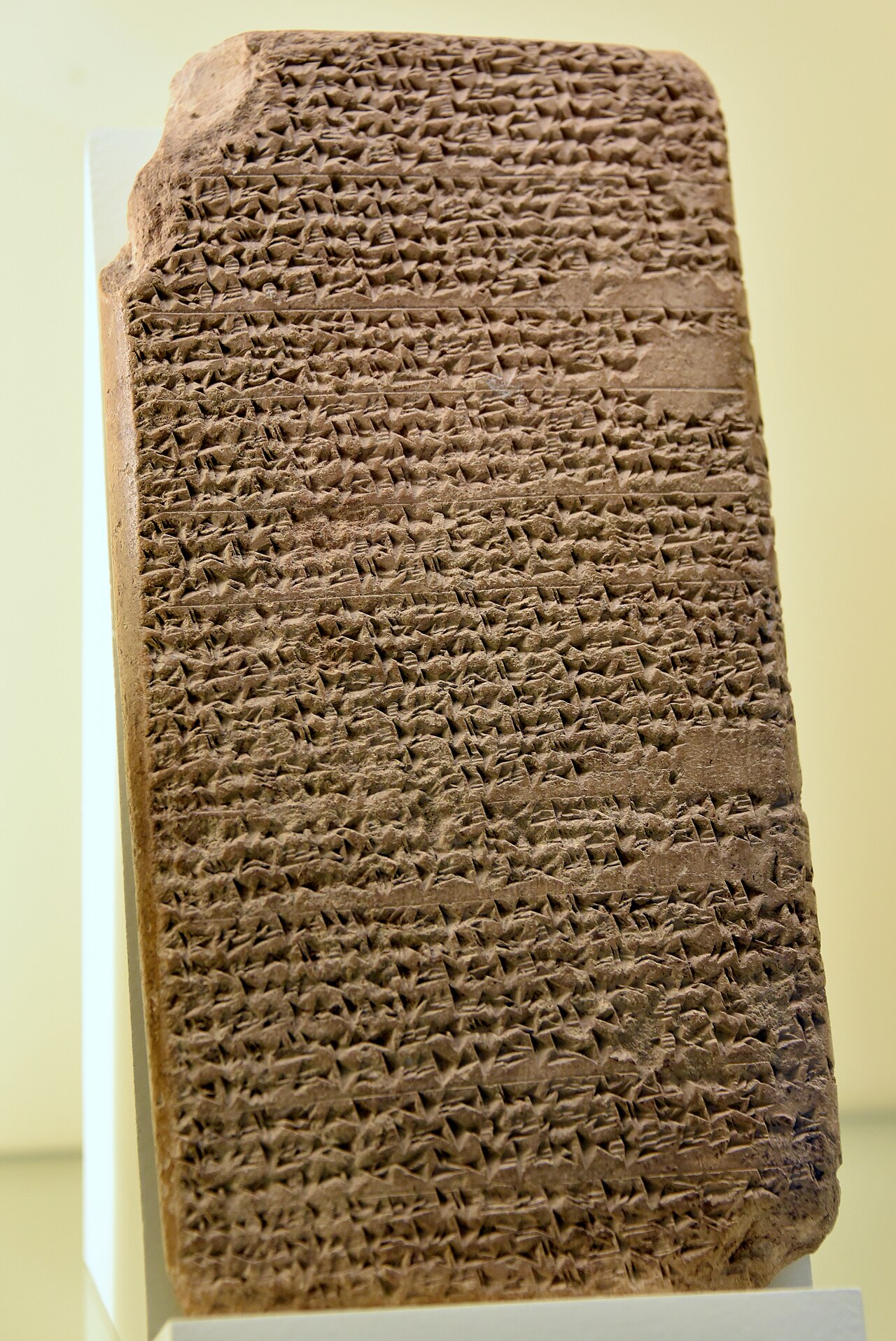
Primary source
Amarna letters
Foreign rulers and vassals of Egypt; Egyptian chancery · c. 1360–1332 BCE
 Sculpture
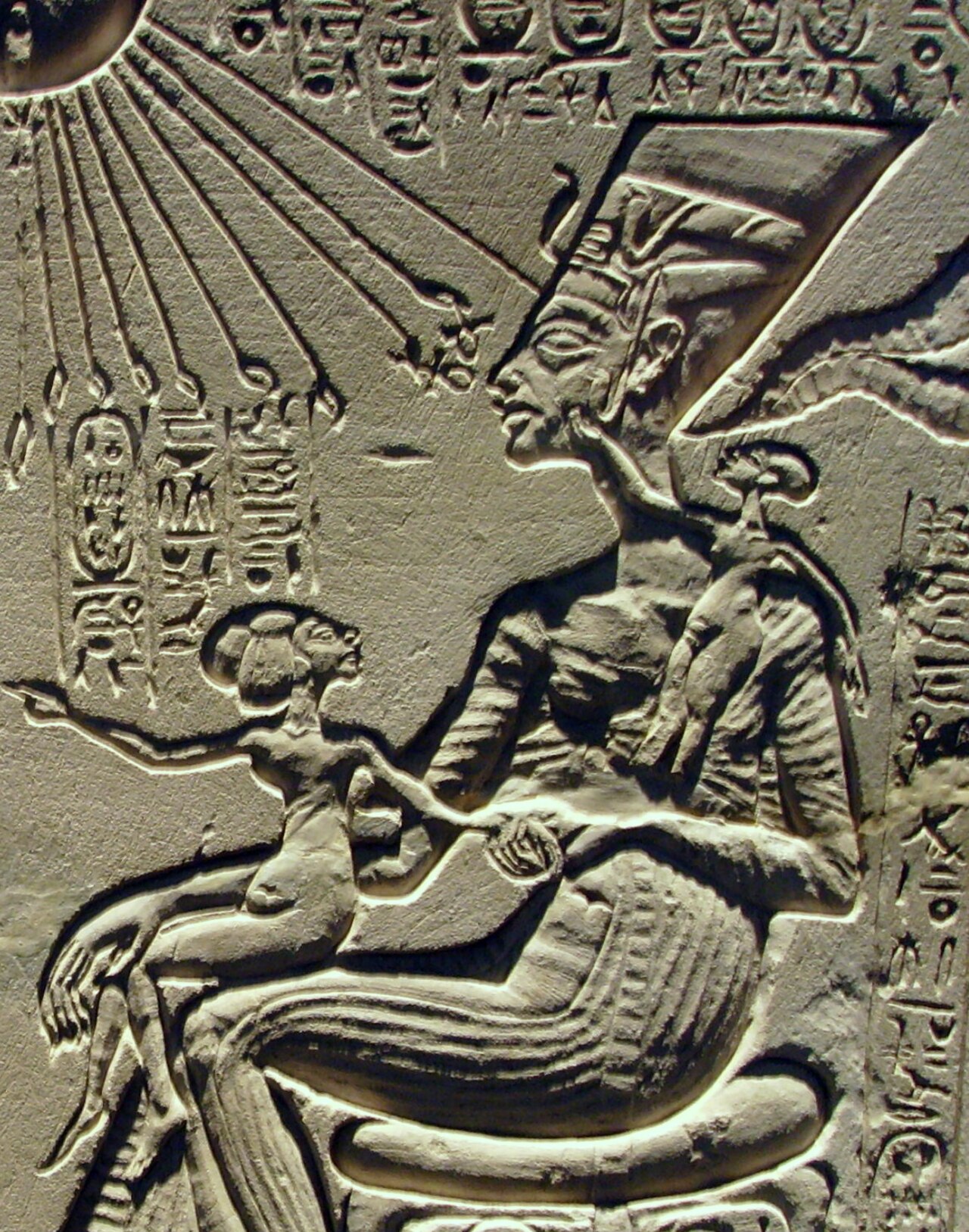
Primary source
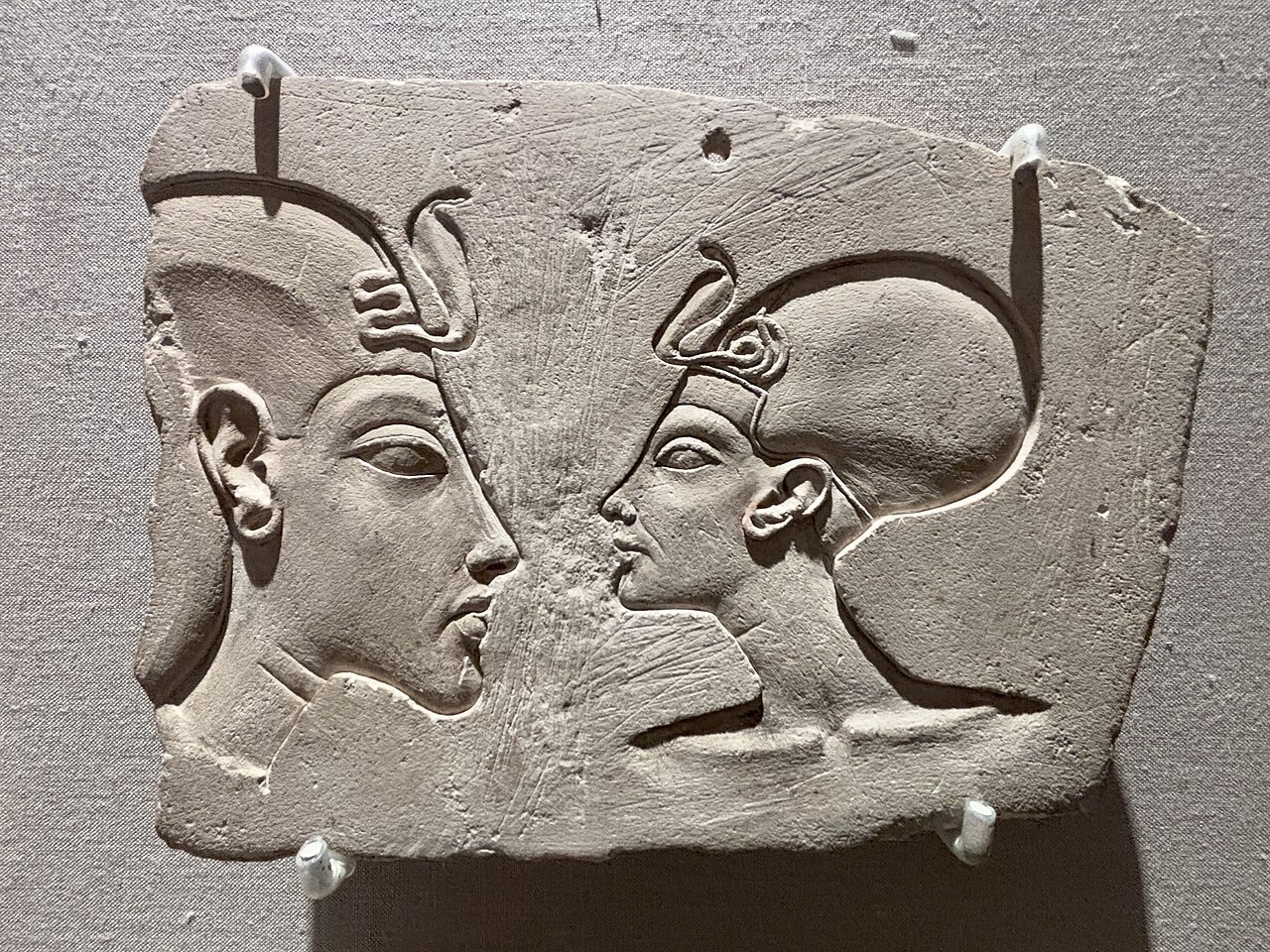
Akhenaten and His Family
c. 1352 BC
 Sculpture
Primary source
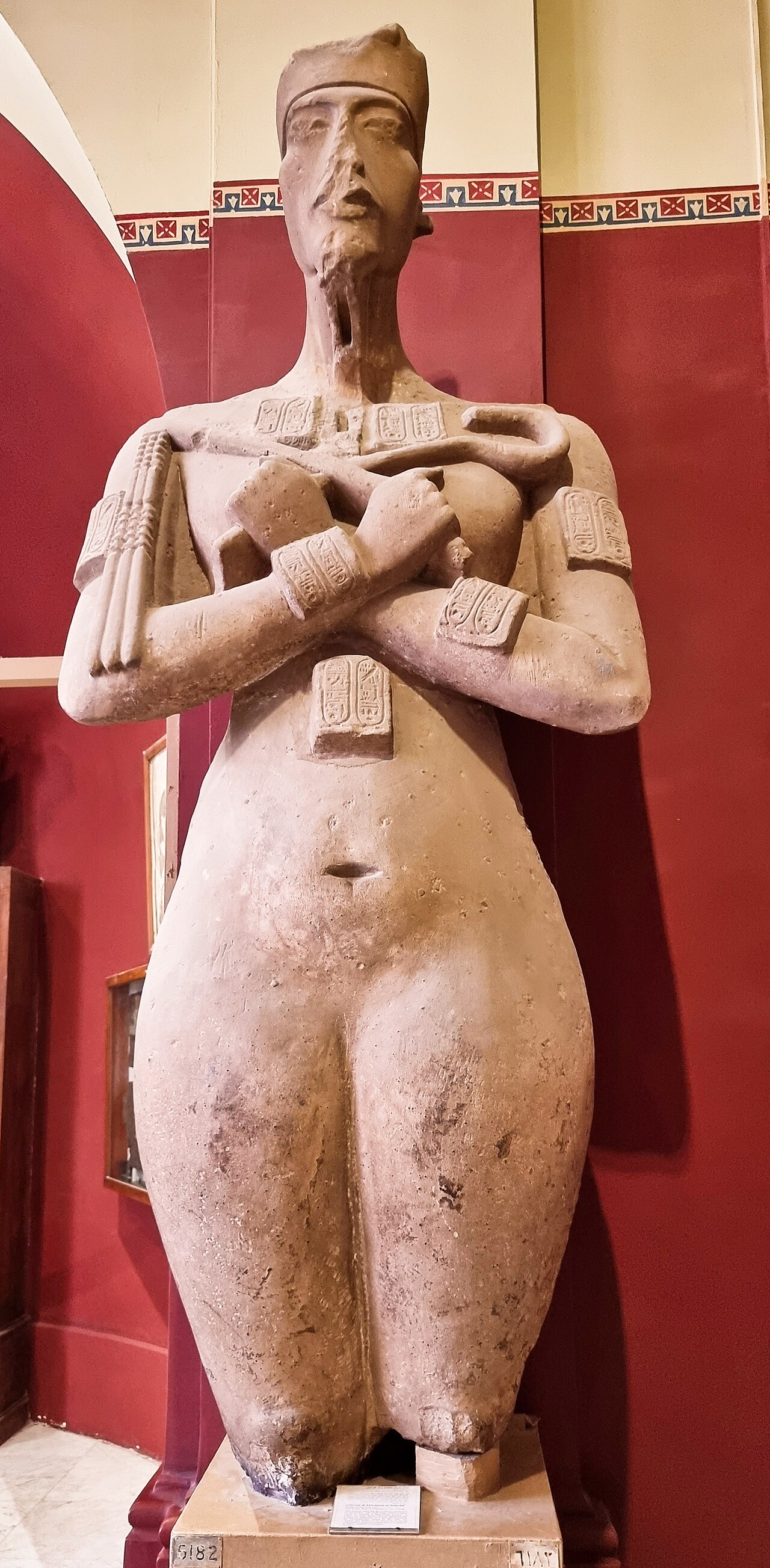
Colossal Statue of Akhenaten or Nefertiti
Free account
Read every Akhenaten source
Sign up free →
Ready when you are
Start chatting with Akhenaten now.
20 messages free · No credit card · Available in 50+ languages.