


Primary sourcePainting1825
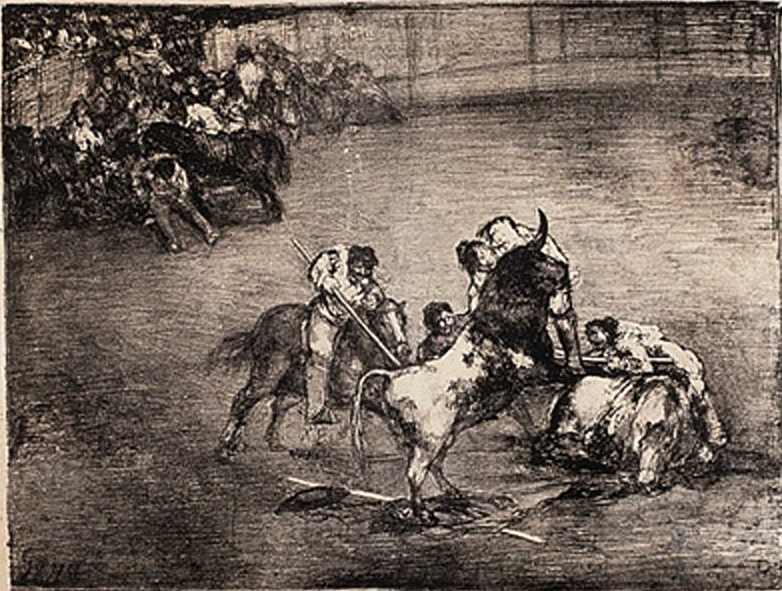
The Bulls of Bordeaux
Francisco Goya · 1825
A series of four lithographs made by Francisco Goya in 1825 during his exile in France, showing bullfighting as public spectacle.
Goya created these lithographs himself in exile, showing his late-life artistic innovation and enduring interest in bullfighting.
About this source
What it is
These four lithographs were produced by Francisco Goya in 1825 while he lived in exile in Bordeaux, France, with the help of master printer Cyprien Gaulon. The prints show scenes of bullfighting as popular entertainment, including a famous matador, a gored picador, a running of the bulls, and a divided bullring.
Why it matters
Goya made the prints in old age, nearly blind, after fleeing political repression in Spain following the restoration of absolute rule under Ferdinand VII. The series shows him experimenting boldly with the still-new medium of lithography, working in an unusually loose, expressive style quite different from the neat lithographs typical of his time. His companion Antonio Brugada left a detailed account of how Goya worked on the stones.
Look closer
- How does Goya use loose, sketchy marks rather than careful detail to show movement and violence?
- What does the choice of subject tell us about Goya's lifelong interests late in his career?
- Why might an elderly, exiled artist choose to depict such energetic, dangerous scenes?
This painting is part of the curated material that grounds the AI version of Francisco Goya on Humy.ai — when students ask about related events, the AI can quote it and cite it.
More Francisco Goya sources
Meet the AI Francisco Goya →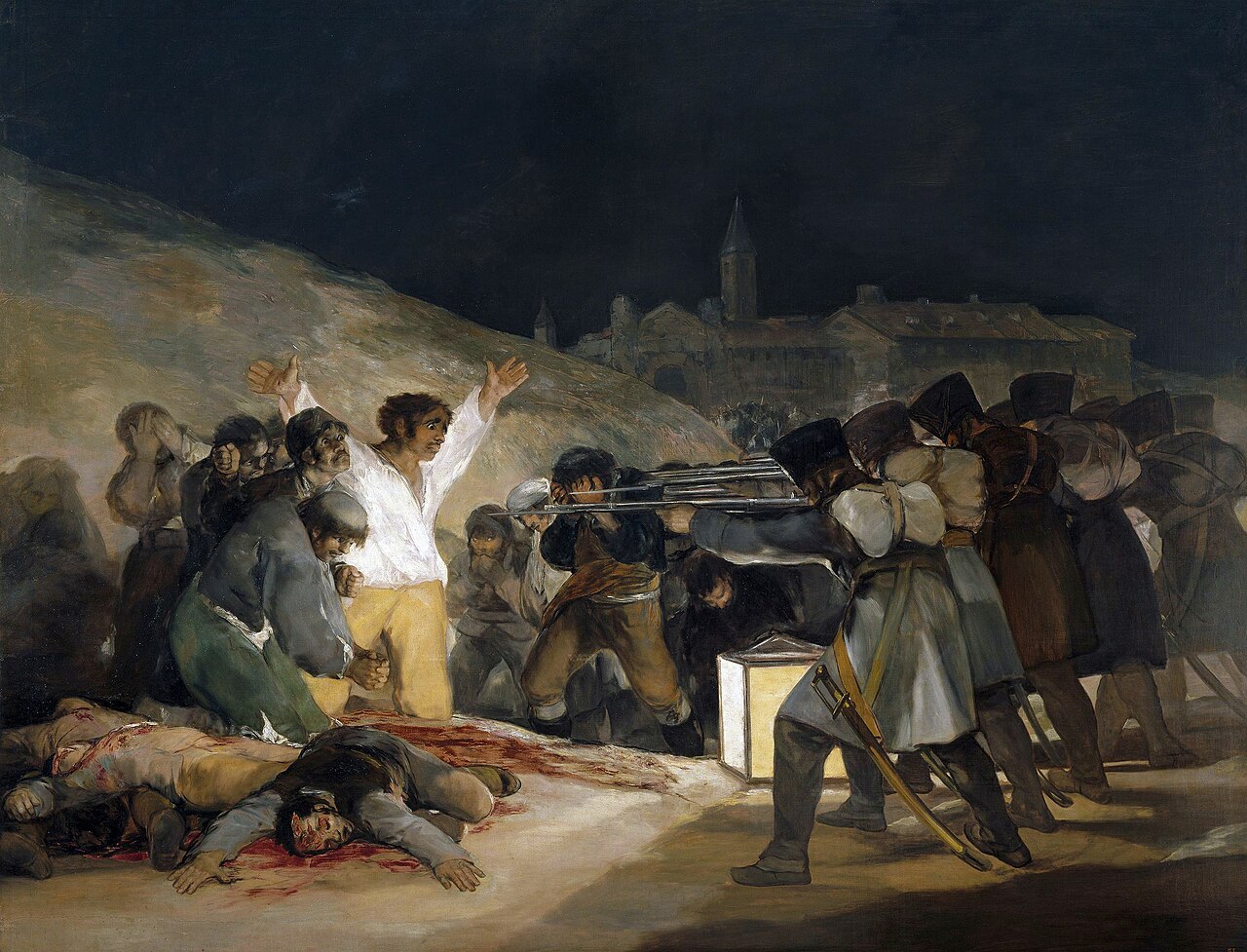 Painting
Secondary source
The Third of May 1808
Francisco Goya · 1814
 Painting
Primary source
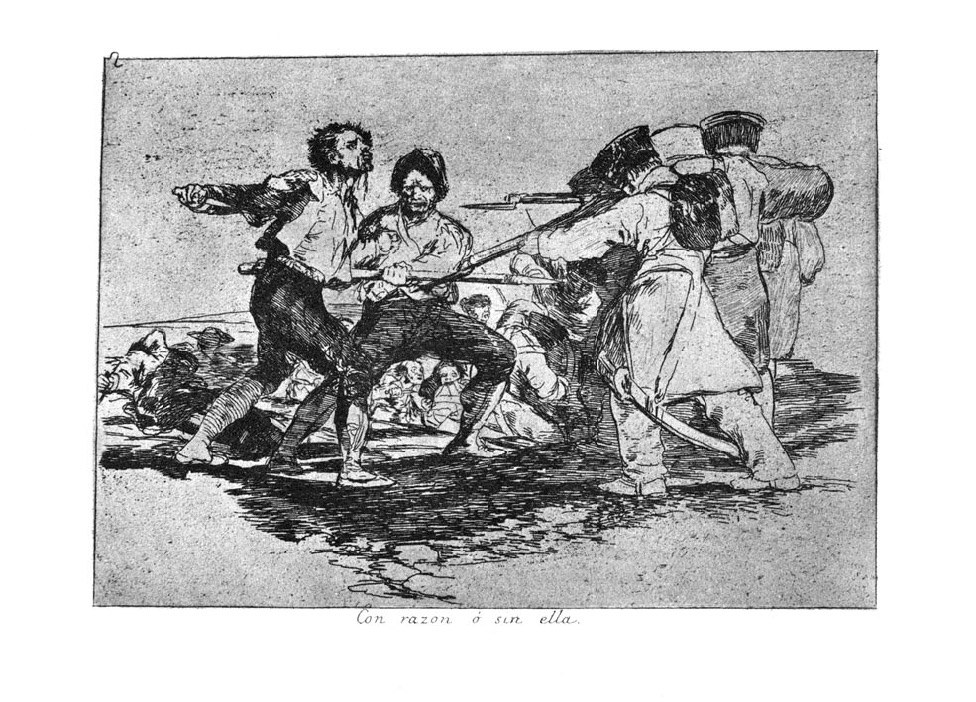
The Disasters of War
Francisco Goya · 1810-1820
 Painting
Primary source
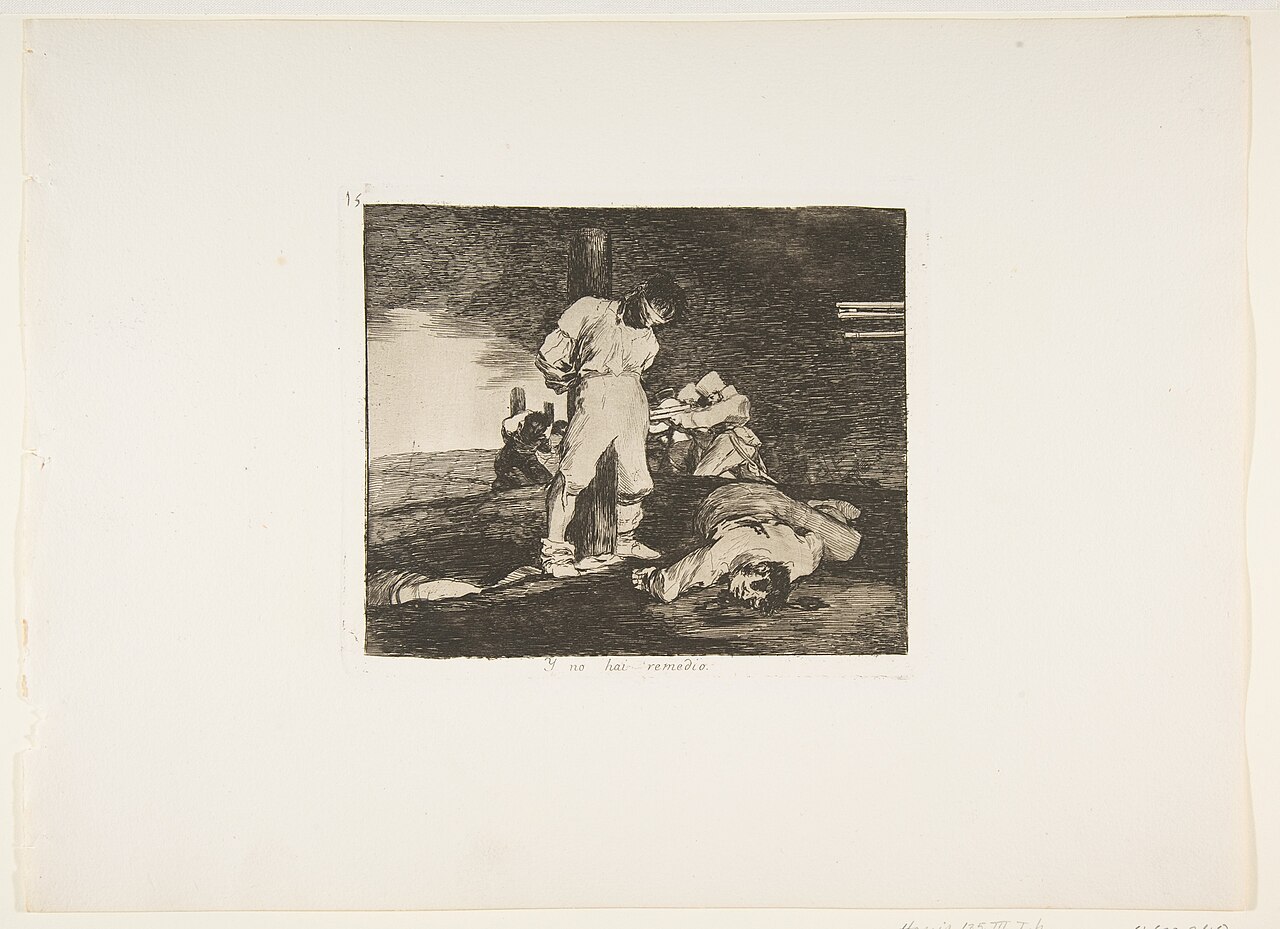
Y no hai remedio
Francisco de Goya · c. 1810-1814 (published 1863)
 Painting
Primary source
Caprichos
Francisco Goya · 1799 (created 1797-1798)
 Painting
Primary source
The Sleep of Reason Produces Monsters
Francisco Goya · 1797-1799
Ready when you are
Start chatting with Francisco Goya now.
20 messages free · No credit card · Available in 50+ languages.