


Secondary sourcePaintingca. 1620
The bust of Plato in a niche, etching by Vorsterman
Lucas Vorsterman I · ca. 1620
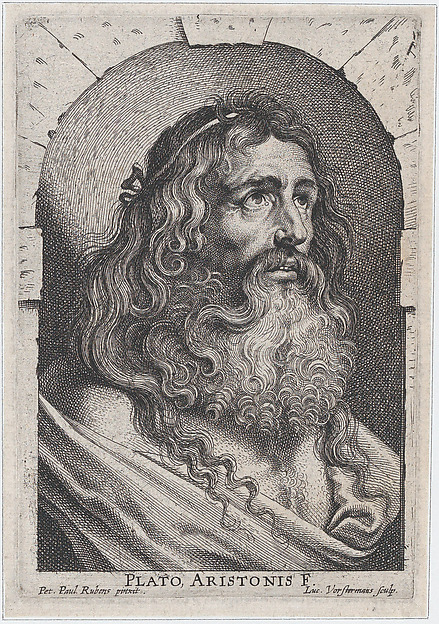
An etching of a bust of Plato in an arched niche, made about 1620 by Lucas Vorsterman after a design credited to Rubens.
Shows how a bust of Plato was reproduced as a 1600s print, illustrating how later artists pictured him.
About this source
What it is
This is an etching of a bust of Plato, shown in an arched niche with a draped garment. The engraved man has long wavy hair and a laurel-like band. The caption below reads 'PLATO, ARISTONIS F.' and credits 'Petr. Paul Rubens pinxit' and 'Luc. Vorstermans sculp.' The print is dated about 1620 and is held by The Metropolitan Museum of Art in New York. Its makers were Lucas Vorsterman I, who cut the plate, and Peter Paul Rubens, who is credited with the design.
Why it matters
The print shows a bust of Plato that was copied and reproduced in the 1600s. Its inscription names Plato as the son of Ariston, a detail from later tradition rather than a record made in his lifetime. The print was made about 1,900 years after Plato died, so it reflects how European artists and collectors imagined ancient philosophers. It tells us about the people who made and bought such prints.
Look closer
- What details of the bust, such as the band and the niche, make Plato look wise or important?
- Why do you think the print credits both a designer and an engraver, and who would have wanted it?
- What does the image leave out about Plato's life and his actual appearance?
This painting is part of the curated material that grounds the AI version of Plato on Humy.ai — when students ask about related events, the AI can quote it and cite it.
More Plato sources
Meet the AI Plato →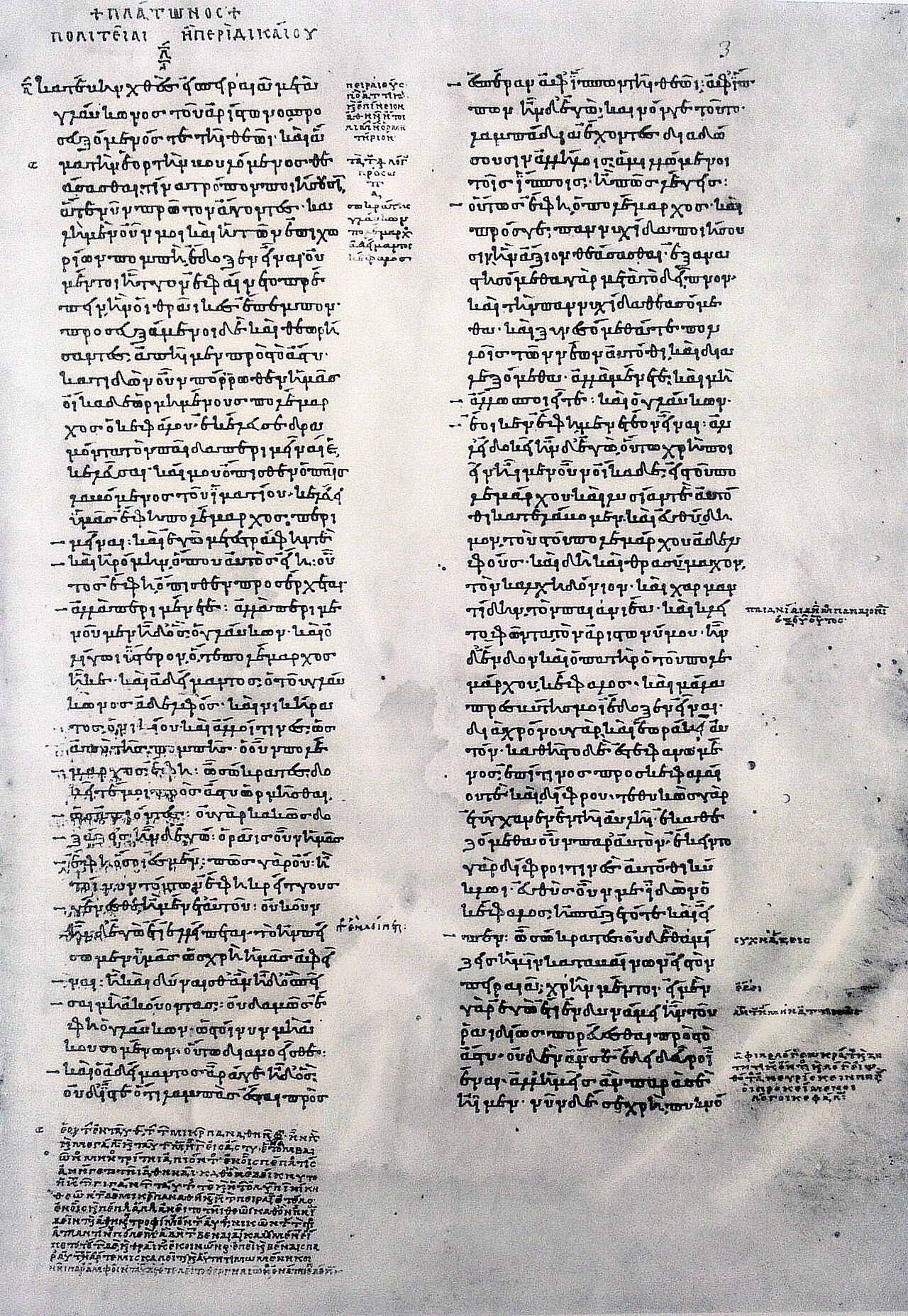 Book
Secondary source
The Republic
Plato · c. 375 BC
 Book
Primary source
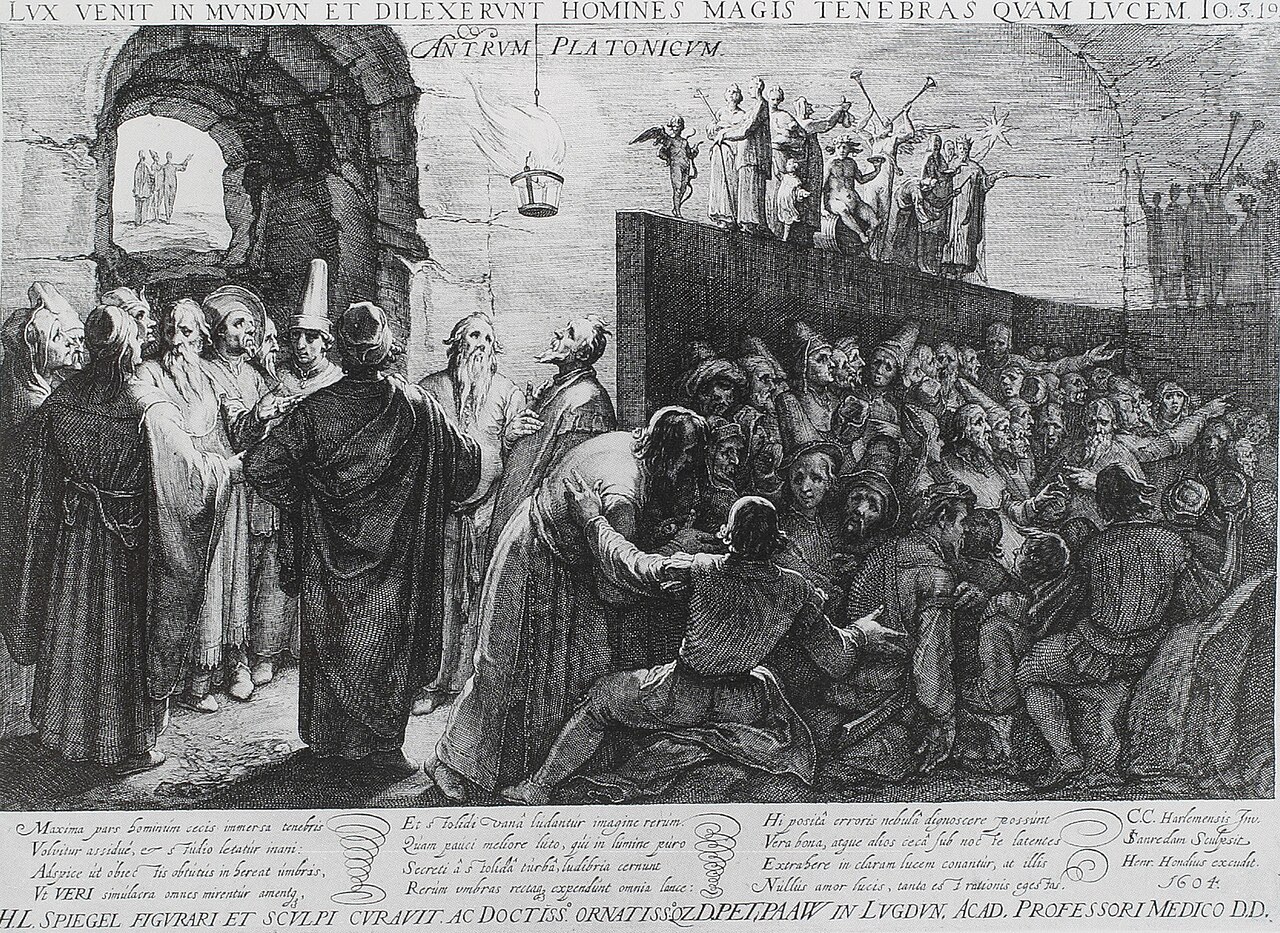
Allegory of the Cave
Plato · c. 400 BC
Secondary source
Apology
Plato · c. 395 BC
 Sculpture
Secondary source
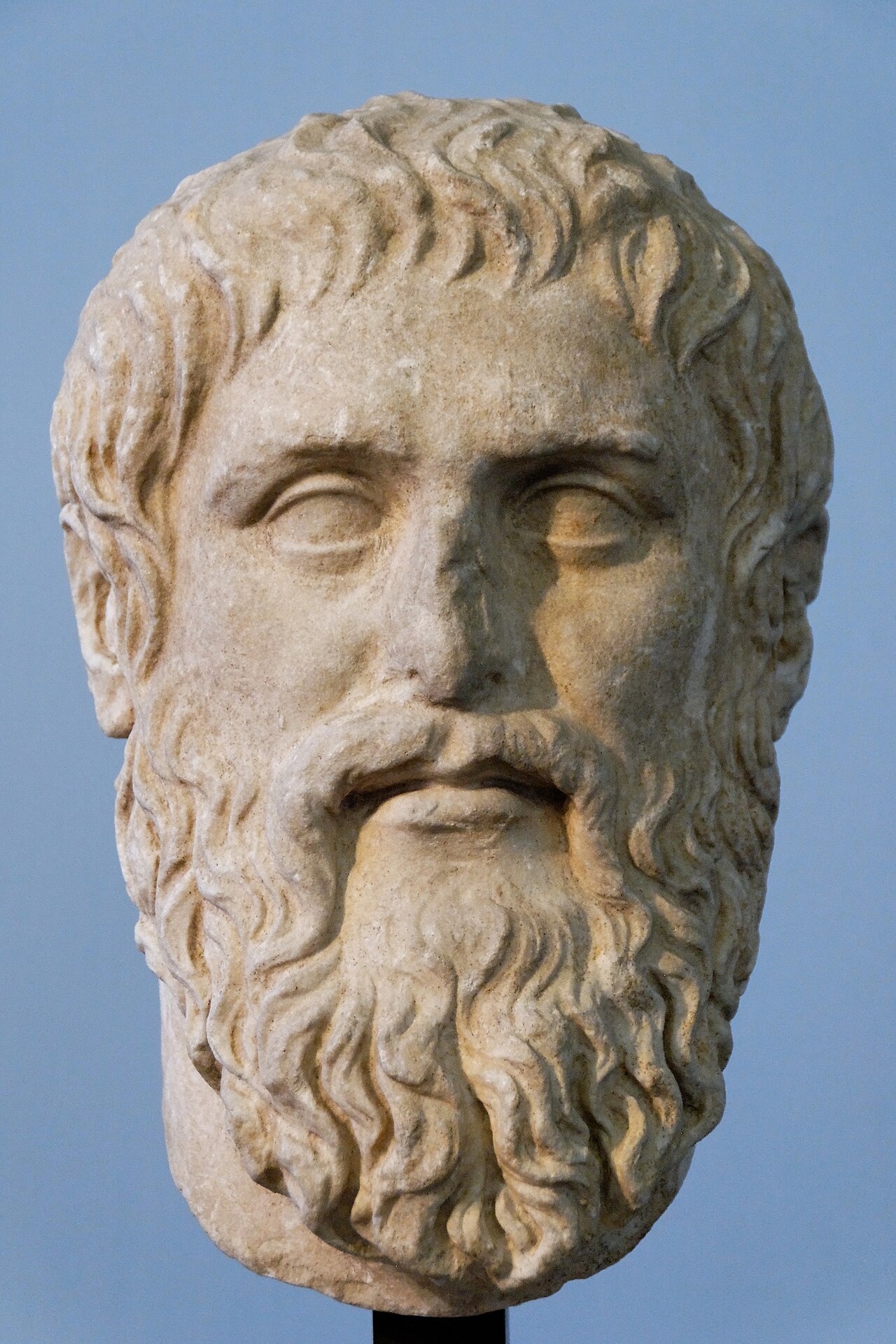
Portrait of Plato
Silanion (original type) · ca. 370 BC (original type); this copy Roman era
 Book
Secondary source
Phaedo
Plato · c. 360 BC
Ready when you are
Start chatting with Plato now.
20 messages free · No credit card · Available in 50+ languages.