


Secondary sourceDocument1920
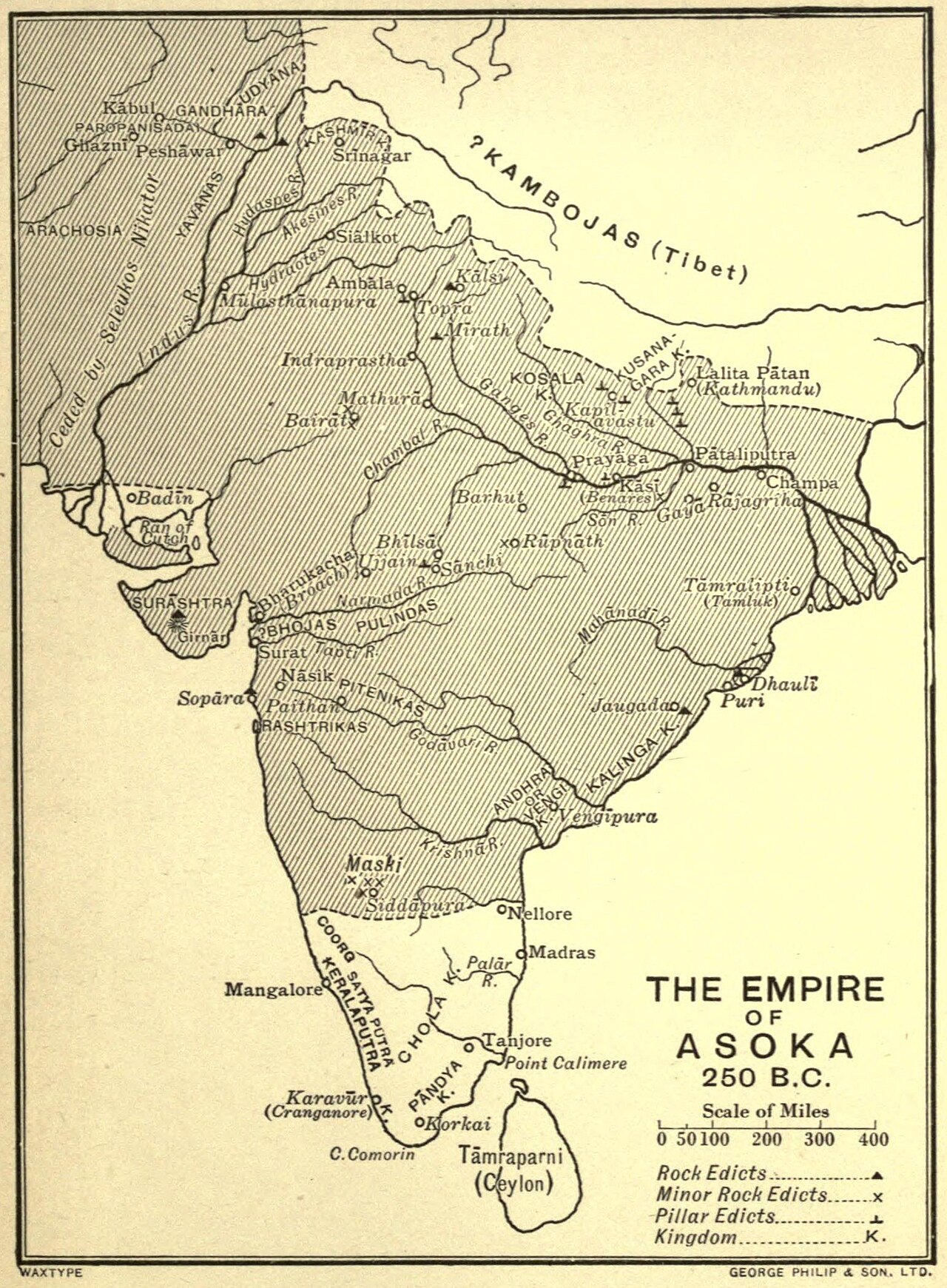
The Empire of Asoka, 250 B.C. (Map from Vincent Smith, 1920)
Vincent Arthur Smith · 1920
A historical map from Vincent Smith's 1920 biography of Ashoka, showing the Indian subcontinent with the territory of his empire and symbols for his edicts.
Shows Smith's 1920 reconstruction of Ashoka's empire and the placement of his edicts, which students can compare with other evidence of his reach.
About this source
What it is
This is a historical map titled The Empire of Asoka, 250 B.C., from Vincent Arthur Smith's 1920 book Asoka, the Buddhist Emperor of India. It shows the Indian subcontinent with shaded territory, rivers, cities and labeled kingdoms. Symbols mark rock edicts, minor rock edicts and pillar edicts. A scale of miles from 0 to 400 appears in the lower right corner.
Why it matters
Ashoka ruled the Mauryan empire from 268 to 232 BCE. Smith's map is a picture of how one early twentieth-century scholar understood the extent of Ashoka's territory and where his edicts were placed. The map shows that the edicts were set up in many regions, which helps students see how his government tried to reach people across a large area. The map reflects the knowledge and assumptions of 1920, so its boundaries are an interpretation.
Look closer
- Which regions are shaded, and what do the different edict symbols suggest about where Ashoka's messages were placed?
- How does the scale in miles help you judge the size of the empire, and what might be uncertain about the borders?
- Why might a 1920 map of an ancient empire look different from modern maps, and what does it leave out?
This document is part of the curated material that grounds the AI version of Ashoka the Great on Humy.ai — when students ask about related events, the AI can quote it and cite it.
More Ashoka the Great sources
Browse all 98 →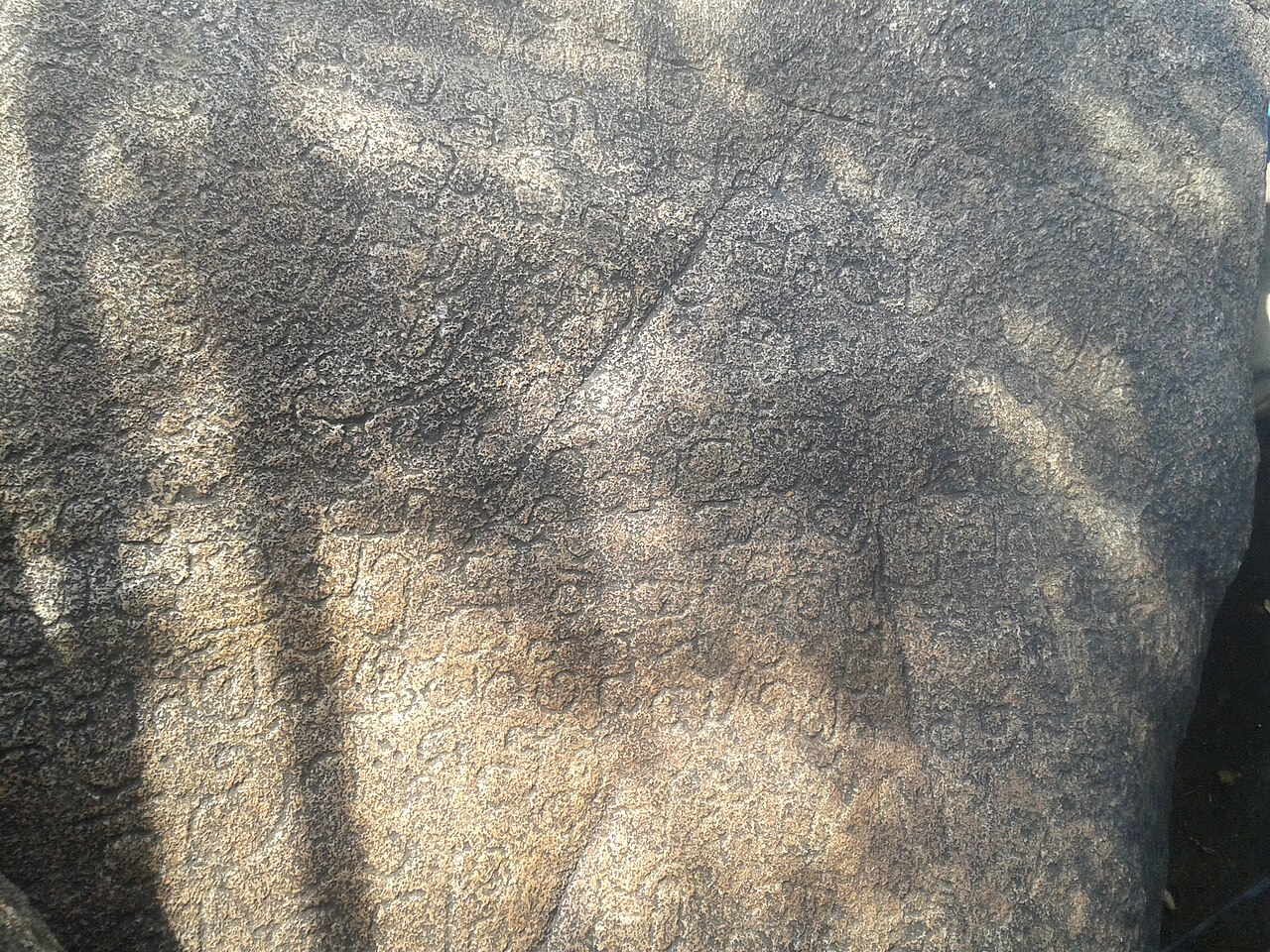 Document
Primary source
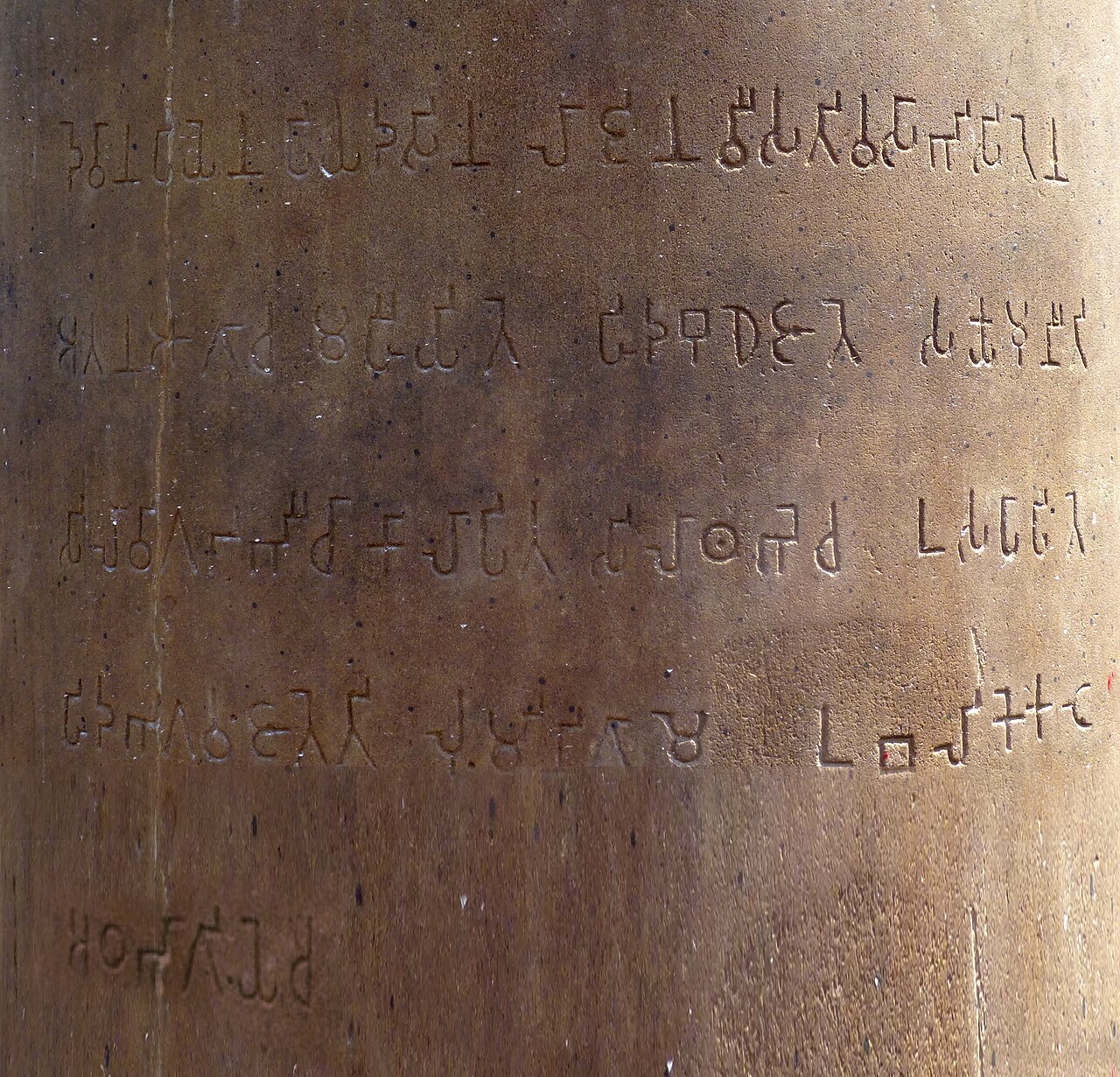
Major Rock Edicts
Ashoka · c. 257 BCE
 Sculpture
Secondary source
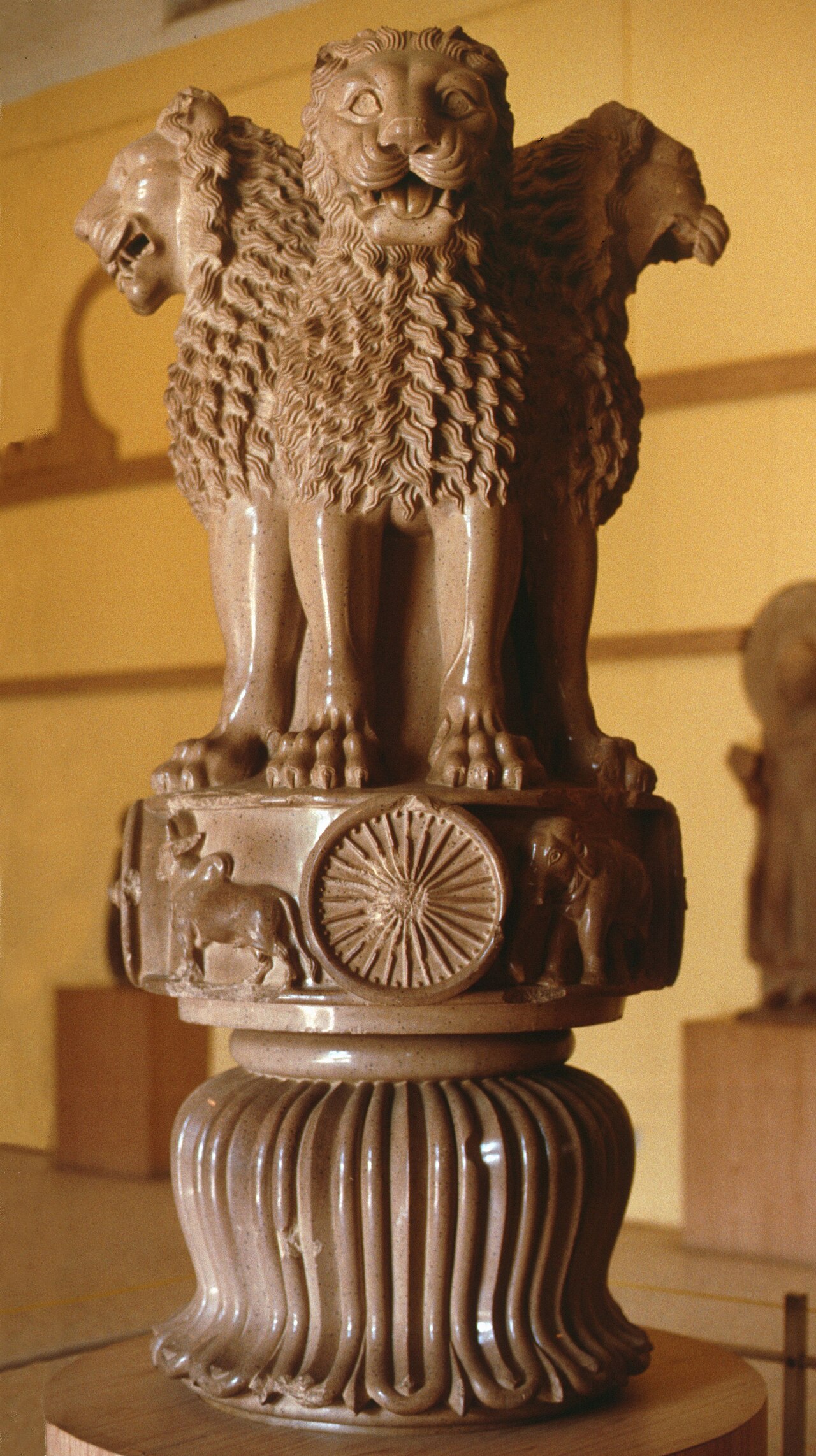
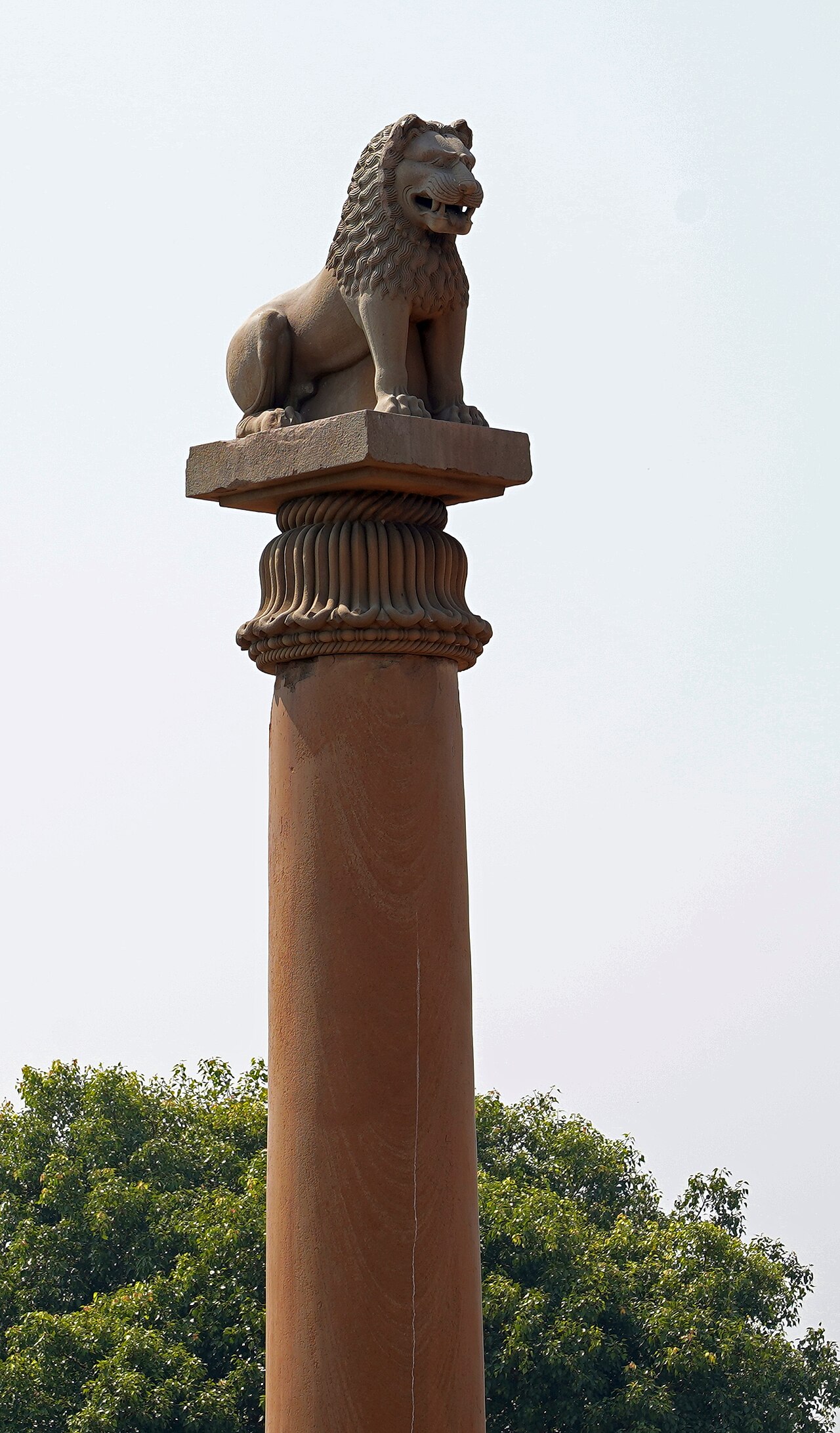
Lion Capital of Ashoka
Commissioned by Ashoka · c. 250 BCE
 Artifact
Secondary source
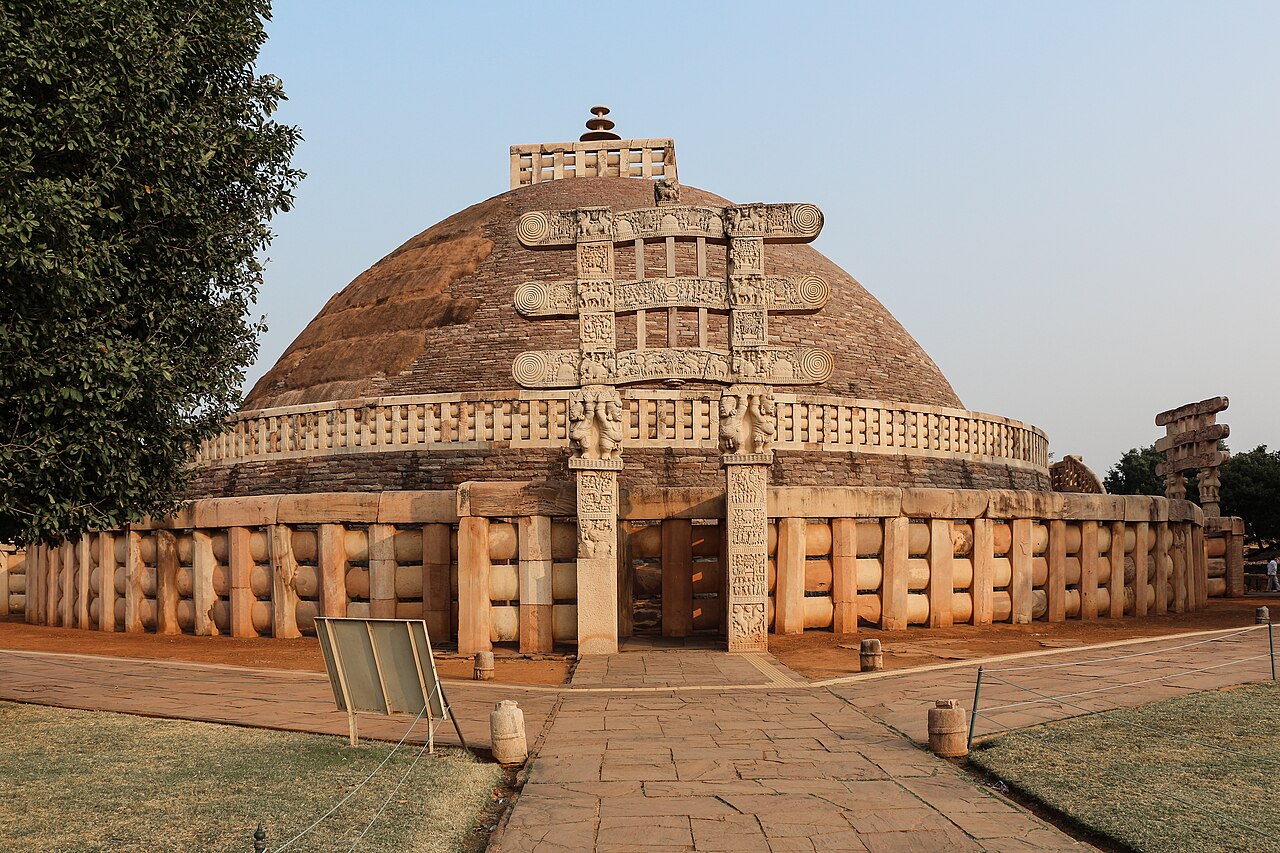
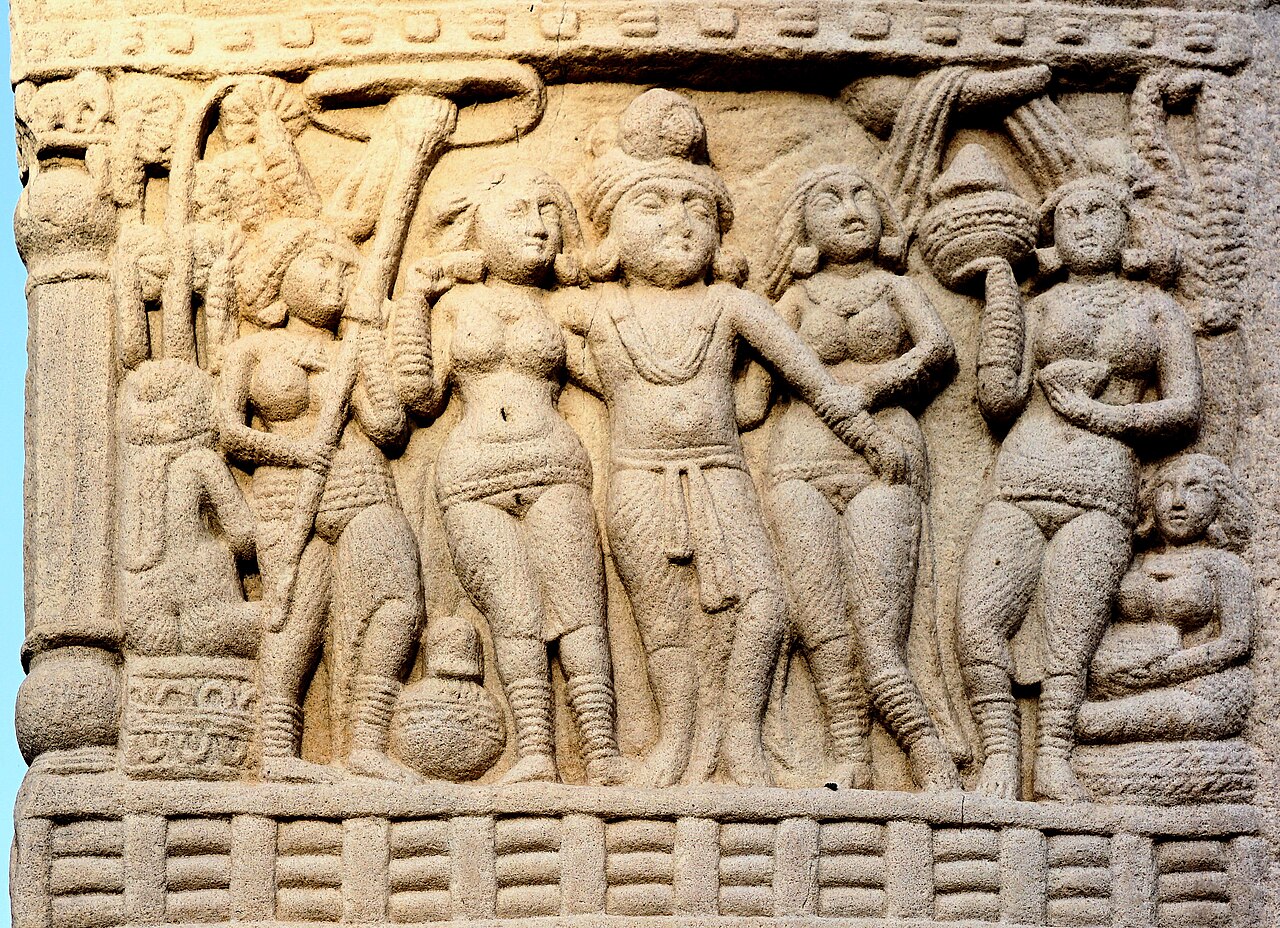
Sanchi Stupa
Commissioned by Ashoka · 3rd century BCE onward
 Document
Primary source
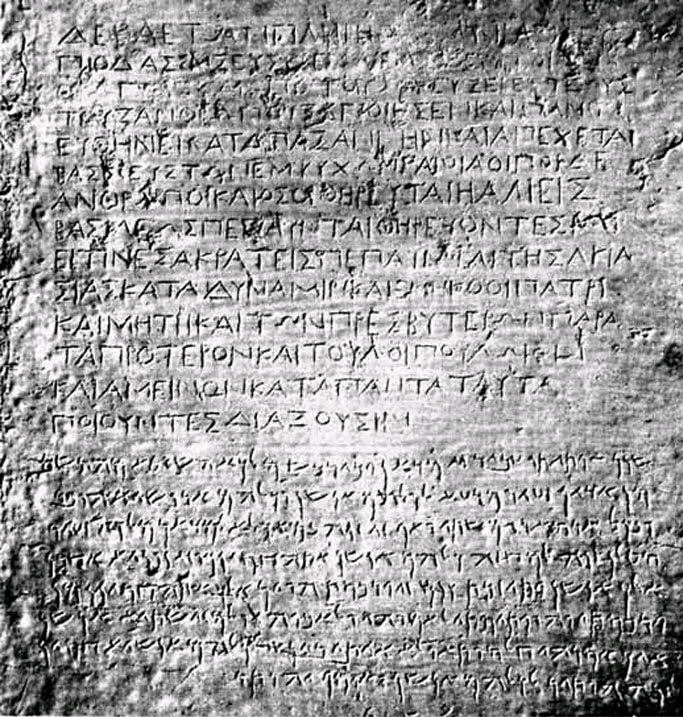
Kandahar Bilingual Rock Inscription
Ashoka · c. 260 BCE
Free account
Read every Ashoka the Great source
Sign up free →
Ready when you are
Start chatting with Ashoka the Great now.
20 messages free · No credit card · Available in 50+ languages.