


Primary sourceDocument26 November 1784
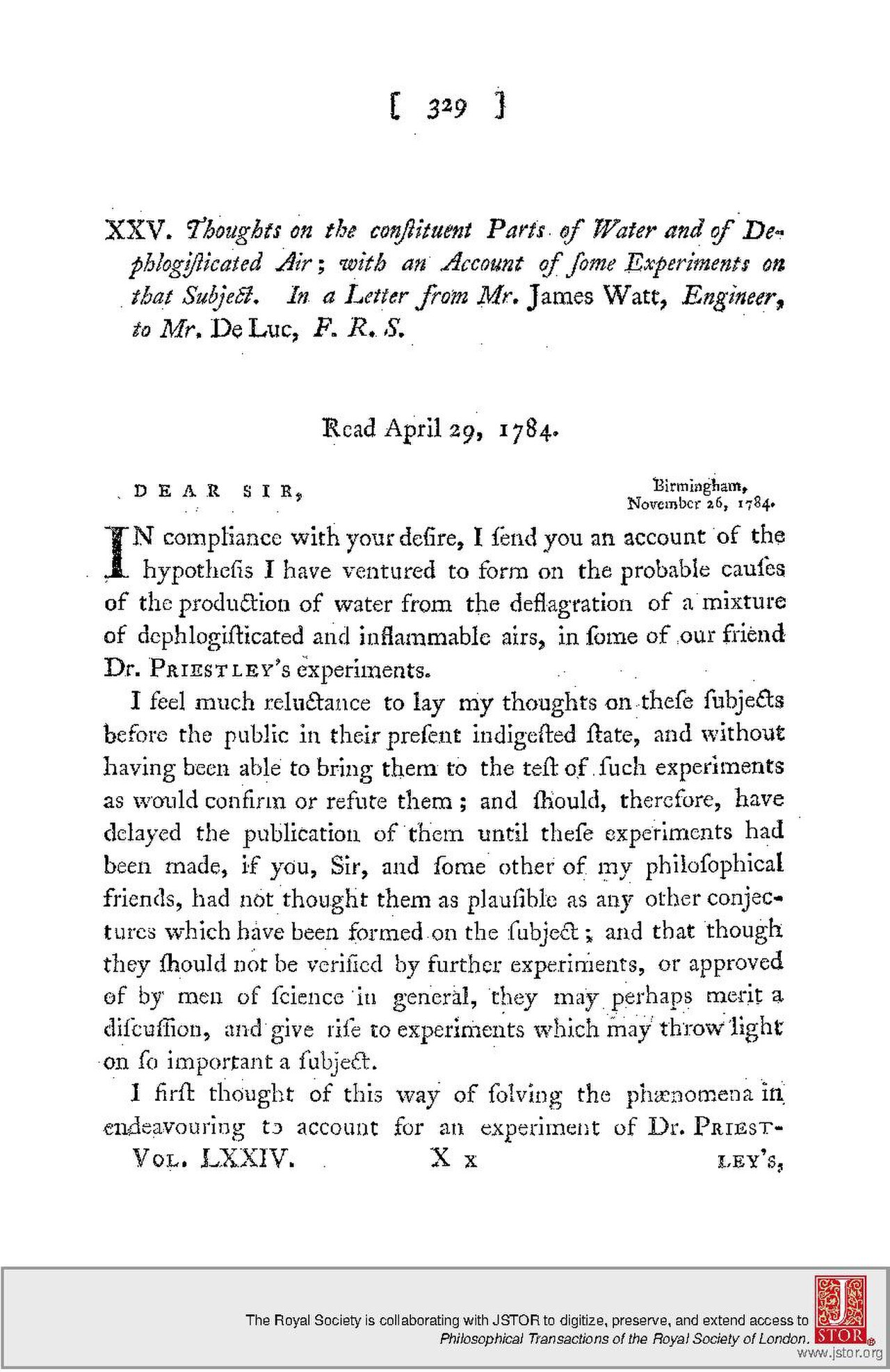
Thoughts on the Constituent Parts of Water and of Dephlogisticated Air
James Watt · 26 November 1784
Watt's 1784 scientific paper on the composition of water, published in the Philosophical Transactions.
Watt wrote this paper himself, showing his work as a chemist alongside his engineering career.
About this source
What it is
This is a printed scientific paper written by James Watt in 1784, published in the Philosophical Transactions of the Royal Society. It takes the form of a letter to Mr. De Luc, written from Birmingham, discussing the chemistry of water and 'dephlogisticated air' (what we now call oxygen). It is held by the Royal Society.
Why it matters
This paper shows that Watt was not only an engineer but also an active chemist, engaging with the leading scientific debates of his day. It led to the long-running 'water controversy', a dispute over who first discovered the composition of water, involving scientists such as Henry Cavendish.
Look closer
- What does the old-fashioned spelling and printing style tell you about when this was written?
- Why might Watt have been interested in chemistry as well as engines?
- What does the existence of a priority dispute suggest about how science worked in the 1780s?
This document is part of the curated material that grounds the AI version of James Watt on Humy.ai — when students ask about related events, the AI can quote it and cite it.
More James Watt sources
Meet the AI James Watt →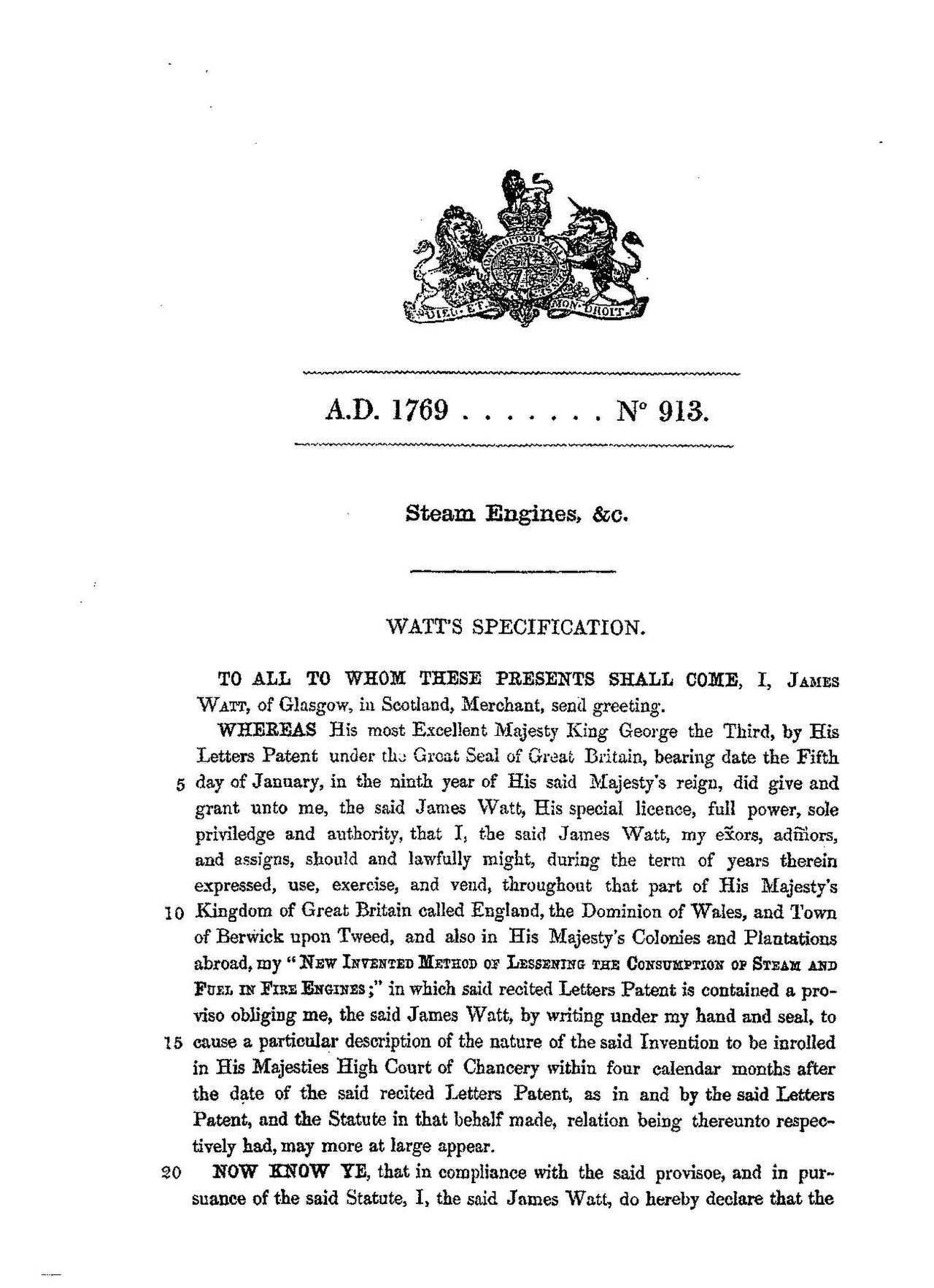 Document
Primary source
James Watt Patent No. 913
James Watt · 1769 (reprinted 1855)
 Artifact
Primary source
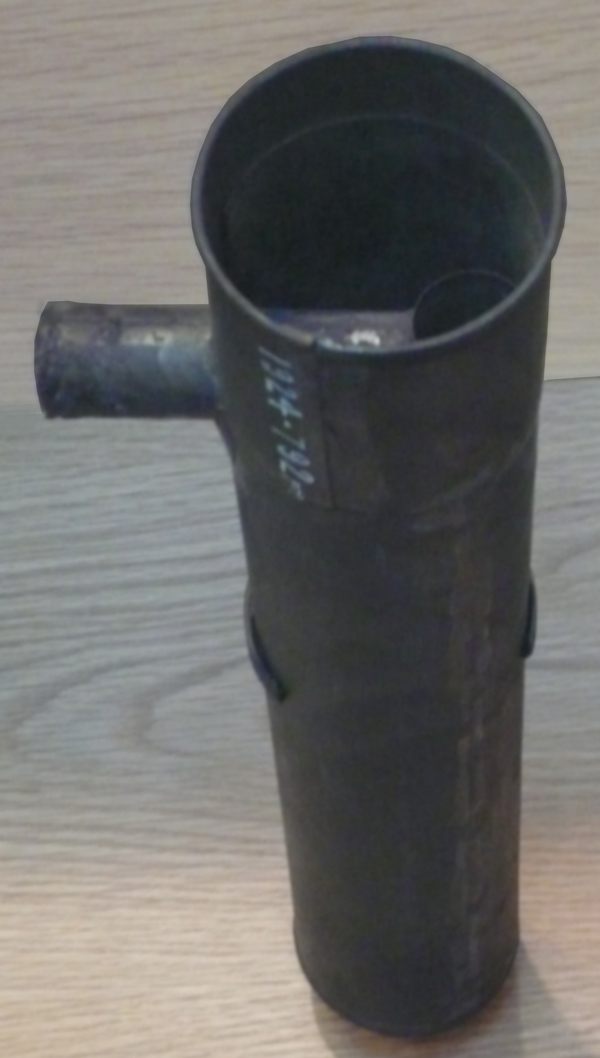
Watt's First Condenser
James Watt · c. 1765
 Artifact
Primary source
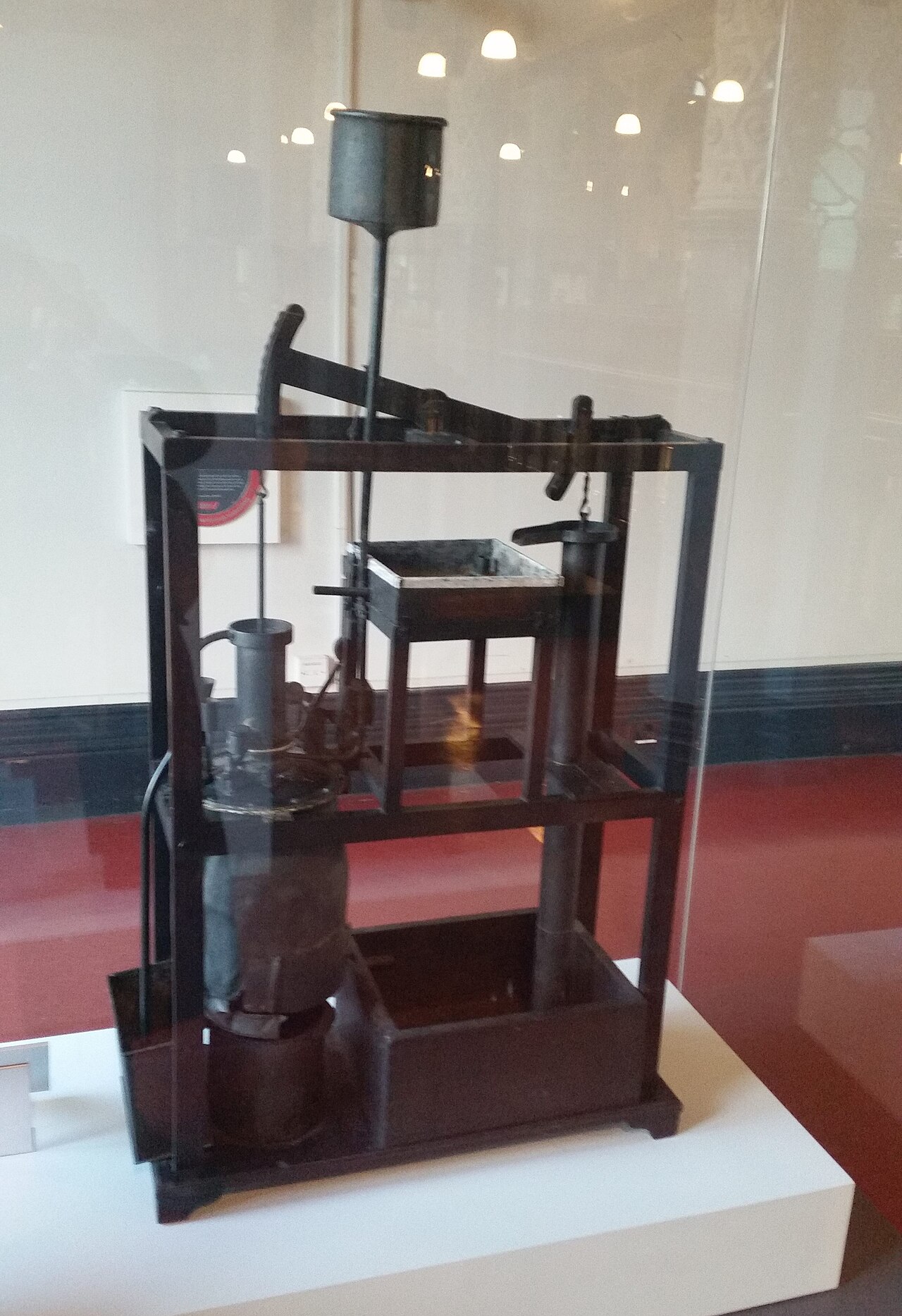
Model Newcomen Engine Repaired by James Watt
Unknown maker (repaired by James Watt) · c. 1760
 Artifact
Primary source
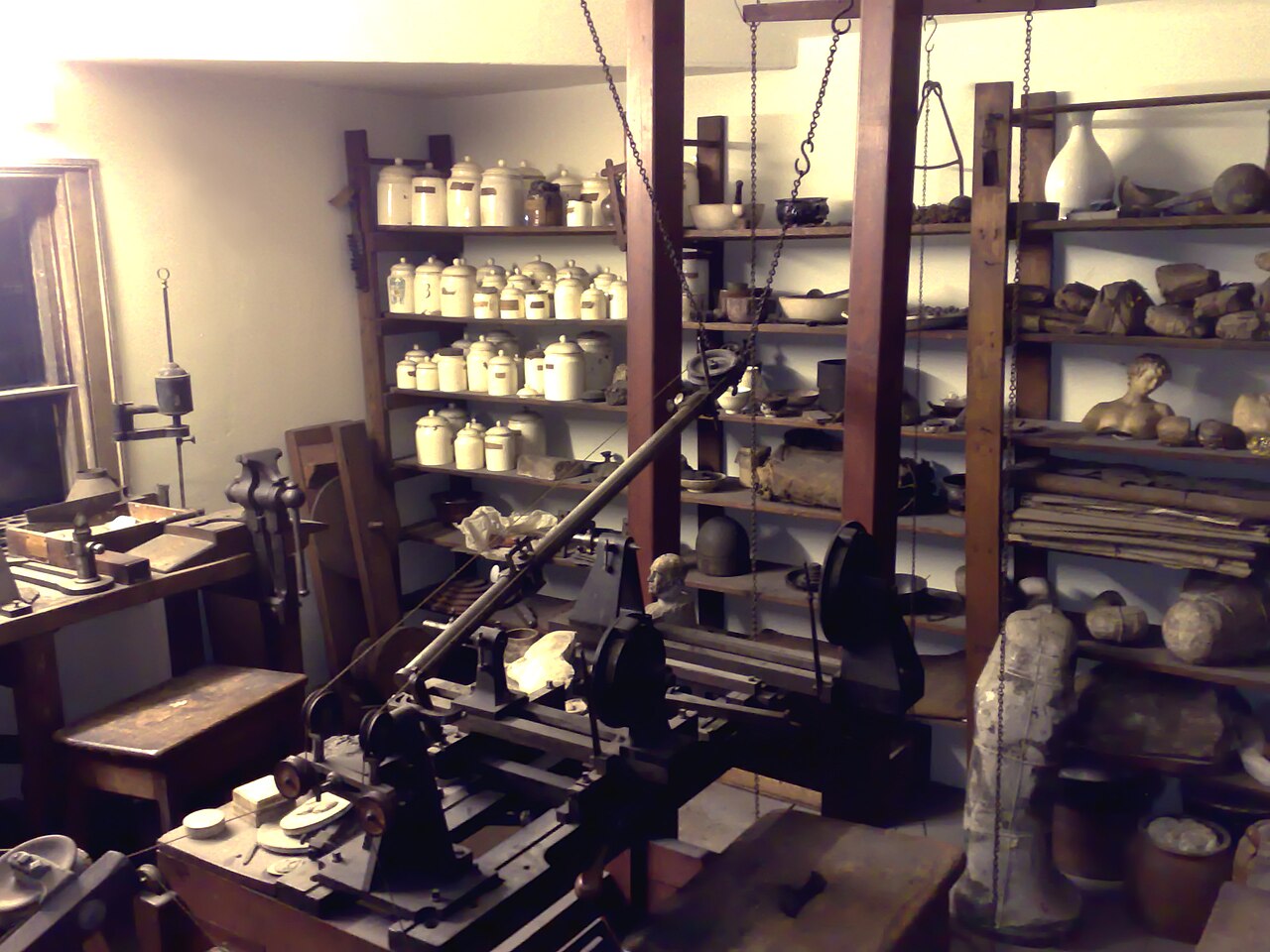
James Watt's Workshop
 Artifact
Primary source
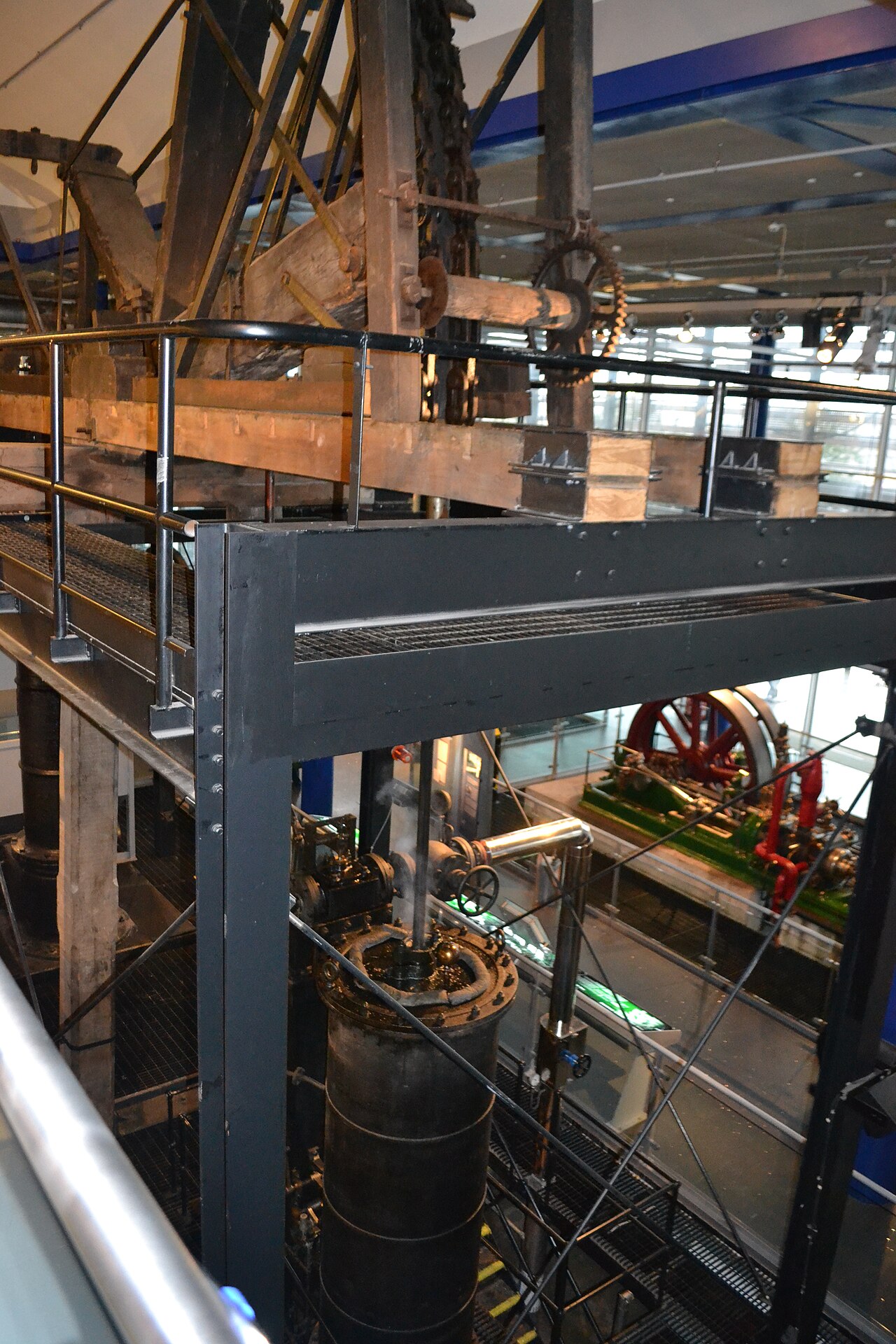
Smethwick Engine
James Watt · 1779
Ready when you are
Start chatting with James Watt now.
20 messages free · No credit card · Available in 50+ languages.