


Primary sourcePainting1796-1798
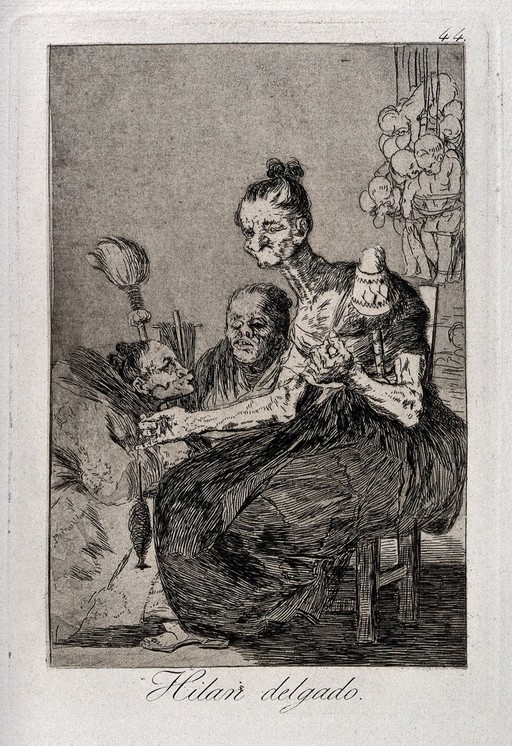
Three Witches Spinning with Bound Babies
Francisco Goya y Lucientes · 1796-1798
A Goya etching from his Caprichos series showing three gaunt women spinning thread while dead infants hang behind them, mocking superstition.
Goya etched and captioned this plate himself as part of his Caprichos series criticising superstition.
About this source
What it is
This etching, captioned Hilan delgado, is plate 44 from the Caprichos, a series made by the Spanish artist Francisco Goya between 1796 and 1798. It shows three old women spinning thread, with the bodies of infants hanging from hooks behind them. It is now held by the Wellcome Collection.
Why it matters
The Caprichos were Goya's biting commentary on the follies, superstitions and cruelties he saw in Spanish society. This plate is one of several in the series that use witches and fantastical figures to criticise belief in magic and the harm it could cause. It reveals Goya not just as a court painter but as a sharp social critic working in print.
Look closer
- What mood does the dim, shadowy setting create?
- Why might Goya have chosen spinning witches and infant bodies to make his point?
- What does the printed caption add to the image's meaning?
This painting is part of the curated material that grounds the AI version of Francisco Goya on Humy.ai — when students ask about related events, the AI can quote it and cite it.
More Francisco Goya sources
Meet the AI Francisco Goya →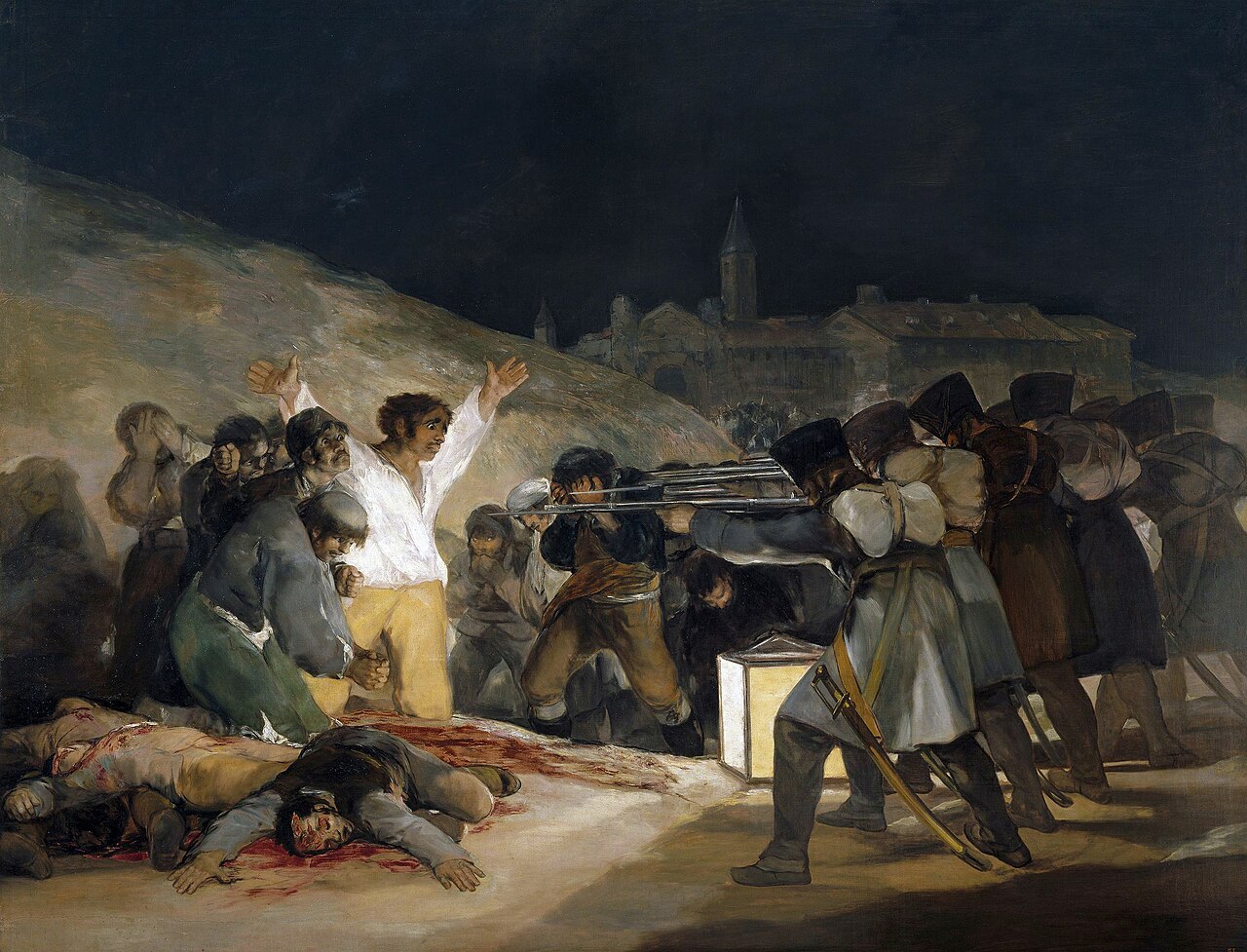 Painting
Secondary source
The Third of May 1808
Francisco Goya · 1814
 Painting
Primary source
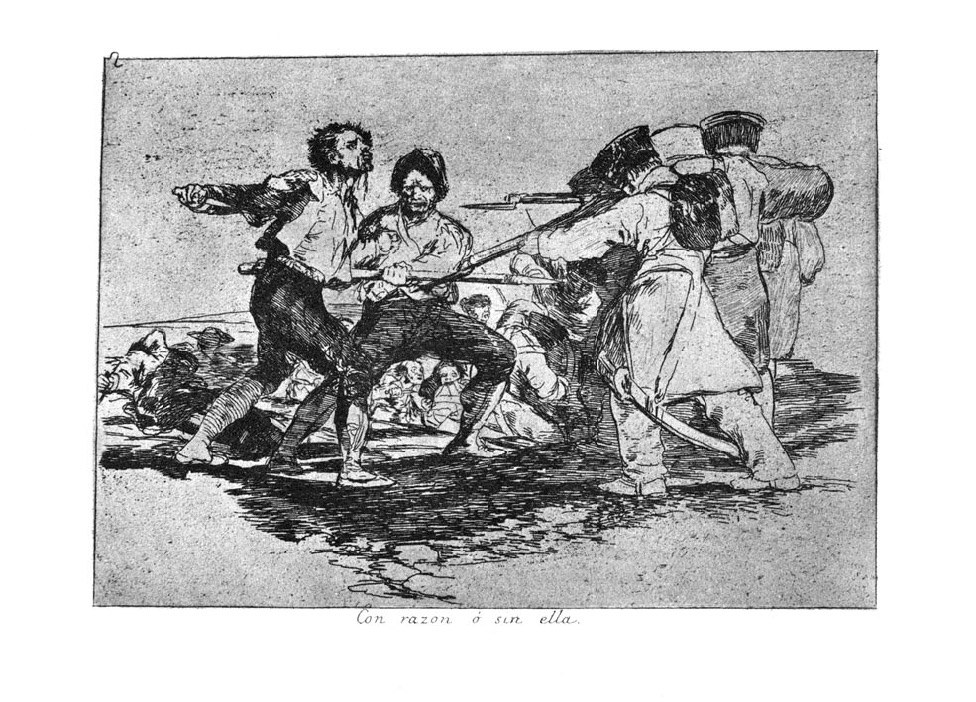
The Disasters of War
Francisco Goya · 1810-1820
 Painting
Primary source
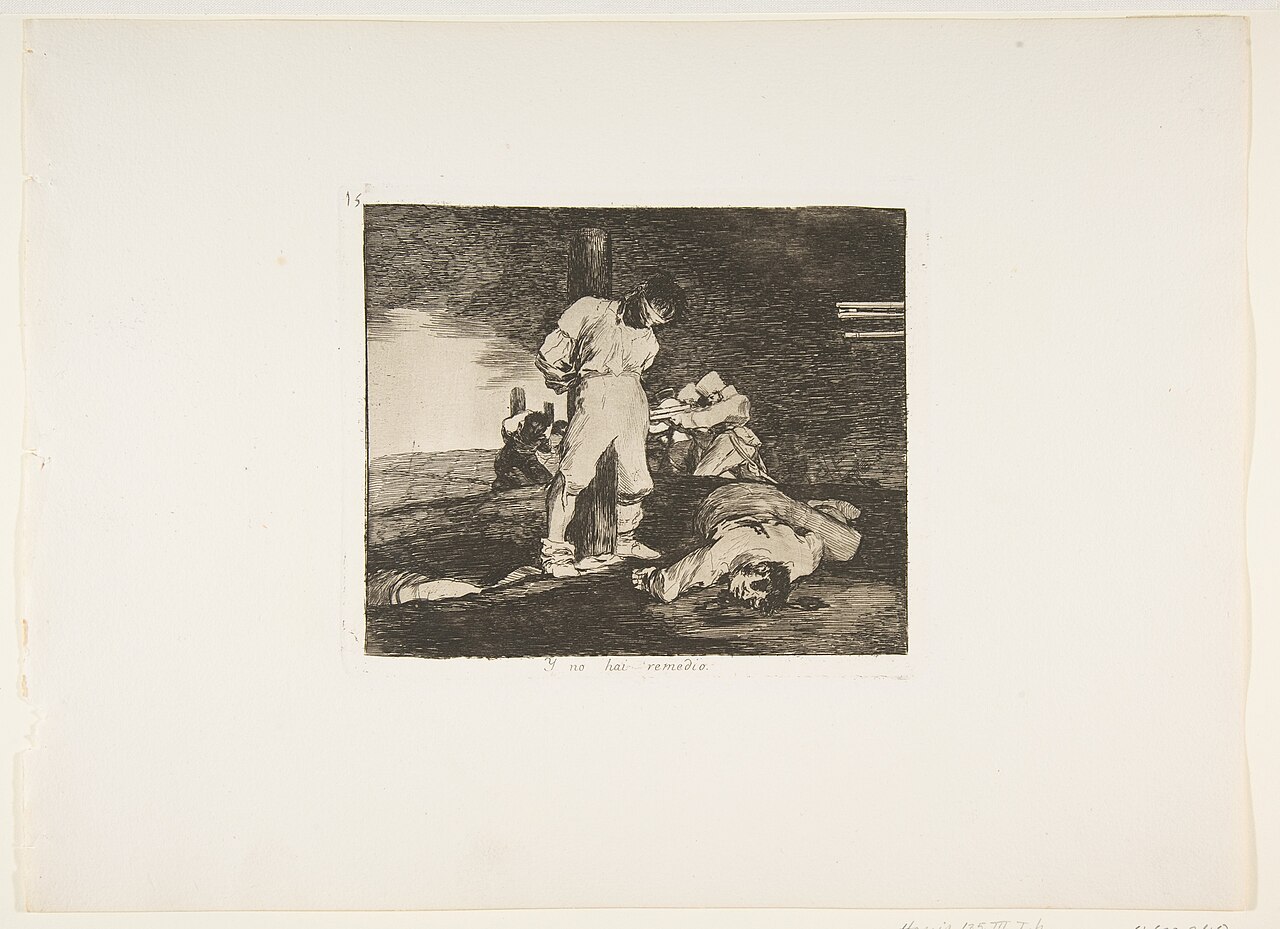
Y no hai remedio
Francisco de Goya · c. 1810-1814 (published 1863)
 Painting
Primary source
Caprichos
Francisco Goya · 1799 (created 1797-1798)
 Painting
Primary source
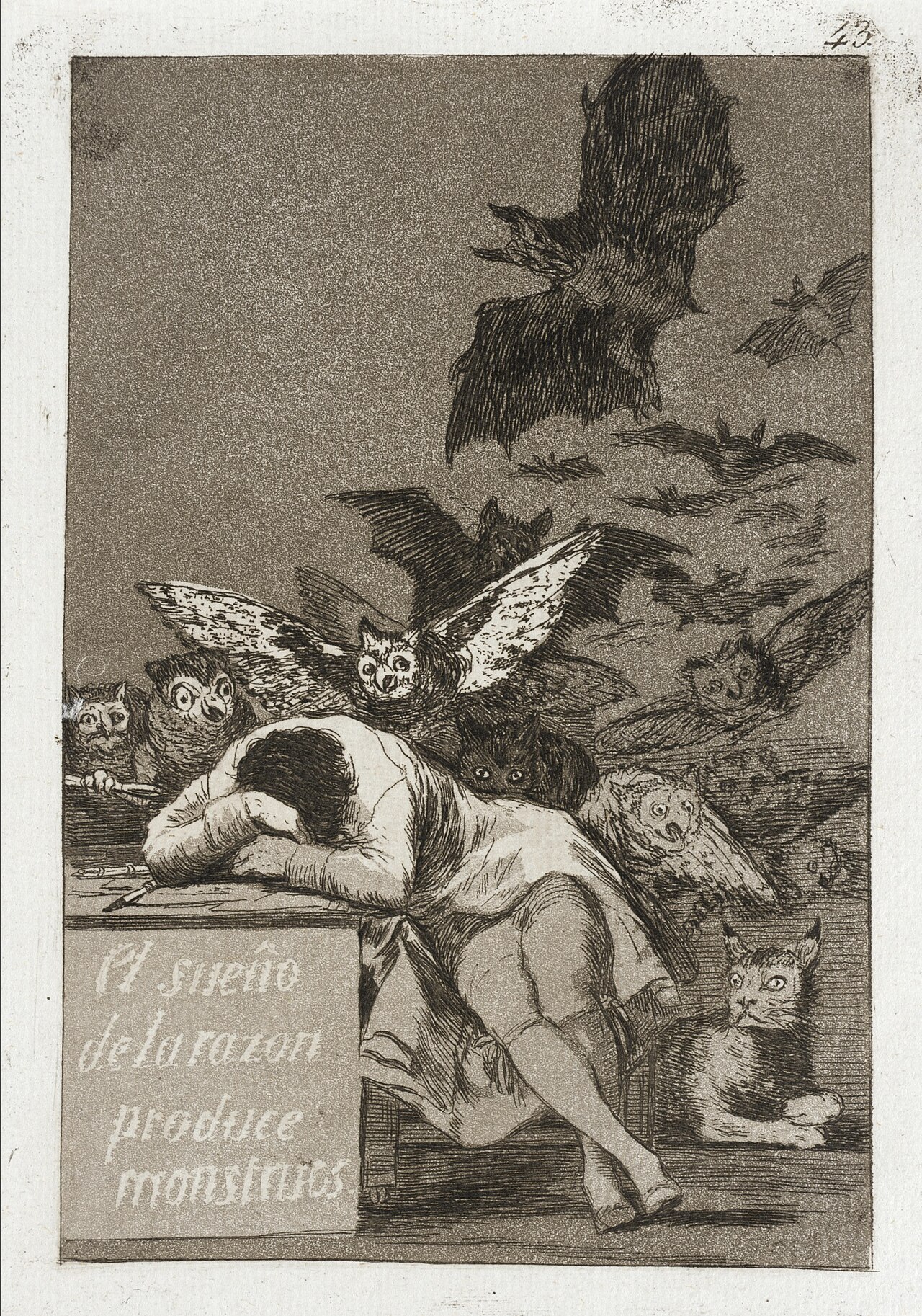
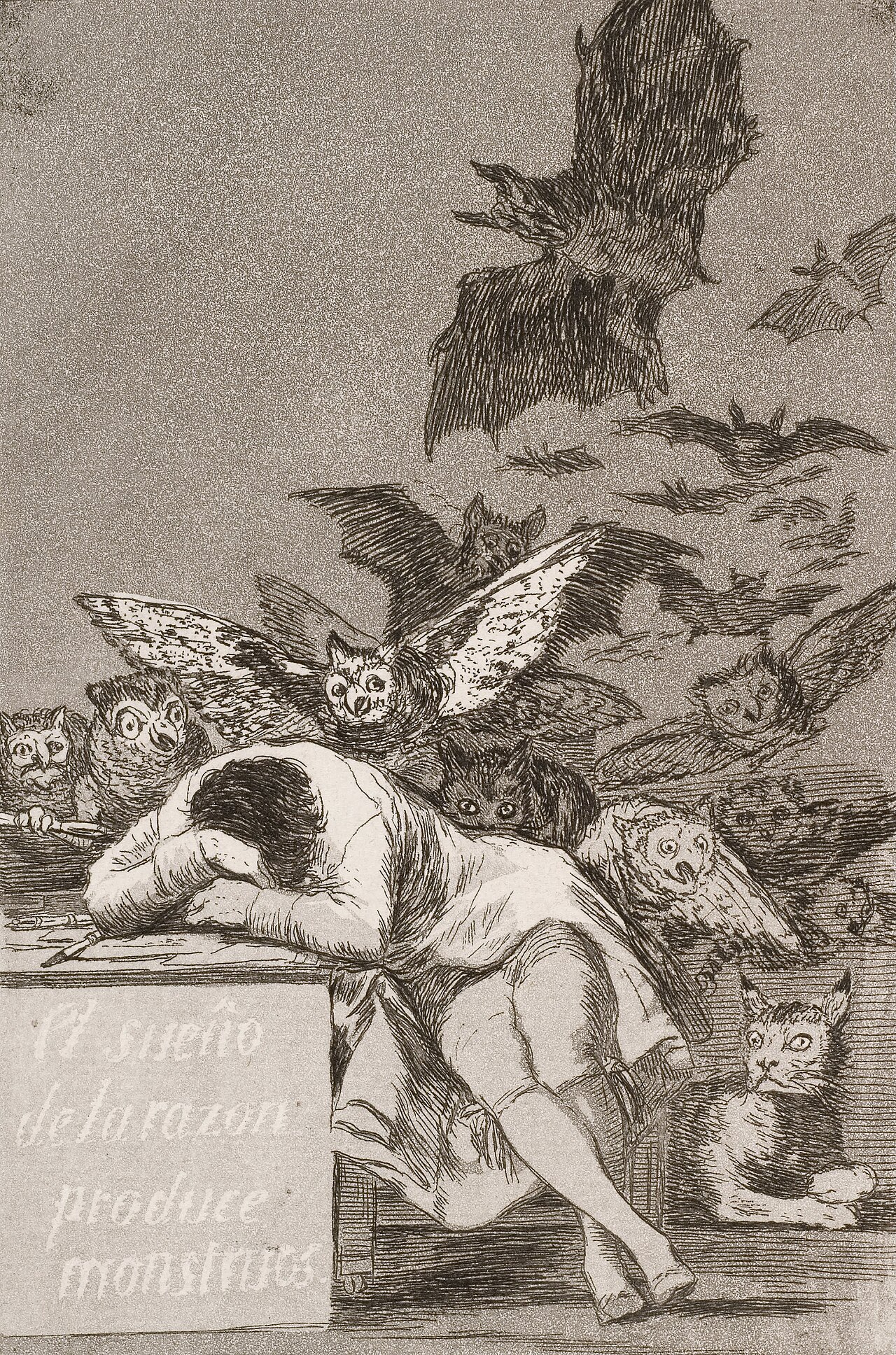
The Sleep of Reason Produces Monsters
Francisco Goya · 1797-1799
Ready when you are
Start chatting with Francisco Goya now.
20 messages free · No credit card · Available in 50+ languages.