


Primary sourceArtifact14th century BCE
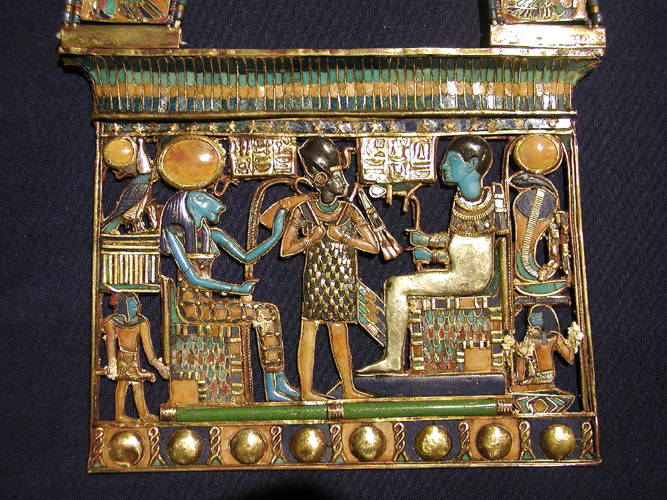
Tutankhamun Pendant
14th century BCE
A gold pendant inlaid with blue and green enamel, bearing Tutankhamun's name and showing figures including a deity and a king.
This pendant bears Tutankhamun's name and was among objects linked to his reign and royal identity.
About this source
What it is
This is a gold pendant decorated with blue and green inlay. It shows a seated deity with a blue head, a standing king wearing a pleated kilt and holding a staff, and another seated figure, with a row of gold spheres along the bottom. The pendant carries Tutankhamun's name and dates from his reign.
Why it matters
Objects like this pendant show the wealth and craftsmanship of the Egyptian royal court. Jewelry naming a pharaoh helped link religious imagery with royal power, showing how kings presented themselves as connected to the gods.
Look closer
- What details suggest this object was made for someone important?
- Why might a pendant show both a god and a king together?
- What does the craftsmanship tell you about the skills of ancient Egyptian artisans?
This artifact is part of the curated material that grounds the AI version of Tutankhamun on Humy.ai — when students ask about related events, the AI can quote it and cite it.
More Tutankhamun sources
Meet the AI Tutankhamun →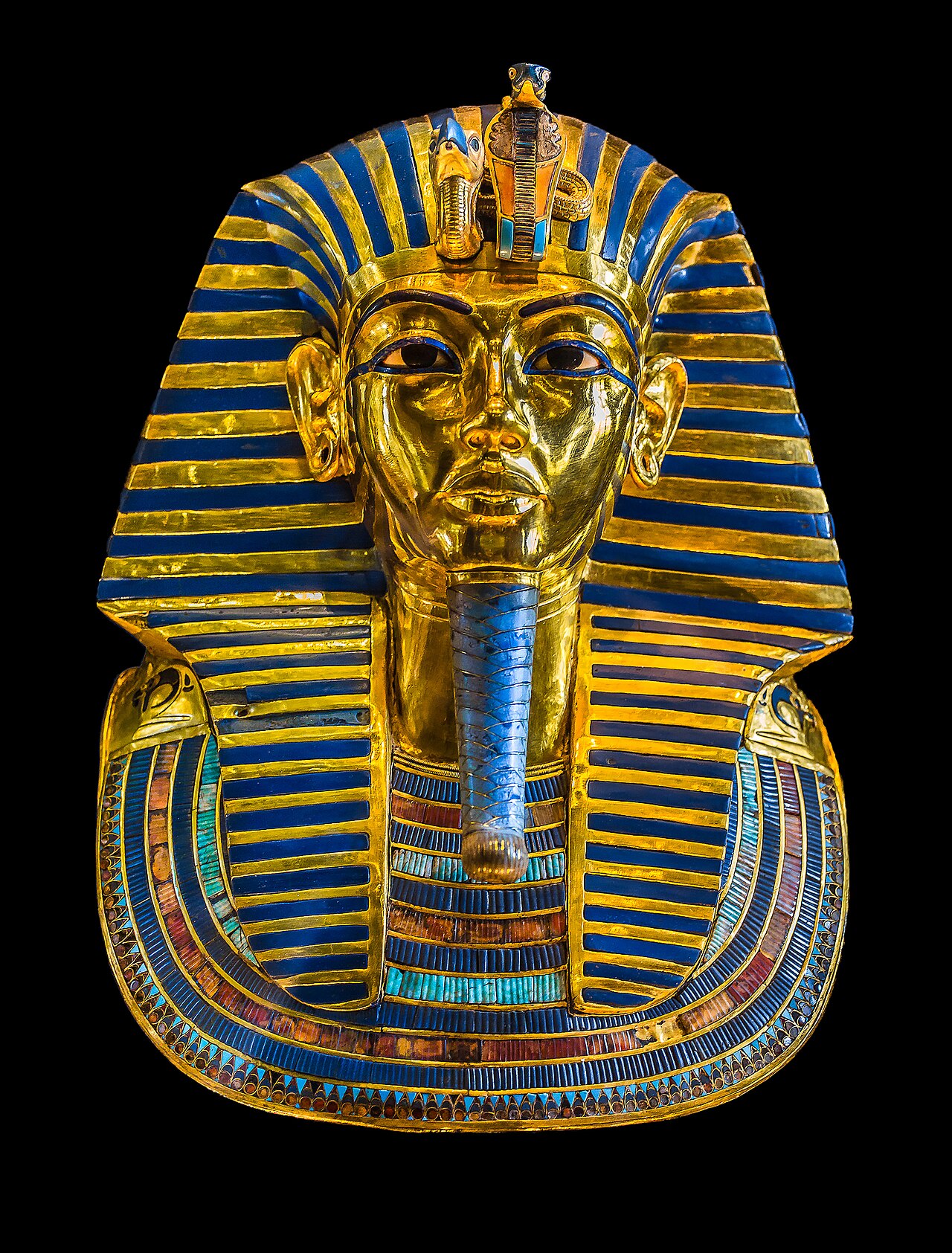 Artifact
Primary source
Mask of Tutankhamun
c. 1333 BCE
 Photograph
Primary source
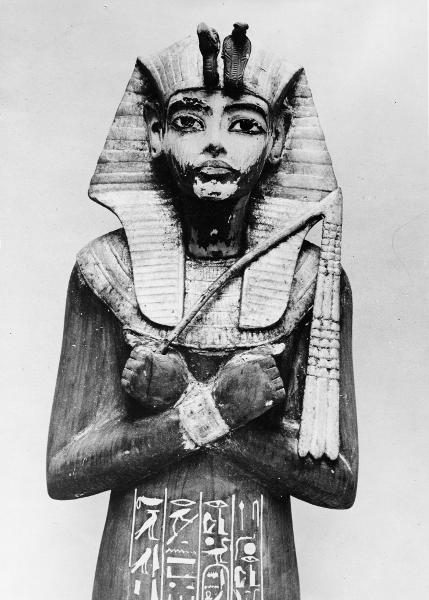
Photograph of Tutankhamun's Shawabti Figure
Harry Burton · 1920s
 Artifact
Primary source
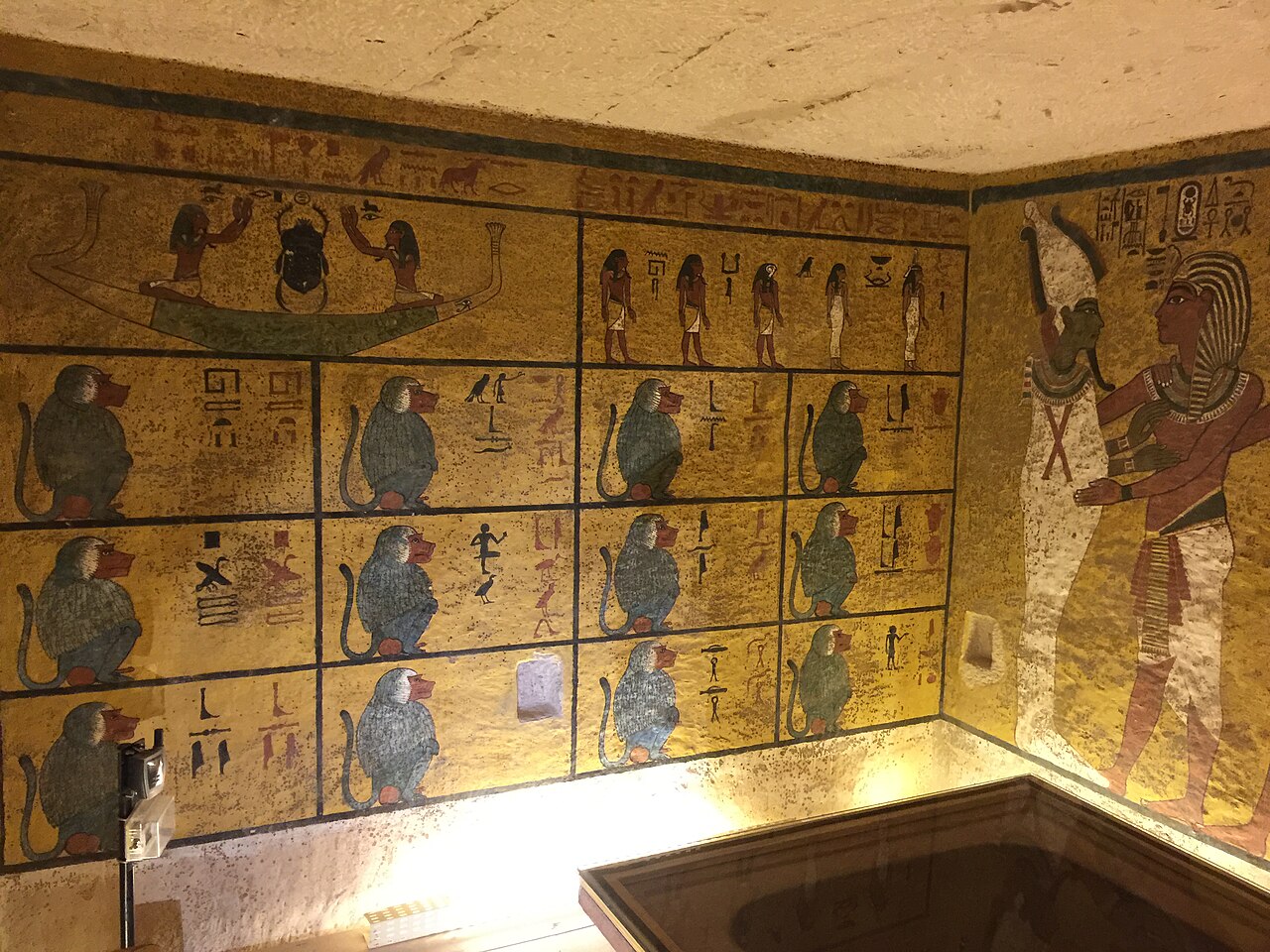
Tomb of Tutankhamun
14th century BCE
 Photograph
Primary source
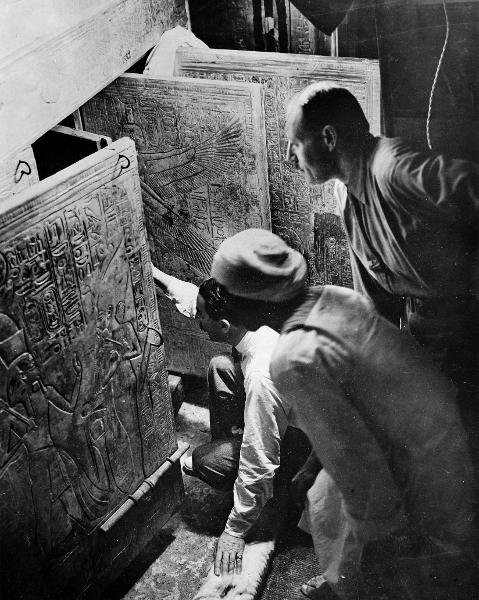
Opening the Doors of the Fourth Shrine in Tutankhamun's Tomb
Harry Burton · 1920s
 Document
Primary source
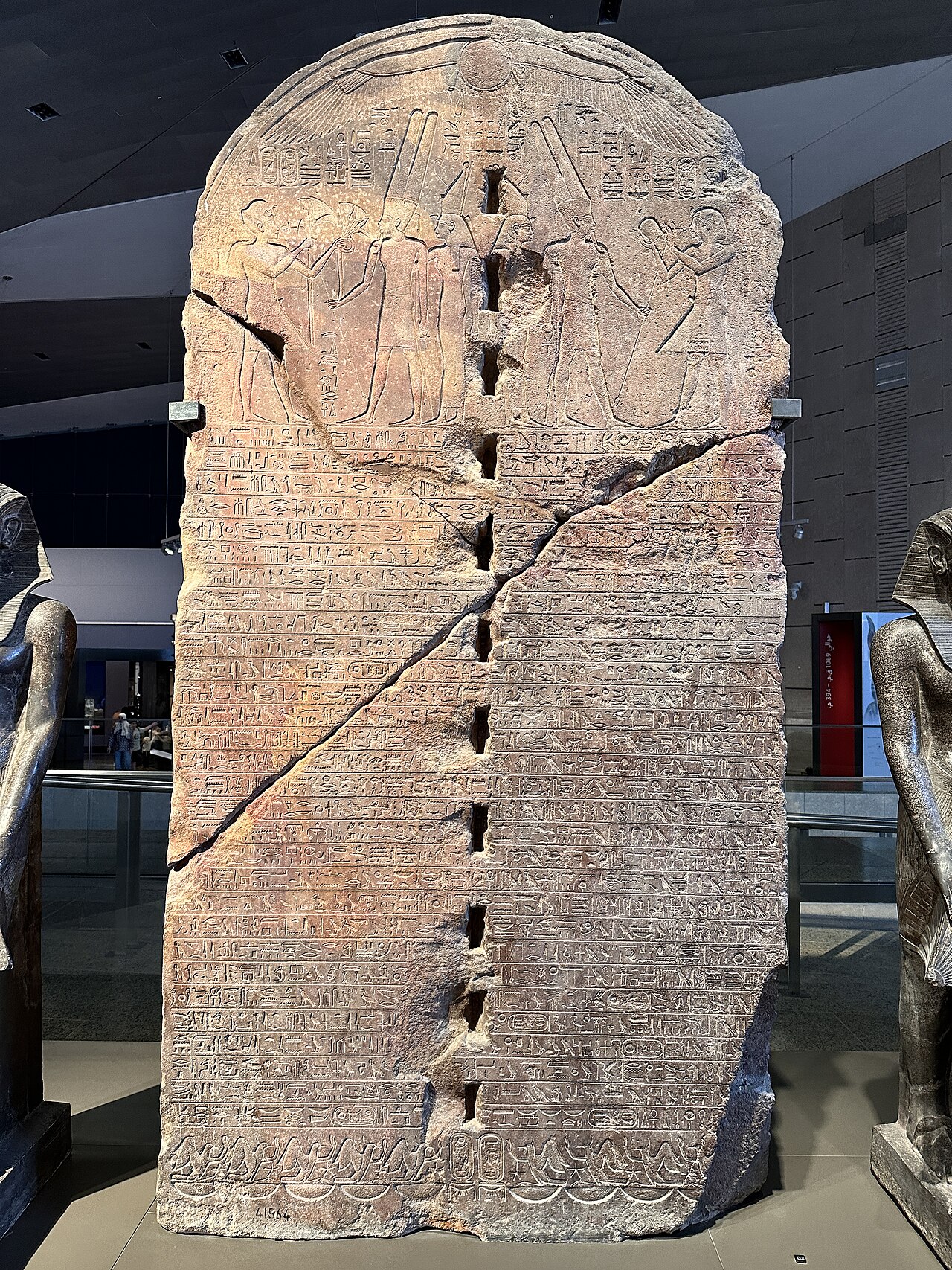
Restoration Stela
Tutankhamun · c. 1326 BCE
Ready when you are
Start chatting with Tutankhamun now.
20 messages free · No credit card · Available in 50+ languages.