


Secondary sourcePainting1360
Via Veritas
Andrea di Bonaiuto · 1360
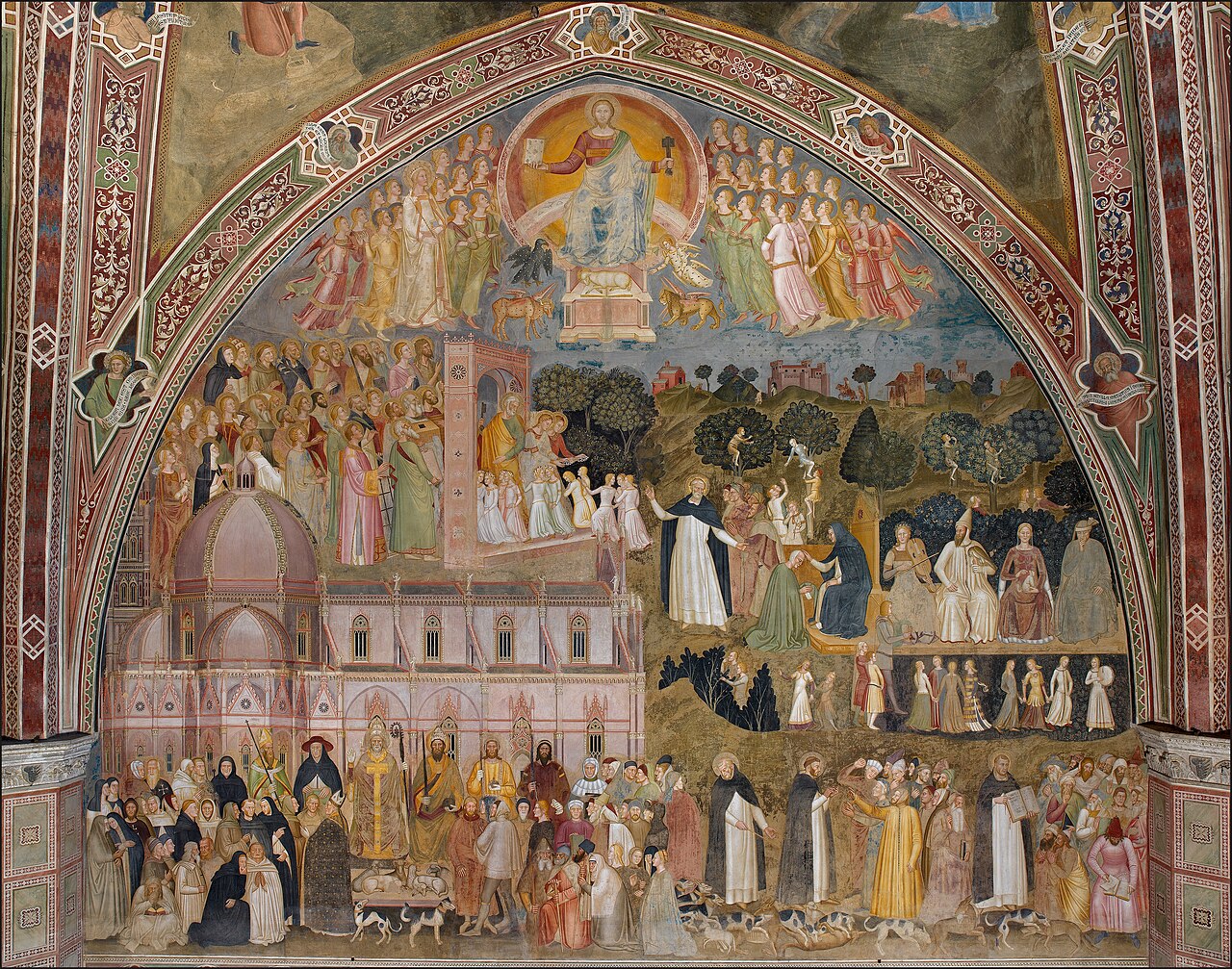
A 1360s fresco in Santa Maria Novella, where Dante studied, containing one of the earliest portraits of him.
This fresco in Dante's own city contains one of the earliest known portraits of him, made decades after his death.
About this source
What it is
This fresco, called the Way of Salvation, was painted by Andrea di Bonaiuto around 1360 in the Spanish Chapel of the Basilica of Santa Maria Novella in Florence.
Why it matters
The fresco shows Christ in Majesty above a crowded scene of popes, emperors, Dominican preachers, and ordinary people being guided toward salvation. Santa Maria Novella was a place connected to Dante's own education, and the fresco is counted among the earliest attempts to portray him, showing how quickly Florence began to honour him after his death.
Look closer
- What different groups of people can you find in the fresco, from popes to beggars?
- Why might the artist have included black-and-white dogs as symbols of the Dominican preachers?
- What does the fresco's huge scale and detail tell you about its purpose in the chapel?
This painting is part of the curated material that grounds the AI version of Dante Alighieri on Humy.ai — when students ask about related events, the AI can quote it and cite it.
More Dante Alighieri sources
Meet the AI Dante Alighieri →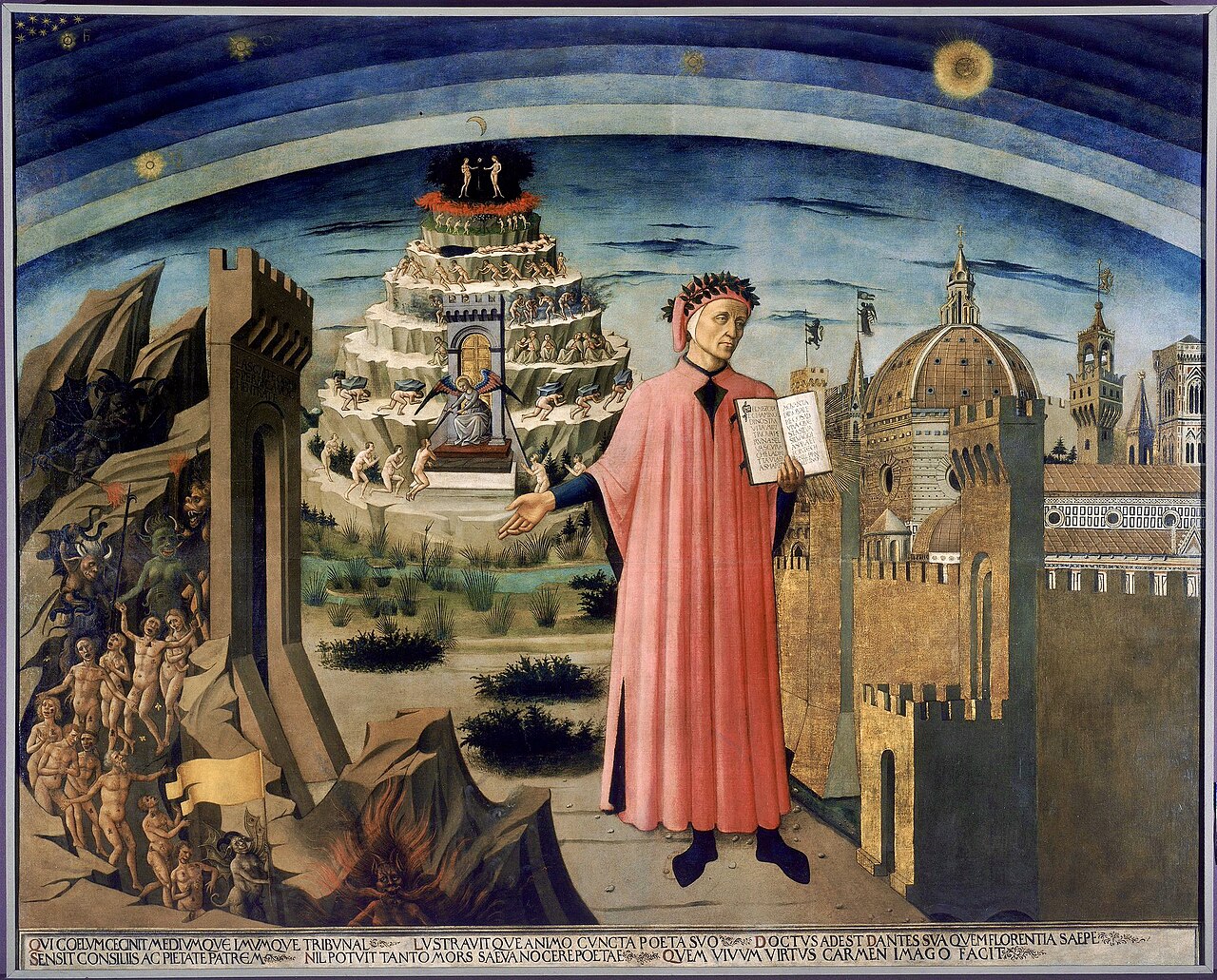 Book
Secondary source
The Divine Comedy
Dante Alighieri · 1320
 Book
Primary source
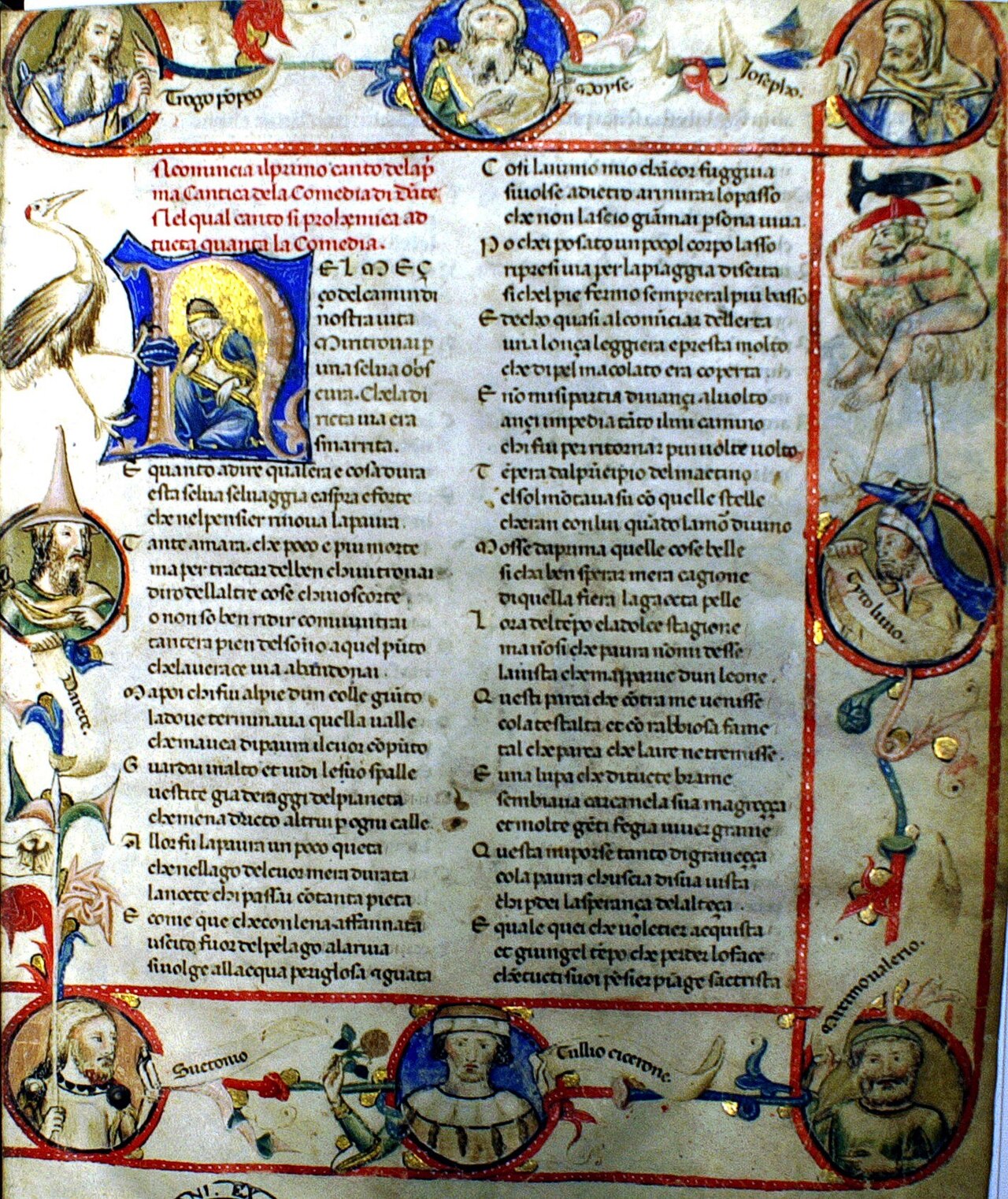
Inferno
Dante Alighieri · c. 1306–1310
 Book
Primary source
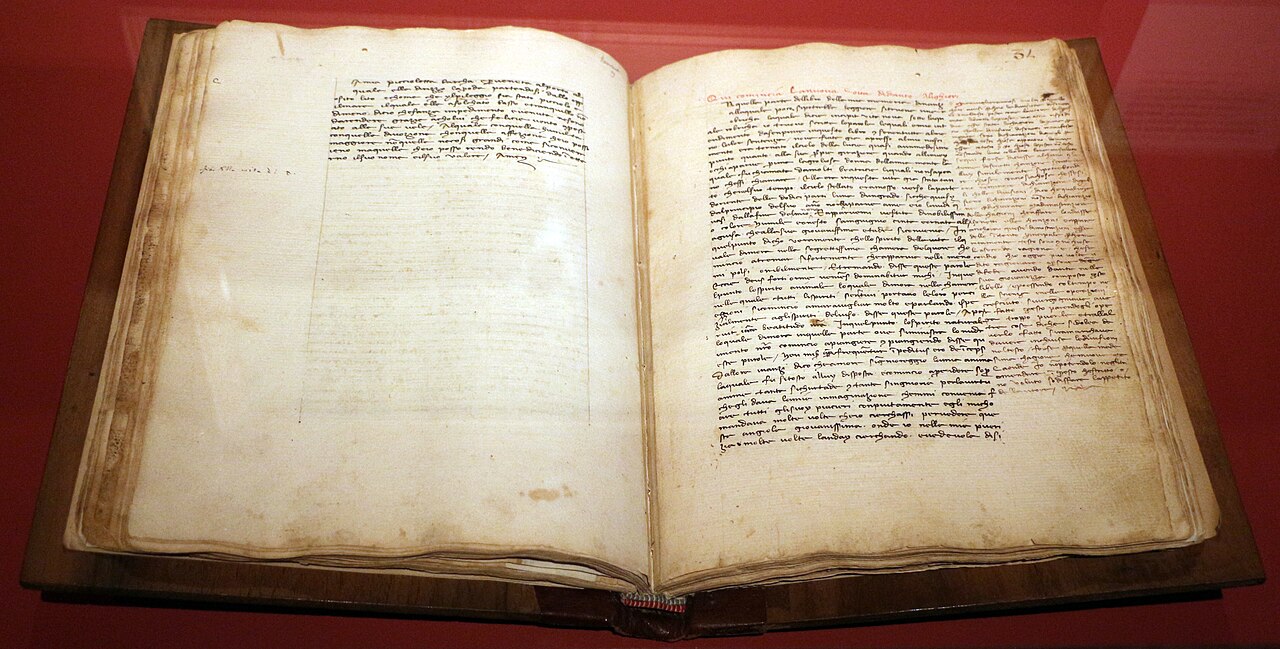
Vita Nuova
Dante Alighieri · before 1294
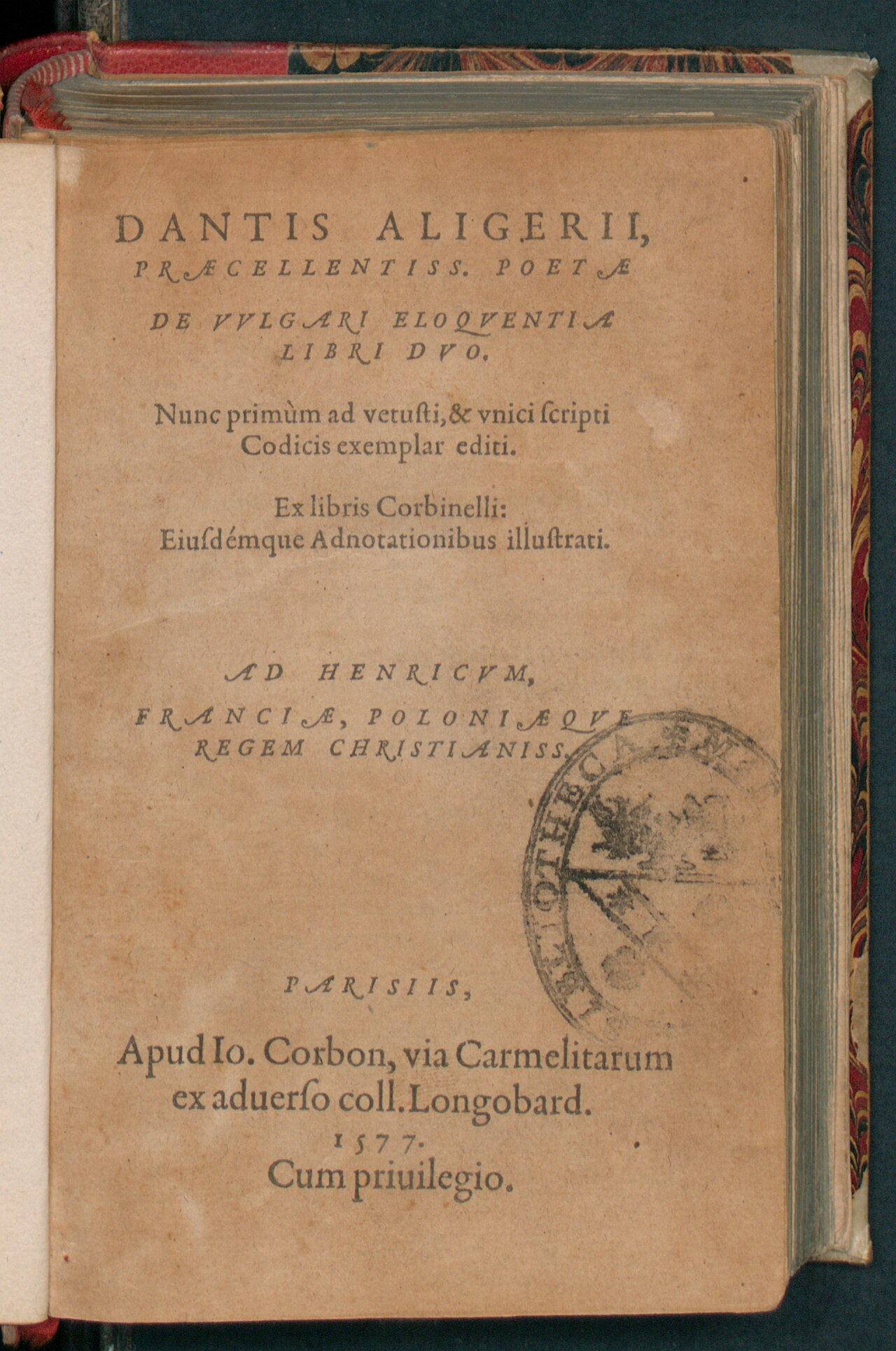 Book
Primary source
De vulgari eloquentia
Dante Alighieri · c. 1302–1305
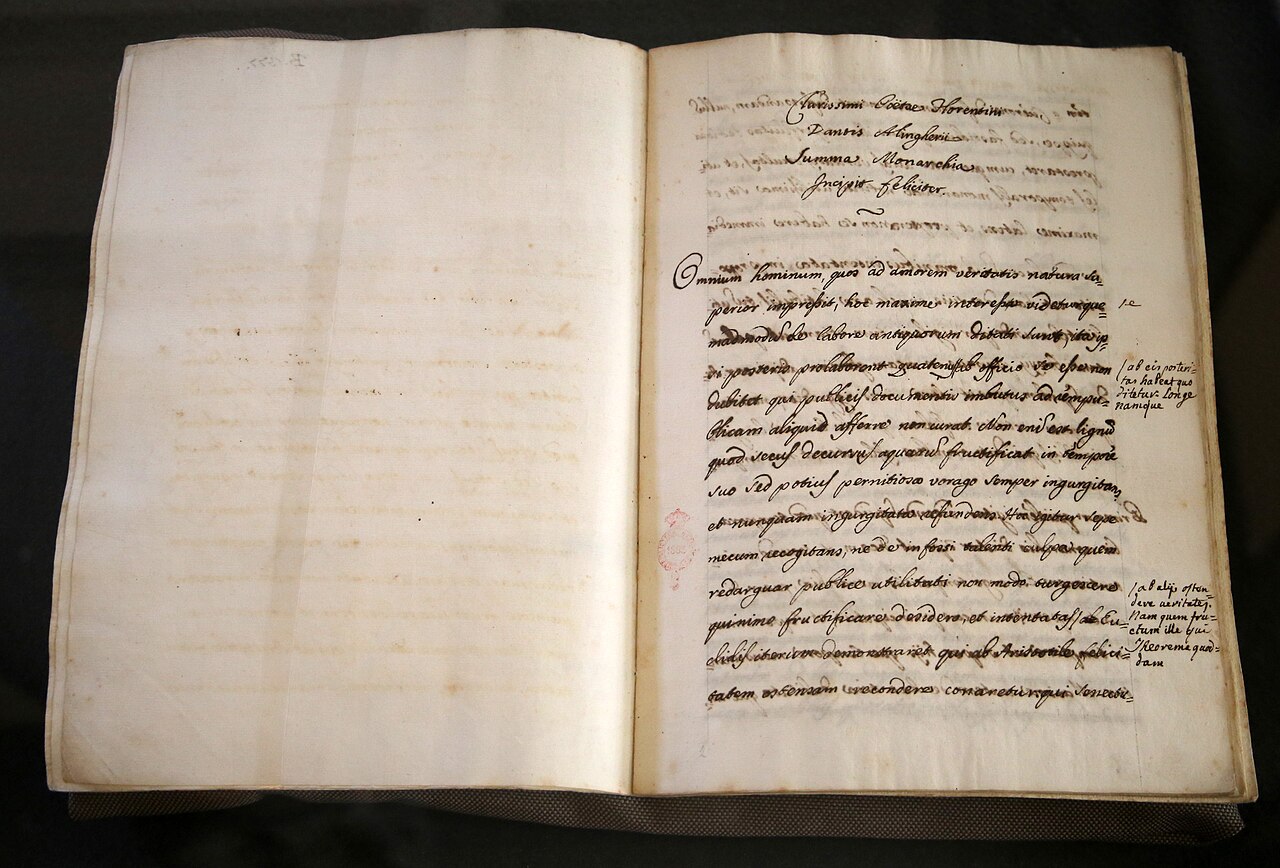 Book
Primary source
De Monarchia
Dante Alighieri · c. 1312–1313
Ready when you are
Start chatting with Dante Alighieri now.
20 messages free · No credit card · Available in 50+ languages.