


Primary sourceSculpturec. 1750-1786
Voltaire
Jean-Claude-François-Joseph Rosset · c. 1750-1786
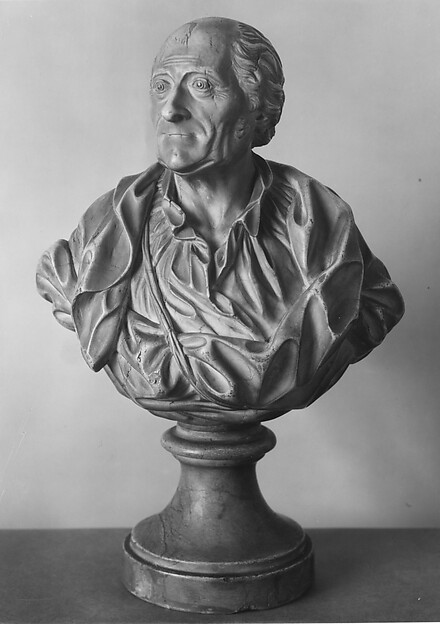
A marble bust of Voltaire by Jean-Claude-François-Joseph Rosset, made during or shortly after his lifetime.
A marble bust showing Voltaire's likeness, made during or close to his own lifetime.
About this source
What it is
This marble bust of Voltaire was made by the sculptor Jean-Claude-François-Joseph Rosset sometime between 1750 and 1786. It is held today at The Metropolitan Museum of Art, having been bequeathed by Annie C. Kane in 1926.
Why it matters
Portrait busts like this one were a common way for important writers and thinkers of the 18th century to have their likeness preserved. Because it was made during or very close to Voltaire's own lifetime, it offers a direct visual record of how he appeared to his contemporaries, showing his age and distinctive features.
Look closer
- What does the sculptor's choice of clothing and pose suggest about how Voltaire wanted to be seen?
- Why might wealthy or educated people in the 18th century commission marble busts of writers?
- What can and can't a sculpture tell us about a person's personality?
This sculpture is part of the curated material that grounds the AI version of Voltaire on Humy.ai — when students ask about related events, the AI can quote it and cite it.
More Voltaire sources
Meet the AI Voltaire →
Ready when you are
Start chatting with Voltaire now.
20 messages free · No credit card · Available in 50+ languages.