


Primary sourceDocument1813
Wellington's Victory
Ludwig van Beethoven · 1813
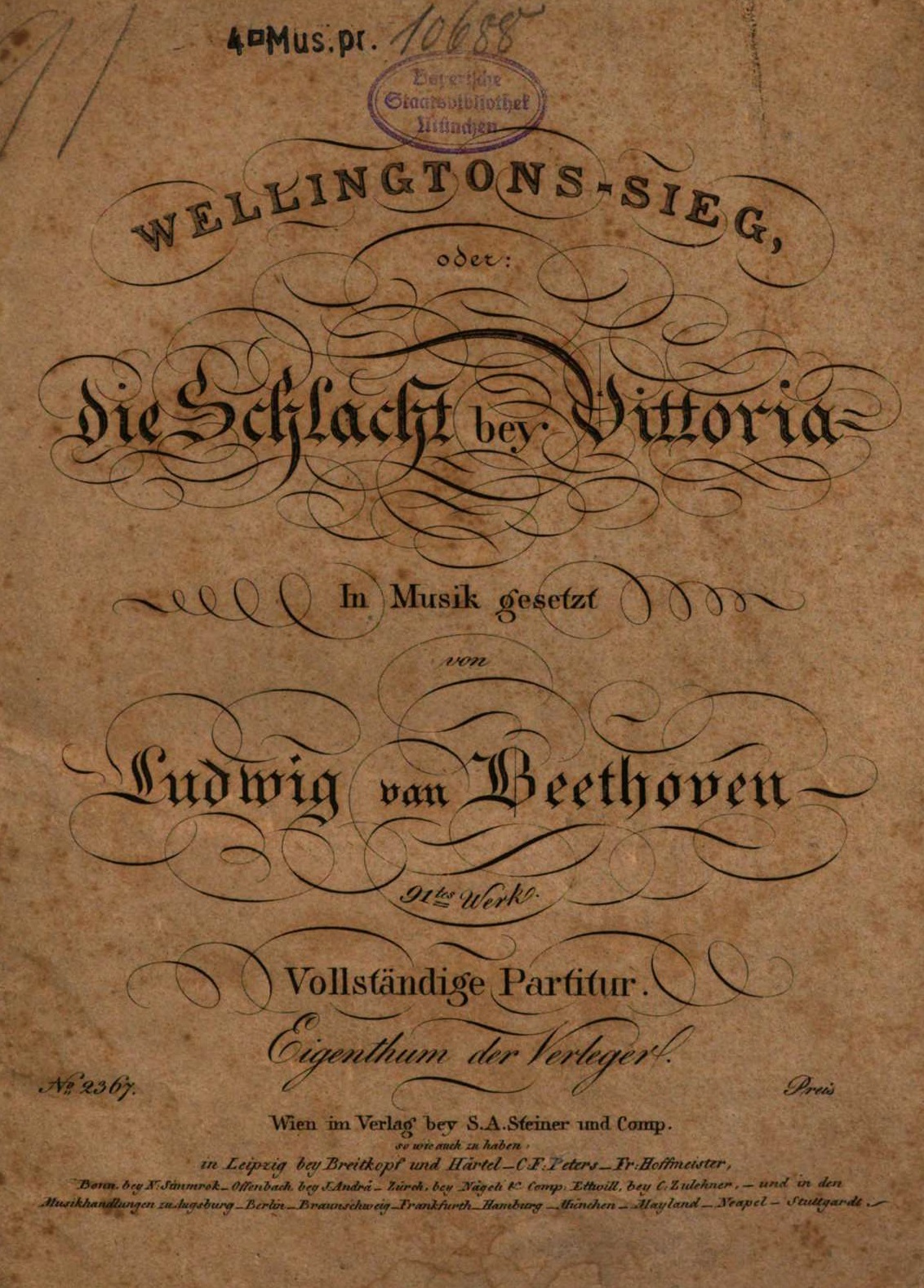
A loud orchestral battle piece Beethoven wrote in 1813 to celebrate Wellington's victory over Napoleon's forces in Spain, his greatest popular success in his lifetime.
Beethoven composed and conducted this patriotic battle piece, his greatest popular success during his lifetime.
About this source
What it is
Wellington's Victory, Op. 91, is an orchestral work composed by Ludwig van Beethoven in 1813 to commemorate the Duke of Wellington's victory at the Battle of Vitoria. It was dedicated to the Prince Regent, later King George IV, and the autograph score is preserved in the Berlin State Library.
Why it matters
Written for a huge orchestra with muskets and artillery sound effects, it uses tunes like 'Rule Britannia' and 'God Save the King' to depict the clash between British and French forces. It proved to be Beethoven's biggest moneymaker and ties him directly to the anti-Napoleonic politics of his time, showing how a serious composer could also produce patriotic, crowd-pleasing spectacle.
Look closer
- Why might Beethoven have avoided using the French national anthem to represent Napoleon's army?
- What does the huge, noisy orchestration tell you about the piece's purpose compared to his symphonies?
- How does a title page like this one help historians track where a printed score has traveled since 1816?
This document is part of the curated material that grounds the AI version of Ludwig van Beethoven on Humy.ai — when students ask about related events, the AI can quote it and cite it.
More Ludwig van Beethoven sources
Meet the AI Ludwig van Beethoven →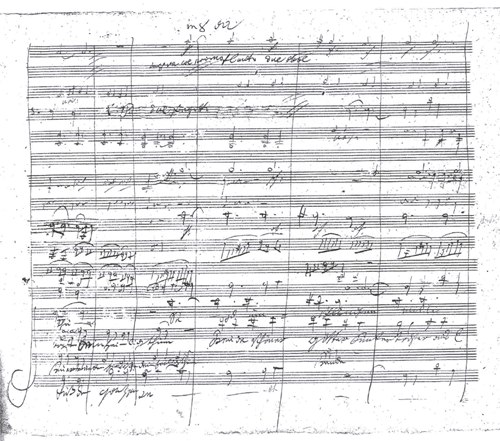 Document
Primary source
Symphony No. 9
Ludwig van Beethoven · 1824
 Sculpture
Secondary source
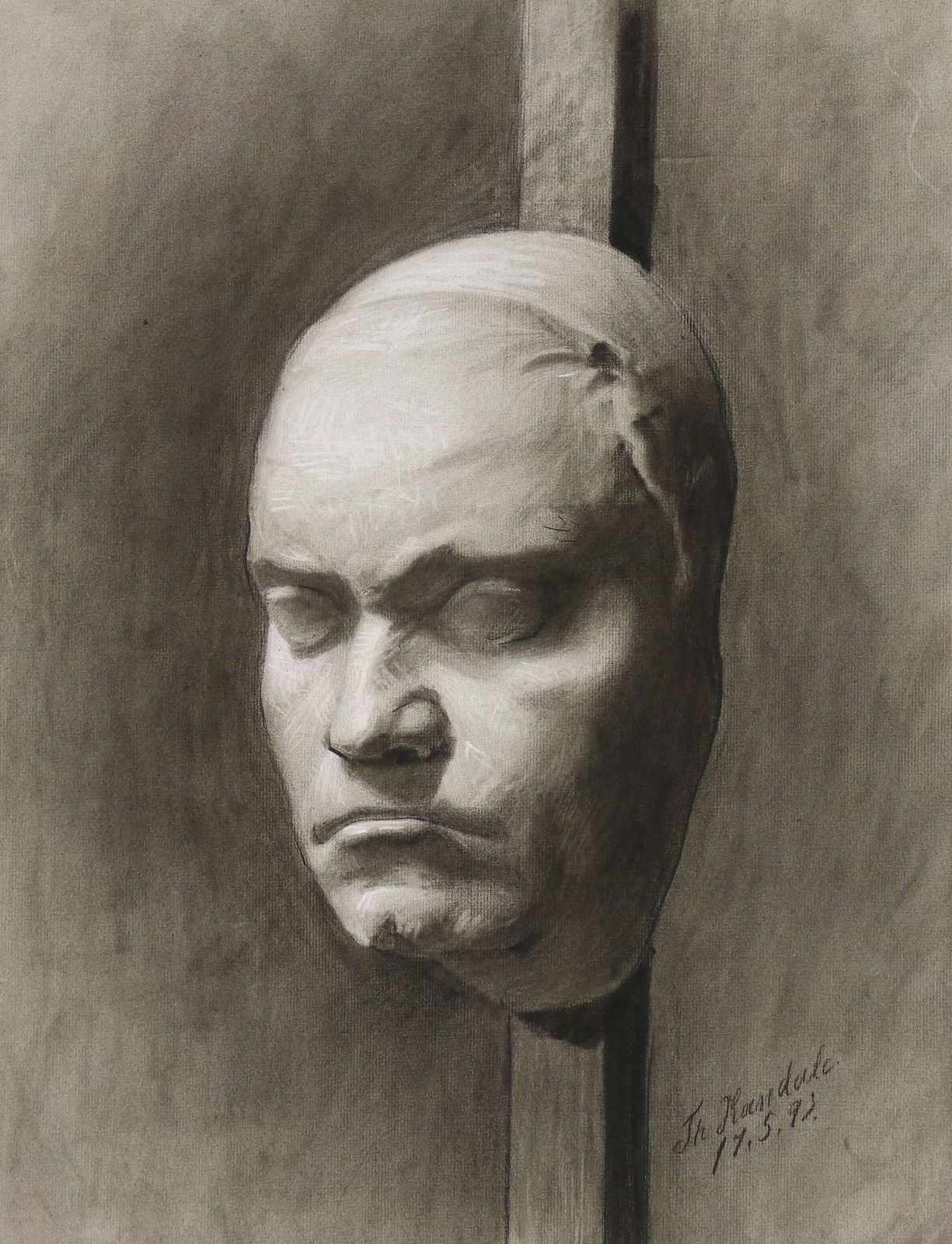
Death of Ludwig van Beethoven
Theodor Kandale (after Josef Danhauser) · 1827 (mask); drawing 1893
 Sculpture
Secondary source
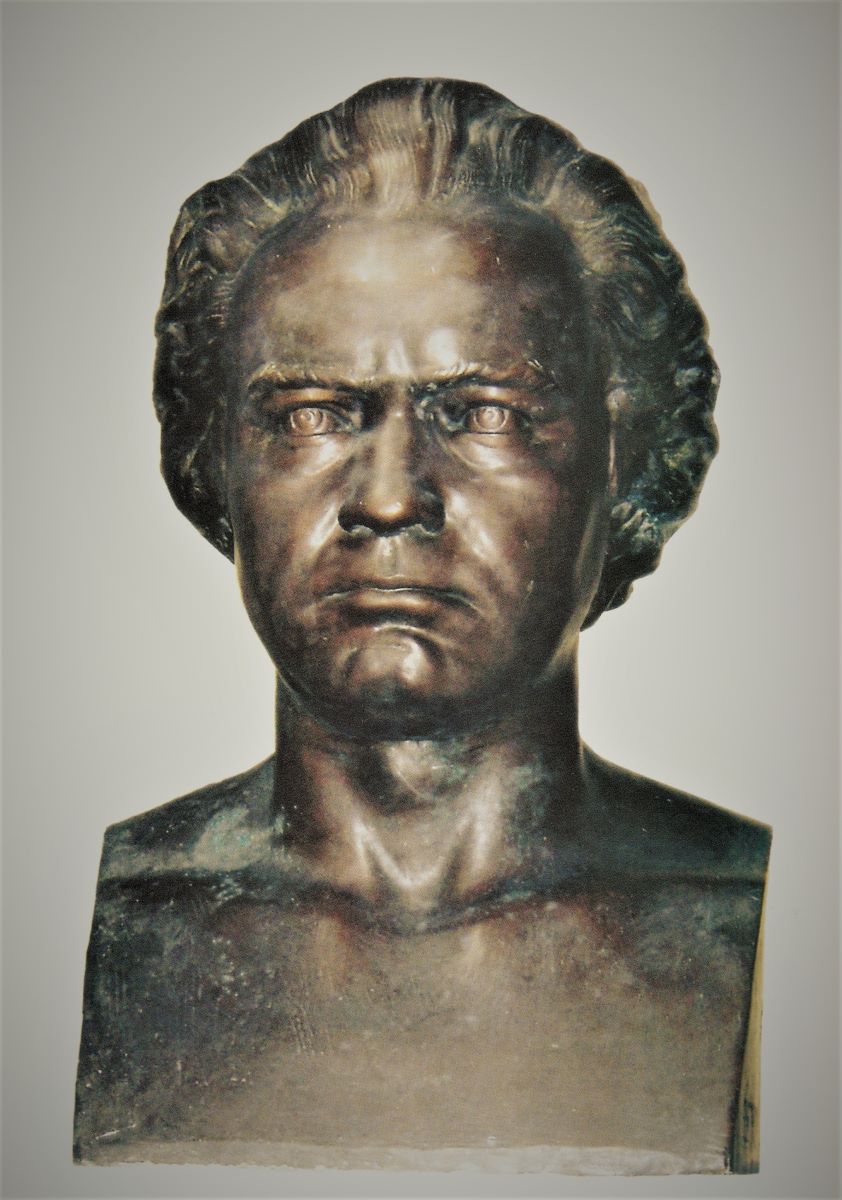
Bust of Ludwig van Beethoven by Frederic Storck
Frederic Storck · 1930
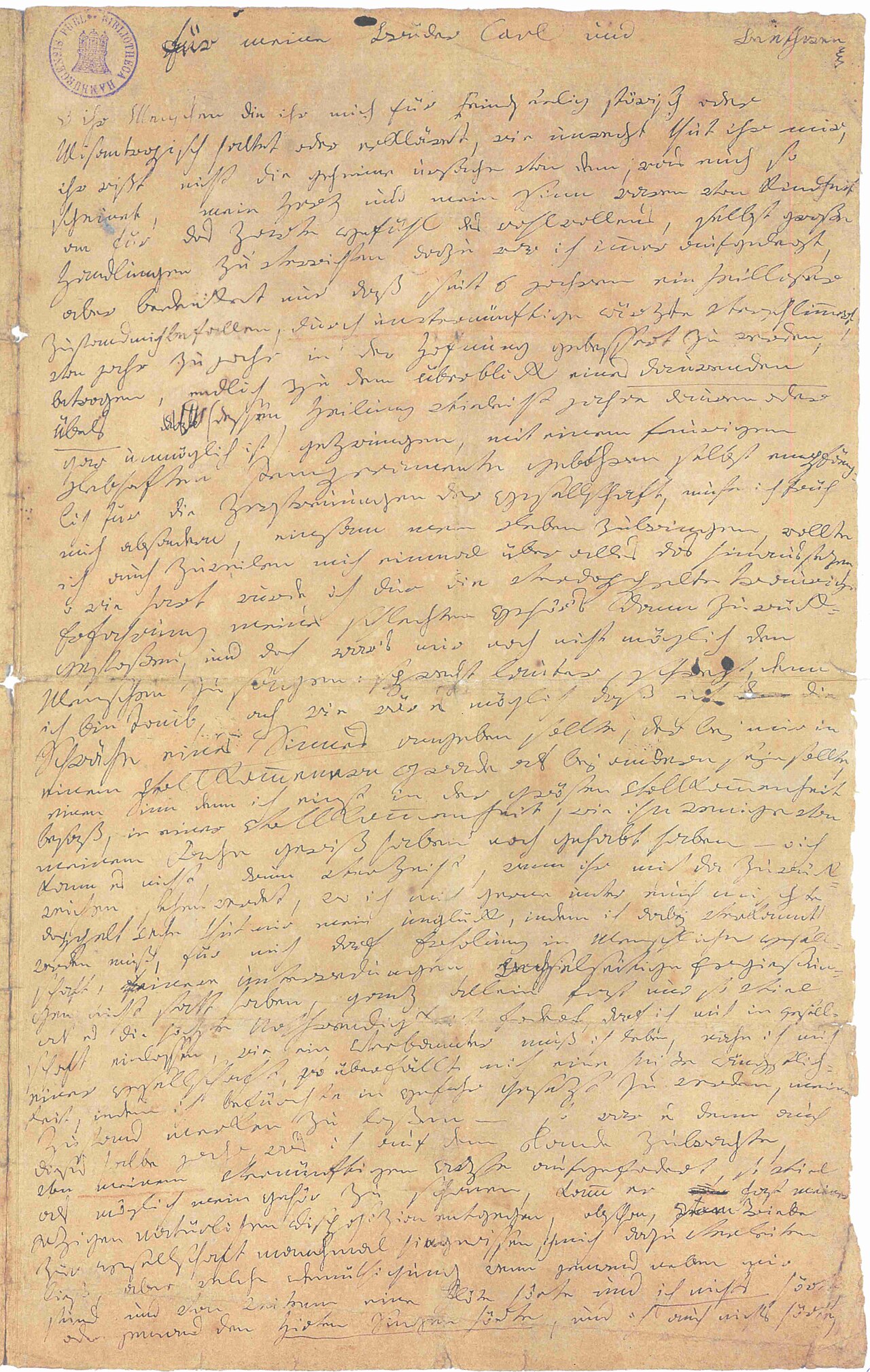 Letter
Primary source
Heiligenstadt Testament
Ludwig van Beethoven · 6 October 1802
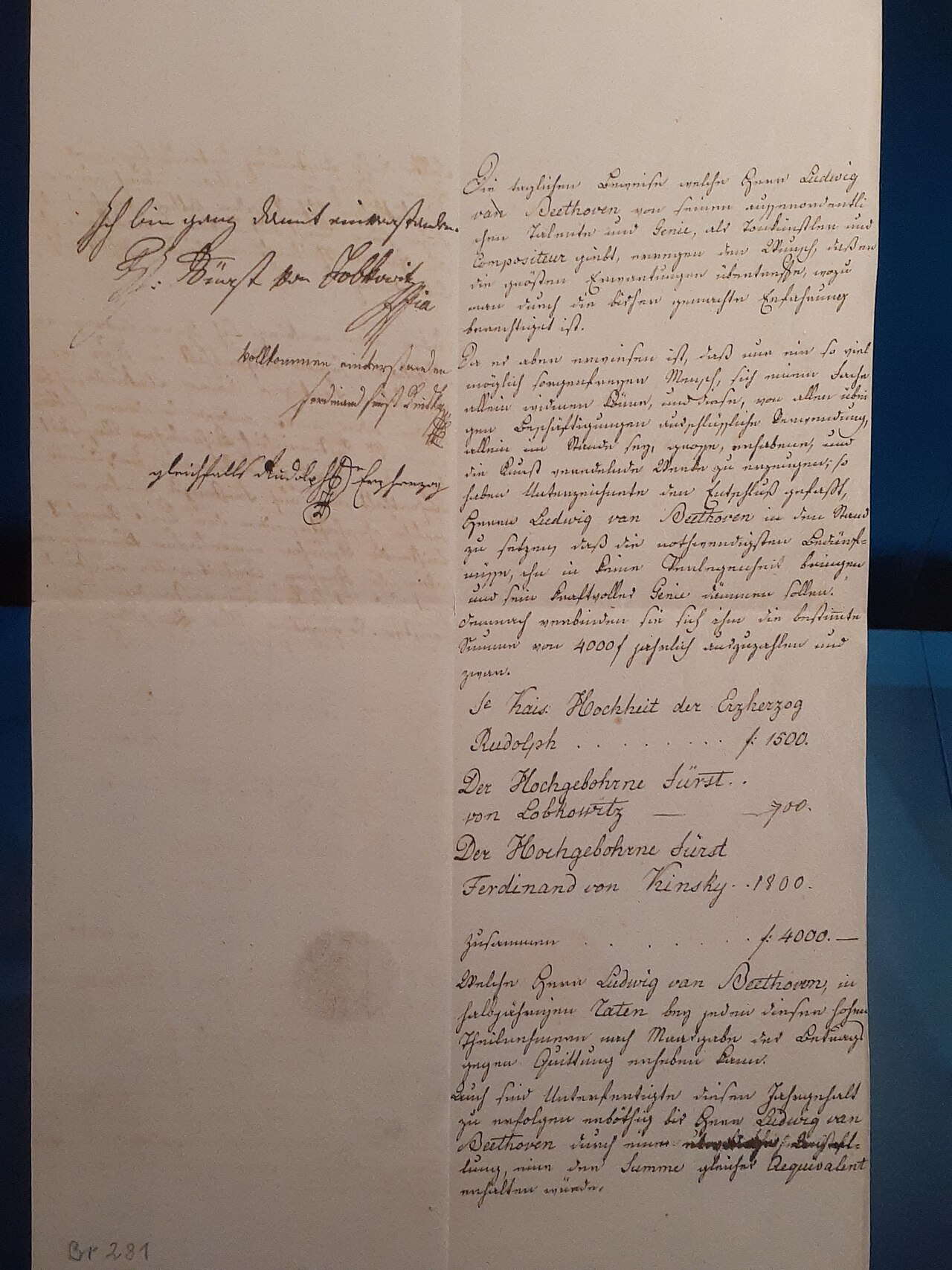 Document
Primary source
Agreement between Beethoven and Archduke Rudolph, Prince Kinsky and Prince Lobkowitz
1 March 1809
Ready when you are
Start chatting with Ludwig van Beethoven now.
20 messages free · No credit card · Available in 50+ languages.