


Primary sourceArtifactc. 1330 BCE
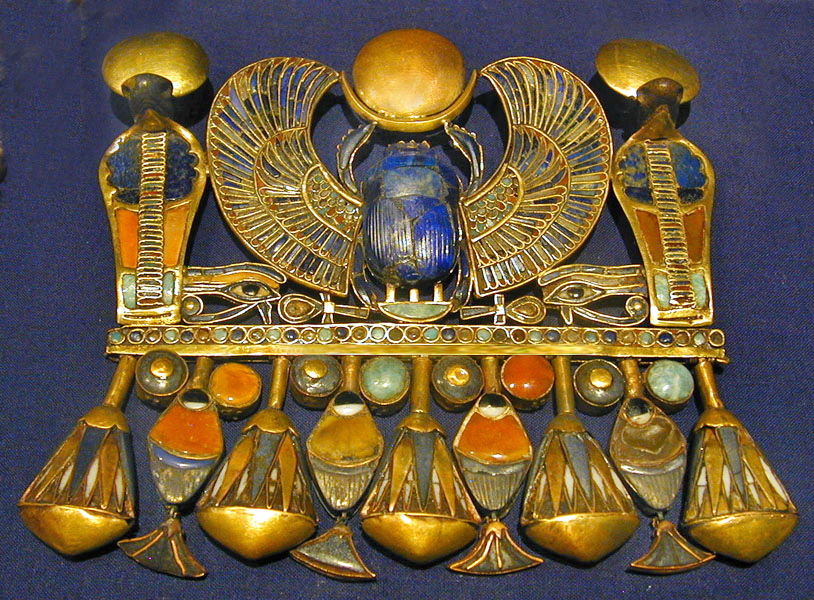
Winged Scarab Pectoral of Tutankhamun
c. 1330 BCE
A gold pectoral in the shape of a winged scarab, spelling out Tutankhamun's throne name, found among his burial jewellery.
This pectoral was made for and owned by Tutankhamun, spelling out his throne name in gold and semi-precious stones.
About this source
What it is
Made around 1330 BCE, this pectoral combines gold, lapis lazuli, and other inlaid stones in the shape of a winged scarab beetle carrying symbols including the Eye of Horus. It is held today at the Grand Egyptian Museum in Giza.
Why it matters
The design spells out Tutankhamun's throne name, Nebkheperure, using hieroglyphic symbols for a basket, scarab, and the sun god Re. Pieces like this show how Egyptian jewellery was not only decorative but carried religious and political meaning, linking the king to the sun god and protective solar symbolism.
Look closer
- Can you spot the hieroglyphs that spell the king's name?
- Why might a king want solar symbols on his jewellery?
- What skills and materials would have been needed to make this object?
This artifact is part of the curated material that grounds the AI version of Tutankhamun on Humy.ai — when students ask about related events, the AI can quote it and cite it.
More Tutankhamun sources
Meet the AI Tutankhamun →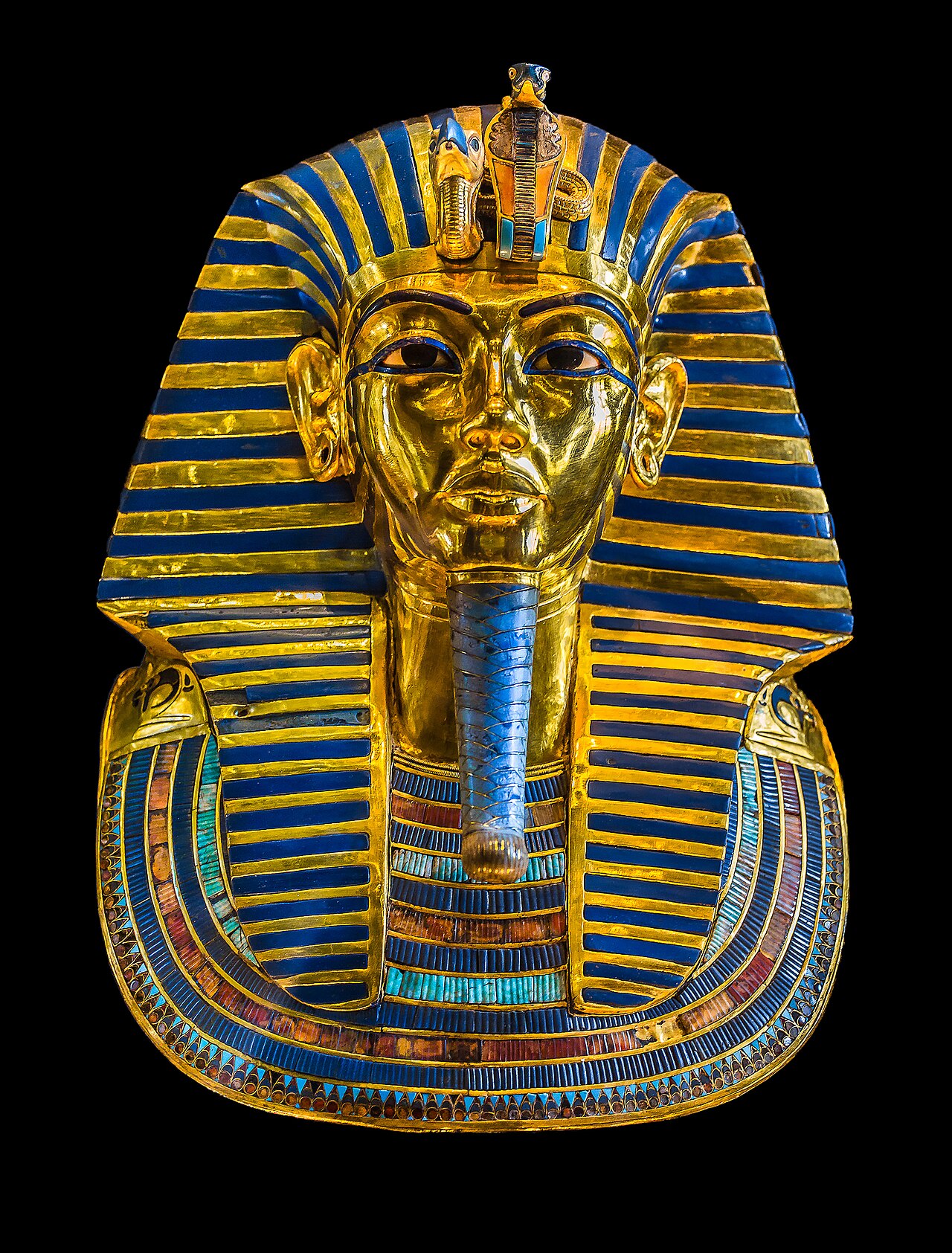 Artifact
Primary source
Mask of Tutankhamun
c. 1333 BCE
 Photograph
Primary source
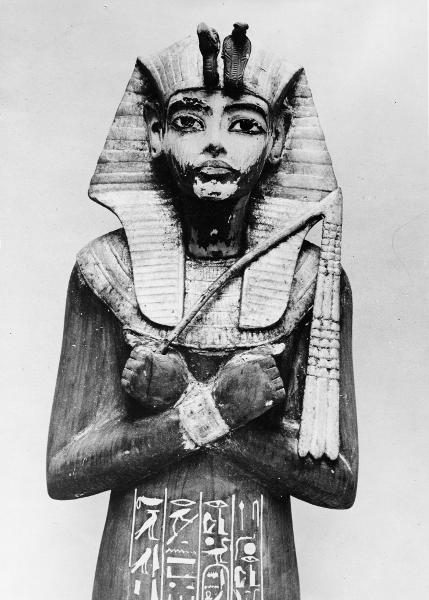
Photograph of Tutankhamun's Shawabti Figure
Harry Burton · 1920s
 Artifact
Primary source
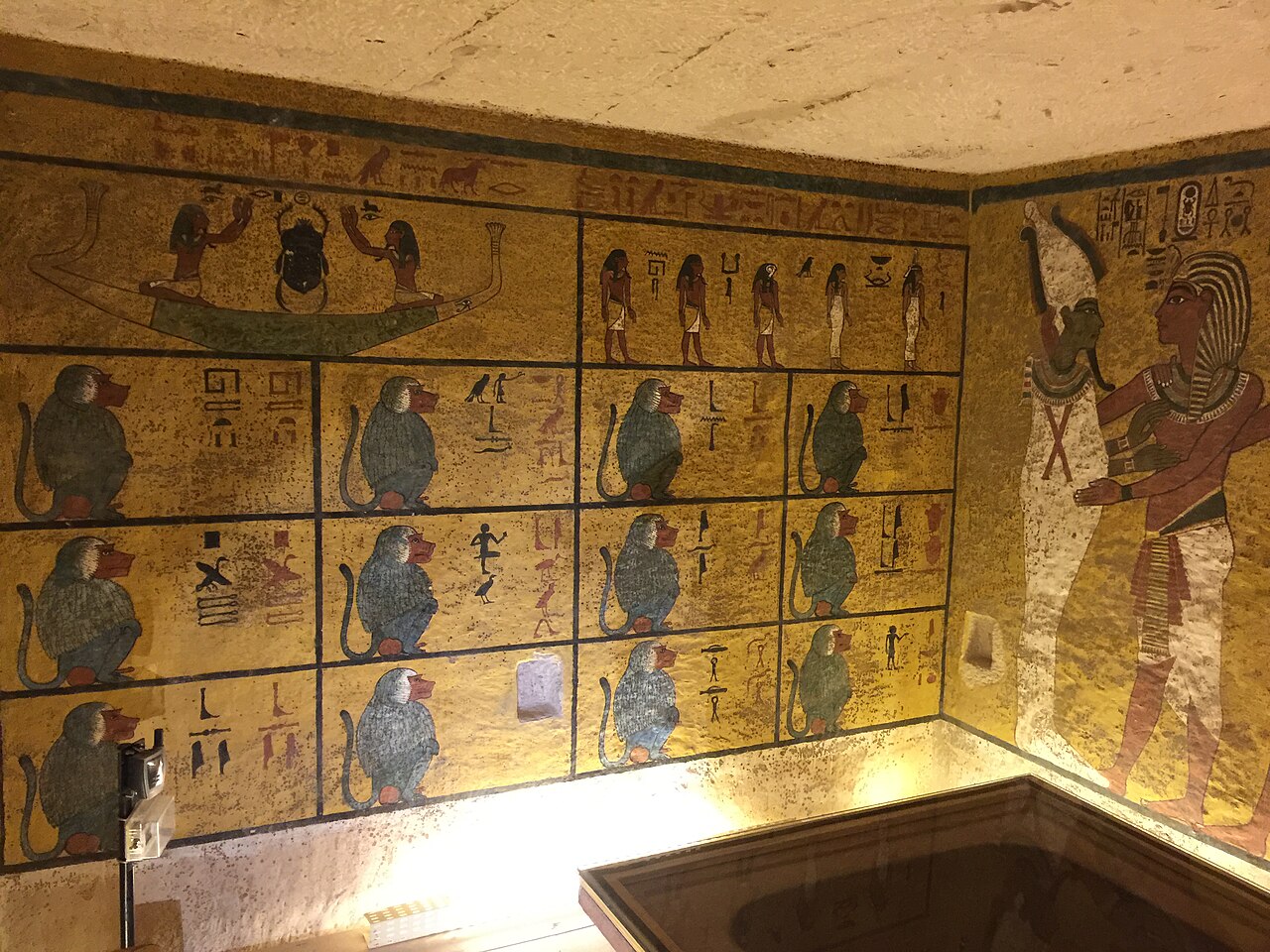
Tomb of Tutankhamun
14th century BCE
 Photograph
Primary source
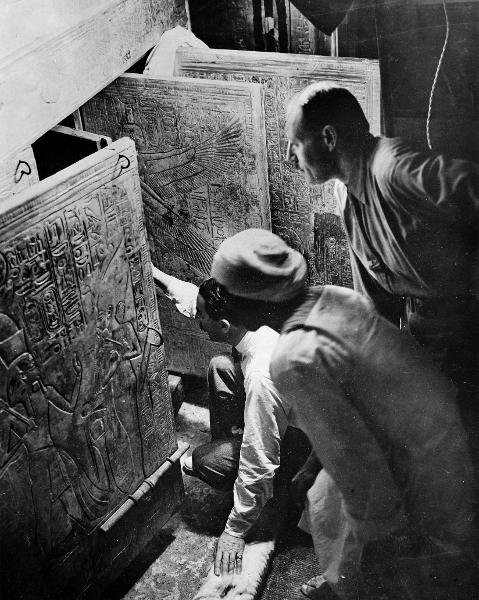
Opening the Doors of the Fourth Shrine in Tutankhamun's Tomb
Harry Burton · 1920s
 Document
Primary source
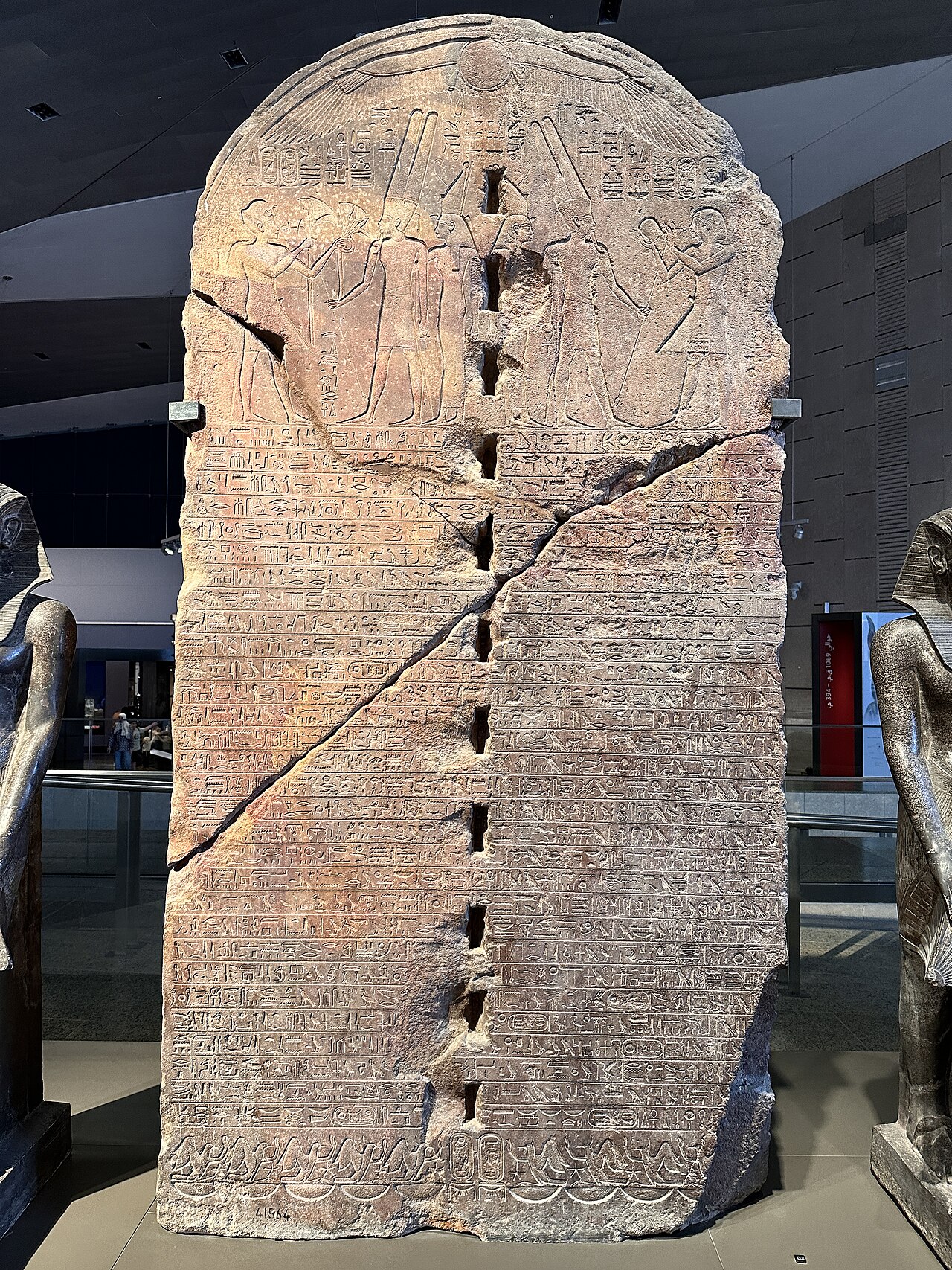
Restoration Stela
Tutankhamun · c. 1326 BCE
Ready when you are
Start chatting with Tutankhamun now.
20 messages free · No credit card · Available in 50+ languages.