


Primary sourcePainting1796-1798
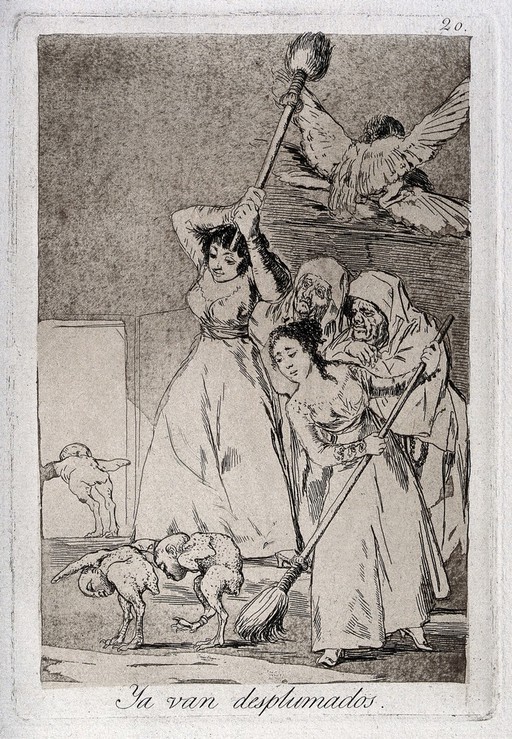
Women Chasing Bird-Men Out of a Door
Francisco Goya y Lucientes · 1796-1798
A Goya etching from the Caprichos series satirising prostitution and corruption, showing women sweeping bird-headed men from a doorway.
Goya created and captioned this etching himself as part of his satirical Caprichos series.
About this source
What it is
This print, captioned Ya van desplumados, is plate 20 from Caprichos, etched by Francisco Goya around 1796–1798. It shows two young women with brooms driving out strange bird-like figures with human heads, while two hooded figures watch. It belongs to the Wellcome Collection.
Why it matters
Goya used fantastical imagery in the Caprichos to comment on real social problems in Spain, including prostitution and the corruption of religious and social institutions. The bird-men likely represent men who have been exploited and then cast out once their money is gone. The print shows Goya's skill at combining satire with striking, strange visual invention.
Look closer
- What might the bird-headed men represent?
- Why are the hooded figures standing behind rather than acting themselves?
- How does the broom-sweeping action change the meaning of the scene?
This painting is part of the curated material that grounds the AI version of Francisco Goya on Humy.ai — when students ask about related events, the AI can quote it and cite it.
More Francisco Goya sources
Meet the AI Francisco Goya →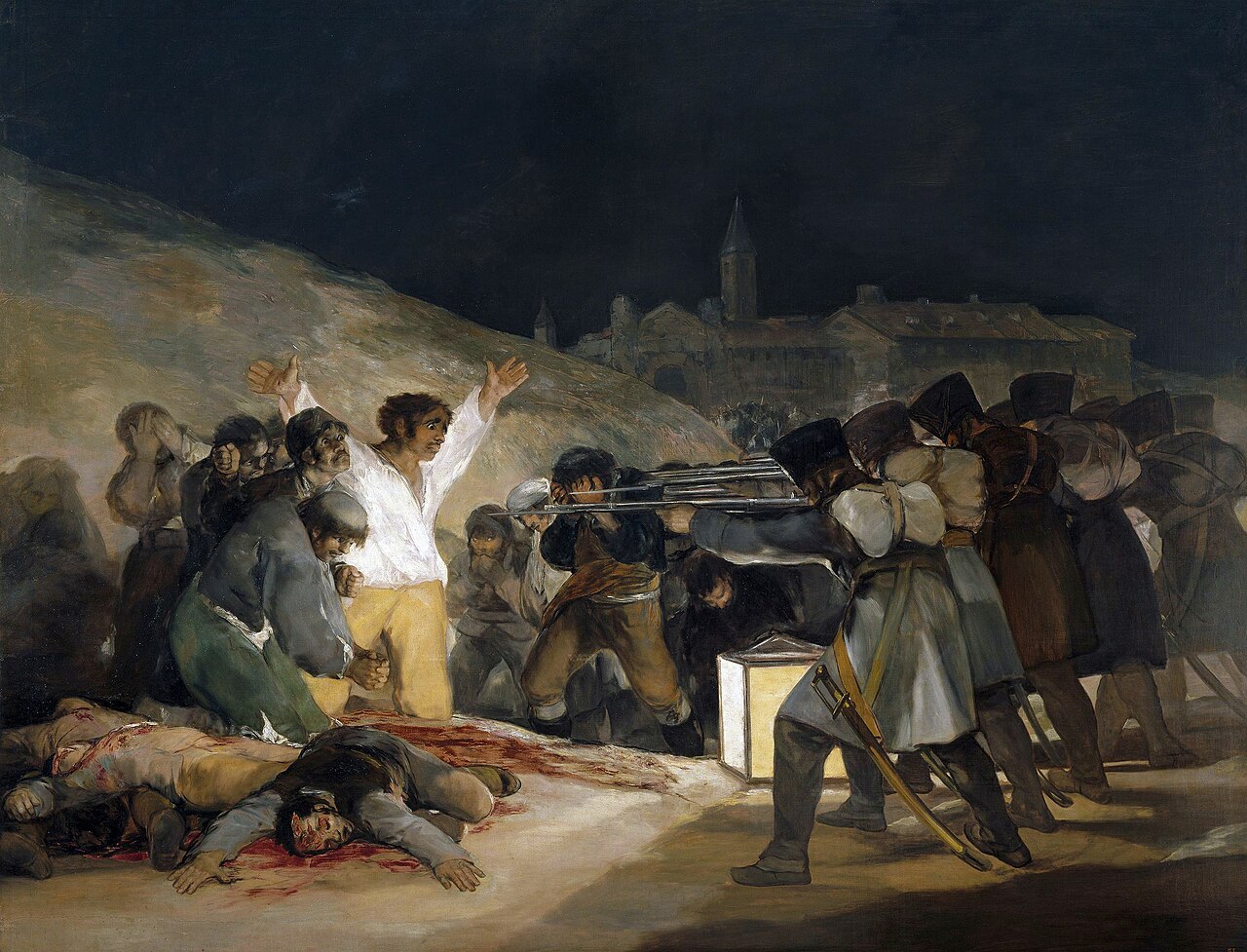 Painting
Secondary source
The Third of May 1808
Francisco Goya · 1814
 Painting
Primary source
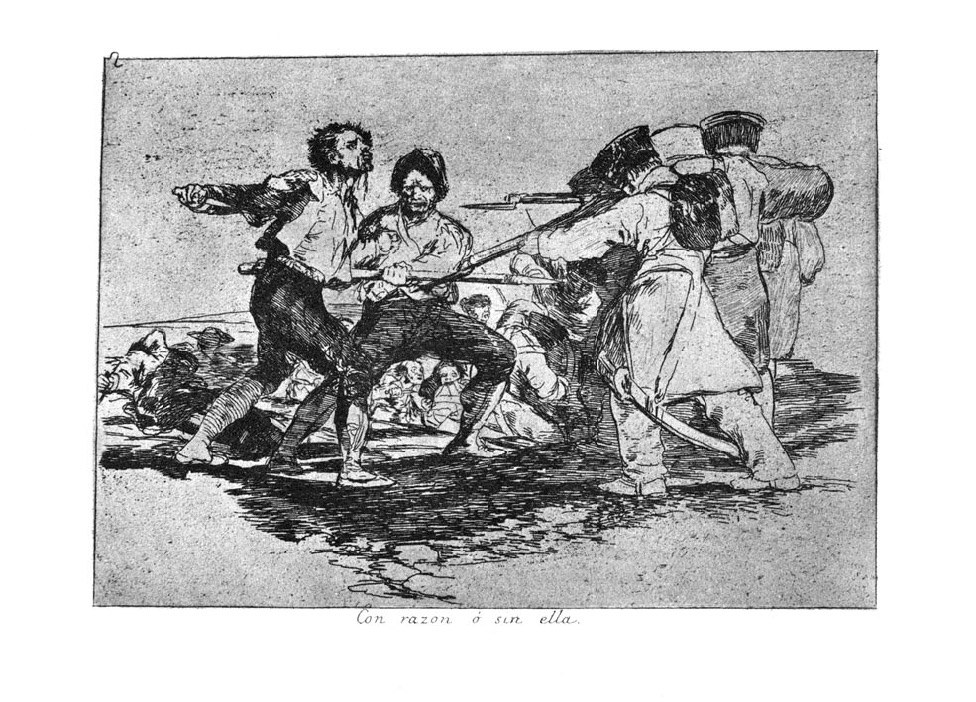
The Disasters of War
Francisco Goya · 1810-1820
 Painting
Primary source
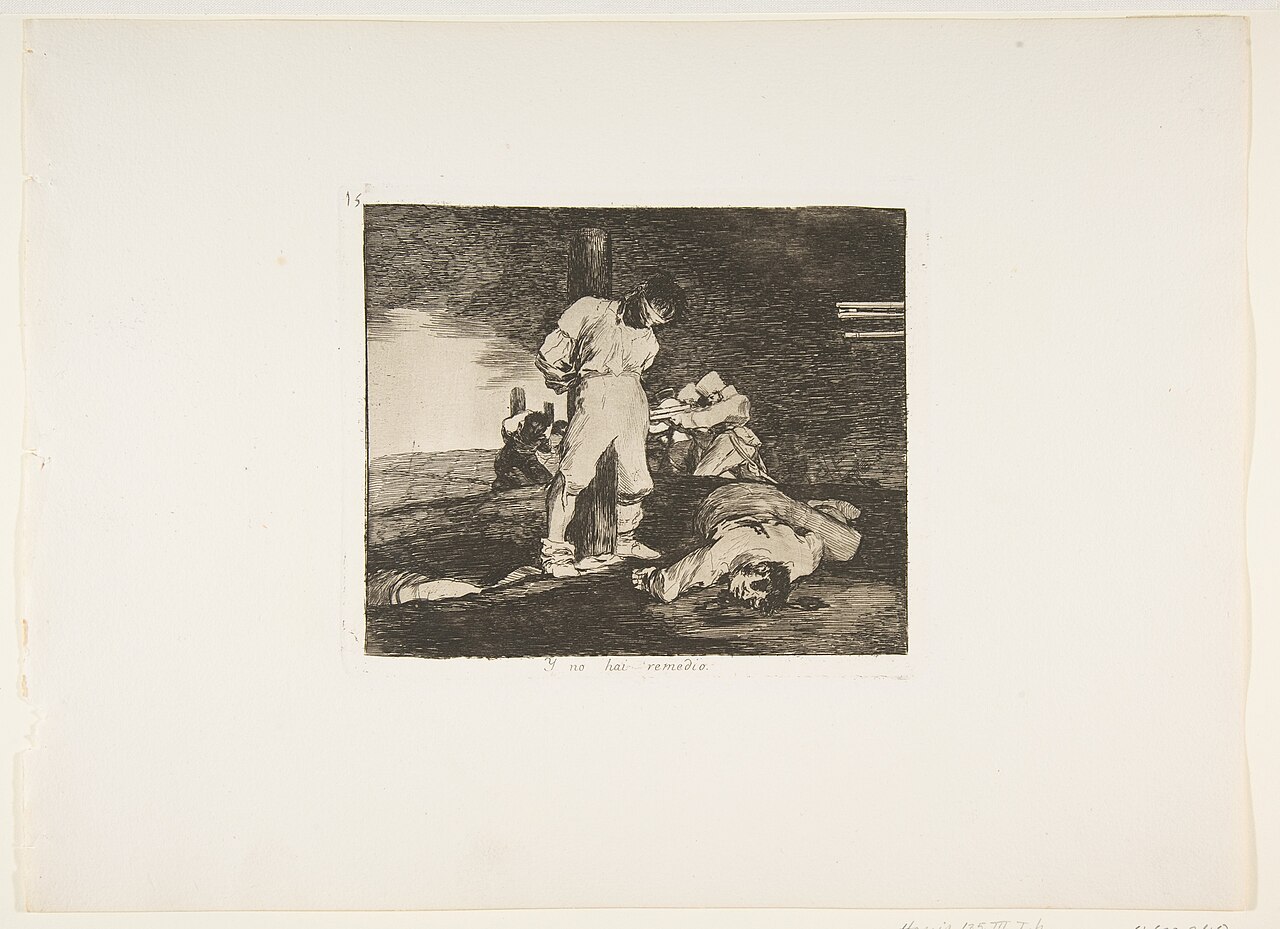
Y no hai remedio
Francisco de Goya · c. 1810-1814 (published 1863)
 Painting
Primary source
Caprichos
Francisco Goya · 1799 (created 1797-1798)
 Painting
Primary source
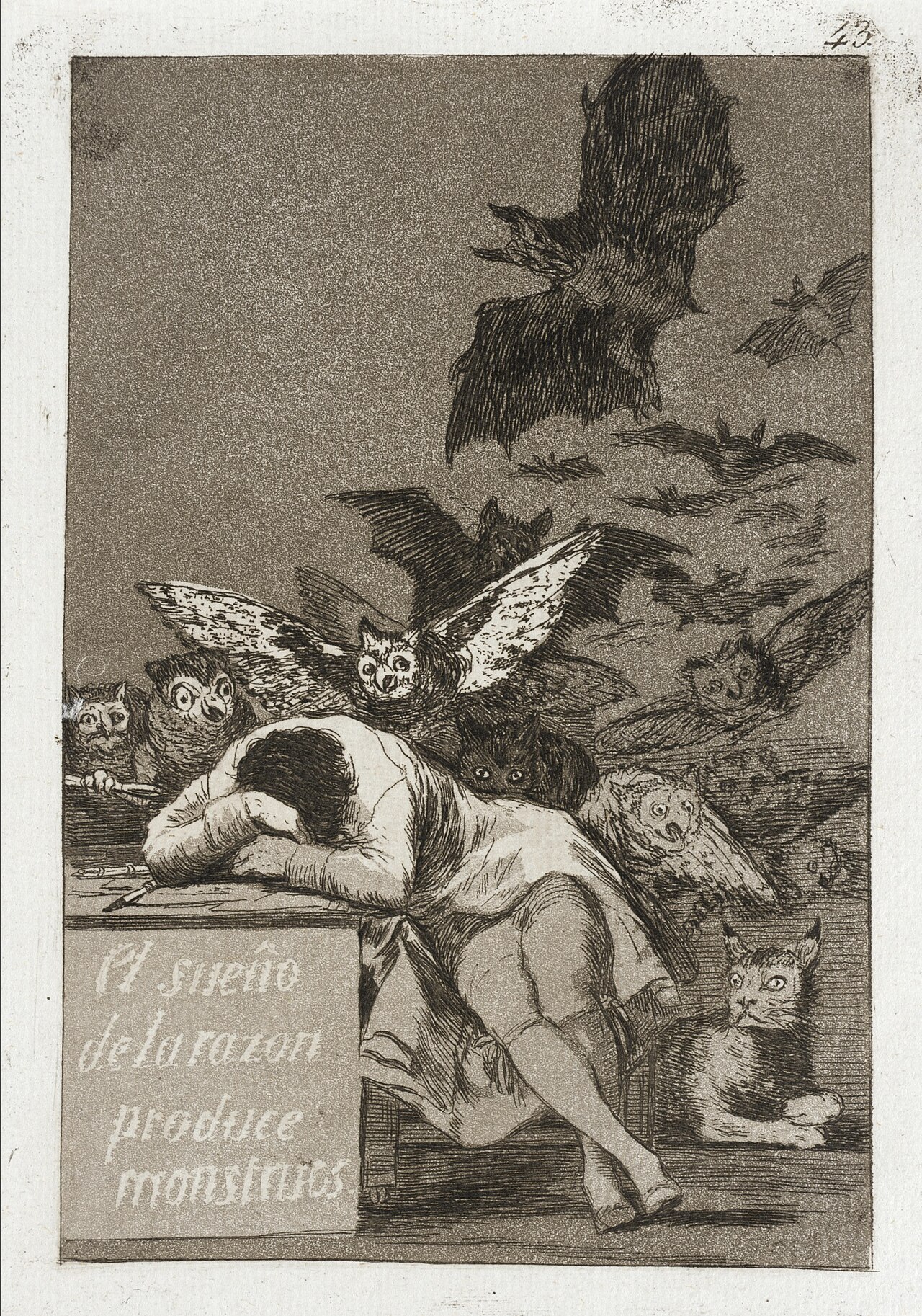
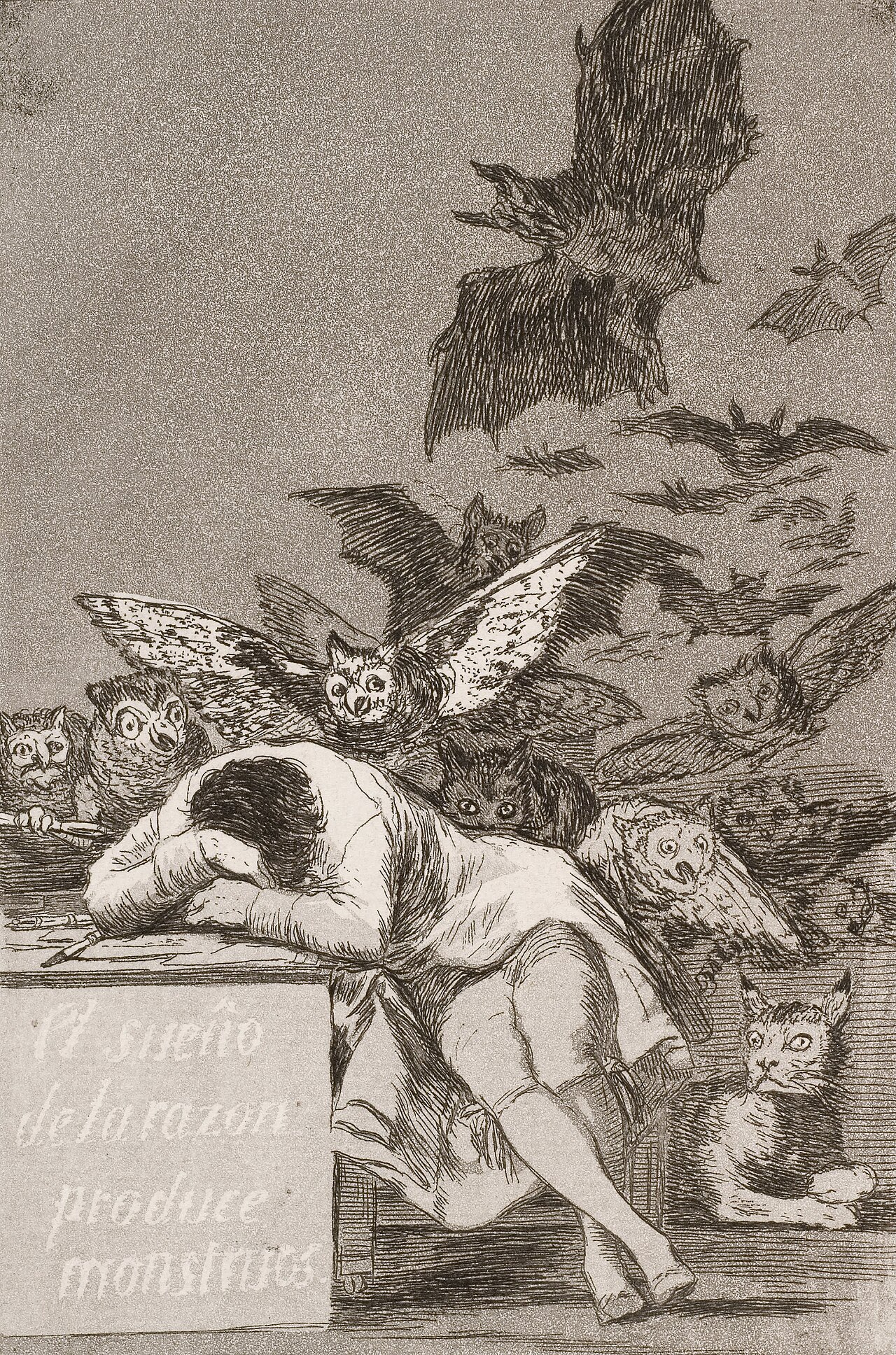
The Sleep of Reason Produces Monsters
Francisco Goya · 1797-1799
Ready when you are
Start chatting with Francisco Goya now.
20 messages free · No credit card · Available in 50+ languages.