


Secondary sourcePainting1914
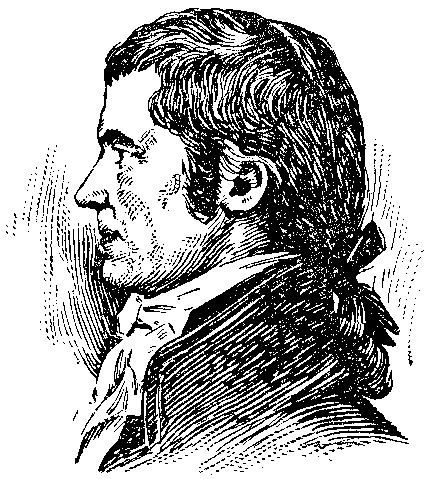
Woodcut portrait of John Marshall
1914
A black-and-white engraved profile portrait of John Marshall, published in 1914 as a later reproduction. It shows his likeness as Chief Justice but is not a contemporary image.
Shows how a later generation pictured Marshall as Chief Justice, making it a secondary image of the figure in his archive.
About this source
What it is
This is a black-and-white engraved line drawing of John Marshall, shown in profile facing left against a hatched background. The archive record credits no known artist and dates the image to publication in 1914. It is a later woodcut portrait of Marshall as Chief Justice, a generic reproduction rather than a drawing made during his lifetime.
Why it matters
Marshall led the Supreme Court from 1801 to 1835 and shaped how federal courts review laws. Portraits like this one show how later generations chose to picture him, often as a serious, dignified judge. Because the image was made about eighty years after his death in 1835, it tells us more about early twentieth-century ideas of a founding judge than about Marshall's own appearance.
Look closer
- What clothing and pose does the artist use to make Marshall look authoritative?
- Why might a 1914 publisher choose a profile view instead of a face-forward portrait?
- What does this image leave out about Marshall's work or his time?
This painting is part of the curated material that grounds the AI version of John Marshall on Humy.ai — when students ask about related events, the AI can quote it and cite it.
More John Marshall sources
Meet the AI John Marshall →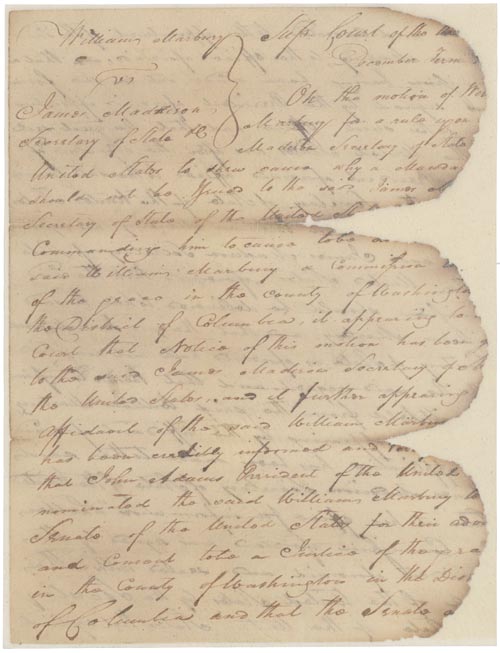 Document
Primary source
Marbury v. Madison
1803
 Document
Primary source
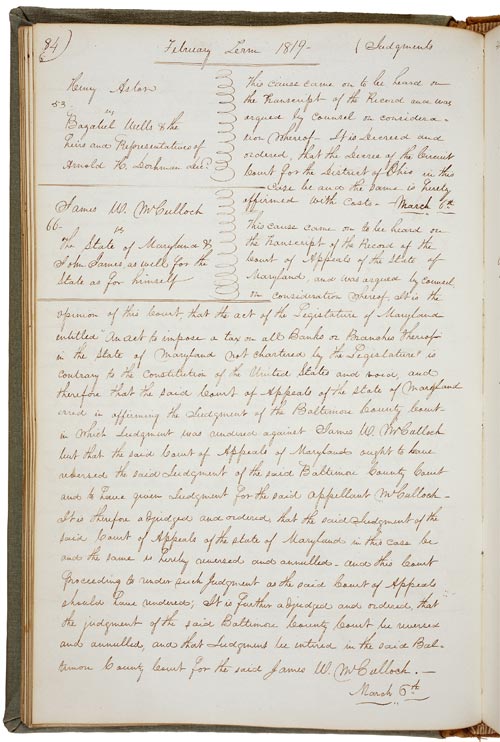
McCulloch v. Maryland
John Marshall · 6 March 1819
 Document
Primary source
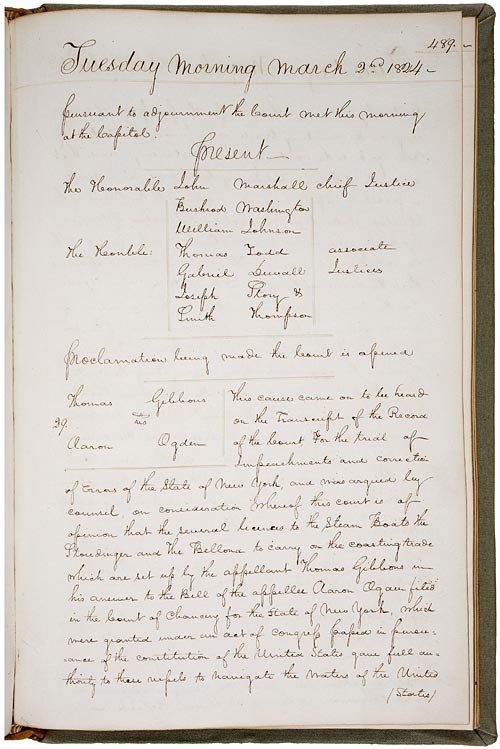
Gibbons v. Ogden
John Marshall · 1824
Primary source
Worcester v. Georgia
John Marshall · 1832
 Painting
Primary source
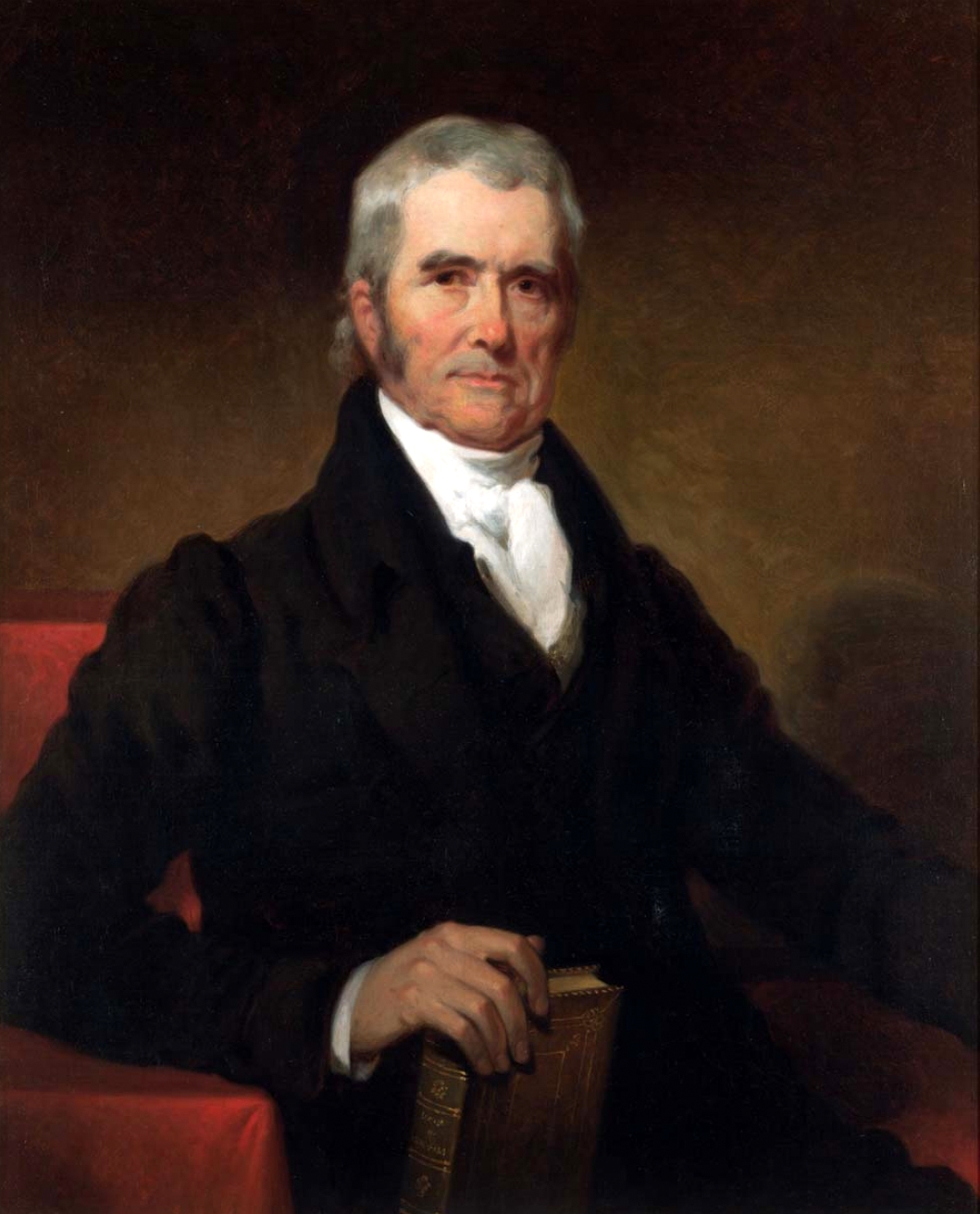
Portrait of John Marshall
Henry Inman · 1832
Ready when you are
Start chatting with John Marshall now.
20 messages free · No credit card · Available in 50+ languages.