


Primary sourceBook1732 (written); 1756 edition shown
Zaïre
Voltaire · 1732 (written); 1756 edition shown
Voltaire's most successful tragedy, a love story between a Christian captive and a Muslim sultan that became a huge stage hit.
Voltaire's most successful tragedy, showing his turn toward stories of pathos and tolerance.
About this source
What it is
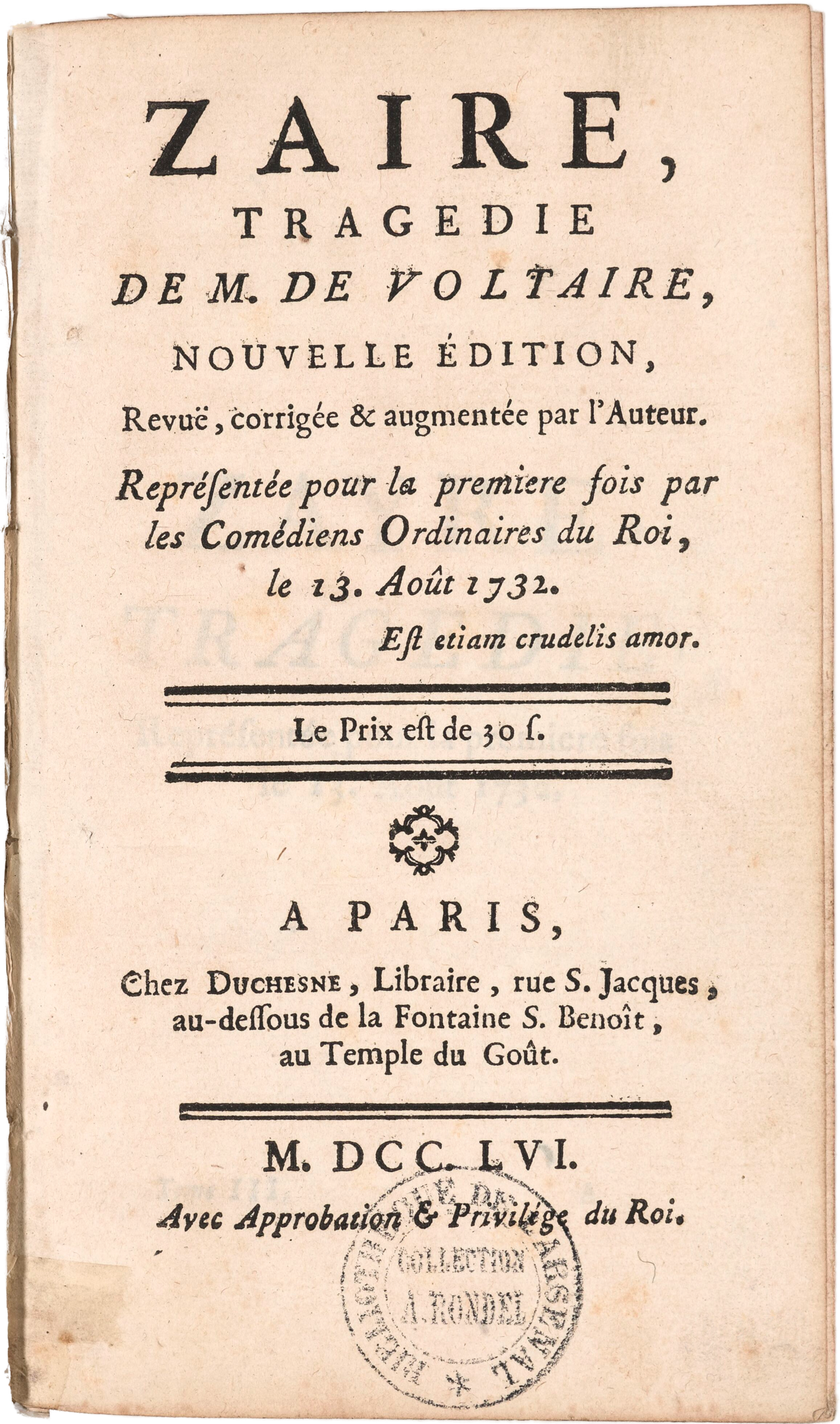
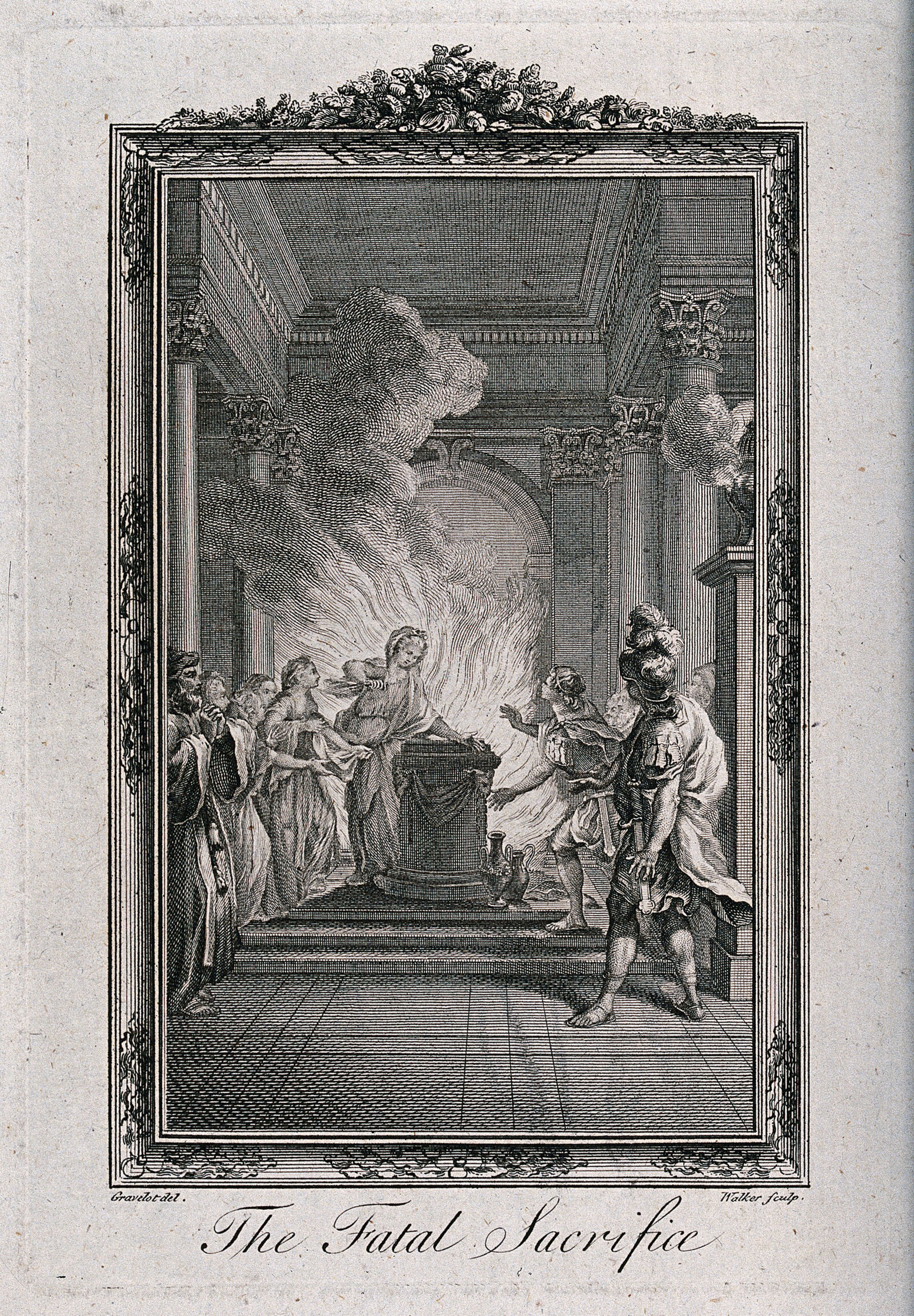
This is a printed edition of Zaïre, a five-act tragedy in verse written by Voltaire in three weeks and first performed in 1732. The title page shown is from a 1756 Paris edition.
Why it matters
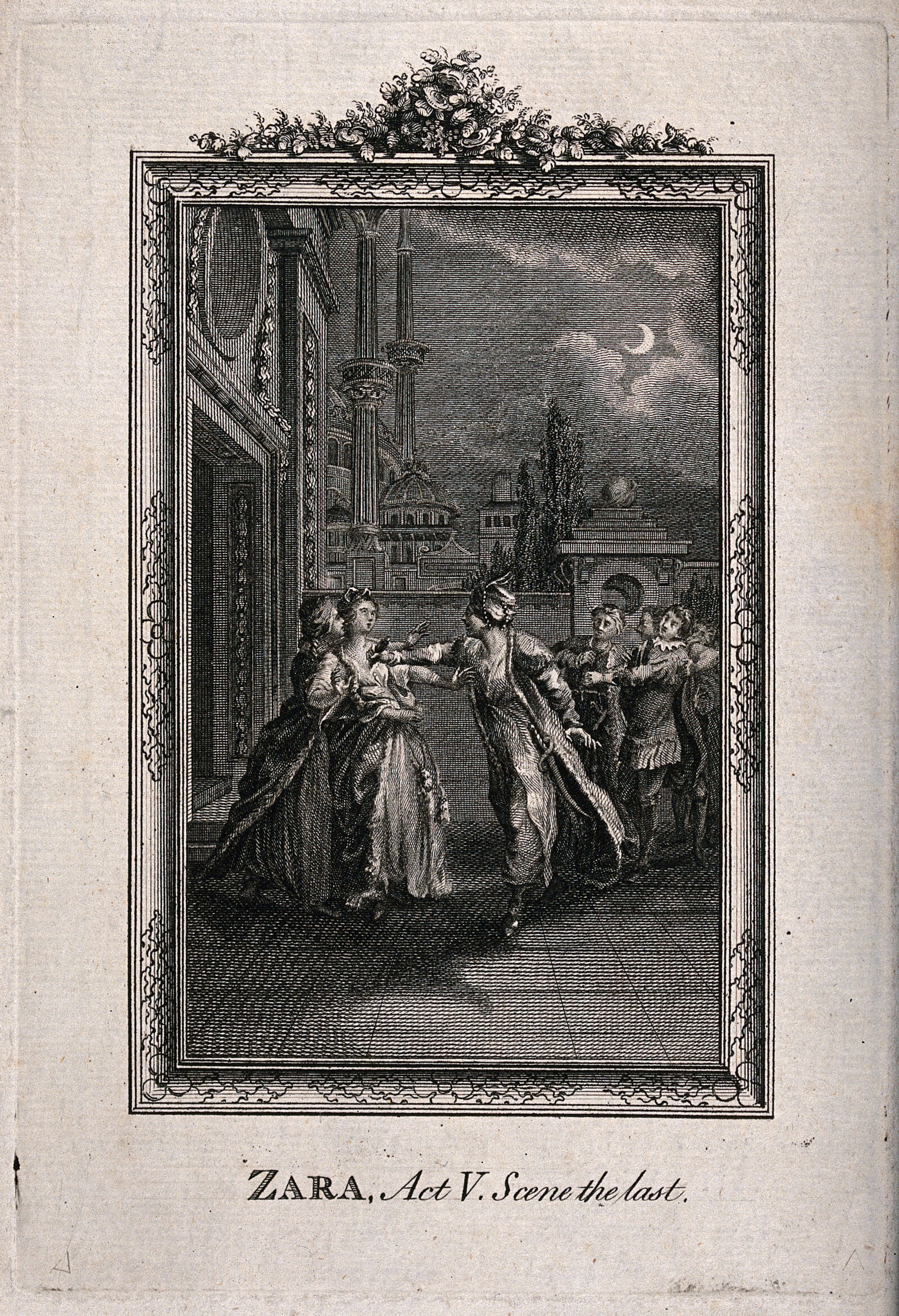
Zaïre tells of a Christian woman raised as a slave who falls in love with the Muslim Sultan Orosmane, with tragedy caused not by her own flaws but by jealousy and religious intolerance. It marked a shift in French tragedy toward stories driven by emotion rather than a hero's personal failing, and was a huge success with Paris audiences, later performed widely in Britain and inspiring operas. Voltaire himself once played a role in a private performance, reportedly weeping with real emotion.
Look closer
- Why might Voltaire have chosen a love story across religious lines as his subject?
- What does the title page reveal about how this play was printed, sold, and owned over time?
- How does the play's ending comment on the cost of religious intolerance?
This book is part of the curated material that grounds the AI version of Voltaire on Humy.ai — when students ask about related events, the AI can quote it and cite it.
More Voltaire sources
Meet the AI Voltaire →
Ready when you are
Start chatting with Voltaire now.
20 messages free · No credit card · Available in 50+ languages.