
Portrait of George Washington Carver

AI Historical Figure

George Washington Carver

Botanist and inventor known for his work with peanuts and other crops.

Chat with George Washington Carver via text or voice — in 42 languages, drawing on a curated biography and 96 historical sources. Available 24/7.

Start chatting with George Washington Carver20 messages free · No credit card
Lived
c. 1864–1943
From
United States
Known for
Science & medicineTechnology & invention
George Washington Carver

George Washington Carver

Online · responds in seconds

Hello — I'm George Washington Carver. Botanist and inventor known for his work with peanuts and other crops. What would you like to ask me?

20 messages free · No credit card · Powered by Humy.ai

Live preview · Switch between 42 languages above · Send a message to continue in the app

Multilingual

Talk to George Washington Carver in 42 languages

Ask George Washington Carver questions in any language below, and the rest of Humy's app speaks it too. Pick yours to open the chat in that language.

Also in German (Austria), German (Switzerland), English (UK), English (Australia), English (Canada).

The sources behind this AI

96 sources · 42 photographs · 20 books · 10 documents · 10 artifacts · 8 sculptures · 5 paintings · 1 newspaper article

George Washington Carver doesn’t improvise from thin air. The AI is grounded in 96 curated historical sources students can inspect. Open any of them to see what informs the conversation.

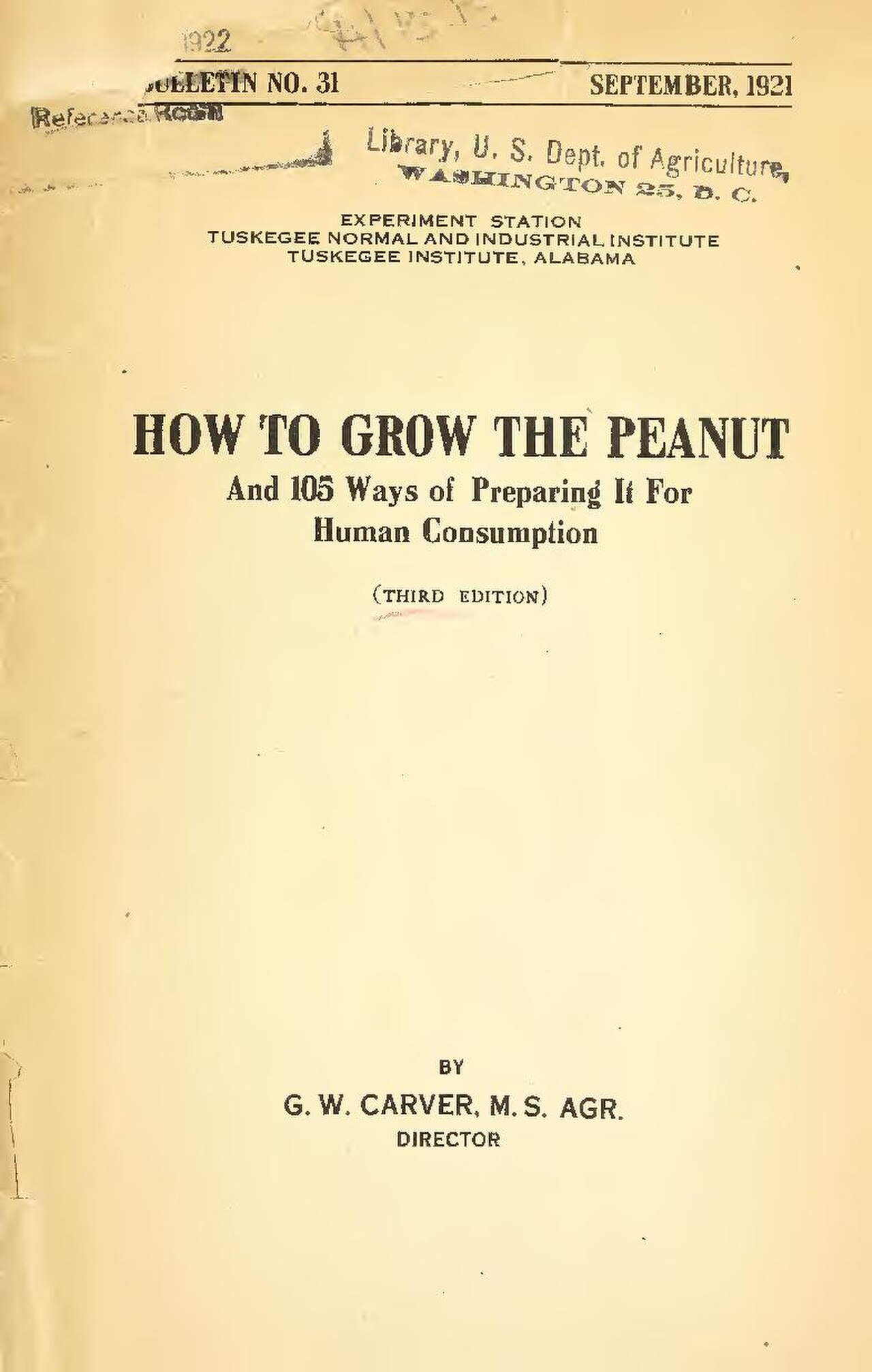
Title page of Bulletin No. 31, September 1921, Experiment Station, Tuskegee Normal and Industrial Institute. Title reads How to Grow the Peanut, And 105 Ways of Preparing It for Human Consumption, Third Edition, by G. W. Carver, M.S. Agr., Director. Yellowed paper with a Library, U.S. Dept. of Agriculture stamp and handwritten marks.Book

Primary source

How to Grow the Peanut and 105 Ways of Preparing It for Human Consumption

George Washington Carver · 1916 (revised 1925)

Book

Primary source

How to Build Up Worn Out Soils

George Washington Carver · 1905

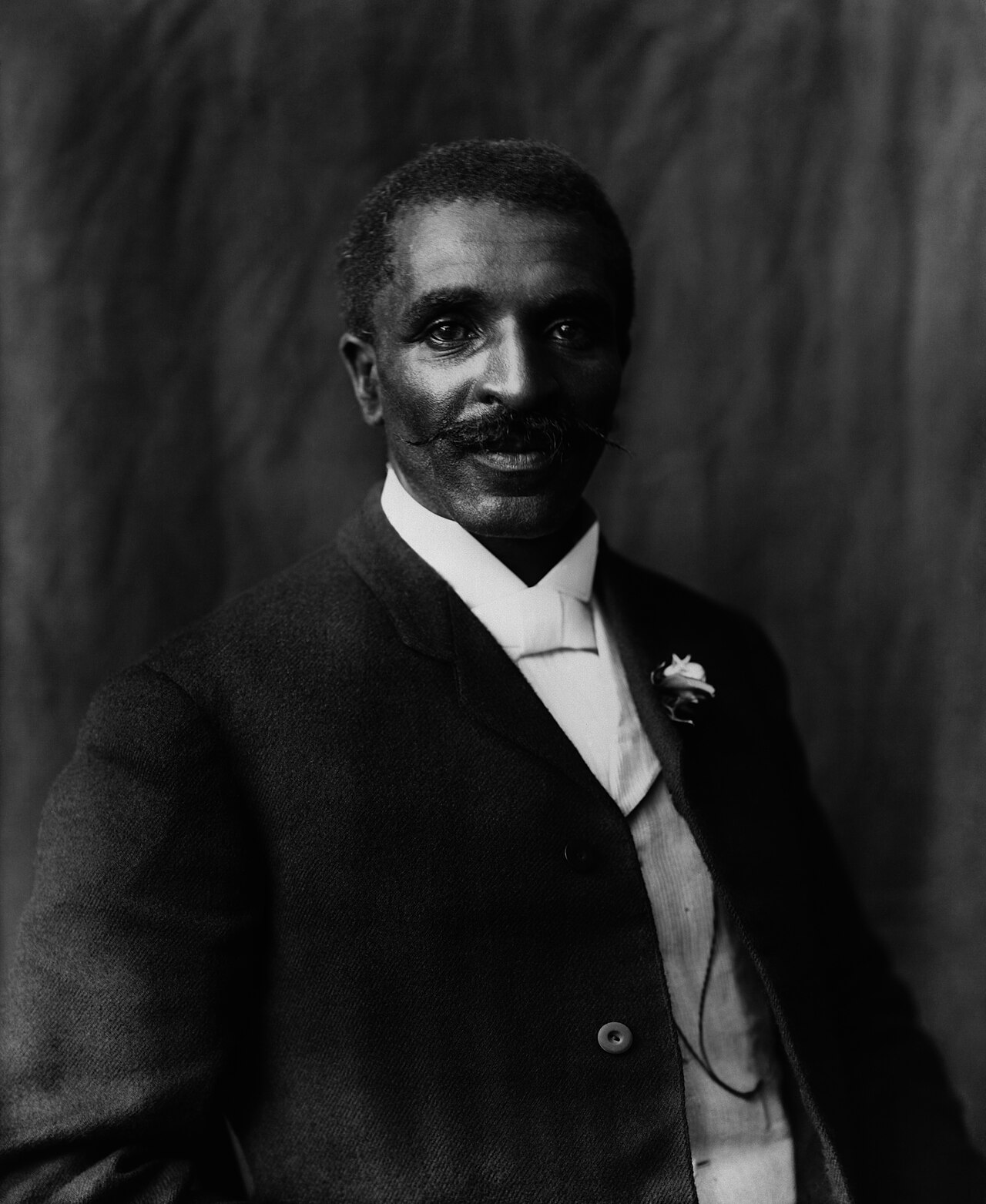
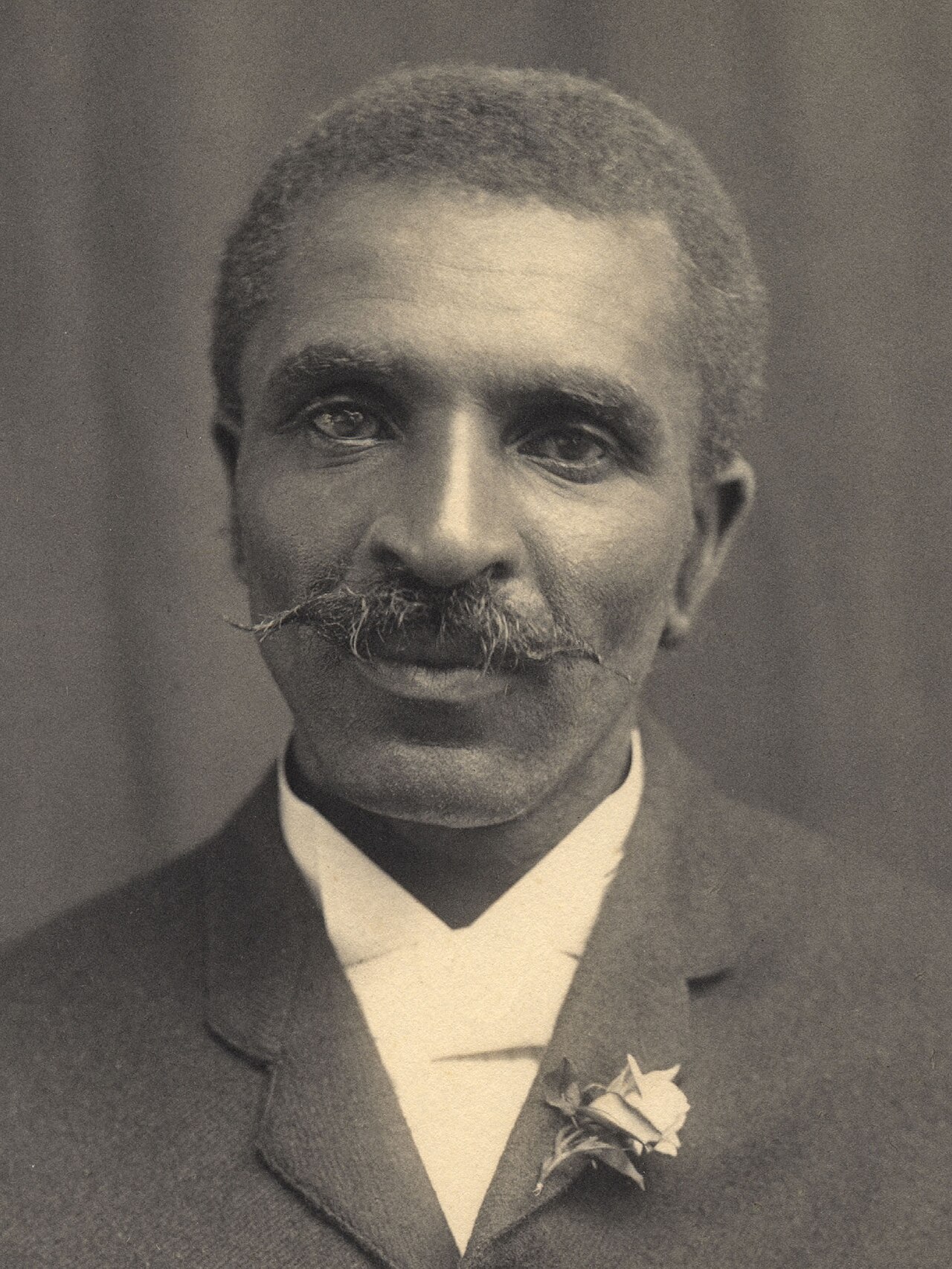
Black-and-white studio portrait of a man with short hair and a thin waxed mustache, wearing a dark suit jacket, white collar and tie, and a flower boutonniere, against a dark draped backdrop.Photograph

Primary source

George Washington Carver by Frances Benjamin Johnston

Frances Benjamin Johnston · 1906

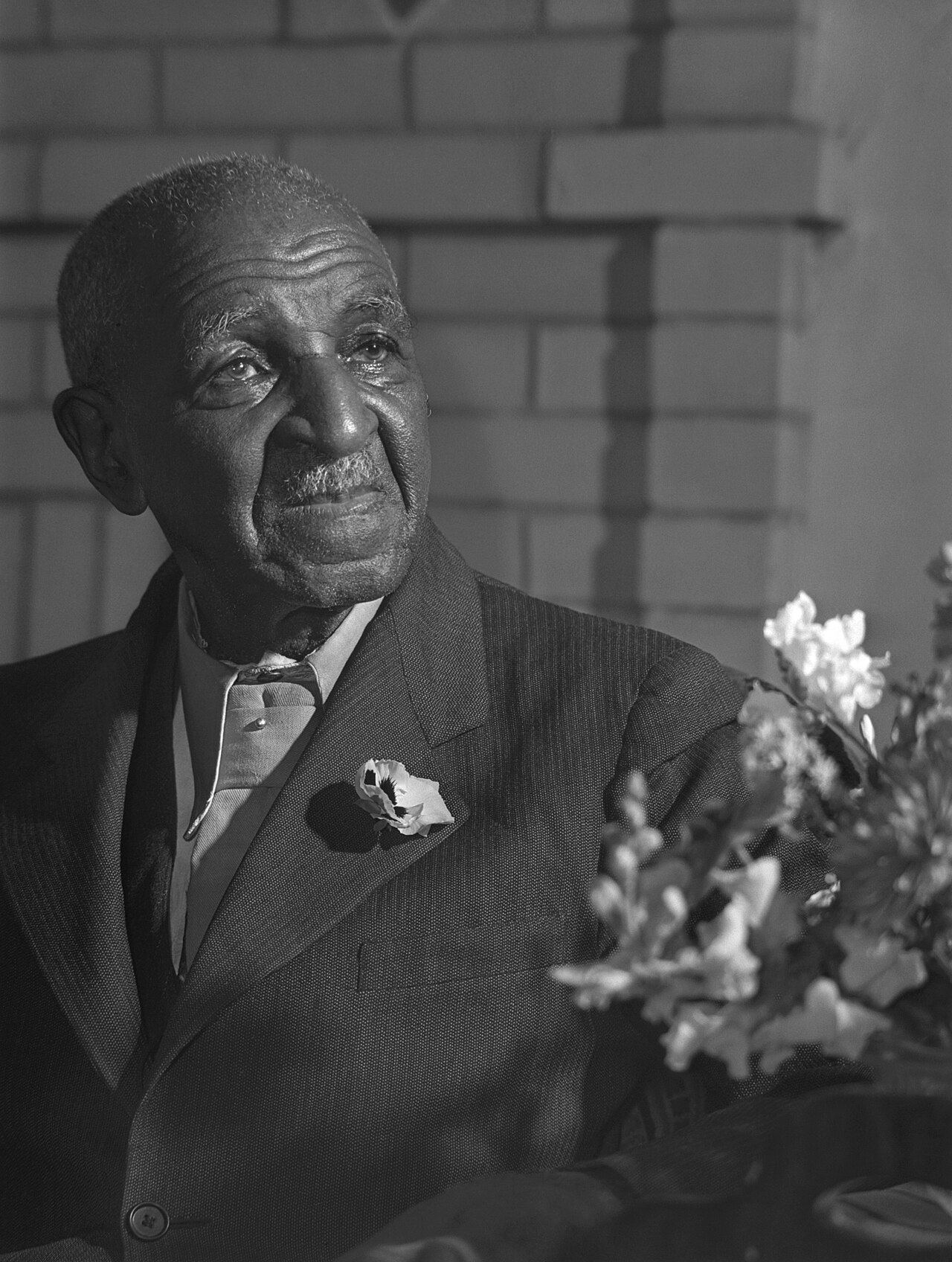
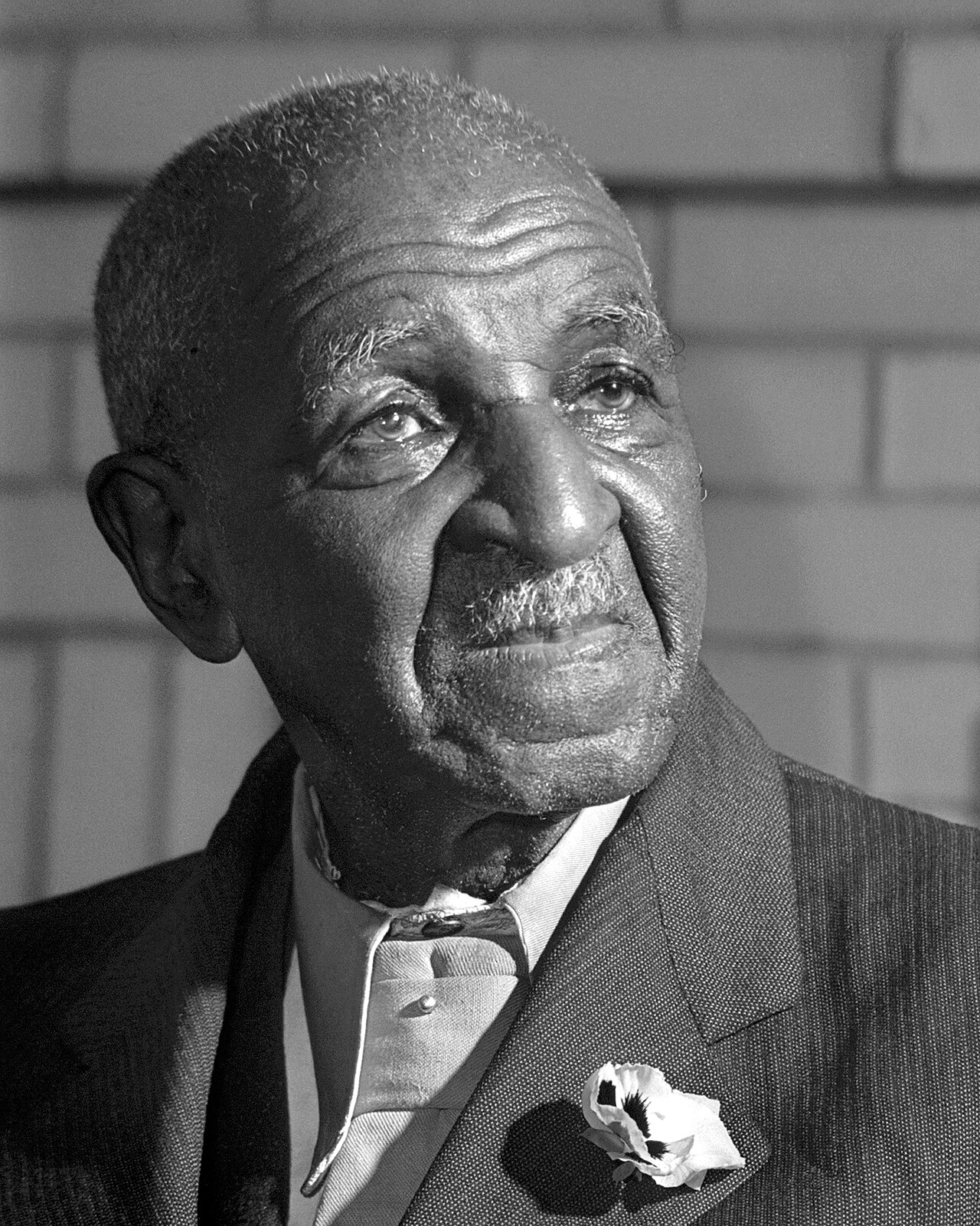
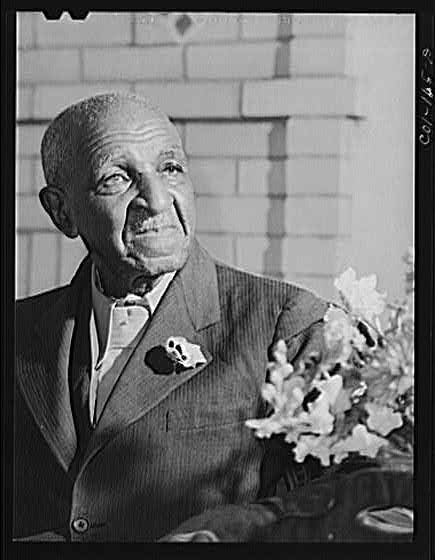
Black-and-white photograph of an elderly man with short gray hair and a gray mustache, wearing a dark suit, light shirt, and tie with a flower boutonniere. He gazes off to the left in front of a brick wall, with a bouquet of flowers in the right foreground.Photograph

Primary source

George Washington Carver Portrait by Arthur Rothstein

Arthur Rothstein · 1942

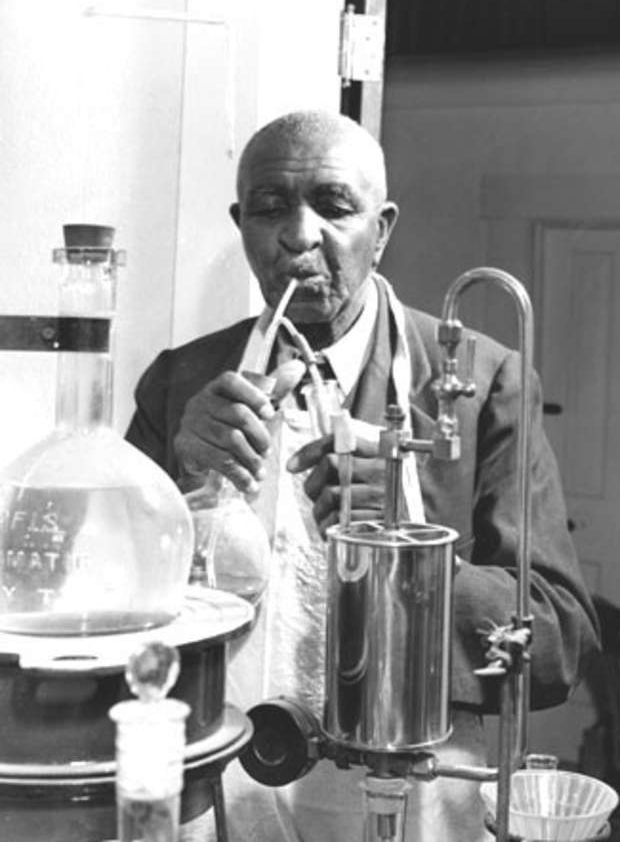
Black-and-white photograph of an older man with a shaved head, wearing a suit and white apron, sipping through a glass tube from a laboratory apparatus. Beside him are a large round glass flask, a metal cylinder with tubing, a glass stopper bottle, and a funnel.Photograph

Primary source

George Washington Carver at Work in His Laboratory

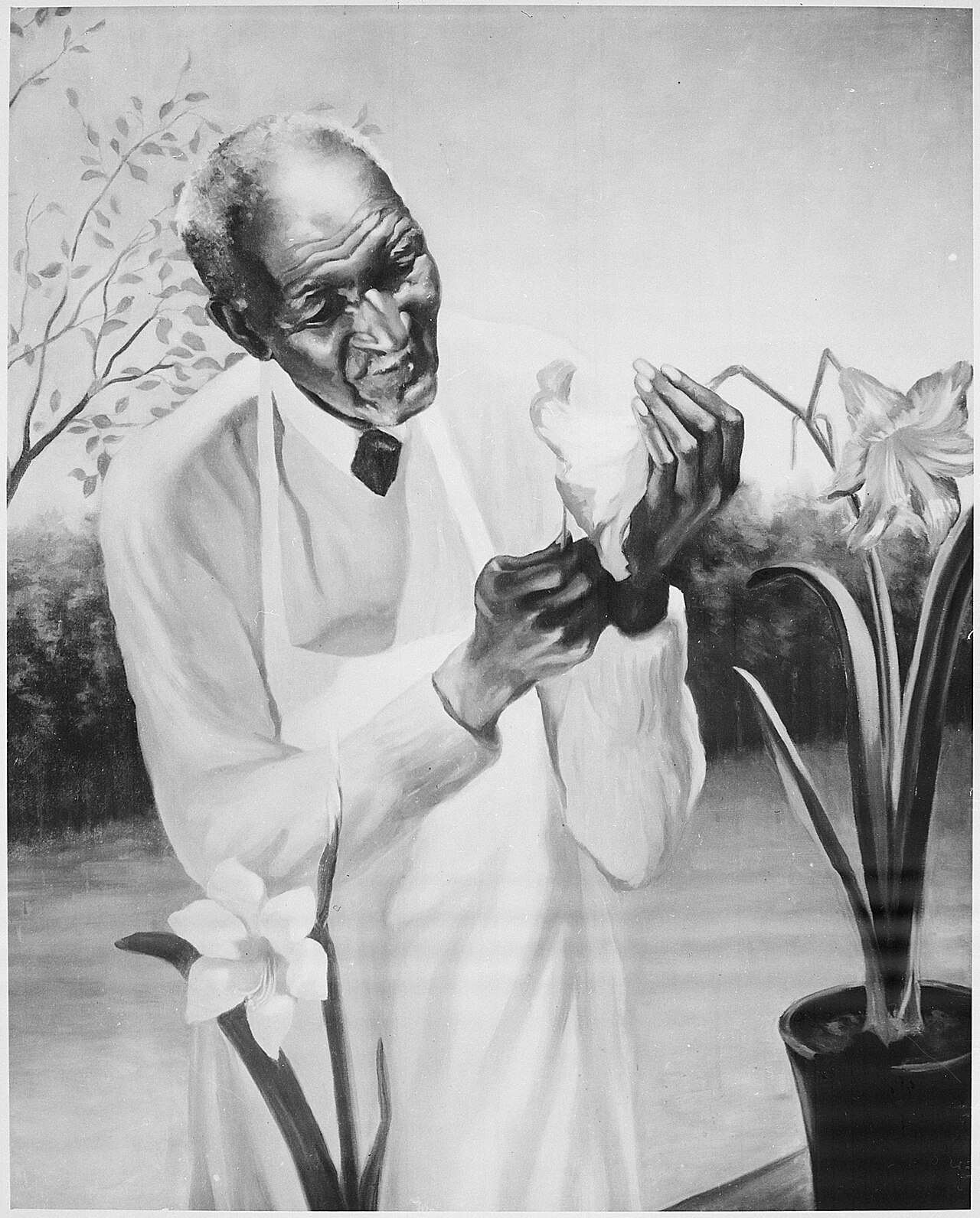
Black-and-white photograph of a painting showing an elderly Black man with white hair, wearing a white smock and dark neckerchief, examining a white flower held in his hands. A potted amaryllis plant stands at right, with a tree and dark foliage behind him.Painting

Primary source

Portrait of George Washington Carver by Betsy Graves Reyneau

Betsy Graves Reyneau · 1942

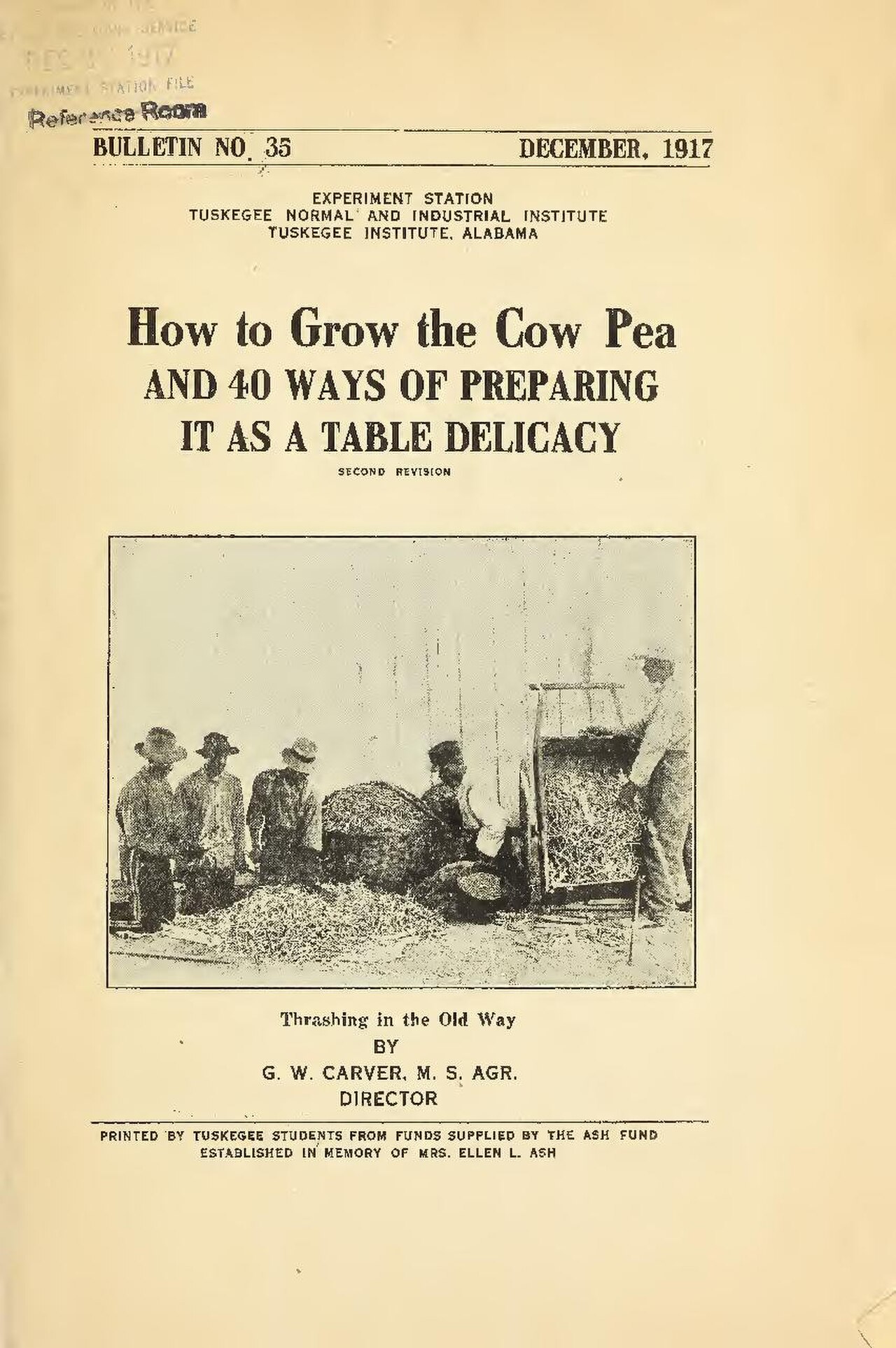
Front cover of Tuskegee Experiment Station Bulletin No. 35, December 1917, titled How to Grow the Cow Pea and 40 Ways of Preparing It as a Table Delicacy. Below the title is a photo of men threshing cowpeas by hand in the old way, with a pile of vines and a threshing frame. Credited to G. W. Carver, Director.Document

Primary source

How to Grow the Cow Pea and Forty Ways of Preparing It as a Table Delicacy

George Washington Carver · 1917

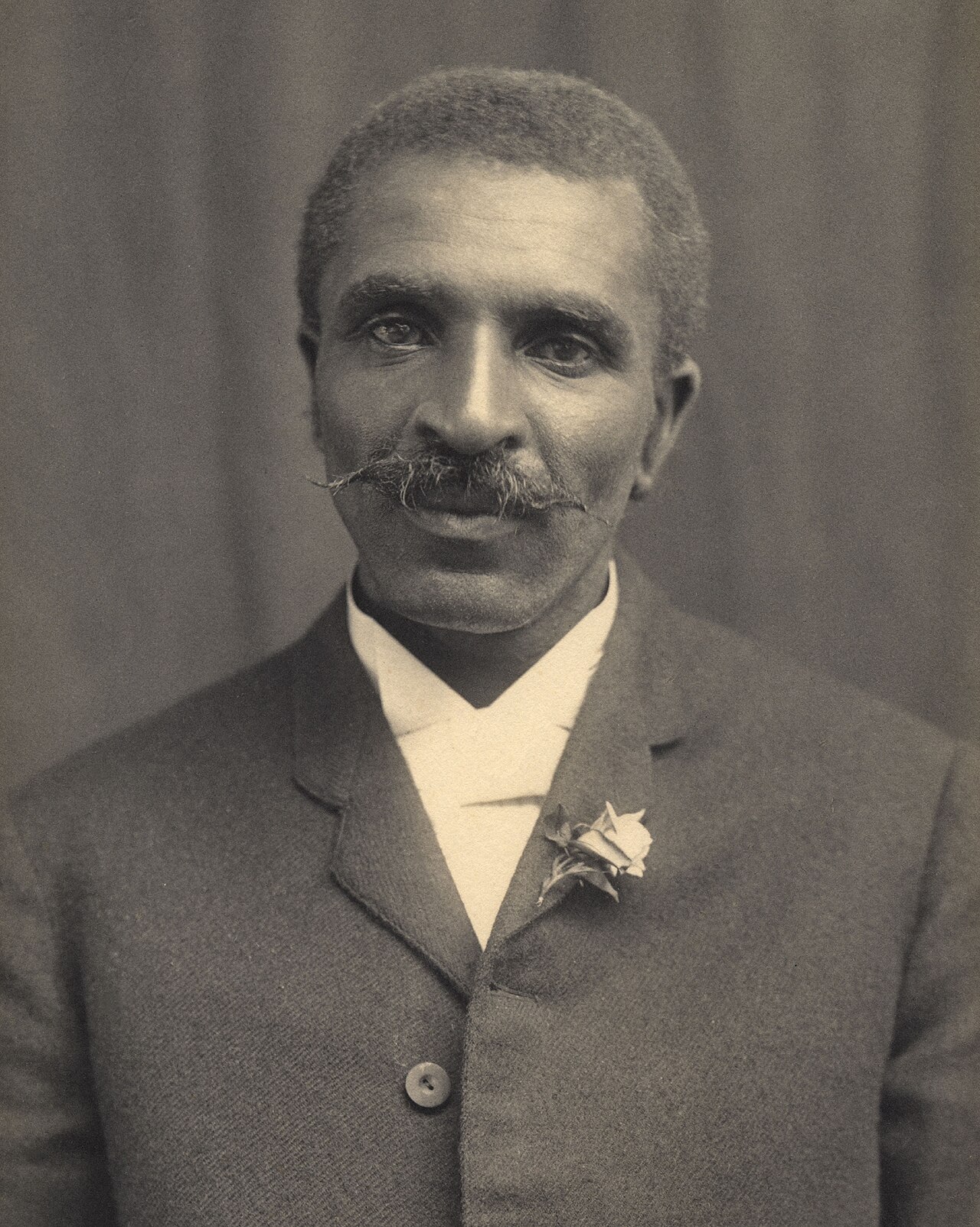
Sepia-toned studio portrait of a middle-aged man with short hair and a thick mustache, wearing a dark suit, white collar, and a small flower boutonniere, against a draped backdrop.Photograph

Primary source

Portrait of George Washington Carver

c. 1910

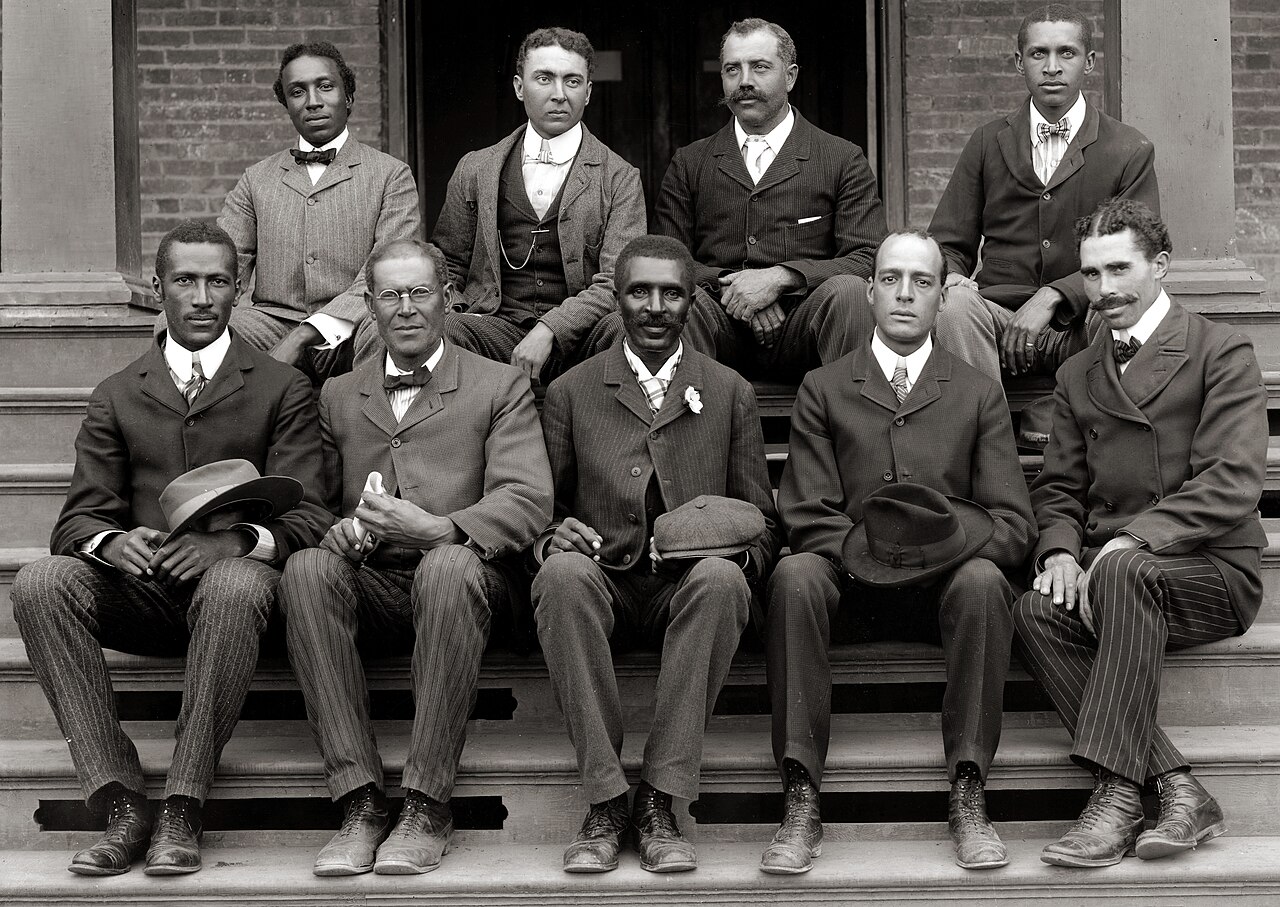
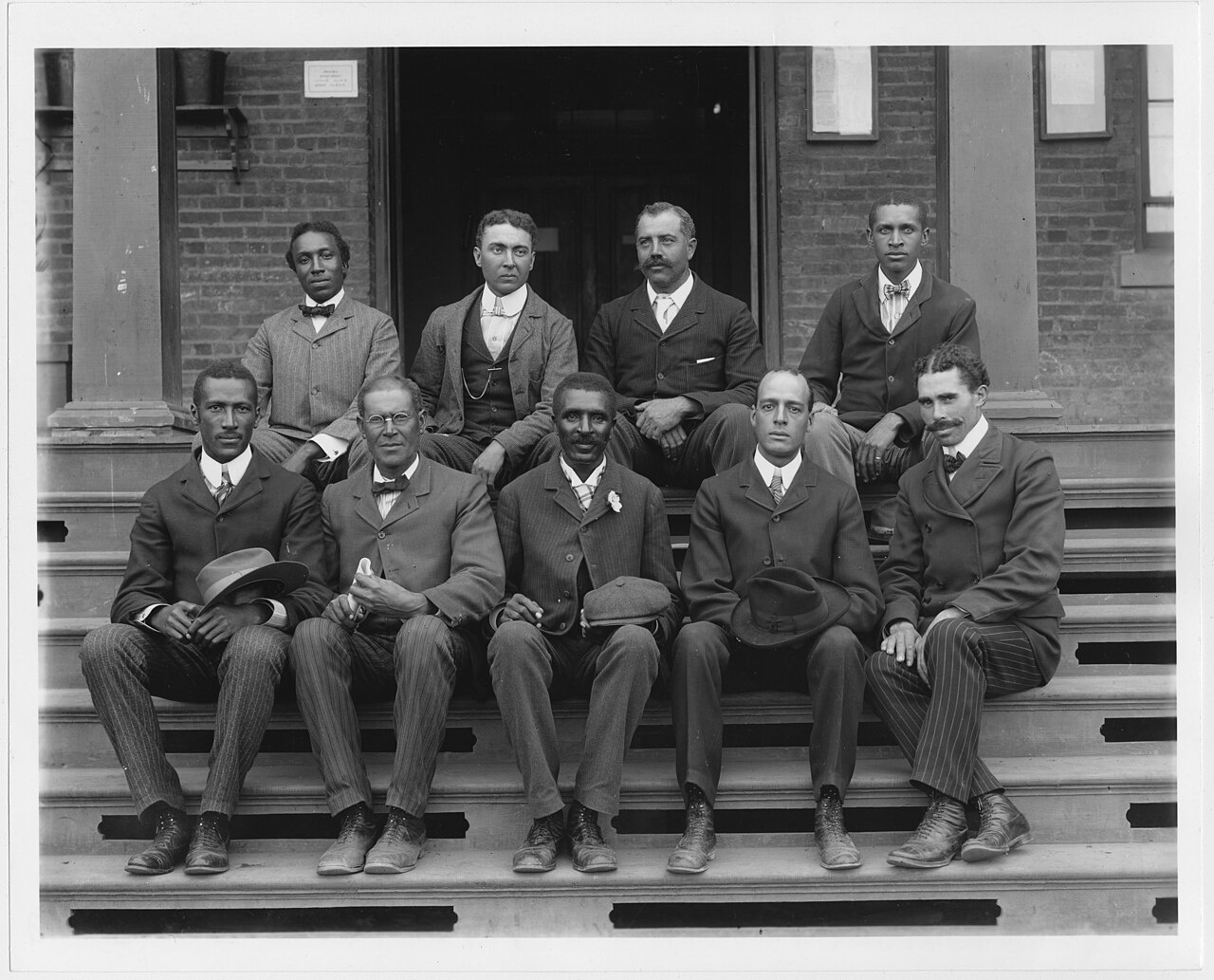
Black-and-white group photograph of nine men in suits and ties posed on stone steps before a brick building. Four stand or sit in the back row and five sit in front. The man at front center wears a flower boutonniere and holds a cap.Photograph

Primary source

George Washington Carver with Tuskegee Staff, ca. 1902

Frances Benjamin Johnston · ca. 1902

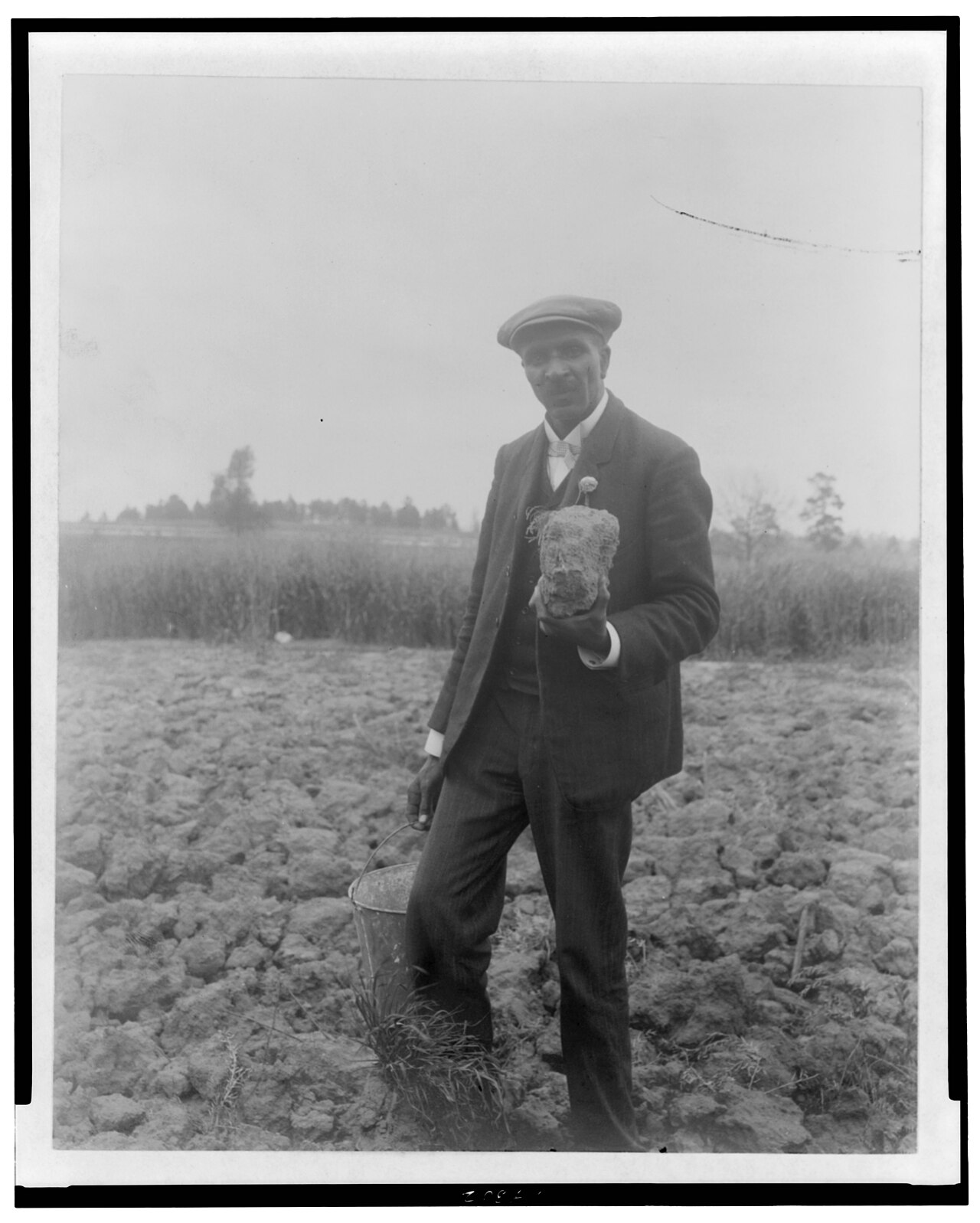
Black and white photograph of a man in a cap, jacket, vest, and bow tie standing in a plowed field, holding a clump of soil in one hand and a metal pail in the other. Tall grass and trees lie in the background.Photograph

Primary source

George Washington Carver Standing in a Field Holding Soil

Frances Benjamin Johnston

Plain red cloth book cover with a dark spine edge on the left side, showing fabric texture and no visible title or lettering.Book

Primary source

My Larger Education

Booker T. Washington · 1911

Document

Primary source

Study of the Soils of Macon County, Alabama, and Their Adaptability to Certain Crops

George Washington Carver

Scanned blank tan cover or endpaper of a book with handwritten call number 'TX 603 C34' in the upper left corner and handwritten '259' in the lower right corner. No title or text is visible.Book

Primary source

The Canning and Preserving of Fruits and Vegetables in the Home

George Washington Carver

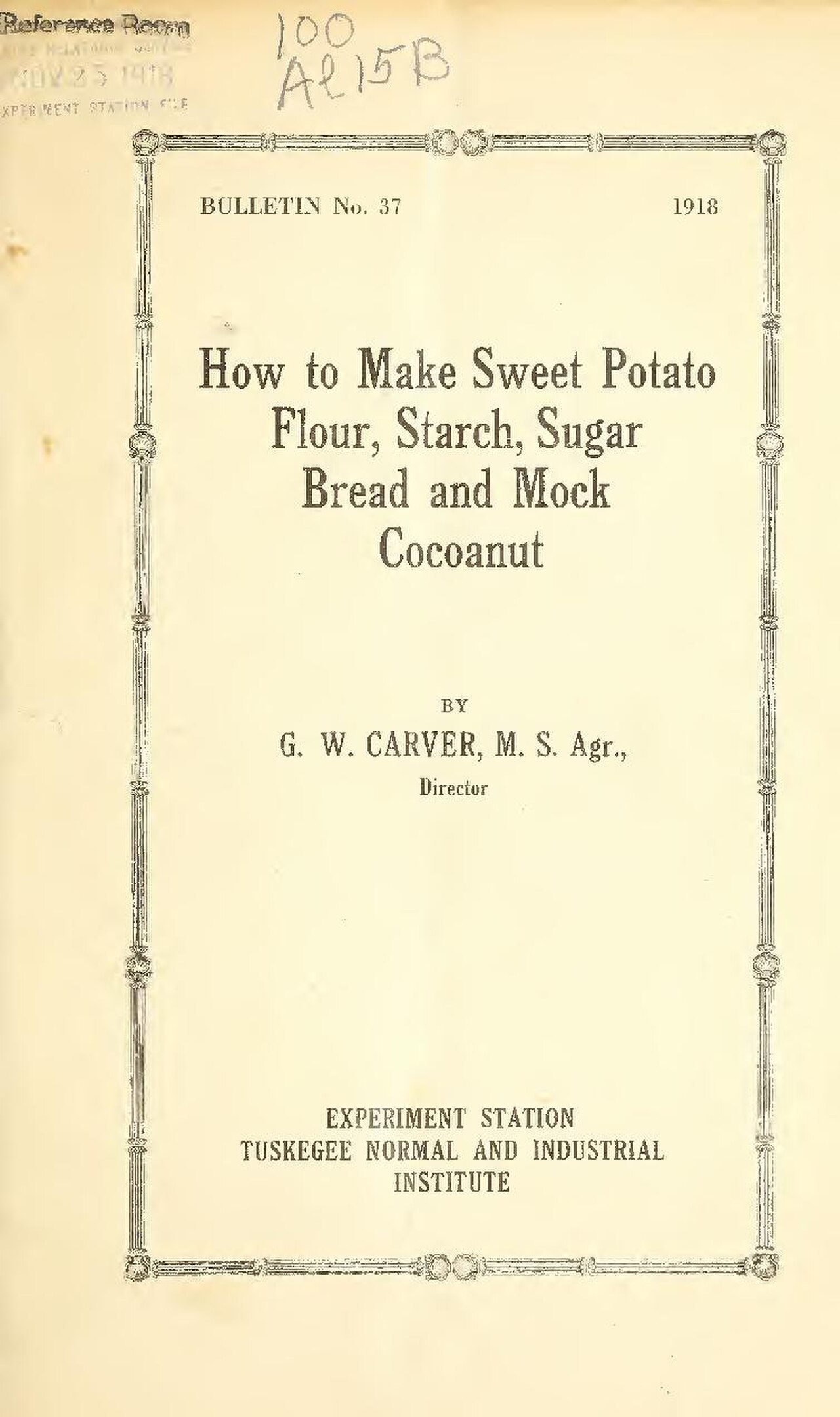
Title page of Bulletin No. 37, 1918, by G. W. Carver, Director, Experiment Station, Tuskegee Normal and Industrial Institute. Title reads: How to Make Sweet Potato Flour, Starch, Sugar, Bread and Mock Cocoanut. Ornate border frame; library stamp 'Reference Room' and handwritten call number 'Al5B' at top.Book

Primary source

How to Make Sweet Potato Flour, Starch, Sugar, Bread and Mock Cocoanut

George Washington Carver · 1918

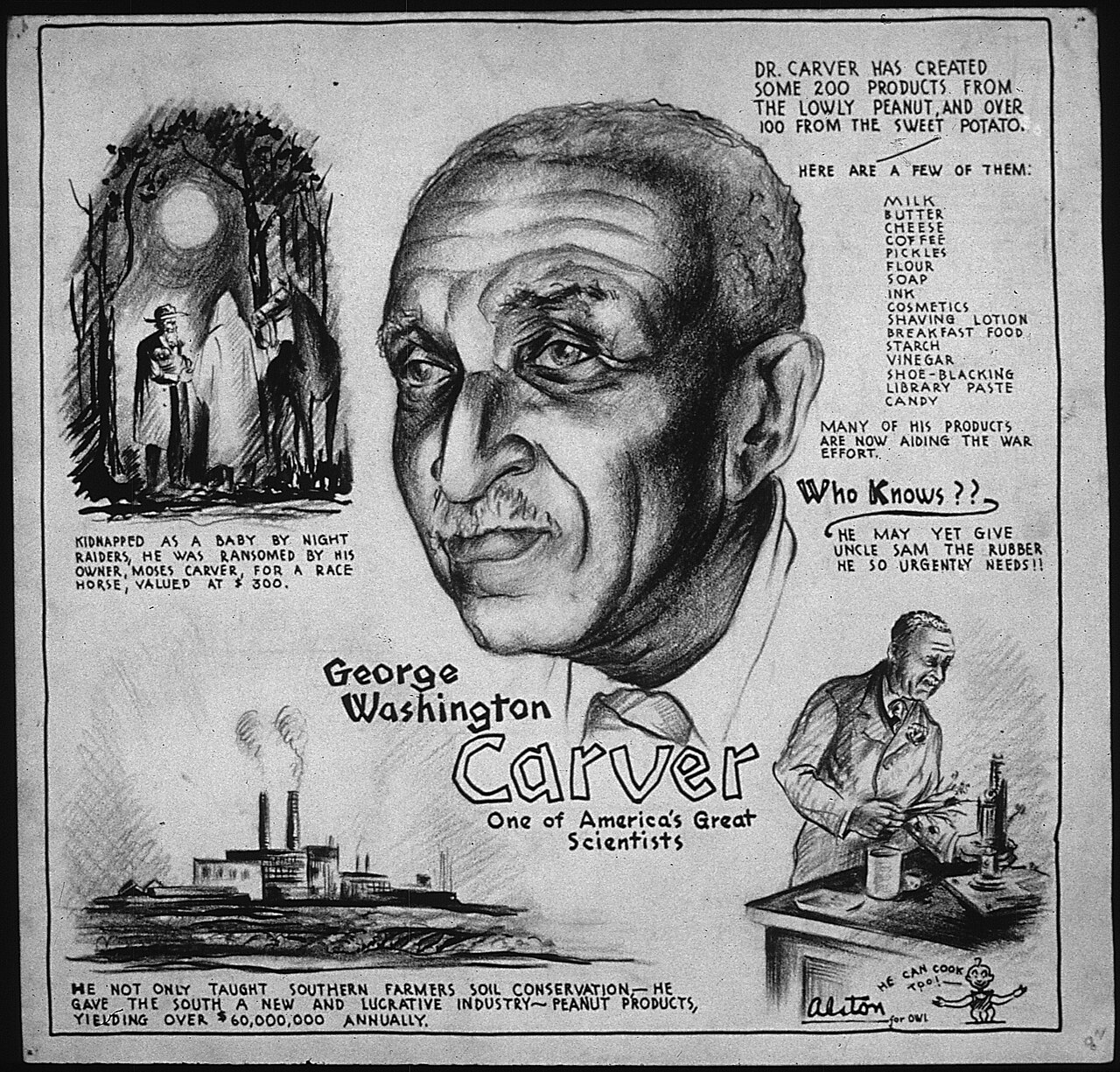
Charcoal-style poster drawing titled 'George Washington Carver, One of America's Great Scientists.' Large central portrait of an older bald man with a mustache. Side vignettes show a night-time kidnapping scene, a factory with smokestacks, and a scientist at a lab bench. Text lists products made from peanuts and sweet potatoes.Painting

Secondary source

George Washington Carver - One of America's Great Scientists

Charles Alston

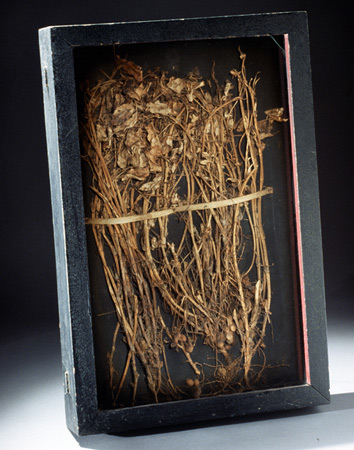
A dried peanut plant with roots and withered leaves, bound with a rubber band, mounted inside a black-framed glass display case against a dark background.Artifact

Primary source

George Washington Carver Peanut Specimen

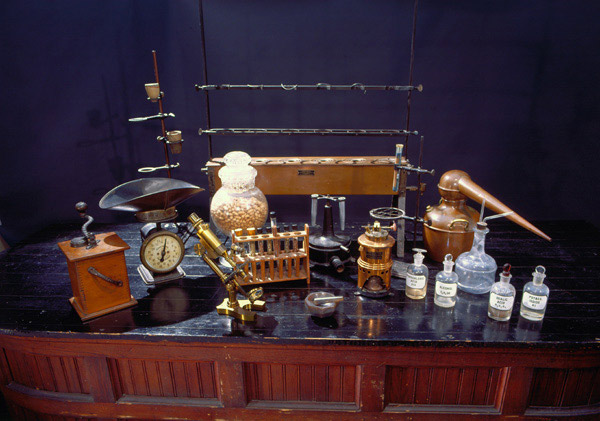
A display of laboratory equipment on a dark wooden counter against a blue backdrop, including a brass microscope, a copper still with a long swan-neck spout, glass reagent bottles, a wooden coffee-style grinder, a balance scale, a test tube rack, a glass jar of beans, and a brass lamp.Artifact

Primary source

George Washington Carver Laboratory Equipment

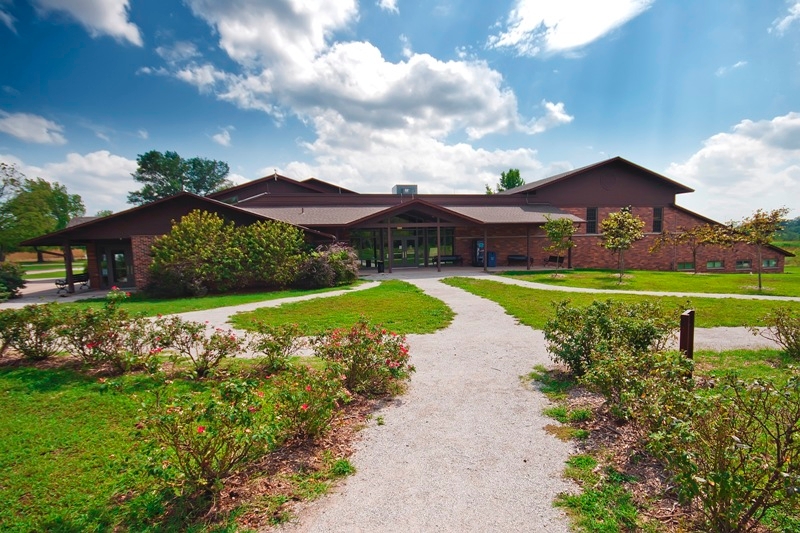
A low, one-story brick visitor center with dark brown sloped roofs, glass entrance doors, landscaped rose bushes, and a gravel path leading to it under a blue sky with clouds.Artifact

Secondary source

George Washington Carver National Monument

1943

Book

Primary source

Nature Study and Gardening for Rural Schools

George Washington Carver · 1910

Black-and-white close-up photograph of an elderly man with short gray hair, wrinkled forehead, and a gray mustache, looking off to the upper left. He wears a suit jacket, white shirt, and tie, with a white flower boutonniere on his lapel. Brick wall behind him.Photograph

Primary source

George Washington Carver, cropped portrait

Arthur Rothstein · 1942

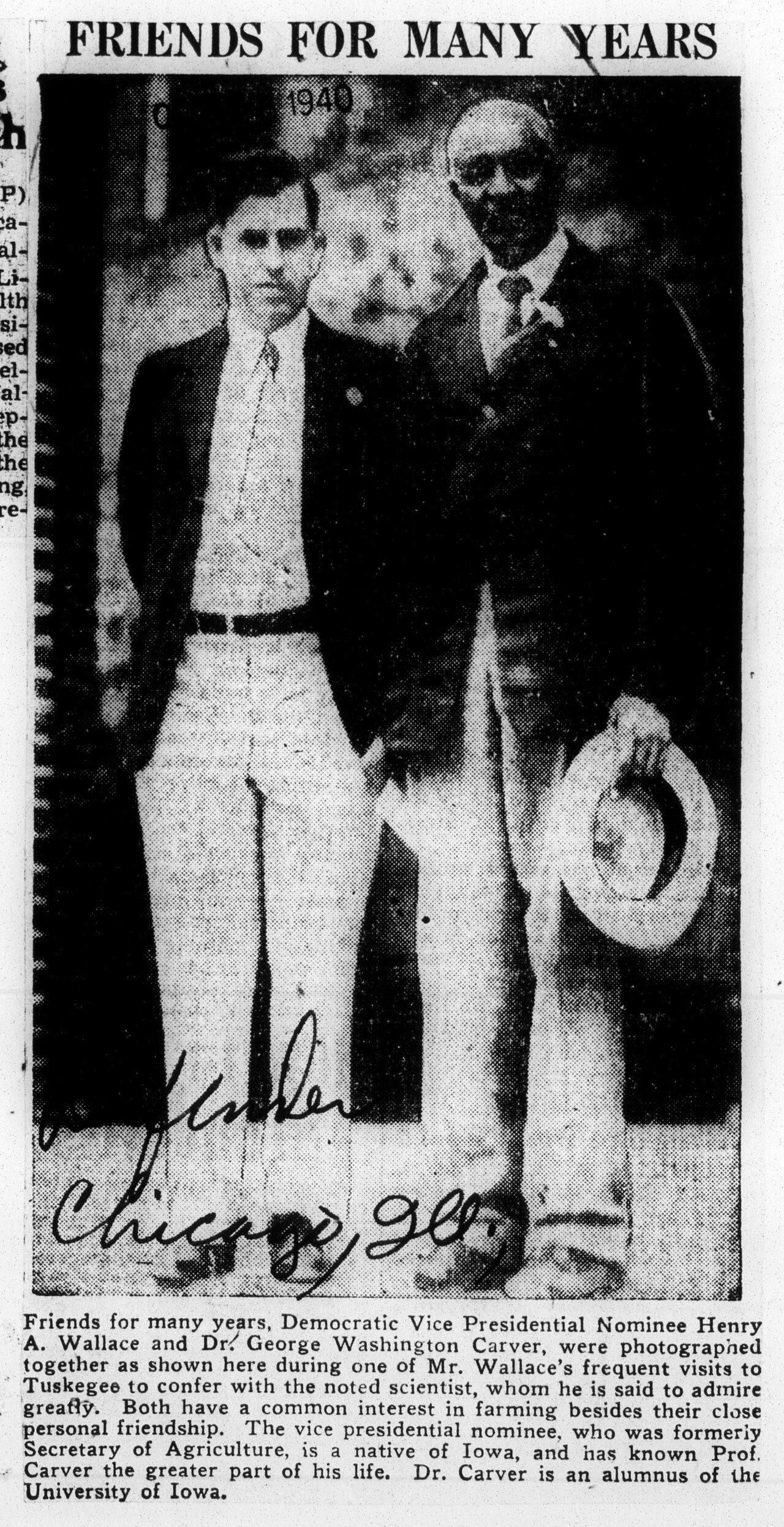
Newspaper clipping titled 'Friends for Many Years' showing a black-and-white photo of two men standing side by side. A younger man in a light shirt, tie, and dark jacket stands on the left, and an older man with glasses and a mustache holds a straw hat on the right. A handwritten signature and 'Chicago 1940' appear at the bottom, with a caption below.Newspaper article

Primary source

Friends for Many Years

1940

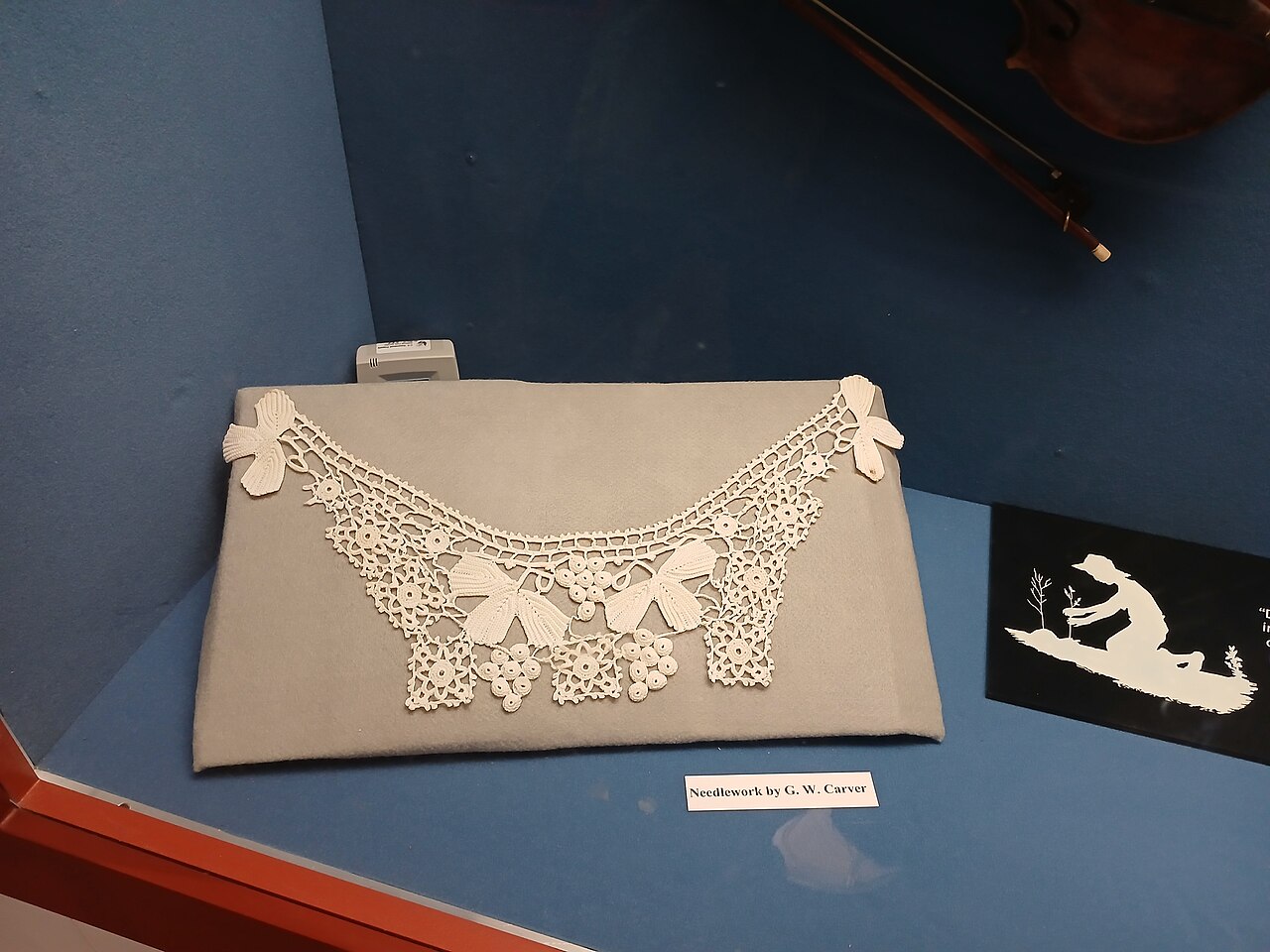
A gray fabric panel displayed in a museum case, decorated with white crocheted lace featuring a scalloped collar, bow motifs and floral medallions. A label below reads 'Needlework by G. W. Carver'. A silhouette picture and a violin are visible nearby.Artifact

Primary source

Lace Made by George Washington Carver

George Washington Carver

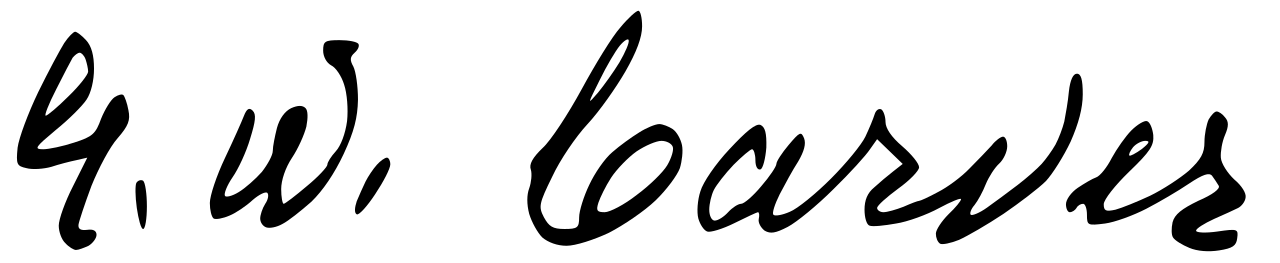
Black handwritten signature on a white background reading 'G. W. Carver' in cursive script, with the letters flowing from left to right.Document

Primary source

Signature of George Washington Carver

George Washington Carver

Plain dark red cloth book cover with a slightly darker spine strip along the left edge. No title or text is visible on the cover in this image.Book

Primary source

The Farmers' Manual and Complete Cotton Book

J. L. Nichols

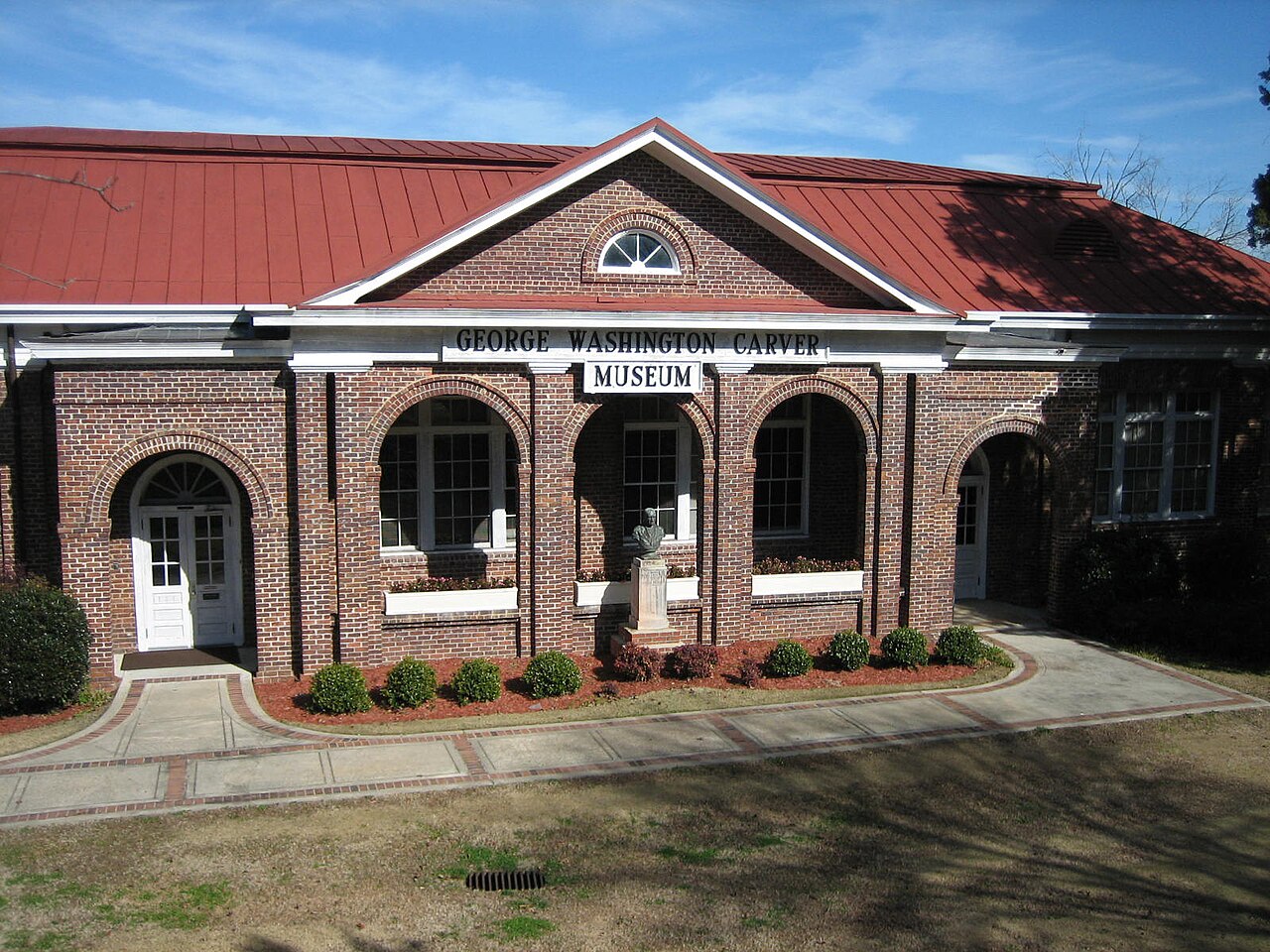
Front facade of a red-brick museum building with a red metal roof, a central gabled entrance with a round window, arched windows, and the sign 'George Washington Carver Museum' above the entrance. Bushes and a paved walkway lead to it.Artifact

Secondary source

George Washington Carver Museum

1941

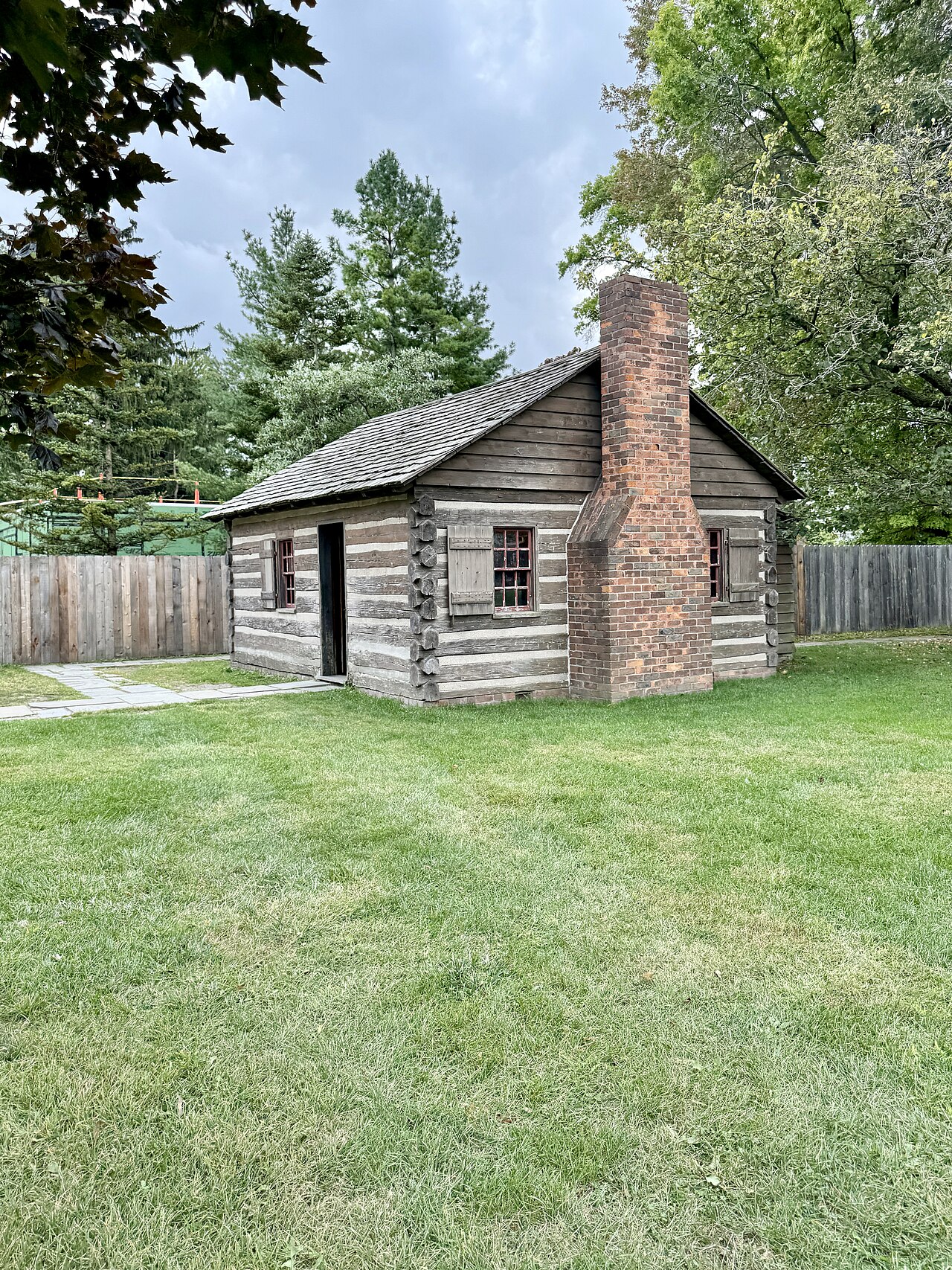
A small log cabin with weathered horizontal logs, a dark shingled side-gable roof, and a tall red brick chimney on the right side. It has a open doorway on the left, small paned windows with wooden shutters, and stands on a lawn with trees and wooden fences behind it.Artifact

Secondary source

George Washington Carver Cabin, Greenfield Village

Henry Ford · 1942

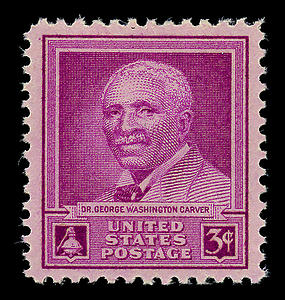
Purple 3-cent United States postage stamp with a portrait of Dr. George Washington Carver, a older man with short hair and a moustache in a suit and tie. Text reads 'UNITED STATES POSTAGE' and 'DR. GEORGE WASHINGTON CARVER'.Artifact

Secondary source

George Washington Carver 3-cent postage stamp

United States Post Office Department · 5 January 1948

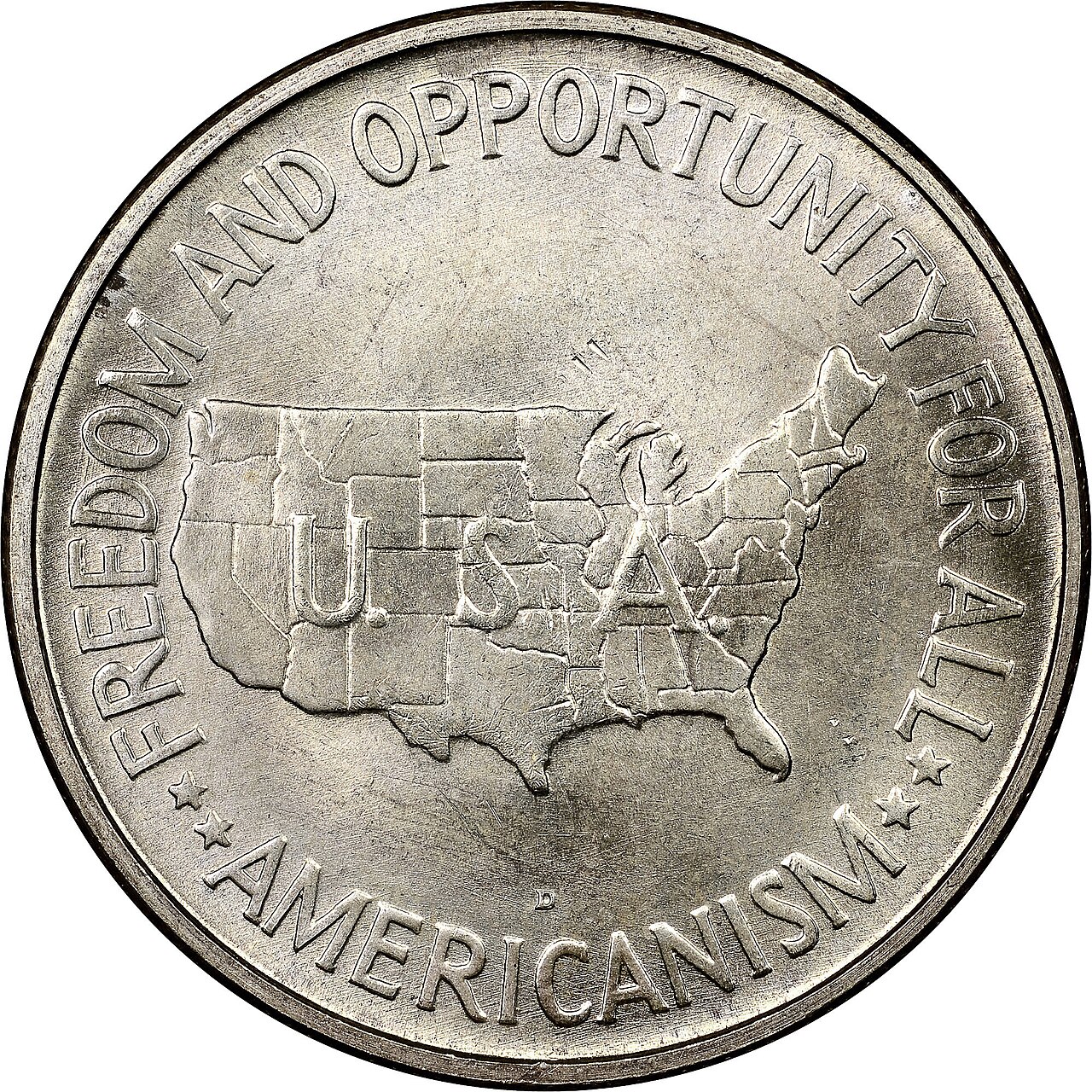
Reverse of a silver-colored commemorative half dollar. Raised text around the rim reads 'FREEDOM AND OPPORTUNITY FOR ALL' and 'AMERICANISM', with stars at the bottom. In the center is a relief map of the United States with the letters 'U.S.A.' on it, and a small 'D' mint mark below.Artifact

Secondary source

Carver-Washington half dollar

Isaac Scott Hathaway · 1951-1954

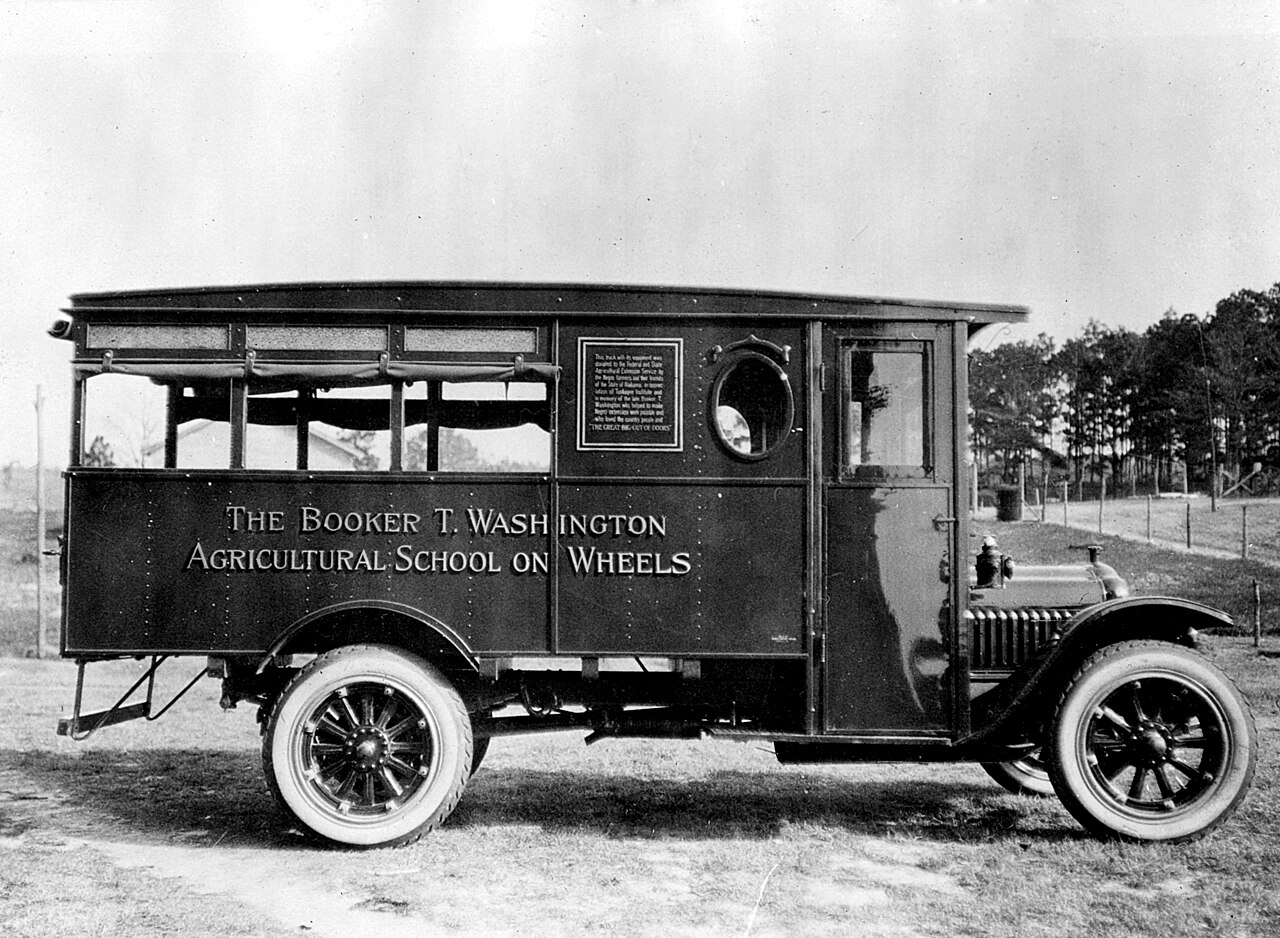
Black-and-white photograph of a boxy early-1900s truck with an enclosed passenger body, labeled 'The Booker T. Washington Agricultural School on Wheels', with a round porthole window, a bench-like side seating area, and a metal plaque on the side panel.Photograph

Primary source

Booker T. Washington Agricultural School on Wheels

U.S. Department of Agriculture · 1917

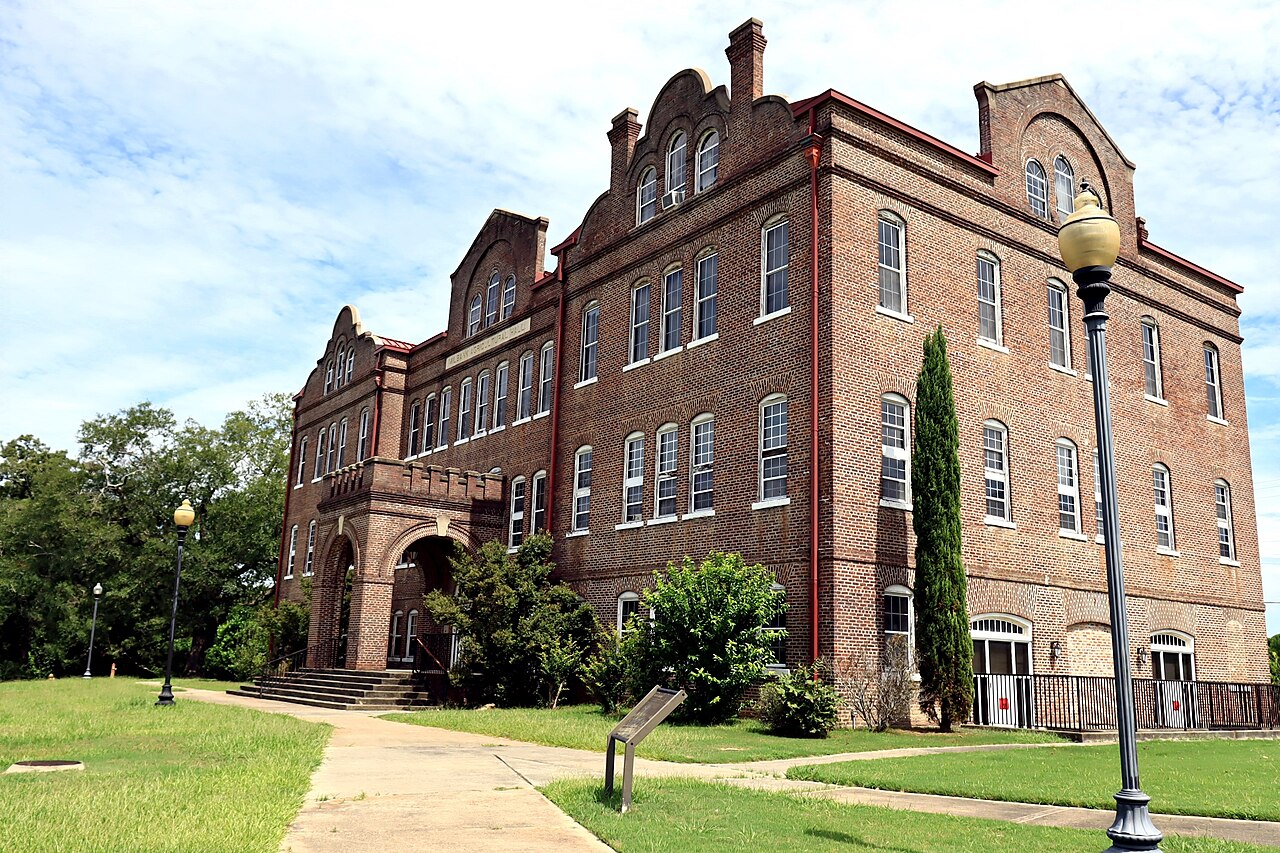
Three-story red brick building with arched windows, gabled dormers, and a central entrance with steps, set on a lawn with a walkway, a street lamp, and trees under a partly cloudy sky.Artifact

Primary source

Milbank Agricultural Hall

2C2K Photography

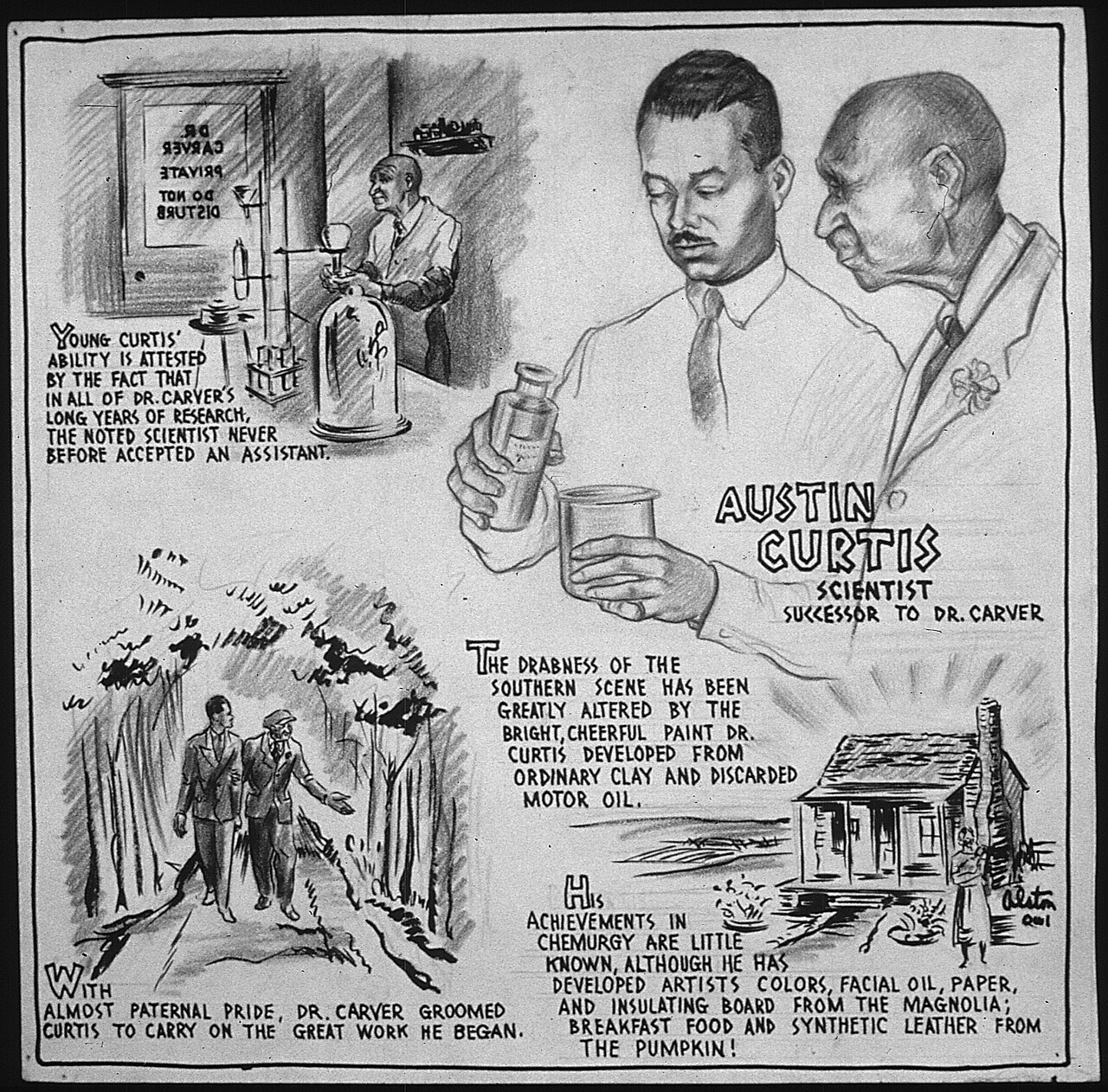
Black and white pencil drawing titled 'Austin Curtis, Scientist, Successor to Dr. Carver'. Panels show a laboratory sign reading 'Dr. Carver Private Do Not Disturb', a young man holding a bottle and beaker beside an older man, two men walking down a wooded path, and a small cabin with a chimney. Text accompanies each panel.Painting

Secondary source

Austin Curtis - Scientist Successor to Dr. Carver

Charles Alston

Experiments with Sweet PotatoesDocument

Primary source

Experiments with Sweet Potatoes

George W. Carver · May 1898

White and Color Washing with Native Clays from Macon County, AlabamaDocument

Primary source

White and Color Washing with Native Clays from Macon County, Alabama

George W. Carver · 1911

Saving the Sweet Potato CropDocument

Primary source

Saving the Sweet Potato Crop

George W. Carver · December 1906

Help for the Hard Times: Important to FarmersDocument

Primary source

Help for the Hard Times: Important to Farmers

George W. Carver · 1910

The Pickling and Curing of Meat in Hot WeatherDocument

Primary source

The Pickling and Curing of Meat in Hot Weather

George W. Carver · 1912

How to Grow the Tomato and 115 Ways to Prepare ItBook

Primary source

How to Grow the Tomato and 115 Ways to Prepare It

George Washington Carver · April 1918

43 Ways to Save the Wild Plum CropBook

Primary source

43 Ways to Save the Wild Plum Crop

George Washington Carver · April 1917

Feeding AcornsBook

Primary source

Feeding Acorns

George Washington Carver · 1898

How to Cook Cow PeasBook

Primary source

How to Cook Cow Peas

George Washington Carver · 1908

Some Possibilities of the Cow Pea in Macon County, AlabamaBook

Primary source

Some Possibilities of the Cow Pea in Macon County, Alabama

George Washington Carver · 1910

Three Delicious Meals Every Day for the FarmerBook

Primary source

Three Delicious Meals Every Day for the Farmer

George Washington Carver · 1916

How to Make and Save Money on the FarmBook

Primary source

How to Make and Save Money on the Farm

George Washington Carver · 1927

When, What, and How to Can and Preserve Fruits and Vegetables in the HomeBook

Primary source

When, What, and How to Can and Preserve Fruits and Vegetables in the Home

George Washington Carver · 1915

Document

Primary source

Fertilizer Experiments on Cotton

George Washington Carver · 1899

Alfalfa, King of All Fodder PlantsBook

Primary source

Alfalfa, King of All Fodder Plants

George Washington Carver · 1915

Twelve Ways to Meet the New Economic Conditions Here in the SouthBook

Primary source

Twelve Ways to Meet the New Economic Conditions Here in the South

George Washington Carver · 1917

Successful Yields of Small GrainBook

Primary source

Successful Yields of Small Grain

George Washington Carver · January 1906

Increasing the Yield of CornBook

Primary source

Increasing the Yield of Corn

George Washington Carver · 1909

A New and Prolific Variety of CottonBook

Primary source

A New and Prolific Variety of Cotton

George Washington Carver · 1915

Sepia-toned studio portrait of a man with short hair and a thin, curled mustache, wearing a dark suit, white collar and a rose boutonniere on his lapel, against a dark backdrop.Photograph

Primary source

George Washington Carver, c. 1910

circa 1910

Black-and-white photograph of an elderly man in a suit jacket, pinstriped, with a boutonniere on the lapel and a light collar and tie, looking off to the side. Behind him is a brick wall, and light-colored flowers are at the right edge.Photograph

Primary source

George Washington Carver at Tuskegee

Arthur Rothstein · March 1942

Black-and-white group photograph of ten men in suits posed on the front steps of a brick building, with a doorway behind them. Four men stand at the back and six sit on the steps in front, several holding hats.Photograph

Primary source

George Washington Carver Seated on Steps

Frances Benjamin Johnston · 1902

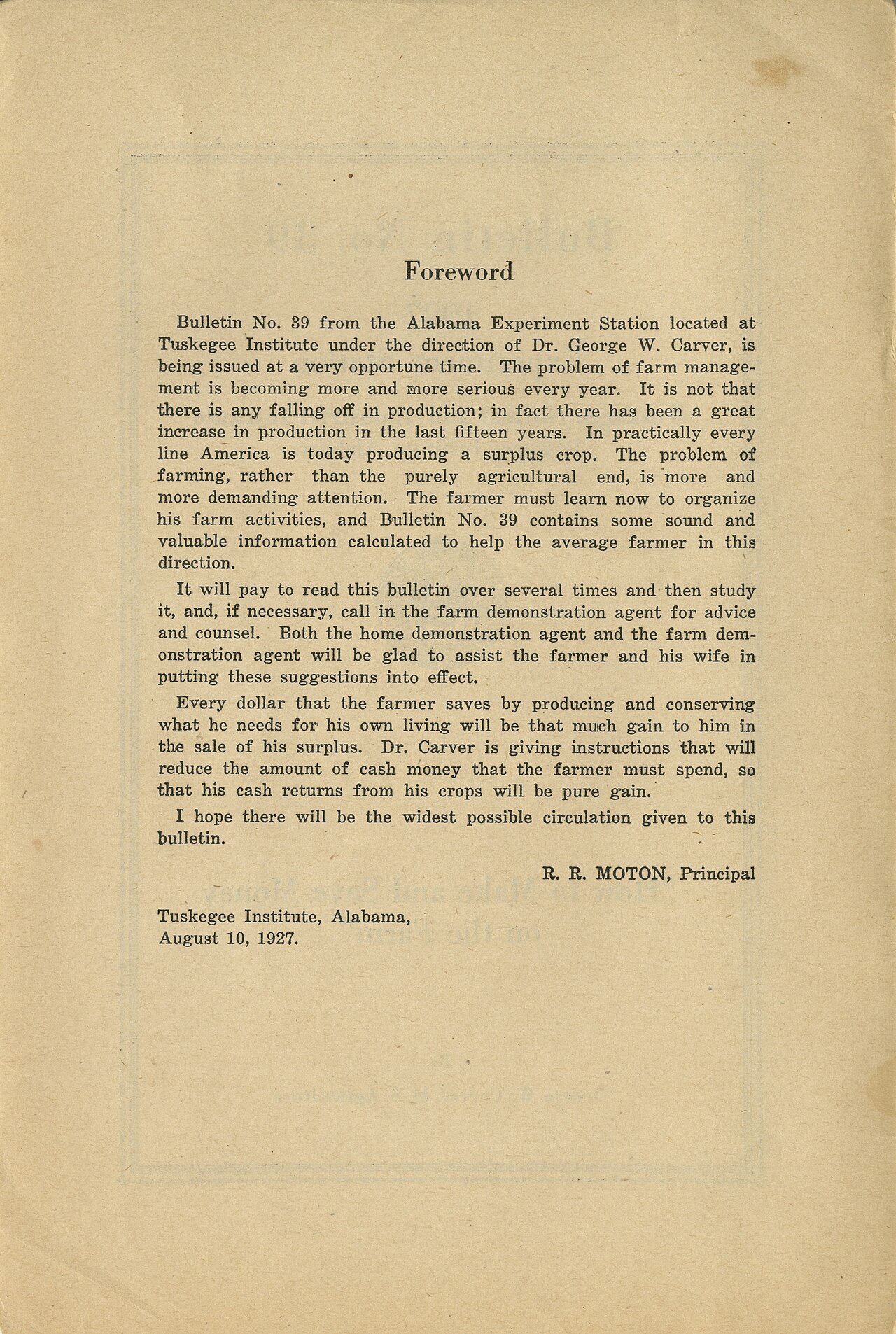
Scanned page of a bulletin titled Foreword, reading Bulletin No. 39 from the Alabama Experiment Station at Tuskegee Institute under Dr. George W. Carver, signed R. R. Moton, Principal, dated August 10, 1927.Document

Primary source

How to Make and Save Money on the Farm

George Washington Carver · 10 August 1927

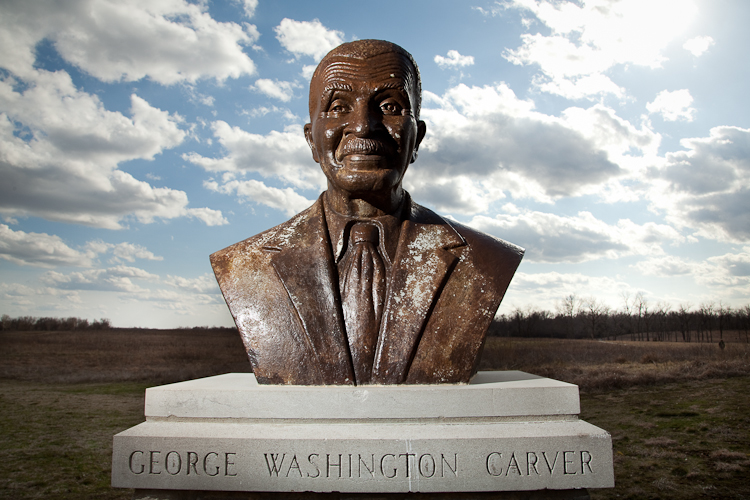
Bronze bust of George Washington Carver with a mustached face, wearing a suit jacket and tie, mounted on a white stone pedestal inscribed with his name. Open grassland and bare trees stand behind it under a cloudy sky.Sculpture

Secondary source

Bust of George Washington Carver

Audrey Corwin · 1952

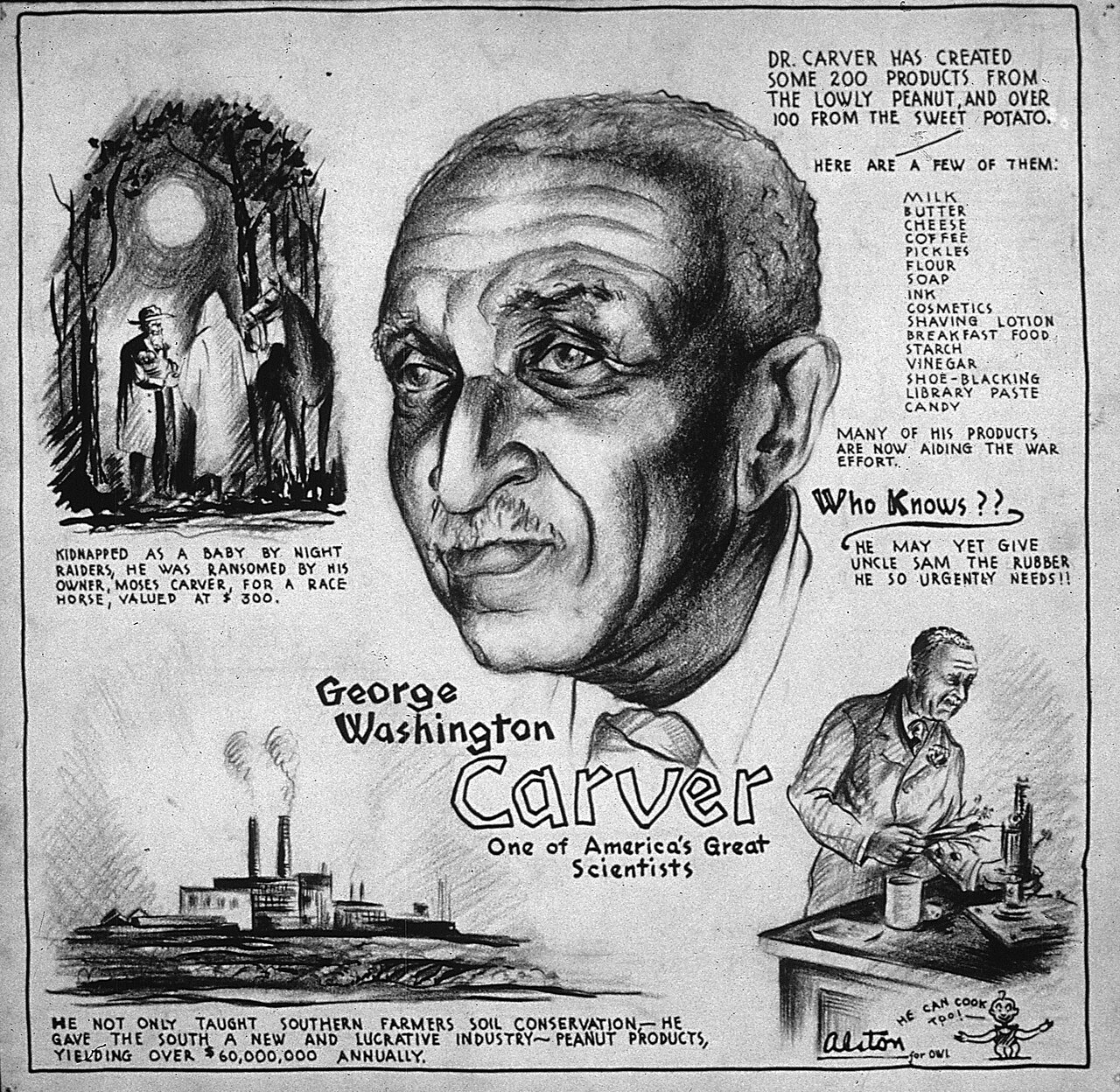
Black-and-white drawing with a large central portrait of an older man with a mustache, titled 'George Washington Carver, One of America's Great Scientists.' Side panels show a forest scene with robed figures, a factory with smokestacks, a man at a lab bench with a microscope, and a list of products made from peanuts and sweet potatoes.Painting

Secondary source

George Washington Carver, One of America's Great Scientists

Charles Alston · 1943

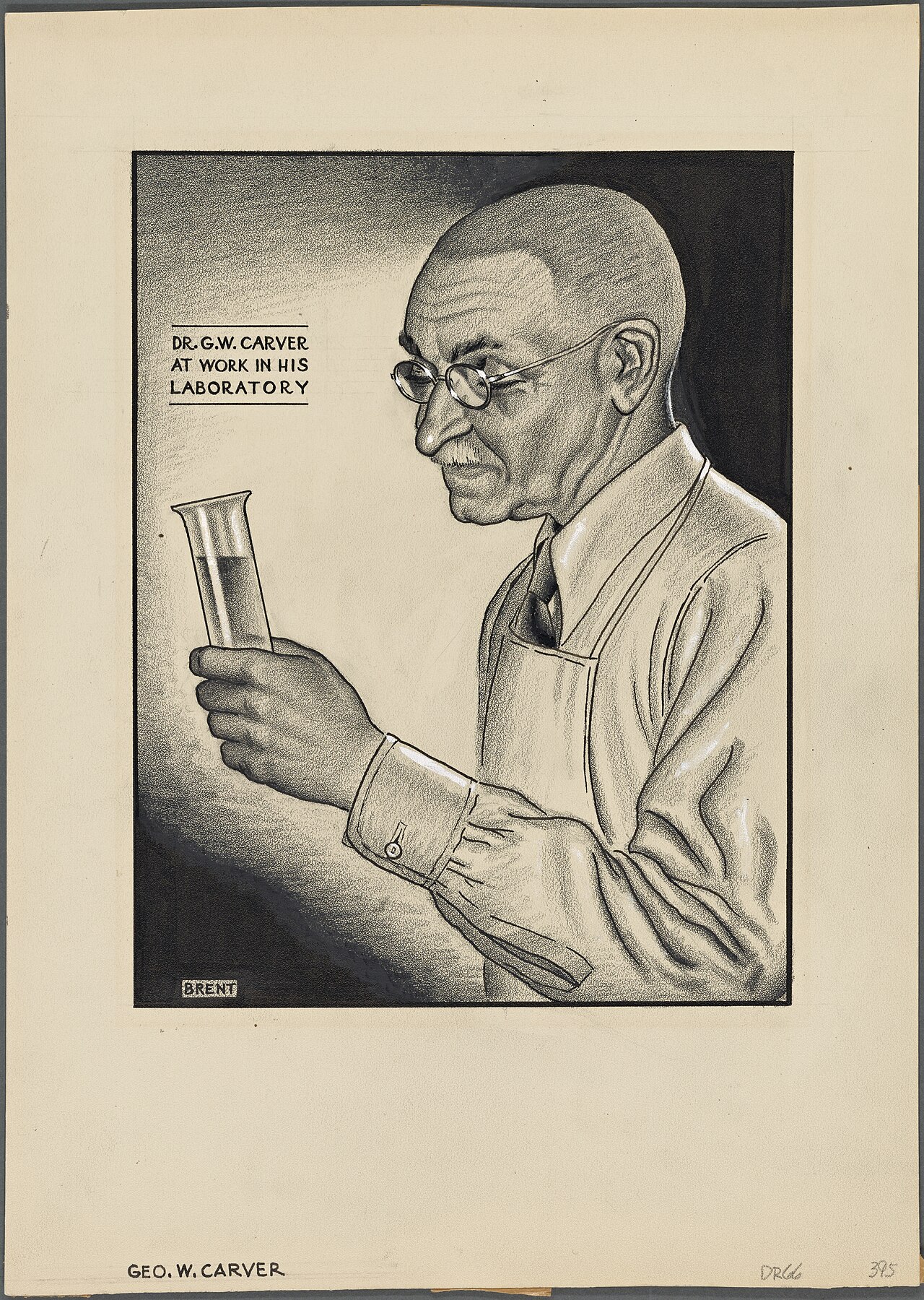
Black and white ink and crayon drawing of an older bald man with round wire-rimmed glasses and a mustache, wearing a work apron and shirt with cuffs, holding a test tube with liquid up to the light. Caption reads Dr. G.W. Carver at work in his laboratory. Signed BRENT at bottom left.Painting

Secondary source

Dr. G. W. Carver at Work in His Laboratory

Richard Brent · between 1935 and 1943 (date uncertain)

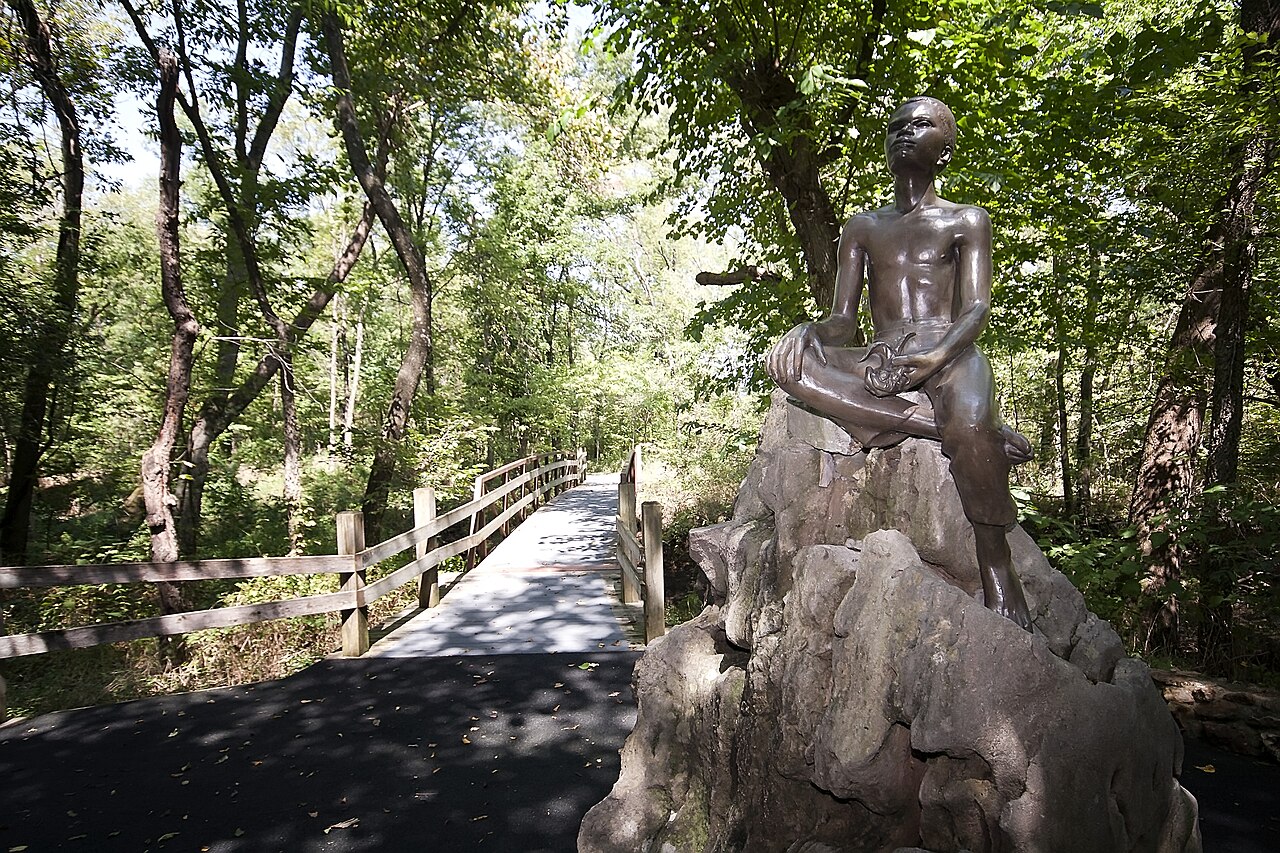
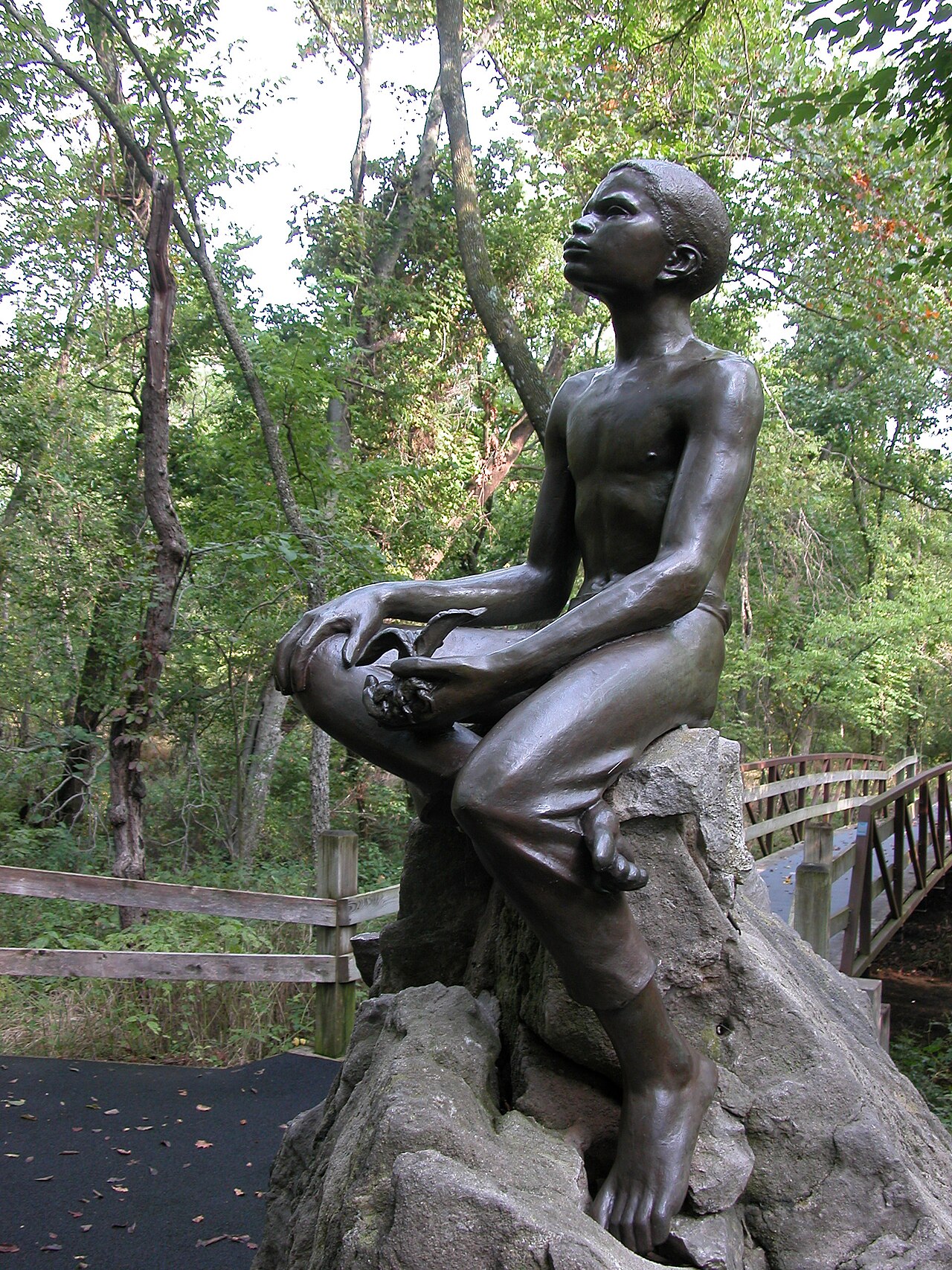
A bronze statue of a young boy seated on a large rough rock, gazing upward with one leg bent, holding a small object. Beside it is a wooden footbridge over a paved trail in a shaded, green wooded area.Photograph

Secondary source

Boy Carver statue on the Carver Trail

Stephen Drew · 10 September 2010

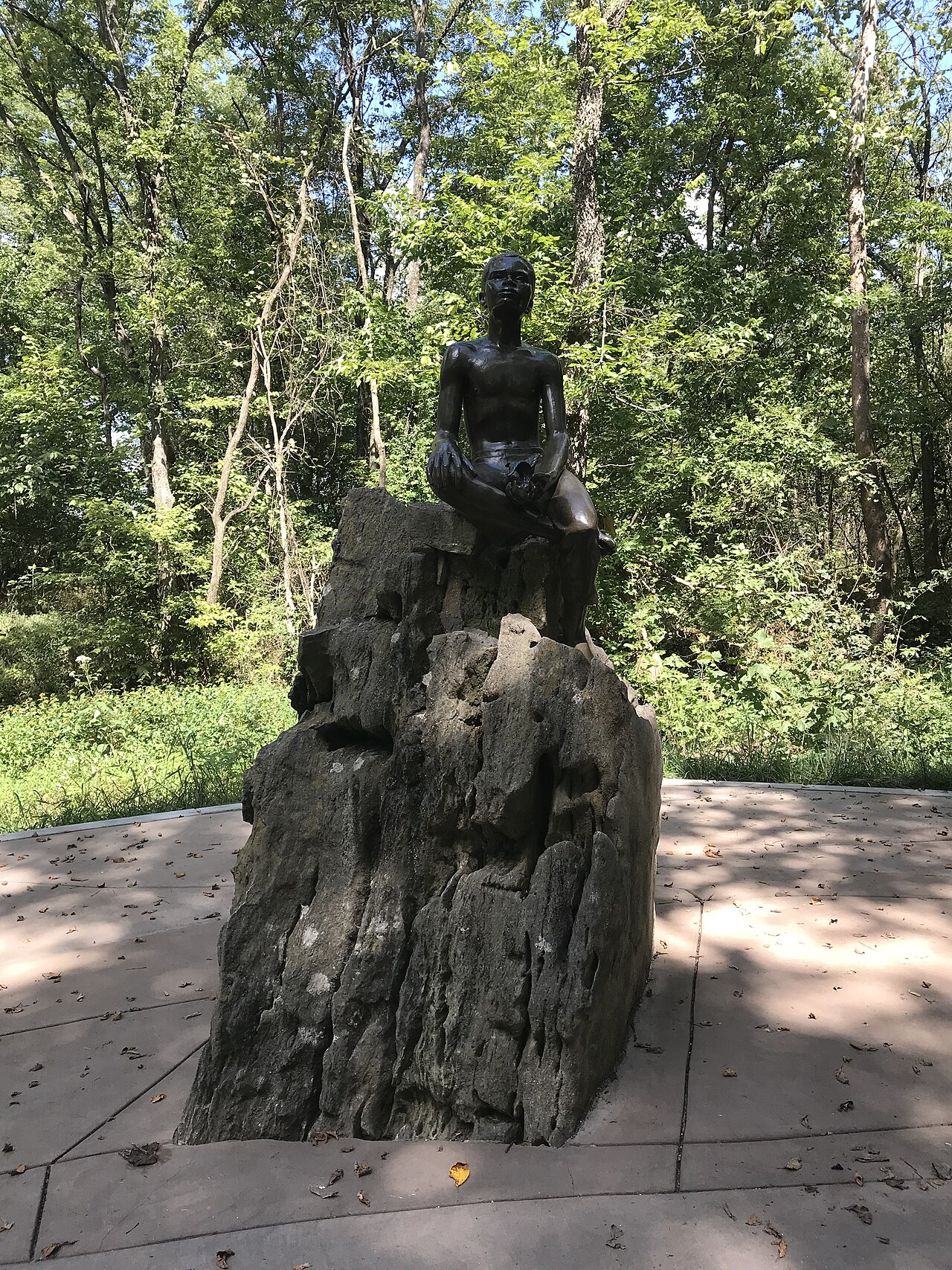
Bronze statue of a young boy seated cross-legged on a large rough rock base, set in a wooded park with a paved circular pad in the foreground. The boy has a bare torso and gazes forward.Sculpture

Secondary source

Boyhood statue of George Washington Carver

Cbmueller17 · 11 September 2018

Bronze statue of a young boy sitting on a rock, shirtless and barefoot, holding a carving knife and a piece of wood in his lap, gazing upward. Wooded trail, wooden bridge railing, and paved path surround it.Sculpture

Secondary source

The Boy Carver statue by Robert Amendola

Robert Amendola · 1960

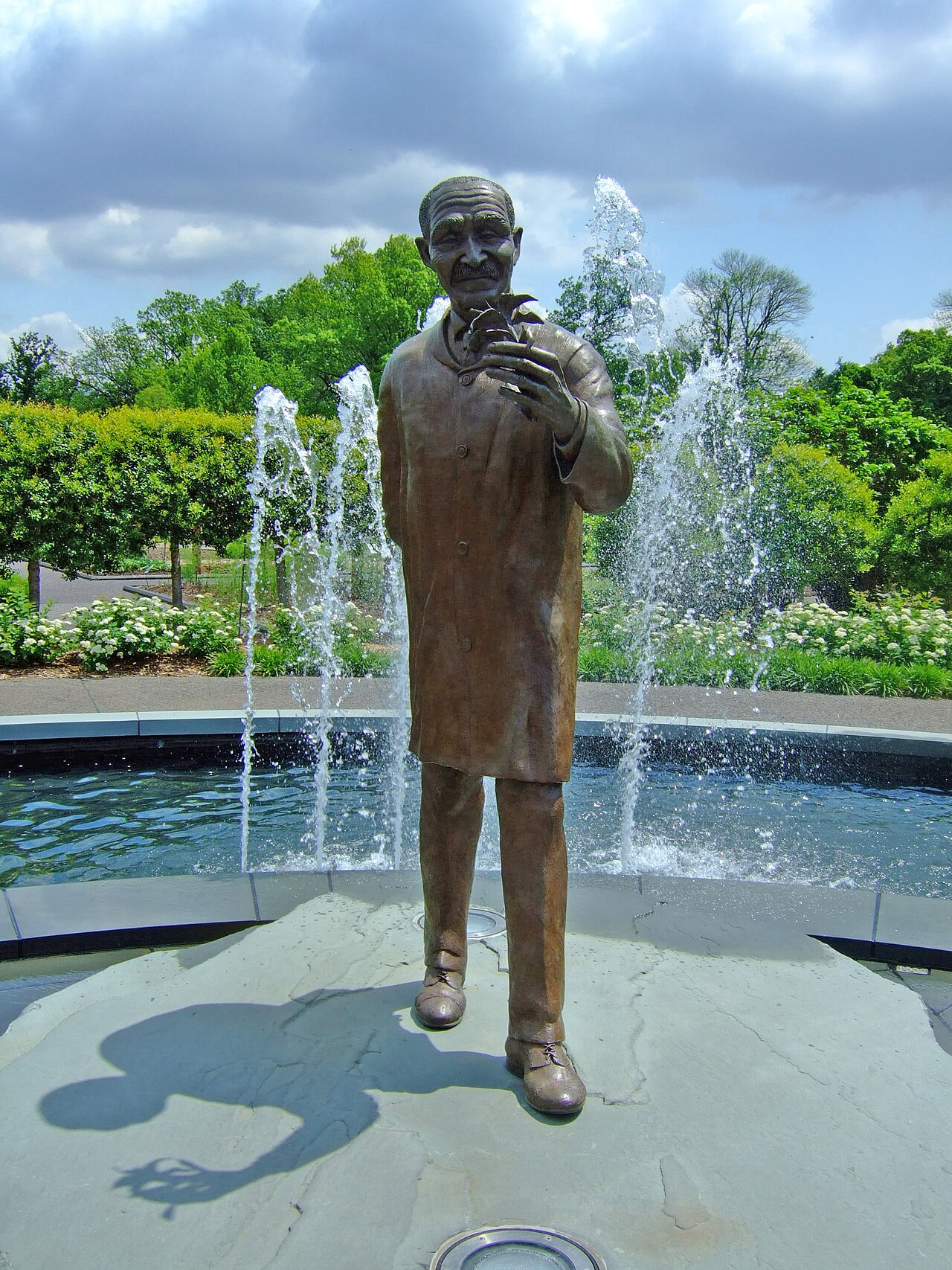
Bronze statue of a man in a long coat and trousers, holding a small plant sprig to his chest, standing on a stone base in front of a fountain with water jets and a pool. Green trees and white flowers are behind.Sculpture

Secondary source

Carver sculpture by Tina Allen at the Missouri Botanical Garden

Tina Allen · 20th century

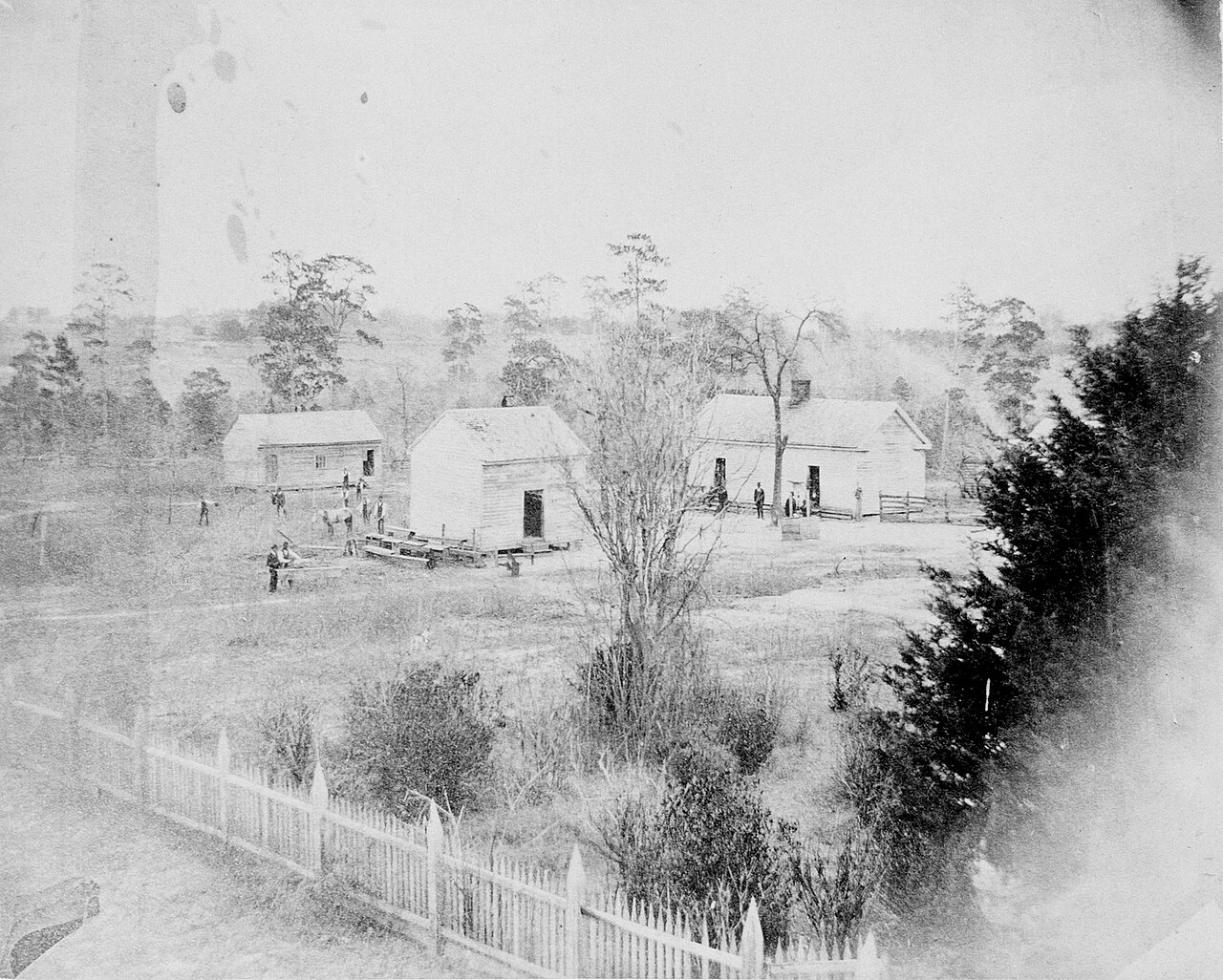
Black and white photograph of a rural campus with several small wooden buildings with pitched roofs, a white picket fence in the foreground, bare trees, and a few small figures standing near the buildings.Photograph

Primary source

Tuskegee Institute in 1882, original buildings

1882

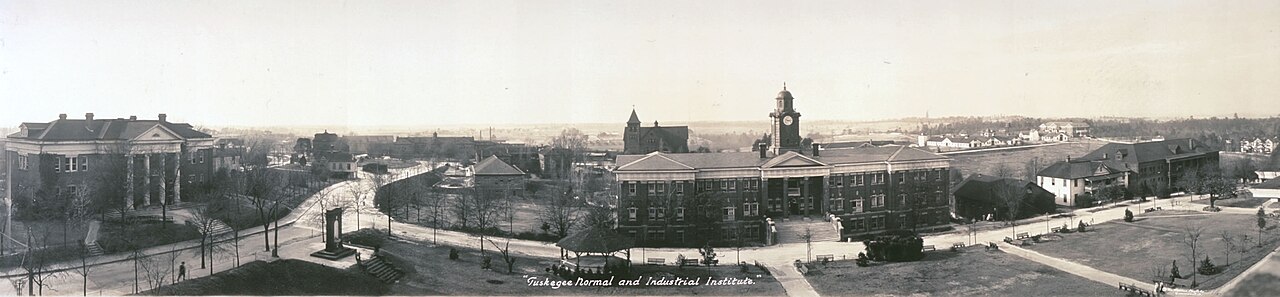
Black-and-white panoramic photograph of the Tuskegee Normal and Industrial Institute campus. A large multi-story brick administration building with a clock tower dominates the center, with a small chapel-like building to its left, and columned buildings on the far left and right. Bare trees, lawns, and paths fill the foreground, with a caption reading Tuskegee Normal and Industrial Institute near the bottom.Photograph

Primary source

Tuskegee Normal and Industrial Institute panoramic photograph, 1916

1916

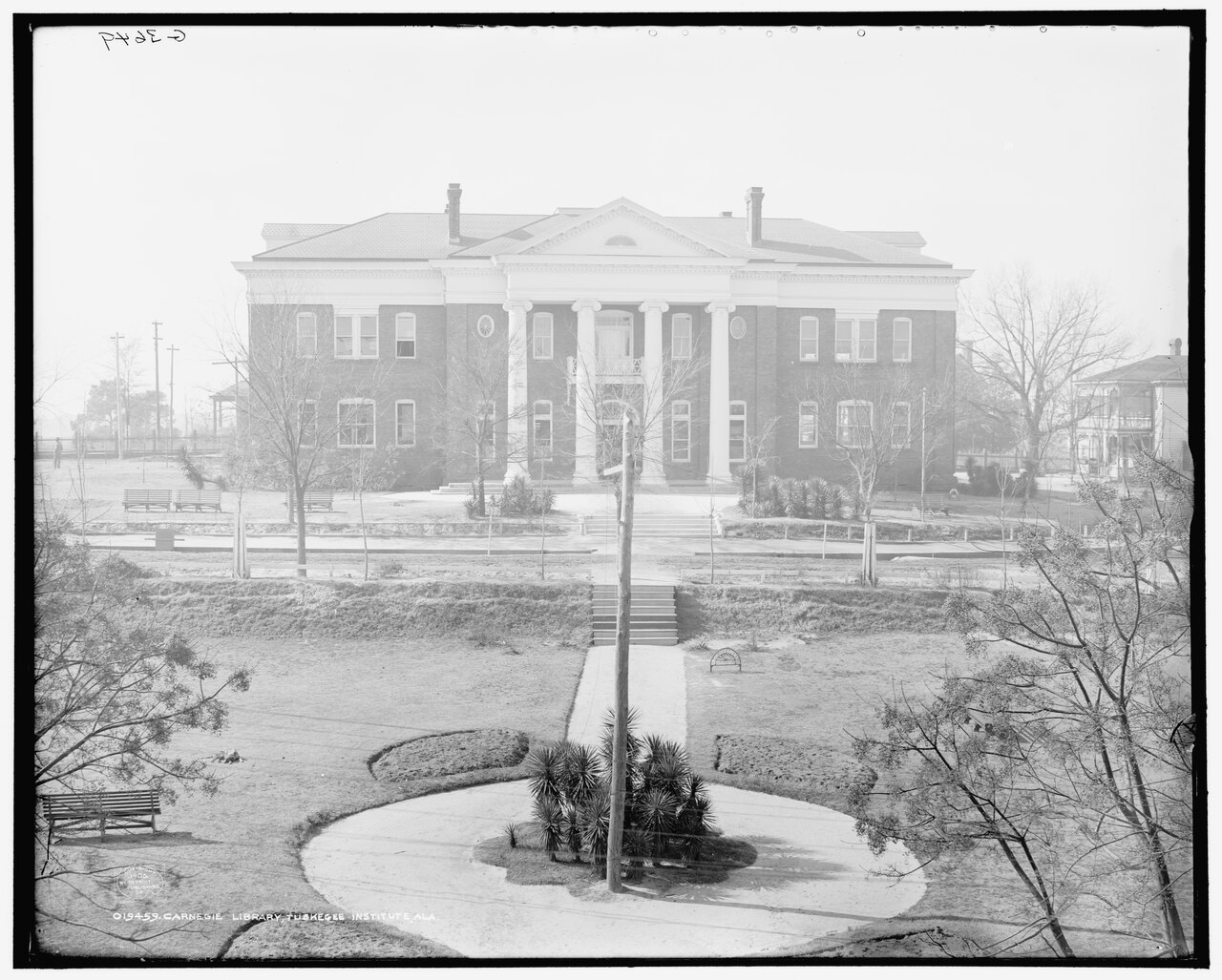
Black and white photograph of the brick Carnegie Library at Tuskegee Institute, a two-story building with a white pediment and columned portico at the center. A pathway with a circular garden bed and palm-like plant leads to it from the foreground, with bare trees and a bench on the lawn.Photograph

Primary source

Carnegie Library, Tuskegee Institute

Detroit Publishing Company · 1906

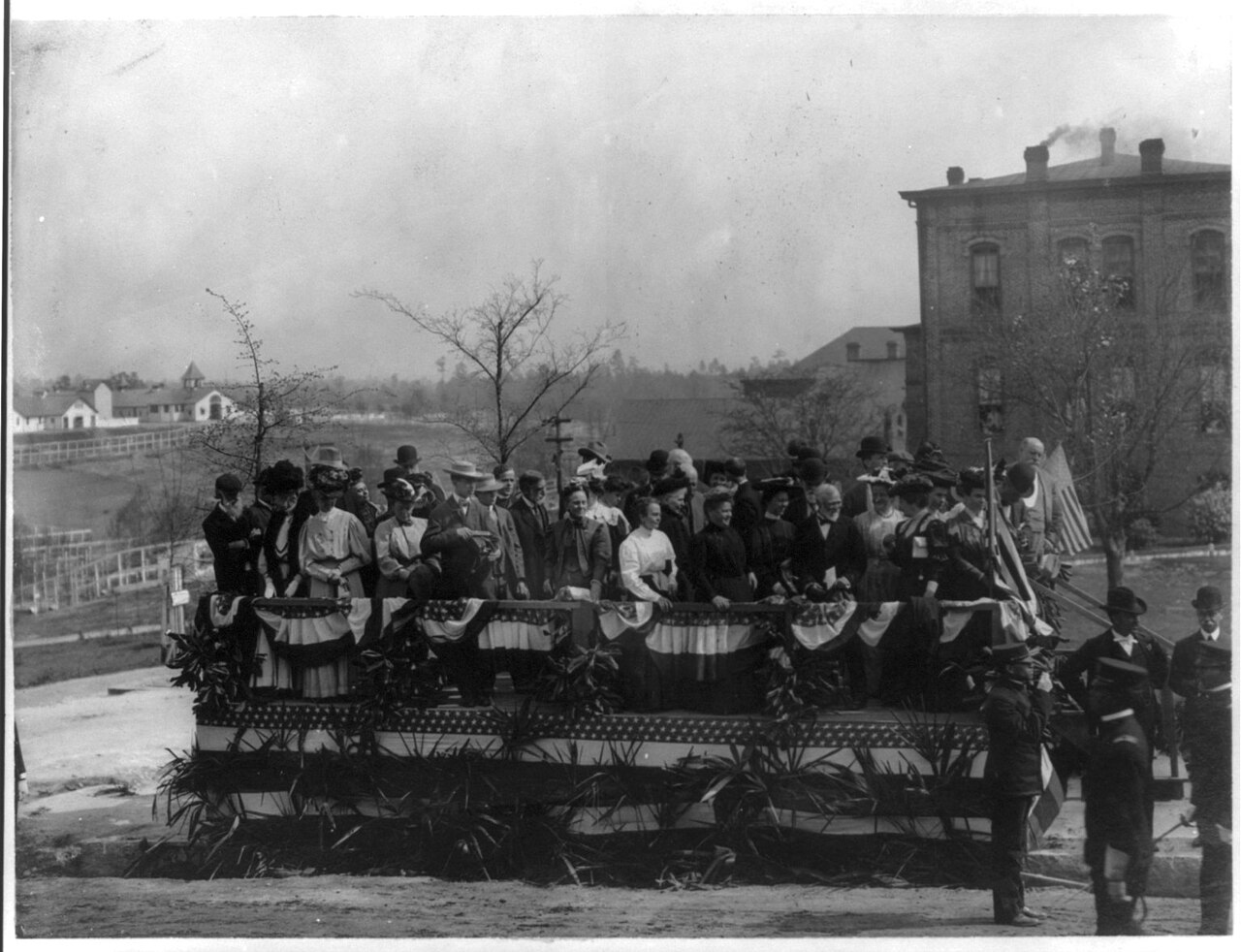
Black-and-white photograph of a decorated wooden reviewing stand draped with bunting and flags, crowded with people in period dress including men in suits and hats and women in long dresses and hats. A brick building with chimneys stands at right, and men in dark suits stand at the stand's base.Photograph

Primary source

Tuskegee 25th anniversary reviewing stand, 1906

Frances Benjamin Johnston · 1906

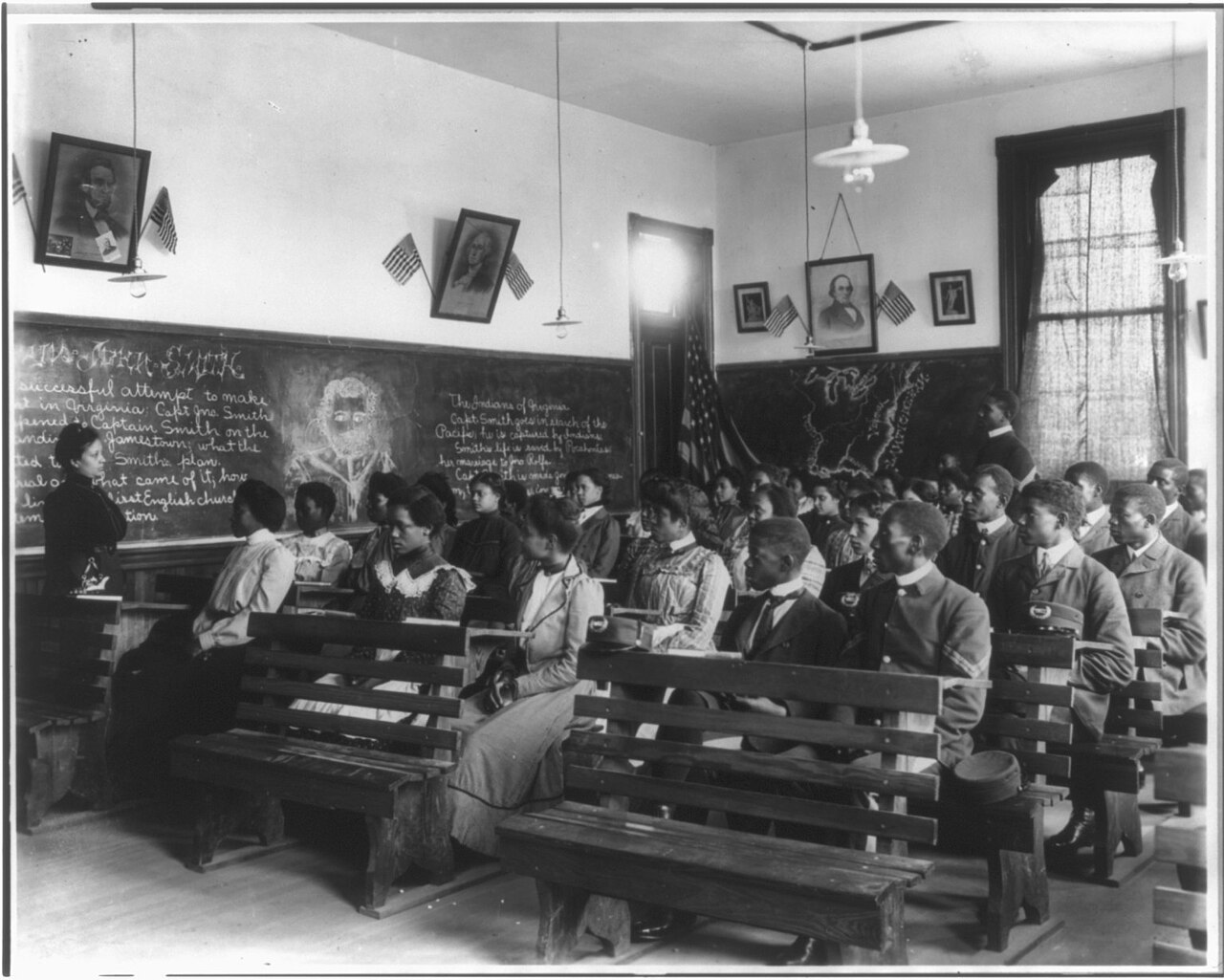
Black and white photograph of a classroom with students seated on wooden benches facing a teacher at left beside a chalkboard with handwritten text and a portrait. Portraits and small American flags hang on the walls.Photograph

Primary source

History class, Tuskegee Institute, Alabama

Frances Benjamin Johnston · 1902

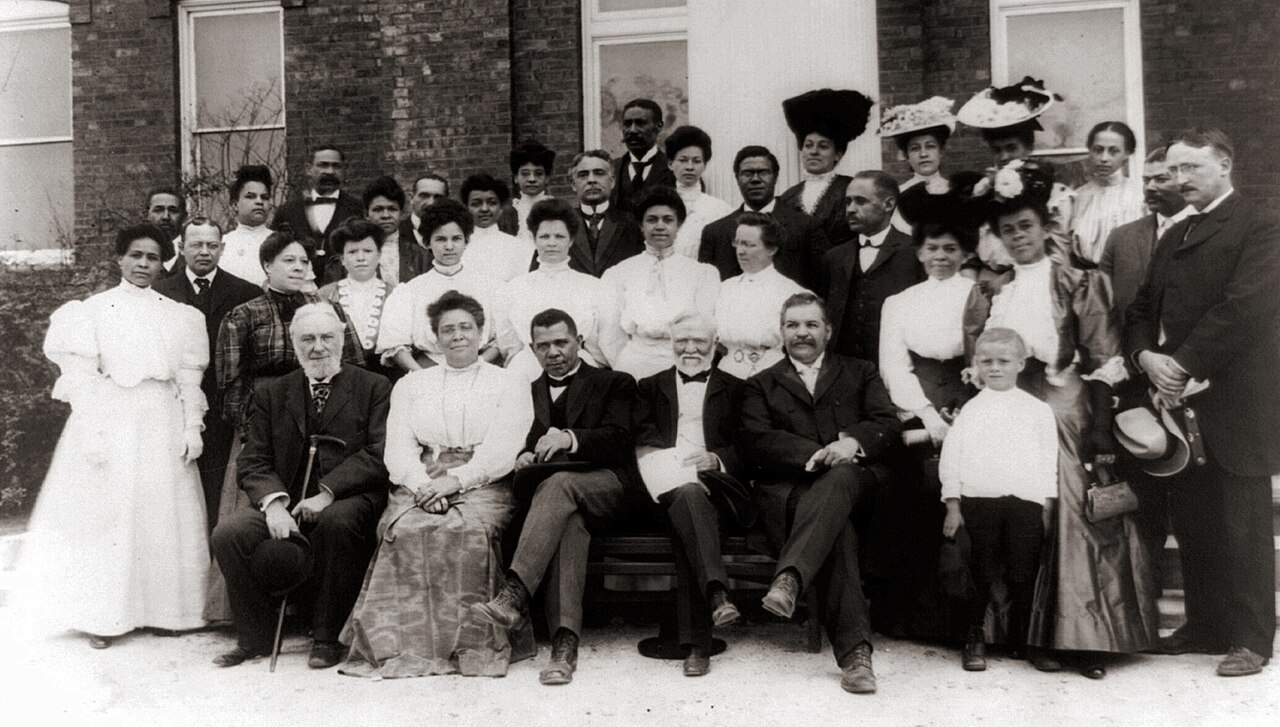
Black-and-white group photograph of about thirty people in formal dress posed outdoors before a brick building with white columns. Three men and a woman sit in front, and others stand in rows behind them, including women in long dresses and large hats and a young child in white.Photograph

Primary source

Tuskegee Institute Faculty with Andrew Carnegie and Robert Ogden

Frances Benjamin Johnston

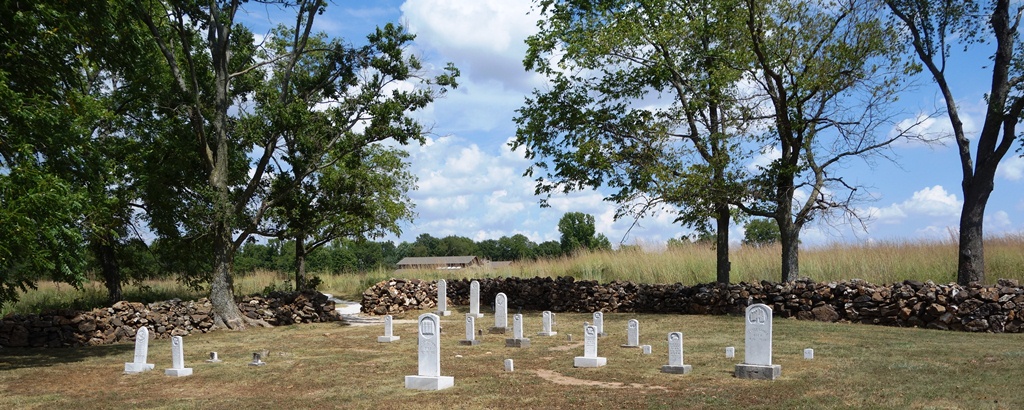
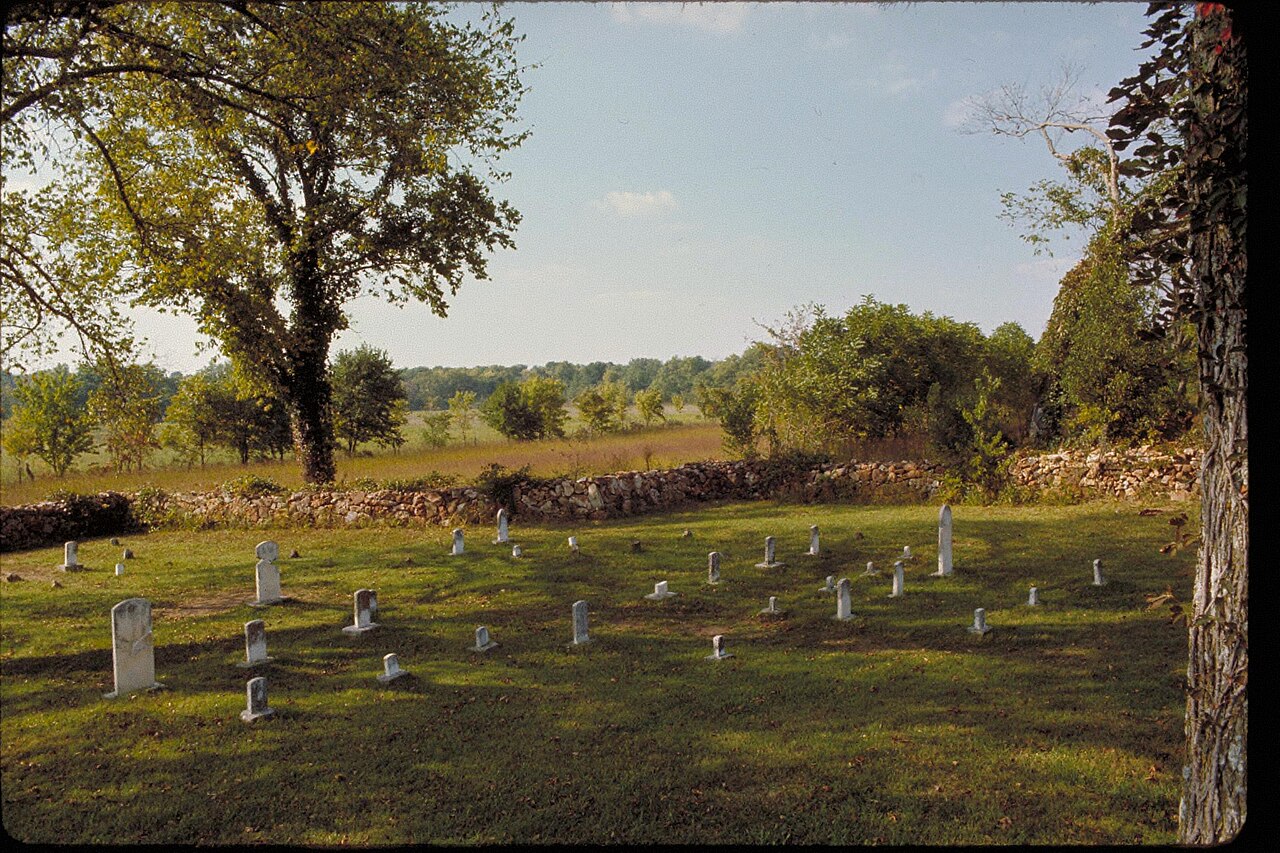
A small rural cemetery on grass under tall trees, with about a dozen white headstones and a low dry-stone wall running across the background. Open sky and a distant building are visible.Photograph

Secondary source

Carver Family Cemetery, Diamond, Missouri

2014-08-31

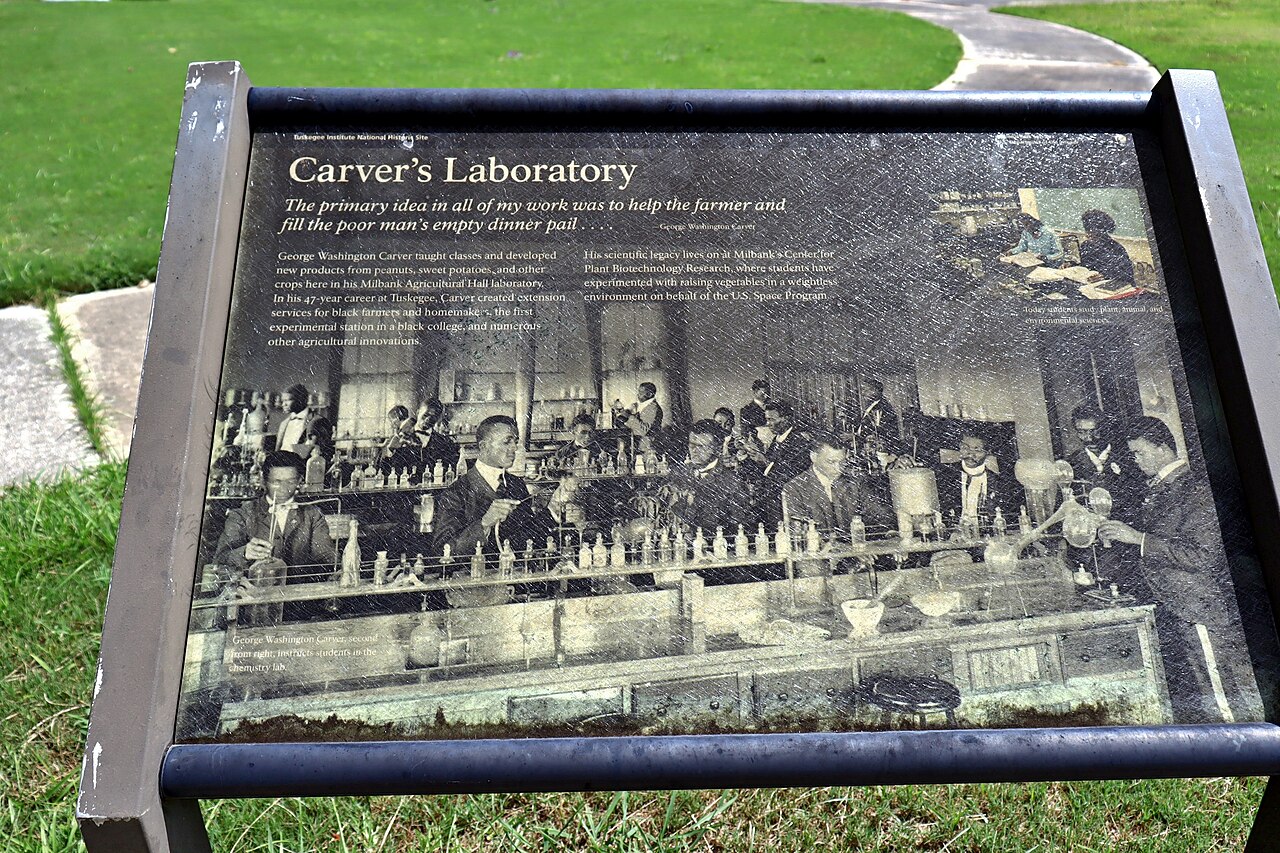
A dark metal-framed outdoor interpretive sign on green grass titled Carver's Laboratory. It has a quote about helping the farmer and the poor man's dinner pail, a text description, and a black-and-white photo of men working in a laboratory with glassware and benches. A small inset photo shows a lab with students.Photograph

Secondary source

Milbank Agricultural Hall marker, Carver's laboratory, Tuskegee

2C2K Photography · 2023-08-09

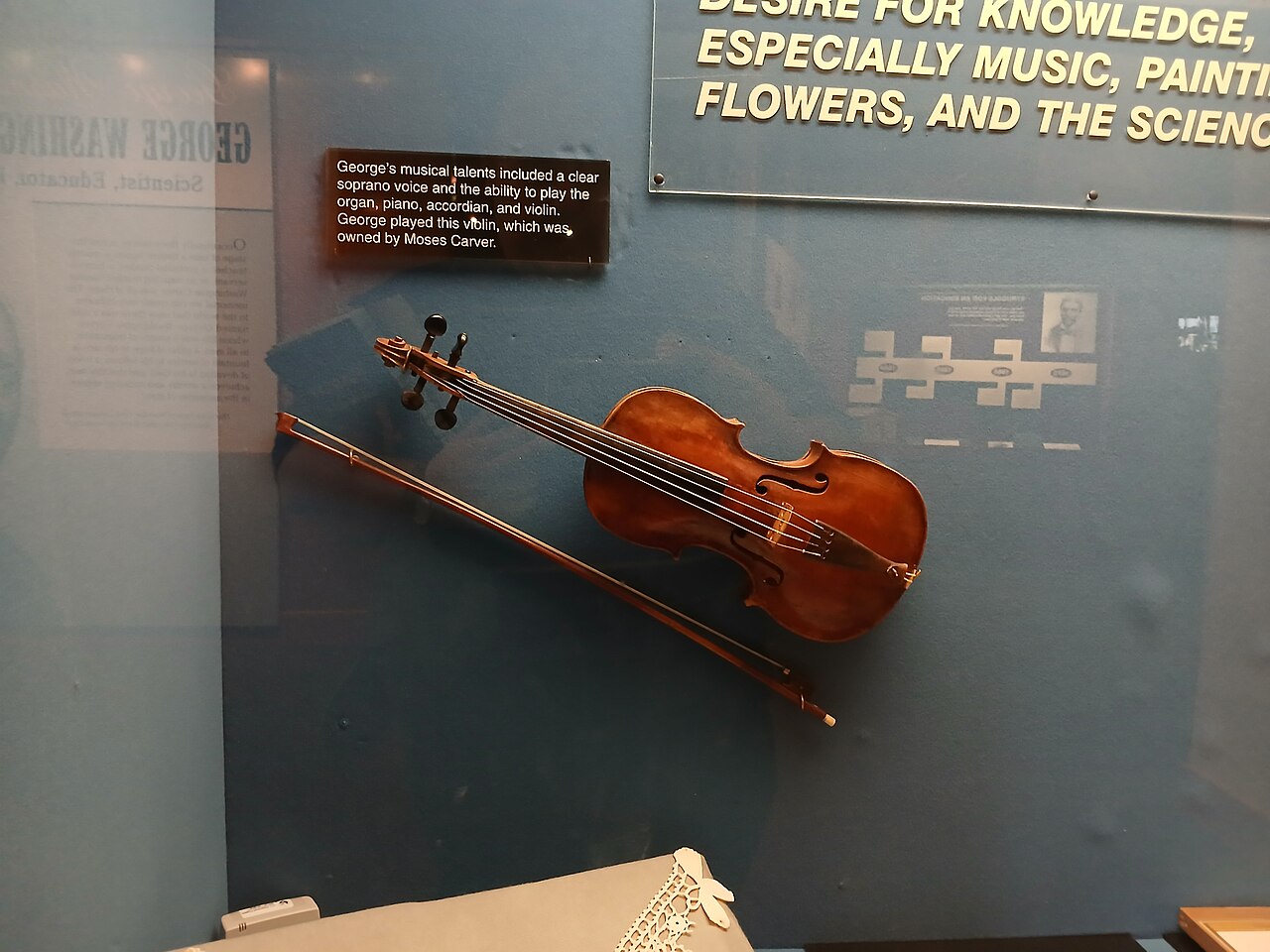
A brown wooden violin with a bow, mounted on a blue wall inside a glass display case at the George Washington Carver National Monument. A placard beside it says George played this violin, owned by Moses Carver.Photograph

Secondary source

Violin Played by George Washington Carver

Ser Amantio di Nicolao

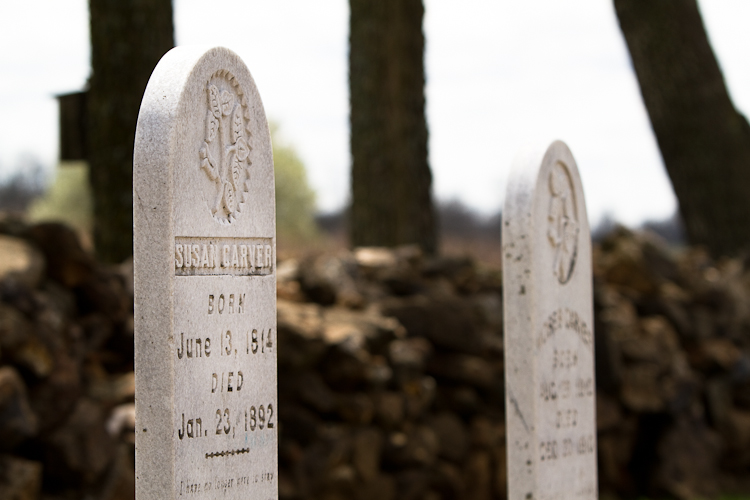
Two white marble headstones in a cemetery with a stone wall and trees behind. The front headstone reads Susan Carver, Born June 13, 1814, Died Jan. 28, 1892, with a carved floral emblem above.Photograph

Secondary source

Carver Family Cemetery Graves

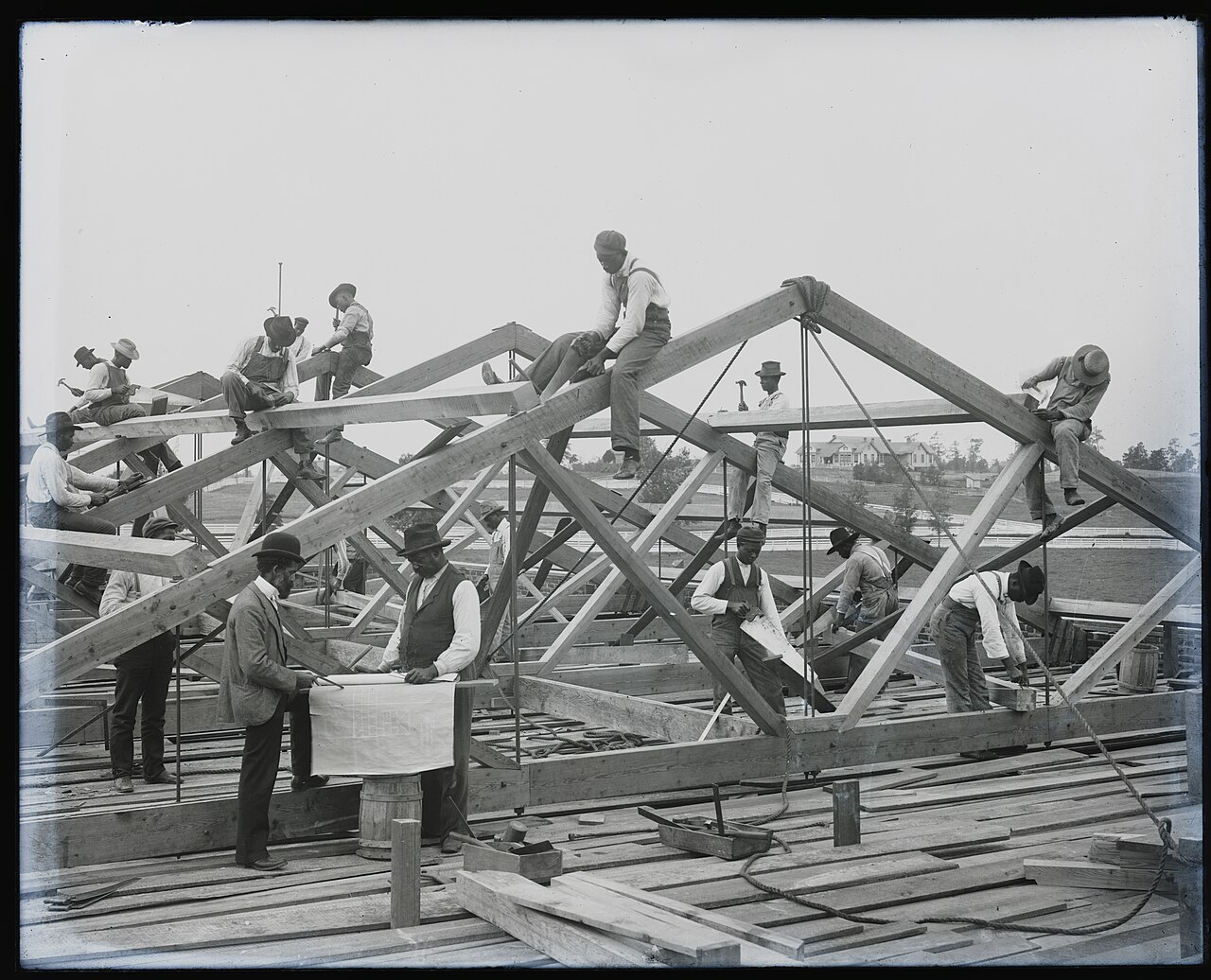
Black-and-white photograph of men at work on a large timber roof frame at Tuskegee Institute. Some workers sit on the rafters, one man stands at a plank table studying a large paper plan, and others work on the wooden planks below.Photograph

Primary source

Students Building a Roof at Tuskegee Institute

Frances Benjamin Johnston · circa 1902

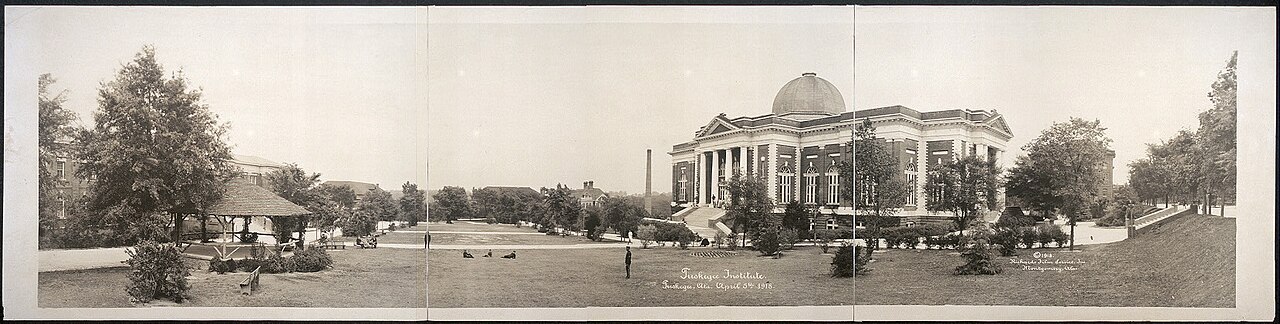
Sepia panoramic photograph of the Tuskegee Institute campus in 1918. A domed neoclassical brick building with white columns stands at right, with a gazebo and tall trees on the left, lawns in the foreground, and a lone figure standing on the grass. A caption reads Tuskegee Institute, Tuskegee, Ala., April 5th, 1918.Photograph

Primary source

Tuskegee Institute Panorama, April 5, 1918

Richards Film Service · 5 April 1918

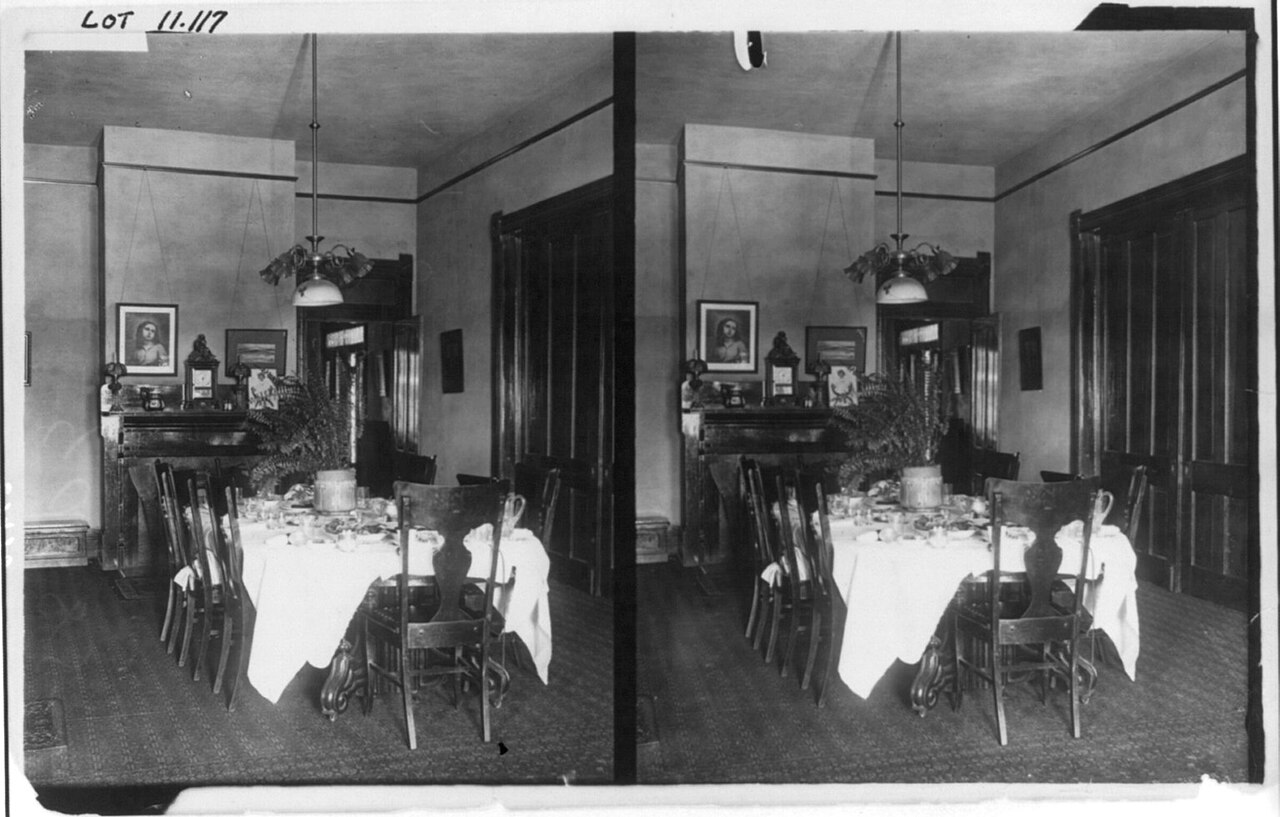
Black-and-white stereograph of a dining room with a white-clothed table set with dishes and a centerpiece, wooden chairs, a pendant lamp, a piano, framed pictures and a bust on the wall. Two side-by-side views.Photograph

Primary source

Tuskegee Institute Dining Room, 1906 Stereograph

1906

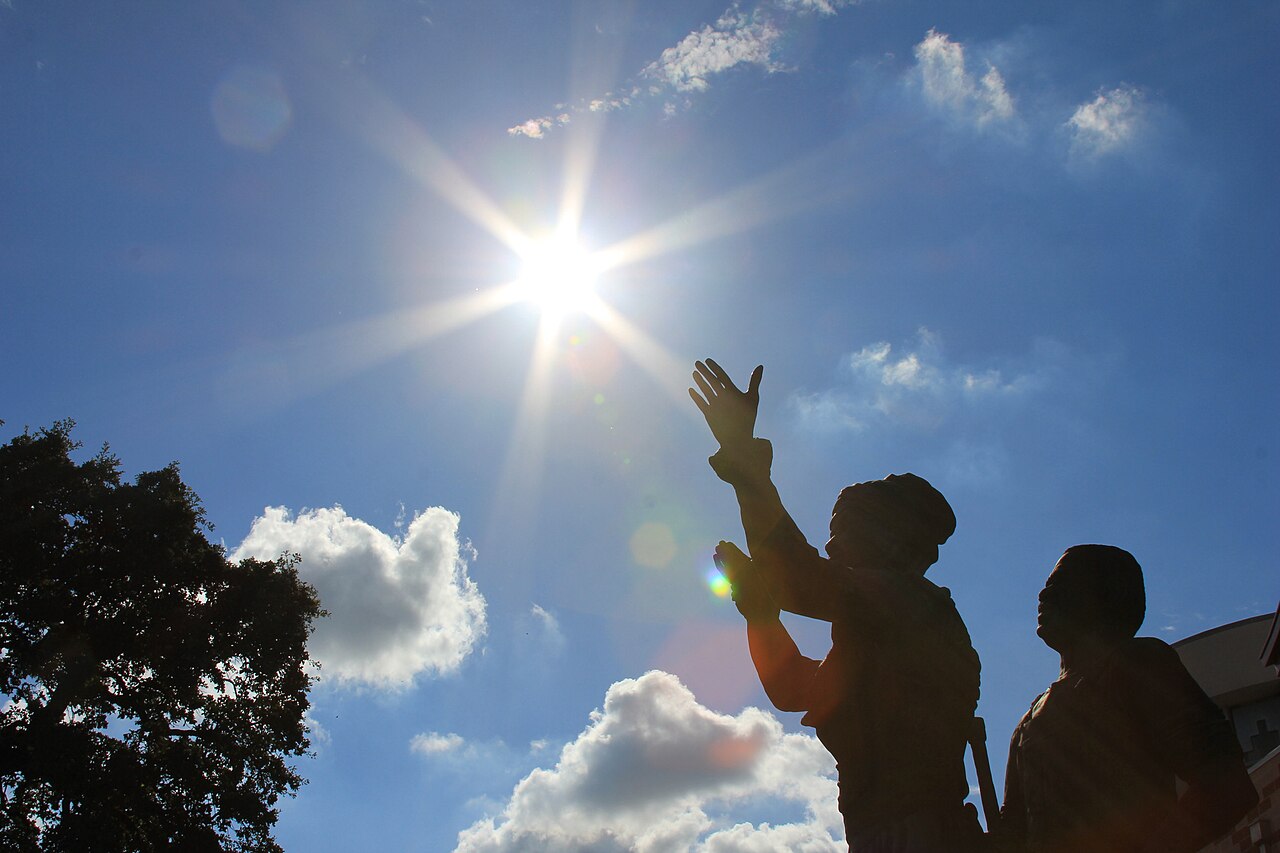
Two sculpted figures silhouetted against a bright blue sky with a sun burst near the top center. The taller figure on the left raises one arm with an open hand toward the sun. The figure on the right, partly cut off at the edge, faces left. A dark tree stands at the far left, with white clouds and part of a building at the right edge.Sculpture

Secondary source

Freed Woman and Freed Man Sculptures

Adrienne Rison Isom · 14 September 2016

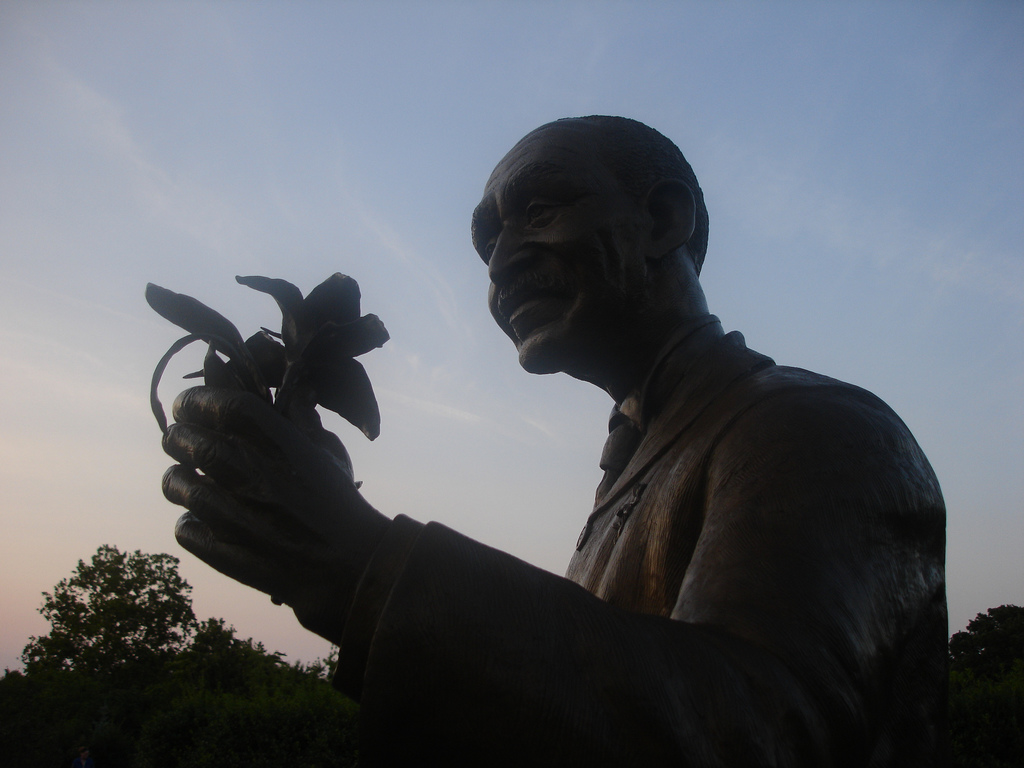
Dark silhouetted bronze statue of a man in a suit and tie, holding a flower in his raised hand, photographed against an evening sky with trees below. The figure is smiling and looking down at the blossom.Sculpture

Secondary source

George Washington Carver monument, Busch Gardens

Photographed 5 July 2006; statue's own date not given

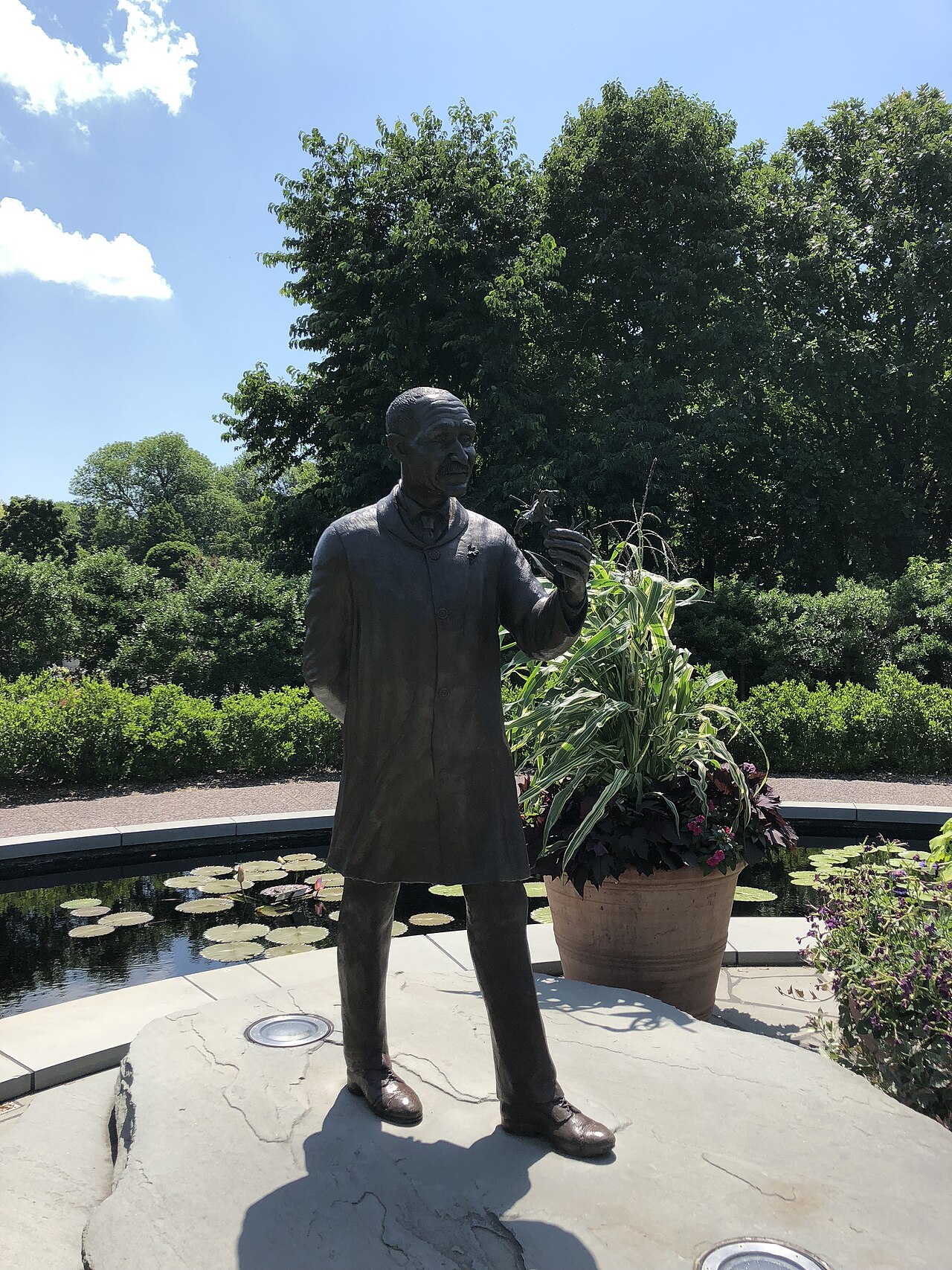
Bronze statue of a standing man in a long coat and tie, holding a small plant sprig in one hand, on a stone base beside a reflecting pool with lily pads. A large terracotta planter with corn-like plants stands behind, with trees and hedges in the background.Sculpture

Secondary source

Statue of George Washington Carver, Missouri Botanical Garden

Photographed 18 June 2018; statue's own date not given

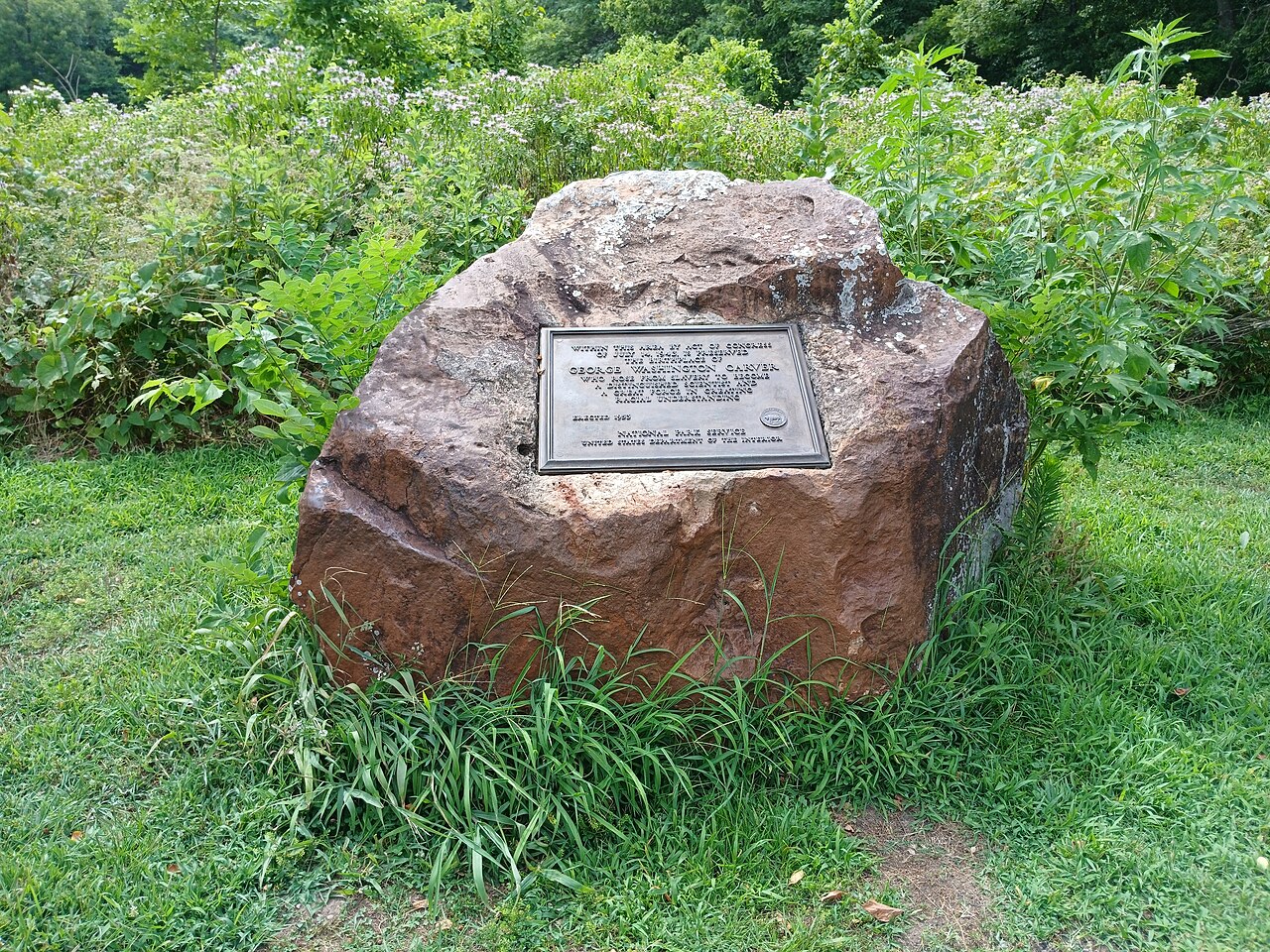
A large reddish-brown boulder in grass and leafy wildflowers, with a bronze plaque mounted on its face. The plaque carries raised lettering and an NPS (National Park Service) seal. The plaque text is too small to read clearly.Sculpture

Secondary source

NPS plaque, George Washington Carver National Monument

Photographed 7 July 2024

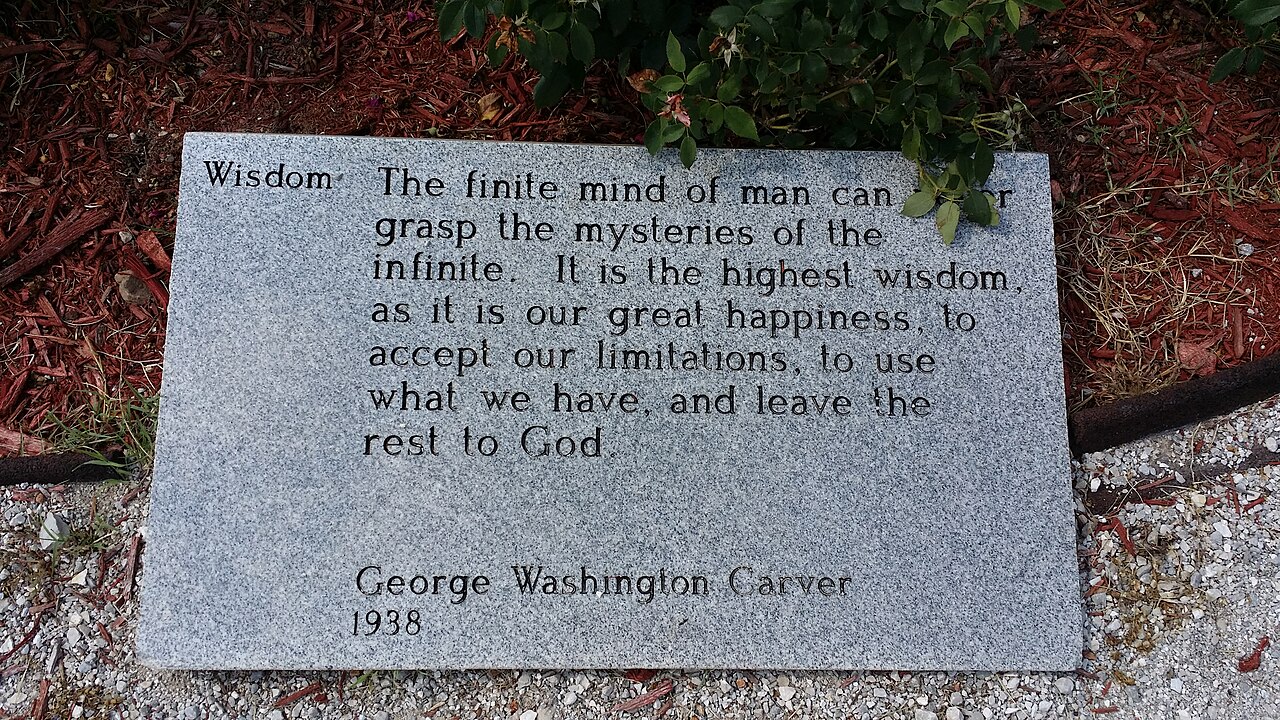
A grey granite plaque set in mulch and gravel, with the word Wisdom at top left and an inscribed quotation by George Washington Carver, signed and dated 1938. A green shrub overhangs the top edge.Photograph

Secondary source

Plaque quoting George Washington Carver, National Monument

Photographed 4 August 2014; inscription dated 1938

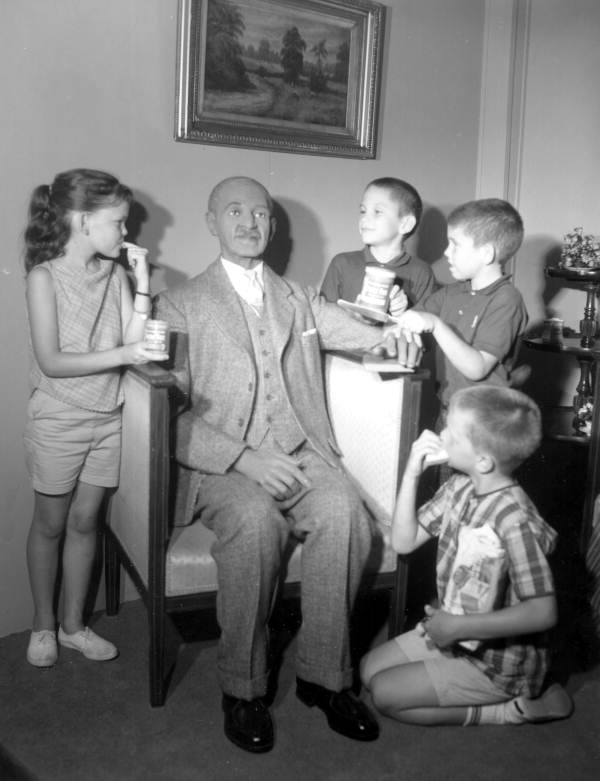
Black-and-white photo of four children posed around a wax figure of George Washington Carver seated in a wooden chair. A girl on the left and two boys stand or lean in, and a boy kneels at right. Each child holds a small jar or cup. A framed landscape painting hangs on the wall behind.Photograph

Secondary source

Children with Carver wax figure, Potter's Wax Museum, 1965

Ted Newhall · August 1965

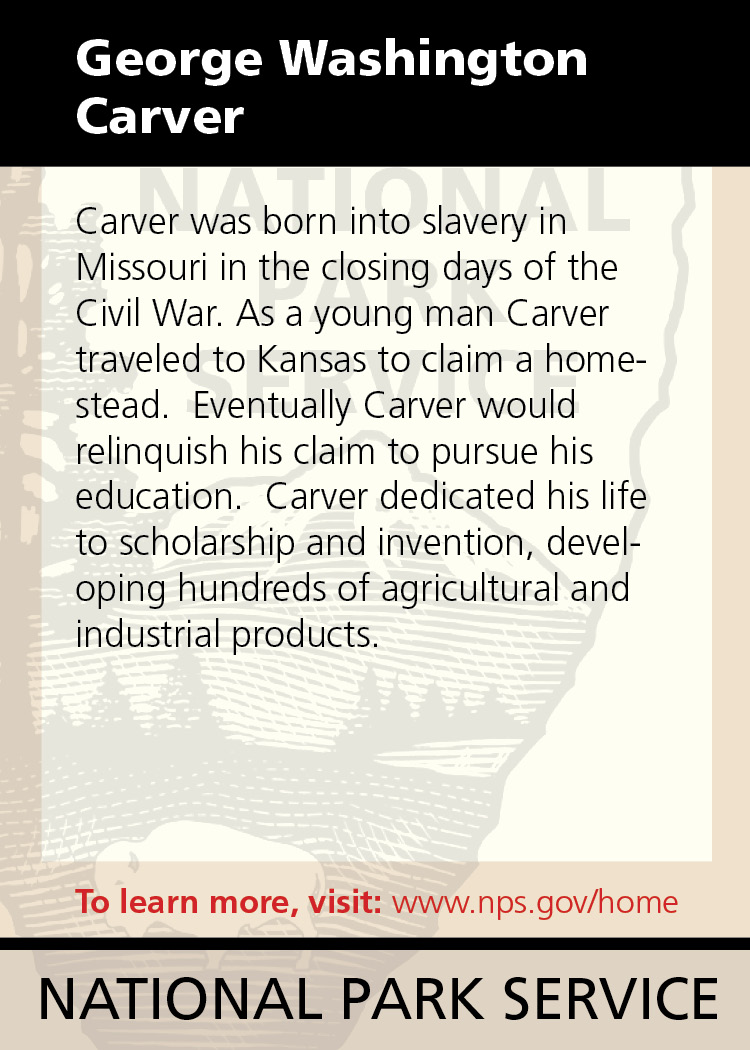
An National Park Service trading card titled George Washington Carver. Black header, cream text panel with a biography paragraph about Carver's early life, a red link to www.nps.gov/home, and a black footer reading National Park Service.Artifact

Secondary source

NPS trading card: Carver's early life and homestead

May 2012 (posting date)

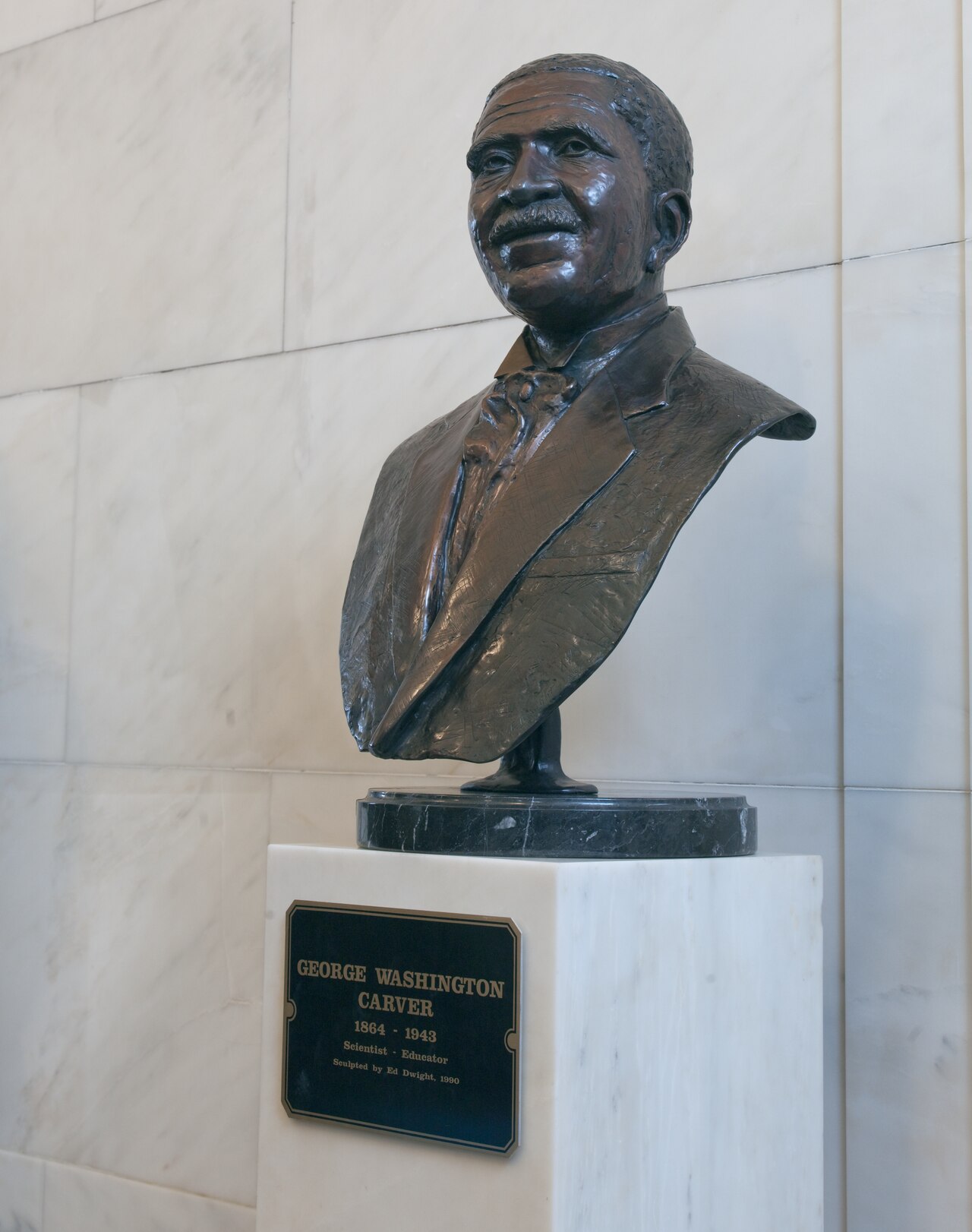
Bronze bust of George Washington Carver on a black marble base, set against a white marble wall. The man has a mustache and wears a suit jacket and collared shirt. A white marble pedestal holds a plaque reading George Washington Carver, 1864-1943, Scientist-Educator, Sculpted by Ed Dwight, 1990.Photograph

Secondary source

Statue of George Washington Carver at the Alabama Department of Archives and History

Carol M. Highsmith · 23 February 2010

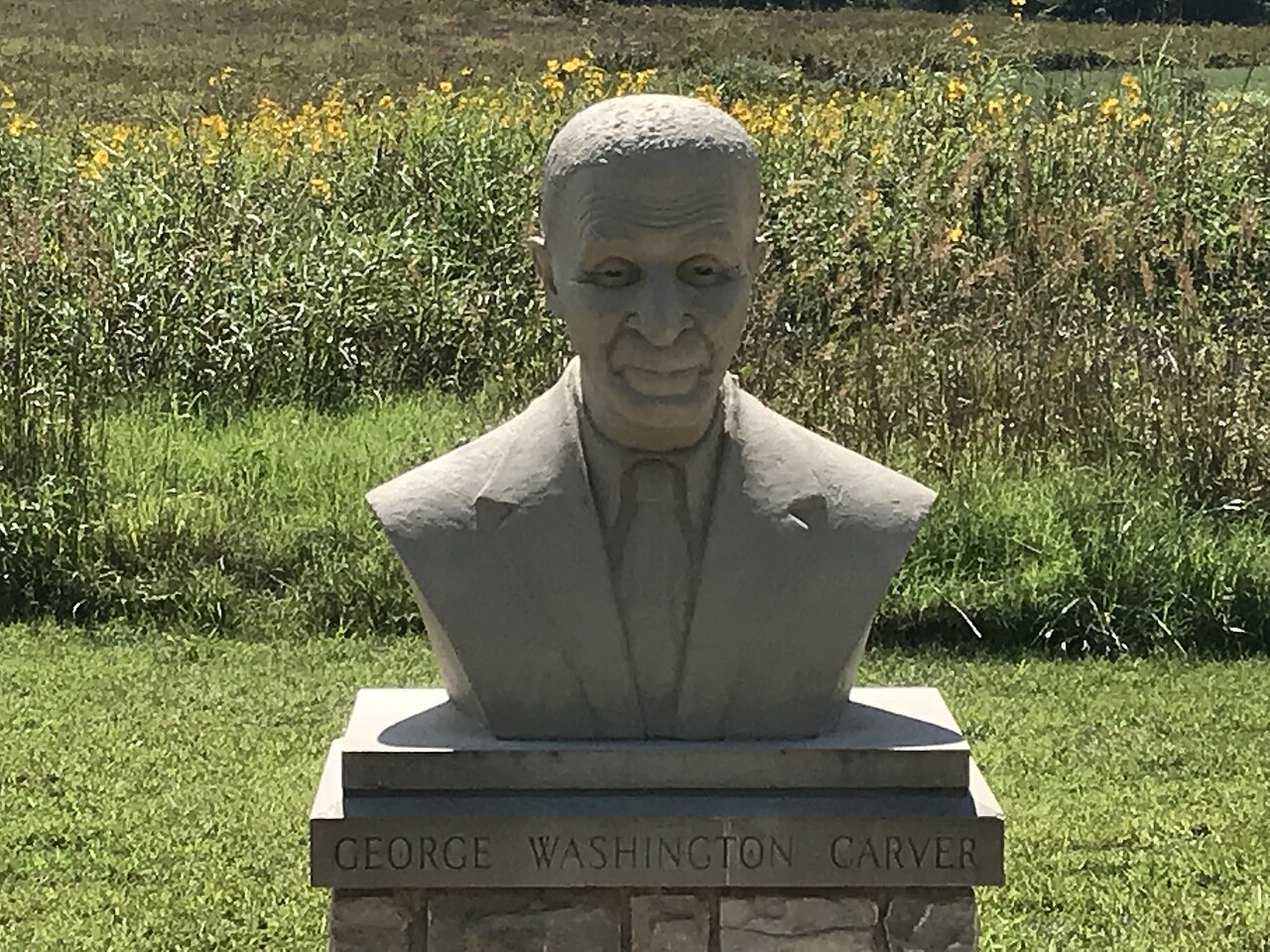
A light gray stone bust of George Washington Carver in a suit and tie, head slightly tilted down with a faint smile, mounted on a stone pedestal inscribed GEORGE WASHINGTON CARVER. Tall grass and yellow wildflowers behind it.Photograph

Secondary source

Carver Bust at George Washington Carver National Monument

Cbmueller17 · 11 September 2018

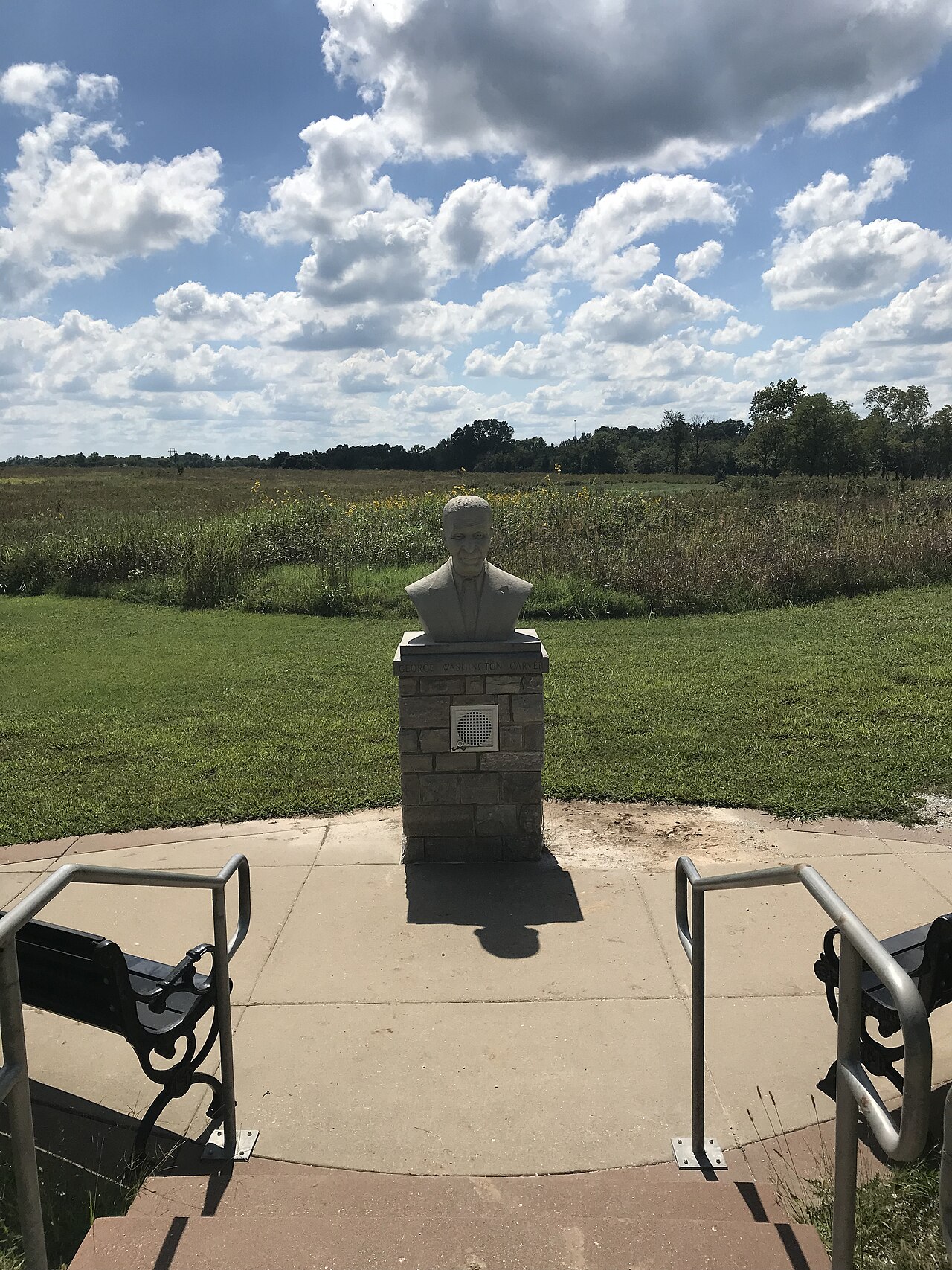
A stone bust of a man in a suit and tie on a tall stone pillar, with a small metal audio speaker grille on the pillar, set on a concrete plaza. Green grass, tall grasses, trees, and a blue sky with clouds are behind it. Metal railings and benches are at the front.Photograph

Secondary source

Carver Bust at George Washington Carver National Monument (second view)

Cbmueller17 · 11 September 2018

A grassy cemetery with rows of small white marble headstones under a tree, with a low stone wall and open fields and trees in the background on a sunny day.Photograph

Secondary source

George Washington Carver National Monument Cemetery

NPS staff · 10 November 2003

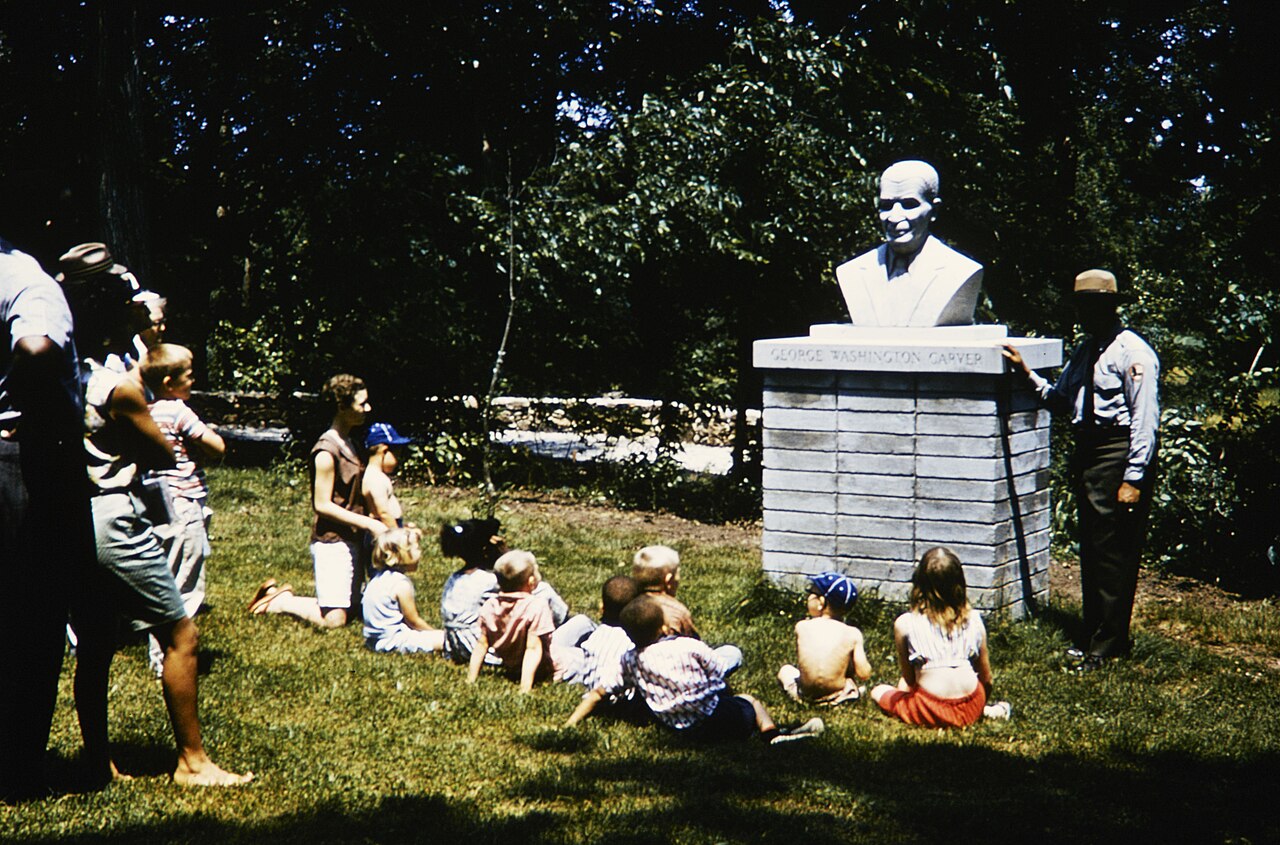
Color photo of children and adults sitting and standing on grass in front of a white bust of George Washington Carver on a stone pedestal inscribed with his name. A park ranger in uniform gestures toward the bust. Trees stand behind.Photograph

Secondary source

NPS Employee by Carver Statue at George Washington Carver National Monument

Jack E. Boucher

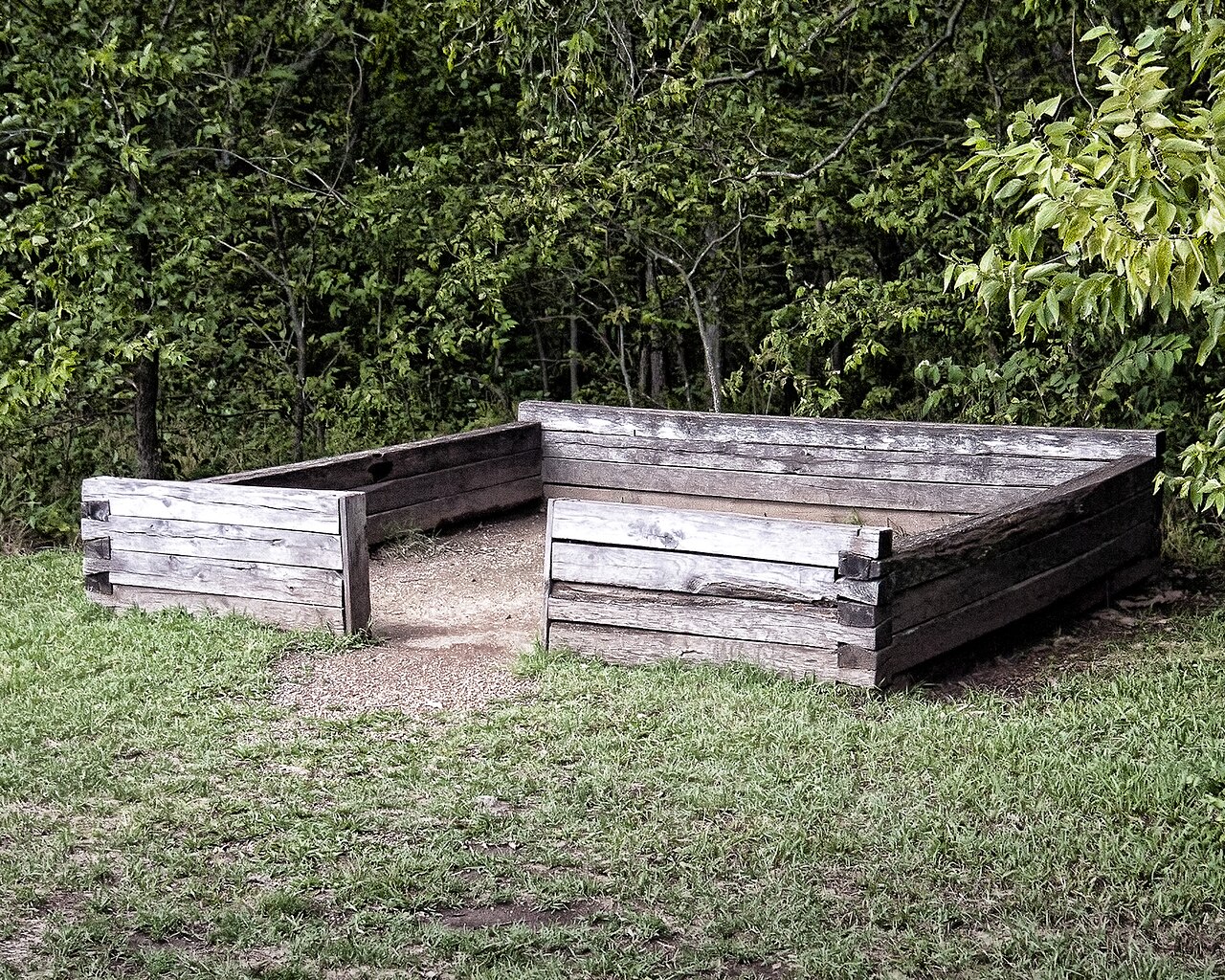
A weathered wooden outline of a square, built from horizontal timber rails on the ground in a grassy clearing, marking the approximate birthplace site of George Washington Carver. Dense green trees stand behind it.Photograph

Secondary source

Birthplace Site of George Washington Carver

NPS Photo · 14 November 2014

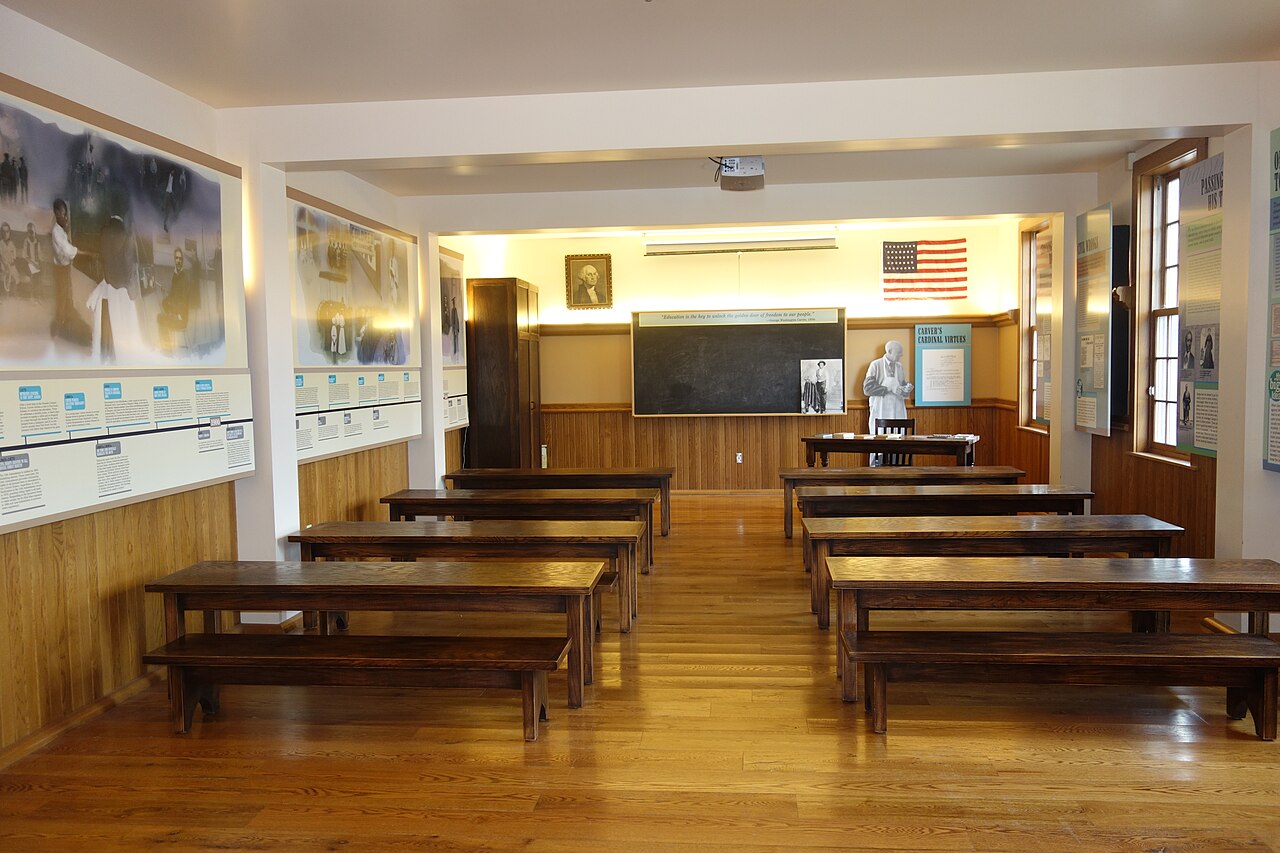
Interior of a wood-paneled classroom with a hardwood floor, rows of long wooden benches and desks facing a green chalkboard. A US flag hangs on the back wall, and a life-size figure in a white coat stands near the front. Tall wall panels with historical photographs line the left side.Photograph

Secondary source

George Washington Carver History Classroom

NPS Photo · 18 May 2010

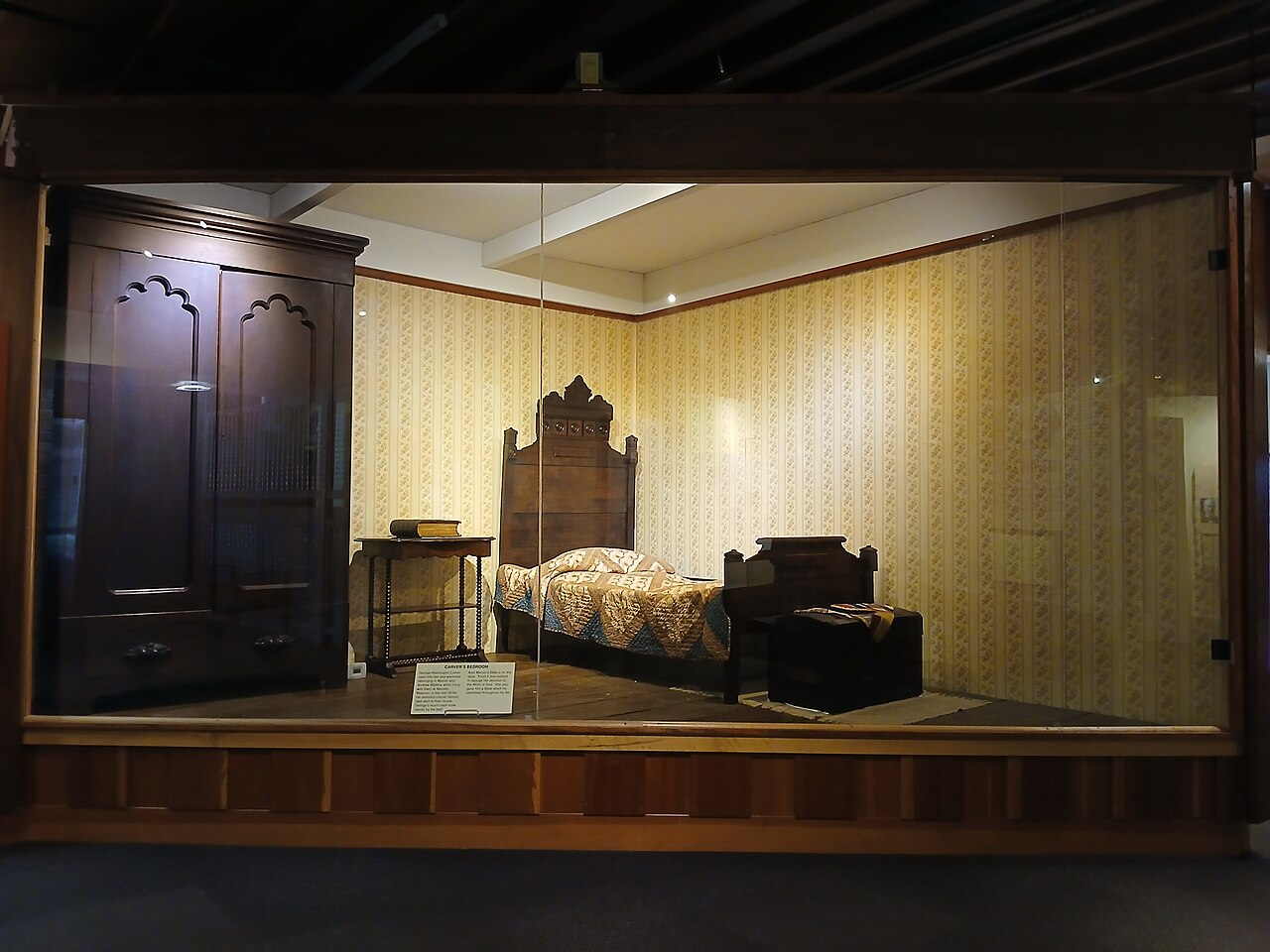
A glass-fronted museum display recreating a bedroom with a dark wooden armoire on the left, a wooden bed with a carved headboard and quilted bedspread, a small side table with a book, a wooden trunk, and striped wallpaper. A small placard sits at the bottom left.Photograph

Secondary source

Bedroom display in visitor center

Ser Amantio di Nicolao · 7 July 2024

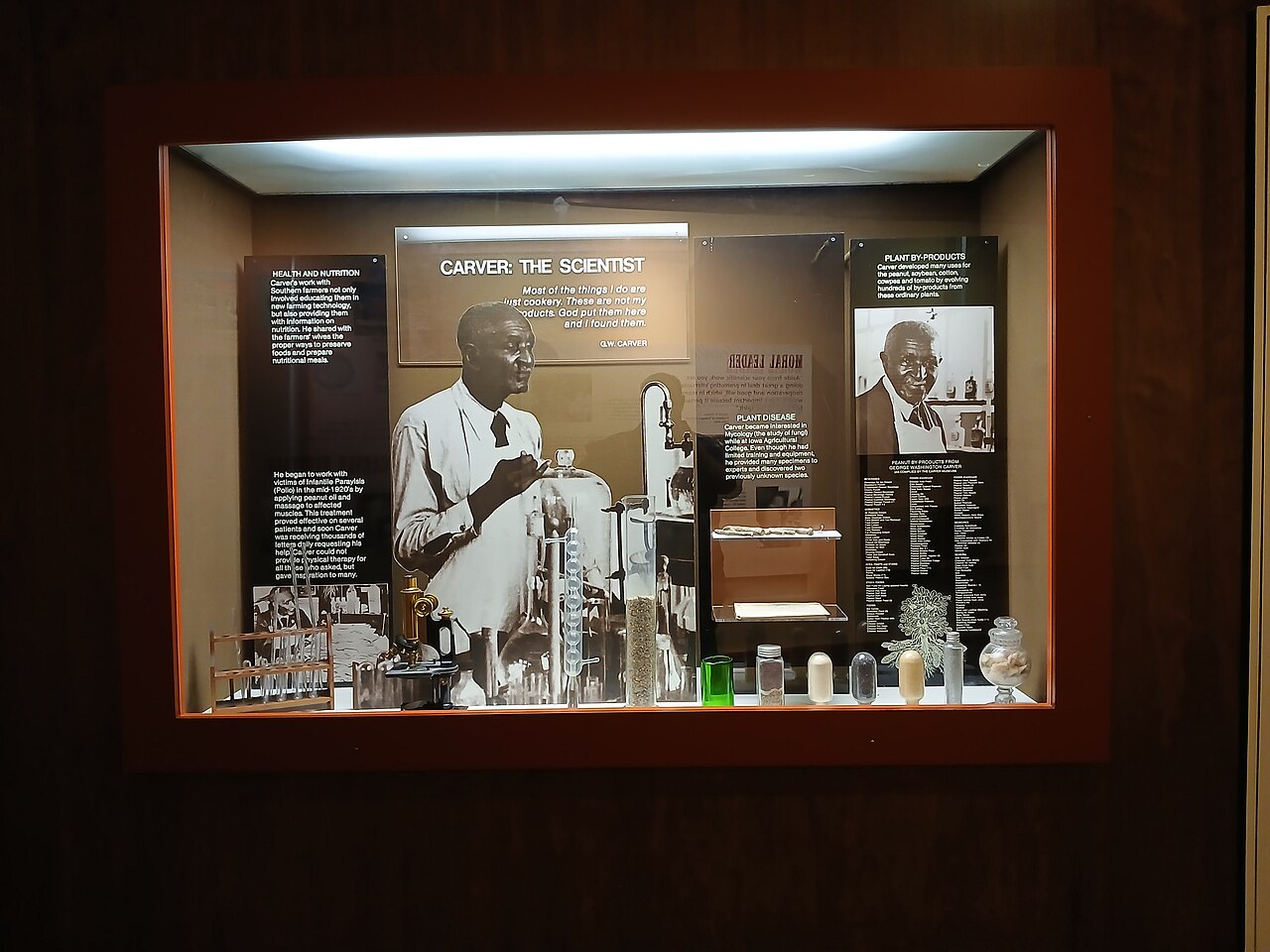
Museum display case titled 'Carver: The Scientist' with panels of text, a large black-and-white photo of a man in a suit holding a glass vessel, laboratory glassware, test tubes, jars, and a small framed photo of an older man.Photograph

Secondary source

Carver the Scientist exhibit

Ser Amantio di Nicolao · 7 July 2024

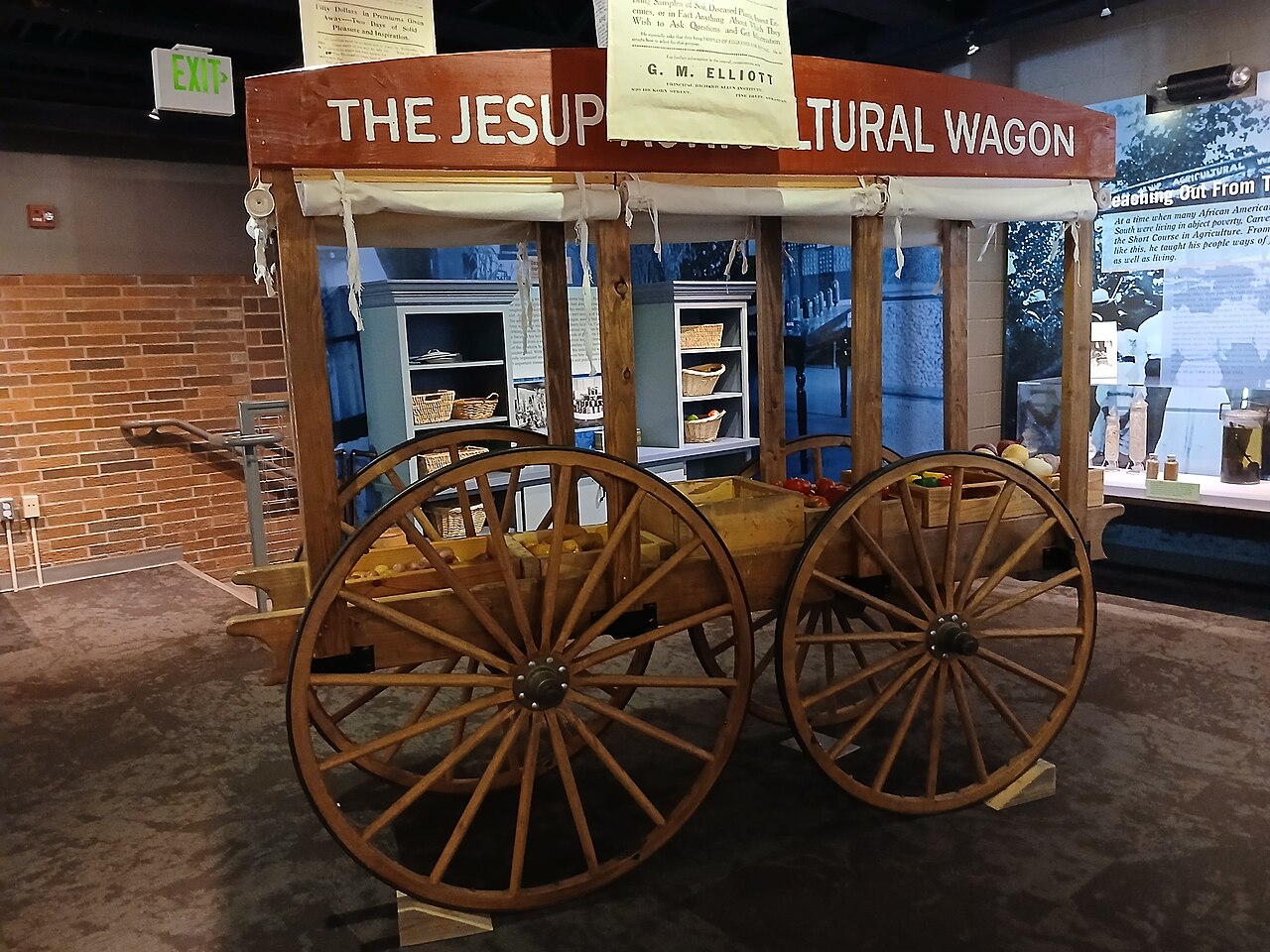
A wooden horse-drawn wagon with a red-painted sign reading 'The Jesup Agricultural Wagon' and a canvas canopy, displayed in a museum with exhibit panels and baskets of produce in its bed.Photograph

Secondary source

Jesup Agricultural Wagon

Ser Amantio di Nicolao · 7 July 2024

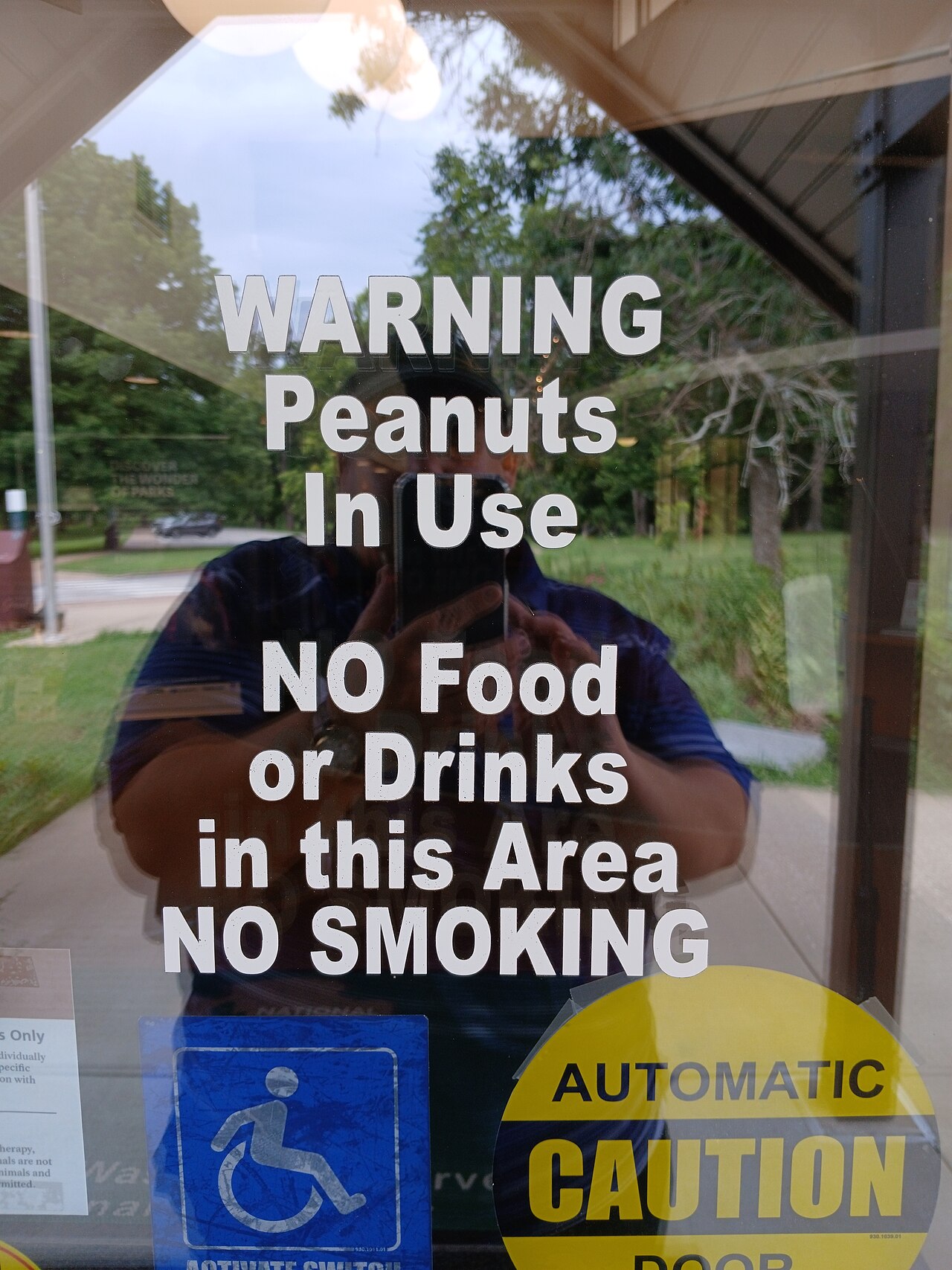
A glass door at the George Washington Carver National Monument with a white printed warning reading 'WARNING Peanuts In Use, NO Food or Drinks in this Area, NO SMOKING'. A reflection of a person photographing the sign appears in the glass. Below are a blue accessibility sticker and a yellow 'AUTOMATIC CAUTION DOOR' sticker.Photograph

Secondary source

Peanut warning display at monument entrance

Ser Amantio di Nicolao · 7 July 2024

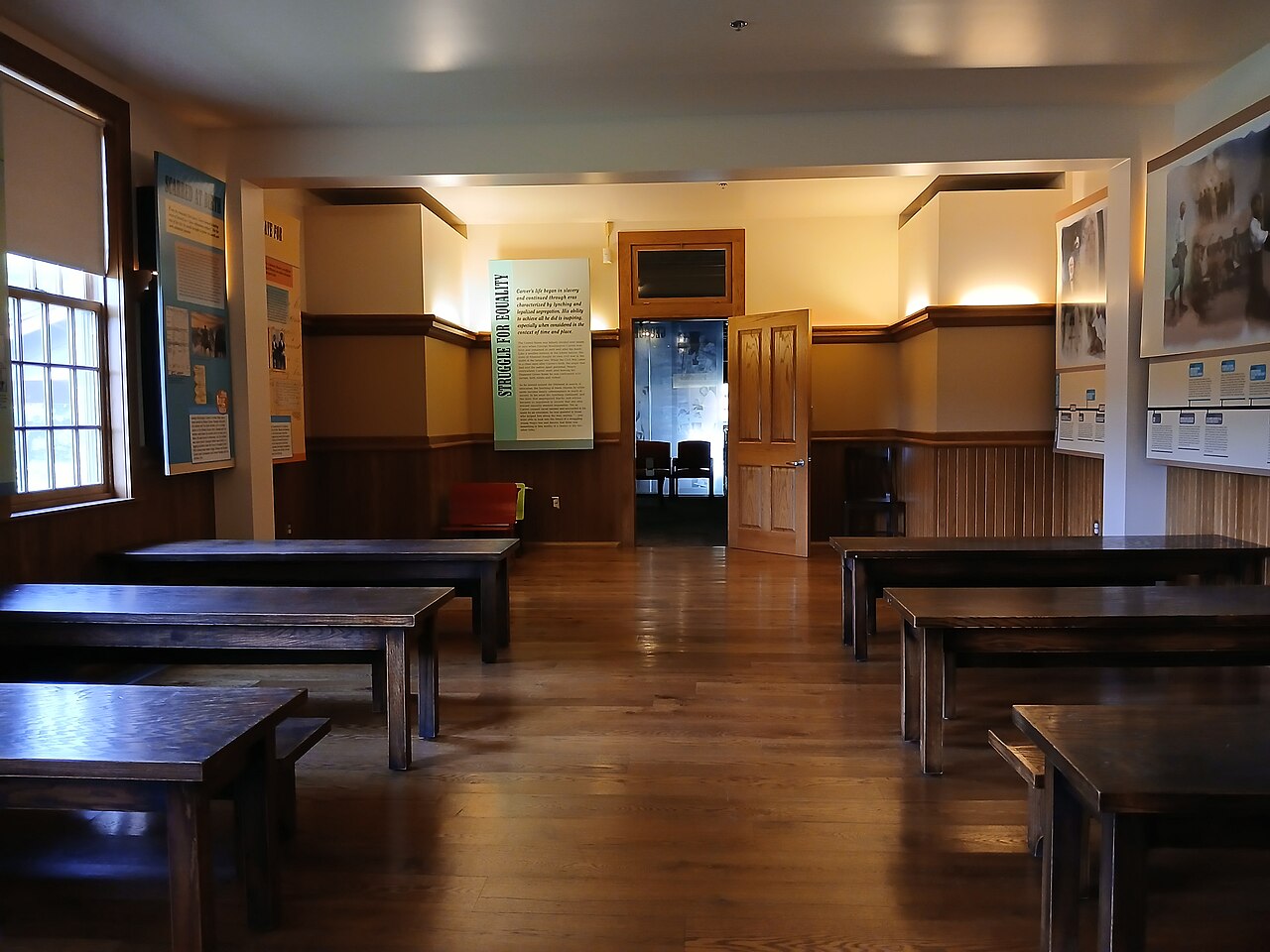
Interior of a recreated one-room schoolhouse with dark wooden tables and benches on a wood floor. Exhibit panels line the walls, including one reading 'Struggle for Equality', and an open door leads to another room.Photograph

Secondary source

Recreated classroom at the George Washington Carver National Monument

Ser Amantio di Nicolao · 7 July 2024

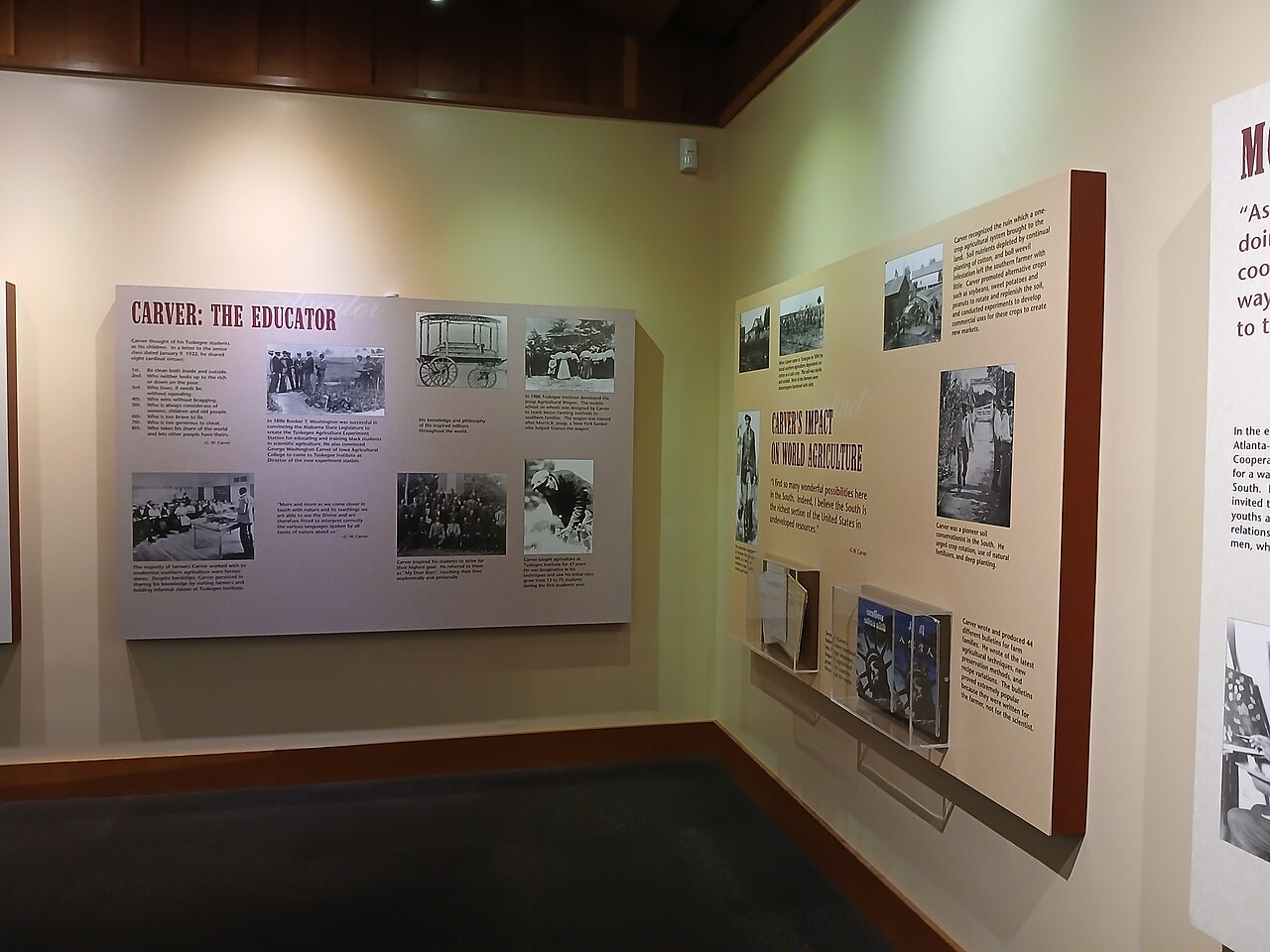
Interior of a museum visitor center with several exhibit panels on pale walls. The left panel is titled 'Carver: The Educator' with text columns and black-and-white photographs. The right panel is titled 'Carver's Impact on World Agriculture' with photos and display shelves holding books.Photograph

Secondary source

George Washington Carver National Monument: visitor center signage

Ser Amantio di Nicolao · 7 July 2024

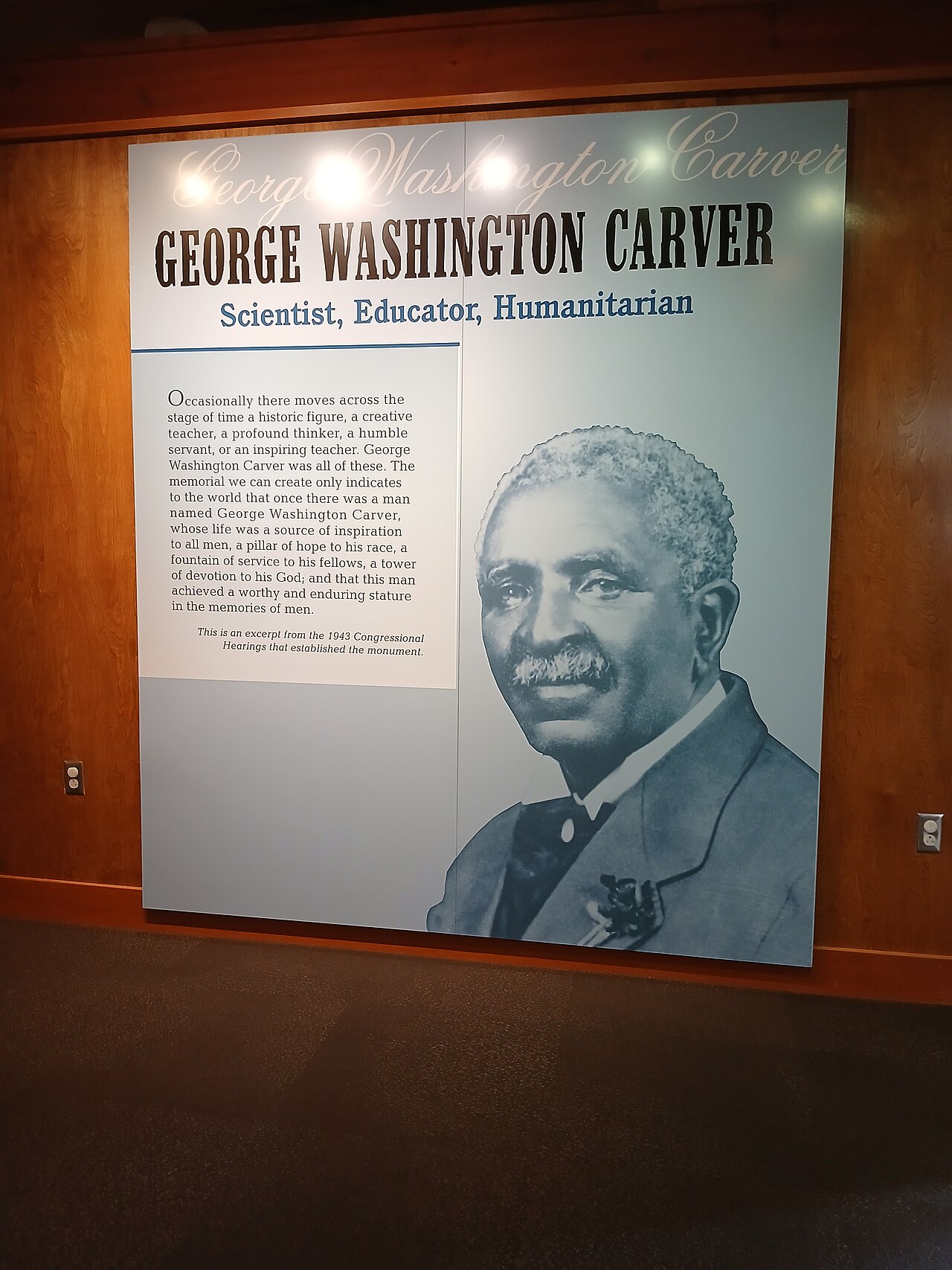
Photo of an indoor wall-mounted exhibit sign reading 'George Washington Carver, Scientist, Educator, Humanitarian' with a block of text quoting 1943 Congressional Hearings and a blue-toned portrait of a man in a suit and tie.Photograph

Secondary source

George Washington Carver National Monument: visitor center sign

Ser Amantio di Nicolao · 7 July 2024

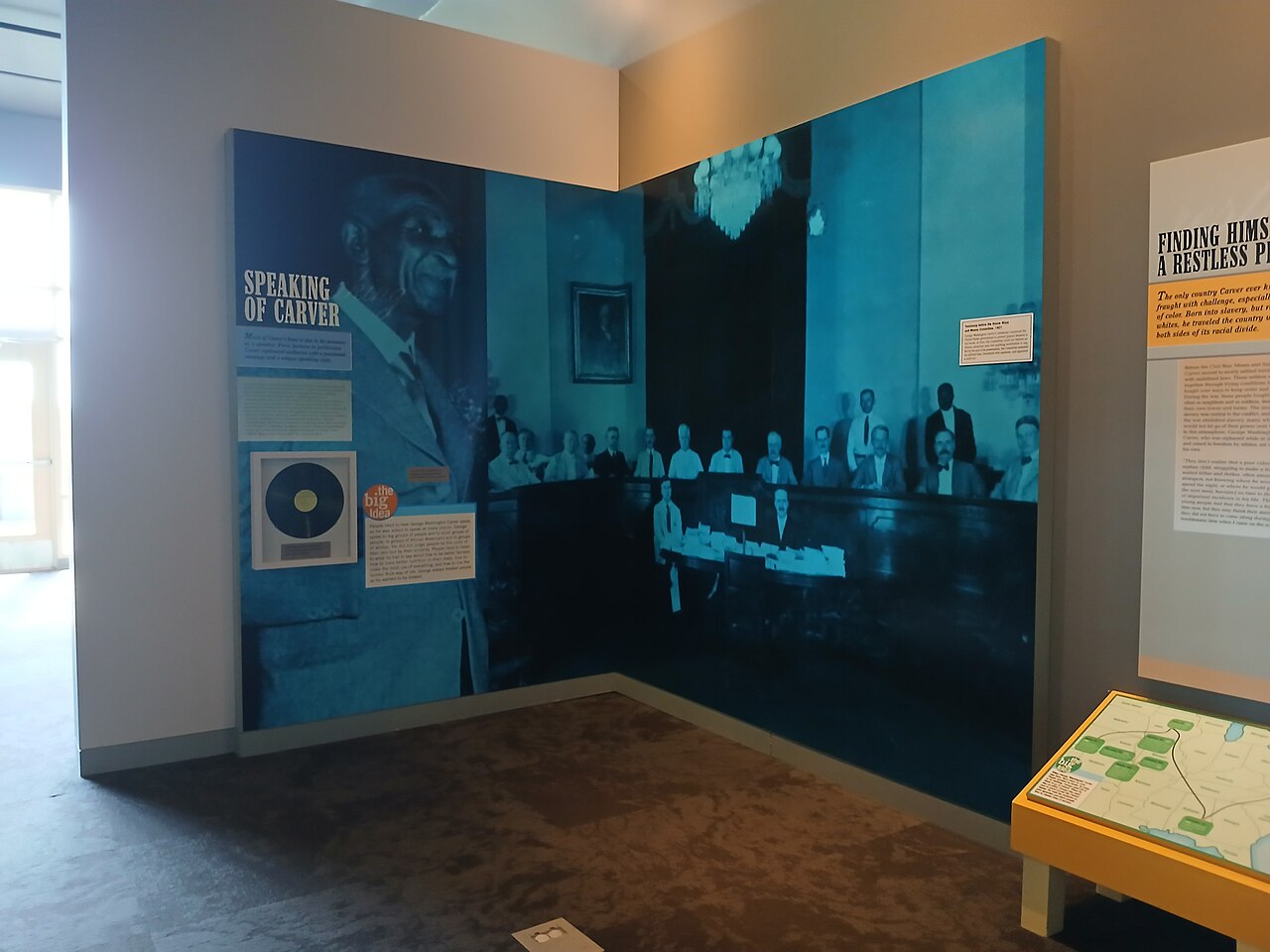
Museum exhibit wall in a blue-tinted panel display. Left side shows a large portrait of an older man in a suit with the heading 'Speaking of Carver', a record album graphic, and text panels. Right side shows a black-and-white group photo of seated men at a long table in a formal room with a chandelier. A yellow-framed touch table with a map sits in front.Photograph

Secondary source

George Washington Carver National Monument: Speaking of Carver exhibit

Ser Amantio di Nicolao · 7 July 2024

Want the full shelf? Chat with George Washington Carver in the app and open the Sources panel — every quote links back to the original.

Use George Washington Carver in class

1 collection

A ready-made collection from the Humy team that features George Washington Carver. Preview it, then try it free.

Trusted by educators worldwide

Conversations
375,000+
Real exchanges between students and historical figures
Messages exchanged
4,142,000+
Across every figure, classroom and language
Historical figures
100,000+
Each informed by a curated biography and selected sources
Languages supported
50+
From English and Spanish to Arabic and Korean

Paying customers

Used by 98 schools and universities

Partner school logo
Tecnológico de Monterrey logo
Hyper Island logo
Partner school logo
Chambersburg Area School District logo
Broward County Public Schools logo
Nebo School District logo
National Louis University logo
South Florida PBS logo
Punahou School logo
University of Wisconsin–River Falls logo
Partner school logo
Partner school logo
Archbishop Mitty High School logo
Kingsburg High School logo
Norwalk Public Schools logo
Partner school logo
Connections logo
Partner school logo
Moore Public Schools logo
Partner school logo
Partner school logo
Partner school logo
Partner school logo
Robbinsville Public Schools logo
Partner school logo
Partner school logo
Partner school logo
Tecnológico de Monterrey logo
Hyper Island logo
Partner school logo
Chambersburg Area School District logo
Broward County Public Schools logo
Nebo School District logo
National Louis University logo
South Florida PBS logo
Punahou School logo
University of Wisconsin–River Falls logo
Partner school logo
Partner school logo
Archbishop Mitty High School logo
Kingsburg High School logo
Norwalk Public Schools logo
Partner school logo
Connections logo
Partner school logo
Moore Public Schools logo
Partner school logo
Partner school logo
Partner school logo
Partner school logo
Robbinsville Public Schools logo
Partner school logo
Partner school logo

What educators are saying

“We enjoyed the program last year and used it frequently.”
“My students say it’s a welcome change of pace. I’m not a fan of the “sage on the stage” model, so I try to incorporate research-oriented and self-paced activities. With Humy, students have to take charge of their learning. They’ve become more adept at critical thinking, forming better questions, and improving their reading comprehension. The interview feature has been my go-to tool. I create assignments where students must ask historical figures a set number of questions, then summarize the responses to ensure they’re truly absorbing the material. This approach lets them actively explore the past rather than passively consuming information.”
“Humy has helped me bring historical figures, sometimes long past, to life. When my students interact with these figures in real-time, it eliminates some of the perceived “ancient” characteristics of my curriculum. This has shifted my students’ thinking away from viewing history as abstract or irrelevant. Real-time interactions make historical figures relatable, even allowing students to ask off-topic questions that help put historical lives in a more relevant context for 13-year-olds. The feature I use the most is the interview feature. After teaching a topic, most recently Gandhi and Joan of Arc, I have the students ask pointed, focused questions. We practice good conversation techniques beforehand, teaching them to listen (or read) carefully and formulate thoughtful follow-up questions rather than just interrogating. It helps students practice effective conversation skills.”

FAQ

Frequently asked questions

Who is George Washington Carver?
Botanist and inventor known for his work with peanuts and other crops. On Humy.ai you can chat with an AI version of George Washington Carver that draws on a short biography and 96 historical sources during the conversation — by text or voice, in 42 languages.
Is George Washington Carver AI free?
George Washington Carver is part of Humy's full library of more than 100,000 figures, which comes with a paid plan. A free account (no credit card) includes 20 messages a month with the free library's figures, so you can try how the conversations work first.
What sources does the George Washington Carver AI use?
It draws on a short biography and 96 historical sources (photographs, books and documents), including “How to Grow the Peanut and 105 Ways of Preparing It for Human Consumption”, “How to Build Up Worn Out Soils” and “George Washington Carver by Frances Benjamin Johnston”. Each source has its own page on Humy.ai.
How historically accurate is the AI version of George Washington Carver?
Each figure uses a short biography and a small set of selected historical sources as context (retrieval-augmented generation), so answers stay closer to known material than the model's general knowledge alone. It isn't a citation-grade research tool — like any LLM, the AI can get details wrong or extrapolate. Treat it as a strong starting point for inquiry and cross-reference important claims.
Can I talk to George Washington Carver by voice?
Yes. In addition to text chat, you can call George Washington Carver and hear their voice respond in real time — useful for auditory learners, interview practice and Socratic dialogue.
Is Humy.ai safe and compliant for schools?
Yes. Humy.ai is used by more than 100 schools, universities and organisations. The platform is FERPA- and GDPR-aligned, supports SSO, and offers an IT-approval pack tailored for school procurement teams.

Cross-reference George Washington Carver

Like any LLM, the AI version of George Washington Carver can get details wrong. Open one of these sources in a new tab to verify what you’ve read.

Ready when you are

Start chatting with George Washington Carver now.

20 messages free · No credit card · Available in 50+ languages.