


Tertiary sourceArtifact
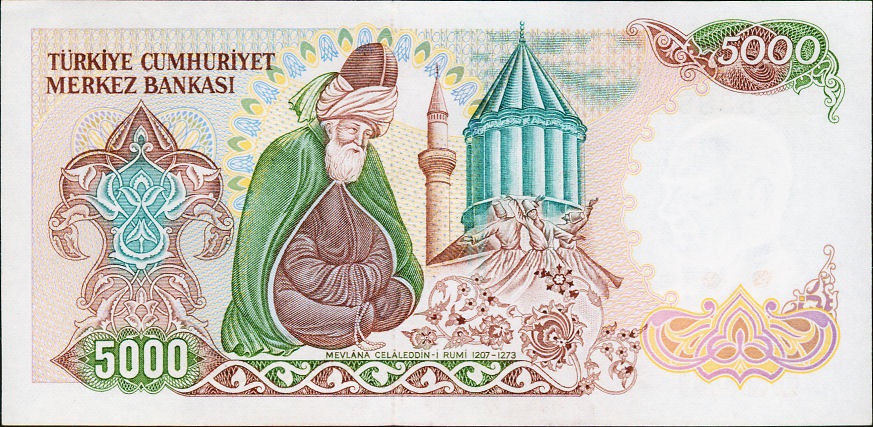
5000 Turkish Lira Banknote, Reverse
A Turkish banknote featuring Rumi, showing his status as a celebrated national cultural figure in modern Turkey.
This banknote commemorates Rumi, showing his adoption as a symbol of Turkish national culture.
About this source
What it is
This is the reverse side of a 5000 Turkish lira banknote issued by the Central Bank of the Republic of Turkey. It shows a seated robed figure beside a turquoise domed tomb and minaret, with whirling dancers nearby, and an inscription naming Mevlana Celaleddin-i Rumi with the dates 1207–1273.
Why it matters
Placing Rumi on national currency shows how, centuries after his death, he was adopted as a symbol of Turkish cultural identity. The whirling dancers reference the Sufi practice associated with the order founded by his followers, linking the banknote to his spiritual legacy.
Look closer
- Why might a government choose to put a poet and mystic on its currency?
- What do the images of the tomb and the whirling dancers suggest about how Rumi is remembered today?
- What does this tell us about the difference between a historical figure and the symbol they later become?
This artifact is part of the curated material that grounds the AI version of Rumi (Jalāl ad-Dīn Muhammad Rūmī) on Humy.ai — when students ask about related events, the AI can quote it and cite it.
More Rumi (Jalāl ad-Dīn Muhammad Rūmī) sources
Meet the AI Rumi (Jalāl ad-Dīn Muhammad Rūmī) →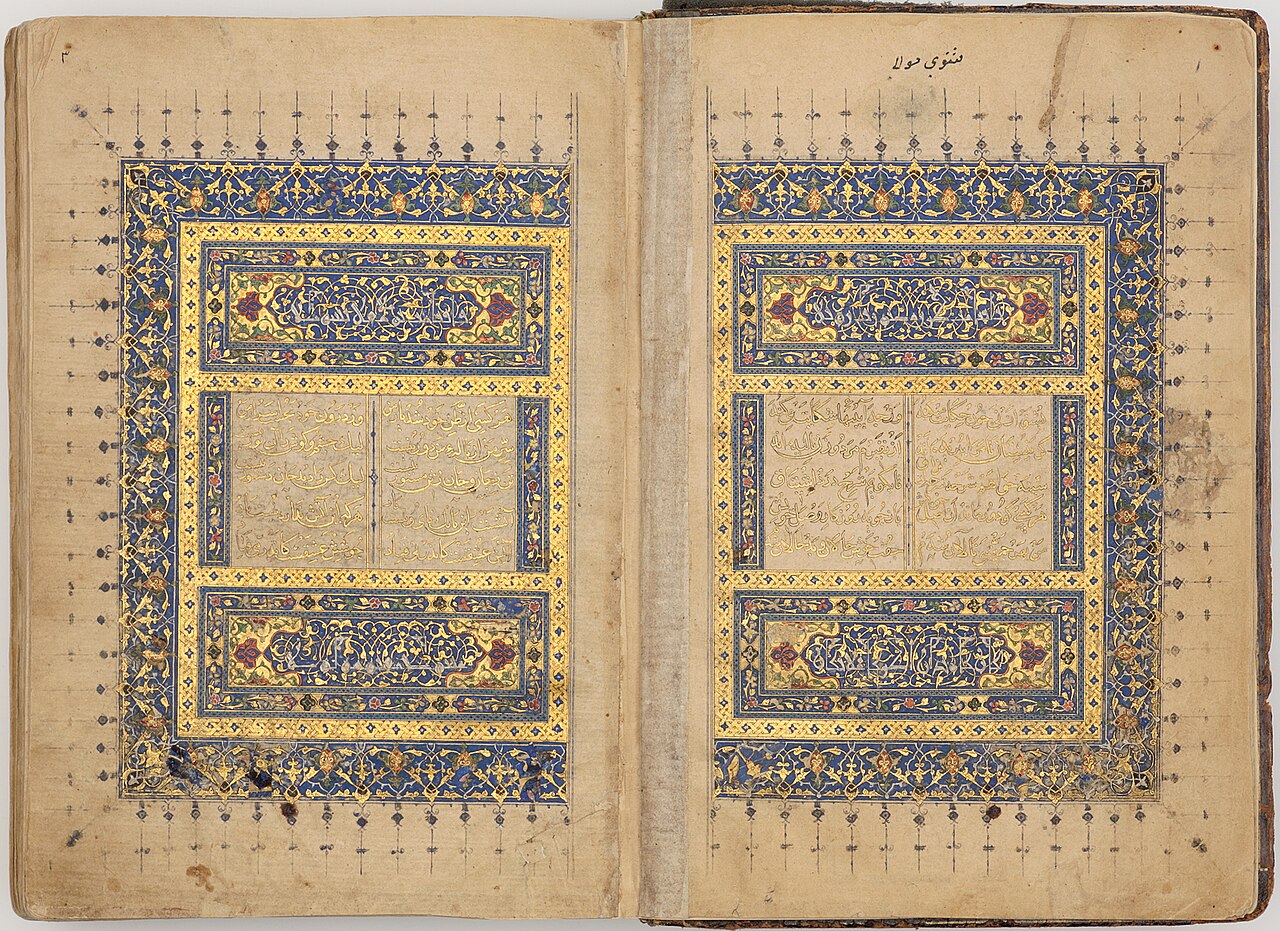 Book
Primary source
Masnavi
Rumi · c. 1258-1273
 Book
Primary source
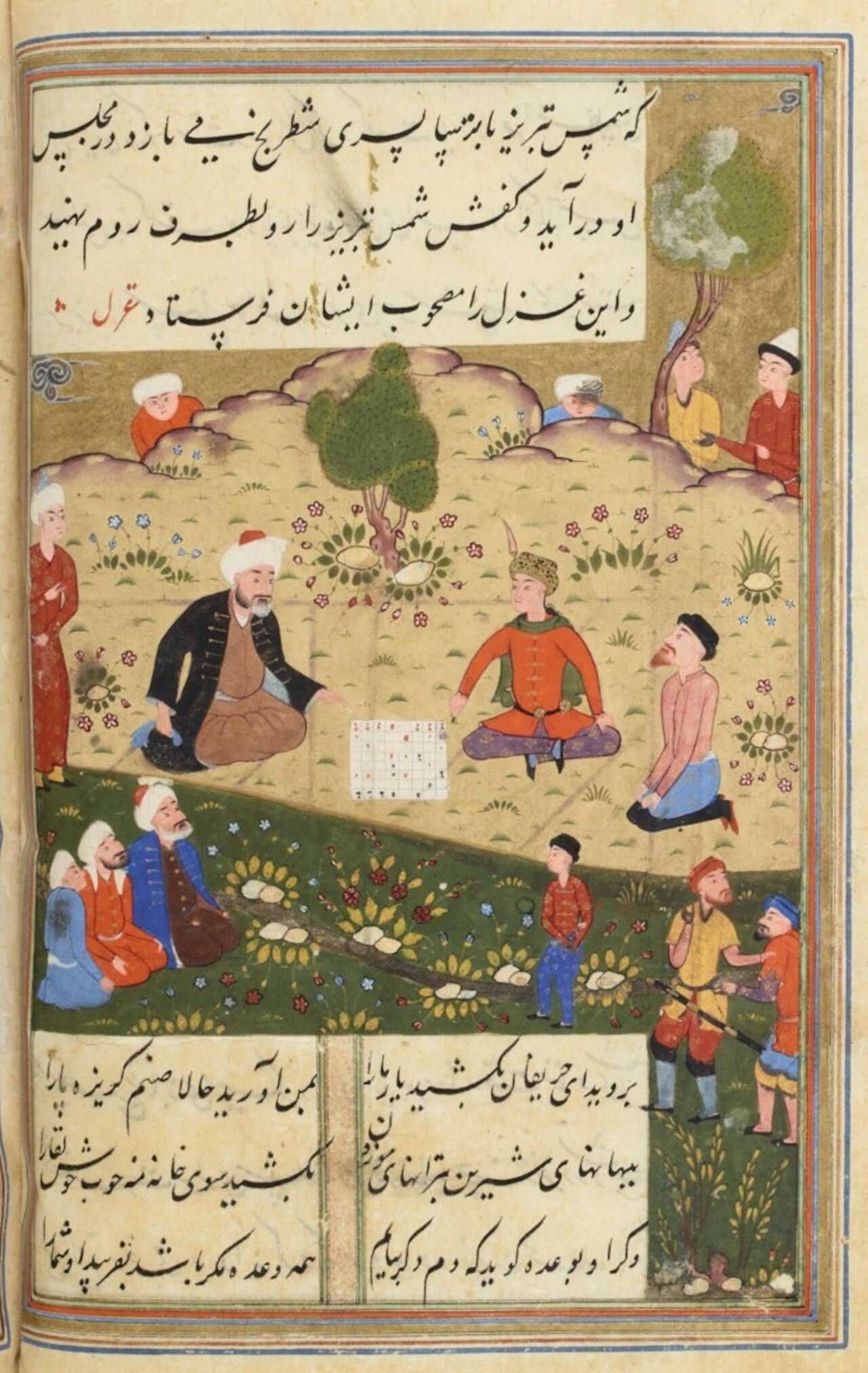
Diwan-e Shams-e Tabrizi
Rumi · c. 1247 onward
 Artifact
Secondary source
Grave of Rumi
soon after 1273
 Book
Primary source
Fihi Ma Fihi
Rumi · c. 1260-1273
 Artifact
Secondary source
Mevlâna Museum
Badr al-Din Tabrizi (architect) · built soon after 1273; museum since 1926
Ready when you are
Start chatting with Rumi (Jalāl ad-Dīn Muhammad Rūmī) now.
20 messages free · No credit card · Available in 50+ languages.