


Secondary sourceArtifactsoon after 1273
Grave of Rumi
soon after 1273
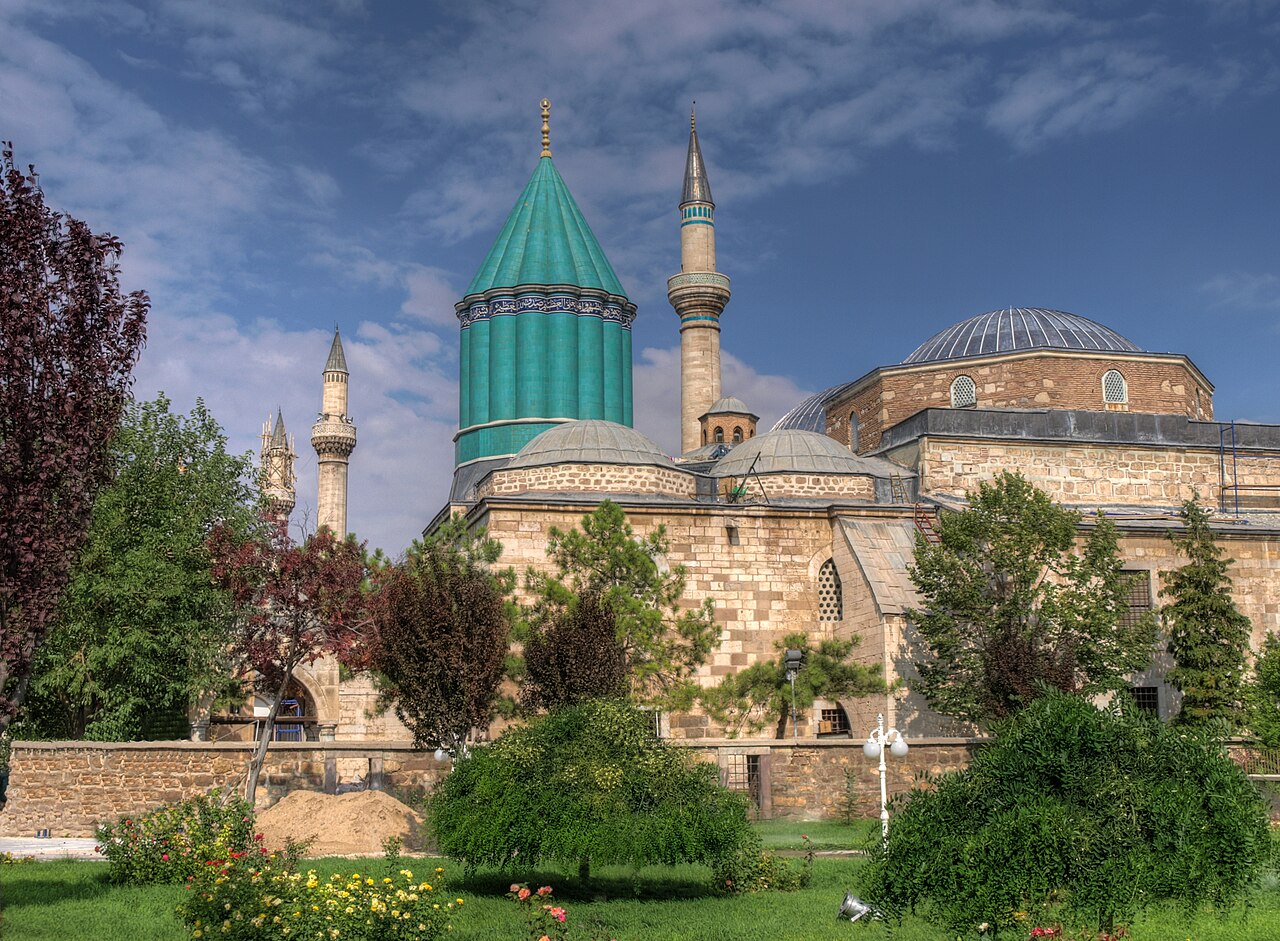
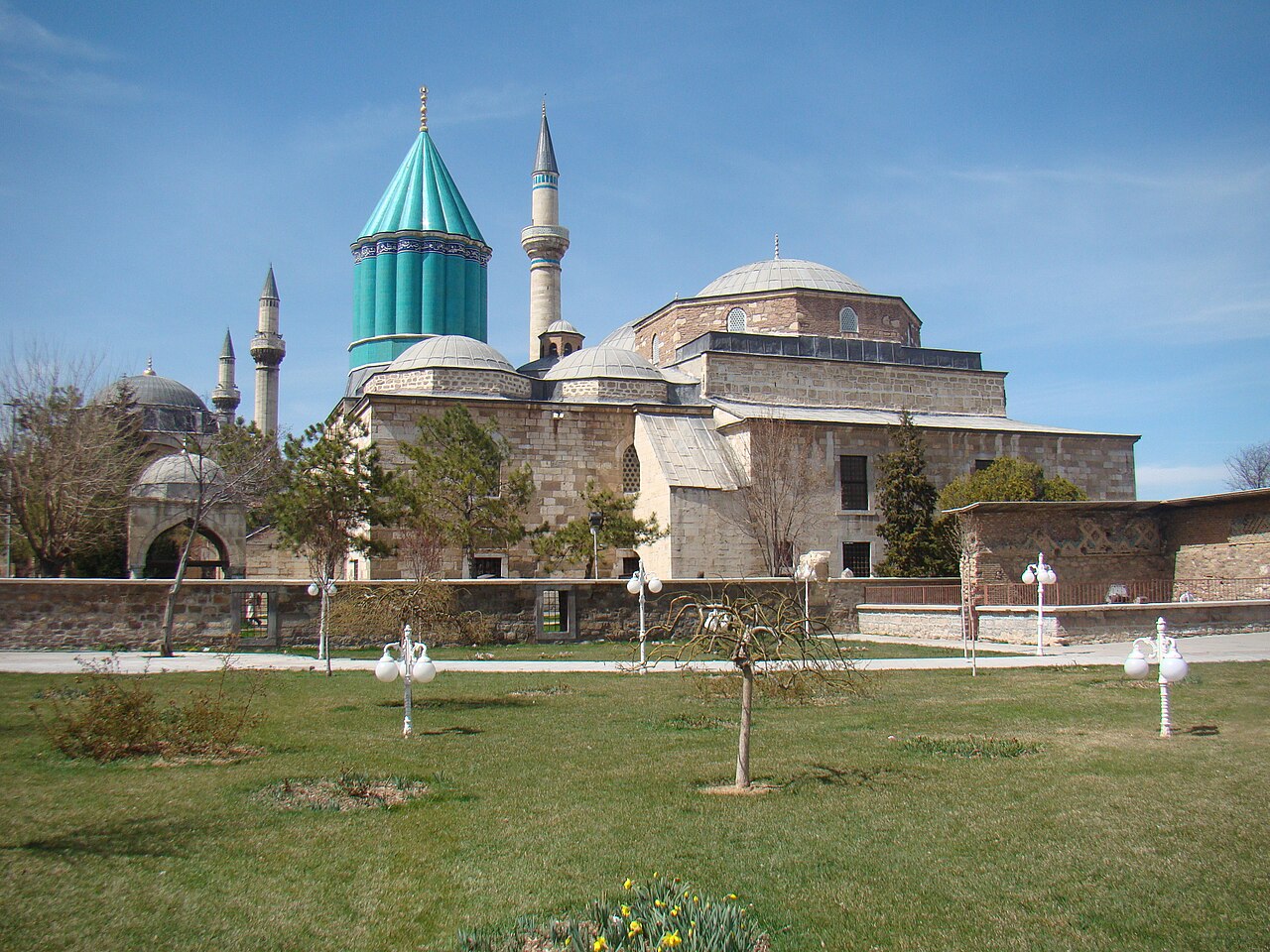
The Green Tomb built over Rumi's grave soon after his death in 1273, which became the centre of the Mevlevi order and a site of pilgrimage.
This tomb marks Rumi's burial place and became the lasting centre of the religious order inspired by him.
About this source
What it is
This tomb, known as the Green Tomb (Yeşil Türbe), was raised over Rumi's grave in Konya not long after he died in 1273, with financial support from Gurju Khatun, a Seljuk royal patron. It is topped with a tall turquoise dome.
Why it matters
The tomb became the heart of the Mevlevi Sufi order that followed Rumi's teachings, and it has drawn pilgrims of many faiths for centuries. Its construction shows the respect Rumi commanded among the powerful figures of his time, including Gurju Khatun who helped fund it.
Look closer
- What does the choice of a turquoise dome and the building's scale suggest about how Rumi was regarded after his death?
- Why might people of many different faiths want to visit this site?
- What can a building like this tell us, and what can it not tell us, about the person buried there?
This artifact is part of the curated material that grounds the AI version of Rumi (Jalāl ad-Dīn Muhammad Rūmī) on Humy.ai — when students ask about related events, the AI can quote it and cite it.
More Rumi (Jalāl ad-Dīn Muhammad Rūmī) sources
Meet the AI Rumi (Jalāl ad-Dīn Muhammad Rūmī) →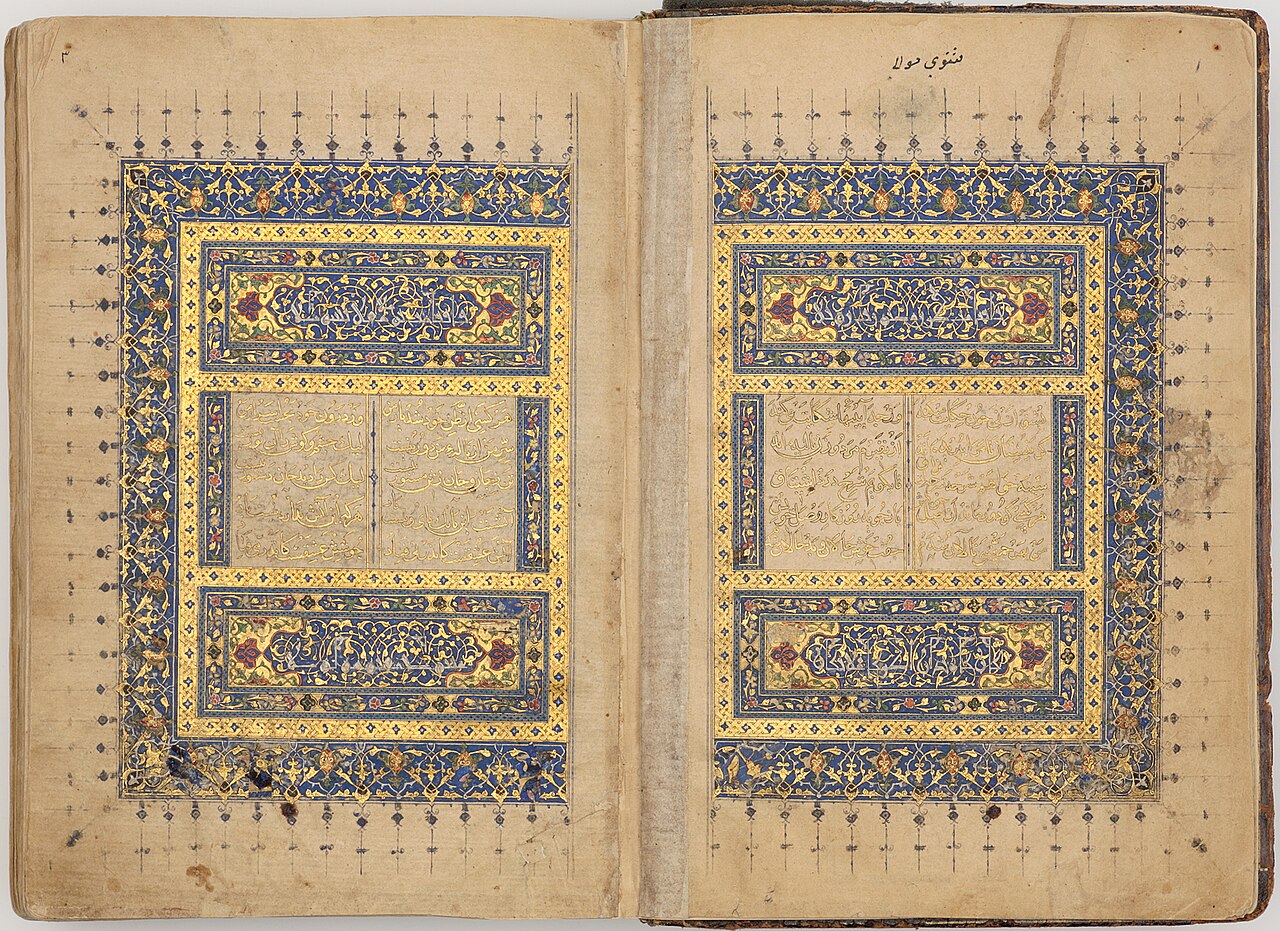 Book
Primary source
Masnavi
Rumi · c. 1258-1273
 Book
Primary source
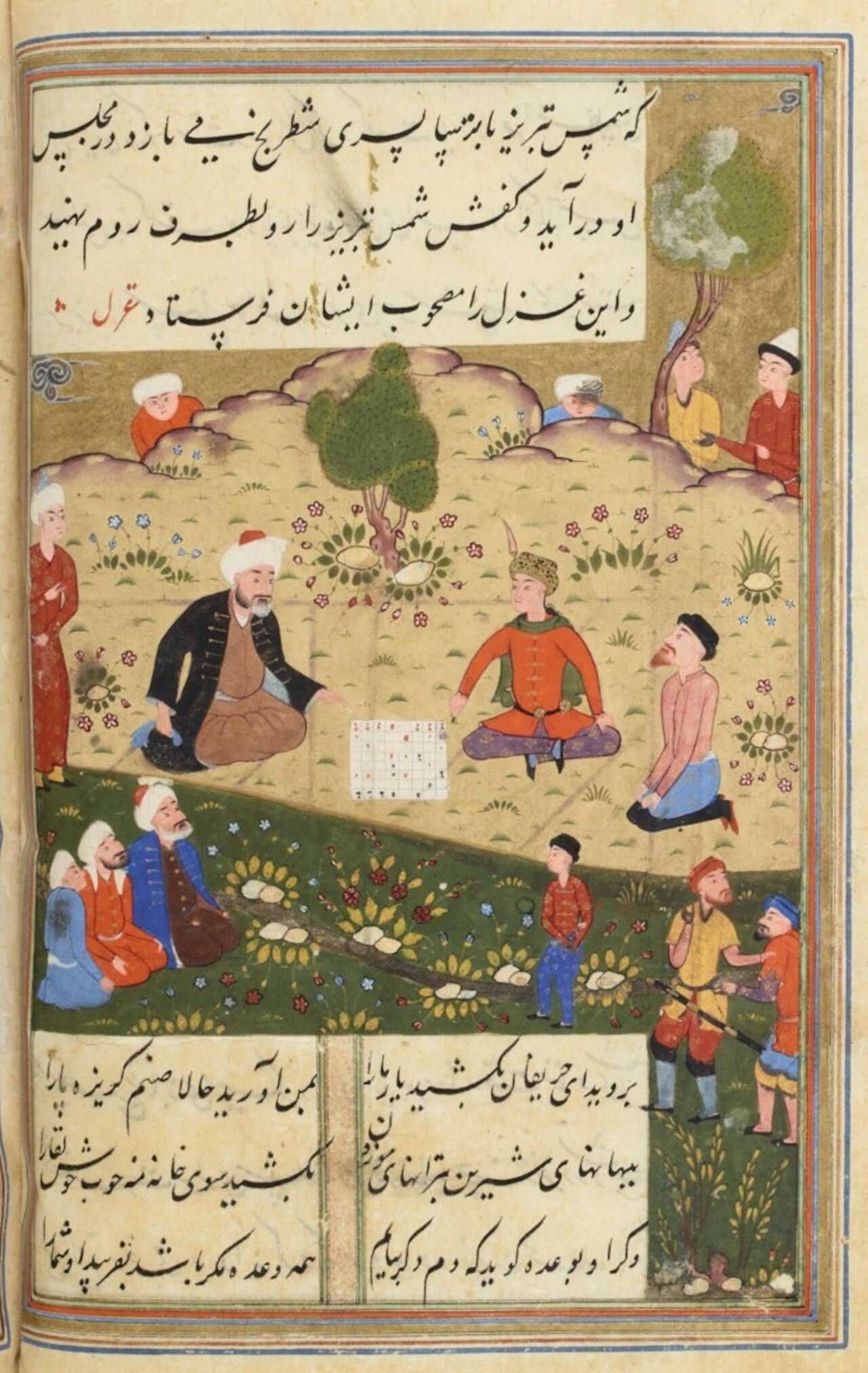
Diwan-e Shams-e Tabrizi
Rumi · c. 1247 onward
 Book
Primary source
Fihi Ma Fihi
Rumi · c. 1260-1273
 Artifact
Secondary source
Mevlâna Museum
Badr al-Din Tabrizi (architect) · built soon after 1273; museum since 1926
 Photograph
Secondary source
Maulana Rumi - Jubba
Ahmed Nisar
Ready when you are
Start chatting with Rumi (Jalāl ad-Dīn Muhammad Rūmī) now.
20 messages free · No credit card · Available in 50+ languages.